Weather by Month
Lisbon in February: Weather, Carnaval and What to Expect
February is Lisbon at half price with no queues — and a weather gamble worth taking. The real climate numbers, where to go for Carnaval, and what to skip.
In this guide
- February weather in Lisbon: the numbers
- Carnaval: the reason February is not a quiet month
- Crowds and prices
- What to do in Lisbon in February
- A three-day February plan
- What to pack
- Where to stay in February
- Getting around
- Is February a good time to visit Lisbon?
- Frequently asked questions
- Bottom Line
- Photo Credits
Lisbon in February is the month the city keeps for itself. The Christmas crowds have gone home, the Easter ones have not arrived, hotel rates sit at their annual floor, and you can walk into restaurants that will not answer the phone in June. The weather is a genuine gamble — but the odds are far better than most northern Europeans assume, and the payoff when they land is a warm, empty, deeply pleasant city.
Push your dates four weeks later and the picture improves sharply: Lisbon in March brings warmer afternoons, more sunshine and rooftops starting to reopen.
This guide covers what the numbers actually say about February weather, what happens during Carnaval — which usually falls this month and changes the whole feel of the week — how much less you pay than in high season, what is worth doing, and where February genuinely lets you down.
February weather in Lisbon: the numbers
These are the 1991–2020 climate normals for the Lisbon city station, which is the honest baseline rather than the sunniest brochure figure:
- Average high: 16.4°C
- Average low: 9.1°C
- Rainfall: 77.8 mm across about 8 rain days
- Sunshine: around 175 hours for the month, roughly 6 hours a day
- Sea temperature: 15°C
The single most useful number there is the eight rain days. February is one of Lisbon’s wetter months on paper, but the rain arrives in concentrated Atlantic systems rather than as steady drizzle — two or three genuinely wet days, then a run of clear ones. It is not the London winter model of grey from breakfast to dusk.
What 16°C actually feels like here
Warmer than the number suggests when the sun is out, and colder when it is not. Lisbon sits on limestone hills above a tidal estuary, and the light in February is low, hard and flattering — a sunny February afternoon on a south-facing terrace is genuinely shirt-sleeve weather, and you will see locals in T-shirts and visitors in coats standing next to each other.
The evenings are the part people underestimate. Once the sun drops behind the hills the temperature falls fast, and Portuguese buildings are not built for cold. Central heating is uncommon in older apartments and guesthouses, floors are tiled, and a 12°C night outdoors can feel like a 12°C night indoors as well. Check that your accommodation has heating — proper heating, not a decorative fireplace — before booking.
Daylight
The days lengthen noticeably. At the start of February the sun rises around 07:40 and sets around 18:00; by the end of the month it is up around 07:10 and light until roughly 18:30. That extra half hour at the end of the day is what makes late February feel like a different season from early January, and it means you can still be at a miradouro for sunset after a full day out.
Carnaval: the reason February is not a quiet month
Carnaval is a movable feast tied to Easter, and it usually — not always — falls in February. In 2027 Carnival Tuesday falls on 9 February, and each town sets its own programme, so check the dates for the place you plan to visit. In some years it slides into late February or the first days of March, so check the date against your dates rather than assuming.
Here is the thing worth knowing: Lisbon itself is not the best place to be for Carnaval. The capital does a modest job of it — some parties, some fancy dress in Bairro Alto, a parade or two — while the serious celebrations happen in towns within an hour of the city. If Carnaval falls during your trip, get on a train or a bus.
Where to actually go
- Torres Vedras — north of Lisbon, and the town’s own slogan calls its Carnaval the most Portuguese in Portugal. Satirical floats mocking politicians, the matrafonas (men in outrageous drag), and no imported Rio feathers. Rough, funny and completely unpolished. It is the one to pick if you only go to one.
- Sesimbra — a fishing town on the coast south of the Tagus that hosts a seaside Carnaval parade run by samba schools and axé groups, with more than a thousand participants and thousands of spectators. Combine it with the Sesimbra day trip if the weather cooperates.
- Loures — the closest big parade to the city, just north of the airport, with elaborate floats and thousands of costumed participants. The easiest one to reach and get home from.
What Carnaval does to your plans
Carnival Tuesday is not a statutory national holiday in Portugal, but it is treated as one by almost everybody — schools close, many businesses give the day off, and a good number of shops, offices and smaller restaurants simply do not open. Public transport runs a Sunday timetable. Museums generally stay open, but confirm rather than assume, and expect the towns hosting parades to be gridlocked from mid-morning.
It also puts a spike into hotel prices in the towns that host parades, though barely touches Lisbon’s own rates. If you want to see Carnaval and sleep cheaply, stay in the city and travel out for the day.

Crowds and prices
February and January are the two cheapest months to visit Lisbon, and February is the more pleasant of the pair. Concretely, what that means on the ground:
- Accommodation runs at roughly half its June-to-September rate. Hotels that are unaffordable in summer become ordinary in February, which is the month to try somewhere above your usual level — see our best hotels in Lisbon guide for the ones worth the upgrade.
- Restaurants take walk-ins. The tables that need booking three weeks out in high season will usually seat you the same evening. This is the single biggest practical advantage of a winter trip.
- Queues effectively disappear at Jerónimos, Belém Tower and São Jorge Castle. Twenty minutes rather than two hours.
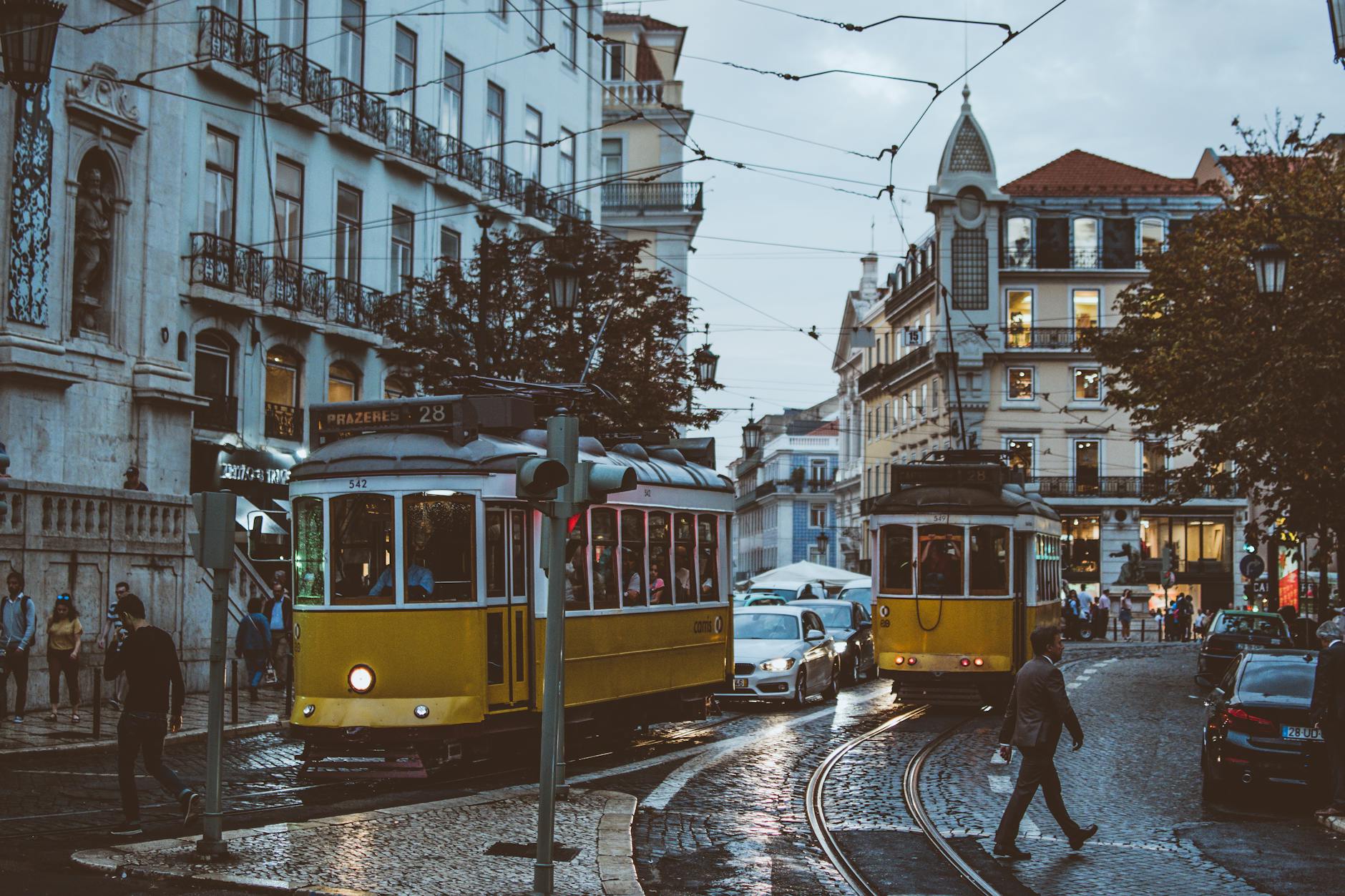
- Tram 28 is usable. In summer it is a scrum you queue forty minutes to join; in February you get a seat by the window. Our Tram 28 guide covers the best boarding points.
- Flights are at their cheapest apart from the immediate post-New-Year window, with the exception of the school half-term week.
Pena Palace and the rest of Sintra are the clearest illustration. In August you book a timed slot days ahead and queue anyway. In February you can more or less turn up — though you should still book Pena online, because the slot system runs year-round.
What to do in Lisbon in February
The indoor city, done properly
Winter is the only time most visitors give Lisbon’s museums the hours they deserve. The Gulbenkian shows Calouste Gulbenkian’s collection, and you will want extra time if you add the CAM. The National Tile Museum is closed for works with no reopening date, so for azulejos look to the streets and churches instead. The MAAT pairs contemporary art with a magnificent old power station. Full roster in the museums and culture guide, and our rainy-day guide is written for exactly this month.
Eating, which is what February is really for
Portuguese winter food is heavy, slow and excellent, and February is the month for it: cozido à portuguesa, caldo verde, salt cod in a dozen preparations, roast kid. The tascas — small family restaurants with paper tablecloths and a chalked menu — are at their best when it is cold outside and the dining room is full of locals rather than visitors. Our traditional food guide covers what to order.
February is also the peak of the bolo-rei hangover and, more importantly, of Carnaval baking: malassadas and filhoses, fried dough eaten in vast quantities in the days before Lent. Bakeries make them for a fortnight and then stop.
Fado, at its proper temperature
Fado is a winter music and it always has been. In summer the Alfama fado houses run tourist sittings; in February they are half locals and the singing goes on later. See the fado guide for the houses that are still the real thing, and book — the good rooms are small in every season.
Walking, in the year’s best light
Low winter sun, clean air after rain and no heat make February the best walking month in Lisbon. Alfama, Belém and the street art routes through Marvila and Alcântara all work better at 16°C than at 35°C, and the hills stop being an ordeal. Our walking guide maps the routes.
Day trips that hold up
Sintra is at its most atmospheric in February — the palaces sit in cloud forest and the mist is a feature rather than a disappointment, though pack for rain. Óbidos works year-round and the ginjinha in a chocolate cup makes more sense when it is cold. Évora is fine. The full list is in day trips from Lisbon.
What to skip
- Beaches. A 15°C sea and an Atlantic wind are not a beach day. Costa da Caparica and Cascais are lovely for a windy walk and a seafood lunch, and that is the correct expectation.
- Rooftop bars. Some close for winter and evenings can be cold, so check each venue’s opening hours before you climb up. Our rooftop guide notes which ones have heating.
- Open-top bus tours and long boat trips. Both are miserable in a February wind. If you want the river, take the commuter ferry to Cacilhas for the price of a single fare and stand inside.
- Anything scheduled tightly outdoors. Leave slack. Some February days simply do not permit the plan you made.
A three-day February plan
Built to flex around weather rather than fight it — keep a museum in reserve for each day.
Day one — the centre and the hills
Start with a bica and a pastel de nata in Baixa, walk up through Chiado, and take Tram 28 while it is still quiet. Afternoon in Alfama and the castle, sunset at Portas do Sol, fado in the evening. If it rains, swap the castle for the Sé and a museum.
Day two — Belém and the river
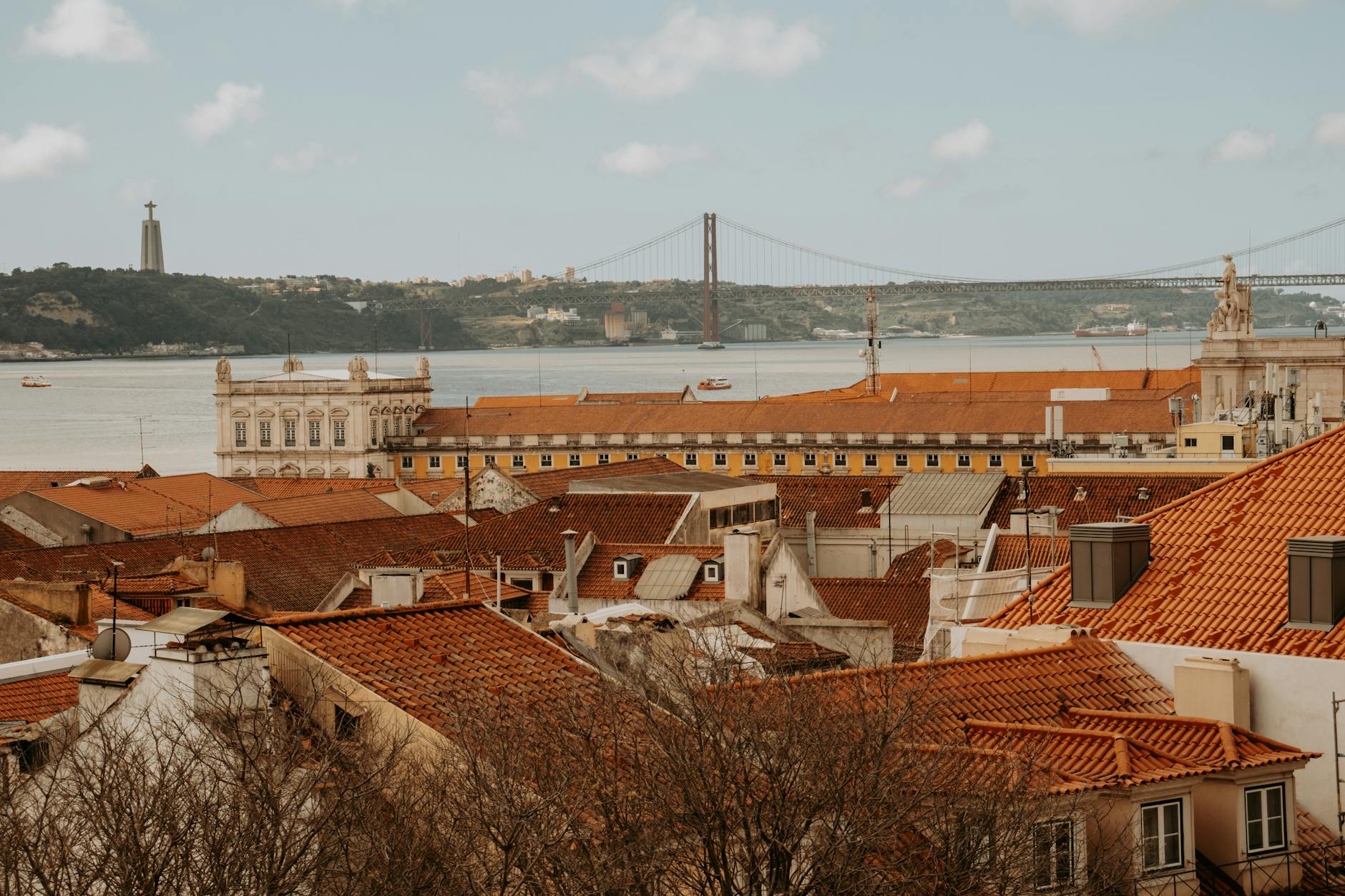
Jerónimos and the cloister first thing, the Coach Museum, the Monument to the Discoveries, then MAAT and the walk back along the waterfront to Alcântara and LX Factory for a late lunch under the 25 de Abril Bridge.
Day three — Sintra, or Carnaval
If Carnaval falls on your trip, this is the day to go to Torres Vedras or Sesimbra. If not, take the train from Rossio to Sintra and do Pena and Regaleira in the winter mist with a fraction of the usual crowd.
What to pack
The February packing problem is that you need summer and winter clothes in the same suitcase, because you will likely get both in the same week — and sometimes the same day.
- Waterproof jacket with a hood. Not an umbrella as your only defence: Lisbon’s rain arrives sideways with Atlantic wind behind it, and umbrellas die on the exposed miradouros.
- Shoes with grip. This is the important one. Lisbon’s calçada pavement is limestone and basalt, and on sloping streets it can turn slippery when wet. Smooth leather soles are a bad idea in February.
- Layers — T-shirt, jumper, jacket. You will use all three on a good day.
- A warm layer for evenings indoors, given the heating situation.
- Sunglasses and sunscreen. The winter sun here is low and directly in your eyes, and it will still burn you on a clear day.
Full list in our Lisbon packing list.
Where to stay in February
Two things change in winter. First, budget goes further — this is the month to book the room with the view. Second, heating matters more than location. A beautiful Alfama apartment with tiled floors and no radiator is a poor February choice.
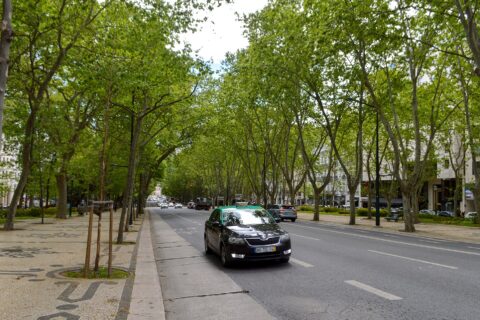
Baixa and Chiado are flat, central and full of newer hotel stock with proper heating, which makes them the sensible winter base. Príncipe Real and Avenida da Liberdade give you the upgrade for winter money. Alfama is romantic and steep and cold — take it with eyes open. Detail in where to stay in Lisbon.
Getting around
Nothing changes seasonally except that everything is less crowded. A single on a Navegante ocasional card is €1.90 and lasts an hour across Carris and the Metro; the card costs €0.50 once; a 24-hour Carris and Metro ticket is €7.25. The funiculars and lifts are a legitimate way to avoid a wet climb. Full detail in the transport guide, and the Lisboa Card tends to pay off better in winter because you spend more of the day inside paid attractions.
Is February a good time to visit Lisbon?
Yes, for a certain kind of trip, and no for another.
It is an excellent month if you are coming for the city — its food, its museums, its music, its streets — and you would rather have those at half price with no queues than have a guaranteed tan. It is one of the two or three best-value months in Western Europe on that basis, and the light is superb.
It is the wrong month if the picture in your head involves a beach, a rooftop and a linen shirt. That is May to October, and no amount of February luck will reliably deliver it. Compare across the year in our best time to visit Lisbon guide and the full month-by-month weather breakdown.

Frequently asked questions
How warm is Lisbon in February?
An average high of 16.4°C and an average low of 9.1°C. In practice that means comfortable daytime walking weather when the sun is out and a cold evening once it sets.
Does it rain a lot in Lisbon in February?
About 78 mm across roughly eight days. Statistically it is one of the wetter months, but the rain comes in blocks — expect two or three properly wet days in a week rather than constant drizzle.
When is Carnaval in Portugal?
It moves with Easter and usually lands in February. In 2027 Carnival Tuesday is 9 February, and each town sets its own programme, so check the dates for the place you plan to visit. Check the year you are travelling, because it can slip into March.
Is Carnival Tuesday a public holiday in Portugal?
Not officially, but it is widely treated as one. Expect many businesses to close, public transport on a reduced timetable and parade towns to be extremely busy.
Can you swim in Lisbon in February?
The sea is around 15°C. Surfers in wetsuits, yes; swimmers, realistically no.
Is Sintra worth visiting in February?
Very much so. The palaces are quiet and the hill mist suits them. Bring waterproofs and expect Sintra to be several degrees colder and considerably wetter than the city.
Is February cheaper than other months in Lisbon?
Yes — alongside January it is the cheapest month of the year for accommodation and flights, with the exception of the school half-term week in mid-February.
What should I wear in Lisbon in February?
Layers, a hooded waterproof and shoes with grip for wet cobbles. Add sunglasses — the low winter sun is stronger than visitors expect.
Bottom Line
February is Lisbon at its least performative. You will not get a guaranteed run of blue skies, and the two or three wet days in your week are a real cost that no amount of enthusiasm talks away. But you also get the city at half price, restaurants that have time for you, Jerónimos without a queue, the best walking light of the year, and — if the dates fall right — a Carnaval an hour up the road that has nothing to do with tourism at all.
Book somewhere with heating, pack a waterproof and shoes that grip, keep a museum in reserve for each day, and treat any run of sunshine as a bonus rather than the plan. Do that and February is one of the smartest months in the Lisbon calendar.
If you want warmth as well as value, the odds shift steadily in your favour in Lisbon in March.
And by April the city has properly turned the corner into spring.
Photo Credits
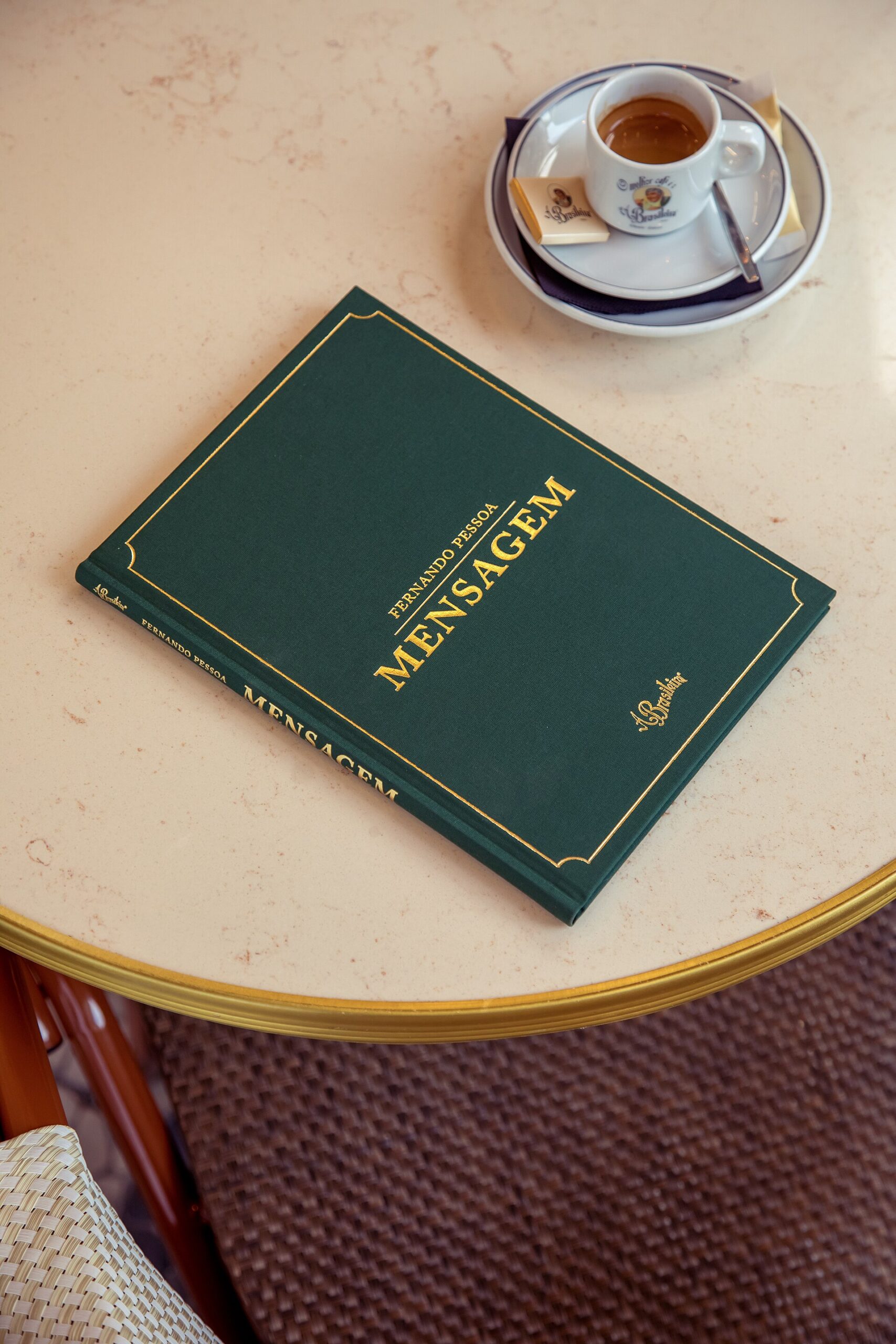
Coffee and Pessoa at A Brasileira: 12 A Brasileira – Mensagem by Luísa Paulos, CC BY-SA 4.0, via Wikimedia Commons.