Getting Around Lisbon
Walking Lisbon: Best Routes Through the City’s Hills & Neighborhoods 2026
Self-guided walking routes through Lisbon's most beautiful neighborhoods—flat routes, hill-friendly paths, and downloadable maps.
In this guide
- Quick Reference: Lisbon Walking Routes
- Route 1: Baixa Flat Walk (Easy, 1.5–2 hours)
- Route 2: Bairro Alto & Chiado (Moderate, 2–3 hours)
- Route 3: Alfama & Castle Climb (Hard, 3–4 hours)
- Route 4: Belém Riverside (Easy but Long, 3–4 hours)
- Combined Full-Day Walking Itinerary
- Walking Etiquette in Lisbon
- What to Bring on a Walking Tour
- Best Walking Tours: Self-Guided Apps and Tools
- Best Photography Stops on Each Route
- Getting Between Routes: Transport Tips
- Walking Tour Tips by Season
- What to Avoid
- FAQ: Walking Tour Lisbon Self-Guided
- Bottom Line
Lisbon rewards walkers more than almost any European capital — and a self-guided walking tour Lisbon self-guided style is genuinely the best way to understand how the city is put together. The hills are real, the cobblestones are relentless, and Tram 28 will not save you from every climb. But the flip side is that most of what matters is packed into a relatively small area, and the transitions between neighborhoods — Baixa’s Pombaline grid melting into Chiado’s bookshops, Chiado’s steps dropping into Bairro Alto’s fado bars — only make sense when you walk them.
This guide gives you four detailed self-guided walking routes, a full-day combination itinerary, and the practical specifics you need to actually do it: distances, timings, difficulty notes, and where to stop for coffee. Flat, moderate, hard, or long-and-flat — there’s a route for every fitness level. Updated for 2026.
Quick Reference: Lisbon Walking Routes
| Route | Difficulty | Duration | Distance | Best for |
|---|---|---|---|---|
| Baixa Flat Walk | Easy | 1.5–2 hours | ~3 km | Mobility-friendly intro |
| Bairro Alto + Chiado | Moderate | 2–3 hours | ~4 km | Shopping + sunsets |
| Alfama + Castle Climb | Hard | 3–4 hours | ~5 km | Medieval Lisbon |
| Belém Riverside | Easy (long) | 3–4 hours | ~7 km | Monuments + flat ground |
See our full Lisbon Transportation guide for getting between routes, and our trams guide for using Tram 15E and Tram 28 to shortcut uphill sections.
Route 1: Baixa Flat Walk (Easy, 1.5–2 hours)
Lisbon’s downtown grid was rebuilt after the 1755 earthquake on completely flat terrain. This is the only major Lisbon route without significant hills — and it’s a good orientation walk for anyone arriving jet-lagged or with mobility limitations. The Pombaline architecture is immediately striking: identical facades, clean right angles, wide streets designed to withstand the next big earthquake.
Route Steps
- Start: Praça do Comércio (riverfront grand square) — arrive by metro (Terreiro do Paço, Blue Line) or on foot from the waterfront
- Walk north under the Rua Augusta Arch — worth the €3 to climb it for river views
- Continue up Rua Augusta (pedestrian-only main street, ~600 m)
- Visit Núcleo Arqueológico (Roman ruins under Millennium BCP building — free with prior reservation; check opening hours before going)
- Continue to Rossio Square (Praça Dom Pedro IV) — the city’s social centre since medieval times
- Visit Rossio Train Station’s neo-Manueline facade — one of Lisbon’s great architectural jokes, a 19th-century building pretending to be medieval
- Stop at Café Nicola (established 1796) or Confeitaria Nacional for coffee and a pastel de nata
- Walk to Praça da Figueira — quieter, more local than Rossio
- Continue west to Praça Luís de Camões (transitions into Chiado)
- End: Café A Brasileira — the famous 1905 café with Fernando Pessoa’s bronze statue outside
What to Notice
The Pombaline grid is an 18th-century urban planning experiment — the world’s first earthquake-resistant building code, with timber frames inside stone facades. Every building on Rua Augusta was built to the same spec. Look down: the black and white calçada portuguesa mosaic pavement is done by hand, and the patterns change from square to square. Rossio’s wave pattern is one of the most photographed floors in Portugal.
Highlights
- Pombaline reconstruction architecture (1758–1775)
- Three major squares in 3 km
- Roman, Pombaline, and 19th-century historical layers visible in one walk
- Historic cafés: Café Nicola (1796), Café A Brasileira (1905)
- Rua Augusta pedestrian street — best street for people-watching
See our Baixa guide and Praça do Comércio guide for deeper coverage of each stop.
Route 2: Bairro Alto & Chiado (Moderate, 2–3 hours)
Climb from Baixa to upper Lisbon’s most interesting pair of neighborhoods. Bairro Alto is Lisbon’s original bohemian district — narrow streets, fado bars, cheap restaurants, and tiled facades that haven’t changed much since the 19th century. Chiado sits just east of it: more polished, with the city’s best independent bookshops and heritage cafés. The uphill sections are genuine but the payoff (panoramic views, excellent coffee) is reliable.
Route Steps
- Start: Rossio Square
- Walk to Restauradores; take the Glória Funicular up (€4 one-way; runs daily) or walk Calçada da Glória — steep but lined with street art
- Top: Miradouro de São Pedro de Alcântara — panoramic view over Alfama and the castle across the valley. Spend time here.
- Walk south through Bairro Alto’s narrow streets (Rua do Diário de Notícias, Rua da Atalaia) — these are the streets that fill with fado-goers at 10 PM
- Stop at Igreja de São Roque — free entry, and the gilded chapel interior is a genuinely jaw-dropping contrast to the plain exterior
- Continue to Largo do Carmo and the Carmo Convent ruins — the Gothic nave was left open to the sky after the 1755 earthquake and never rebuilt. The exposed arches now frame a blue sky.
- Take the Santa Justa Elevator viewing platform (€1.80, or included with Lisboa Card) or walk down via Calçada do Carmo to Chiado
- Walk Rua Garrett — Bertrand bookshop (world’s oldest still-operating bookshop, 1732), Café A Brasileira, independent fashion
- End: Praça Luís de Camões or Largo do Chiado — both have terrace cafés
Timing Notes
The Glória Funicular runs from approximately 7:15 AM to midnight on weekdays, with reduced hours on weekends. If you plan to visit Bairro Alto for fado in the evening, this route is ideal as a daytime walk — you already know the streets. The neighborhood transforms after 10 PM.
Highlights
- Best panoramic views of central Lisbon and the castle
- Bairro Alto’s tile facades and street art
- Carmo Convent — ruined Gothic nave, open sky (€5 for the small archaeological museum inside)
- Bertrand bookshop (1732 — Guinness World Record for oldest operating bookshop)
- Santa Justa Elevator — a Gustave Eiffel-school iron tower connecting lower and upper Lisbon
See our Bairro Alto & Chiado guide for the full neighborhood breakdown.

Route 3: Alfama & Castle Climb (Hard, 3–4 hours)
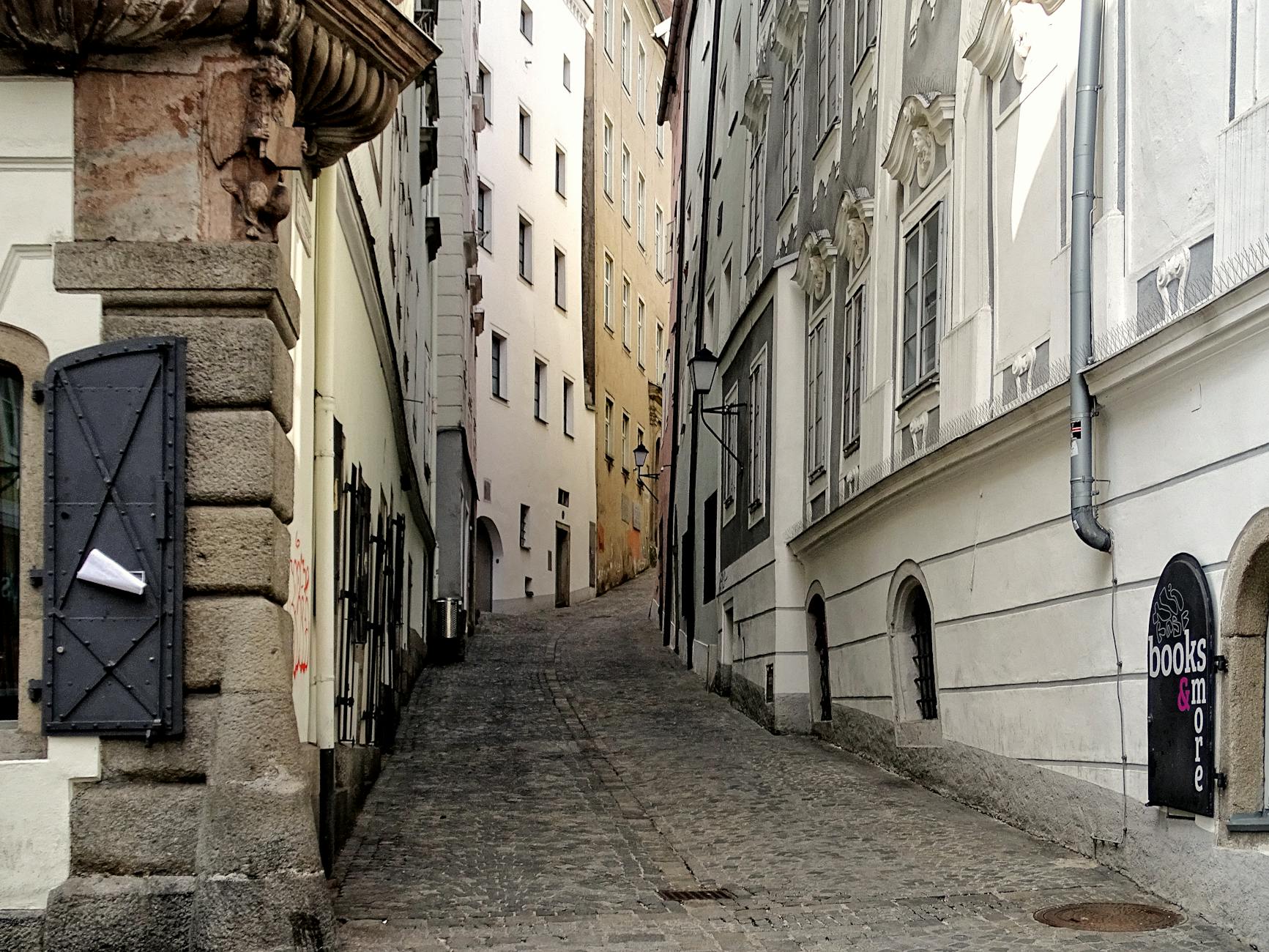
Alfama is Lisbon’s oldest continuously inhabited neighborhood — the Moors built it, the earthquake mostly missed it, and 800 years later the street pattern is almost unchanged. It’s also the city’s steepest quarter. The climb is real: plan for 200+ meters of cumulative elevation gain, significant stair sections, and cobblestone throughout. The reward is equally real: the castle ramparts, the tile-decorated viewpoints, and the medieval streets look nothing like the Pombaline downtown 15 minutes away.
Route Steps
- Start: Sé Cathedral (Largo da Sé) — also reachable by Tram 28 from Martim Moniz
- Visit the Sé Cathedral — free nave entry, €5 for the Roman cloister excavations below
- Walk uphill on Rua Augusto Rosa — first significant climb starts here
- Stop at Miradouro de Santa Luzia — small tiled viewpoint overlooking the Tagus. The azulejo panels on the wall depict pre-earthquake Lisbon.
- Continue to Miradouro das Portas do Sol — the iconic viewpoint with the tiled dome of São Vicente church behind you and Alfama’s rooftops below
- Walk uphill to Castelo de São Jorge — the Moorish castle on the hill above Alfama
- Visit the castle (€15, free for under-10s; reserve online to avoid queues) — peacocks, 11th-century ramparts, panoramic views in every direction
- Walk down through Alfama’s narrow streets: Rua de São Tomé, Beco do Carneiro, Rua dos Remédios
- Stop for lunch at a local tasca — Pateo 13, Zé da Mouraria, or simply follow your nose
- End at Tram 28 stop at Largo Chafariz de Dentro for the ride back (or walk down to the Sé and metro)
The Castle in Detail
São Jorge Castle was originally a Moorish fortification, possibly built on Roman foundations. The Portuguese king Afonso Henriques took it from the Moors in 1147 — aided, according to chronicle, by a group of northern European Crusaders. The current walls date mostly from the 11th–14th centuries, with significant 20th-century restoration. The castle grounds are larger than you expect: allow at least 90 minutes inside. The rampart walk has 11 towers.
The Museum of Lisbon inside the castle has a scale model of pre-earthquake Lisbon — essential context for understanding what the 1755 destruction actually swept away.
Difficulty Notes
Significant climbing. Cobblestoned streets throughout. Multiple stair sections — some without handrails. Wear sturdy shoes (not sandals, not heels, not new trainers). Carry water in summer; the streets offer minimal shade. Allow extra time for the descent — downhill on wet cobblestones is slower than uphill.
Highlights
- Castelo de São Jorge — 11th-century Moorish/Portuguese fortress
- Sé Cathedral — 12th-century, Romanesque, the oldest church in Lisbon
- Miradouro das Portas do Sol — the Alfama viewpoint
- Best azulejo tile-facade photography in the city
- Medieval street pattern unchanged for 800 years
- Fado bars that open at night in the same streets
See our guide to exploring Alfama and São Jorge Castle guide for detailed coverage of both.

Route 4: Belém Riverside (Easy but Long, 3–4 hours)
Flat riverside walk through Lisbon’s monumental district. Belém sits 6 km west of downtown and holds a disproportionate share of the country’s most important monuments: the Jerónimos Monastery, the Belém Tower, the Monument to the Discoveries, and the National Coach Museum. The route itself is almost entirely flat, along the Tagus waterfront — but it covers significant distance, so wear walking shoes even if you don’t plan to climb.
Route Steps
- Start: Cais do Sodré Station (or take Tram 15E directly to Belém, ~25 minutes, €2)
- Walk west along the Tagus riverside path — cycle/pedestrian path runs the full length
- Pass Doca de Alcântara marina — good spot for coffee before the monuments
- Reach Belém village (~45 min walk from Cais do Sodré, or Tram 15E)
- Visit Jerónimos Monastery (€21 adult, €10.50 reduced; free on Sunday mornings until 2 PM; reserve online to avoid queues) — the cloister alone justifies the visit
- Stop at Pastéis de Belém for the original pastéis de nata (1837; the recipe is still secret). Eat them warm with cinnamon and sugar.
- Walk to the Monument to the Discoveries (Padrão dos Descobrimentos) — climb for views across the Tagus (€6)
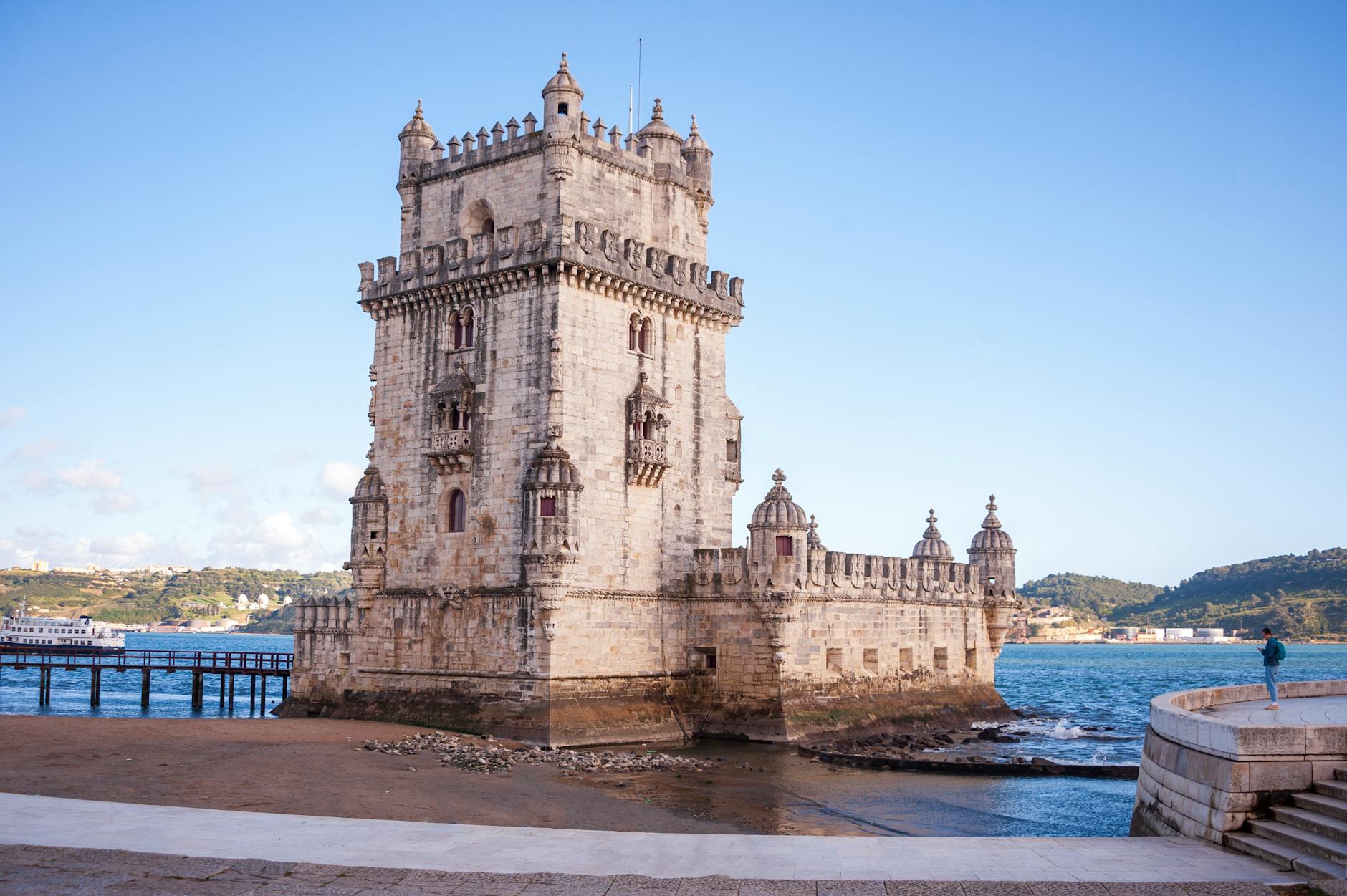
- Continue to Belém Tower — closed for restoration in 2026, exterior viewable
- Optional: MAAT museum or National Coach Museum
- Return by Tram 15E or Uber
Jerónimos Monastery: What to Know
Built between 1501 and 1601 in the Manueline style — a Portuguese Gothic that incorporates maritime motifs, twisted columns, and armillary spheres. The cloister is the architectural centrepiece: two floors of carved stone arches around a central garden. The church contains the tomb of Vasco da Gama and a later monument to poet Luís de Camões. Plan at least 90 minutes. The Sunday morning free period (until 2 PM) gets busy after 10 AM.
Highlights
- UNESCO Jerónimos Monastery (1501–1601 Manueline masterpiece)
- Original Pastéis de Belém (1837 recipe, still the benchmark)
- Monument to the Discoveries — 52 historical figures in carved stone
- Tagus River views across to Almada and the 25 de Abril Bridge
- National Coach Museum — 70+ royal carriages, genuinely extraordinary collection
- MAAT — contemporary art in a riverside building worth seeing for the architecture alone
See our full guide to Belém for full hours, pricing, and what to skip. For Tram 15E schedules and tickets, see our Lisbon tram routes explained.
Combined Full-Day Walking Itinerary
For maximum walking efficiency in one full day — covering Baixa, Bairro Alto, and Belém without repeating ground or zig-zagging:
8:30 AM — Start Praça do Comércio (arrive by metro, Blue Line to Terreiro do Paço)
9:00 AM — Baixa flat walk: Rua Augusta → Rossio → Praça da Figueira
10:00 AM — Glória Funicular up to Bairro Alto (€4)
10:15 AM — Miradouro São Pedro de Alcântara for panoramic views
10:45 AM — Bairro Alto streets → Carmo Convent ruins → Santa Justa Elevator
12:00 PM — Lunch in Chiado (Rua Garrett area)
1:30 PM — Walk or taxi to Cais do Sodré; Tram 15E to Belém
2:15 PM — Pastéis de Belém: eat immediately
2:45 PM — Jerónimos Monastery (book tickets in advance)
4:30 PM — Monument to the Discoveries → Tagus waterfront walk
5:30 PM — Return by Tram 15E
6:30 PM — Sunset at Miradouro de Santa Catarina (above Cais do Sodré)
This skips Alfama — do that on a separate day, starting earlier and saving energy for the climb.
Walking Etiquette in Lisbon
- Move aside for residents in narrow Alfama streets — these are people’s homes, not a film set
- Don’t stop mid-street for photos — step into a doorway alcove first
- Tram tracks have right of way — the tram does not stop for you, and it comes faster than it sounds
- Pedestrians yield to trams, not the other way around
- Don’t peek into homes in Alfama — many doors open directly into living rooms
- Keep voice down on residential streets before 9 AM
- Cross at designated spots — Lisbon drivers treat pedestrian crossings as suggestions
What to Bring on a Walking Tour
Non-Negotiables
- Walking shoes — not sandals, not fashion trainers. The cobblestones will destroy light soles within two hours. Leather-soled shoes become dangerously slippery on wet calçada.
- Water — refillable bottle; tap water is safe. In summer, carry at least 500 ml and refill at public fountains (marked água potável).
- Phone with offline maps — Google Maps offline mode works well; Maps.me is faster in dense Alfama alleys
- Sunscreen and hat — May through September, the sun in open squares is intense from about 11 AM
- Light layers — mornings are cool even in summer; afternoons warm
- Light raincoat — October through April
- Charged camera/phone
For Long Routes
- Snacks or cash for mid-walk tasca stops
- Sunglasses — year-round; Tagus light is bright even in winter
- Light backpack — keeps hands free and reduces pickpocket risk
Best Walking Tours: Self-Guided Apps and Tools
Free Self-Guided Resources
- Google Maps — Most reliable for Lisbon walking; offline mode essential
- Maps.me — Better for narrow alleys where Google maps loses precision
- VoiceMap — Audio walking tours (€5–10 per route)
- GPSmyCity Lisbon — Free walking tours via app
Free Walking Tours (Tip-Based)
- Sandeman’s New Lisbon — Free 3-hour daily tours from Praça do Comércio; meets 10 AM and 1 PM
- Lisbon Walker — Themed paid tours covering history, fado, and food
- GuruWalk — Multiple independent operators; filter by neighborhood and language
See our walking tours guide for full reviews of tour operators.
Best Photography Stops on Each Route
Baixa Flat Walk
- Praça do Comércio — equestrian statue, Tagus behind, triumphal arch above
- Rua Augusta Arch from below — best at golden hour
- Rossio Train Station facade — neo-Manueline horseshoe arches
Bairro Alto + Chiado
- Miradouro São Pedro de Alcântara at golden hour — castle, Alfama, Tagus in one frame
- Carmo Convent roofless Gothic ruins
- Igreja de São Roque gilded interior
Alfama + Castle
- Miradouro das Portas do Sol — rooftops, Tagus, São Vicente dome
- Castle ramparts looking over Lisbon — 360° panorama from 11 towers
- Rua dos Remédios and surrounding alleys — tile facades, laundry lines, cats
Belém
- Jerónimos cloister corner arches
- Monument to the Discoveries from below — Vasco da Gama at the prow
- Sunset on the Tagus from the waterfront path opposite the tower
Getting Between Routes: Transport Tips
Lisbon’s transport options are an essential part of walking strategy — you don’t have to walk every transition.
- Metro — Fast repositioning. Terreiro do Paço (Blue Line) for Baixa; Baixa-Chiado (Blue/Green) for Chiado; Rossio for the old town. See our Lisbon metro guide.
- Tram 15E — Cais do Sodré to Belém, ~25 minutes. Accepts Viva Viagem card or contactless.
- Funiculars — Glória (Restauradores to Bairro Alto), Bica (Cais do Sodré area), Lavra (near Avenida da Liberdade). €4 one-way or included with Lisboa Card. See our trams guide for current status — funiculars occasionally close for maintenance.
- Uber/taxis — Reliable for getting back from Belém. Centre to Belém: €10–14.
Walking Tour Tips by Season
Summer (June–September)
- Start early (8 AM) to avoid heat — Alfama’s streets offer minimal shade
- Take a long lunch break (1–3 PM) — most Lisboetas do the same
- Sunset walks in Alfama at 7–8 PM: the city’s best light
- Tram 28 between 11 AM–5 PM: pickpocket hotspot; consider walking instead
Spring / Autumn (April–May, October)
Best walking weather. Mild temperatures (16–22°C), longer daylight, fewer crowds. September is often warmer than June with lower humidity.
Winter (November–March)
- Rain is common — bring waterproofs; cobblestones become slippery when wet
- Mild (rarely below 8°C) but damp near the Tagus
- Smaller crowds at monuments, especially weekday mornings
What to Avoid
- Tram 28 during 11 AM–5 PM in summer (pickpockets, crowded)
- Cobbled hills in heavy rain — especially descending Alfama
- Overpriced restaurants on Rua Augusta
- Carrying valuables in back pockets on Tram 28 or in dense Alfama crowds
- Wearing flip-flops or unsupportive shoes
- Planning all four routes in one day — Baixa + Bairro Alto is already 5–6 hours
- Ignoring the metro for repositioning between routes — a €2 ride can save 3 km of flat walking
FAQ: Walking Tour Lisbon Self-Guided
Is Lisbon walkable?
Central Lisbon is walkable, but it isn’t flat. Alfama, Bairro Alto, and the castle area involve real climbs — 100–200 meters of cumulative elevation gain depending on your route. Baixa and Belém are completely flat. Match the route to your fitness.
What’s the best self-guided walking route in Lisbon?
For first-timers: the Baixa–Chiado–Bairro Alto loop. Covers earthquake-rebuilt downtown, viewpoints, bohemian neighborhood, and excellent cafés in around 3 hours. Add Alfama the next morning if energy allows.
How long does a Lisbon walking tour take?
Baixa flat walk: 1.5–2 hours. Bairro Alto + Chiado: 2–3 hours. Alfama + Castle: 3–4 hours (more if you spend time inside the castle). Belém: 3–4 hours with monument visits.
Is Alfama hard to walk?
Yes — steep stairs and uneven cobblestones throughout. Wear sturdy shoes. Take breaks. Use Tram 28 to ascend to the Sé and walk downward through Alfama — descending is easier on the knees.
Can I do Lisbon walking tours in winter?
Yes — cooler temperatures, fewer crowds, and genuine beauty in the winter light. Bring waterproofs and be cautious on wet cobblestones.
Where can I download walking maps?
Google Maps offline mode, Maps.me, GPSmyCity, or VoiceMap audio tours. The Lisbon Welcome Centre at Praça do Comércio also has free printed maps.
Bottom Line
Lisbon is a walking city that reveals itself in layers — you can’t fully understand the relationship between Baixa and Alfama, or between the Pombaline grid and the Moorish hill above it, until you’ve walked the transitions yourself. The four routes here are genuinely different experiences: flat downtown geometry, bohemian heights with panoramic views, medieval stairs and castle ramparts, and monumental riverside. Pick based on fitness and time, wear shoes with grip, carry water, and don’t try to do all four in one day.
Walking covers the centre; everything past it needs wheels. The metro guide and the tram guide explain which routes spare you the steepest climbs, the transportation pillar covers fares and passes, and the airport guide deals with the one journey nobody should attempt on foot.