Where to Stay in Lisbon
Belém Guide: Lisbon’s Age of Discovery District 2026
Discover Belém—Lisbon's monumental waterfront district. Jerónimos Monastery, Belém Tower, pastéis de nata, MAAT museum, and how to get there.
In this guide
- Why Belém Matters
- Quick Reference: Belém at a Glance
- Getting to Belém
- Major Monuments and Museums
- Pastéis de Belém
- Where to Eat in Belém
- Where to Stay in Belém
- Belém Half-Day Itinerary
- Belém Full-Day Itinerary
- Practical Tips for Belém
- Belém vs. Alfama: How to Split Your Lisbon Days
- What to Skip in Belém
- FAQ: Belém Lisbon Guide
- Bottom Line
Belém is Lisbon’s monumental waterfront district — the launch point of Portugal’s 15th-century maritime explorations and home to two UNESCO World Heritage sites, the original pastéis de nata bakery, three world-class museums, and Lisbon’s most photographed monument. It’s where Vasco da Gama set sail for India in 1498 and where the modern monument to that age stands today.
Belém’s newest attraction is not a monastery at all: Quake, the 1755 earthquake experience, runs timed ninety-minute sessions on Rua Cais da Alfândega Velha and is worth booking ahead.
Belém is the natural add-on once you have more than eight hours ashore. Our Lisbon cruise port guide has the timings from both cruise terminals and the order to do it in.
This complete Belém Lisbon guide covers everything: the major monuments, how to get there, where to eat and stay, what to skip, insider tips, and the best itineraries for a half-day or full day. Updated for 2026.
Why Belém Matters
In the 15th and 16th centuries, Belém — then a separate village a few kilometres west of Lisbon — became the departure and arrival point for Portugal’s voyages of exploration. Vasco da Gama left from these shores for India in 1497 and returned in 1499, having opened the sea route to Asia that would reshape global trade. Pedro Álvares Cabral set sail in 1500 and reached Brazil. The extraordinary wealth flowing back through this port funded a building programme that produced the Manueline architectural style: maritime Gothic, encrusted with ropes, anchors, coral, and exotic plants carved in stone.
Belém also survived the catastrophic 1755 earthquake largely intact — the shockwaves and the subsequent fires that destroyed most of central Lisbon left the district relatively unscathed. This is one of the few places in Lisbon where you stand in front of buildings that looked roughly the same when Vasco da Gama walked past them. That’s the weight of the place.
Quick Reference: Belém at a Glance
| Detail | Info |
|---|---|
| Location | 6 km west of central Lisbon, Tagus waterfront |
| Best for | Monuments, museums, pastéis de nata, riverside walks |
| Time needed | Half-day minimum; full day for all museums |
| UNESCO sites | Jerónimos Monastery + Belém Tower (listed 1983) |
| Best transport | Train from Cais do Sodré (15 min, ~€1.55) |
| Cheapest transport | Tram 15E with Viva Viagem (€1.61) |
| Closed Mondays | Jerónimos, National Coach Museum, most state museums |
| Free entry day | First Sunday of month (most municipal museums, 10 AM–2 PM) |
| Belém Tower 2026 | Interior closed for restoration (reopening expected ~mid-2026) — exterior accessible. Check status before visiting. |
| Essential stop | Pastéis de Belém (1837) — before or after Jerónimos |
Getting to Belém
Train (Fastest)
From Cais do Sodré station to Belém station: approximately 15 minutes, runs every 10–15 minutes, uses the Cascais suburban line operated by CP. Pay with your Viva Viagem card or buy a single ticket. This is the fastest and most reliable option — particularly useful when the tram route is congested. Check current schedules at cp.pt.
Tram 15E (Most Atmospheric)
From Praça da Figueira in Baixa to Belém. Approximately 30 minutes. Pay with Viva Viagem (€1.61) or single ticket (€3.10). The modern articulated 15E tram is less photogenic than Tram 28 but follows the riverside route with views of the Tagus. Often crowded in summer but more spacious than the heritage trams.
Bus 728 or 714
From central Lisbon. Slower than the tram due to traffic, but less crowded. Useful as a backup when 15E wait times are long.
Uber or Bolt
€8–€14 from central Lisbon, 15–20 minutes depending on traffic. Practical with luggage, children, or if you’re arriving from a neighbourhood not served by the Cais do Sodré train line.
Riverside Walk
From Cais do Sodré: approximately 35 minutes on the waterfront promenade. Very pleasant in good weather, flat terrain, passes through Santos and Alcântara with views of the 25 de Abril Bridge. A legitimate option if the weather cooperates and you’re not in a hurry.
Major Monuments and Museums
Jerónimos Monastery (Mosteiro dos Jerónimos)
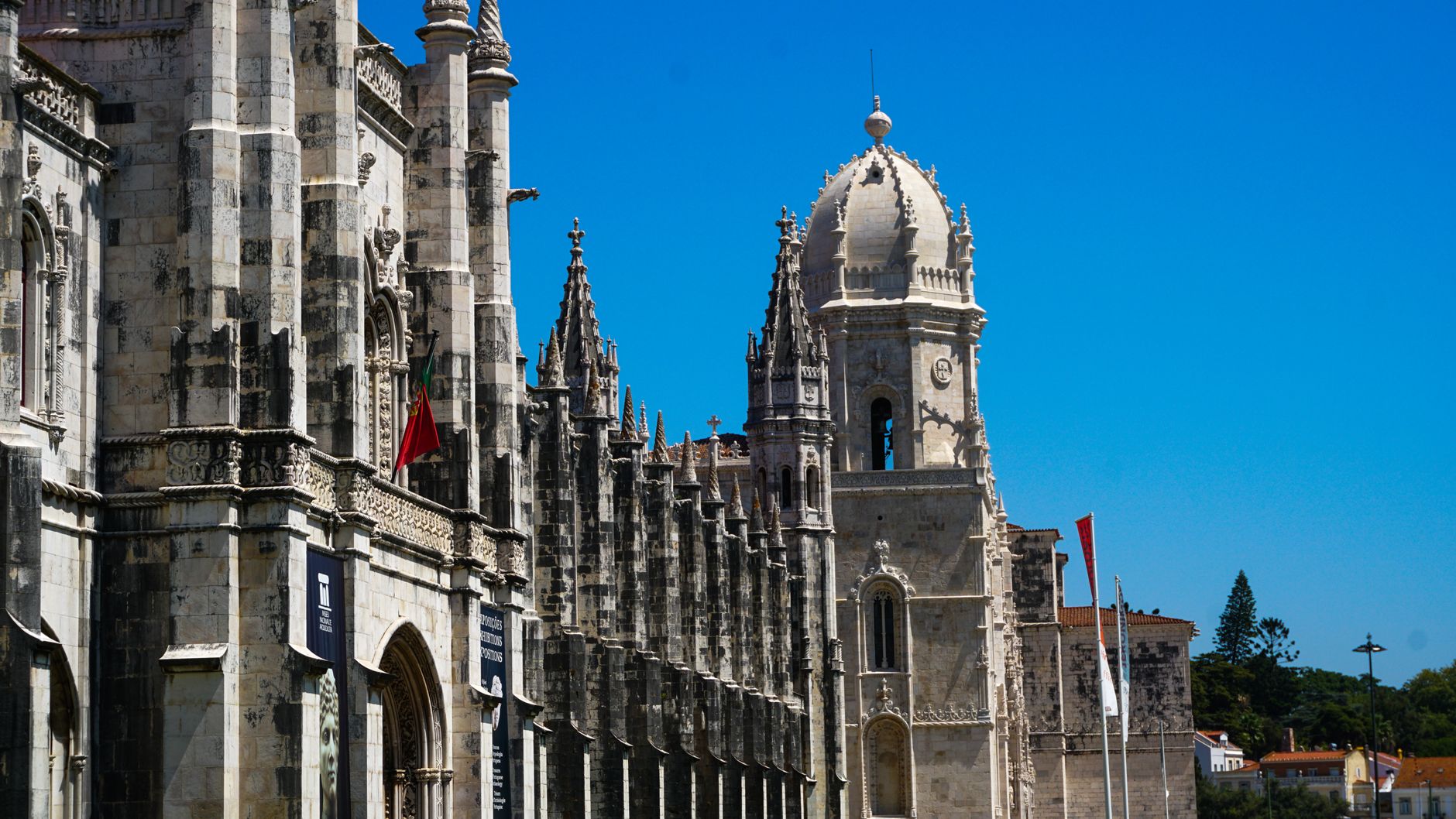
The crown jewel of Belém and one of Portugal’s greatest architectural achievements. Construction began in 1502, funded primarily by a 5% tax on the spice trade — specifically pepper, cinnamon, and cloves arriving from India. The monastery was built to commemorate Vasco da Gama’s voyage and to serve as a mausoleum for the House of Aviz.
Style: Manueline — Portugal’s uniquely late Gothic style, laden with maritime motifs. Ropes twisted into stone columns. Anchors and armillary spheres in the carved portals. Coral and exotic plant forms climbing every surface. The style was named after King Manuel I, under whose reign (1495–1521) most of it was built.
Highlights:
- South portal — the 32-metre carved façade is the most intricate stonework in Portugal. Plan 20 minutes just to read it
- The cloister — Lisbon’s most beautiful Manueline cloister, two storeys of carved stone around a quiet central garden
- Church interior — the tombs of Vasco da Gama and the poet Luís de Camões rest in the lower church
- Refectory — the dining hall is lined with original 18th-century azulejo tiles depicting Biblical scenes
- Nave — the single-aisled church interior is vast, lit by stained glass, with palm-tree columns branching into the vault
Admission: €21 adults; church free, cloister and monastery museum paid. Lisboa Card: free entry.
Hours: 9:30 AM – 6 PM (May–September); 9:30 AM – 5 PM (October–April); closed Mondays and public holidays.
Book online: Strongly recommended in summer. The walk-in queue regularly exceeds 60 minutes from May through September. Timed-entry tickets available through the official booking page.
Jerónimos is a UNESCO World Heritage Site alongside Belém Tower — both listed in 1983 as outstanding examples of Portuguese Late Gothic Manueline architecture. See the full listing at UNESCO World Heritage List 263. For a deeper dive, see our Jerónimos Monastery guide.
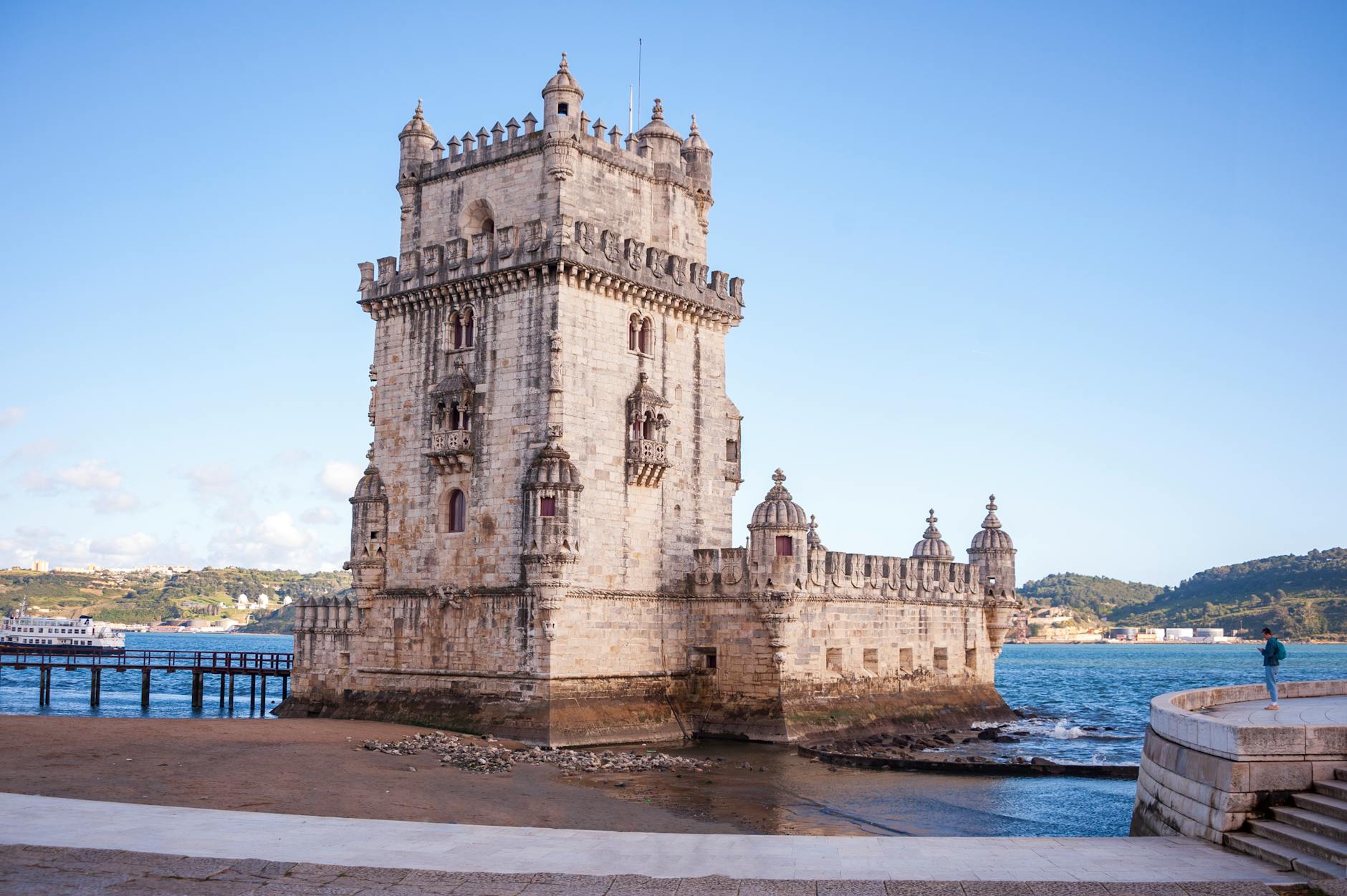
Belém Tower (Torre de Belém)
2026 Status: Belém Tower’s interior has been closed for restoration under Portugal’s Recovery and Resilience Plan, with reopening expected around mid-2026 — check the official status before you go. The exterior and riverside setting remain fully accessible and visually intact.
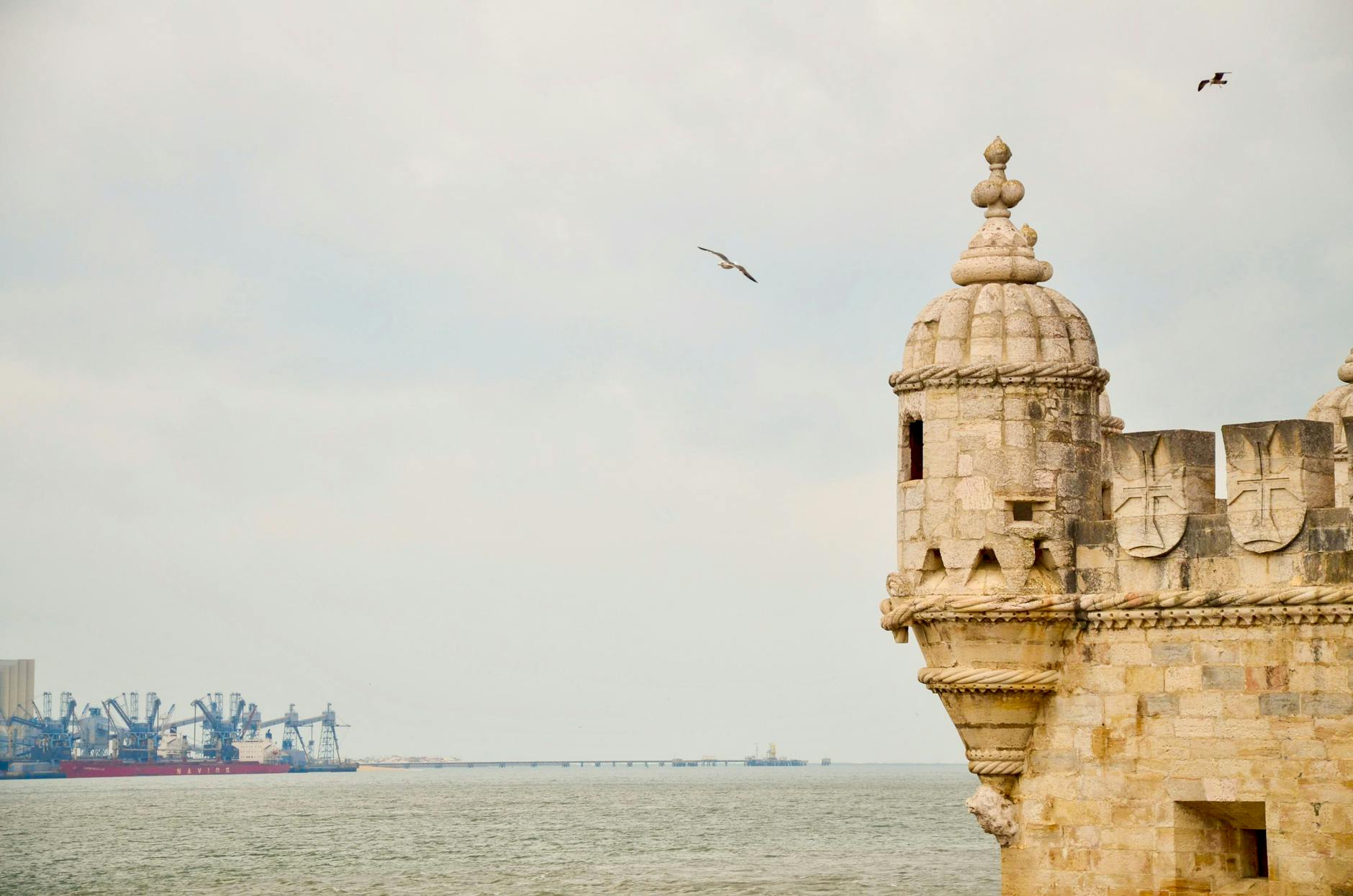
Built between 1514 and 1519 by architect Francisco de Arruda, the tower was originally a river fortress guarding the approach to Lisbon. It stands in the Tagus at the point where Vasco da Gama’s fleet departed in 1497. Architecturally, it’s a miniature jewel — Manueline detailing, loggia balconies, carved rhinoceros heads on the base (a reference to an actual rhinoceros sent to King Manuel I from India in 1515).
Listed as a UNESCO World Heritage Site in 1983 alongside Jerónimos. Once the tower reopens, interior visits include the gunpowder room, the king’s chamber, the governor’s room, and the terrace with river views. For full details when it reopens, see our full guide to Belém Tower.
Monument to the Discoveries (Padrão dos Descobrimentos)
The 52-metre limestone sculpture facing the Tagus was built in 1960 for the 500th anniversary of Henry the Navigator’s death. Shaped like a ship’s prow, it carries 33 carved figures from Portugal’s Age of Discovery: Henry the Navigator at the bow, followed by Vasco da Gama, Fernão Magalhães (Magellan), Pedro Álvares Cabral, Luís de Camões, and others. The interior has an exhibition space and an elevator to the top for panoramic river views. Entry approximately €10.
Don’t miss the 40-metre compass rose mosaic in the plaza in front — a 1960 gift from South Africa to Portugal, showing the routes of the major Portuguese discoveries. It’s best seen from the monument’s top terrace.
MAAT (Museum of Art, Architecture and Technology)
One of Lisbon’s most architecturally striking buildings: a wave-shaped structure with a walkable tile roof extending over the Tagus waterfront. The building itself is as much the exhibit as what’s inside — designed by UK firm AL_A and opened in 2016, it incorporates the historic Tejo Power Station. Hosts rotating contemporary art, architecture, and technology exhibitions. Entry approximately €11. Worth visiting if you have a full day in Belém or an interest in contemporary architecture. See our MAAT visitor guide.
National Coach Museum (Museu Nacional dos Coches)
Consistently underrated. One of the finest collections of historical royal coaches anywhere in the world — 70+ vehicles ranging from 17th-century gilded Baroque carriages to 19th-century state coaches, including the coach used by Pope John Paul II on his 1982 visit to Portugal. The new building (2015) is modern and airy; the original 18th-century riding academy next door houses the oldest pieces. Entry approximately €8; Lisboa Card: free. Often skipped in favour of Jerónimos — don’t skip it if you have time.
Berardo Collection at CCB
The Belém Cultural Centre (CCB) — the large modern complex at the eastern end of the Belém strip — houses the Berardo Collection, an extensive collection of modern and contemporary art including Picasso, Warhol, Duchamp, and Miró. Entry approximately €5. CCB also hosts concerts, theatre, and touring exhibitions throughout the year.
Ajuda National Palace
A 10-minute walk uphill from the Belém waterfront. The 19th-century royal palace was started in 1796 but never fully completed — its permanent unfinished quality gives it a particular character. Recently completed: the Royal Treasure Wing, Portugal’s largest exhibition of the crown jewels and royal decorative arts. Entry approximately €10–€15 for combined access.
Pastéis de Belém
The original pastel de nata bakery, operating since 1837 at Rua de Belém 84. The recipe was passed from the Jerónimos monks to a local sugar refinery when the monastery was closed during the Liberal government’s dissolution of religious orders in 1834. The pastéis here are made to a recipe that has been a trade secret for nearly 200 years.
Each pastel costs €1.30 (prices change occasionally; check on arrival). Eat warm, immediately, dusted with cinnamon and powdered sugar. The bakery is enormous — over 400 seats spread across multiple rooms — but the takeaway window on the street has its own queue, usually shorter (5–15 minutes). Even if you don’t consider yourself a pastry person, this is essential Belém. It’s not a tourist gimmick. It’s one of Portugal’s genuinely great foods.
The ongoing debate: Pastéis de Belém vs. Manteigaria in Chiado. Both are legitimately excellent. The recipes differ. Manteigaria’s pastéis have a thinner crust and more liquid custard; Pastéis de Belém’s are slightly thicker and more caramelised. Try both if you can. See our full pastéis de nata guide.
Where to Eat in Belém
Casual and Essential
- Pastéis de Belém — beyond the pastries, the full menu runs to Portuguese classics: bacalhau, roasted meats, fish of the day. Better than its tourist-attraction status suggests
- Quiosque do Padrão — riverside kiosk near the Discoveries Monument; sandwiches, drinks, river views
- Pão Pão Queijo Queijo — sandwich shop popular with locals at lunch, practical and inexpensive
Mid-Range
- Darwin’s Café — modern Portuguese, good weekday lunch menu, near MAAT
- Restaurante Espaço Espelho d’Água — built over the water beside the Discoveries Monument; good views, reliable Portuguese fish dishes
- Taberna da Rua das Flores — technically not in Belém but worth noting as the gold standard for traditional tascas if you want something similar closer to centre
Special Occasion
- Feitoria Restaurante — one Michelin star inside the Altis Belém Hotel; contemporary Portuguese tasting menu at €120+. One of Lisbon’s best. Book well ahead.
Where to Stay in Belém
Belém is quieter than central Lisbon and works well for travelers who prefer monumental atmosphere over easy nightlife access. The trade-off: you’re 6 km from Bairro Alto and Alfama, which means using transit for most evenings out.
- Altis Belém Hotel & Spa — 5-star riverside design hotel, Michelin-starred restaurant, rooftop terrace with tower views
- Palácio do Governador — 5-star in a restored 18th-century governor’s palace, swimming pool, close to all monuments
- Vila Belém Hotel — 4-star boutique, walking distance to all sights, more affordable than the two above
For most first-time visitors, staying in central Lisbon (Chiado, Príncipe Real, Baixa) is more practical — Belém is easily done as a half-day excursion. See our full best hotels guide and our hostel roundup for the full picture across all neighbourhoods.
Belém Half-Day Itinerary
9:15 AM — Take the Cascais line train from Cais do Sodré (arrives Belém ~9:30 AM)
9:30 AM — Pastéis de Belém: buy two, eat outside, short queue at this hour
10:00 AM — Jerónimos Monastery (timed-entry ticket booked online in advance)
11:30 AM — Walk west along the waterfront to Belém Tower
12:00 PM — Belém Tower exterior and riverside promenade (interior restoration ongoing — check status before visit)
12:30 PM — Monument to the Discoveries — climb for panoramic views
1:30 PM — Lunch at Pastéis de Belém or Quiosque do Padrão
3:00 PM — MAAT Museum (skip if not interested in contemporary art)
4:30 PM — Train back to Cais do Sodré
Belém Full-Day Itinerary
Follow the half-day itinerary above, then add in the afternoon:
- National Coach Museum (1.5 hours) — genuinely excellent, undervisited
- Berardo Collection at CCB (1 hour) — Warhol, Miró, Picasso, Duchamp
- Ajuda National Palace (1 hour) — 15-minute walk uphill; crown jewels wing is the draw
- End with sunset drinks at a riverside kiosk or back in Chiado
Practical Tips for Belém
- Book Jerónimos online ahead — saves 30–60 minutes of queue in summer; mandatory in July and August
- Lisboa Card covers Jerónimos and Coach Museum — calculates well for a full Belém day
- Mondays: everything is closed — Jerónimos, National Coach Museum, and most state museums all shut Monday. Don’t plan your Belém visit on a Monday
- First Sunday of the month: Free entry to many museums until 2 PM — check which ones before buying a Lisboa Card that day
- Low tide photo trick: When the Tagus tide is out, you can walk along the waterline closer to Belém Tower for better angles
- Sunrise photography: Summer sunrise at Belém Tower is around 5:30–6:00 AM — empty streets, extraordinary light, no queues
- Public bathrooms: Available at the Monument to the Discoveries and inside CCB
- Belém gets crowded by 10:30 AM — arrive before 10 AM to have the promenade to yourself
Belém vs. Alfama: How to Split Your Lisbon Days
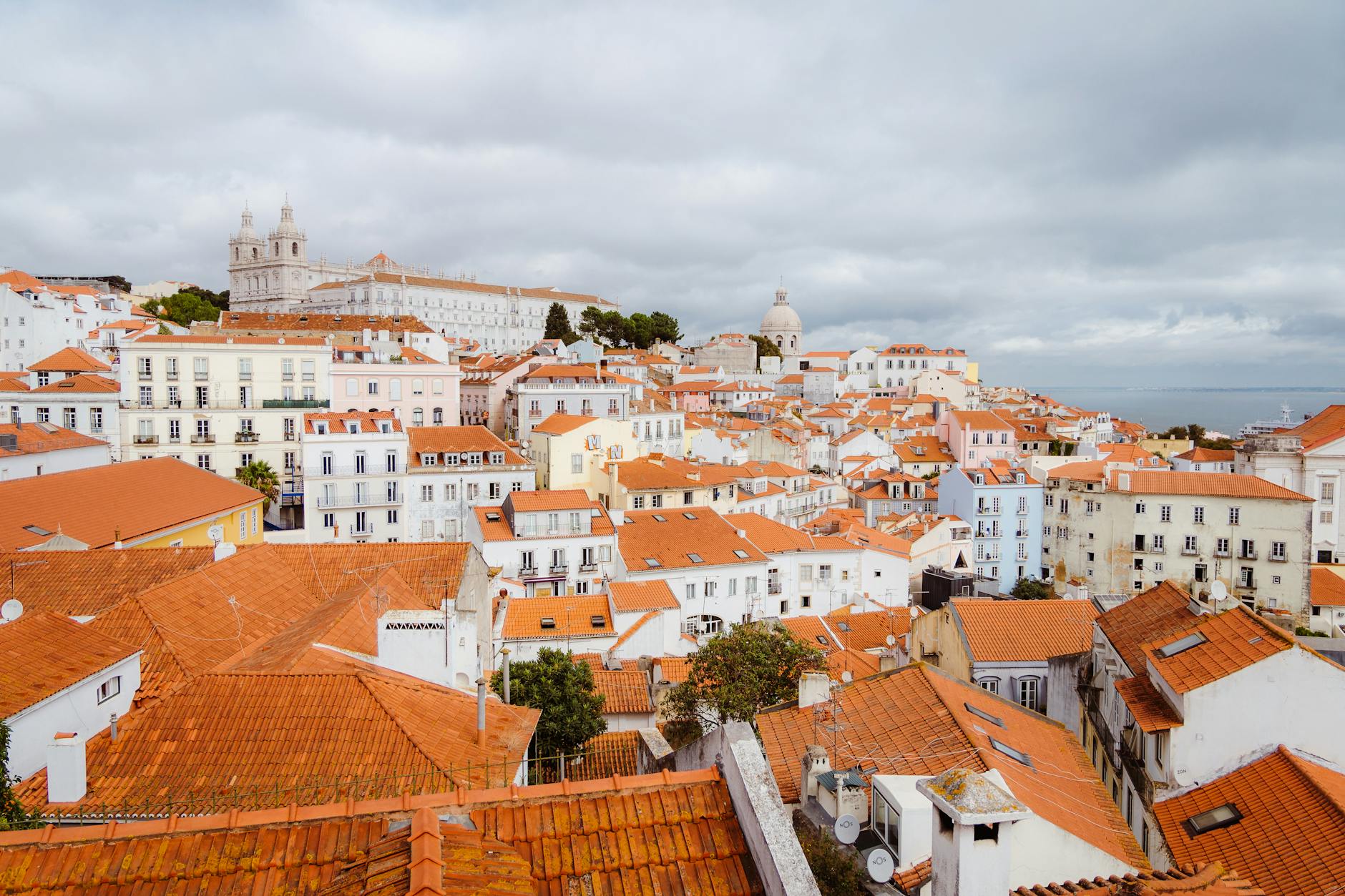
Belém and Alfama are Lisbon’s two most historically loaded districts, but they’re at opposite ends of the city and opposite in character. Belém is imperial, monumental, 16th-century Portuguese state power in stone. Alfama is older, smaller-scaled, Moorish in origin, lived-in, fado at night.
Don’t try to do both in the same day unless your itinerary is very short. Each deserves a dedicated morning. Alfama is better in the early morning and evening; Belém is best done as a full half-day starting around 9:30 AM. See our deeper look at Alfama for the comparison in full.
What to Skip in Belém
- Belém Tower interior — closed for restoration with reopening expected around mid-2026. Exterior is still worth seeing. Check current status before your trip.
- The overpriced restaurants on the main waterfront strip — avoid the tourist-trap cafés immediately in front of the Discoveries Monument; prices are 30–40% higher than they should be for average food
- The souvenir stalls near Jerónimos — generic, overpriced. If you want azulejo tiles and genuine craft, go to the Nacional Tile Museum or the shops in Chiado
- Guided bus tours that “include Belém” — they give you 45 minutes. Belém needs 3–4 hours minimum to do properly
FAQ: Belém Lisbon Guide
Is Belém worth visiting?
Without question — it’s Lisbon’s most monumentally significant district. Jerónimos Monastery alone justifies the trip. Add the Belém Tower exterior, the Discoveries Monument, pastéis de nata, and the riverside walk and you have one of the best half-days in any European city.
How much time do I need in Belém?
Half a day (3–4 hours) covers the main monuments and the pastry. A full day adds the Coach Museum, Berardo Collection, and Ajuda Palace. Don’t try to squeeze Belém into 90 minutes — you’ll see the exterior of things and feel rushed.
Is Belém Tower open in 2026?
The interior has been closed for restoration under Portugal’s Recovery and Resilience Plan, with reopening expected around mid-2026. By the time these posts publish, status may have changed — check the UNESCO listing page or our Belém Tower guide for current information. The exterior and riverside walk remain fully accessible regardless.
What’s the best way to get to Belém?
Train from Cais do Sodré (15 minutes, runs every 10–15 minutes) is fastest. Tram 15E from Praça da Figueira (30 minutes) is more atmospheric. Both use the Viva Viagem card.
Are pastéis de Belém really better than other places?
The recipe is genuinely different and genuinely secret. Many Lisbon residents prefer Manteigaria’s version. Both are worth eating. The “which is better” argument is entertaining and unresolvable — that’s part of the point.
Should I get the Lisboa Card for Belém?
If you’re visiting Jerónimos (€21), the National Coach Museum, and one or two other museums, the Lisboa Card pays off. For just Jerónimos plus the Monument, it probably doesn’t. Run the numbers for your specific plan.
Is Belém safe?
Yes — it’s one of Lisbon’s safest areas. Pickpockets are far less active here than on Tram 28 or in Alfama, but standard precautions (bag in front, phone in pocket) apply anywhere there are tourist crowds.
Bottom Line
Belém is essential Lisbon. The Jerónimos Monastery is the single best building in Portugal. The pastéis are the best pastry in the city. The riverside walk past Belém Tower and the Discoveries Monument is one of the most historically charged walks in Europe. The Tower interior may be reopening around mid-2026 — check current status; book Jerónimos online, arrive before 10 AM, and bring comfortable shoes. A good half-day here outlasts most full days elsewhere.
Belém is a half-day, not a base — it empties in the evening and you would spend your nights on a tram back into town. The where to stay pillar covers the districts that do work as a base, the hotel guide and hostel guide get down to specific addresses, and Alfama is the neighbourhood most often chosen for the atmosphere and most often underestimated for the stairs.