Where to Stay in Lisbon
Bairro Alto & Chiado Guide: Lisbon’s Cultural & Nightlife Heart (2026)
Everything about Bairro Alto and Chiado—shopping, nightlife, rooftop bars, restaurants, cultural attractions, and where to stay.
In this guide
Bairro Alto Lisbon and adjacent Chiado form the city’s cultural and nightlife heart — a 24-hour neighborhood that combines elegant Belle Époque cafés, Lisbon’s best independent shops, the historic Carmo Convent ruins, the city’s most-photographed rooftop bars, and a nightlife scene that fills the streets until 4 AM.
In the middle of Chiado stands a Gothic church with no roof, left exactly as the earthquake made it. See our Carmo Convent guide for tickets, hours and what is in the archaeological museum.
The plainest door in the Bairro Alto opens onto the richest interior in Lisbon, and it costs nothing. Our Igreja de Sao Roque guide covers the free church, the EUR8 museum and the Monday morning closure.
This guide covers the two adjacent neighborhoods that travelers most often visit together — what to do, where to eat, where to stay, and how to navigate them across day and night. Updated for 2026.
Bairro Alto and Chiado: Quick Comparison
| Bairro Alto | Chiado | |
|---|---|---|
| Era | 16th century | 19th century |
| Vibe | Bohemian, gritty, energetic | Elegant, polished, intellectual |
| Daytime | Quiet, residential | Busy with shoppers and café culture |
| Nighttime | Wild street nightlife | Polished bars and fine dinners |
| Best for | Drinking, fado vadio, nightlife crawls | Shopping, dining, sightseeing |
| Sleep here if… | You want full immersion (bring earplugs) | You want access plus quiet nights |
| Price level | Mix of cheap bars and boutique hotels | Mid-range to luxury |
Bairro Alto and Chiado at a Glance
- Where: Western central Lisbon, on the hill above Cais do Sodré
- Bairro Alto: The 16th-century working-class hilltop neighborhood, now Lisbon’s nightlife heart
- Chiado: Adjacent below, Lisbon’s elegant 19th-century shopping and café district
- Best for: Shopping, café culture, nightlife, fado, fine dining
- Time required: Half-day each, often blended into one experience
The two neighborhoods share a border along Rua do Carmo and blend so naturally that locals often use the names interchangeably. In practice: if you’re shopping or sitting in a historic café, you’re in Chiado. If you’re standing in a narrow street with a beer at midnight, you’re in Bairro Alto.
What to Do in Chiado
Café A Brasileira
The 1905 historic café where poet Fernando Pessoa famously sat. The bronze statue of Pessoa at the door is one of Lisbon’s most-photographed spots. Coffee runs €0.80–€1.50 at the bar; pastéis de nata around €1.30. It’s atmospheric in the morning before the tourist crowds arrive — or late evening when it settles back into a neighborhood café. The azulejo panels inside are worth pausing for.
Bertrand Bookshop
The world’s oldest continuously operating bookstore, open since 1732. Guinness World Records certified. Strong Portuguese-language sections, an excellent English-language travel shelf, and a small bistro inside. Worth visiting just for the heritage — the original 18th-century rooms still feel like what a bookshop should be.
Carmo Convent and Carmo Archaeological Museum
The ruined Carmo Convent — leveled by the 1755 earthquake and never fully rebuilt — has become one of Lisbon’s most atmospheric spaces. The roofless Gothic nave frames open sky; the surviving arches are held together purely by architectural integrity and stubbornness. The Archaeological Museum inside contains a remarkable collection including Egyptian mummies and pre-Colombian artifacts. Entry €7 adults, €5 students and seniors, free under 14. Open Monday–Saturday, 10 AM–7 PM (May–October), 10 AM–6 PM (November–April), closed Sundays.
Allow 45 minutes. The Carmo is one of Lisbon’s most affecting sights — partly for the earthquake history, partly because the ruined nave forces you to look up at actual sky rather than a ceiling.
Largo do Carmo and Rua Garrett
Lisbon’s most elegant shopping streets. International brands sit alongside standout Portuguese designers: the Bordallo Pinheiro flagship (cabbage-leaf ceramics), A Vida Portuguesa (curated Portuguese-made goods), and Bertrand. Café A Brasileira sits in the middle of it all. Rua Garrett is the heart of old Chiado — the street that survived the 1988 fire largely intact.
Praça Luís de Camões
Central square between Bairro Alto and Chiado, with the bronze Camões statue. Most walking tours start here. The square marks the natural transition point between the two neighborhoods — Chiado slopes down to the east and south; Bairro Alto rises up to the west. Good orientation point if you’re navigating on foot.
Manteigaria (Chiado Original)
The original 2014 location of the cult pastel de nata bakery. Open kitchen — you can watch fresh natas come out of the oven. Around €1.30 each. The pastry must shatter when you bite it and the custard must be slightly warm. If neither of those is true, it’s been sitting too long. Come right as they pull a fresh batch. See our pastéis de nata guide for a full ranking.
The 1988 Fire and Chiado’s Renewal
A significant fire in August 1988 destroyed several historic buildings along Rua do Carmo and Rua Garrett. Architect Álvaro Siza Vieira oversaw the reconstruction — a thoughtful restoration that kept the original facades while rebuilding interiors. The episode explains why Chiado has a slightly newer feel in places than its 19th-century heritage might suggest. The rebuilt Armazéns do Chiado (now a modern shopping center) sits on the fire’s epicenter.
What to Do in Bairro Alto
Walk the Streets During the Day
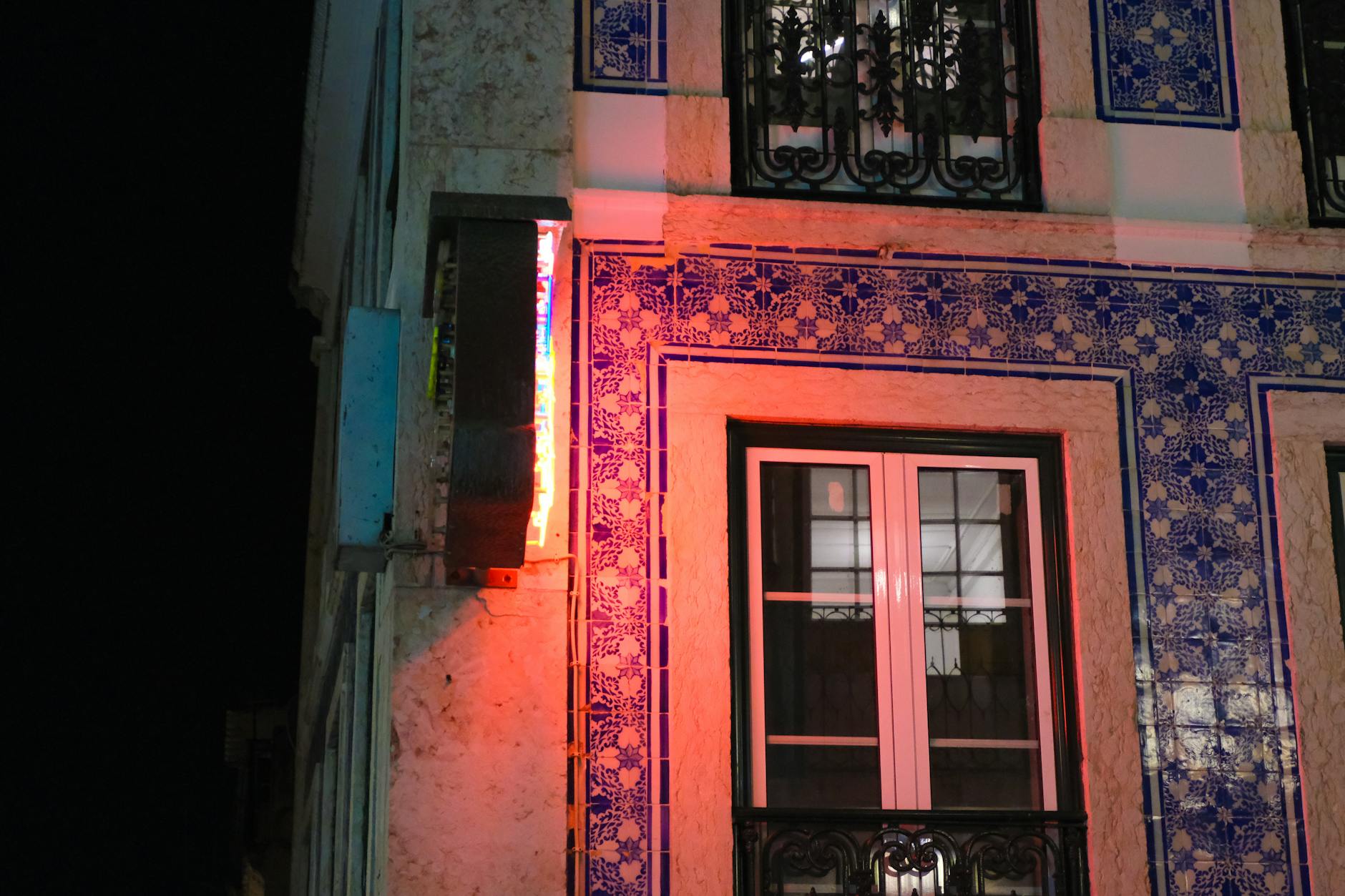
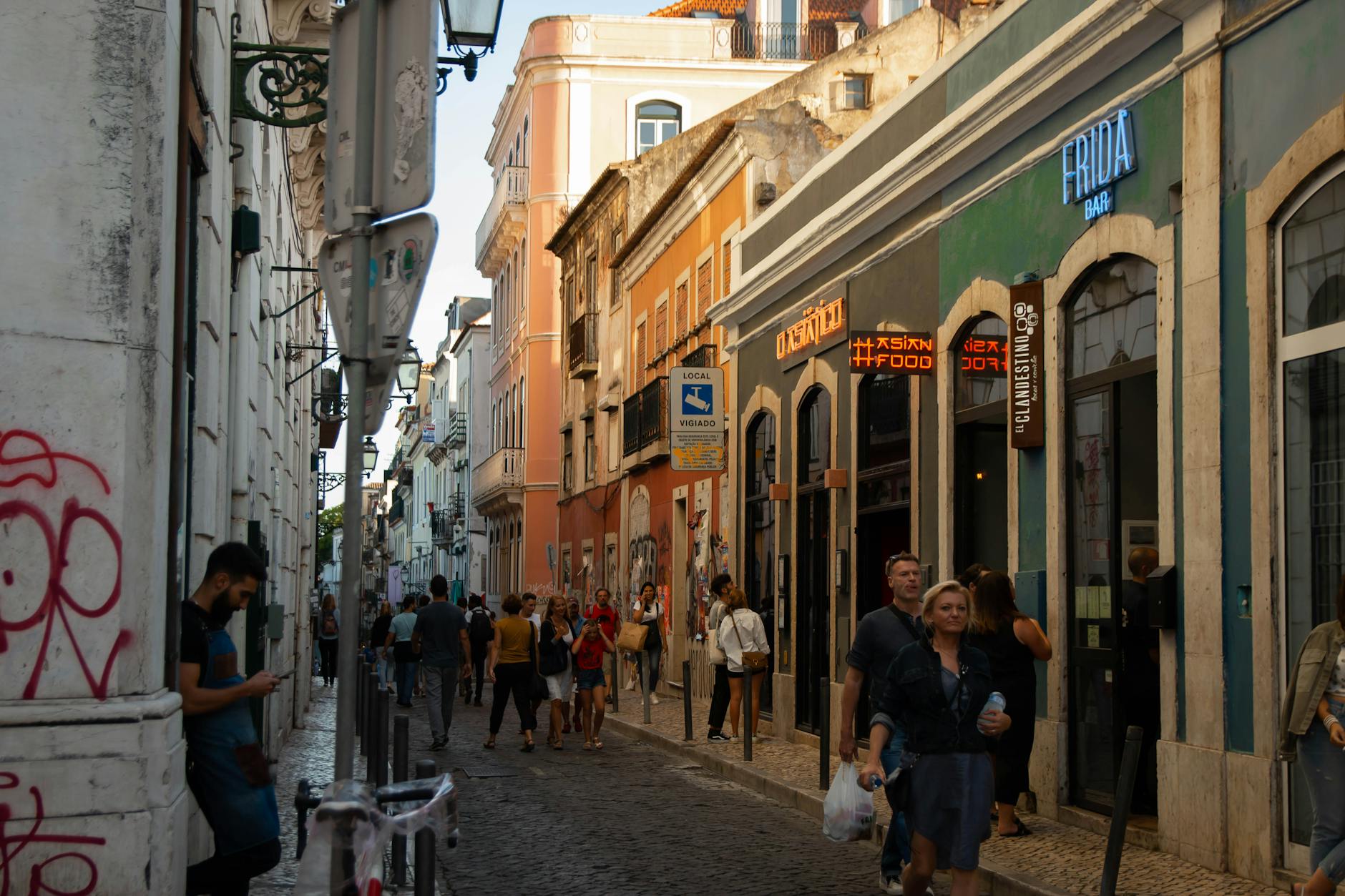
Bairro Alto is residential and quiet during daytime hours. Walk the narrow lanes (Rua da Atalaia, Rua da Rosa, Rua do Diário de Notícias) for tile facades, atmospheric corners, and a sense of pre-tourist Lisbon. The 16th-century grid of the neighborhood — laid out after the 1755 earthquake on a more regular plan than Alfama — is compact and walkable. The neighborhood transforms at night but daytime has its own pleasures: art galleries, vintage shops, and the occasional bacalhau smell drifting out of someone’s kitchen window.
Miradouro de Santa Catarina
The classic Lisbon sunset viewpoint at the western edge of Bairro Alto. Pine trees frame the Tagus and the 25 de Abril Bridge. Kiosk café for beer and wine. This is the miradouro locals come to on summer evenings to sit on the wall, watch the sun go down, and drink cheap beer. See our miradouros guide for all 15 viewpoints.
Miradouro de São Pedro de Alcântara
Two-tiered terrace at the northern edge of Bairro Alto. Eastern view — the castle and Alfama lit by the setting sun. Less crowded than Santa Catarina. Reached via the Elevador da Glória funicular from Praça dos Restauradores, or a short walk from Chiado. The gardens on the lower terrace are pleasant for a mid-afternoon break.
Tasca do Chico
The fado vadio shrine in Bairro Alto’s narrow streets. €2 beers, free salty snacks, spontaneous fado from around 9 PM. Fado vadio means amateur singers — locals, not paid performers — take the floor. The atmosphere is closer to a local social event than a tourist show. No reservations, no cover charge. Get there by 9:30 PM for a seat; it fills completely. The most atmospheric and honest fado experience in Bairro Alto. See our fado guide.
Pavilhão Chinês
Five interconnected rooms crammed with antique knickknacks, military memorabilia, model soldiers, curiosities, and beautiful chaos. Cocktails €8–€14. Billiards room in the back. No music — the space itself is the entertainment. The most atmospheric cocktail bar in Lisbon. Gets genuinely busy after 11 PM but the early-evening hour (9–10 PM) is when you can actually see the rooms properly. Ring the bell to enter.
Park Bar
The iconic rooftop bar atop a parking garage on Rua Ramalhete. Sunset cocktails with bridge views. Accessible and relaxed compared to fancier rooftop options. The improbable setting — a concrete car park transformed by plants and fairy lights — is quintessentially Bairro Alto. See our roundup of Lisbon’s best rooftop bars.
Bairro Alto Nightlife Crawl
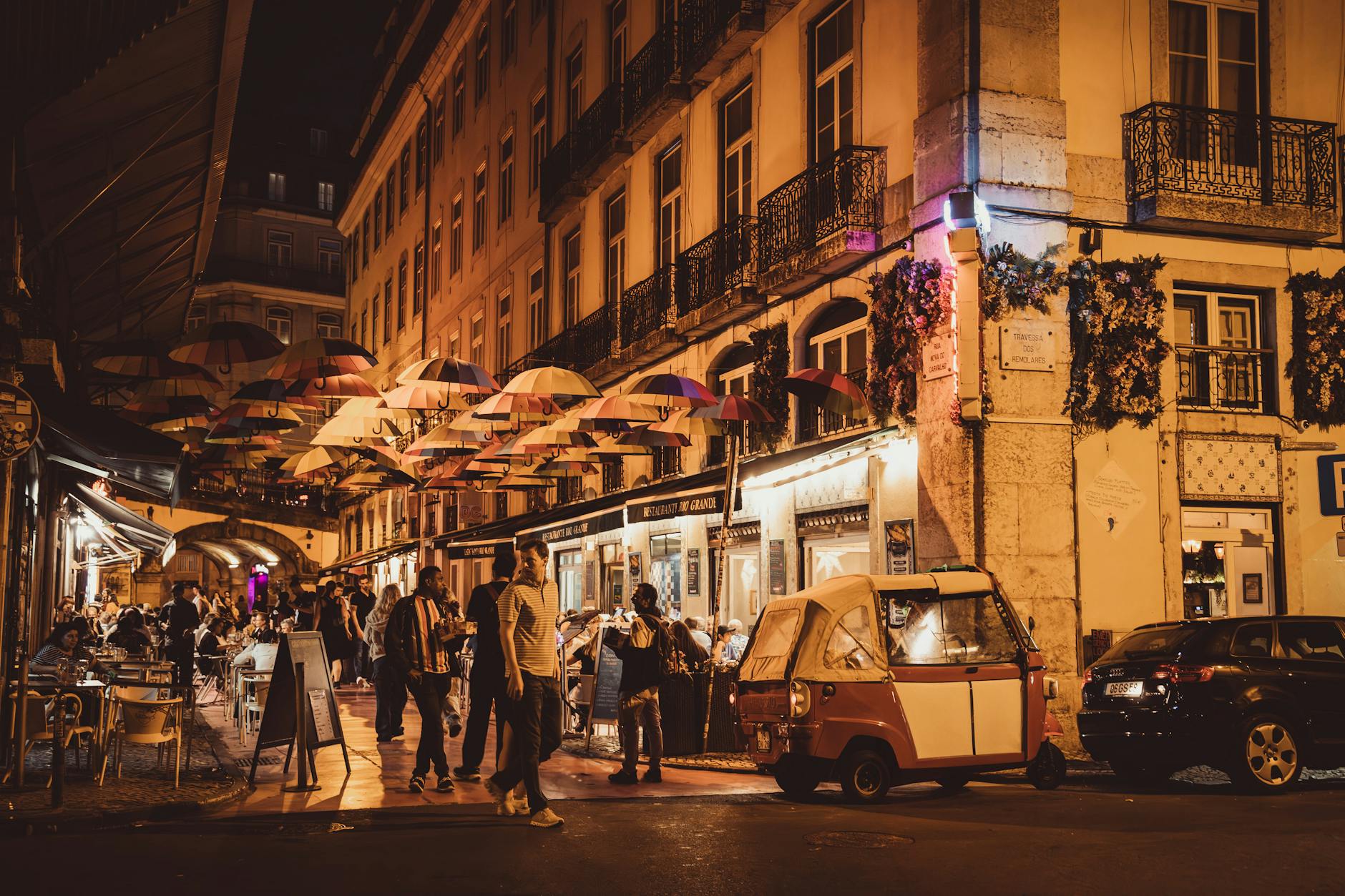
Friday and Saturday nights from 10 PM, the neighborhood’s narrow streets fill with people. Bars are tiny — often seating only 10–15 inside — so drinks spill onto the streets. The entire grid between Rua da Atalaia, Rua da Barroca, and Rua do Diário de Notícias becomes an open-air party. Hundreds of small bars cater to every taste and budget. The classic Bairro Alto night runs 10 PM–3 AM. For the later continuation, head to Cais do Sodré or Santos. See our Bairro Alto nightlife guide for the full venue map.
Where to Eat
Chiado
- Taberna da Rua das Flores — modern Portuguese petiscos, no reservations, mains €14–€22. Queue early or go at 6:30 PM when it opens.
- Cervejaria Trindade — traditional Portuguese in a 13th-century convent. Excellent seafood, reliable quality. Mains €15–€28.
- Cantinho do Avillez — chef José Avillez’s casual flagship, €18–€28. Creative Portuguese with accessibility.
- Belcanto — 2-Michelin-star tasting room, around €240, book 6+ weeks ahead. Avillez’s flagship.
- Alma — 2 Michelin stars, €185–€235 tasting menu. Henrique Sá Pessoa’s acclaimed kitchen.
- Marlene — 1 Michelin star, more accessible booking window.
Bairro Alto
- Tasca do Chico — fado + bifanas + cheap beers. More experience than meal.
- Pap’Açorda — modern Portuguese, open until midnight, good for late arrivals.
- O Faia — historic fado restaurant with dinner service. Traditional, established, higher price point.
- Cervejaria Trindade (above) — borders both neighborhoods; accessible from either.
For the full picture, see our best restaurants guide and best tascas guide.
One practical note: Chiado’s most popular spots (Taberna da Rua das Flores, Cantinho do Avillez) fill by 7:30 PM. Either book in advance or arrive at opening (6:30–7 PM). The Michelin restaurants require advance booking — sometimes weeks ahead.
Where to Stay
Both neighborhoods offer excellent accommodation with different trade-offs: Chiado gives elegance and quiet; Bairro Alto gives full immersion but weekend noise until 3–4 AM.
Luxury
- Bairro Alto Hotel — boutique luxury at Praça Luís de Camões. €450–€900. The neighborhood’s defining property.
- The Lumiares — design-led 5-star with apartments. €350–€600.
Mid-range
- The Independente Suites & Hostel — 19th-century mansion, €100–€220. Beautifully restored.
- Hotel do Chiado — central with rooftop terrace, €160–€280.
Budget
- Yes! Lisbon Hostel — top-rated party hostel
- Sant Jordi Hostels — bohemian, art-themed
- GSpot Hostel — for serious partiers
See our best hotels guide and best hostels guide for full options across all budgets.
Getting There and Around
Both neighborhoods sit on a hill above Cais do Sodré. Several options for reaching them:
- Metro: Baixa-Chiado station (Blue and Green lines) puts you at the bottom of Chiado. A 5-minute walk up Rua do Carmo brings you into the heart of things.
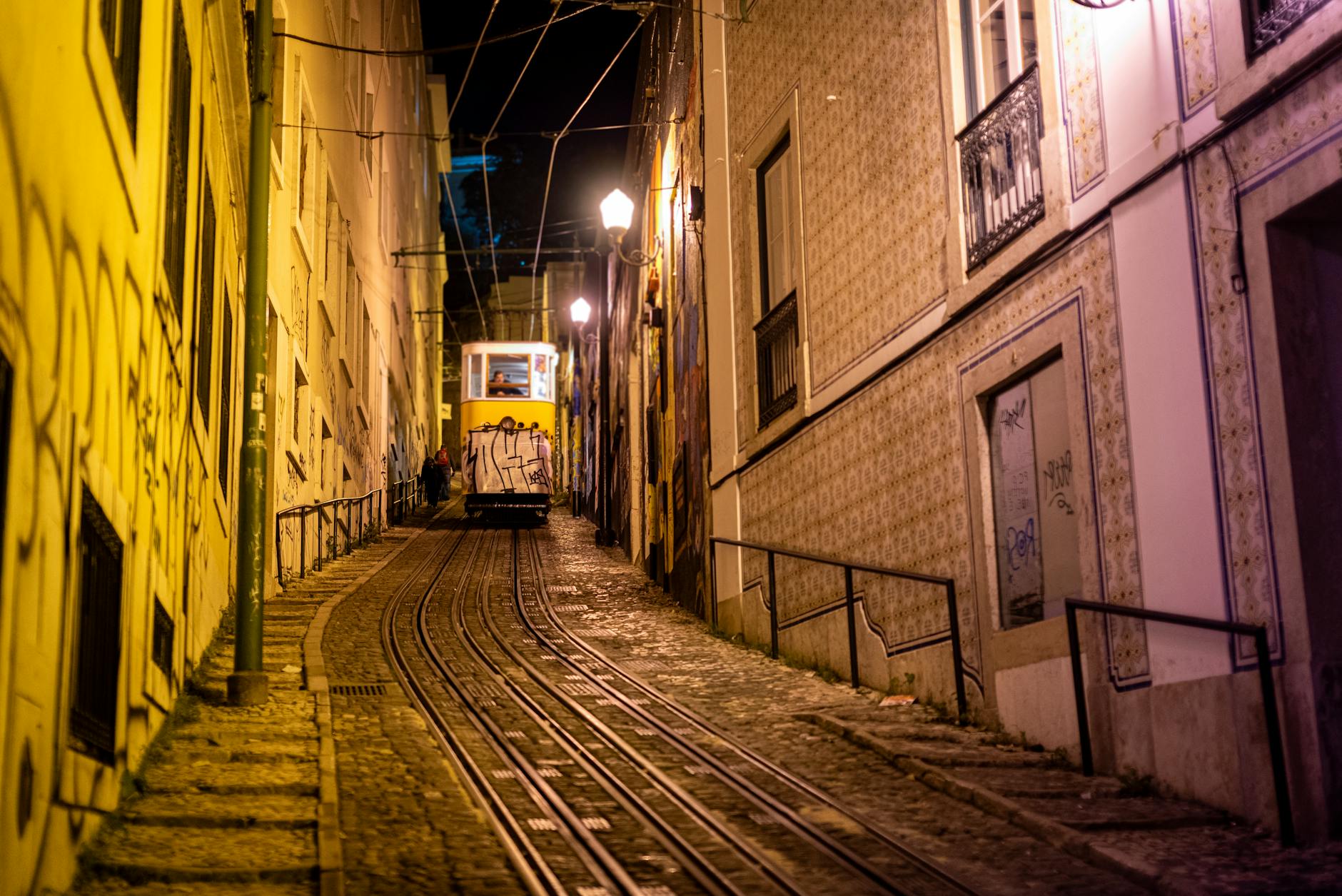
- Funiculars: Elevador da Bica (from Rua de São Paulo near Cais do Sodré) and Elevador da Glória (from Praça dos Restauradores) both climb into Bairro Alto. Scenic and practical. Included in a 24-hour Carris transit pass. See our funiculars guide.
- On foot from Baixa: Rua do Carmo from Praça do Comércio is a 15-minute uphill walk — manageable and it takes you through interesting streets.
- Uber/taxi: Practical if you’re arriving with luggage or late at night.
Within both neighborhoods, walking is the only option — the streets are too narrow for much else. Good walking shoes matter here as much as anywhere in Lisbon.
Practical Considerations
Noise
If you stay in Bairro Alto, weekend noise runs until 3–4 AM. This is not a minor issue — it’s sustained street noise at party volume. Light sleepers should choose Chiado-side or upper-floor rooms, or simply factor the noise into the experience and embrace the late-night energy.
Steepness
Both neighborhoods sit on a hill above Cais do Sodré. Walking from the riverside up requires moderate effort. The Elevador da Bica funicular is the scenic alternative (€4 single, or included in 24-hour transit pass). If you’re arriving from Baixa-Chiado metro, the uphill walk to Bairro Alto proper takes about 10 minutes.
Pickpockets
Bairro Alto’s nightlife crowds attract pickpockets. Standard precautions apply: front pockets, bags zipped and in front of body, valuables in hotel safe. See our is Lisbon safe guide.
Late-Night Transit
Metro runs until 1 AM. After that, Uber/Bolt or taxis. The Uber app works reliably in Lisbon; surge pricing applies at 2–3 AM on weekends but is rarely extreme. Don’t try to walk back to outer-neighborhood hotels alone after 2 AM.
Walking Routes
Daytime: 2.5-Hour Bairro Alto + Chiado Walk
Praça Luís de Camões → Café A Brasileira (coffee at the bar) → Bertrand bookshop → Largo do Carmo → Carmo Convent (€7, 45 min) → Elevador de Santa Justa upper deck → Rua Garrett shopping → Manteigaria pastel de nata → Miradouro de São Pedro de Alcântara → Bairro Alto street walk (Rua da Atalaia, Rua da Rosa) → Miradouro de Santa Catarina for sunset.
Nighttime: Bar Crawl
Pavilhão Chinês (atmospheric start, 9 PM) → Tasca do Chico (cheap beer + fado vadio, 9:30 PM) → Park Bar rooftop (10–11 PM) → wander Bairro Alto’s grid streets for the rest of the night. The streets themselves are the bar — you’ll find what calls to you.
FAQ: Bairro Alto and Chiado
Are Bairro Alto and Chiado the same neighborhood?
No, but they’re adjacent and frequently visited together. Bairro Alto is the higher hilltop neighborhood; Chiado sits below to the east. Together they form Lisbon’s cultural heart — elegant by day in Chiado, wild by night in Bairro Alto.
Where should I stay — Bairro Alto or Chiado?
Chiado for quieter nights, polished hotels, and walkable convenience. Bairro Alto for the full nightlife immersion (and earplugs). Both are central and well-located for exploring the rest of Lisbon.
Is Bairro Alto safe?
Yes — generally safe, including at night. Standard pickpocket precautions in nightlife crowds. The area is busy and well-lit on weekend nights; the volume of people is itself a form of safety.
What’s the best time to visit Bairro Alto?
Both daytime (quiet residential walks, miradouros, café culture in Chiado) and nighttime (the iconic nightlife from 10 PM). Best evening: Friday or Saturday after 10 PM when the streets are at full energy.
Are Bairro Alto bars expensive?
Most are cheap. Beers €2–€5, basic cocktails €6–€10. Premium cocktail bars (Pavilhão Chinês, Red Frog) charge €11–€18. The cheap-beer culture of Bairro Alto is one of the things that distinguishes it from more upmarket nightlife zones.
What’s open during the day in Bairro Alto?
Quieter than you’d expect — some art galleries, vintage bookshops, and the occasional café. The action is in Chiado during daytime hours. Bairro Alto comes alive after 9 PM.
Can I do Bairro Alto and Chiado in one day?
Yes, easily. Morning and afternoon in Chiado (shopping, Carmo Convent, cafés), then walk up into Bairro Alto for the miradouros at sunset and the nightlife after. The two neighborhoods form a natural full-day loop.
Bottom Line
Bairro Alto and Chiado are Lisbon’s two-faced cultural heart — Chiado polished and elegant by day, Bairro Alto bohemian and wild by night. Visit both, stay in either, and don’t miss the Carmo Convent ruins, the Manteigaria natas, the sunset at Miradouro de Santa Catarina, and the fado vadio at Tasca do Chico.
These two neighbourhoods are the most common answer to where to stay, and not always the right one — Bairro Alto is loud until 3am in a way the photographs never convey. The where to stay pillar weighs that up, the hotel recommendations and hostel picks cover both districts, and Alfama is the quieter old-Lisbon alternative.