Things to Do in Lisbon
Praça do Comércio: Complete Guide to Lisbon’s Grand Square 2026
Discover Praça do Comércio—Lisbon's most iconic square. History of the 1755 earthquake, the Rua Augusta Arch, riverside views, and nearby restaurants.


In this guide
- Praça do Comércio at a Glance
- The History: From Royal Palace to Republic
- What to See in Praça do Comércio
- Where to Eat Near Praça do Comércio
- Praça do Comércio at Different Times of Day
- Combining Praça do Comércio with Other Sights
- Getting There
- Photography Tips
- Practical Tips
- FAQ: Praça do Comércio Lisbon
- Bottom Line
- The Architecture in Detail
- Nearby Streets Worth Exploring
- Events at Praça do Comércio
- What You Won’t Find in the Tourist Guides
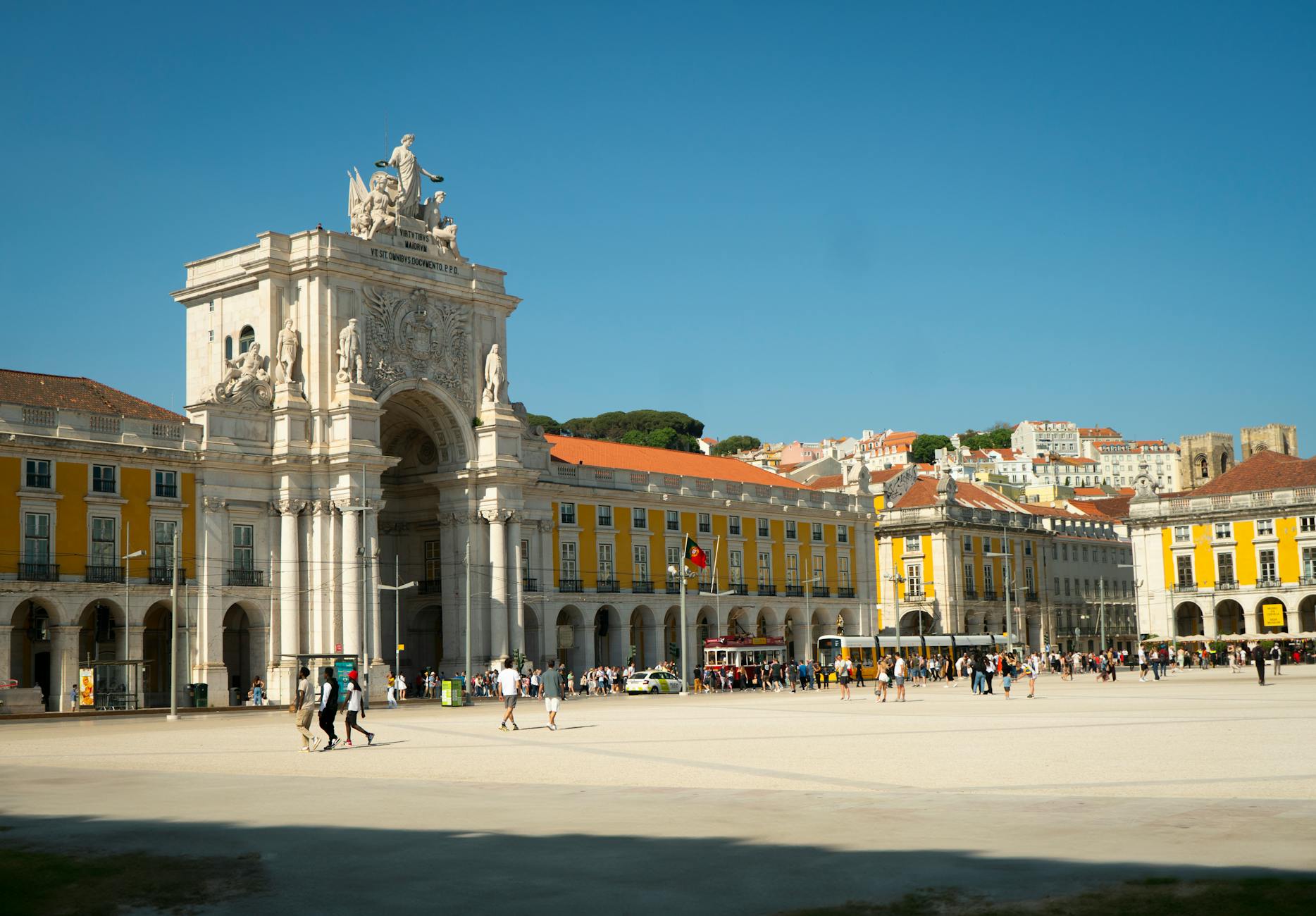
Praça do Comércio Lisbon is the city’s grandest square — a 175-metre rectangular plaza opening directly onto the Tagus River, framed on three sides by yellow neoclassical arcaded buildings and anchored by the triumphal Rua Augusta Arch and the equestrian statue of King José I. It’s where Lisbon meets the river, where the royal palace once stood, and where the city’s most dramatic history played out across three centuries. Every visitor ends up here eventually; the question is whether they know what they’re looking at.
The square does its heaviest lifting in winter: the Christmas tree from late November and the midnight fireworks on the 31st. Our Lisbon in December guide explains when to arrive and how to get home afterwards.
This guide covers everything: the history (royal palace, earthquake, regicide, revolution), what to see today, how to reach it, and how to make the most of your visit. Updated for 2026.
Praça do Comércio at a Glance
| Detail | Info |
|---|---|
| Location | Southern end of Baixa, on the Tagus waterfront |
| Size | ~175 × 175 metres — one of Europe’s largest squares |
| Also called | Terreiro do Paço (“Palace Yard”) |
| Built | 1758–1873 (Pombaline reconstruction after earthquake) |
| Metro | Terreiro do Paço (Blue Line) |
| Rua Augusta Arch entry | €4.50; open daily ~9 AM – 7 PM (8 PM in summer) |
| Best time to visit | Sunrise (empty) or sunset (marble steps fill with people) |
| Free to enter | Yes — the square itself is always open |
The History: From Royal Palace to Republic
Pre-1755: The Ribeira Palace
Before the earthquake, this waterfront site held the Ribeira Palace — the main residence of Portuguese monarchs from the 1500s onward. Built by King Manuel I in the early sixteenth century, the palace contained the Royal Library (roughly 70,000 volumes including irreplaceable manuscripts from the Age of Discovery), extensive royal collections, and the administrative machinery of a global empire. Lisbon was then the richest city in Europe. The palace sat at the intersection of its maritime power and its royal authority.
1755: The Earthquake and Its Aftermath
At 9:40 AM on November 1, 1755 — All Saints’ Day, when most of the city was at church — an earthquake estimated at magnitude 8.5–9.0 struck. The initial shock brought buildings down across Baixa. A tsunami followed roughly 40 minutes later, engulfing the waterfront. Fire broke out simultaneously and burned for six days. The Ribeira Palace was destroyed. The Royal Library — manuscripts, charts, and records of Portugal’s entire maritime age — was lost. Estimates of the death toll vary; tens of thousands died in Lisbon alone.
It was one of the deadliest natural disasters in European history and the event that effectively ended Portugal’s status as a dominant imperial power.
Pombaline Reconstruction (1758–1873)
King José I delegated the entire reconstruction of Lisbon to his formidable prime minister, Sebastião José de Carvalho e Melo — later the Marquês de Pombal. Pombal commissioned architect Eugénio dos Santos to design a new square: a rectangular plaza in a “U” shape, opening toward the river, with arcaded buildings on three sides housing the new state bureaucracy. The ensemble was completed in stages from 1758 onward; the Rua Augusta Arch — begun in 1755 — wasn’t finished until 1873, 118 years later.
The name tells the story: “Praça do Comércio” means Commerce Square. Where the absolute monarchy had lived, the Enlightenment put trade and bureaucracy. Lisboners, however, kept calling it Terreiro do Paço — the Palace Yard — and still do.
1908: The Regicide
On February 1, 1908, King Carlos I and Crown Prince Luís Filipe were shot in this square by Republican militants as their carriage crossed from the southern ferry pier toward the Rua Augusta. The king died instantly; the crown prince died minutes later. It was the most politically significant assassination in modern Portuguese history. Two years later, the monarchy fell entirely in the 1910 revolution.
1974: The Carnation Revolution
Praça do Comércio was a key gathering point on April 25, 1974, when the Estado Novo dictatorship fell in a largely bloodless military coup. Lisboners flooded here, and into the streets of Baixa, to celebrate. The square witnessed the end of 48 years of authoritarian rule in the space of an afternoon.
What to See in Praça do Comércio
The Equestrian Statue of King José I
The bronze equestrian statue at the centre of the square was completed in 1775 by sculptor Joaquim Machado de Castro — widely considered the finest Portuguese sculptor of the eighteenth century. The horse tramples a serpent, variously interpreted as representing Lisbon’s enemies, evil, or (depending on whom you ask) the political opponents of Pombal himself.
Look at the pedestal carefully. According to legend, Pombal’s enemies had his profile secretly carved into one of the decorative reliefs before the unveiling — a hidden tribute to the man who actually rebuilt Lisbon, even if he was loathed in equal measure. Whether this is literally true or not, it speaks to the man’s contested legacy.
Rua Augusta Arch (Arco da Rua Augusta)
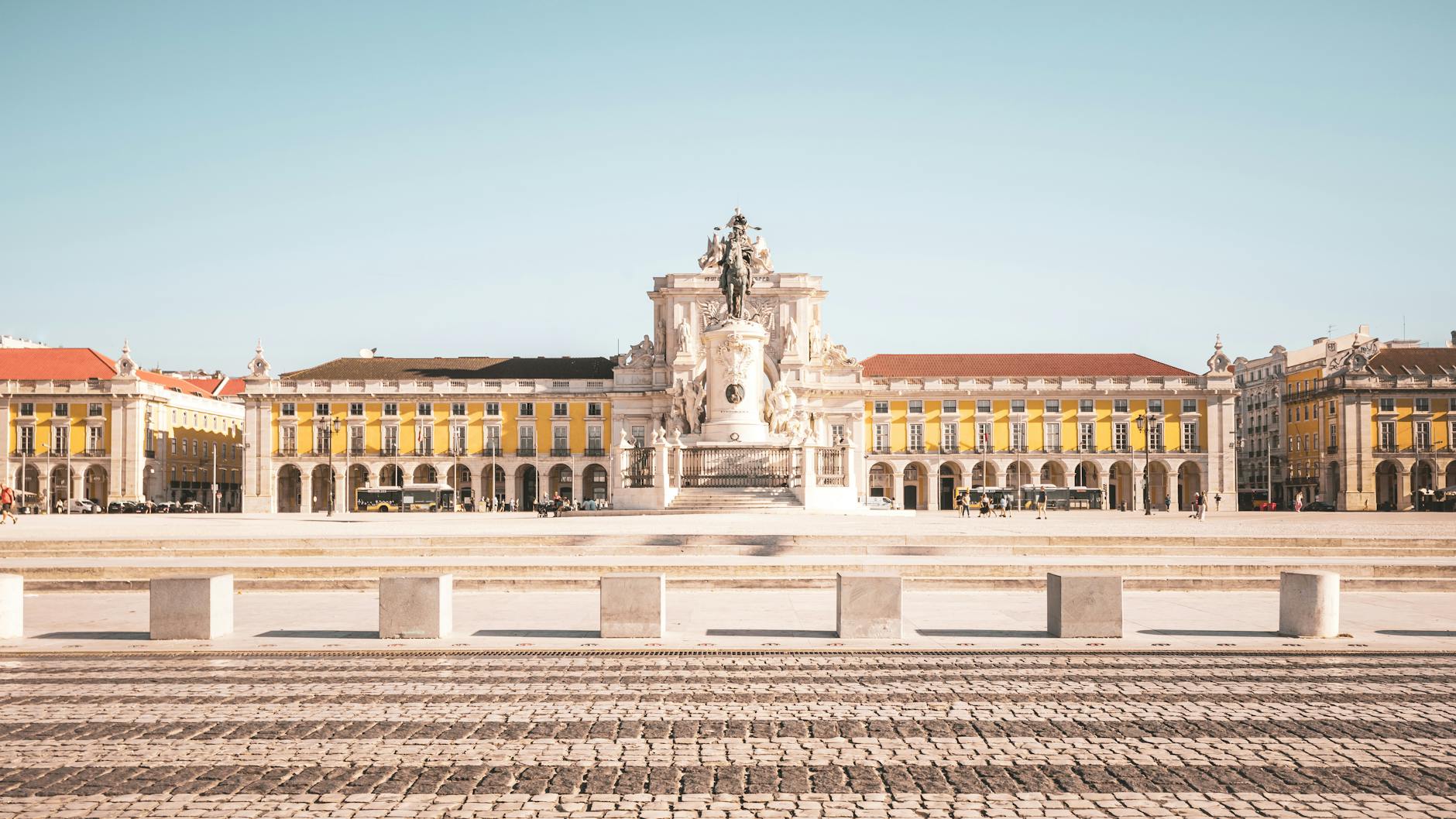
The triumphal arch closing the northern end of the square. Design started in 1755 but completion dragged to 1875 — 120 years of construction. The arch celebrates Lisbon’s resurrection from the earthquake and the men who made it possible.
Sculptural programme:
- Summit: Gloria crowning Genius and Valor
- Upper niches: four historical figures including Vasco da Gama and the Marquês de Pombal
- Central panel: Royal coat of arms of Portugal
Climbing the arch (€4.50): An elevator takes you most of the way up, with stairs to the viewing terrace at roughly 30 metres. The panorama covers the entire Baixa grid, Praça do Comércio below, the Tagus, and Alfama rising to the east. For a free view, the arch terrace competes well with the paid miradouros. Open approximately 9 AM to 7 PM (8 PM in summer).
The Yellow Arcaded Buildings
Three sides of the square are wrapped in uniform yellow Pombaline arcades — designed as ministry buildings. Today they house a mix of uses:
- Lisboa Story Centre (€7) — multimedia walk through Lisbon’s history; currently check opening status, as some facilities in this area have had restoration-related closures
- Pousada de Lisboa — a five-star hotel occupying a former ministry building; worth a drink in the bar for the location
- Ask Me Lisboa tourism office — eastern arcade; Lisboa Cards sold here
- Several restaurants and cafés with terraces facing the square
The Marble Staircase to the River
At the southern edge, a broad marble staircase descends to the Tagus. These steps are older than the current square — they were part of the pre-earthquake riverfront, originally used by royalty embarking on barges. At sunset they fill with Lisboners and visitors drinking beer and watching the light change over the river. This is one of the best free experiences in the city.
Cais das Colunas (The Pillared Pier)
At the water’s edge, two marble columns frame what was the ceremonial river entrance to Lisbon. Royalty, diplomats, and dignitaries arrived here from the water. The columns survived the 1755 earthquake. Walk between them and you’re standing on a literal piece of pre-earthquake Lisbon — almost nothing else downtown can claim that.
Where to Eat Near Praça do Comércio
Café Martinho da Arcada
Lisbon’s oldest continuously operating restaurant, founded in 1782 and operating from the eastern arcade. Fernando Pessoa — Lisbon’s most important poet — was a regular. Coffee around €1.20; full meals €25–€45. The food is tourist-oriented; you’re paying for 250 years of history and the right to tell people where you had lunch. For places where the food leads, see our best restaurants in Lisbon.
Outdoor Café Terraces
Several establishments run square-facing terraces with mid-range pricing. Not the city’s best cooking. The location is the value, and on a good evening it’s worth it for the view alone.
Better Options Five Minutes Away
- Cervejaria Trindade (5 min north into Chiado) — Lisbon’s most atmospheric beer hall, in a thirteenth-century monastery. Better food than anything on the square.
- Time Out Market (10 min west at Cais do Sodré) — the covered market with stalls from Lisbon’s best chefs. See timeoutmarket.com/lisboa for current vendors.
Praça do Comércio at Different Times of Day
Sunrise (5:30–7 AM in summer)
Empty. The square at its most monumental — yellow facades catching the earliest light, Tagus calm and silver. Best photography conditions by a margin.
Mid-morning (10 AM onward)
Tour groups arrive. Square fills rapidly with tourists, boat tour vendors, selfie sticks, and organised walking tours assembling. If you’re sensitive to crowds, plan your main visit for early morning or late evening.
Sunset
The marble river steps fill with people — mostly locals — drinking takeaway beers or wine. The yellow arcades catch the western light and glow gold. The Tagus turns copper. This is the scene that ends up on posters, and for once the reality delivers.
Late Evening (after 9 PM)
Illuminated and calmer. The square empties out after dinner service and becomes peaceful. A good end to a Baixa evening.
Combining Praça do Comércio with Other Sights
The square is the natural anchor of a Baixa walking tour and connects easily to most of central Lisbon:
- North (8 min): Walk Rua Augusta through its pedestrian shopping street to Praça do Rossio
- East (10 min): Walk past the Sé Cathedral into Alfama — the oldest part of the city, ending at São Jorge Castle
- West (10 min): Cais do Sodré, Pink Street, and the Time Out Market along the riverside
- Belém (Tram 15E): Board the tram from the southwest corner for Jerónimos Monastery and Belém Tower — roughly 20 minutes
- Riverside walk: The new riverside promenade runs westward toward Cais do Sodré and beyond
Getting There
- Metro: Terreiro do Paço station (Blue Line) — the station is directly beneath the square
- Bus: Multiple lines stop on the surrounding streets
- Tram: Tram 15E from Praça da Figueira stops at the western end
- On foot: 8 minutes south from Rossio down Rua Augusta; 10 minutes east from Cais do Sodré along the waterfront
- Ferry: Ferries from the south bank (Cacilhas, Montijo, Barreiro) dock at the adjacent Cais do Sodré and Terreiro do Paço terminals
Photography Tips
- Best wide shot: From the river side (on the marble steps or at Cais das Colunas), looking north toward the arch and statue
- From the arch terrace: 360° panorama covering the Baixa grid, the river, and Alfama on the hill — worth the €4.50
- Sunset: Face west from the marble steps for the light on the Tagus
- Evening: Long-exposure shots of the illuminated arcades with the square empty
- Avoid harsh midday sun — the square is almost entirely unshaded and the light is flat
Practical Tips
- Pickpockets work the square actively — tourist crowds are the draw. Keep bags in front, phones in pockets
- Pigeons: abundant; don’t feed them
- Public toilets at the Ask Me Lisboa office in the eastern arcade and at Lisboa Story Centre
- Boat tours depart from nearby Cais do Sodré — vendors approach visitors in the square, so expect solicitation
- Lisboa Card: Sold at the Ask Me Lisboa desk in the eastern arcade — convenient if you haven’t already purchased online
- Events: The square hosts concerts, exhibitions, and public events regularly — check schedules if you want to avoid (or attend) a crowd
FAQ: Praça do Comércio Lisbon
What was on this site before Praça do Comércio?
The Ribeira Palace — Portugal’s main royal residence from the early 1500s until the 1755 earthquake destroyed it. The palace held the Royal Library and the administrative centre of the Portuguese empire.
Why is it called Terreiro do Paço?
Terreiro do Paço means “Palace Yard” in Portuguese, referring to the original royal palace. Lisboners still use this name in everyday speech, even though the official name is Praça do Comércio.
How much does it cost to climb the Rua Augusta Arch?
€4.50. The entrance is on the eastern side of the arch. An elevator takes you most of the way up; stairs lead to the viewing terrace. Open approximately 9 AM to 7 PM (8 PM in summer).
Is Praça do Comércio safe at night?
Yes — well-lit, busy with both tourists and locals, and generally safe for walking. The same standard pickpocket precautions apply here as anywhere in a busy tourist area — more on that in is Lisbon safe for tourists?
What’s the best time to visit?
Sunrise for empty, atmospheric conditions and the best photography light. Sunset for the marble-step scene with drinks and golden light. Late evening for calm, illuminated walks. Avoid 10 AM–4 PM if you dislike crowds.
What is the equestrian statue?
King José I (1714–1777), the monarch who reigned during the earthquake and the subsequent Pombaline reconstruction. The bronze sculpture was completed in 1775 by Joaquim Machado de Castro.
Is the square close to other main sights?
Yes — it’s the natural hub of central Lisbon. Alfama and São Jorge Castle are 10 minutes on foot east; Belém and Jerónimos are 20 minutes by tram; Chiado and Bairro Alto are 10–15 minutes on foot north and west.
Bottom Line
Praça do Comércio earns its place as Lisbon’s most significant public space. The architecture is impressive, the history is layered across five centuries, and the river setting makes it genuinely beautiful. Go early for the photography, stay for the sunset on the marble steps, and climb the Rua Augusta Arch for the best free panoramic view of Baixa. Everything else in the centre flows from here.
Praça do Comércio is the natural starting point for the rest of the centre. São Jorge Castle is the climb directly behind it, Jerónimos and Belém Tower are twenty minutes west along the river, and the things to do pillar sets out the order that wastes the least walking.
The Architecture in Detail
The Pombaline style that defines Praça do Comércio — and most of Baixa — was radical for its time. After the earthquake, Pombal tasked engineers and architects with rebuilding Lisbon to a standardised grid, using prefabricated structural systems that could be assembled quickly. The arcaded buildings around the square are among the most consistent surviving examples of this grid-era design philosophy.
The yellow-ochre colour of the facades is not original to the eighteenth century — it evolved through subsequent painting and repainting. The current shade is the result of decades of restoration and conservation decisions. The original Pombaline buildings were designed with interchangeable structural components, one of the earliest examples of what we’d now call modular construction.
The cobblestone pattern in the square itself — waves and geometric forms in black and white limestone — is Portuguese calçada, the same art form applied across Lisbon’s pavements and plazas. The skilled artisans (calceteiros) who lay and maintain it are a UNESCO-recognised craft tradition.
Nearby Streets Worth Exploring
Rua Augusta
The main pedestrian axis running north from Praça do Comércio to Praça do Rossio. About 500 metres of street performers, shops, cafés, and tourists. The arch at the southern end frames a classic Lisbon corridor shot. Walk it in both directions — north for Rossio, south for the river view through the arch.
Rua dos Bacalhoeiros
One street east of Rua Augusta. Less touristed, lined with older buildings (including some surviving pre-Pombaline structures) and the Casa dos Bicos — a sixteenth-century building with a distinctive diamond-pointed stone facade, now home to the José Saramago Foundation. Free to visit the ground-floor exhibition.
Rua do Comércio and the Baixa Grid
The Pombaline grid between Praça do Comércio and Rossio is entirely planned — streets named after their original trades (Rua da Prata for silversmiths, Rua do Ouro for goldsmiths, Rua dos Sapateiros for cobblers). The pattern reveals how Pombal conceived the reconstruction as a complete system rather than a patchwork.
Events at Praça do Comércio
The square functions as Lisbon’s main outdoor event space. Throughout the year it hosts:
- Open-air concerts — particularly in summer; Portuguese and international artists
- Christmas market — December, with stalls and an ice rink in recent years
- New Year’s Eve — the city’s main public fireworks gathering, with crowds in the six figures
- Cultural festivals — Book Fair, national day events, pop-up exhibitions in the arcades
- Corporate and institutional events — the square is rented for private functions that occasionally restrict pedestrian access
Check the visitlisboa.com events calendar before visiting if you want to either attend or avoid a specific event.
What You Won’t Find in the Tourist Guides
The square isn’t flat. It slopes gently toward the river — enough that a spilled drink runs downhill. The marble steps at the southern end have been polished smooth by millions of visitors and can be genuinely slippery when wet. Take care in rain.
The western corner is the departure point for river cruises. Boat tour operators approach visitors in the square. The legitimate operators are licensed and the tours are decent; the pricing and route information offered verbally often differ from the actual ticket. If you’re interested, ask for the written ticket details before paying.
The square has multiple names. “Terreiro do Paço” and “Praça do Comércio” are both official; Lisboners use the former in speech. Metro announcements and GPS use both. The metro station is labelled Terreiro do Paço. Your taxi or rideshare driver will understand either.
The best photograph of the arch isn’t from the square. For a clean shot of the Rua Augusta Arch framing the vista down the pedestrian street, step inside the arch under the carriageway — the symmetry of the street opening toward Rossio to the north and the equestrian statue to the south is the classic Lisbon corridor shot.