Things to Do in Lisbon
Lisbon Hidden Gems: 20 Secret Spots the Locals Love 2026
Go beyond the tourist trail with 20 Lisbon hidden gems including secret viewpoints, local neighborhoods, underground bars, and off-the-beaten-path attractions.
In this guide
- Quick Answer: Best Lisbon Hidden Gems
- Hidden Viewpoints
- Hidden Neighborhoods
- Hidden Architecture & Culture
- Hidden Eating & Drinking
- Hidden Day Trips Near Lisbon
- Hidden Markets & Shopping
- Hidden Cultural Spaces
- Hidden Walking Routes
- How to Find More Hidden Gems
- Best Time to Visit for Hidden Gems
- Practical Tips for Off-the-Beaten-Path Lisbon
- Links to Lisbon’s Major Attractions
- FAQ: Lisbon Hidden Gems
- Bottom Line
Lisbon hidden gems exist for travelers willing to walk past Tram 28 lines and Pastéis de Belém queues. The city has dozens of viewpoints, neighborhoods, gardens, and small museums that even repeat visitors miss — Jardim do Torel, the Aqueduto das Águas Livres walk, Galeria de Arte Urbana underground, working-class Marvila, and lesser-known fado tascas where locals actually go.
Under the garden at Príncipe Real there is a reservoir most people walk over without noticing. It is one of four sites in our Lisbon aqueduct and Water Museum guide.
Out at Jamor sits the open concrete bowl where Celtic won the 1967 European Cup, still largely unchanged. Our football in Lisbon guide explains who should make the trip and who should not.
This guide reveals 20 hidden gems — plus hidden neighborhoods, day trips, markets, walking routes, and cultural spaces — that turn a regular Lisbon trip into something more authentic. These aren’t secrets so much as places that don’t make the top-10 lists. They reward the traveler who walks uphill, takes the quieter tram, and eats at 9pm rather than 7pm. Updated for 2026.
Quick Answer: Best Lisbon Hidden Gems
| Category | Top Pick | Why It’s Worth It |
|---|---|---|
| Viewpoint | Miradouro do Monte Agudo | Less crowded than central miradouros; local bar on top |
| Garden | Jardim do Torel | Hilltop oasis with sunset views; almost no tourists |
| Neighborhood | Marvila | Craft breweries, street art, zero tourist infrastructure |
| Architecture | Aqueduto das Águas Livres | 14km 18th-century aqueduct; walkable section available |
| Church interior | Igreja de São Roque | Plain outside, extraordinary baroque inside; free |
| Free art | Galeria de Arte Urbana | Permanent street art in an underground Picoas passage |
| Greenhouse | Estufa Fria | Three climate zones in Eduardo VII Park; often empty |
| Fado | A Severa, Mouraria | Historic tasca where fado was born; low tourist traffic |
| Museum | Museu do Aljube | Resistance to Salazar’s dictatorship; free first Sunday |
| Day trip | Cromeleque dos Almendres | Megalithic stones older than Stonehenge; often empty |
Hidden Viewpoints
1. Miradouro do Monte Agudo
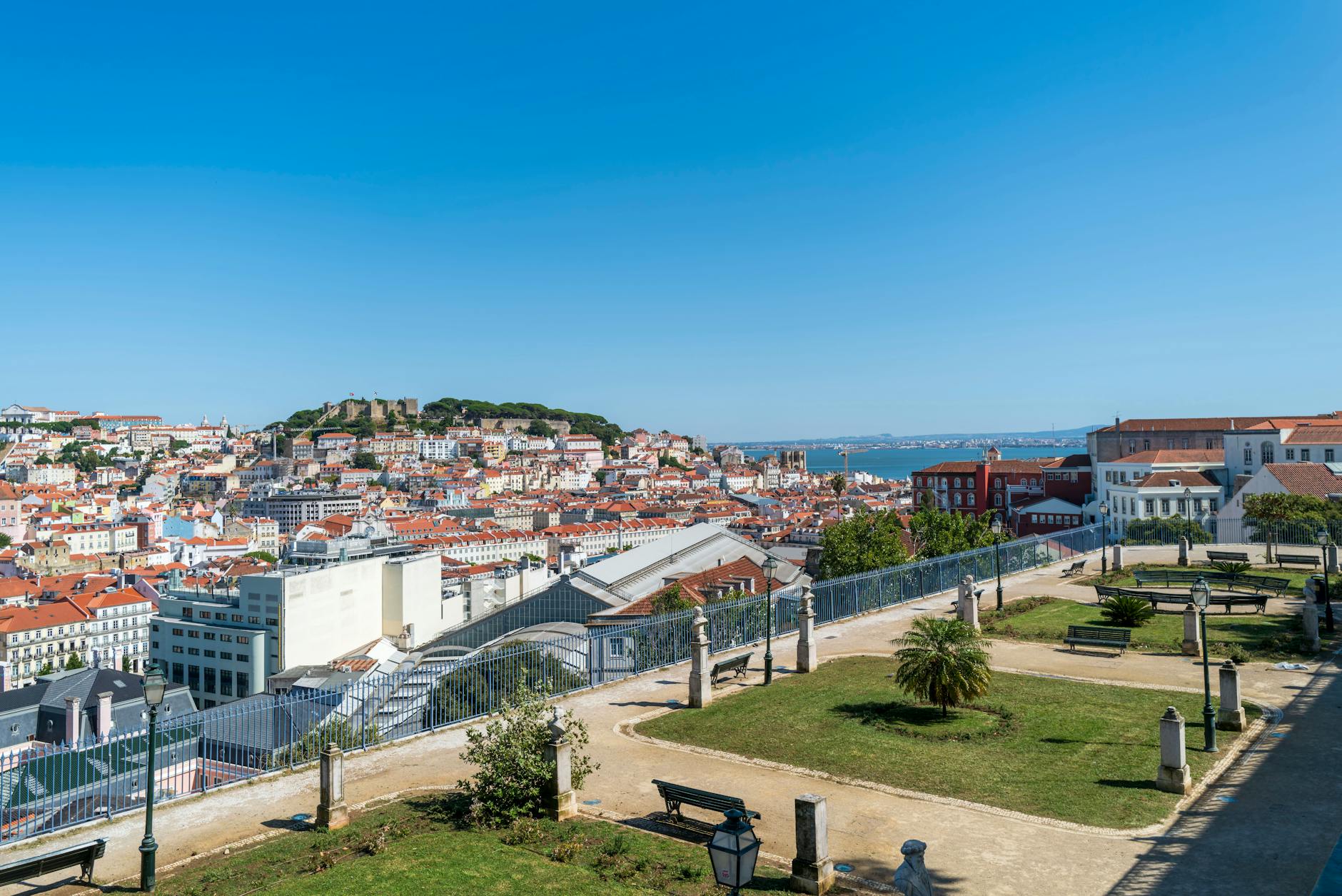
Far less visited than the central miradouros like Senhora do Monte or Graça. Up in the Penha de França neighborhood, north of Alfama — you’ll need to walk uphill through residential streets to reach it, which is exactly why the crowds thin out. Sweeping panoramic view of the city with a small bar on the terrace. The kind of place where you can actually sit down, order a beer, and look at Lisbon for an hour without being in a photograph.
2. Jardim do Torel
A small hilltop garden tucked between Avenida da Liberdade and Pena, accessible by the Lavra funicular (the oldest in Lisbon, rarely mentioned in guidebooks). Very few tourists make it here — the garden is quiet on weekday afternoons even in summer. There’s a simple outdoor café with sunset views over the Tagus, and in summer a public swimming pool. The Lavra funicular that takes you up has been running since 1884 and costs the price of a regular transit ticket.
3. Miradouro de São Pedro de Alcântara (Lower Tier)
Most visitors stop at the upper tier — the one you arrive at from Rua Dom Pedro V — and leave. Take the steps down to the lower garden tier. It’s quieter, greener, has benches with the same skyline view, and feels genuinely different. Good for families with young children because of the open grass and absence of the upper-tier crowd.
4. Castelo dos Mouros (Sintra)
This one requires a Sintra day trip, but it’s worth flagging specifically: most travelers make straight for Pena Palace and the queues that come with it. The Moorish Castle next door — a 10th-century fortification built by the Moors during their occupation of the Iberian Peninsula — draws a fraction of the visitors despite offering arguably better views over the Sintra hills and coastline. Book tickets through Parques de Sintra; the combined ticket includes multiple sites.
5. Convento dos Capuchos
A tiny, remote 16th-century cork-lined convent hidden in the Sintra forest. The cells are so small and low that taller visitors have to stoop; the walls are lined with cork for insulation, giving it a texture unlike anywhere else in Portugal. Less than 1% of Sintra visitors find it. Atmospheric, peaceful, and genuinely strange. Budget 30-40 minutes and factor in the drive or taxi from central Sintra — it’s not accessible by the tourist buses.

Hidden Neighborhoods
6. Marvila
Eastern industrial district being transformed by craft breweries, street art, and post-industrial creative spaces. Dois Corvos and Lince are two of the best craft breweries in Lisbon; both are in Marvila warehouse spaces that feel nothing like a tourist attraction. Very few visitors end up here. The neighbourhood is served by bus from Cais do Sodré — it’s a 20-minute ride that feels like entering a completely different city. The street art murals alone are worth the trip.
7. Anjos / Intendente
Multicultural, gentrifying, and still rough-edged in places that make it interesting. The area around Largo do Intendente and Rua de Anjos has excellent diverse food — African restaurants, Indian tascas, old-school Portuguese lunch spots running set menus for €9-11. Up-and-coming bars. Real Lisbon feel without the tourist density you get in Alfama or Bairro Alto. The square of Largo do Intendente itself has been recently restored and has outdoor café seating in the evenings.
8. Madragoa
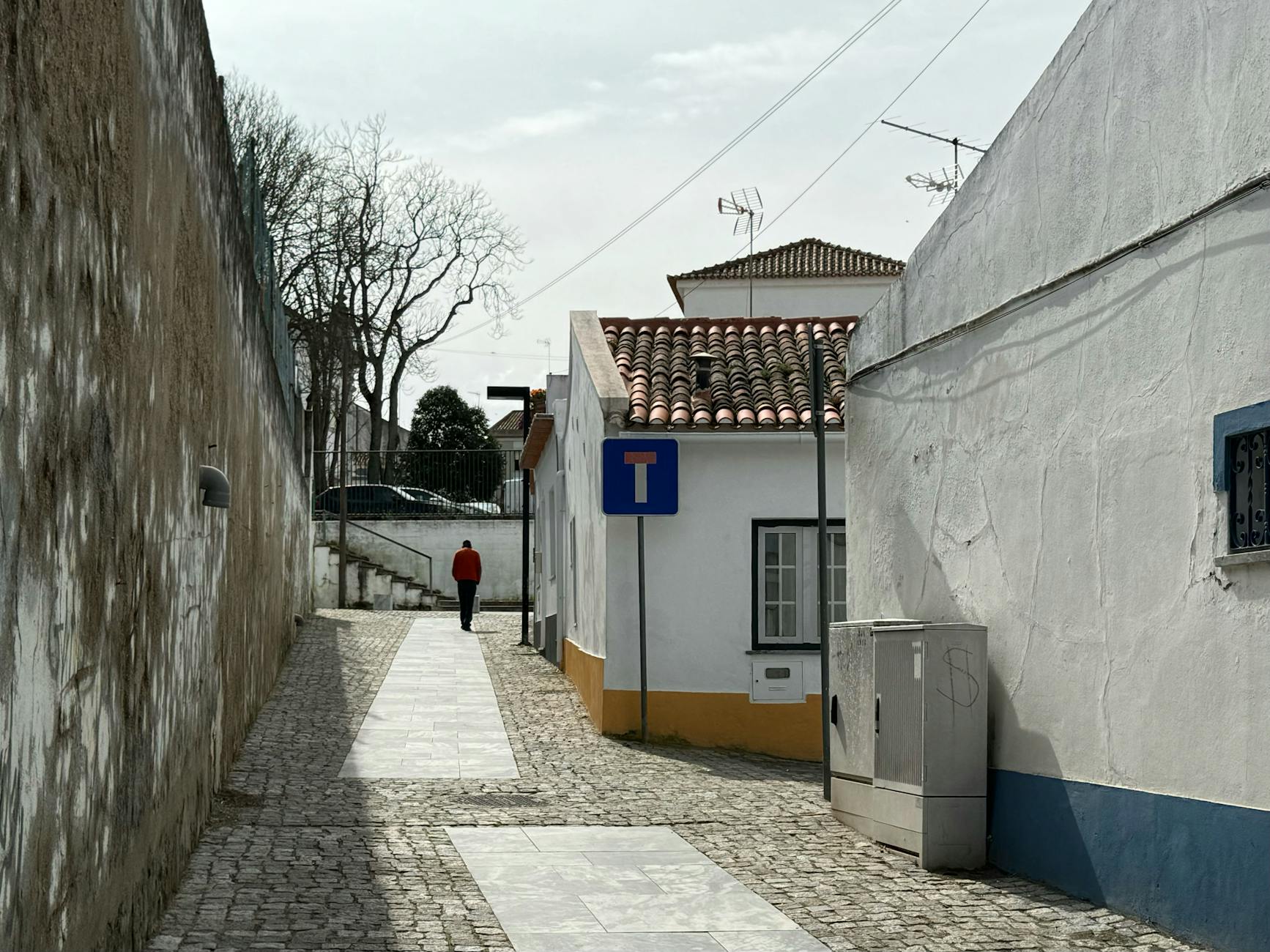
Working-class neighborhood between Lapa and Cais do Sodré. Largely unspoiled by tourism — the tiled façades haven’t been restored for Instagram, the tascas haven’t added English menus, and the streets are quiet enough that you’ll hear birdsong over traffic. A 10-minute walk from the busy waterfront of Cais do Sodré, but it feels like a different world. Good for an afternoon wander with no particular agenda.
9. Penha de França
Hilly residential neighborhood north of Alfama that most tourists pass through on the way to somewhere else and never stop in. Local tascas running proper lunch menus, small neighborhood parks, the wonderful Monte Agudo viewpoint (entry 1 on this list), and the kind of corner grocery shops where the owner knows every customer by name. Entirely unperformed for tourists.
10. Beato
Riverside district between Marvila and Santa Apolónia that has become a hub for creative industries. Hub Criativo do Beato — a former military biscuit factory — houses cafés, event spaces, and innovation offices in a spectacular industrial complex. It hosts regular markets and events that attract Lisbon locals rather than tourists. Check their schedule before visiting; it’s more lively on event days.
Hidden Architecture & Culture
11. Aqueduto das Águas Livres
The 18th-century stone aqueduct stretches 14km from outside Lisbon to the city, built in 1744 under King João V to bring fresh water to the capital. It survived the 1755 earthquake intact when most of Lisbon did not. The most visible section — the Alcântara Valley crossing — has 35 arches, the tallest of which reaches 65 metres and 29 metres across, making it the world’s largest stone arch at the time of construction. You can walk a section of the aqueduct walkway (when open to the public through the Museu da Água programme) and see Lisbon from an elevation and angle that almost no other tourist experiences. The Mãe d’Água reservoir at the city end is also visit-worthy. Check visitlisboa.com for current opening days.
12. Galeria de Arte Urbana (Underground)
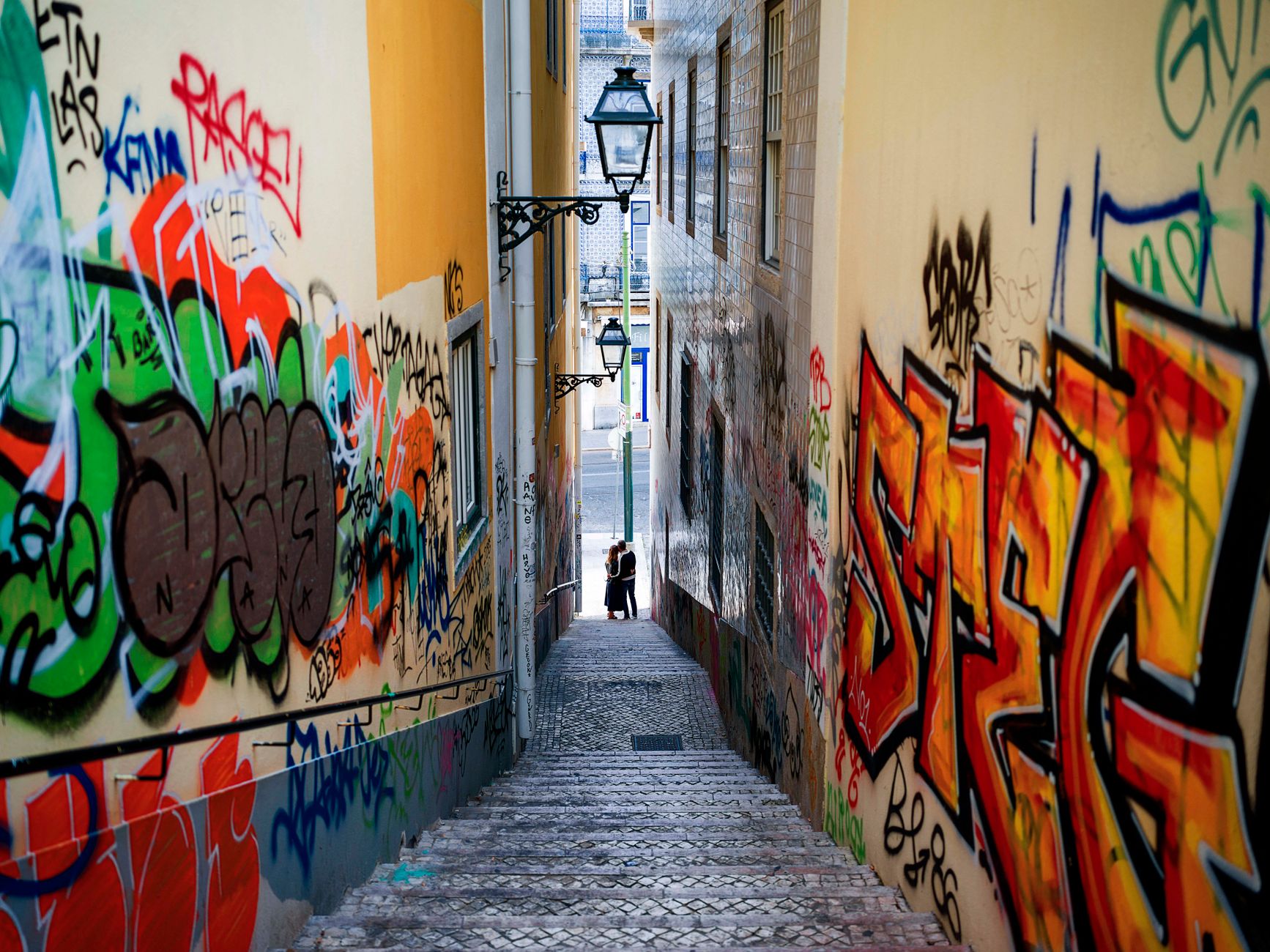
A permanent street art exhibition installed in an underground pedestrian passage in the Picoas area. Free entry — you just walk in off the street. The murals are large-scale, high-quality, and rotate periodically. Fewer than 1% of Lisbon visitors find it because nothing marks the entrance as a gallery; it looks like an ordinary underpass until you’re inside it. A five-minute detour from the Picoas metro stop.
13. Estufa Fria (Cold Greenhouse)
A tropical greenhouse complex in Parque Eduardo VII, right at the top of Avenida da Liberdade, that almost no one enters despite being in one of the city’s most central parks. Three different climate zones — the Estufa Fria (cold), Estufa Quente (hot), and Estufa Doce (sweet) — house plants from around the world in a network of paths, ponds, and bamboo groves. Quiet, atmospheric, and almost empty on weekday mornings. Free with the Lisboa Card; small admission fee otherwise. A genuine escape from the city despite being inside it.
14. Calouste Gulbenkian Garden
The free outdoor garden at the Gulbenkian Museum is one of Lisbon’s best public spaces and almost no tourists know to visit it without entering the museum. Pond with ducks, modern sculpture dotted through the lawns, mature trees, and picnic-perfect grass areas. Locals use it as a park on summer evenings. You can enter from the side street on Avenida de Berna without paying museum admission. Particularly good in spring when the roses are out.
15. Igreja de São Roque Interior
From the outside, on Largo Trindade Coelho in Bairro Alto, it looks like an entirely unremarkable whitewashed church — the kind you’d walk past without a second glance. Inside is one of the most ornate baroque interiors in Europe: the Chapel of St. John the Baptist was built in Rome in the 1740s, blessed by Pope Benedict XIV, disassembled, shipped to Lisbon in three ships, and reassembled here. Lapis lazuli, ivory, amethyst, alabaster, and Florentine mosaics that look like oil paintings. Free to enter. Most people who walk past Bairro Alto bars every night never go in.
Hidden Eating & Drinking
16. Cervejaria do Moita (Marvila)
A tiny working-class beer hall in Marvila that has been serving €0.80 beers and basic snacks to the same local clientele for decades. No décor to speak of, no English menu, no Instagram presence. The kind of place that makes you feel like a trespasser for the first five minutes and a regular by the second beer. Combine with a visit to the nearby craft breweries for the full Marvila contrast.
17. A Severa (Mouraria)
A historic fado tasca in Mouraria — the neighborhood where fado was born in the early 19th century — named after Maria Severa, the legendary fadista who lived here in the 1820s. Very few tourists find it despite the historical significance; the tourist-facing fado houses have absorbed the Alfama market. The atmosphere here is the real thing: small tables, shared benches, fado performed for its own sake. Book in advance; it does fill up on weekends.
18. Cervejaria Trindade Outdoor Garden
The famous Cervejaria Trindade on Rua Nova da Trindade — a Gothic convent turned beer hall with azulejo-covered walls — has a hidden interior garden that most visitors miss entirely. Accessed through the main hall and often unmarked. Trees, old stone walls, fountain. Less crowded than the main dining room and better for an afternoon drink in summer.
19. Cantinho Avillez Príncipe Real Outdoor Patio
Chef José Avillez’s casual restaurant in Príncipe Real has a hidden tile-decorated patio at the back of the dining room — tiny, intimate, one of the nicest outdoor dining spots in Lisbon for its scale. Easy to miss if you don’t ask for it at the door. The food is accessible Avillez (petiscos and Portuguese classics) without the Belcanto price tag.
20. Quiosques on Ribeira das Naus
The riverside stretch between Praça do Comércio and Cais do Sodré has a series of restored quiosques (kiosk bars) right on the water. €2 craft beers and wines, wooden deck chairs facing the Tagus, sunset views over the south bank. Lisbon locals treat this as their default after-work spot on warm evenings and it’s still relatively underused by visitors despite being in the centre. Go between 6 and 8pm on a clear evening.
Hidden Day Trips Near Lisbon
Comporta
An hour south of Lisbon by car (public transport is difficult), Comporta is a beach village of rice paddies, stork nests, and thatched-roof restaurants. The beach is long, wild, and Atlantic. Increasingly discovered by a wealthy European clientele — prices have risen — but it still feels remote in a way that no Algarve destination does. Best in May-June before peak season.
Setúbal Mercado do Livramento
Often cited as one of Portugal’s best fish markets. Live oysters served at the bar inside the market hall for €1-2 each; the day’s fresh catch on ice in the stalls around it. Combine with a beach day at Arrábida (20 minutes by car) for a near-perfect day out. Reachable by train from Lisbon in about 50 minutes.
Cabo Espichel
A dramatic clifftop sanctuary on the western tip of the Setúbal Peninsula. Wild Atlantic views from 100-metre cliffs, an ancient Baroque pilgrimage church (Nossa Senhora do Cabo) half-collapsed at its edges, and almost no visitors even in summer. Dinosaur footprints are visible in the cliff face below (accessible on foot). Requires a car — there’s no direct public transport from Lisbon.
Cromeleque dos Almendres
Megalithic stone circle west of Évora, 12km from the city on a farm track. Approximately 95 standing stones arranged in an oval formation, dating to around 6000 BCE — older than Stonehenge. Almost always empty. The site has minimal facilities and no gift shop, which is exactly why it remains unhurried. Combine with an Évora day trip; the stones are an add-on that takes an extra 30 minutes by car.
Praia da Adraga
A wild Sintra-coast beach north of Cascais, accessible by bus from Cascais or by car from Sintra. Smaller and less developed than Praia das Maçãs, backed by dramatic cliffs, with a seafood restaurant at the top of the beach stairs. The surf can be strong; swimming depends on the day. Best in September when the water is warmest and the crowds have thinned.
Hidden Markets & Shopping
Feira da Ladra (Campo de Santa Clara)
The famous flea market runs on Tuesdays and Saturdays at Campo de Santa Clara, near the Panteão Nacional. Most guides tell you this. What they don’t mention: arrive early (before 9am on Saturday) for the actual dealers with genuine antiques and vintage items; arrive late (after 1pm) for rock-bottom prices as sellers start packing up. The tourist-facing mid-market period (10am-12pm) has the worst selection at the highest prices.
Mercado de Santa Clara
A working-class market inside the same square as Feira da Ladra but in a separate covered building. Very local, very cheap — produce, fresh fish, household goods, eggs sold by the half-dozen. Not on the tourist radar at all. Good for provisions if you’re in a self-catering apartment in Alfama or Mouraria.
Cortiço & Netos
A tile shop in the Anjos area selling rescued 1960s-80s industrial Portuguese tiles — leftover production runs, salvaged from demolished buildings, old stock. The tiles are vintage, original, and genuinely affordable compared to the decorative azulejo shops in Alfama. If you want to bring back something authentically Portuguese that wasn’t made to be sold to tourists, this is the place.
Sant’Anna Factory Tour
Portugal’s oldest tile factory, operating continuously since 1741, still produces hand-painted azulejos on Rua do Alecrim in Chiado. Tours of the production workshop are available by prior booking — you watch the hand-painting process and see tiles at various stages of production. The factory shop sells seconds at lower prices. Pre-book directly with the factory.
Hidden Cultural Spaces
Casa-Museu Amália Rodrigues
The former home of Portugal’s most beloved fado singer, preserved largely as she left it. Atmospheric, intimate, and often nearly empty. Photographs, costumes, personal effects, and the kind of quiet that lets you understand the fado sensibility better than any performance-stage presentation can. On Rua de São Bento; open most days except Mondays.
Museu da Marioneta (Puppet Museum)
A quirky, genuinely charming museum dedicated to puppets and marionette theater, housed in a convent building in Santos. The collection covers Portuguese puppet tradition alongside international pieces. Odd, specific, and rarely visited — which makes it calming to experience compared to the queues at the major museums. Good for an hour on a quiet afternoon.
Museu do Aljube (Resistance Museum)
A museum about the Portuguese resistance to António de Oliveira Salazar’s Estado Novo dictatorship, built in and around the building that served as the PIDE secret police’s political prison from 1928 to 1965. Sobering, important, and among the best-curated political history museums in Iberia. Free on the first Sunday of the month. On the tourist circuit for anyone with an interest in 20th-century European history, but rarely mentioned in general Lisbon guides.
Museu Nacional de Arte Contemporânea – Chiado (MNAC)
The national contemporary art museum sits in the middle of Chiado and is routinely overlooked in favour of the nearby MAAT or Gulbenkian. Smaller collection, less architecture to photograph, but often the most interesting temporary exhibitions in the city. Quiet enough that you can actually stand in front of a painting for more than 30 seconds.
Hidden Walking Routes
Lapa to Madragoa Walk
Embassy district (Lapa) through Santos and into the working-class Madragoa neighborhood. About 45 minutes of walking through varied Lisbon — grand 19th-century mansions giving way to small tiled houses, the streets getting quieter and the restaurants getting cheaper as you go. Ends near the waterfront at Cais do Sodré if you continue downhill.
Tagus Riverside (Beato to Belém)
A long flat walk along the Tagus river path from the Beato district westward through Cais do Sodré, Santos, and on to Belém — approximately 10km total, mostly on dedicated pedestrian and cycle paths along the waterfront. Largely empty of tourists outside the central Ribeira section. Good for early morning when the light on the water is best and the riverside cafés are just opening.
Largo do Carmo to Príncipe Real via Travessas
Rather than taking the main Rua da Misericórdia, cut through the network of narrow connecting streets (travessas) between Largo do Carmo and Príncipe Real. The route passes hidden patios, small design shops, old convents repurposed as apartments, and a neighborhood feel that the main streets have lost to tourism. Takes about 20 minutes without stopping; budget an hour if you’re inclined to wander.
How to Find More Hidden Gems
- Walk uphill from any miradouro — discoveries exist above the tourist circuits in every direction
- Take trams off the famous routes — Tram 12E, 24, and 25 are quieter, more local, and reveal different sides of the city
- Go where Tram 28 doesn’t — east into Marvila, north into Penha de França and Anjos
- Eat at restaurants with paper tablecloths on side streets — these are aimed at locals, not visitors
- Follow the locals’ dinner timing — restaurants filling up at 9pm are local; tourist places fill at 7pm
- Use Visit Lisboa for official listings of lesser-known monuments and current opening details
Best Time to Visit for Hidden Gems
Avoid peak summer when seeking off-the-beaten-path Lisbon. Spring (April-May) or autumn (September-October) work best — locals are more visible in the streets and neighbourhood cafés, the weather is comfortable for long walks, and formerly hidden spots haven’t yet been absorbed entirely into the tourist circuit. Early mornings in July-August also work: the Ribeira das Naus waterfront at 7am, before the tour groups arrive, feels like a completely different city.
Practical Tips for Off-the-Beaten-Path Lisbon
- Comfortable shoes with grip — hidden gems usually require walking on steep, uneven cobblestones
- Carry a transit day pass — €6.80 covers metro, bus, tram, and funicular; essential for Marvila and Beato
- Don’t expect English everywhere in less touristy spots — a few words of Portuguese (obrigado, por favor, tem menu?) goes a long way
- Carry small cash for mom-and-pop tascas, market stalls, and quiosque beers
- Be respectful in residential neighborhoods — Marvila, Penha de França, and Madragoa are where people live, not performance spaces
Links to Lisbon’s Major Attractions
Once you’ve done the hidden circuit, the major sights are still worth your time. Our guides cover the Jerónimos Monastery, the Belém Tower, and São Jorge Castle in depth — including how to visit efficiently and what’s free.
FAQ: Lisbon Hidden Gems
What are the most underrated places in Lisbon?
Jardim do Torel, Marvila, Galeria de Arte Urbana underground, Estufa Fria, and the Igreja de São Roque interior. Each rewards travelers who get past the top-10 circuit. The Igreja de São Roque is the biggest surprise — it looks completely ordinary from the outside and is extraordinary inside.
Where do locals go in Lisbon?
Marvila for craft beer and street art; Anjos and Intendente for affordable food; Madragoa and Penha de França for everyday life; the Ribeira das Naus quiosques for after-work drinks; the Gulbenkian garden on summer evenings. The working-class neighborhoods north and east of Alfama are where Lisbon’s everyday culture is most visible.
What’s the best hidden viewpoint in Lisbon?
Miradouro do Monte Agudo in Penha de França — less crowded than Senhora do Monte and with a small bar on top. Jardim do Torel is the runner-up: a hilltop garden with sunset views that almost no tourists find despite being accessible by funicular from Avenida da Liberdade.
Are these still “hidden” gems in 2026?
Increasingly less so. Lisbon’s tourism boom means yesterday’s local secret becomes this year’s Instagram spot faster than ever. Marvila has been “discovered” by the bar-opening crowd; Anjos is gentrifying rapidly. But these places are still markedly less crowded than central attractions, and the neighborhoods themselves remain genuinely local in character even as the edges change.
How do I find authentic Lisbon experiences?
Walk uphill from wherever you are. Take the quieter trams (12E, 24, 25). Eat where the menu is handwritten or on a chalkboard and the tables fill at 9pm. Explore Marvila, Anjos, and Madragoa. Accept that you’ll occasionally end up somewhere without an English menu or a TripAdvisor rating, and order the daily special.
What’s the best hidden food or drink spot?
A Severa in Mouraria for genuine fado in the neighborhood where the music was born; the quiosques on Ribeira das Naus for casual riverside drinks at €2-3 a glass; Dois Corvos or Lince craft breweries in Marvila for the local beer scene. The Cervejaria Trindade’s hidden garden for a mid-afternoon beer in surroundings almost no visitors find.
Bottom Line
Lisbon’s hidden gems exist for travelers willing to walk uphill, take quieter trams, and explore beyond Alfama and Bairro Alto. Marvila for industrial-creative cool, Madragoa for working-class authenticity, Jardim do Torel for hilltop solitude, and Galeria de Arte Urbana for underground art. The Igreja de São Roque rewards any traveler who has walked past its plain exterior without stopping. The most rewarding way to discover all of this is by walking — pick a hill, climb it, see what unfolds at the top. Lisbon almost always delivers something worth the effort.
None of this replaces the obvious ones. Jerónimos, Belém Tower and São Jorge Castle are famous because they earn it, and the things to do guide covers them properly. The spots above work best as the other half of that trip, not as a substitute for it.