Landmarks & Monuments
Lisbon’s Aqueduct and the Water Museum
Thirty-five arches, 65 metres up, untouched by the 1755 earthquake. How to walk across the Aqueduto das Águas Livres, and why Mãe d'Água is the part to do first.
In this guide
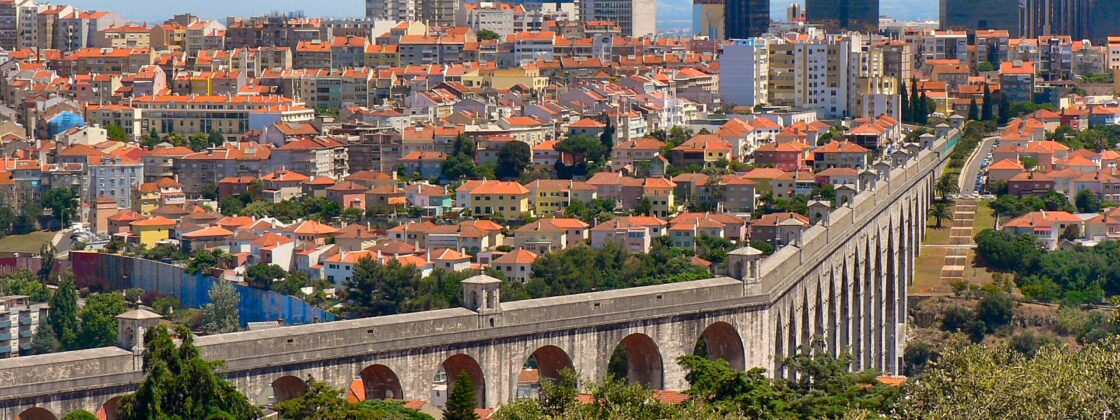
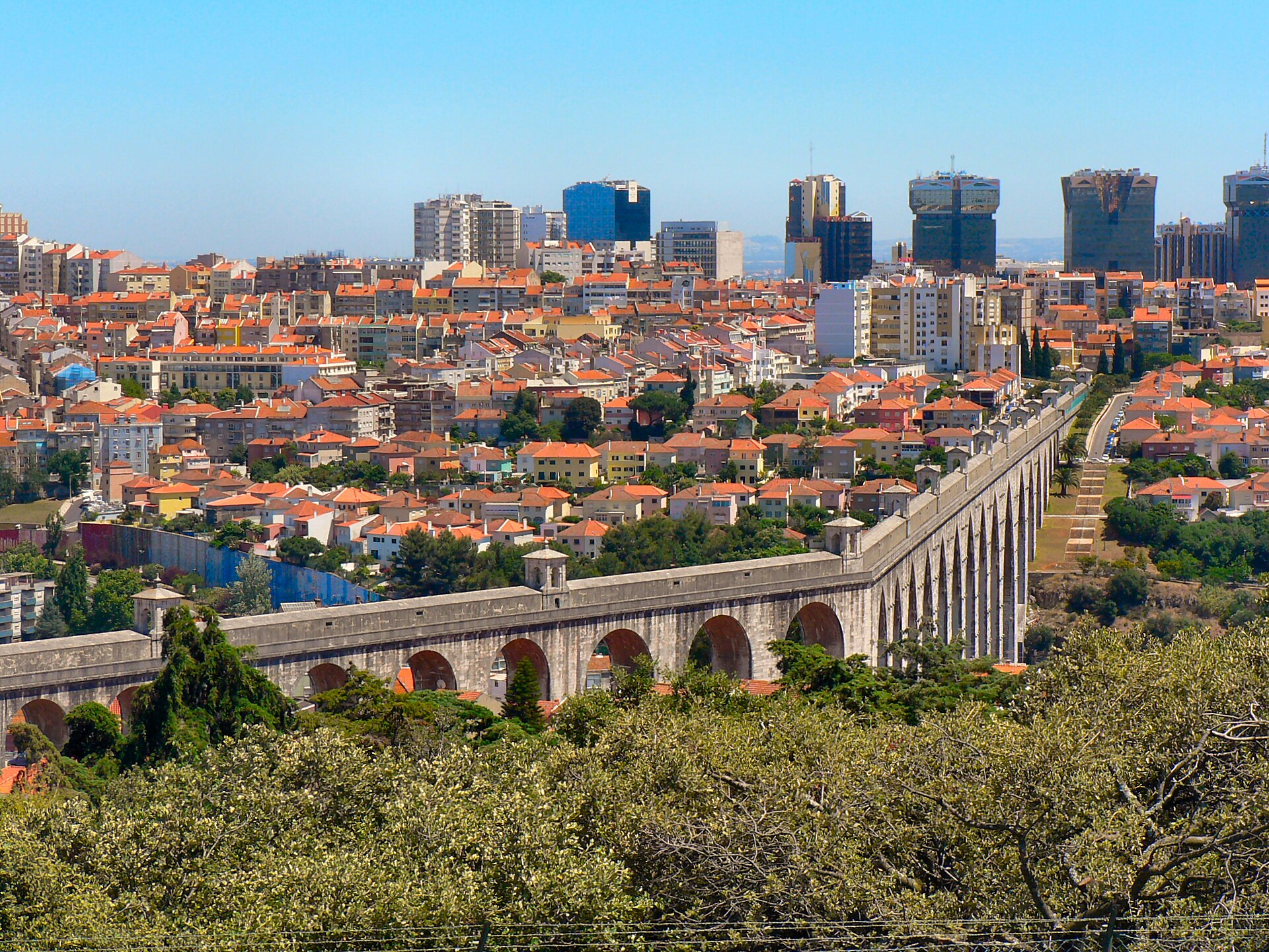
The Lisbon aqueduct — the Aqueduto das Águas Livres — is the enormous run of stone arches striding across the Alcântara valley that you see from the motorway, from the train, and from about half the miradouros in the city, and which almost nobody goes to look at properly. It is one of the great engineering works of eighteenth-century Europe, it survived the earthquake that flattened everything around it, and on the right day you can walk along the top of it. This guide covers what it is, how to get onto it, the strange and beautiful reservoir at the other end, and whether the whole thing is worth an afternoon.
The essentials
- What it is: an eighteenth-century water supply system, roughly 58 kilometres of channels in total, of which the Alcântara arches are the visible fragment.
- Run by: EPAL, the city water company, through its Museu da Água — four separate sites across the city.
- Tickets: individual sites are inexpensive, typically around €5, with guided visits a little more. There are combined tickets covering several sites.
- Walking the arches: possible, but only on a restricted schedule and often only on guided visits. Check epal.pt before building a day around it.
- Easiest site to visit: the Mãe d’Água das Amoreiras reservoir, which keeps regular hours and needs no planning.
- Getting there: Campolide station for the aqueduct; Rato metro for Amoreiras.
A word of caution before you go further: EPAL’s opening arrangements for the aqueduct itself change more often than any other attraction in Lisbon. Over the past few years access has run variously as a seasonal self-guided opening and as guided tours on set Saturdays. Any specific day-and-time you read online — including in guides published this year — may be out of date. The Museu da Água’s own pages are the only reliable source.
Why Lisbon needed it
For most of its history Lisbon had a water problem. The city sits on hills of limestone with few springs and no useful river water — the Tagus at this point is tidal and brackish — and by the early eighteenth century a growing population was dependent on wells, cisterns and water carried in by hand.
The solution was to bring water from the free-flowing springs at Belas, in the hills to the north-west, and João V — a king awash with Brazilian gold and an appetite for monumental building — approved the scheme in 1731. It was paid for by the Real de Água, a dedicated tax on meat, olive oil, wine and other goods, which is to say by everyone in Lisbon whether they wanted it or not.
Water reached the city in 1748. Work on the wider network of galleries and fountains carried on until 1799. In total the system runs to about 58 kilometres of conduits, of which the spectacular part — the section crossing the Alcântara valley — is a little under a kilometre.
The arches
The Alcântara crossing carries 35 arches, the tallest standing around 65 metres above the valley floor. The central arch is generally described as the largest pointed stone arch ever built, and standing under it is the only way to grasp the scale — from a distance the thing reads as elegant, and up close it reads as frankly alarming.
What makes it beautiful rather than merely large is the restraint. There is no ornament to speak of: just cut limestone, a Gothic-pointed profile chosen for structural reasons rather than stylistic ones, and small pyramidal pinnacles marking the piers. It is one of the few genuinely monumental things in Lisbon that is not also decorated.
How it actually works
The whole system runs on gravity and on a very slight, very consistent fall — a few centimetres per kilometre, held over fourteen kilometres of hilly ground. Getting that gradient right, without modern surveying, across valleys and around hills, is the real achievement; the arches are simply what you build when the ground drops away and the water still has to keep falling at the same rate.
Inside the arches, above the walkway, runs a covered stone channel — you are walking on the roof of the conduit rather than beside an open trough. The water was never exposed to the air on this stretch, which is why the supply stayed clean enough to drink for two centuries. Along the route, and all over the older parts of Lisbon, the system fed public fountains called chafarizes, several of which still stand: the one at Largo do Carmo and the Chafariz d’El Rei down by the river are the easiest to find.
The earthquake
On 1 November 1755 the earthquake destroyed most of central Lisbon, and the fire and tsunami that followed finished the job. The aqueduct was undamaged and kept supplying water throughout.
This is not a small footnote. In the weeks after the disaster, with the city in ruins and its wells fouled, the aqueduct was one of the few pieces of infrastructure still functioning, and it became a considerable point of national pride — proof that Portuguese engineering could do something the earthquake could not undo. It stayed in service as Lisbon’s principal water supply until 1967, which is a remarkable working life for a structure begun in 1731.
Our 1755 earthquake guide covers what the city lost that day, and the Carmo Convent page covers the ruin that was deliberately left standing as its memorial.
Walking across the aqueduct
This is what most people want to know, so here it is plainly.
Yes, it is possible — but not on demand. There is a walkway along the top of the arches, running from the Campolide end across the valley, and EPAL opens it to visitors. What has varied, repeatedly, is how: at some periods it has been open on a regular seasonal timetable that you could simply turn up for, and at others access has been restricted to guided visits on specific Saturdays each month, booked in advance.
The crossing takes about 45 minutes to an hour there and back. The walkway is wide, walled on both sides and perfectly safe, though the drop either side is very obvious and anyone with a serious fear of heights will not enjoy it. The views over Campolide, Monsanto and the western city are excellent and completely different from anything you get at the standard miradouros.
Book, or at minimum check, before you travel. Turning up at Campolide hoping to walk across is how a lot of people waste an afternoon. If you are set on doing it, make it the fixed point of your day and build around it.
Mãe d’Água das Amoreiras
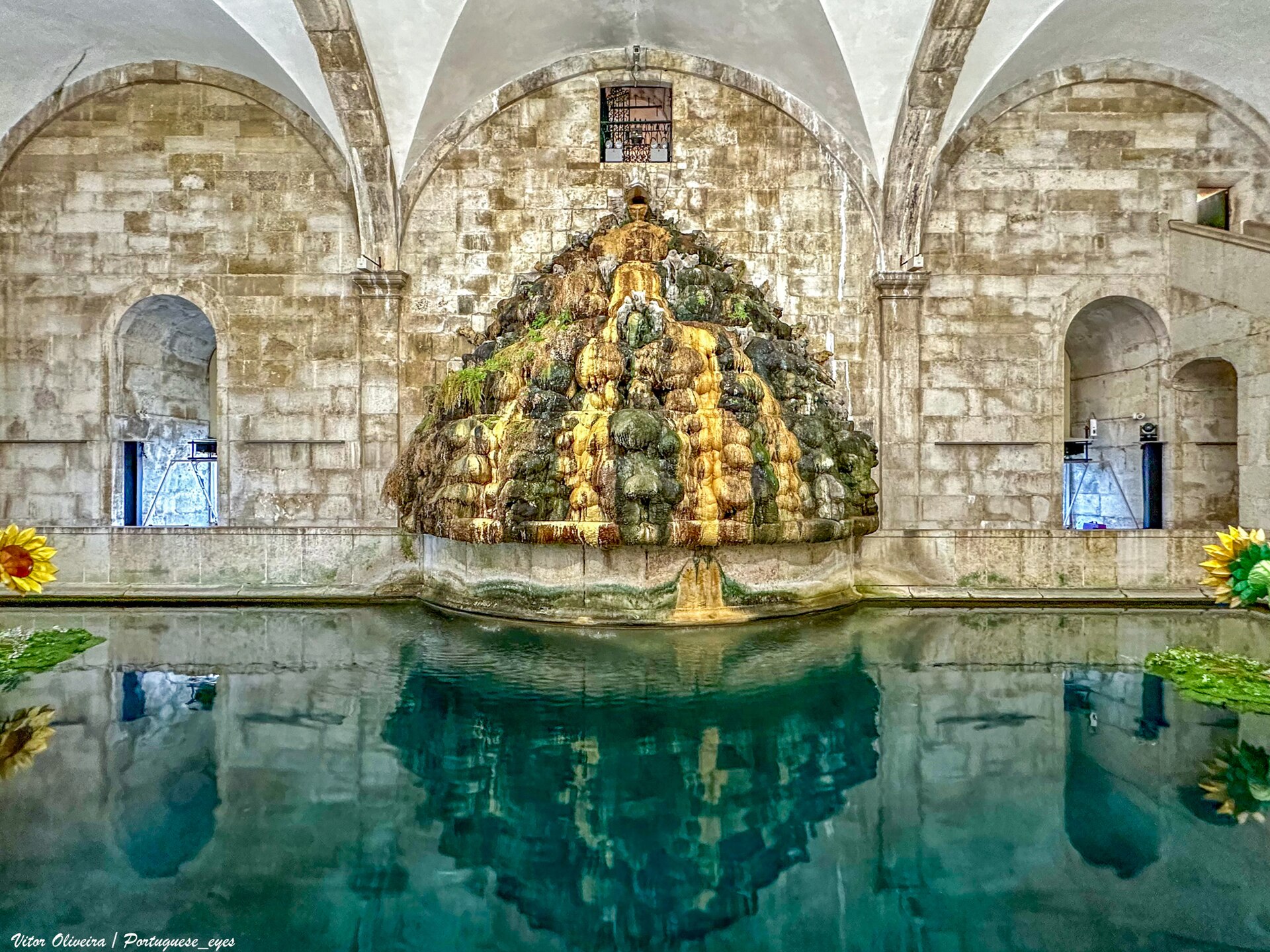
If you only do one part of this, do this one. The Mãe d’Água das Amoreiras is where the aqueduct’s water finally arrived: a great vaulted stone chamber on Praça das Amoreiras, completed in 1834, with the water arriving down an artificial rockwork cascade into a still pool that fills most of the floor.
It is a genuinely strange space — cathedral-like, cold, echoing, lit from small high windows, with the water reflecting the vaults. EPAL uses it as an exhibition and concert venue, so there is usually contemporary art in it, which either enhances the effect or gets in the way depending on the show. There is also a roof terrace with a view over the square and the western city.
Practically, it is the easiest of the Museu da Água sites to visit: central, keeps regular hours, no booking needed, and about twelve minutes’ walk from Rato metro. Combine it with the Príncipe Real neighbourhood, which is next door.
The rest of the Water Museum
EPAL’s Museu da Água is spread across four separate sites, which is unusual and a little confusing. Beyond the aqueduct and Amoreiras:
- The Barbadinhos Steam Pumping Station, out east near Santa Apolónia, is the museum’s main indoor site — a nineteenth-century pumping house with its original steam engines preserved in place. Excellent if you like machinery, and a very quiet corner of Lisbon.
- The Patriarcal Reservoir sits underneath the garden at Praça do Príncipe Real, and you go down into it from the square. Most people walking through that garden have no idea it is there. It is small, cool, dark and worth twenty minutes.
- The Loreto Gallery, a 410-metre underground conduit begun in 1748, links the Patriarcal Reservoir towards the São Pedro de Alcântara viewpoint. It is opened only for occasional guided visits and is the most atmospheric thing in the whole system — a lantern-lit tunnel under the Bairro Alto.
Combined tickets covering several sites are available and are better value than paying separately if you intend to see more than one. Our museums guide puts these in context with the city’s bigger collections.
The other story: Diogo Alves
Because it is asked constantly, and because Lisbon does not hide from it: in the 1830s a Galician-born man named Diogo Alves used the aqueduct’s walkway as a place to rob and murder people crossing between the city and the villages beyond, throwing the bodies from the arches so the deaths would read as suicides. The number attributed to him runs to several dozen. He was hanged in 1841, among the last people executed in Portugal.
The aqueduct walkway was closed to the public for well over a century afterwards, and that is the direct reason you cannot simply stroll across it today. Alves’s preserved head is still held in a jar at the Faculty of Medicine, kept for nineteenth-century phrenological study and never disposed of, and it is occasionally shown. It is the sort of thing Lisbon has a great many of and mentions rarely.
Is it worth it?
The arches: yes, from underneath, free, any time. The best thing you can do with the Lisbon aqueduct costs nothing. Walk into the Alcântara valley below the arches — the streets around Campolide and the Parque das Necessidades side both give you it — and look up. The scale simply does not come across in photographs.
The walkway: yes, if the schedule cooperates. Genuinely memorable, quite unlike anything else on offer in the city, and a good use of an hour. Do not chase it if the timings do not fit; the disappointment is out of proportion to the reward.
Amoreiras: yes, unreservedly. Cheap, central, easy, and one of the most surprising interiors in Lisbon.
The whole Museu da Água circuit: only for enthusiasts. Four sites scattered across the city, with limited hours and a lot of walking between them, is a full day for something that is fundamentally about municipal water supply. If that sentence excites you, you will love it. If it does not, do Amoreiras and look at the arches from below, and spend the rest of the day elsewhere. We would rather say that than pretend otherwise.
For where this fits among Lisbon’s other landmarks, see our landmarks and monuments guide, and hidden gems for more in this register.
How to see it in half a day
If you want a coherent route rather than four scattered visits, this is the one we would do, and it takes about four hours:
- Start at Campolide on a Sintra-line train from Rossio, fifteen minutes. Walk down into the valley beneath the arches and spend twenty minutes looking up at them from below. This is the best part and it is free.
- Cross the walkway if the schedule allows and you have booked. Allow an hour.
- Walk or take a bus east to Amoreiras and spend forty minutes in the Mãe d’Água reservoir, including the roof terrace.
- Finish in Príncipe Real, ten minutes on foot, where you can go down into the Patriarcal Reservoir under the garden and then have a drink in the square above it.
That covers three of the four sites, keeps you on one side of the city, and ends somewhere pleasant. Barbadinhos, out by Santa Apolónia, is a separate trip and only worth it if the steam engines are the draw.
Practical advice
- Campolide is the station for the aqueduct end; it is on the Sintra and Azambuja lines and about fifteen minutes from Rossio.
- Rato is the metro for Amoreiras, roughly twelve minutes’ walk.
- Wear proper shoes for the walkway — the surface is old stone and uneven.
- Take a layer. The reservoirs are several degrees colder than the street, and the aqueduct is exposed and windy.
- Check opening arrangements the week you travel, not the month before. This is the single most schedule-volatile attraction in the city.
- The best free view of the arches is from the Campolide side, or from a train on the Sintra line, which passes directly underneath.
- Accessibility varies a lot by site: Amoreiras is largely manageable, the underground reservoirs and the aqueduct walkway are not. See our accessibility guide.
Frequently asked questions
Can you walk on the Lisbon aqueduct?
Yes, along a walled walkway on top of the Alcântara arches — but access is restricted and has alternated between scheduled self-guided openings and guided visits on set days. Check the Museu da Água pages on epal.pt before you plan around it, because the arrangements change frequently.
How much does the Lisbon aqueduct cost?
Individual Museu da Água sites are inexpensive, generally around €5, with guided visits somewhat more and combined tickets available for several sites. Looking at the arches from the street below is free.
How old is the Aqueduto das Águas Livres?
Construction began in 1731 under João V, water reached Lisbon in 1748, and works on the wider network continued until 1799. It remained the city’s main water supply until 1967.
Did the Lisbon aqueduct survive the 1755 earthquake?
Yes, completely undamaged, and it kept supplying water while the city around it burned. It became a considerable source of national pride for exactly that reason.
How tall is the Lisbon aqueduct?
The tallest of the 35 arches over the Alcântara valley stands around 65 metres above the valley floor, and the central arch is generally reckoned the largest pointed stone arch ever built.
What is the Mãe d’Água das Amoreiras?
The terminal reservoir of the aqueduct system, completed in 1834 at Praça das Amoreiras — a vaulted stone chamber with a rockwork cascade and a still pool, now used as an exhibition space, with a roof terrace. It is the easiest and most rewarding part of the system to visit.
Bottom Line
The Lisbon aqueduct is the city’s most underrated monument and the only one that has been continuously useful. It brought water across fourteen kilometres of hills to a city that badly needed it, it shrugged off the earthquake that destroyed everything else, and it stayed in service for well over two centuries.
Go and stand underneath the arches, which costs nothing and is the best part. Visit Mãe d’Água at Amoreiras, which is cheap, central and genuinely strange. And if the schedule happens to let you walk the walkway across the Alcântara valley, take it — just check first, because the opening times here move around more than anywhere else in Lisbon, and this is not a monument that rewards turning up on spec.