Where to Stay in Lisbon
Príncipe Real & Avenida da Liberdade: Lisbon’s Upscale Neighborhoods
Explore Príncipe Real and Avenida da Liberdade—Lisbon's most elegant neighborhoods with designer shops, gardens, cocktail bars, and boutique hotels.
In this guide
- Neighborhood Quick Reference
- Príncipe Real
- Avenida da Liberdade
- Best Restaurants in Príncipe Real and Avenida
- Best Boutique Hotels
- Where to Stay: Neighborhood Pros and Cons
- Praça da Alegria
- Walking Route: A Day in Príncipe Real and Avenida
- FAQ: Príncipe Real and Avenida da Liberdade
- Bottom Line
- Shopping Guide: What to Buy in Príncipe Real
- Príncipe Real vs Bairro Alto vs Chiado: What’s the Difference?
- Day Trips and Half-Day Excursions from Príncipe Real
Príncipe Real Lisbon and the adjacent Avenida da Liberdade make up the city’s most composed, unhurried corner — leafy 19th-century streets, palaces repurposed as concept stores, a grand luxury-shopping boulevard, and some of Lisbon’s best boutique hotels. This is where Lisbon’s creative class actually lives. It’s also where first-time visitors who did their research end up staying.
Príncipe Real has been the heart of gay Lisbon for thirty years, and the venues cluster on Rua de São Marçal and Rua da Palmeira — see our gay Lisbon guide for the full picture.
Príncipe Real is also the strongest neighbourhood in the city for a small hotel, thanks to its nineteenth-century palacetes — several appear in our guide to Lisbon’s best boutique hotels.
The two neighborhoods sit northwest of central Lisbon, separated by about ten minutes on foot, and together they cover everything from designer-label flagships to independent Portuguese jewellers to a cedar-shaded garden with a Saturday organic market. This guide covers what to see, where to eat, the best places to stay, and how to spend a day here well. Updated for 2026.
Neighborhood Quick Reference
| Feature | Príncipe Real | Avenida da Liberdade |
|---|---|---|
| Location | Northwest of Chiado, above Bairro Alto | Links Restauradores to Marquês de Pombal |
| Metro | Rato (yellow), Avenida (blue) | Avenida, Marquês de Pombal (blue/yellow) |
| Vibe | Residential, design-forward, quiet evenings | Grand boulevard, business + luxury retail |
| Best for | Concept stores, cocktail bars, boutique hotels | Luxury shopping, top hotels, metro access |
| Hotels | €180–€400/night boutique | €250–€600/night 5-star |
| Restaurants | €35–€80/person, chef-driven | €45–€120/person, Michelin + formal |
Príncipe Real
The Vibe
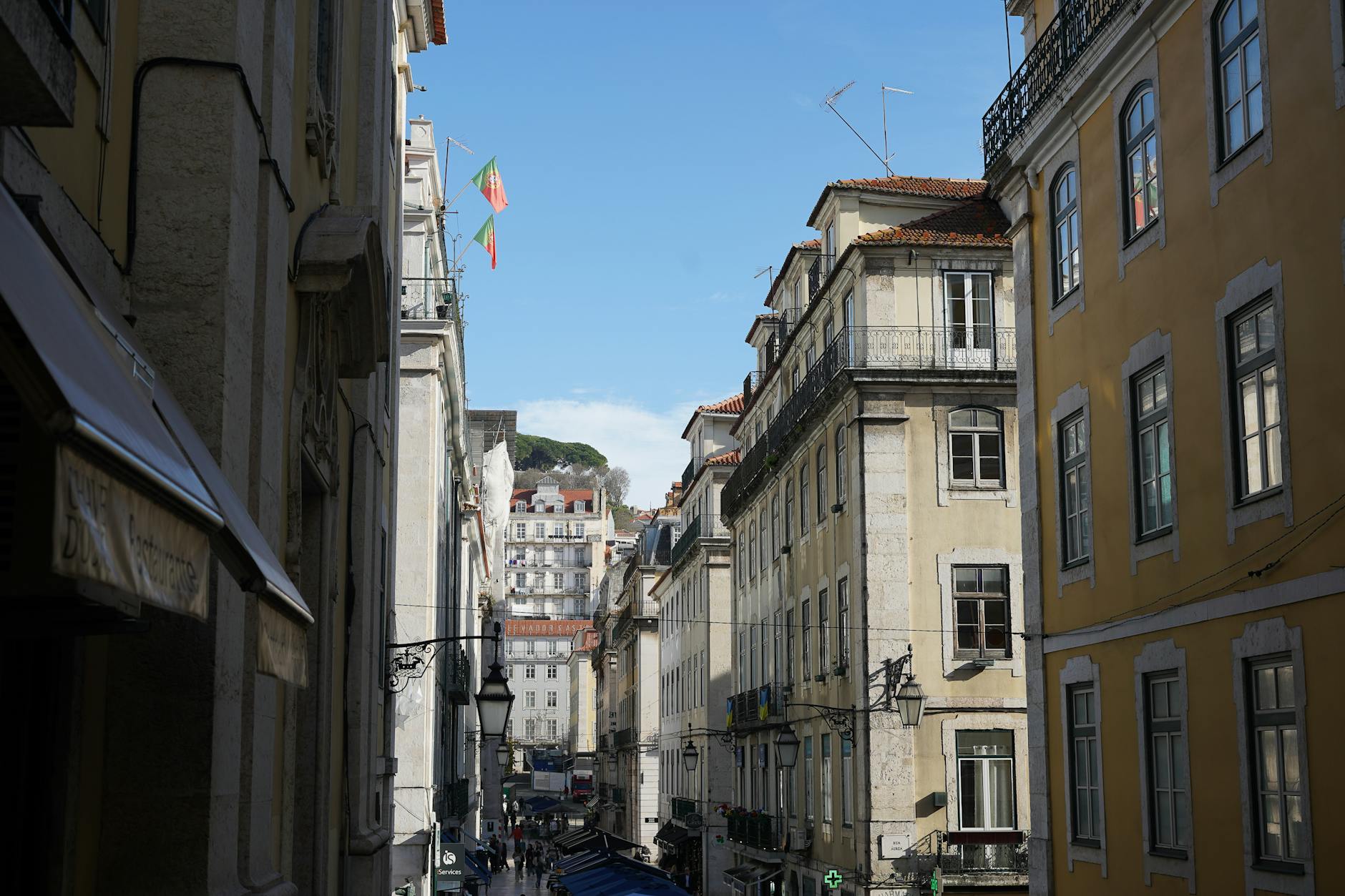
Named after Prince Pedro V — the “Royal Prince” — the district developed in the 19th century as a residential enclave for Lisbon’s aristocracy. Today it’s the city’s densest cluster of concept stores, design boutiques, and independent galleries. The creative class and well-heeled expats who actually live here have made it feel like a neighborhood first, a tourist destination second. Streets are tree-lined and tilted — some steeply — with 19th-century buildings in various states of careful restoration.
The atmosphere is calmer than Bairro Alto immediately to the south, which runs on its nightlife. Príncipe Real does late-evening cocktails rather than clubs. Dinners that go slowly. Saturday morning markets. It suits people who want Lisbon’s energy in a lower register.
It’s also one of the city’s most LGBTQ+-friendly neighborhoods — a cluster of bars and venues that have been part of the fabric here for decades, not a scene grafted on.
Things to Do in Príncipe Real
Jardim do Príncipe Real
The neighborhood’s centerpiece is a small public garden anchored by a cedar tree that spreads like a giant green umbrella — broad enough to shade a dozen café tables underneath. Saturdays from around 9 AM to 2 PM, an organic farmers’ market occupies the garden paths: local producers with cheese, honey, bread, wine, and seasonal vegetables. Low-key and genuinely good. The kiosk café under the cedar is one of the better places to sit in the sun in central Lisbon.
Reservatório do Príncipe Real (Underground Cistern)
Directly beneath the garden, a 19th-century water reservoir converted into a small atmospheric museum. Iron columns, vaulted ceilings, cool underground air. Since most visitors walk past the entrance without noticing it, you’ll often have it near to yourself. Entry is €3. Worth the descent.
Embaixada Concept Mall
A 19th-century neo-Moorish palace — horseshoe arches, azulejo panels, ornate ironwork — now housing around 20 curated Portuguese brands across two floors. Fashion, ceramics, jewellery, skincare, home goods, all made in Portugal. Entry is free. The architecture alone justifies walking through, but the curation is sharp enough that most people end up at the counter. Probably the most beautiful retail space in Lisbon.
Príncipe Real Concept Stores and Galleries
More independent boutiques per block than anywhere else in Lisbon:
- 21 PR Concept Store — design, art, and fashion, well edited
- Plant House — botanical store with café; good for a slow morning
- Atelier Surrealejos — modern takes on traditional azulejo tile art
- Chocolataria Equador — serious Portuguese chocolate, not tourist chocolate
- Galeria 111 — one of Lisbon’s oldest contemporary art galleries; established 1964
- Cork & Co — cork products with genuine design intelligence
Miradouro de São Pedro de Alcântara
Five minutes east, one of Lisbon’s best viewpoints. The upper terrace looks directly east toward São Jorge Castle and the Alfama roofline. A tiled map identifies what you’re looking at. The Glória funicular arrives here from Restauradores. In the evening the light on the castle makes people stop mid-conversation.
Praça das Flores and the Quiet Streets
Just south of the main Príncipe Real square, Praça das Flores is a smaller, quieter garden surrounded by 18th-century buildings and a few good cafés. The lanes nearby — Rua da Escola Politécnica, Rua Dom Pedro V — are worth the wander for the architecture alone.
Avenida da Liberdade
The Boulevard
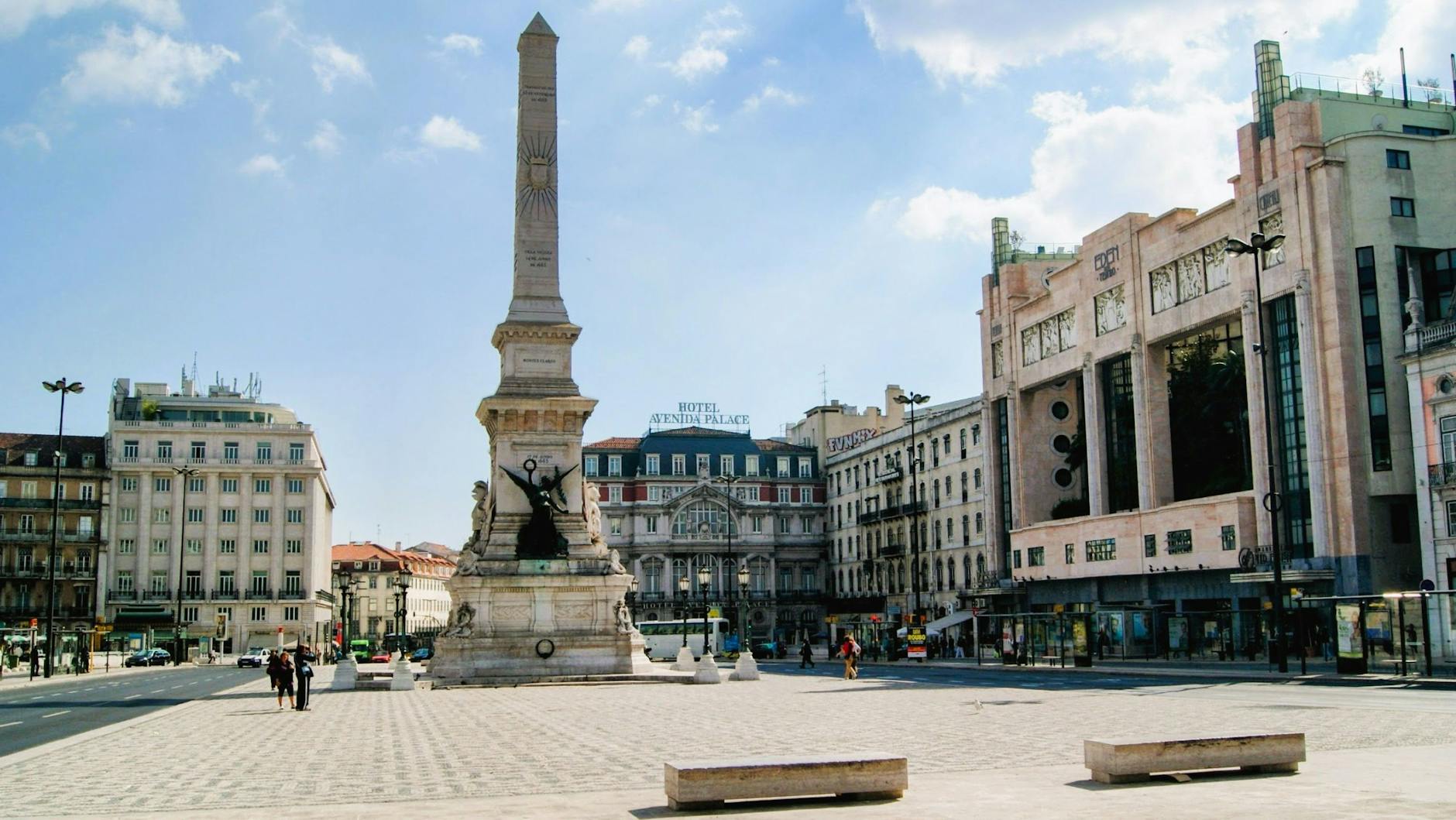
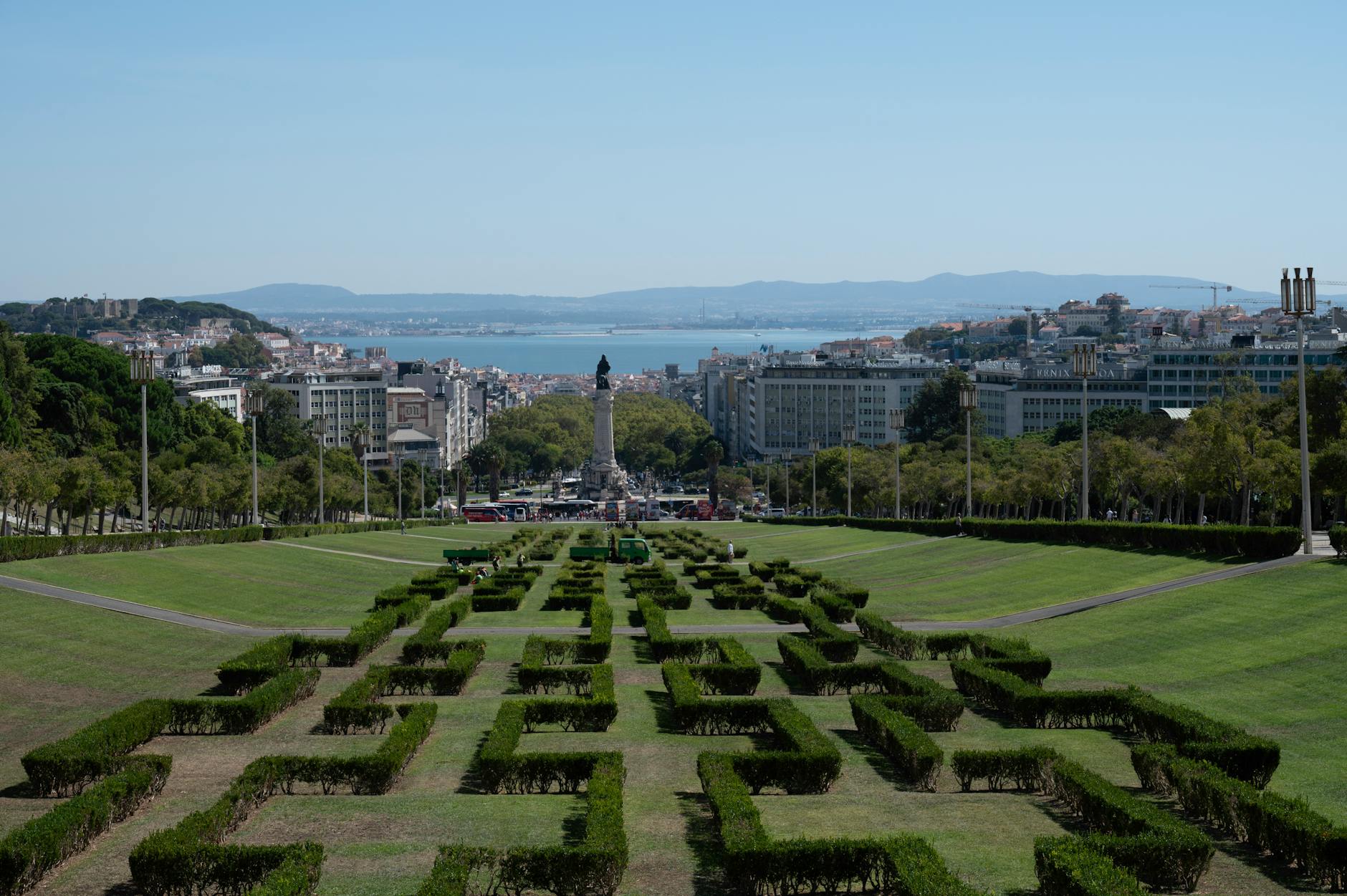
Lisbon’s grand 1.5 km boulevard opened in 1879, built on the footprint of a former public garden called the Passeio Público. Design inspiration came from the Champs-Élysées: a wide central promenade flanked by two driving lanes on each side, lined with plane trees, ornate fountains, mosaic calçada paving in black and white, and 19th-century buildings that have largely kept their facades. It runs due north from Restauradores Square to the large roundabout at Marquês de Pombal, where a column with Pombal’s statue surveys the city he rebuilt after the 1755 earthquake.
The boulevard is flat, shaded, and genuinely pleasant to walk — a rarity in Lisbon. Even if luxury retail isn’t your focus, the stroll is worth doing once for the architecture and the mosaics underfoot.
Luxury Shopping
Lisbon’s premier address for international luxury brands. Flagships running the full length:
- Gucci, Louis Vuitton, Prada, Cartier, Tiffany & Co
- Christian Dior, Burberry, Carolina Herrera, Loewe
- Hugo Boss, Tous, Boca do Lobo (Portuguese luxury furniture)
- Portuguese multi-brand boutiques between the international flagships
Other Avenida da Liberdade Highlights
- Tivoli Avenida Liberdade — historic luxury hotel opened 1933; famous rooftop bar
- Cinema São Jorge — a 1950 Art Deco cinema still operating, used for the Lisbon Film Festival; grand auditorium worth seeing
- Casa do Alentejo (Rua das Portas de Santo Antão, just off Avenida) — 17th-century palace with a Moorish-style interior courtyard and restaurant; one of Lisbon’s most undervisited ornate spaces
- Eduardo VII Park — formal park at the north end beyond Marquês de Pombal; views back down the Avenida toward the river
Best Restaurants in Príncipe Real and Avenida
Príncipe Real Restaurants
- A Cevicheria — Chef Kiko Martins’s modern ceviche bar; no reservations, queue forms early. The giant hanging octopus above the bar sets the tone. One of the best meals in Lisbon.
- 100 Maneiras — Sarajevo-born chef Ljubomir Stanisic’s modern Portuguese tasting menu in a dark, intimate room. Mid-to-upscale, book ahead.
- Tapisco — sophisticated petisco bar mixing Portuguese small plates with Spanish tapas. Casual feel, serious food.
- Pesca — modern seafood, short focused menu. Good for lunch.
- JNCQUOI — opulent see-and-be-seen Italian/international restaurant in a grand palace space. The room is spectacular.
- Boa-Bao — Asian fusion, lighter and quicker than the other options on this list.
Avenida Restaurants
- Eleven — 1 Michelin star, hilltop near Marquês de Pombal, panoramic views over the city. Chef Joachim Koerper’s modern European menu. Book ahead.
- Solar dos Presuntos (Restauradores, just south) — old-school formal Portuguese; Lisbon’s power-lunch institution for decades. Heavy, slow, excellent.
- Various luxury hotel restaurants — Tivoli’s and Avenida Palace’s dining rooms are serious options for breakfast and dinner.
Cocktail Bars
- Lost In Esplanada — garden terrace adjacent to Príncipe Real garden; Indian-inflected small plates and well-made cocktails
- Pavilhão Chinês — a Lisbon institution on Rua Dom Pedro V; the walls are covered floor-to-ceiling in antique toy soldiers, model cars, and curiosities. Order a gin and just look around.
- Foxtrot — speakeasy-style on Travessa Santa Teresa; low-lit, good music, regular local crowd
- Red Frog — the Príncipe Real speakeasy with a proper cocktail program
- Sky Bar Tivoli — rooftop on Avenida; the sunset view south toward the Tagus is reliably excellent
- SEEN Lisboa — top of Tivoli Liberdade hotel; outdoor terrace, good views
Best Boutique Hotels
5-Star Luxury
- Four Seasons Hotel Ritz Lisbon — overlooking Eduardo VII Park; the city’s most iconic five-star, opened 1959
- Tivoli Avenida Liberdade — historic 1933 luxury hotel, famous rooftop bar, central boulevard position
- Avani Avenida Liberdade — modern five-star, strong pool, design-forward
- Memmo Príncipe Real — design-forward boutique hotel in Príncipe Real itself; rooftop pool with castle views
- The Vintage Hotel — chic and intimate, rooftop terrace with city views
Boutique 4-Star
- Hotel Britania — 1942 Art Deco building on Avenida, classified national heritage; small, quiet, the building is the attraction
- Heritage Avenida Liberdade — 18th-century building, small pool, strong boulevard location
- Casa Balthazar — intimate family-run B&B in upper Chiado, walking distance to Príncipe Real
- Hotel das Amoreiras — quieter, sophisticated, good value for the quality
See our best hotels guide for full reviews and current pricing.
Where to Stay: Neighborhood Pros and Cons
Príncipe Real
Pros: Quieter than the Baixa tourist core; walking distance to Chiado, Bairro Alto, and the waterfront; the best concept-store shopping in Lisbon; garden and viewpoint within five minutes; excellent restaurant and bar scene that skews local over tourist
Cons: Higher prices; less raw Lisbon character; some streets steep; fewer budget options
Avenida da Liberdade
Pros: Best metro access in Lisbon; most central for first-timers; luxury shopping at the door; world-class hotels with serious facilities; flat walking to Baixa and Chiado
Cons: Less neighborhood character; more business-district feel; traffic noise on the boulevard; hotel prices reflect the addresses
Praça da Alegria
The small “Square of Joy” sits between the base of Avenida and the approach to Príncipe Real. Quiet, shaded, several boutique hotels around it. Worth a five-minute sit. A few good mid-range hotels use this square as their address precisely because it splits the difference between the two neighborhoods — central enough, quiet enough.
Walking Route: A Day in Príncipe Real and Avenida
9:30 AM — Coffee at Bettina & Niccolò Corallo on Rua da Escola Politécnica
10:15 AM — Browse Embaixada concept mall; allow 45 minutes
11:15 AM — Walk through Jardim do Príncipe Real; descend to the Reservatório beneath the garden (€3)
12:00 PM — Wander concept stores on Rua Dom Pedro V
1:00 PM — Lunch at A Cevicheria (queue) or Tapisco (reservations easier)
3:00 PM — Walk south to Miradouro de São Pedro de Alcântara for the castle view
3:30 PM — Down to Avenida da Liberdade; walk the full length north to south
4:30 PM — Window-shop the luxury flagships; detour to Casa do Alentejo
6:00 PM — Sunset drinks at Sky Bar Tivoli (book ahead)
8:30 PM — Dinner at 100 Maneiras or Eleven (book ahead for either)
FAQ: Príncipe Real and Avenida da Liberdade
Is Príncipe Real a good place to stay in Lisbon?
Yes — it’s among the best neighborhoods for travelers who want sophistication and walkability with a quieter residential character. Walking distance to Chiado, Bairro Alto, and the waterfront. The main drawbacks are cost and some steep streets.
What’s special about Avenida da Liberdade?
Lisbon’s grand 1.5 km luxury boulevard, inspired by the Champs-Élysées. Flat, shaded, pleasant to walk. Best metro connectivity in the city. Flagship stores of most major international luxury brands. The architecture — 19th-century buildings, mosaic paving, ornate fountains — makes it worth walking even for non-shoppers.
Is Príncipe Real expensive?
Yes, among Lisbon’s pricier neighborhoods. Boutique hotels typically €180–€400 per night. Mid-range restaurants €40–€80 per person. Concept-store shopping is boutique-priced. Not designed for budget travelers.
What’s the best concept store in Príncipe Real?
Embaixada — a 19th-century neo-Moorish palace curating Portuguese fashion, design, ceramics, and lifestyle brands. Free entry. The building is worth seeing regardless of whether you buy.
How do I get to Príncipe Real?
Metro Rato (yellow line) or Avenida (blue line), then a 5–10 minute walk. Walking from Bairro Alto takes about 10 minutes. From Baixa-Chiado, 15–20 minutes uphill.
Is Avenida da Liberdade walkable?
Completely flat, 1.5 km end to end, about 20 minutes at a leisurely pace. Plane trees provide shade. One of the most pleasant walks in central Lisbon.
What’s the best viewpoint near Príncipe Real?
Miradouro de São Pedro de Alcântara — five minutes east. Looks directly toward Castelo de São Jorge and the Alfama roofscape. Best in late afternoon.
Bottom Line
Príncipe Real and Avenida da Liberdade reward the visitor who came prepared. Príncipe Real for the garden, the concept stores, Embaixada, the cocktail bars, and the quieter residential atmosphere. Avenida for the grand architecture, the metro access, and the luxury hotel lineup. Stay in either if you prefer quiet sophistication over hostel-area buzz. Visit both for half a day even if you’re sleeping elsewhere — Embaixada, the Reservatório, the Miradouro, and a sunset at Sky Bar Tivoli make a solid half-day anywhere in Lisbon’s calendar.
These are two of the more expensive places to sleep in Lisbon, and the case for doing it is not obvious. The where to stay pillar makes the comparison, the hotel picks cover the Avenida’s grand end, the hostel guide the opposite, and Alfama is the neighbourhood that offers the character these two districts trade away for comfort.
Shopping Guide: What to Buy in Príncipe Real
Príncipe Real is the best neighborhood in Lisbon to buy things that are actually made in Portugal. Not the azulejo fridge magnet from a factory in China — the real thing. A short guide to what’s worth your money:
Portuguese Ceramics and Tiles
Atelier Surrealejos on Rua Dom Pedro V makes modern azulejo art pieces that function as wall art rather than souvenirs — hand-painted tiles with contemporary designs that nod to traditional motifs without copying them. Prices start around €25 for small pieces; larger framed works run €80–€200. Worth it if you have bag space.
Sant’Anna on Rua do Alecrim (walking distance, in Chiado) is the other serious ceramics destination — a factory opened in 1741 that still makes hand-painted tiles. Custom work takes time; off-the-shelf pieces start around €30.
Portuguese Fashion and Design
Embaixada remains the anchor. But the surrounding streets have a concentration of independent Portuguese designers that has grown significantly in the last five years. Several Príncipe Real designers have won international attention: Ana Salazar and Alexandra Moura have been working from this neighborhood for decades; newer names like Storytailors (theatrical fashion) and Hibu (minimalist leather goods) have more recently set up here.
Cork Products
Portugal produces around half the world’s cork supply. Cork & Co in Príncipe Real demonstrates what good design does with the material: bags, wallets, shoes, and home accessories that are genuinely impressive in terms of durability and finish. A cork wallet runs around €35; bags €60–€150. Lightweight, vegan, and something you can actually use rather than display.
Chocolate
Chocolataria Equador makes single-origin chocolate using Portuguese techniques and sourcing partnerships with São Tomé cocoa farms — Portugal’s colonial-era connection to West African cocoa is part of what makes Portuguese chocolate worth seeking out. A selection box of dark chocolates runs around €15–€25. One of the better edible souvenirs in the city.
Príncipe Real vs Bairro Alto vs Chiado: What’s the Difference?
These three neighborhoods sit within 10–15 minutes of each other on foot and get confused in visitor itineraries constantly. A quick distinction:
- Príncipe Real: Residential, sophisticated, design-boutique-rich, quieter evenings. The neighborhood for people who want high quality without the tourist concentration. LGBTQ+-friendly. Best concept stores in the city. Cocktail bars rather than clubs.
- Bairro Alto: Nightlife first. The bars are tiny, the music is loud after midnight, the streets fill with groups. Excellent for a specific kind of night out; less suitable for a quiet dinner or a design-shopping afternoon. The restaurant scene has improved significantly though.
- Chiado: The polished middle ground — sophisticated shopping (Zara, Bertrand Bookshop, a few international flagships), good cafés, the best concentration of mid-to-upscale restaurants. More commercial than Príncipe Real but easier to navigate. Usually the first neighborhood first-time visitors discover.
The practical takeaway: stay in Príncipe Real if you want quiet sophistication. Eat in Chiado if you want the broadest restaurant range. Go to Bairro Alto if you want to be out until 3 AM.
Day Trips and Half-Day Excursions from Príncipe Real
Príncipe Real’s position in the city makes it a useful base for reaching several good half-day excursions on foot or by metro:
- Parque das Amoreiras (15 min walk north) — a quiet residential park, largely tourist-free, with an 18th-century aqueduct running through it. The Aqueduto das Águas Livres is one of Lisbon’s great engineering achievements — 18 km of arches bringing water to the city, still standing. Free to enter the park; guided aqueduct walks available.
- Museu Nacional de Arte Antiga (20 min walk south) — the national fine arts museum along the riverfront, with Nuno Gonçalves’s Panels of São Vicente (15th century) alone worth the trip. Entry around €10.
- Sintra (40 min by train from Rossio) — the day trip from Príncipe Real is easy: 10-minute walk to Rossio Station, 40-minute train. See our Sintra day trip guide.
- Belém (30 min by tram 15E or bus) — the historic waterfront district with Jerónimos Monastery and the Tower of Belém. Catch tram 15E from Praça do Comércio (15 min walk downhill from Príncipe Real).