Lisbon Nightlife
Gay Lisbon: LGBTQ+ Bars, Clubs and Neighbourhoods
Príncipe Real and Bairro Alto, venue by venue, plus the beaches, Pride, where to stay — and a straight answer on Portugal's legal picture in 2026.
In this guide
Gay Lisbon is small, concentrated, unusually relaxed and easy to find — which is the good news and also, if you have come expecting Berlin or Madrid, the thing to calibrate. Almost the whole scene fits inside a fifteen-minute walk between Príncipe Real and Bairro Alto, the bars are mixed rather than segregated, and the city’s general attitude is closer to indifference than to either hostility or celebration. This guide covers where the venues actually are, what happens on which night, the beaches, Pride, where to stay, and an honest account of the legal and social picture in 2026 — including a development that trans travellers in particular should know about before booking.
The geography: two neighbourhoods, one hill
You do not need a map so much as a hill. The scene occupies the high ground west of Avenida da Liberdade, and it splits cleanly in two.
Príncipe Real
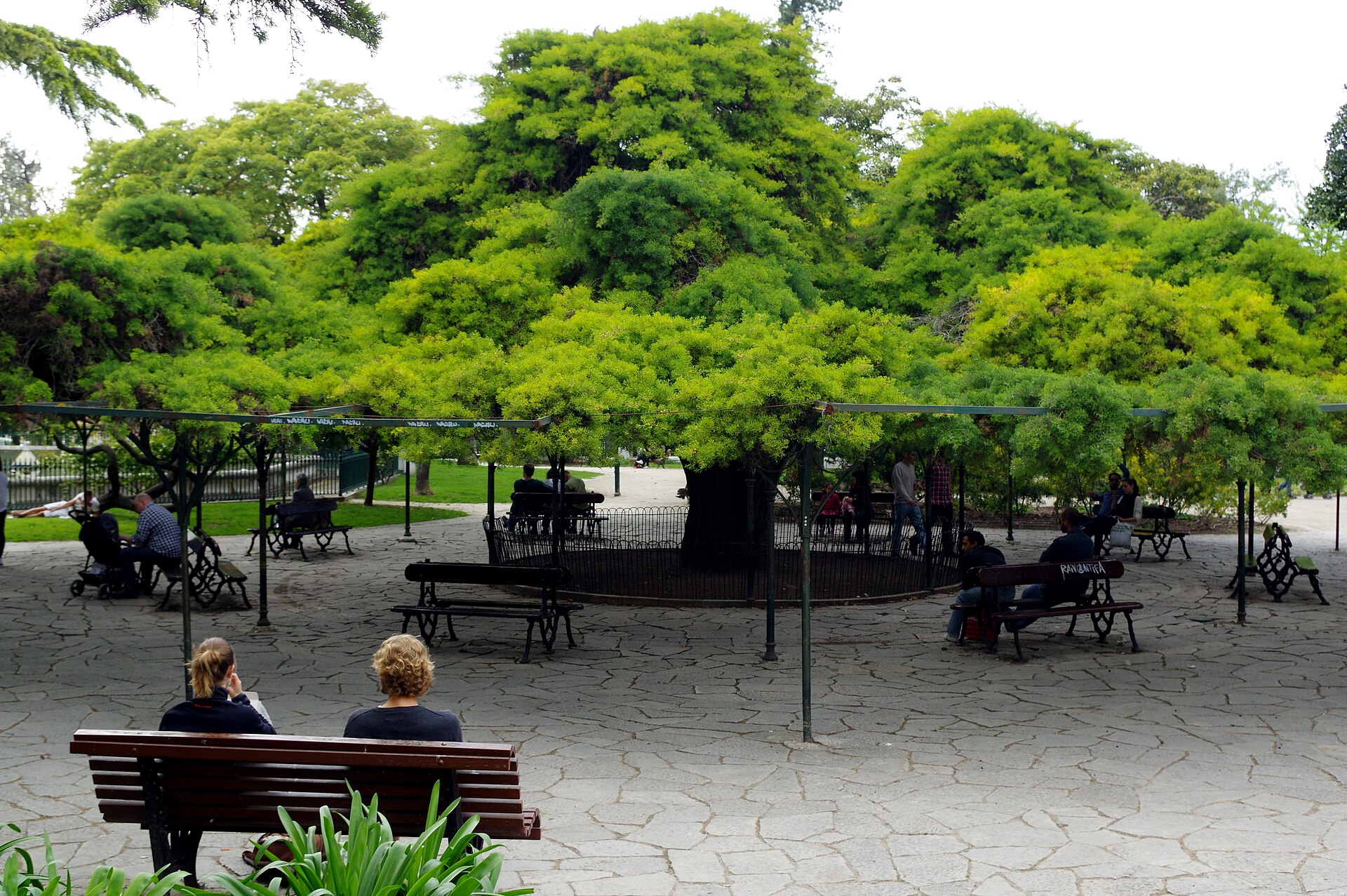
Príncipe Real is the heart of it and has been for thirty years. It is a flat plateau of nineteenth-century townhouses around a garden square with an enormous, spreading cypress at its centre, and it is simultaneously the most obviously gay neighbourhood in Portugal and a completely ordinary residential district where people walk dogs and buy vegetables. Venues cluster along Rua de São Marçal and Rua da Palmeira, and around the garden itself. During the day it is concept stores, coffee, an antiques market at the weekend and a botanical garden; at night it is where the scene ends up after midnight.
Bairro Alto
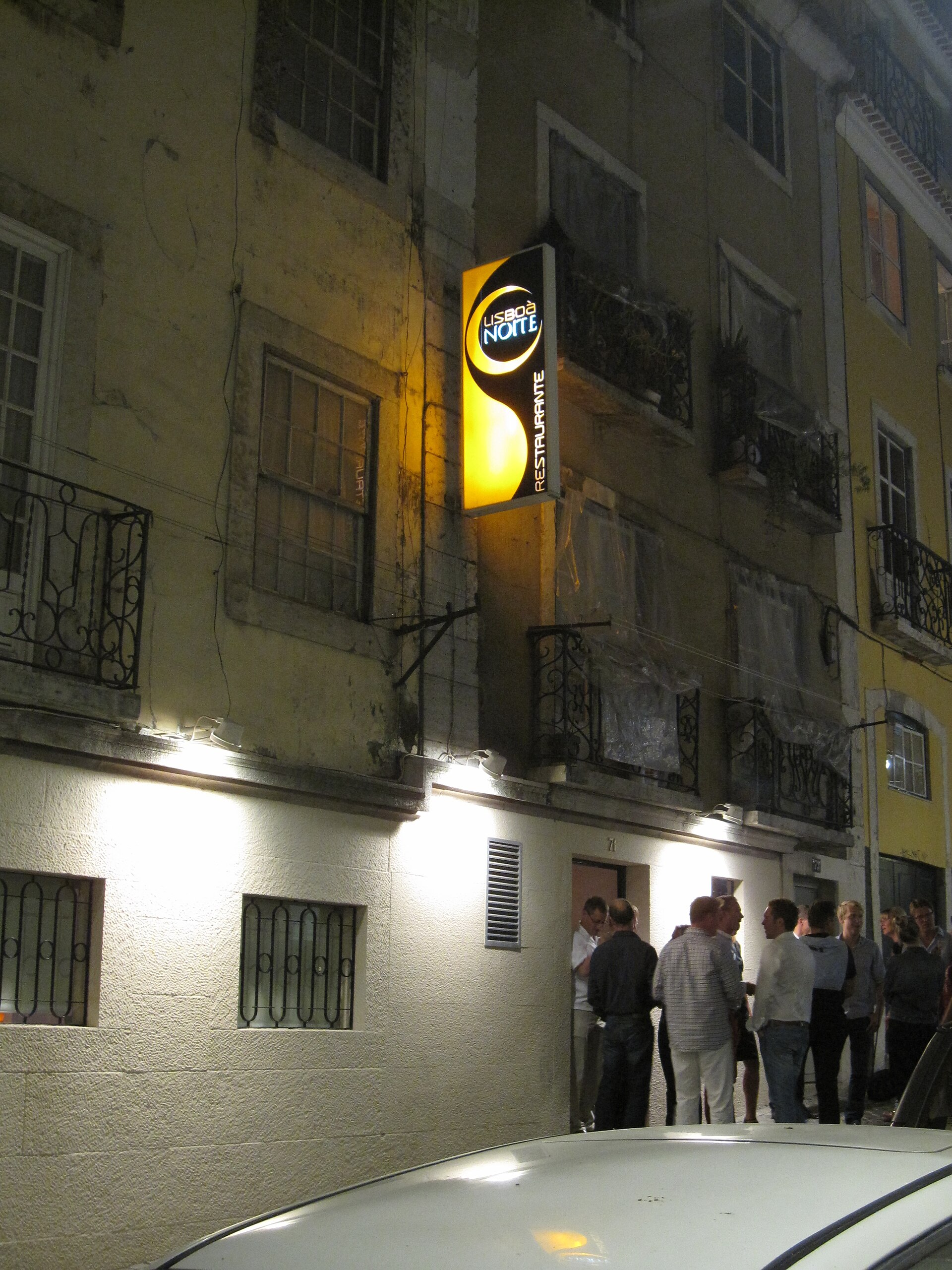
Downhill and immediately south, Bairro Alto is where the night starts. It is not a gay neighbourhood as such — it is a grid of narrow streets containing something like a hundred tiny bars of every description, several of them gay, all of them spilling their customers into the street. The drinking is done standing outside with a plastic cup, it is cheap, and nobody is checking who you came with. From about 22:30 to 01:30 this is where you drift, and then you walk five minutes uphill for the rest of the night.
A third pole worth knowing: Cais do Sodré, down by the river, is straighter and more tourist-facing but shades into the same crowd late on.
The bars
Venues change hands, and a bar that was the place two years ago can be a burger restaurant now — so treat every list, including this one, as a starting point and check the door before you plan a night around it.
- Bar 106 — Príncipe Real, open since 1995 and the oldest gay bar in the city. Small, friendly, mixed ages, and the reliable place to start if you do not know anybody. Typically open daily from about 19:30 to 02:00.
- Bar TR3S Lisboa — also Príncipe Real, a bigger, calmer room with a proper outdoor terrace, a long gin and cocktail list, and a crowd that skews older and beardier. The terrace makes it the best of them on a warm evening.
- Purex — Rua das Salgadeiras, in Bairro Alto. Long-running, mixed, more indie than scene, with a roof terrace. A good corrective if the polished end is not your thing.
- Finalmente Club — the drag institution, running for something close to fifty years, with nightly shows and a small dance floor afterwards. It is not sophisticated and it is not trying to be; it is a piece of Lisbon history that happens to be a nightclub.
- Trumps — Rua da Imprensa Nacional, the biggest gay club in the city. Two rooms, drag, DJs, typically Thursday to Sunday and open until roughly six in the morning.
Prices are the same as anywhere else in Lisbon and that is the pleasant surprise: a beer is €2–€3 in a bar, a cocktail €8–€12 in most places and €12–€16 in the polished ones. Nothing here charges Berlin or London money, and covers, where they exist, are modest.
How a night actually runs
Timings matter more here than in most cities, because arriving early means arriving alone. The rhythm is the same as the rest of Lisbon’s nightlife, shifted slightly later:
- 19:00–20:30 — sunset. Miradouro de Santa Catarina or a rooftop; both are five minutes from everything.
- 20:30–22:00 — dinner. Príncipe Real and Bairro Alto are full of good small restaurants and nobody eats at seven.
- 22:00–00:30 — Bairro Alto, on foot, outdoors, moving between bars.
- 00:30–02:00 — up the hill to Príncipe Real: Bar 106, TR3S, Finalmente.
- 02:00 onwards — Trumps, or one of the mixed clubs in Alcântara and along the docks. Nothing is busy before two.
Turning up at Trumps at midnight is a common visitor mistake. So is planning a Tuesday: the scene is a Thursday-to-Sunday proposition, and a Monday or Tuesday night in Príncipe Real is a quiet drink with four other people, which can be lovely but is not what you booked for.
Daytime
Lisbon does not have a “gay daytime scene” as a separate thing, which is arguably the point. What it has is Príncipe Real, where a large share of the cafés, concept stores, wine bars and restaurants are gay-owned or gay-adjacent and nobody makes anything of it. Spend a morning there: coffee on the square, the Embaixada shopping gallery in its palacete, the antiques and flea stalls, and the botanical garden downhill.
Beyond that, the ordinary city is the daytime — the viewpoints, the Gulbenkian, LX Factory, a day in Sintra. Nothing about being a gay visitor changes any of it.
The beaches
This is one of Lisbon’s genuine advantages over most European city breaks: you can be on an Atlantic beach in under an hour, and one stretch of it has been the gay beach for decades.
- Praia 19, Costa da Caparica. The best-known gay and nudist beach in the Lisbon area, on the long dune-backed coast south of the river. In summer a narrow-gauge beach train, the transpraia, runs down the sand spit between the numbered beaches; out of season you walk. Getting there means crossing the river — ferry or bus — and the practicalities are in our Costa da Caparica guide.
- Meco, further south near Sesimbra, is the other long-standing naturist beach, wilder and harder to reach without a car. See the Sesimbra guide.
- Carcavelos and the Cascais line are the easy, family, everyone-goes beaches — twenty-five minutes on the train and no scene attached at all.
A practical warning that applies to all of them: this is the Atlantic, not the Mediterranean. The water is cold in any month, the surf is real, and the afternoon wind on the Caparica coast can be fierce. Take a jumper even in August.
Pride and the calendar
Lisbon has two distinct June events and people routinely confuse them.
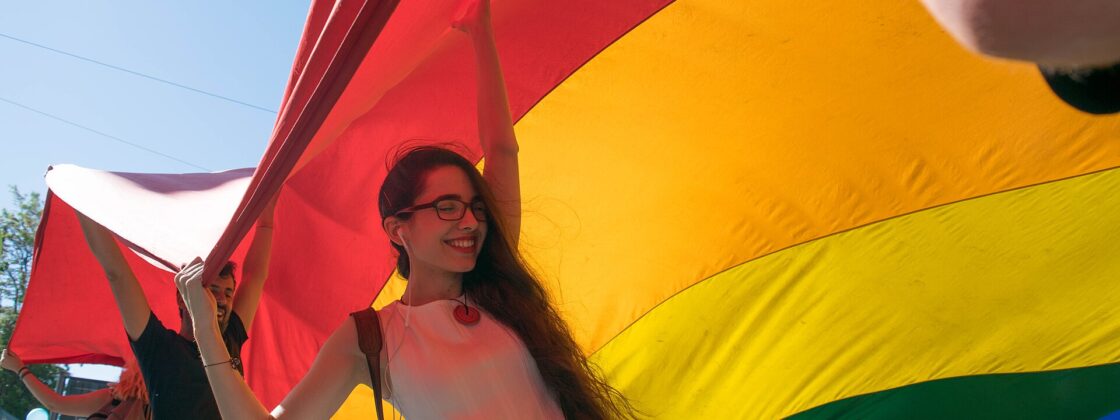
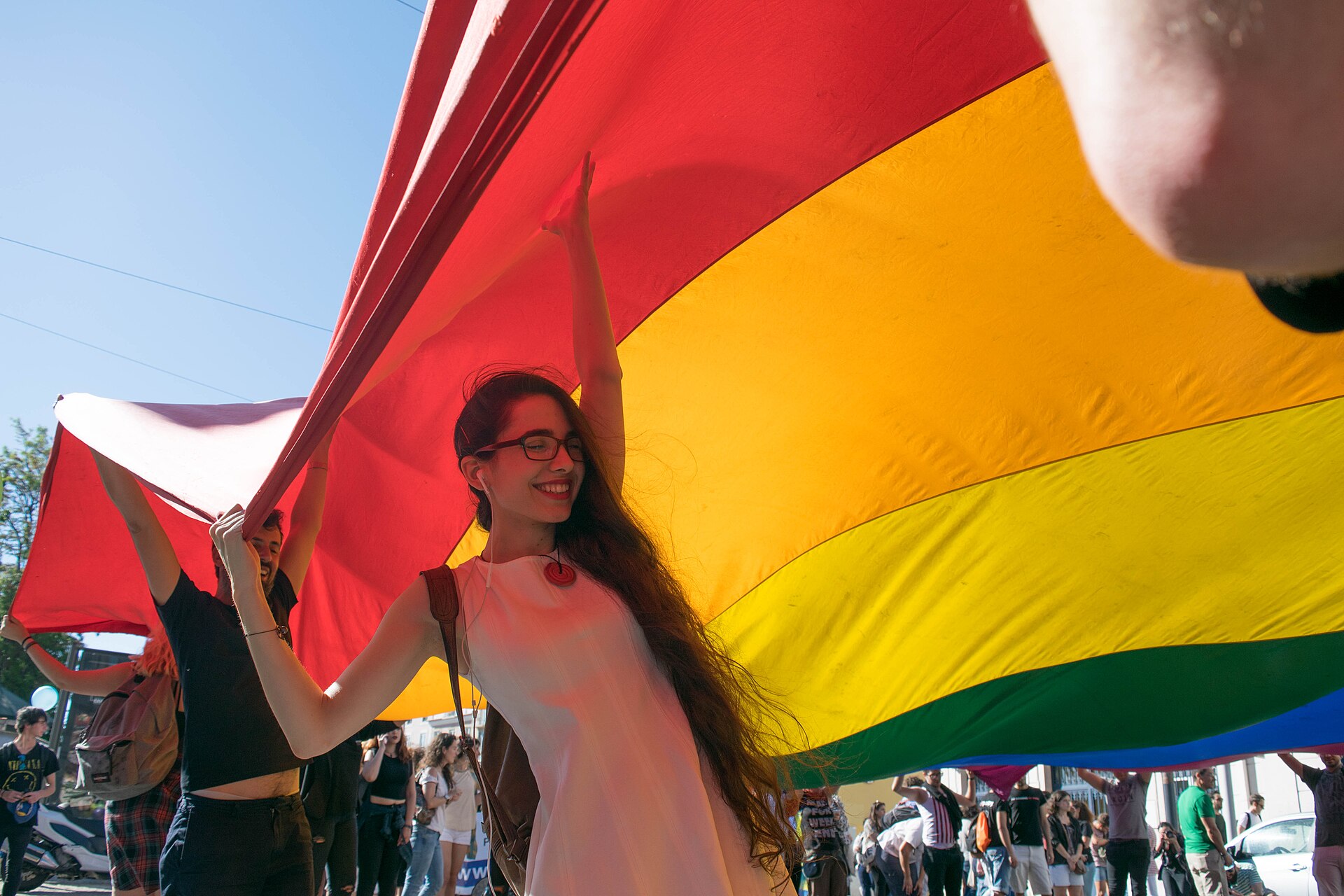
- Arraial Lisboa Pride is the big free street party, organised by ILGA Portugal and held at Terreiro do Paço — the vast riverside square — running from around midday well past three in the morning, with concerts, drag and DJs. Tens of thousands of people, and it costs nothing to walk in.
- The Marcha do Orgulho LGBTI+ de Lisboa is a separate march through the city, more political in character, usually within a week of the Arraial.
Do not book flights around a date you read on an aggregator. Dates are announced late, listings sites disagree with each other every single year, and we have watched them publish three different weekends for the same edition. Check ILGA Portugal’s own channels, and note that mid-June is also Santo António, when the whole city is in the street for entirely unrelated reasons and every bed in Lisbon is booked. Combining the two is a wonderful week and an expensive one.
Where to stay
Príncipe Real is the obvious answer and a genuinely good one regardless of orientation: flat once you are up there, residential, walkable to the whole scene, and full of small hotels in converted townhouses. Bairro Alto is closer to the noise — literally; the street is loud until three at weekends, and a street-facing room is a mistake. Chiado is a five-minute walk from both and quieter.
- Boutique hotels — several of the best are in Príncipe Real itself.
- Hotels across the city and apartments if you want a kitchen and a longer stay.
- Our full neighbourhood breakdown is in where to stay in Lisbon.
Remember the tourist tax: €4 per person per night, capped at seven nights, collected by the property and not usually included in the rate you booked.
Safety, attitudes and the law — the honest section
Portugal has one of the stronger legal frameworks in Europe. Same-sex marriage has been legal since 2010, joint adoption since 2016, and legal gender recognition by self-determination since 2018. On ILGA-Europe’s 2026 Rainbow Map, which scores 49 European countries against 75 legal and policy criteria, Portugal ranks 12th with a score of 67% — down one place on the previous year.
Socially, Lisbon is easy. Same-sex couples holding hands in Príncipe Real, Chiado or Bairro Alto is unremarkable and draws nothing. The city is safe by European capital standards and the realistic risk on a night out is a pickpocket, not a confrontation — our safety guide covers that in general. Outside the centre, and particularly in smaller towns and among older generations, expect the same reserve you would find in most of southern Europe: not hostility, but not indifference either.
What trans travellers should know
This part needs saying plainly rather than glossed. In March 2026 the Portuguese parliament voted to advance three bills that would substantially roll back trans rights — banning gender-affirming care for minors, requiring medical approval before an adult can change their name or sex marker, and restricting discussion of what the bills call “gender ideology” in schools. As of September 2026 they were still moving through committee and had not been signed into law, which is why they had not yet moved Portugal’s Rainbow Map score.
For a short visit this changes very little in practice: Lisbon itself remains one of the more comfortable cities in southern Europe, and nothing about the bills affects a tourist walking around. But it is an active political situation rather than a settled one, the direction of travel matters if you are considering a longer stay or a move, and anyone who tells you Portugal is uncomplicated on this point in 2026 is a year out of date. Check the current legal position before you travel — ILGA Portugal is the organisation that tracks it.
For lesbian and queer women travellers
The honest position: the dedicated venue scene in Lisbon is small and heavily male-dominated, and there is no long-running women’s bar of the kind Berlin or Barcelona sustains. What there is instead is a strongly mixed culture — most of the Príncipe Real and Bairro Alto bars are genuinely for everyone, and the more interesting nights tend to be roving parties and collectives rather than fixed addresses. That means the useful research is Instagram and local listings in the week before you arrive, not a guidebook. It is a real limitation of the city, and pretending otherwise does nobody any favours.
Practical notes
- Getting home. The metro runs until 01:00, which is before the night has properly started. After that it is Carris night buses in the 200-series, or Uber and Bolt, which surge at 02:00 and again around 04:00 when the clubs empty. Príncipe Real to Chiado is a ten-minute walk downhill and often the fastest option.
- Apps work as everywhere and are widely used; the scene is small enough that they function more as a directory than a discovery tool.
- Language. English is spoken almost universally in bars and hotels in the centre. A few words of Portuguese are still appreciated — see our phrasebook.
- Shoes. Unromantic but the single most useful piece of advice on this page: the pavement is polished limestone, it is steeper than it looks, and it is treacherous in the rain and after four drinks.
A three-night plan
If you have a long weekend and want the scene without giving up the city, this is the shape we would suggest.
- Friday. Arrive, drop bags in Príncipe Real, walk down to Santa Catarina for sunset. Dinner in Bairro Alto around nine. Bars in the street from half ten, up the hill to Bar 106 and TR3S after midnight, Trumps if you have the legs.
- Saturday. A slow morning — the antiques stalls and coffee on the Príncipe Real square, then the Gulbenkian or a wander through Alfama. Late afternoon on a rooftop. Dinner, then Finalmente for a drag set, then whichever club has the night you want.
- Sunday. The beach — the ferry across to Cacilhas and out to Caparica, or the train along the coast if you want it easier. Back for an early dinner, because Sunday nights are quieter than Saturdays but far from dead.
That leaves Sintra undone, which is the correct trade on three nights. Four nights and you can have both — see the weekend break guide for the general version.
A few things that surprise visitors
- How small it is. On a good Saturday you will recognise people from one bar in the next. That is the charm and it is also the limit — if you want anonymity in a crowd of thousands, this is not that city.
- How mixed it is. Most of the “gay bars” are perhaps sixty per cent gay on a given night, with everyone else’s friends and half the neighbourhood in as well. Lisbon does not really do segregated venues, and the handful that are strictly scene feel like the exception.
- How international the crowd is. Between the digital nomads, the students and the weekenders, a Saturday in Príncipe Real can be more Brazilian, Spanish, British and German than Portuguese. Whether that is a feature or a disappointment depends on what you came for; if you want a local night, go on a Thursday.
- That the sauna and cruise venues exist but are not the centre of things. There are a few, they are discreet, and they are easily found through the usual listings apps. Unlike some European cities, they are not what the scene is built around.
- How early it gets quiet. The city genuinely shuts on Sunday and Monday nights, and residents’ noise complaints have made the police much stricter about clearing the Bairro Alto streets after two. The night moves indoors then, or it ends.
Frequently asked questions
Is Lisbon gay-friendly?
Yes. Portugal ranks 12th of 49 European countries on ILGA-Europe’s 2026 Rainbow Map at 67%, same-sex marriage has been legal since 2010, and central Lisbon is relaxed to the point of indifference. Public affection in Príncipe Real, Chiado or Bairro Alto draws no reaction.
Where is the gay area of Lisbon?
Príncipe Real, with Bairro Alto immediately downhill. Venues cluster on Rua de São Marçal and Rua da Palmeira and around the garden square. Everything is within a fifteen-minute walk.
What are the best gay bars in Lisbon?
Bar 106 is the oldest and the easiest to arrive at alone; Bar TR3S has the best terrace; Purex is the mixed, indie option in Bairro Alto; Finalmente is the veteran drag venue; Trumps is the main club. Check current opening days before you go — venues turn over.
When is Lisbon Pride?
In June. The Arraial Lisboa Pride street party is held at Terreiro do Paço and organised by ILGA Portugal, with the Marcha do Orgulho LGBTI+ as a separate march usually within a week. Exact dates are announced late and listings sites frequently disagree, so confirm with ILGA Portugal before booking.
Where is the gay beach near Lisbon?
Praia 19 on the Costa da Caparica, south of the river, which is both the gay beach and a naturist one. Meco, further south, is the other long-standing option. Both need a river crossing and the water is cold Atlantic all year.
Is Lisbon safe for LGBTQ+ travellers at night?
Yes, in the central neighbourhoods, which stay busy late. The realistic risks are pickpocketing in crowded streets and the slippery pavement rather than harassment. Standard caution outside the centre.
Is Lisbon good for trans travellers?
The city itself is comfortable, but the national picture is in flux: bills advanced in March 2026 would roll back legal gender recognition and restrict care for minors, and as of September 2026 they had not become law. Check the current position with ILGA Portugal before travelling, particularly if documents matter for your trip.
What nights are best to go out?
Thursday to Sunday. Monday to Wednesday the scene is very quiet, and the clubs are largely closed or empty.
Are there lesbian bars in Lisbon?
Not a long-running dedicated one, no. The scene is mixed rather than segregated, and women’s nights tend to be roving parties announced on social media. Check local listings in the week before you arrive.
How expensive is a night out in gay Lisbon?
Cheap by northern European standards: €2–€3 for a beer, €8–€16 for a cocktail depending on the room, and modest or no cover charges. A full night out including dinner runs €50–€80 a head.
Bottom Line
Gay Lisbon is compact, welcoming and unpretentious, and its greatest strength is that it barely operates as a separate scene at all — Príncipe Real is simply a nice neighbourhood where a lot of the bars happen to be gay, and nobody in central Lisbon cares who you are holding hands with. Come Thursday to Sunday, start in Bairro Alto at half past ten, walk up the hill after midnight, and give yourself a day on the Caparica sand. Do not book around a Pride date you found on a listings site, do not expect a big-city scene, and if you are trans, check where the 2026 legislation has got to before you travel rather than assuming Portugal’s old reputation still holds unchanged.
Photo Credits
The spreading tree in Jardim do Príncipe Real: 16.4.14 Lisbon 57 (13929761434) by Donald Judge from England, CC BY 2.0, via Wikimedia Commons.
A group gathered outside a Bairro Alto restaurant at night: Lisboa Noite (3901646262) by Bernt Rostad from Oslo, Norway, CC BY 2.0, via Wikimedia Commons.