Lisbon Nightlife
Live Music in Lisbon: Jazz, Indie, Fado & Concert Venues 2026
Where to find live music in Lisbon—jazz clubs, indie venues, African music bars, concert halls, and free outdoor performances.

In this guide
- Lisbon Live Music at a Glance
- Jazz Venues
- African Music
- Major Concerts and Arenas
- Electronic and Dance
- Indie, Punk, and Experimental
- Fado (Traditional Portuguese)
- Classical Music
- Bairro Alto Bar Live Music (Free)
- Lisbon Music Festivals
- How to Find What’s Playing
- Live Music Etiquette
- Lisbon vs Other European Cities for Live Music
- A Suggested Lisbon Music Night Out
- FAQ: Live Music Lisbon
- Bottom Line
- Where Lisbon’s Live Music Fits the Bigger Picture
Live music Lisbon goes far beyond fado — the city has world-renowned jazz at Hot Clube de Portugal (DownBeat magazine’s top European jazz club), African-music institutions like B.leza, electronic temple Lux Frágil, the historic Coliseu dos Recreios for major concerts, and free Bairro Alto performances on most nights. Whether you want experimental indie, Cape Verdean kizomba, or pop arena shows, Lisbon’s live music scene punches well above its size.
This guide covers every genre: jazz clubs, fado venues, African music bars, electronic and dance spots, indie spaces, classical concert halls, music festivals, and how to find out what’s on any given night. Updated for 2026.
Lisbon Live Music at a Glance
| Genre | Best Venue |
|---|---|
| Jazz | Hot Clube de Portugal |
| Fado | Mesa de Frades, Tasca do Chico |
| African (kizomba, funaná, marrabenta) | B.leza |
| Electronic / DJ | Lux Frágil, Music Box |
| Major concerts | Coliseu dos Recreios, Altice Arena |
| Indie / experimental | Galeria Zé dos Bois (ZdB) |
| Live cover bands / pop | Casino Lisboa, various Bairro Alto bars |
| Classical | São Carlos Theatre, Gulbenkian |
Jazz Venues
Hot Clube de Portugal
Founded 1948 — one of the world’s oldest continuously operating jazz clubs. DownBeat magazine named it the top jazz club in Europe. Tiny basement venue at Praça da Alegria 39, between Avenida da Liberdade and Príncipe Real. Has hosted Dexter Gordon, Mark Turner, Aaron Goldberg, John Abercrombie, and a constant stream of international artists across seven decades.
The atmosphere is exactly what a basement jazz club should be: close quarters, serious listeners, genuine musicians. Cover charge varies by the calibre of the act — typically in the €8–15 range, sometimes higher for major bookings. Reserve in advance for weekend shows. Check the full programme at hcp.pt.
- Where: Praça da Alegria 39 (between Avenida da Liberdade and Príncipe Real)
- Cost: Varies by act — typically €8–15 cover
- Vibe: Intimate, classic basement jazz

Catacumbas Jazz Bar
Underground vault in Bairro Alto. Live jazz most nights, with Sundays particularly consistent. Low ceilings, cocktails, atmospheric candlelit setting. A more casual option than Hot Clube if you want live jazz without a reservation.
Páginas Tantas
Live jazz nights in Bairro Alto. Small cover charge for live shows. Good for an impromptu night out when you want music without planning ahead.
Out Jazz (Summer)
Free outdoor jazz series every Sunday afternoon in July and August at various Lisbon parks and gardens. Consistently excellent quality. One of the best free cultural programmes in the city — bring a picnic, find shade, arrive early.
Jazz em Agosto
The Gulbenkian Foundation’s August jazz festival. Outdoor concerts in the foundation’s gardens. Free entry. World-class international bookings in a beautiful setting.
African Music
Lisbon has a large and culturally significant African diaspora community — primarily from Angola, Cape Verde, Mozambique, and Guinea-Bissau — and the African music scene here is not a curio for tourists. It is the real thing, attended by the communities that created it.
B.leza
Riverfront venue specialising in African music of the Lusophone world. Angolan kizomba, Cape Verdean funaná and coladeira, Mozambican marrabenta. Live music early evening transitions to dancing late. The dance floor is real — many Portuguese and African residents come here specifically to dance kizomba. Not a performance you watch; a social event you join.
- Where: Cais da Ribeira Nova (Cais do Sodré waterfront)
- Cost: €5–10 cover
- Vibe: Social, dance-focused, sweaty in the best sense
Music Station
Smaller African-focused venue. Cape Verdean and Brazilian rhythms. More intimate than B.leza, neighbourhood feel.
Major Concerts and Arenas
Coliseu dos Recreios
Lisbon’s historic concert hall, operating since 1890. Around 3,500 capacity — the ideal size for mid-level international acts, Portuguese artists doing career-peak shows, classical performances, and theatrical productions. The interior is beautiful: ornate late-19th-century architecture with good acoustics. If you have any interest in Portuguese music specifically, this is the venue where the important shows happen.
Altice Arena (formerly MEO Arena)
Lisbon’s largest concert venue at Parque das Nações. 20,000 capacity. Hosts major international touring acts — Coldplay, Beyoncé, Kendrick Lamar, the Rolling Stones. Check current listings at altice-arena.com.
Capitólio
Mid-size venue at Parque Mayer, approximately 2,000 capacity. Art deco building, good sightlines. Indie and rock-leaning programme with occasional electronic and world music bookings.
Stadium Concerts
Estádio do Sport Lisboa e Benfica (Estádio da Luz) hosts occasional major outdoor concerts for the very biggest touring acts. Summer only.
Electronic and Dance
Lux Frágil
Lisbon’s most internationally acclaimed nightclub, and one of the most respected electronic venues in Europe. Part-owned by John Malkovich (genuinely). World-class DJ bookings across house, techno, and electronic music. Three floors including a river-view roof terrace. The sound system is serious. Dress smart-casual; the door is selective on busy nights.
- Where: Av. Infante Dom Henrique (riverside, near Santa Apolónia station)
- Cost: €15–20 cover
- Hours: Until 6 AM
- Vibe: Fashionable, international, serious electronic music crowd
Music Box
Under the Cais do Sodré bridge near Pink Street. Electronic music focus, multiple rooms. Open until 6 AM. More accessible than Lux Frágil in terms of door policy; equally serious about music.
Ministerium Club
House music focus. Smaller and more intimate than Lux or Music Box. Worth checking if the headliner is in your wheelhouse.
K Urban Beach
Outdoor riverside summer venue. House music, open-air terrace, summer-only programme. Best in July and August.
Indie, Punk, and Experimental
Galeria Zé dos Bois (ZdB)
Operating in Bairro Alto since 1994. The closest thing Lisbon has to a serious underground arts institution. Indie, experimental, electronic, world music, performance art, and whatever doesn’t fit anywhere else. Mid-size venue with genuine international bookings at a fraction of the price you’d pay in London or Berlin.
Sabotage Club
Pink Street area. Rock and indie focus. Live bands regularly. Unpretentious crowd, reasonable drink prices, good for a spontaneous night out.
RCA Club
Underground venue for newer Portuguese indie acts and emerging international artists. Smaller capacity means you’re usually close to the stage.
Damas (Graça)
Quirky neighbourhood cultural space in Graça hosting indie shows, DJ nights, film screenings, and arts events. The terrace upstairs has a famously good view. One of those places that feels like a local secret even when it’s packed.
Fado (Traditional Portuguese)
Most Authentic Fado Venues
- Mesa de Frades — Tiny, intimate Alfama venue in a former chapel. Reserve weeks ahead. The real thing.
- Tasca do Chico — Fado tasca with food. More casual than Mesa de Frades, harder to book but worth the effort.
- Sr. Vinho (Lapa) — Slightly upscale, consistently excellent fado
- Casa da Severa (Mouraria) — Historic spot, recently renovated
See our guide to hearing fado in Lisbon for the full breakdown on authentic venues versus tourist traps, what a proper fado night costs, and how to book.
Classical Music
Teatro Nacional de São Carlos
Lisbon’s opera house since 1793. Gilded 18th-century interior modelled loosely on La Scala. Operas, classical concerts, and ballet through the season (September–June). Buy tickets well in advance for major productions.
Centro Cultural de Belém (CCB)
Modern complex on the Belém waterfront hosting symphonies, contemporary classical, recitals, and chamber music. Excellent acoustics in the main auditorium. Programme leans towards contemporary classical and world music alongside the standard repertoire.
Calouste Gulbenkian Foundation
The Gulbenkian has its own resident orchestra and choir. Consistently excellent programming, world-class international guests, and the outdoor Jazz em Agosto summer festival. The foundation gardens are one of the most pleasant concert settings in the city.
Sintra Festival of Music (June–July)
Annual classical music festival using the palaces and historic spaces of Sintra as venues. World-class performers in extraordinary settings.
Bairro Alto Bar Live Music (Free)
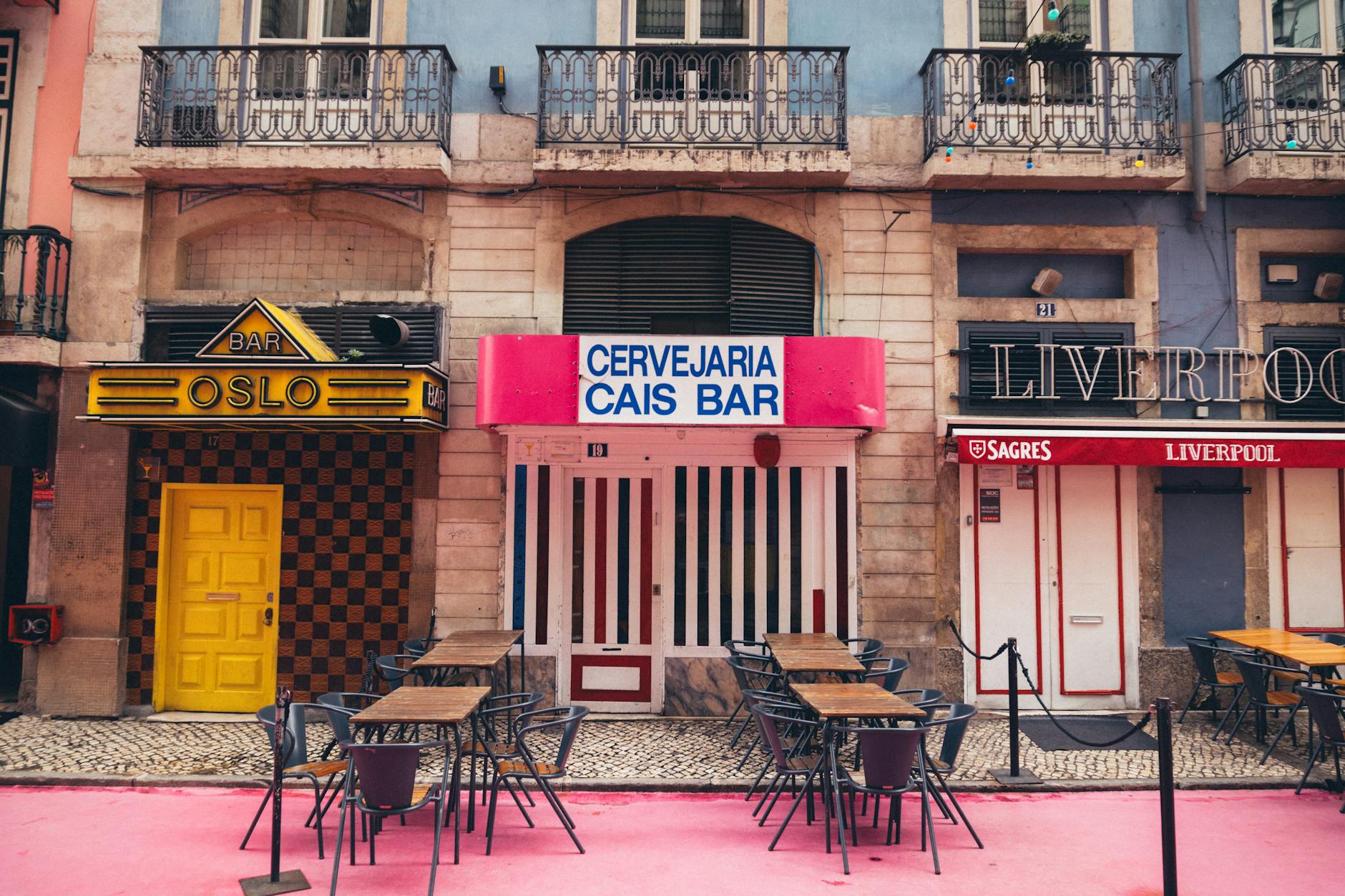
Many Bairro Alto bars host live music on weeknights and every night on weekends — usually free with a drink purchase. Genres rotate: world music, reggae, fado covers, funk, indie, jazz, soul. The best approach is to walk Rua do Diário de Notícias and Rua da Atalaia from around 10 PM and listen for music spilling through open doors. No planning required.
See our Bairro Alto nightlife guide for the full neighbourhood breakdown — best bars, where to eat first, what time the music starts, and how the night flows.
Lisbon Music Festivals
NOS Alive (July)
Major rock and indie festival at Passeio Marítimo de Algés, on the Tagus waterfront west of Belém. Headliners at this level: Foo Fighters, The Weeknd, Pearl Jam, Arctic Monkeys. Typically three days. Tickets in the €100–200 per day range for the full event.
Super Bock Super Rock (July)
Rock and indie festival, often overlapping with NOS Alive weekend. Different programming focus; worth checking both lineups.
Out Jazz (July–August)
Free Sunday afternoon jazz at various Lisbon parks and gardens throughout summer. Outstanding quality, zero cost. One of the best arguments for visiting Lisbon in summer.
Jazz em Agosto (August)
Gulbenkian Foundation’s outdoor jazz festival. Free entry. International bookings at a level that would cost €40–60 per ticket elsewhere in Europe.
Festas dos Santos Populares (June)
Saint Anthony’s Day on June 12–13 triggers massive street parties throughout Alfama, Mouraria, and Graça. Traditional popular music — marchas populares, folk, accordion — in the streets until dawn. Free, outdoor, participatory. One of Lisbon’s most genuine cultural events of the year.
Web Summit (November)
The tech conference anchors major music acts as side events across multiple Lisbon venues in November. Not a music festival per se, but a good reason for a November visit if the lineup aligns.
How to Find What’s Playing
- Time Out Lisboa (timeout.com/lisbon) — comprehensive weekly music listings, reliable and up to date
- Visit Lisboa (visitlisboa.com) — official tourism events calendar
- Bandsintown app — set Lisbon as your city for automated notifications
- Songkick — same function, broader database
- Hot Clube de Portugal website (hcp.pt) — jazz programme a month ahead
- Atlas Lisboa — alternative and underground scene listings, Portuguese-language but navigable
- Venue Instagram accounts — Lux Frágil, ZdB, Music Box all post weekly lineups
Live Music Etiquette
- Reservations recommended at jazz clubs and fado venues — both can sell out on weekends
- Dress smart-casual for Lux Frágil; casual everywhere else
- Cash or card — most venues now accept cards, but some smaller bars are cash-preferred
- Silence during fado — this is not a suggestion; talking during songs is genuinely rude and will attract looks
- Tipping musicians at Bairro Alto bars: entirely optional; €1–5 if you’ve stayed a while is appreciated
- Late start — Lisbon music nights typically start between 10 PM and midnight. Showing up at 9 PM means an empty room
Lisbon vs Other European Cities for Live Music
Lisbon punches above its weight for a city of 545,000. Concert ticket prices are generally 30–40% lower than London or Paris for equivalent acts — the same touring artist will charge less in Lisbon than in Berlin. The jazz scene (Hot Clube de Portugal specifically) is world-class in a way that surprises many visitors. The fado scene is singular — there is nothing else like it anywhere. The electronic scene has a dedicated international following. And the free outdoor programming in summer (Out Jazz, Jazz em Agosto, Santos Populares) represents genuine cultural value at zero cost.
The gap is in sheer volume. London or Berlin will have 50 significant live music events on any given Saturday; Lisbon might have 10. But for a week’s visit, that is more than enough.
A Suggested Lisbon Music Night Out
For a complete Lisbon music night that covers multiple scenes:
8:30 PM — Dinner in Alfama or Mouraria
10:00 PM — Fado at Mesa de Frades or Tasca do Chico (reserve ahead)
12:30 AM — Walk to Bairro Alto; drink at a bar with free live music on Rua da Atalaia
2:00 AM — Lux Frágil for the late electronic programme, or Music Box under the bridge
5:00 AM — The night ends when the sun comes up over the Tagus
This is a real Lisbon music night. It requires good shoes, no commitments the next morning, and the knowledge that Lisbon genuinely operates on this schedule on weekends.
FAQ: Live Music Lisbon
What’s the best jazz club in Lisbon?
Hot Clube de Portugal — DownBeat magazine’s top European jazz club, operating since 1948 at Praça da Alegria 39. Reserve ahead for weekend shows.
Where can I see live music in Lisbon for free?
Bairro Alto bars most nights. Out Jazz Sunday afternoons in July and August. Jazz em Agosto at the Gulbenkian in August. Santos Populares street parties in June.
What’s the best Lisbon nightclub for electronic music?
Lux Frágil — internationally renowned, world-class bookings, river-view terrace. Music Box for a second-tier-but-serious electronic alternative.
Where to see African music in Lisbon?
B.leza — iconic riverfront venue specialising in Angolan kizomba, Cape Verdean funaná, and Mozambican marrabenta. A social event as much as a concert.
Where do major concerts happen in Lisbon?
Altice Arena (Parque das Nações, 20,000 capacity) for the biggest acts. Coliseu dos Recreios (3,500 capacity) for mid-size artists. Capitólio (2,000) for indie and rock.
Are concert tickets cheaper in Lisbon than London?
Generally yes — about 30–40% cheaper for similar acts.
Bottom Line
Lisbon’s live music scene is one of Europe’s most underrated. Hot Clube de Portugal for world-class jazz in a basement that hasn’t changed since 1948. Lux Frágil for electronic music with a view of the Tagus at 4 AM. B.leza for African rhythms that are the real thing, not a tourist version of it. Free nightly Bairro Alto bar performances for casual discovery. And fado — uniquely Portuguese, irreplaceable, and best experienced at a small Alfama tasca with a glass of wine and nothing to do the next morning. Pair fado in Alfama with a Lux Frágil after-hours session for the full Lisbon-music night out.
Music is one thread through Lisbon’s nights rather than a separate scene — a fado house and a 3am club can be the same evening. The nightlife pillar maps how the districts connect, the bars guide covers where to drink between sets, and rooftops are the early half of the same night.
Where Lisbon’s Live Music Fits the Bigger Picture
Lisbon’s music scene is deeply connected to its broader nightlife. The city doesn’t separate “music venues” cleanly from bars, clubs, and cultural spaces — a lot of the best live music happens in places that are also just good places to drink. This is what makes the Bairro Alto walk such a reliable evening: you are simultaneously finding music and finding bars, without planning either.
The rooftop bar scene (see our rooftop bar shortlist) occasionally overlaps with live music — some terrace bars run acoustic sets in summer. The bar scene more broadly (see our best bars guide) covers the venues where music is incidental rather than the main event.
For the full context of how Lisbon nights work — what time things start, how the sequence from dinner to fado to electronic club unfolds, and which neighbourhoods to be in at which hour — our Lisbon nightlife guide covers the complete picture.
One practical note: Lisbon nights are late. Live music that starts at midnight is normal. Clubs that don’t get going until 2 AM are normal. If you are used to a 9 PM show and a 11 PM finish, Lisbon will require an adjustment — or a long nap before dinner.