Where to Stay in Lisbon
The Best Boutique Hotels in Lisbon
Small hotels in converted townhouses and palacetes, sorted by neighbourhood — what boutique actually buys you in Lisbon, what it costs in 2026, and when it is the wrong choice.
In this guide
Search boutique hotels Lisbon on any booking site and you will be handed several hundred properties, most of which are not boutique hotels at all — they are ordinary three-stars with a feature wall, or eight-room guesthouses in a converted flat with a self-check-in code and nobody at the desk after six. This guide sorts the real thing from the marketing: what a boutique hotel in Lisbon actually gets you, which neighbourhoods suit which kind of traveller, what the honest price bands look like in 2026, and the specific things that go wrong in this city that nobody warns you about until you are dragging a suitcase up a cobbled hill in August.
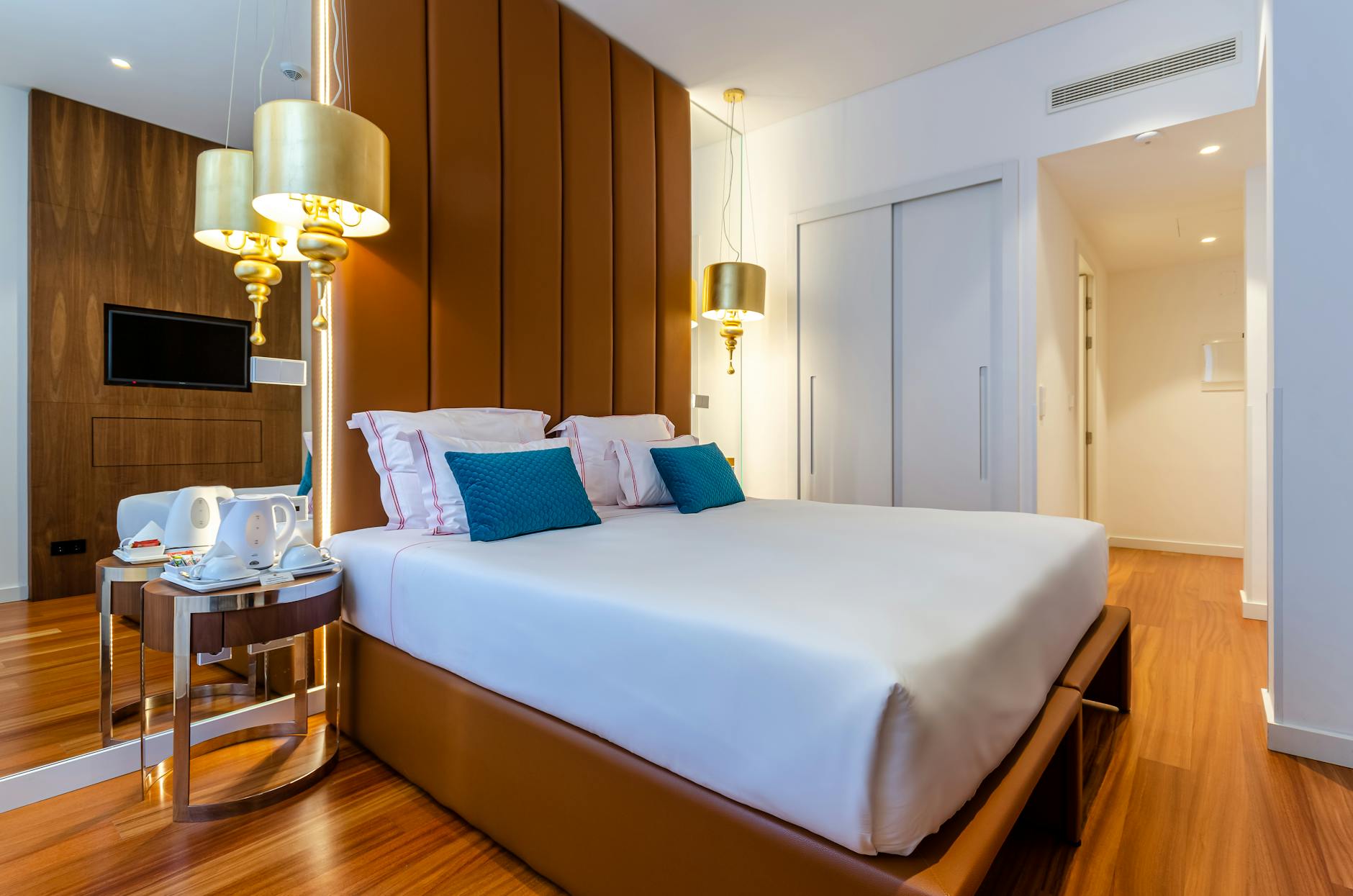
What “boutique” actually means in Lisbon
There is no legal definition, in Portugal or anywhere else. What the word tends to mean here, in practice, is a hotel with fewer than about fifty rooms, in a building that existed long before the hotel did, with an owner or a small Portuguese group behind it rather than a chain. Lisbon happens to be unusually good at this, for a boring structural reason: the historic centre is full of eighteenth- and nineteenth-century townhouses and small palaces that are far too awkward to turn into a two-hundred-room hotel, but exactly the right size for twenty rooms.
That is the genuine appeal, and it is worth being clear about it. You are not paying for a better bed than the Marriott has. You are paying for a stone staircase, a tiled entrance hall, a courtyard with an orange tree, a breakfast room where somebody knows your name by day two, and a building that tells you something about the city you came to see.
You are also, frequently, paying for the drawbacks that come with an old building. Small rooms. Uneven floors. Bathrooms squeezed into former cupboards. Windows onto a light well. A lift that fits one adult and one bag, or no lift at all. None of that is a scandal — it is what a 1780s townhouse is — but you should know it going in, because the photography never shows it.
The neighbourhoods, and who each one suits
Where you stay in Lisbon matters more than in most European capitals, because the city is built on hills and the transport does not run everywhere. A hotel that looks eight hundred metres from the castle on the map can be a twenty-minute climb. Our full breakdown lives in the where to stay in Lisbon guide; this is the boutique-specific version.
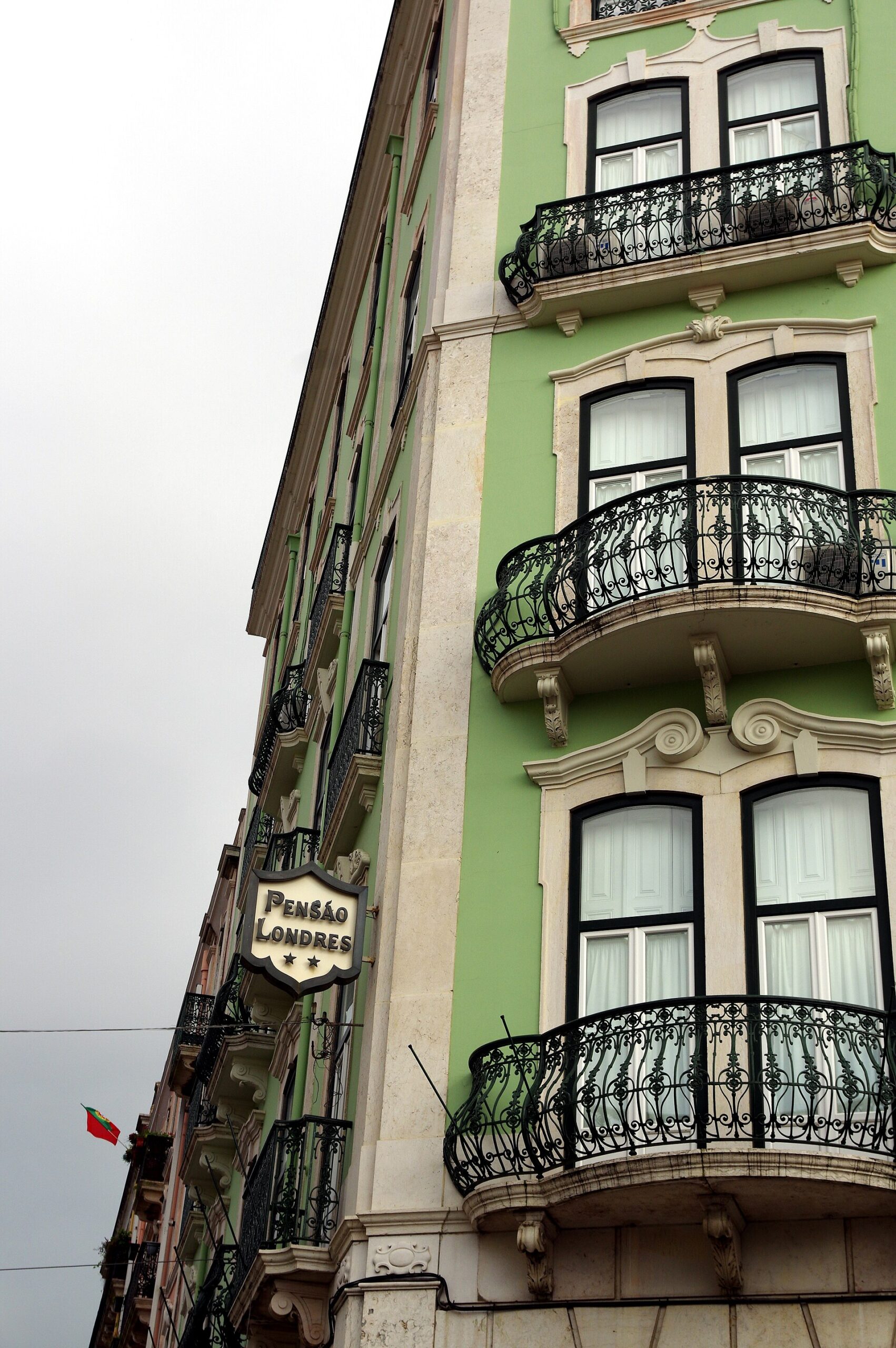
Príncipe Real — the default good answer
If you asked us to pick one neighbourhood for a boutique stay without knowing anything else about you, it would be Príncipe Real. It sits on the plateau above Bairro Alto, which means it is flat once you are up there, it has a genuine neighbourhood life rather than a tourist strip, and the housing stock is exactly the nineteenth-century palacete that converts beautifully. Memmo Príncipe Real is the well-known one — forty-one rooms by the Portuguese architect Samuel Torres de Carvalho, with a terrace and a plunge pool looking over the whole city. The Vintage Lisbon, fifty-six rooms between here and Avenida da Liberdade, is bigger and more mid-century in mood, with a rooftop bar and a spa in the basement.
The catch: getting down to Baixa is easy and getting back up is not. The Elevador da Glória funicular is closed, but bus 51E covers its route, and there is a metro at Rato and Avenida. Budget for the odd taxi at the end of a long day.
Alfama and Graça — atmosphere, at a physical cost
Alfama is the postcard: the lanes that survived the 1755 earthquake, laundry across the alley, fado leaking out of a doorway at eleven at night. It is also, without exaggeration, the hardest neighbourhood in Lisbon to arrive at with luggage. Cars cannot reach many addresses. Taxis stop at the top or the bottom and you walk the rest.
The boutique offering here is strong. Santiago de Alfama has nineteen rooms in a fifteenth-century palace directly under São Jorge Castle. Palacete Chafariz d’El Rei is six suites in a late-nineteenth-century neo-Moorish mansion on the riverfront edge, with Brazilian art-nouveau interiors that look like nothing else in the city. Memmo Alfama was the first boutique hotel to open in the neighbourhood and still has the best-known terrace, with a red plunge pool over the rooftops. A little further out at Campo de Santa Clara, beside the Feira da Ladra flea market, Santa Clara 1728 is the austere, pale, almost monastic end of the spectrum — a Silent Living house in an eighteenth-century building, and a completely different proposition from a hotel with a concierge.
Our honest verdict: Alfama is a wonderful place to stay on a second visit, in spring or autumn, with a small bag. On a first visit in July with two suitcases and a six-year-old, it is a mistake, and a beautiful hotel will not save it.
Chiado and Baixa — convenient, and you pay for it
Chiado is where most first-timers should be: central, flat-ish, walkable to almost everything, well served by metro at Baixa-Chiado. Casa Balthazar sits on the hillside above Baixa in a building bought in 1882 by Balthazar, the founder of Confeitaria Nacional, and has the thing nobody else at this size has: a private garden and an outdoor pool. Prices reflect all of that.
Baixa proper — the grid — is flatter and cheaper but noisier, and a lot of the “boutique” stock down there is a converted upper floor with a shared street door. Ask specifically which floor, and whether there is a lift.
Lapa, Estrela and Santos — quiet, residential, further
The western neighbourhoods are where you go if you want space and calm and do not mind a tram ride into town. As Janelas Verdes, next to the Museu Nacional de Arte Antiga, is the best-loved small house out here — an eighteenth-century mansion with a library and a walled garden. It belongs to Lisbon Heritage Hotels, a collection of four independently owned, family-run houses: As Janelas Verdes, Heritage Avenida Liberdade, Heritage Lisboa Plaza and Solar do Castelo. If you like the idea of a small hotel but distrust design-led minimalism, that group is the safest bet in the city.
Intendente and Anjos — the interesting bet
Largo do Intendente was a genuinely rough square fifteen years ago and is now the address of one of Lisbon’s better small hotels. 1908 Lisboa Hotel occupies a restored art-nouveau building on the corner of Avenida Almirante Reis, with thirty-six rooms and suites and a restaurant, Infame, that locals actually eat in. Room categories are named for what they look at — Square, Avenue, and three Attic rooms on the top floor with their own lobby.
The neighbourhood is still mixed. It is safe, and it is not scrubbed. If that description makes you uneasy, book Chiado instead; if it makes you curious, you will get more hotel for your money here than anywhere else on this list.
What it costs in 2026
Boutique pricing in Lisbon moves more than chain pricing, because a nineteen-room hotel with one conference-free month sells out completely and a two-hundred-room hotel does not. Treat every figure below as a band, and check the dates you actually want.
- Small guesthouse / townhouse B&B, low season: roughly €110–€170 a night for a double.
- Established boutique hotel, shoulder season (March–May, October): roughly €180–€300.
- The well-known names — Memmo, Santiago de Alfama, Casa Balthazar — in peak season: €350 and upwards, often well upwards.
- Peak dates: late June (the Santo António festivities), September, and Web Summit week in November, when the whole city reprices.
If those numbers are above your line, the honest answer is that Lisbon has an unusually good mid-range, and you are not obliged to pay boutique prices to have a good stay — see the best hotels in Lisbon for the broader picture, or the hostel guide, because Lisbon’s design hostels are genuinely among the best in Europe and several have private rooms.
The tourist tax
Every guest aged thirteen and over pays a municipal tourist tax of €4 per person per night, capped at seven nights per person per stay, at any hotel, guesthouse, hostel or licensed short-let inside the Lisbon municipality. It is collected by the property, usually at check-out, and it is almost never included in the rate you booked. For two people on a five-night stay that is €40 you did not plan for. Neighbouring councils — Cascais, Sintra, Oeiras, Almada — set their own separate rates. The detail is in our Lisbon tourist tax guide.
The eight things to check before you book
This list is Lisbon-specific. Most of it does not matter in Madrid or Amsterdam and matters enormously here.
- The approach, not the address. Drop the hotel into a map in Street View and look at what the last hundred metres look like. Steps count. In Alfama, Bica and Graça, the last hundred metres are often the whole problem.
- Lift or no lift. Many converted townhouses have none, or have one that stops at the second floor. Ask which floor your room is on, in writing.
- Air conditioning, and heating. Lisbon summers now reach the high thirties and Portuguese buildings are poorly insulated. Winter matters too: January nights are genuinely cold indoors, and older properties sometimes offer nothing but a plug-in heater.
- Noise. If the hotel is in or near Bairro Alto, Cais do Sodré or Santos, the street is loud until three in the morning at weekends. Ask for a room on the courtyard, not the street. The photograph of the balcony is a trap.
- What “river view” means. It ranges from a full Tagus panorama to a triangle of water visible if you lean out. Ask for a photograph taken from the actual room.
- Breakfast. In a small house it is often the best part of the stay — proper bread, cheeses, fruit, pastries from a named bakery. In others it is a supermarket buffet at €18 a head. Ask what it is before you prepay it. There is a pastelaria on every corner regardless.
- Reception hours. Small properties often staff the desk from 08:00 to 20:00 only. If you land late — and a lot of flights into Lisbon do — confirm the late arrival procedure rather than assuming there is one.
- Book direct. At this size the owner would rather not pay a platform fifteen per cent, and a direct email will frequently produce a better room, a later check-out or breakfast thrown in. It costs one message.
Where a boutique hotel is the wrong choice
We would rather say this plainly than sell you the romance.
- Travelling with small children. Small houses rarely have family rooms, connecting rooms, cots as standard or anywhere to put a pushchair. Read where to stay in Lisbon with families instead.
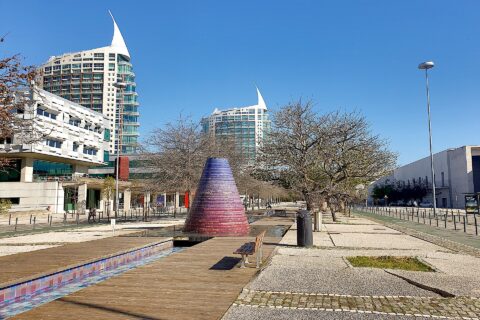
- Any mobility limitation. Steps, no lift, cobbles, narrow doorways. A modern hotel in Parque das Nações or on Avenida da Liberdade will be enormously better. Our accessibility guide covers this in detail.
- A long stay, or working remotely. Twenty rooms means no proper workspace and no laundry. An apartment is better value past about five nights — see apartments and Airbnbs in Lisbon.
- You genuinely want a pool and a gym. Very few small Lisbon hotels have either; the ones with a plunge pool have a plunge pool, which is a photograph more than a swim.
Boutique versus luxury
There is real overlap, and some properties sit in both categories — Memmo, Santiago de Alfama and Palácio Belmonte would all answer to either name. The distinction that matters when you book is service depth rather than room quality. A five-star palace hotel has a concierge who will get you a table on a Friday night, a night manager, room service at midnight and someone to carry the bag. A twenty-room boutique house has a person on the desk who knows the neighbourhood extremely well and goes home at eight.
Which is better depends entirely on how you travel. If you want the city arranged for you, pay for the luxury hotels. If you want a beautiful base and to arrange things yourself, boutique is better value and better company.
When to book
Small inventory sells out early. For a spring or autumn trip, three to four months ahead is right; for late June or Web Summit week, six. The genuinely cheap window is mid-November to mid-March, excluding Christmas and New Year, when the same room can be half the September rate and Lisbon is still mild and perfectly walkable — the trade-off is rain and short days, which our best time to visit page lays out month by month.
One practical scheduling note: if you are doing Sintra as well, consider splitting the stay rather than day-tripping twice. Staying a night in Sintra gets you the palaces before the coaches arrive, and the train back is thirty-nine minutes.
Frequently asked questions
What is the best boutique hotel in Lisbon?
There is no single answer, and anyone who gives you one is guessing. For location and design together, Memmo Príncipe Real is the safest recommendation. For history, Santiago de Alfama. For a garden and a pool in the centre, Casa Balthazar. For value and character, 1908 Lisboa at Intendente.
How much does a boutique hotel in Lisbon cost?
Roughly €110–€170 a night for a small guesthouse in low season, €180–€300 for an established boutique hotel in shoulder season, and €350 or more for the best-known names in summer. Add €4 per person per night in tourist tax.
Which neighbourhood should I choose?
Príncipe Real if you want neighbourhood life and a flat plateau. Chiado if it is your first visit and you want to walk everywhere. Alfama if atmosphere matters more than convenience and you travel light. Lapa or Estrela if you want quiet.
Do Lisbon boutique hotels have air conditioning?
Most now do, but not all, and in an unrenovated townhouse it can be a single wall unit in the bedroom only. Confirm it explicitly if you are travelling between June and September.
Is it worth booking direct rather than through a platform?
Usually, yes, at this size. Owners pay a substantial commission on platform bookings and will often match or beat the rate by email, or add breakfast, a better room or a late check-out. Larger chains are far less flexible.
Are boutique hotels in Lisbon safe neighbourhoods?
Lisbon is a low-crime city by European capital standards and every neighbourhood mentioned here is fine to walk in at night. The realistic risk is pickpocketing on Tram 28 and in crowded squares, not the street your hotel is on. See is Lisbon safe for the specifics.
Can I get to a boutique hotel in Alfama by taxi?
Partly. Many Alfama addresses cannot be reached by car at all, and drivers will set you down at the nearest square. Ask the hotel where the drop-off point is before you arrive, and read our airport to city centre guide if you are coming straight from the airport.
Do small hotels store luggage before check-in?
Nearly always, yes, and it is one of the things they do better than chains. If you arrive before the property opens, or leave long after check-out, the city’s luggage storage options are cheap and widespread.
Bottom Line
Lisbon is one of the best cities in Europe for a small hotel, because the buildings were already the right size and the people running them are largely Portuguese families rather than asset managers. Príncipe Real is the strongest all-round neighbourhood, Chiado the safest for a first visit, Alfama the most atmospheric and the most physically demanding, and Intendente the best value if you are not put off by a neighbourhood still in the middle of changing. Book three to four months out, ask about the lift and the last hundred metres before you commit, budget €4 per person per night for the tourist tax, and send the owner a direct email before you book anywhere — it is the single highest-return message you will send about this trip.
Photo Credits
Bairro Alto Hotel: Lisboa- bairro alto hotel (55850917) by ricardo from London, CC BY 2.0, via Wikimedia Commons.
A guesthouse façade on Rua Dom Pedro V: 16.4.14 Lisbon 54 (13929340563) by Donald Judge from England, CC BY 2.0, via Wikimedia Commons.