Shopping
Feira da Ladra: Complete Guide to Lisbon’s Famous Flea Market (2026)
Everything about Feira da Ladra—Lisbon's centuries-old flea market. What to buy, how to haggle, the best time to arrive, and what to avoid.
In this guide
- Feira da Ladra Quick Facts
- The Name and Its History
- When to Arrive
- How to Get There
- What to Buy at Feira da Ladra
- What to AVOID Buying
- How to Haggle
- Bringing Cash and Payment
- Safety at Feira da Ladra
- Around the Market: Pantheon and São Vicente
- Food and Drinks Near the Market
- Best Time of Year to Visit Feira da Ladra
- What to Bring
- Common Mistakes
- Other Lisbon Markets to Combine
- FAQ: Feira da Ladra Lisbon
- Bottom Line
- Photo Credits
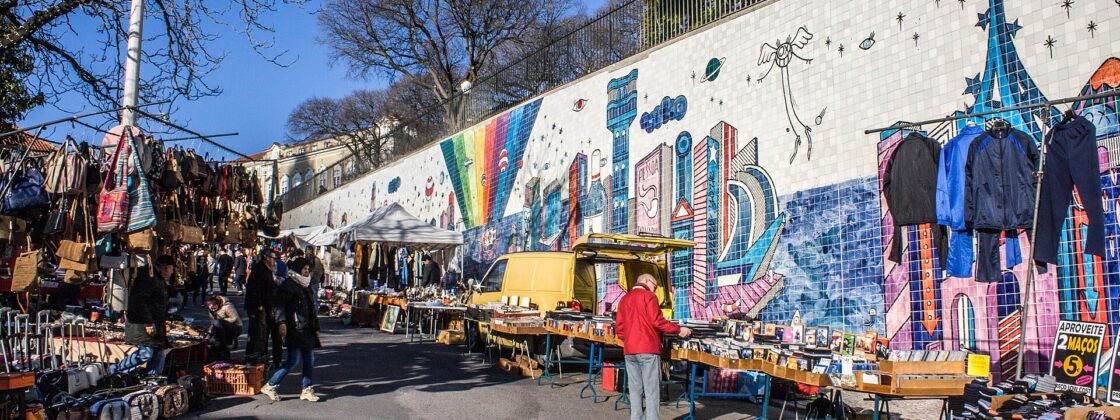
Feira da Ladra Lisbon — literally “Thieves’ Fair” — is the city’s centuries-old open-air flea market, sprawling across Campo de Santa Clara in eastern Alfama every Tuesday and Saturday morning. Vintage azulejos, antique books, military pins, fado vinyl, hand-embroidered linens, dusty oil paintings, and an honest amount of pure junk all change hands here from before sunrise until early afternoon.
The white dome above the market square is worth an hour once you have finished browsing — our Panteao Nacional guide covers the ticket, the tombs and the 360 dome terrace that almost nobody queues for.
This guide covers everything you need to plan a good visit: when to arrive, what to buy (and what to avoid — including stolen tiles), how to haggle, the surrounding neighborhood, and the small details that separate a productive market morning from a confusing one. Updated for 2026.
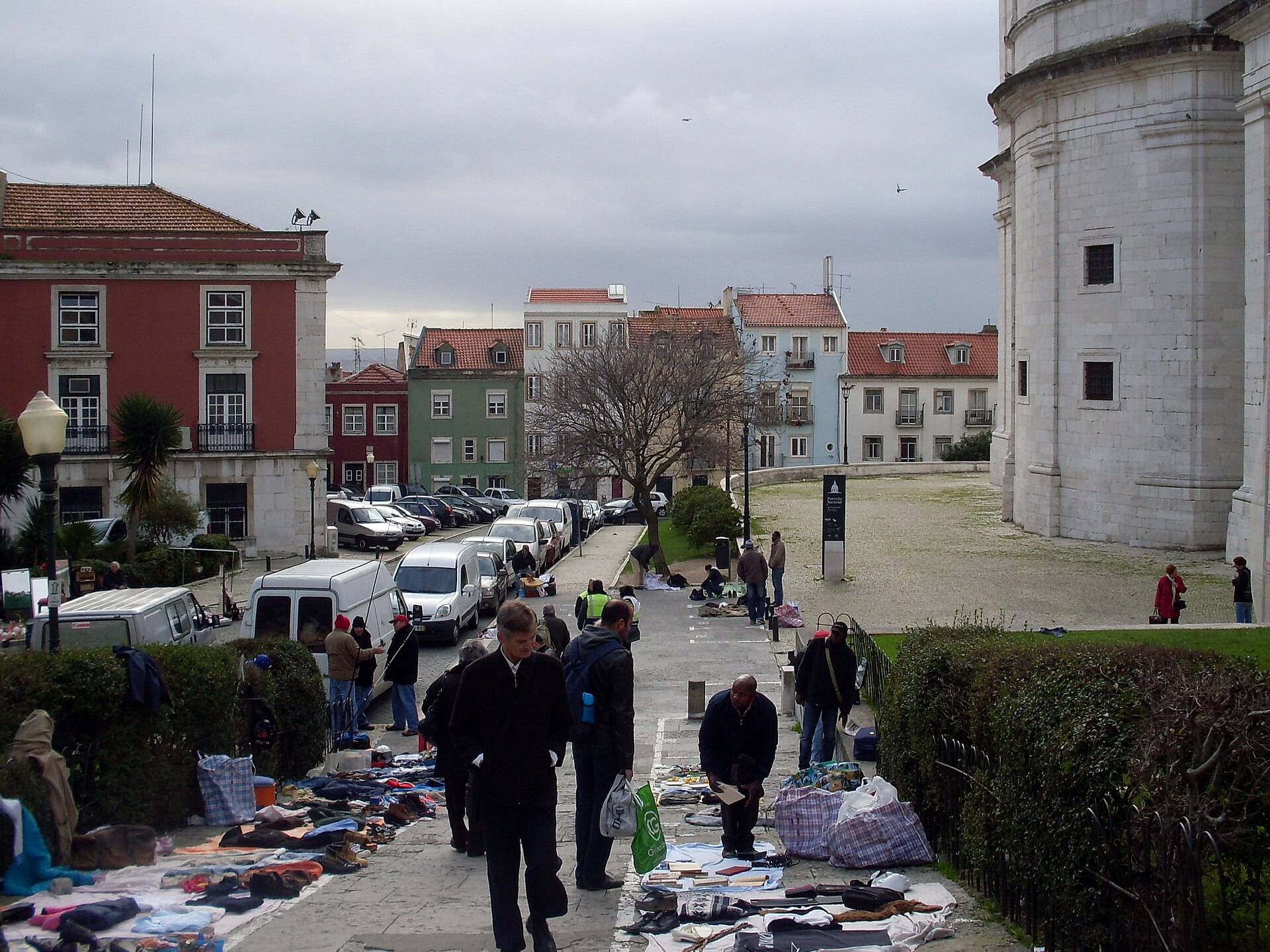
Feira da Ladra Quick Facts
- Where: Campo de Santa Clara, Alfama (eastern Lisbon)
- When: Every Tuesday and Saturday, ~8 AM – 6 PM (though most stalls close by 2 PM)
- Cost: Free to enter
- Atmosphere: Outdoor street market, no climate control, weather-dependent
- Crowd: Mix of locals (early), tourists (later), antique dealers (very early)
- Best time: 9–11 AM
- Cash preferred: Most vendors accept only cash
The Name and Its History
“Feira da Ladra” translates to “Thieves’ Fair” — but the modern name comes from the Portuguese word “ladra” (a kind of bug or beetle, like a louse), not “ladrão” (thief). The market dates to medieval times and has occupied this hilltop spot east of Alfama for hundreds of years. The “thieves’ market” reputation persisted from the centuries when stolen goods were genuinely traded here, but today the market is regulated and stolen items are theoretically not permitted (though see warnings about tiles below).
Twice a week, hundreds of vendors set up tarpaulins, folding tables, and small wooden stalls across Campo de Santa Clara. The setting holds up — the open square sits between the Pantheon (Igreja de Santa Engrácia) and the Monastery of São Vicente de Fora, with views down toward the Tagus.
When to Arrive
The market technically runs from sunrise to dusk, but the rhythm matters:
6:30 AM – 8:00 AM: Antique dealers and serious collectors arrive. Best selection of valuable items but vendors are still setting up. Some early haggling possible.
8:00 AM – 10:00 AM: The “first run” period. Stalls fully set up, vendors fresh, prices firm but still negotiable. The best window for serious finds.
10:00 AM – 12:00 PM: Peak crowds, peak energy. Tourists arrive in numbers. Browsing is enjoyable but the better deals are gone.
12:00 PM – 2:00 PM: Many vendors begin packing up for lunch. Some stay; others leave. Crowds thin.
After 2:00 PM: The market is much smaller. Many vendors return around 3:00 PM but the morning’s energy is gone. By 4:30 PM most stalls are closed.
For shopping, 9–11 AM is the sweet spot. For atmospheric photography, 10–11:30 AM. For fewer crowds, arrive at 8 AM.
How to Get There
By Tram (Tram 28)
The most scenic route. Tram 28 stops at the “Santa Engrácia” stop, 2 minutes’ walk from the market. €3.30 on board, €1.90 with a Navegante card or €1.72 with Zapping.
By Metro
Santa Apolónia (Blue Line) is 8 minutes’ walk uphill from the market. €1.90.
By Foot from Alfama
From central Alfama, the market is a 15–20 minute uphill walk. From Largo das Portas do Sol or Miradouro de Santa Luzia, it’s about 12 minutes.
By Uber/Bolt/Taxi
€8–€12 from central Lisbon. Useful with luggage but the streets near the market can be congested on busy Saturdays.
What to Buy at Feira da Ladra
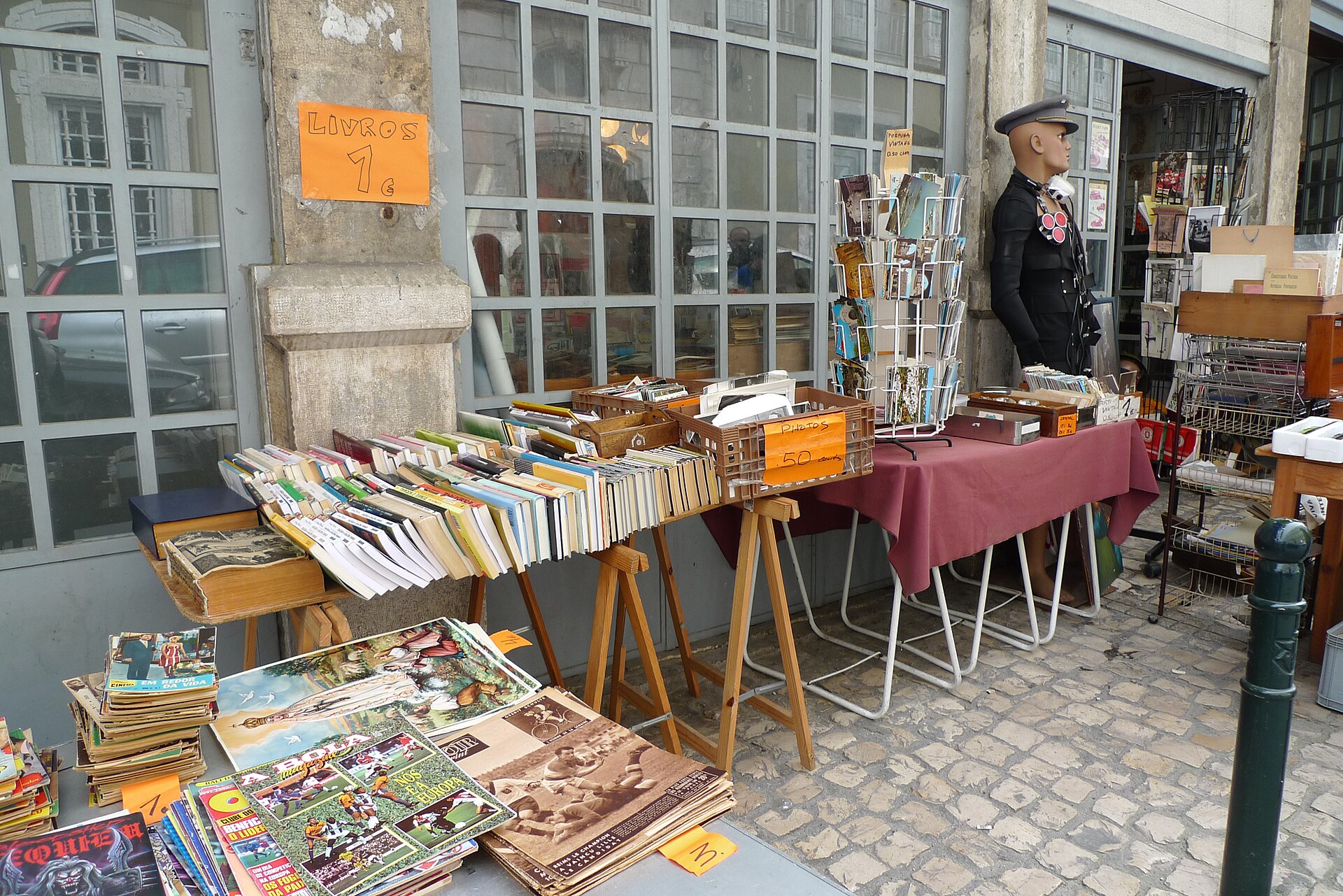
Antique Books and Vinyl
One of the market’s strongest categories. Portuguese-language books are abundant; English-language and French finds appear regularly. Vintage Portuguese vinyl — fado, rock, jazz — is consistently strong, with rare Amália Rodrigues and Carlos do Carmo records sometimes surfacing for €5–€20. Know what you’re buying.
Vintage Clothing
1960s–1990s Portuguese textile and clothing finds — wool blankets, embroidered shirts, vintage Portuguese designer pieces. Quality varies wildly. Check for moth damage and stains before buying.
Coins, Stamps, and Postal History
Portuguese coins from the Estado Novo period (1933–1974), Republican coinage, and earlier. Stamps from the Portuguese colonial period (Mozambique, Angola, Macau, Goa) are particularly collectible and genuinely hard to find elsewhere.
Religious and Folk Art
Portuguese religious folk art — small santos (saint figures), ex-voto plaques, and miniature azulejo panels with religious iconography. Quality and authenticity vary; buy what speaks to you, not what a vendor claims it’s worth.
Vintage Photographs
Mid-20th-century Portuguese family photographs, postcards, and tourism photographs. Often €1–€5 each. Strong for travel collage or framing projects.
Kitchen Items and Tableware
Vintage Portuguese tableware including Bordallo Pinheiro pieces, Vista Alegre porcelain, and old kitchen tools. For higher-value pieces, authentication matters — ask about marks and provenance.
Costume Jewelry and Filigree
Mostly costume pieces, occasionally genuine silver Portuguese filigree. Ask for hallmarks if buying anything claimed as silver or gold.
Military and Government Surplus
Portuguese military pins, badges, medals, and uniforms (mostly post-WWII). Worth €5–€100 depending on rarity.
Furniture (Smaller Pieces)
Side tables, small chairs, mirrors, and curiosities. Larger furniture rarely makes financial sense to ship home.
What to AVOID Buying
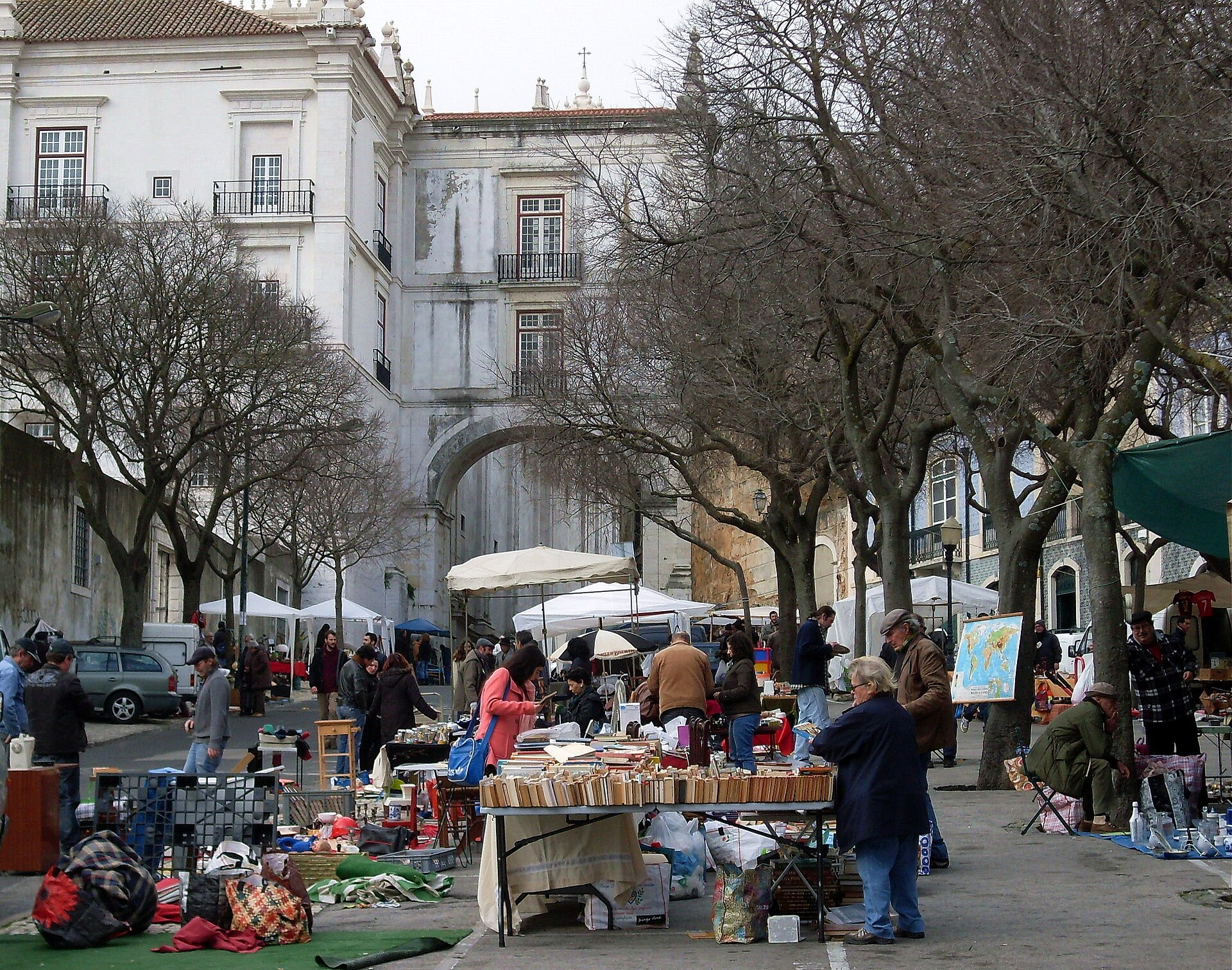
Antique azulejo tiles. A significant portion of “antique tiles” sold at Feira da Ladra are stolen — peeled off the facades of Lisbon’s residential buildings. Buying them is illegal in Portugal and ethically destructive. Stick to licensed antique tile dealers like D’Orey or Cortiço & Netos for authentic pieces with documented provenance.
“Genuine” cork and leather goods. Many are mass-produced reproductions. Better to buy these at specialty shops like Cork & Co.
Mass-produced fridge magnets and tourist trinkets. Same junk available at Rua Augusta tourist shops, often at higher prices.
Anything claimed as “ancient” without provenance. Too good to be true at flea-market prices. Stick to pieces whose age and origin you can check for yourself.
Pricey “antique” jewelry without hallmarks. Costume pieces are fine; serious silver/gold purchases need proper hallmarks and ideally a certificate.
How to Haggle
Bargaining is expected and welcome at Feira da Ladra — unlike everyday Portuguese commerce, where prices are fixed. Some rules:
Start at 60 percent of the asking price. Vendors expect this. They’ll counter at 80 percent. You’ll meet at 70–75 percent.
Walk away. The single most effective technique. If a vendor won’t meet your number, smile, thank them, and leave. About a third of the time they’ll call you back.
Buy multiple items from one vendor. Price drops sharply for buyers taking 3+ items. “Quanto fica para tudo?” (How much for everything?) is the magic phrase.
Don’t haggle over €1–€3 items. Books at €2 each, postcards at €1, small coins at €0.50 — pay the asked price, build goodwill.
Be friendly. Portuguese vendors respond to warmth. Aggressive haggling falls flat; smiling, polite negotiation works.
Use cash. Round amounts (€10, €20) are easier to settle on, and vendors strongly prefer cash over cards.
Useful Portuguese phrases:
- “Quanto custa?” — How much does it cost?
- “É muito caro.” — It’s too expensive.
- “Pode fazer melhor preço?” — Can you do a better price?
- “Levo dois (três).” — I’ll take two (three).
- “Obrigado/a.” — Thank you.
Bringing Cash and Payment
Cash is essential at Feira da Ladra. Most vendors don’t accept cards. ATMs near the market exist but get crowded — withdraw before arriving.
Recommended cash budget: €20–€100 depending on your shopping appetite. Bring a mix of small bills (€5, €10, €20) — easier for vendors to make change.
A few of the larger antique vendors have started accepting MB Way (Portuguese mobile payment) and very occasionally cards. Don’t count on it.
Safety at Feira da Ladra
The market is generally safe but pickpockets target the dense, distracted crowds:
- Keep wallets in front pockets or money belts
- Bags zipped and worn in front of your body
- Don’t put cash on top of stalls while browsing other items
- Avoid displaying expensive electronics
- Be cautious of sudden crowd-jostling — a classic pickpocket distraction technique
For broader Lisbon safety context, see our is Lisbon safe guide.
Around the Market: Pantheon and São Vicente
Two major monuments flank Feira da Ladra:
National Pantheon (Igreja de Santa Engrácia)
The 17th-century domed church directly adjacent to the market. Now serves as Portugal’s National Pantheon, holding the tombs of Portuguese heroes including Amália Rodrigues (the Queen of Fado), poet Almeida Garrett, navigator Pedro Álvares Cabral (cenotaph), and several presidents.
Hours: 10 AM – 5 PM (winter) / 10 AM – 6 PM (summer), closed Mondays.
Tickets: €8 adult, free Sundays before 2 PM.
Tip: Climb to the dome for one of central Lisbon’s best 360-degree views.
Monastery of São Vicente de Fora
One of Lisbon’s most important Mannerist churches and royal pantheon for the House of Braganza. Beautiful 18th-century azulejo panels in the cloisters.
Hours: 10 AM – 6 PM, closed Mondays.
Tickets: €5.
Combine the market with these two monuments for a solid 4-hour Tuesday or Saturday morning in eastern Lisbon.
Food and Drinks Near the Market
Several good local cafés surround Campo de Santa Clara:
- Cervejaria Ramiro — 12-minute walk west. Lisbon’s iconic seafood spot, perfect post-market lunch (book ahead or arrive at 11:45 AM)
- Pastelaria Versailles Alfama branch — coffee and pastel de nata with terrace overlooking Campo de Santa Clara
- Quiosque Santa Clara — small kiosk in the square itself, good for an espresso break mid-shop
- Restaurante Botequim da Graça — 8-minute walk uphill into Graça neighborhood, family-run tasca with daily specials
Best Time of Year to Visit Feira da Ladra
Spring (April–May) and autumn (September–October) have the best weather for outdoor browsing. Mild temperatures, dry stretches, and the surrounding terrace cafés all open.
Summer (June–August) can be brutal for an outdoor market. Arrive at 8 AM and leave by noon. Bring water and sunscreen.
Winter (November–February) is rainier and the market runs smaller — some vendors skip poor-weather days and selection thins. The market still functions but bring a waterproof jacket and expect less.
For broader context, see our best time to visit Lisbon guide.
What to Bring
- Cash (€20–€100 in small bills)
- A reusable canvas tote for purchases
- A small daypack for valuables
- Comfortable closed-toe walking shoes (Lisbon’s cobbles are slippery)
- Light layer — the hilltop is breezy
- Water and sunscreen (May–September)
- Phone with offline maps
- Patience — the market rewards slow browsers
Common Mistakes
1. Arriving at noon expecting a full market. Most stalls pack up by 2 PM. Arrive by 10 AM.
2. Carrying too much cash visibly. Pull bills discreetly from your wallet; don’t flash large amounts.
3. Buying tiles. Stolen-from-buildings tiles are rampant. Use licensed antique dealers instead.
4. Forgetting to haggle. Asked prices are inflated 20–40 percent above fair price. Negotiate respectfully.
5. Going in the rain. The market still runs but stalls cover up and selection drops. Reschedule if possible.
6. Coming on Wednesday or Friday. The market only runs Tuesdays and Saturdays. Other days the square is empty.
7. Skipping the surrounding monuments. The Pantheon and São Vicente add real depth to the visit and you’re already there.
Other Lisbon Markets to Combine
If you enjoy Feira da Ladra, Lisbon has several other markets worth knowing about:
- LX Market — Sundays at LX Factory (Alcântara), 11 AM – 7 PM. Curated artisan and design-focused, less old-junk-treasure than Feira da Ladra.
- Mercado de Campo de Ourique — small daily local market with fresh produce, food stalls, and a Friday-night antique section.
- Mercado da Ribeira (Time Out Market) — daily, food-focused, but the original west wing still operates as a traditional fish-and-produce market.
- Carcavelos Beach Market — Thursday mornings on the coast, large traditional outdoor market.
FAQ: Feira da Ladra Lisbon
What does “Feira da Ladra” mean?
“Thieves’ Fair” historically, though the modern name actually derives from “ladra” (a beetle/louse), not “ladrão” (thief). The market has a centuries-old reputation for stolen goods that persists in the name.
When is Feira da Ladra open?
Tuesdays and Saturdays, 8 AM – 6 PM (most stalls close by 2 PM). Best to arrive 9–11 AM.
Where is Feira da Ladra in Lisbon?
Campo de Santa Clara, in eastern Alfama. Easy reach by Tram 28 (Santa Engrácia stop) or 8-minute uphill walk from Santa Apolónia metro station.
Is Feira da Ladra worth visiting?
Yes for travelers who enjoy flea markets, antique hunting, or atmospheric outdoor browsing. The setting alone — between the Pantheon and São Vicente monastery — is rewarding even if you buy nothing.
Is Feira da Ladra free?
Yes — entry is free. You only pay for items you buy.
Can I haggle at Feira da Ladra?
Yes, and it’s expected. Start at 60 percent of asking, meet at 70–80 percent. Be friendly and polite.
What should I buy at Feira da Ladra?
Vintage Portuguese books and vinyl, old photographs and postcards, religious folk art, costume jewelry, military pins, vintage clothing. Avoid antique tiles (often stolen) and overpriced “antique” jewelry without hallmarks.
Is Feira da Ladra safe?
Generally yes, but pickpockets target the dense crowds. Standard precautions: front pockets, zipped bags, no flashy electronics.
Can I pay by card at Feira da Ladra?
Mostly no — cash is strongly preferred and required by many vendors. Bring €20–€100 in small bills. Some larger vendors take MB Way; cards are rare.
How long should I spend at Feira da Ladra?
Allow 1.5–2 hours for browsing. Add 1–2 hours if combining with the Pantheon and São Vicente monastery.
Bottom Line
Feira da Ladra is one of Lisbon’s most authentic experiences — a centuries-old open-air flea market on a hilltop square between two major monuments. Arrive 9–10 AM on a Tuesday or Saturday, bring cash and patience, haggle politely, skip the antique tiles, and combine the morning with the Pantheon (best central Lisbon viewpoint) and São Vicente monastery. Even non-shoppers leave with at least €5 of vintage finds and a deeper feel for Alfama’s daily rhythm.
Continue planning shopping with our Shopping in Lisbon pillar, our best souvenirs from Lisbon guide, our where to buy azulejo tiles guide, and our cork products guide.
Photo Credits
Feira da Ladra beside the tile mural: Feira da Ladra (33829833080) by Shadowgate from Novara, ITALY, CC BY 2.0, via Wikimedia Commons.
Feira da Ladra beside the National Pantheon: Feira da Ladra (2) by Plaats, CC BY-SA 3.0, via Wikimedia Commons.
Books and postcards at Feira da Ladra: Lisboa L1190683 (25204895176) by tak.wing, CC BY-SA 2.0, via Wikimedia Commons.
Mixed secondhand stalls at Feira da Ladra: Feira da Ladra (1) by Plaats, CC BY-SA 3.0, via Wikimedia Commons.
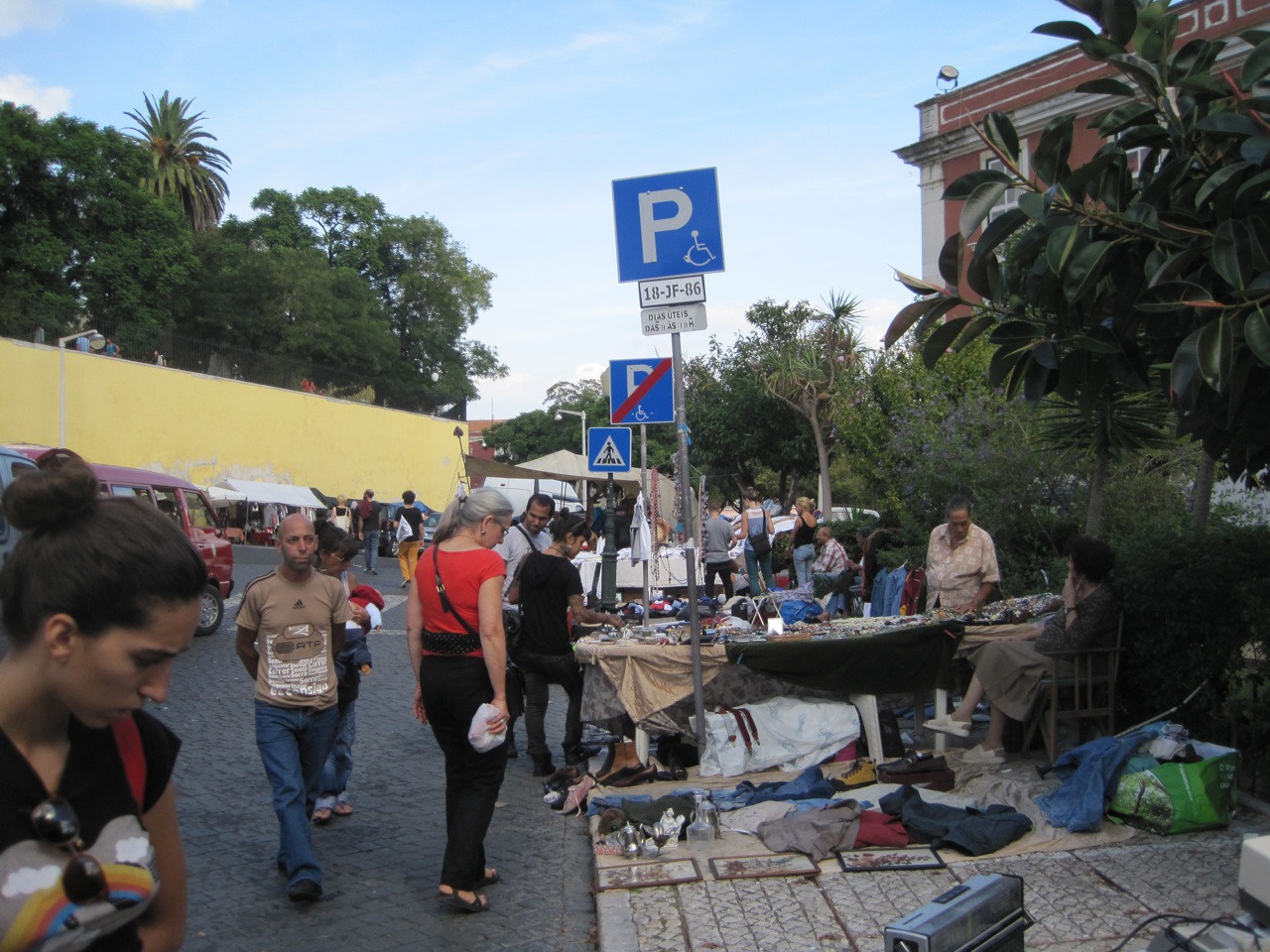
Pavement displays at Feira da Ladra: IMG 2818 (8059855005) by ralmonline alm, CC BY 2.0, via Wikimedia Commons.