Want to buy azulejos in Lisbon but worried about getting fakes — or worse, stolen heritage tiles? You’re right to be cautious. The city has dozens of tile sellers ranging from artisan workshops with five centuries of tradition to dodgy market stalls selling pieces literally pried off Lisbon buildings. Knowing where to buy makes the difference between a meaningful souvenir and a problem.
This guide covers the trusted sources for authentic handmade azulejos, what to look for, what to avoid, and the workshops worth visiting in person. Updated for 2026.
Where to Buy Authentic Azulejos
Sant’Anna (Lapa)
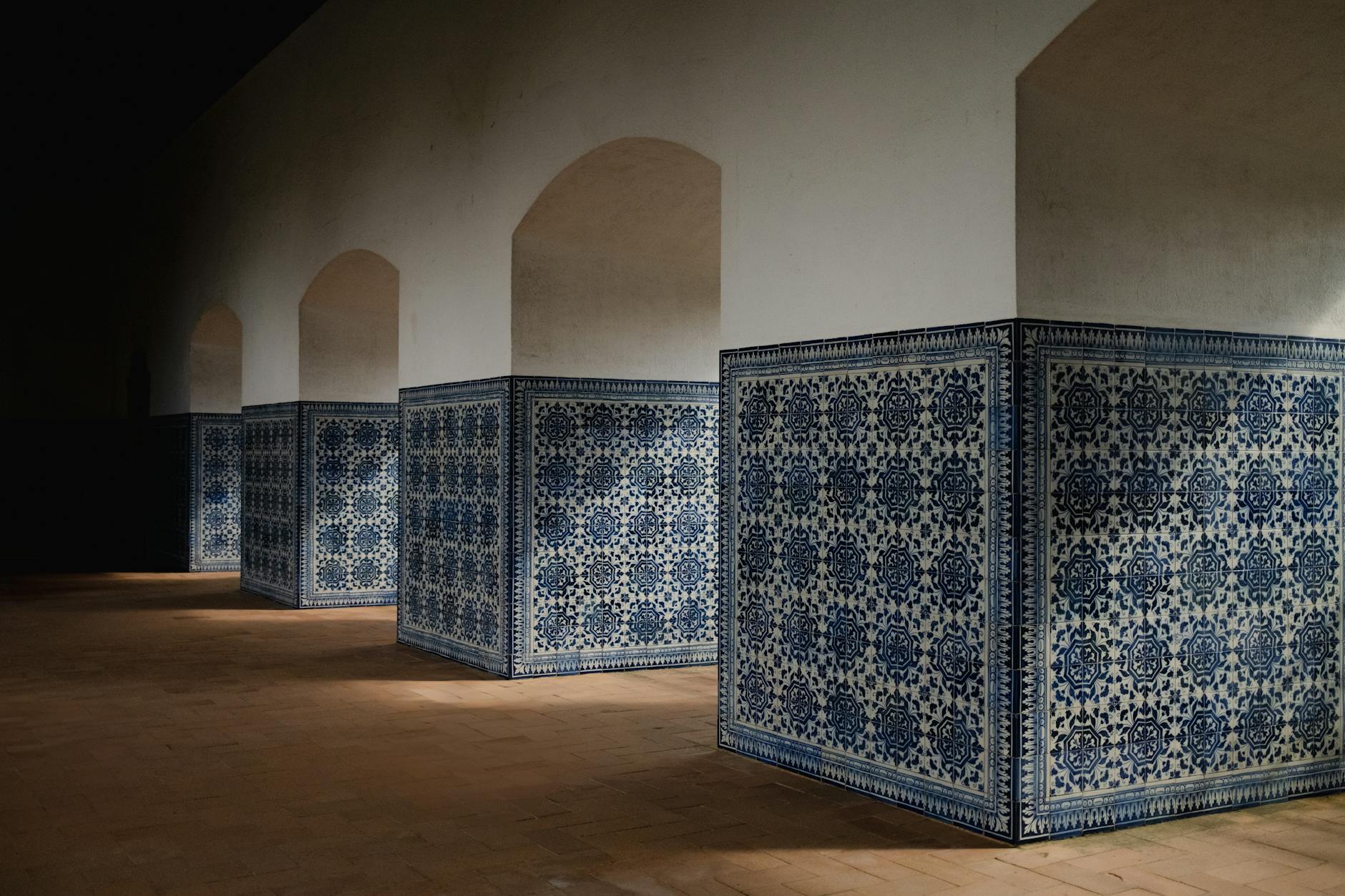
Operating since 1741 — the oldest tile factory in Lisbon. Visit the Calçada da Boa-Hora showroom and the working factory. Single hand-painted tiles from €15; custom panels run into the hundreds or thousands. The closest thing to buying a tile from a working 18th-century atelier.
Cortiço & Netos (Anjos)
Specializes in vintage industrial tiles rescued from defunct Portuguese factories. Eclectic, story-rich collection. Singles €5–€40. Excellent for travelers who want one-of-a-kind pieces with provenance.
Surrealejos (Príncipe Real)
Contemporary artist Sandra Boto’s witty modern takes on traditional azulejo iconography. Hand-made, signed, limited series. Singles €18–€40. Good for travelers who want something personal rather than reproduction-traditional.
D’Orey Tiles (Rua Conde de Redondo)
Antique tiles with documented provenance — the legitimate way to buy historic tiles. Most pieces dated 16th–19th century. Prices €40–€500+ per piece depending on age and rarity.
Solar (Antiguidades, multiple central locations)
Antique dealer with a reputable tile section. Provenance documentation provided.
Aleluia Cerâmicas
Established Portuguese ceramic brand with a Lisbon shop. Reproductions of historic patterns plus contemporary designs.
Costa Nova / Vista Alegre
Major Portuguese ceramic brands with shops in Lisbon. Higher-volume production but quality remains solid. Worth visiting for tableware as much as tiles.
What to Avoid
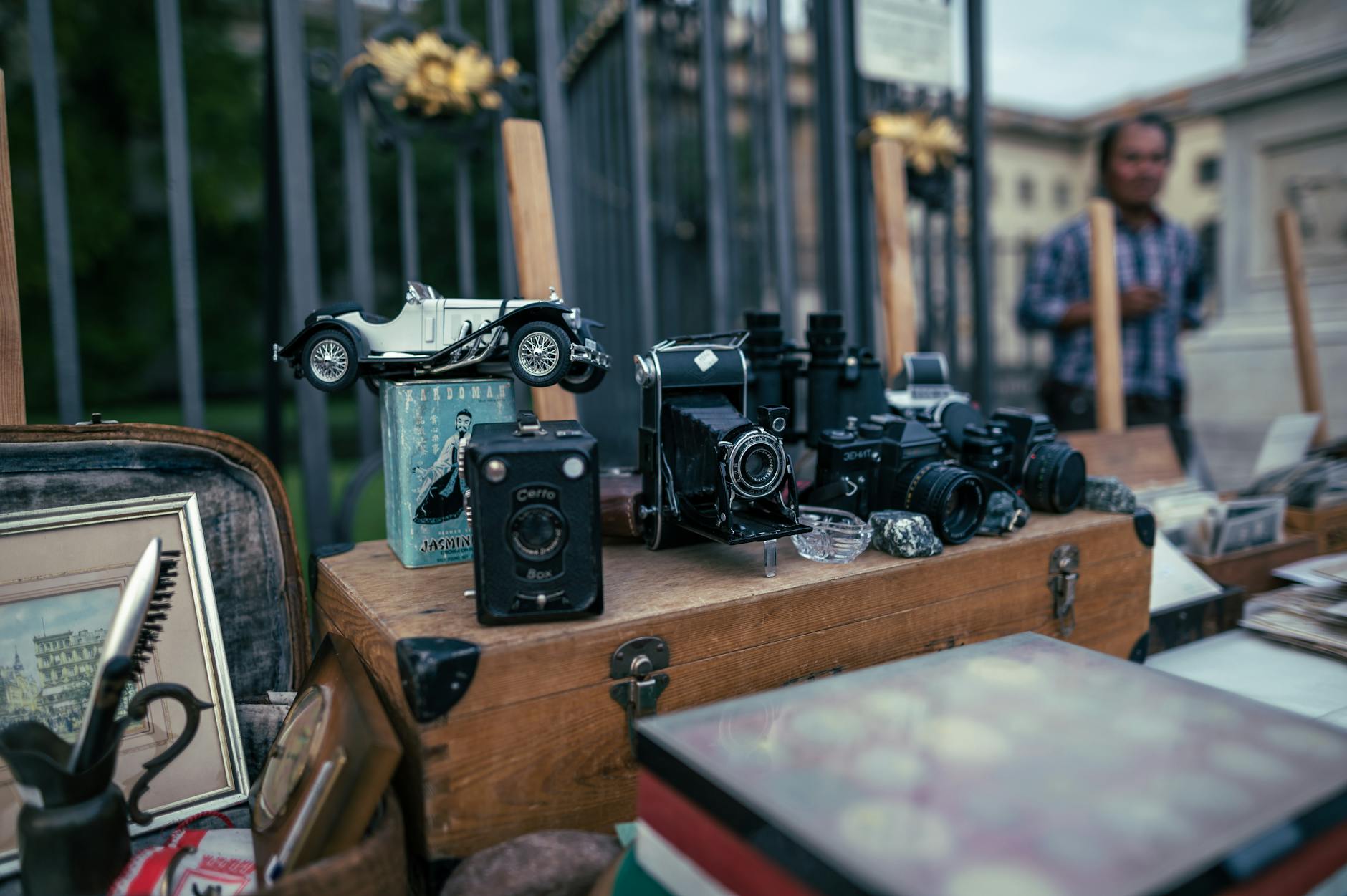
Antique tile vendors at Feira da Ladra. A significant portion of “antique tiles” sold at the flea market are stolen — peeled off the facades of Lisbon’s residential buildings. Buying them is illegal in Portugal and ethically destructive (each stolen tile damages the city’s cultural heritage). See our Feira da Ladra guide.
Tourist shops on Rua Augusta. Most “azulejo coasters” sold here are printed on inferior ceramics, not hand-painted tiles. Often labeled “azulejo” but mass-produced abroad.
Unmarked street vendors. If they can’t provide a receipt with their business name and address, walk away.
“Antique” tiles without paperwork. Authentic vintage tiles come with documented provenance. Anything claimed as historical without paperwork is suspect.
How to Identify Authentic Hand-Painted Tiles
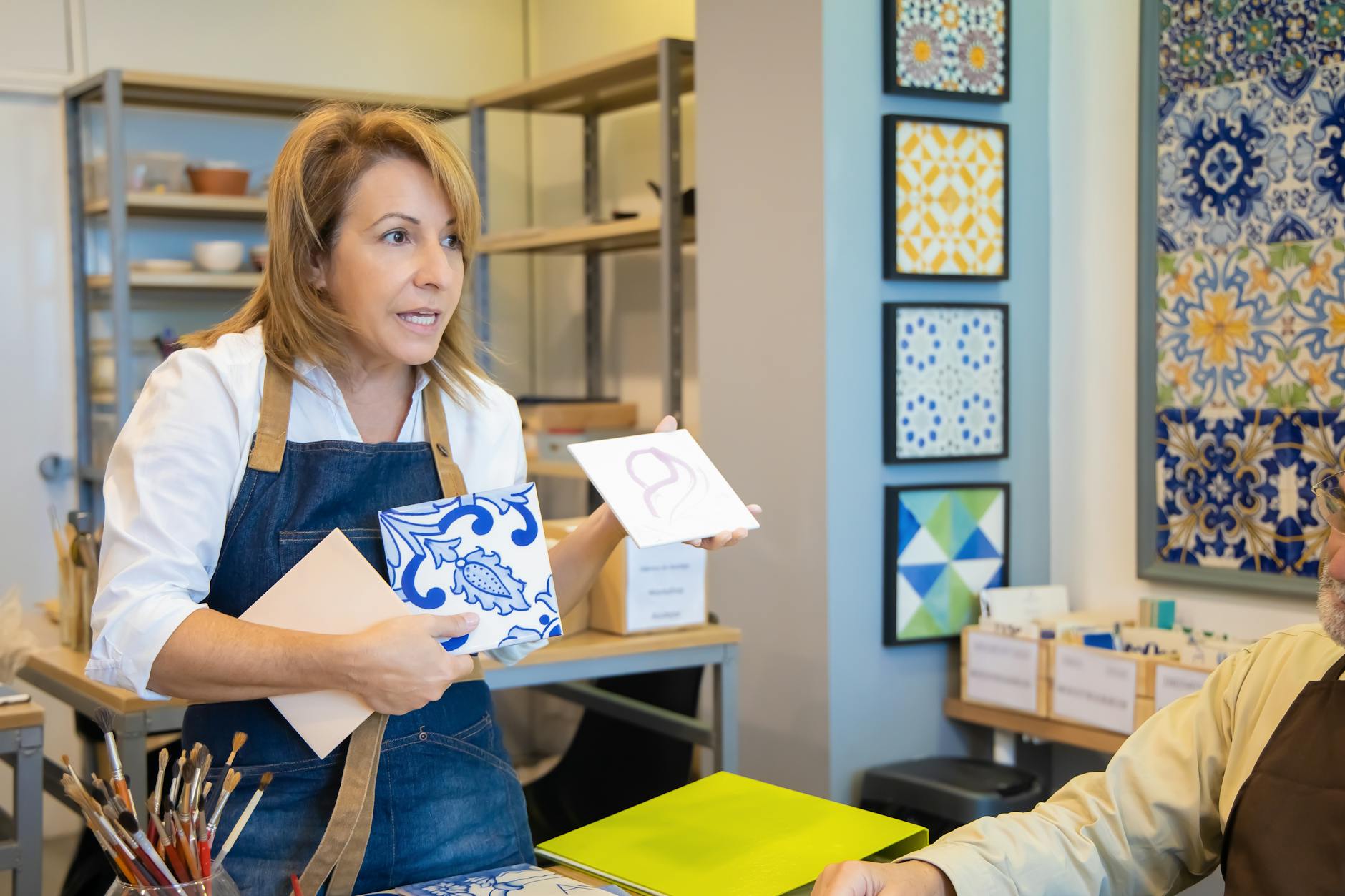
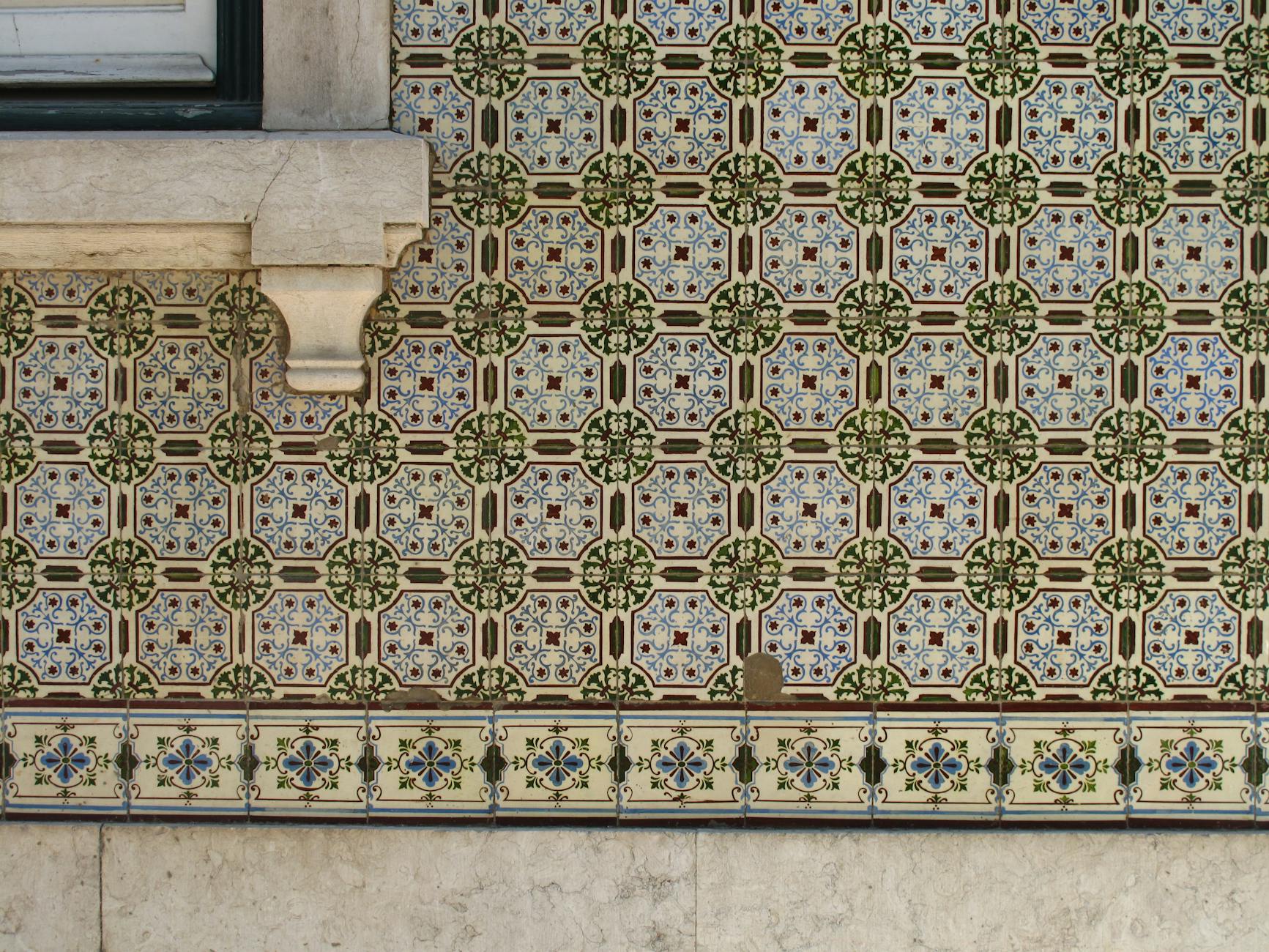
1. Look for irregularities. Hand-painted tiles have visible brush strokes, slight color variations, and minor imperfections. Perfectly uniform tiles are factory-printed.
2. Check the back. Authentic tiles have visible firing marks, hand-applied glaze, and may include the maker’s stamp. Mass-produced tiles have machine-clean backs.
3. Feel the surface. Hand-glazed tiles have slight surface texture. Printed tiles feel uniformly smooth.
4. Verify the paint depth. Genuine majolica painting goes into the glaze, not on top. Run your fingernail across — printed tiles often feel slightly raised.
5. Ask for documentation. Reputable sellers provide receipts with maker info, date of production, and (for antiques) provenance.
Pricing Guide
| Type | Typical price |
|---|---|
| Single contemporary hand-painted tile | €15–€40 |
| Vintage industrial tile (Cortiço) | €5–€40 |
| Single antique tile with provenance | €40–€500+ |
| Small panel (4–6 tiles) | €60–€250 |
| Custom designed panel | €200–€2,000+ |
| Mass-produced “souvenir tile” | €2–€8 (avoid) |
Workshop Visits and Tile-Painting Classes
Several Lisbon workshops offer hands-on tile-painting experiences:
- Sant’Anna factory tour — see the working atelier with explanations of the production process. Free with appointment; €15 per person for guided tours.
- Tile painting workshops — paint your own tile with guidance from a master. €40–€80 per person for 2–3 hour classes. Surrealejos and several smaller workshops offer these.
- Pena Palace tile-painting kits — sold at the Sintra palace gift shop, plus instructional materials.
How to Pack and Transport Tiles Home
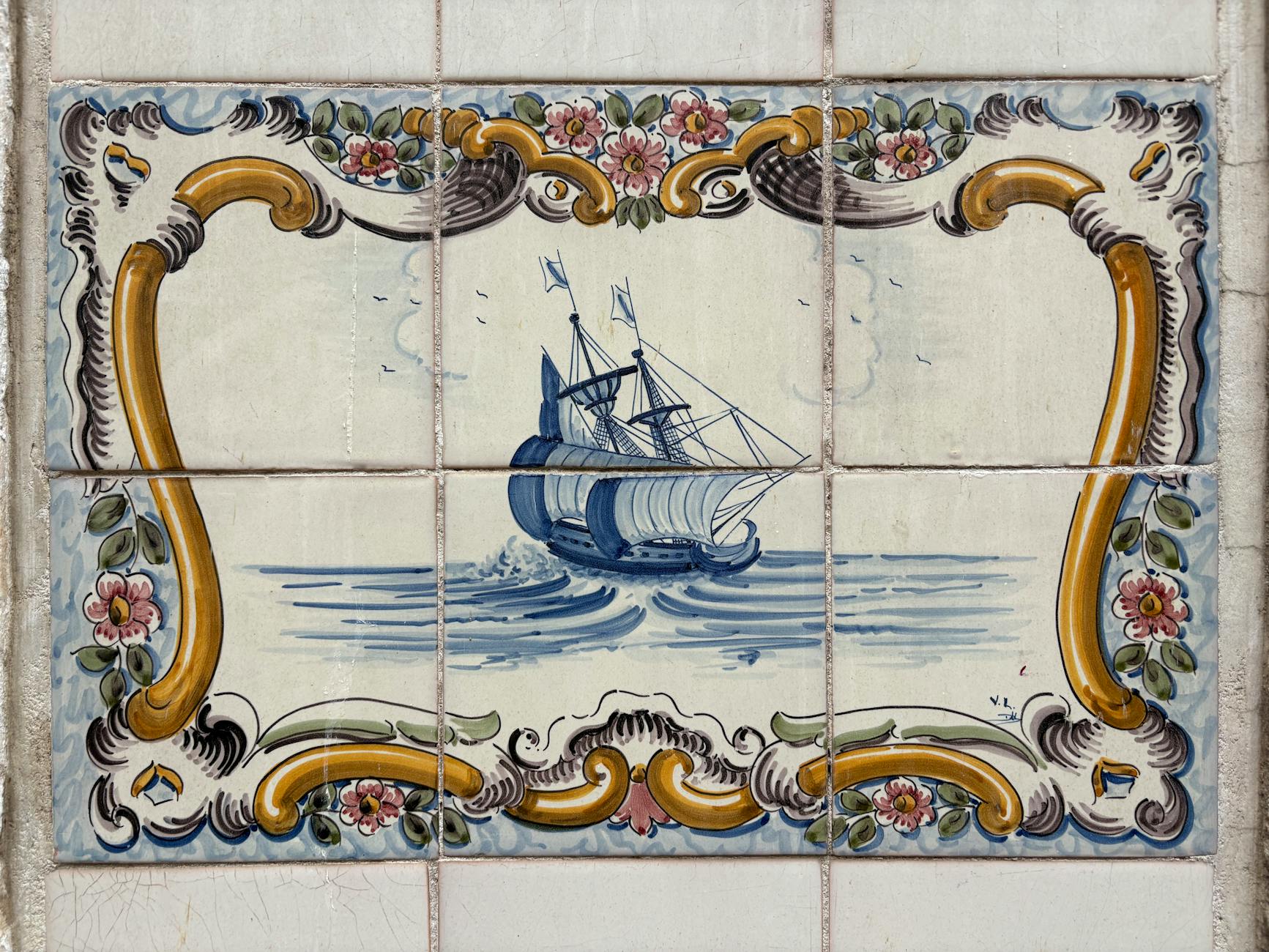
Tiles are fragile and heavy. Packing matters:
- Bubble wrap — most workshops provide it; ask for extra layers
- Hard-shell suitcase — soft luggage doesn’t protect tiles adequately
- Carry-on for valuable pieces — anything over €100 should travel with you, not in checked baggage
- Customs: EU travelers face no restrictions. Non-EU travelers may pay import duty on items over a country-specific threshold (US: $800; UK: £390 in your luggage).
The Best Lisbon Streets for Spotting Azulejos
If you’re learning to recognize good tiles, walk these neighborhoods to study real azulejos in their original architectural context:
- Anjos and Intendente — densest concentration of 19th-century facade tiles
- Lapa — aristocratic 18th-century palace facades
- Alfama — diverse historic and contemporary mix
- The Tile Museum (Museu Nacional do Azulejo) — see our guide
- Major churches and convents — Igreja de São Vicente, Igreja de São Roque, Mosteiro dos Jerónimos
Shipping Tiles Internationally
Larger purchases or panels can be shipped:
- Reputable workshops handle shipping — Sant’Anna, D’Orey, and Solar all ship internationally with insurance
- Cost — €40–€150 to most countries depending on weight and value
- Customs duty — buyer responsibility outside EU; varies by country
- Avoid third-party shipping from market vendors — they’re often unreliable and uninsured
Custom Azulejo Commissions
For travelers wanting bespoke pieces — a custom panel for a kitchen backsplash, a memorial tile, or a personalized address number — Sant’Anna and several smaller artisans accept commissions. Lead time 4–12 weeks; pricing €200–€2,000+ depending on complexity. Most workshops ship internationally.
FAQ: Buy Azulejos Lisbon
Where can I buy authentic azulejos in Lisbon?
Sant’Anna (since 1741), Cortiço & Netos (vintage industrial), Surrealejos (contemporary), and D’Orey Tiles (antique with provenance) are the most-trusted options.
Is it illegal to buy old tiles in Portugal?
Buying tiles stolen from buildings is illegal. Buying antique tiles from licensed dealers with documented provenance is legal. Always require paperwork.
How much do azulejos cost?
€15–€40 for contemporary hand-painted singles. €5–€40 for vintage industrial. €40–€500+ for documented antiques. Custom panels €200–€2,000+.
Can I take azulejos home in checked luggage?
Yes, with proper bubble-wrap packing in a hard-shell suitcase. Valuable pieces should travel as carry-on.
Are the tiles at Feira da Ladra real?
Some are; many are stolen from buildings. Avoid this market for tile purchases entirely. Use licensed dealers instead.
What’s the difference between hand-painted and printed tiles?
Hand-painted tiles have visible brush strokes and slight irregularities; printed ones are perfectly uniform. Hand-painted tiles cost 5–10x more but are dramatically more valuable.
Can I take a tile-painting class in Lisbon?
Yes — several workshops offer 2–3 hour classes for €40–€80 per person. Surrealejos is the most-recommended.
Bottom Line
Buy authentic azulejos at licensed workshops — Sant’Anna for tradition, Cortiço & Netos for vintage character, Surrealejos for contemporary design, D’Orey Tiles for documented antiques. Avoid Feira da Ladra and unmarked street vendors. Pack carefully, request paperwork, and consider a tile-painting class to take home a piece you made yourself.
Continue planning shopping with our Shopping pillar, our souvenirs guide, our flea market guide, and our cork products guide.