Shopping
Portuguese Canned Sardines: The Quirky Souvenir You Need to Buy
The fascinating story of Portuguese canned sardines—why they're collectible, the best shops (like Comur), and how to choose the perfect tin.

In this guide
- Why Portuguese Canned Sardines Are Special
- A Brief History of Portuguese Canning
- Best Shops to Buy Canned Sardines in Lisbon
- Best Brands to Buy
- Quick Comparison: Which Shop to Choose
- Beyond Sardines: Other Portuguese Canned Fish
- How to Choose a Tin
- Pricing Summary
- How to Eat Your Sardines When You Get Home
- Customs and Travel Rules
- Saint Anthony’s Festival: Why Sardines Mean Lisbon
- Pairing With Other Portuguese Souvenirs
- Sardine Tasting Notes: What to Expect
- Where Lisbon’s Sardine Culture Came From
- Sardines as Part of a Portuguese Food Tour
- FAQ: Portuguese Canned Sardines
- Bottom Line
The Portuguese canned sardines souvenir is one of Lisbon’s most distinctive gifts — and one of the few you’ll actually use when you get home. Portugal has been canning sardines since the 1850s, the tins are decorated with retro-style art that turns them into collectibles, the contents are some of the world’s finest preserved fish, and shops like Conserveira de Lisboa (1930) and the theatrical O Mundo Fantástico da Sardinha Portuguesa elevate the humble tin into something worth a dedicated trip.
This guide covers the history, the best shops, what to buy, and why these unassuming tins are worth the suitcase space. Updated for 2026.
Quick Answer: For authentic atmosphere, go to Conserveira de Lisboa (Rua dos Bacalhoeiros 34, Baixa — open since 1930). For the widest selection, Loja das Conservas (Rua do Arsenal 130). For photogenic whimsy and year-stamped tins, O Mundo Fantástico da Sardinha Portuguesa on Rua Augusta. Budget €5–8 per tin for solid quality; €10–15 for premium artisan brands (Pinhais, La Gondola). Tins are carry-on legal everywhere.
Why Portuguese Canned Sardines Are Special
Not every country that cans fish does it well. Portugal does it exceptionally well, for reasons that go back 170 years.
- 170-year canning tradition — Portugal refined the craft from the 1850s onward, with entire coastal towns built around the industry
- World-class quality — Atlantic-caught sardines preserved in olive oil to gourmet standards, with aging potential that rivals wine
- Beautiful packaging — Many brands use retro and vintage-style art labels that are collectibles in themselves; some tins appreciate in value
- Affordable luxury — Premium tins €5–12 each; gift-sized boxes €15–50
- Travel-friendly — Durable, lightweight, customs-allowed everywhere
- Variety beyond sardines — Tuna, cod, mackerel, eel, octopus, squid all canned by specialist producers
- Cultural depth — Sardines are central to Portuguese identity. Every June during Saint Anthony’s Festival, Alfama’s streets fill with the smoke of thousands of fresh grilled fish. The canned version carries that significance year-round.
A Brief History of Portuguese Canning
Sardine canning was invented in Nantes, France in 1824. The Portuguese got involved around 1850, because the Atlantic waters off Portugal and the Algarve were dramatically richer in sardines than anything off the French coast. Within decades, canneries dotted the entire Portuguese coastline — Setúbal, Matosinhos, Portimão, Vila Real de Santo António.
By 1900, the industry exported worldwide. WWI and WWII surged demand — canned fish was a military ration staple, and Portuguese factories ran continuously. By the 1950s, dozens of canneries employed tens of thousands of workers, mostly women, and produced what was considered some of the best preserved fish available anywhere.
The industry nearly collapsed in the 1970s and 1980s as global preferences shifted and competition increased. By the 1990s, only a handful of canneries survived. Then around 2010, a renaissance began. Small artisan canneries returned. Retro packaging caught the eye of a new generation of food tourists. And Portugal’s conservas became one of the country’s most marketable exports — to tourists first, then internationally.
Today, the cannery at Matosinhos that produces Pinhais sardines is one of the last hand-processing facilities in Portugal. A worker there handles the fish exactly as their grandmother did. That context is part of what you’re buying.
Best Shops to Buy Canned Sardines in Lisbon

Conserveira de Lisboa (Most Authentic)
Founded 1930. Tiny historic shop in Baixa with no marketing budget, no Instagram presence, and a permanent queue of locals and in-the-know tourists. Three house brands — Tricana, Prata do Mar, Minor — cover sardines, tuna, mackerel, eel, octopus, and cod. Staff wrap purchases in paper by hand, the way they always have. The shop smells like the sea and old wood.
- Where: Rua dos Bacalhoeiros 34, Baixa
- Vibe: Authentic, family-run, locals and tourists in equal measure
- Pricing: €3–8 per tin
Loja das Conservas (Best Selection)
Curated shop with Portugal’s widest selection of canned fish brands under one roof. Premium and traditional brands side by side. The staff can explain the differences between producers. Better for comparison shopping or if you want to try lesser-known regional canneries.
- Where: Rua do Arsenal 130, Cais do Sodré (main location)
- Pricing: €4–15 per tin
O Mundo Fantástico da Sardinha Portuguesa (Most Theatrical)
“The Fantastic World of the Portuguese Sardine” — concept stores with theatrical retro decor, period costumes on staff, and the gimmick that makes it irresistible: each tin carries the year of someone’s birth, so you choose the year and take home a personalised gift. Operated by Comur, Portugal’s largest canner since 1942. Kitschy in the best possible way, and the tins are genuinely decent quality.
- Where: Multiple locations including Rua Augusta (pedestrian street) and Praça do Comércio
- Pricing: €6–12 per tin
A Vida Portuguesa
Curated Portuguese design and heritage shop with a carefully edited conservas section. The packaging is consistently the most beautiful available — if aesthetics matter more than volume, this is the place. Limited selection but everything is premium.
Address: Rua Anchieta 11, Chiado
Pingo Doce / Continente Supermarkets
For everyday Portuguese sardines at supermarket prices (€2–4 per tin). Brands like Bom Petisco, Pinhais (sometimes), and Robalo are on standard shelves. Less collectible packaging, but identical quality in many cases — and significantly cheaper than specialty shops.
Best Brands to Buy
Premium Artisan
- Pinhais — Family-run since 1920 in Matosinhos. Hand-prepared sardines. One of the last traditional processors. Considered top-tier by chefs internationally. €6–12 per tin.
- La Gondola — Premium brand from Setúbal. €8–15.
- Joaquim S. Marques (J.S.M.) — Artisan canner from Matosinhos. €10–18.
- Maria Organic — Premium organic sardines for the health-conscious buyer. €15–20.
Mid-Range
- Tricana — Conserveira de Lisboa house brand. Solid, consistent. €4–8.
- Prata do Mar — Second Conserveira house brand. €4–7.
- Comur — The theatrical tins; contents are good mid-range quality. €5–10.
- Conservas Friba — Algarve canner with strong regional character. €4–7.
Affordable Standard
- Bom Petisco — Supermarket standard. €2–4.
- Robalo — Same tier. €2–4.
Quick Comparison: Which Shop to Choose
| Shop | Best For | Price Range | Tourist Experience? |
|---|---|---|---|
| Conserveira de Lisboa | Authenticity, local feel | €3–8 | Moderate |
| Loja das Conservas | Widest brand selection | €4–15 | Moderate |
| O Mundo Fantástico | Year-stamped personalised tins, photos | €6–12 | High (by design) |
| A Vida Portuguesa | Beautiful packaging, curated edit | €6–20 | Moderate |
| Supermarket | Everyday quality, best value | €2–4 | Low |
Beyond Sardines: Other Portuguese Canned Fish
Sardines get the attention, but Portuguese canning covers a much wider range. If you’ve already bought sardines before, try something different:
- Cavala (Mackerel) — Stronger, oilier flavour than sardines. Excellent in escabeche (vinegar marinade)
- Atum (Tuna) — Portuguese premium tuna is genuinely different from supermarket tinned tuna everywhere else
- Polvo (Octopus) — Often in olive oil with garlic, tender and flavourful
- Lula (Squid) — In oil or piri-piri sauce
- Enguia (Eel) — Niche specialty, smoked or in oil. Unusual and worth trying
- Espadarte fumado (Smoked swordfish) — Rich, substantial
How to Choose a Tin
For the Packaging (Aesthetics)
- O Mundo Fantástico for year-stamped whimsical tins
- Comur for colour-coordinated decorative tins
- Maria Organic for minimalist modern design
- Conservas com Bigode for vintage-style labels
For the Contents (Quality)
- Pinhais if budget allows — widely regarded as the reference standard
- La Gondola for Setúbal sardines specifically
- J.S.M. for Matosinhos artisan quality
- Tricana for solid mid-range value
By Preparation
- “Em azeite” — In olive oil (traditional, most common)
- “Em escabeche” — In vinegar marinade (sharper, good with bread)
- “Picante” — With chili peppers
- “Com tomate” — In tomato sauce
- “Em água” — In water (less flavourful, avoid for gifts)
Pricing Summary
| Type | Price per tin |
|---|---|
| Supermarket standard | €2–4 |
| Mid-range gourmet | €5–8 |
| Premium artisan (Pinhais, La Gondola) | €8–15 |
| Special edition / themed (Comur, Mundo Fantástico) | €6–12 |
| Gift box (3–6 tins) | €15–50 |
How to Eat Your Sardines When You Get Home
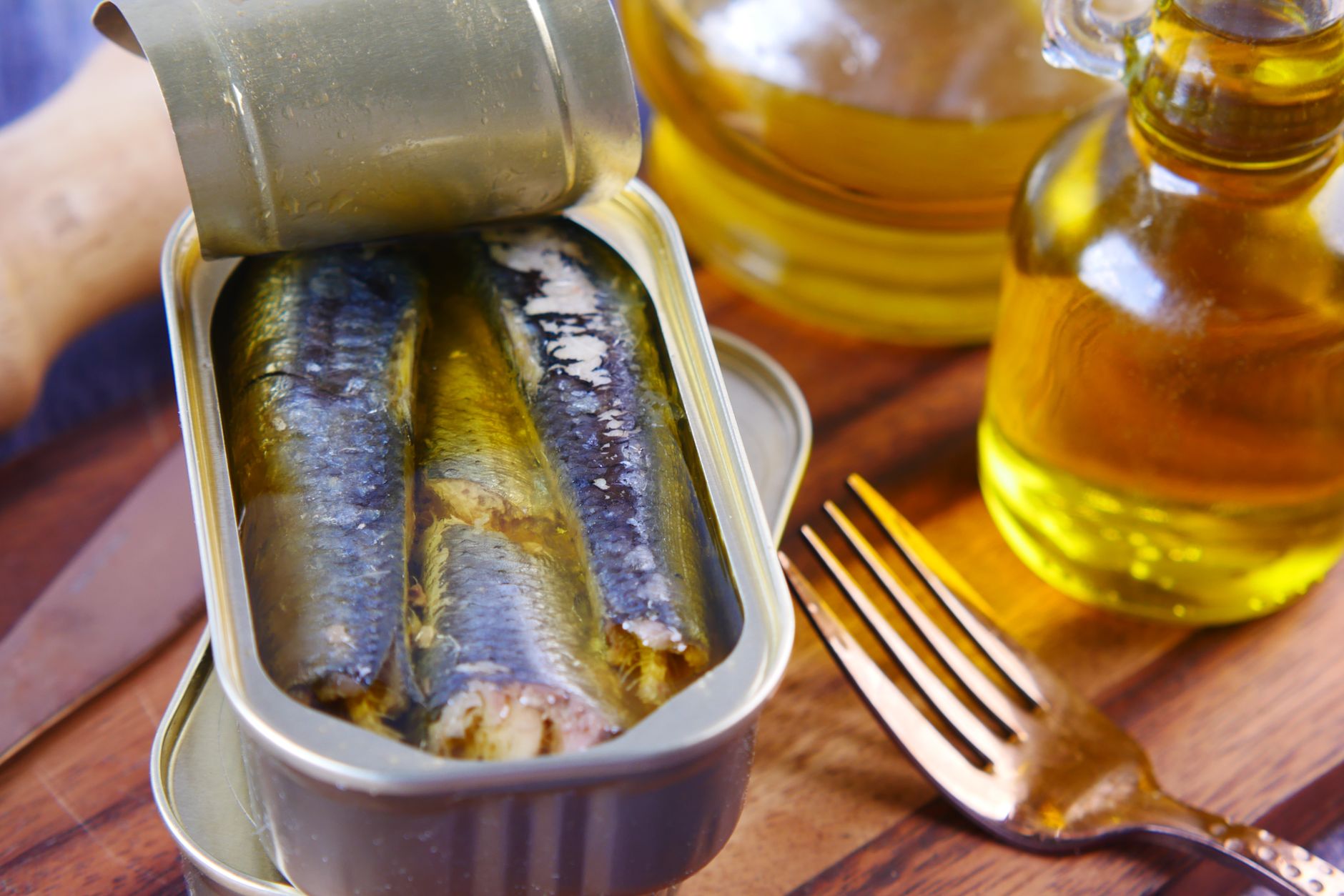
The Traditional Portuguese Way
Open the tin. Drain off some (not all) of the olive oil. Serve on thickly toasted bread with sliced tomato and a squeeze of lemon. Sprinkle sea salt. Pair with cold vinho verde or a cold beer. That’s it. Don’t overthink it.
Other Preparations
- Toasted on bread with butter — the quick snack version
- Mixed into a simple salad with white beans and red onion
- On crackers as canapés for a dinner party (premium tins only)
- Mashed with capers and herbs as a spread on toast
- Tossed into pasta with cherry tomatoes and good olive oil
Customs and Travel Rules
- Carry-on allowed? Yes — solid tins, not subject to liquid restrictions
- Customs to US: Allowed; declare on customs form as “fish products”
- Customs to UK / EU: No restrictions
- Weight — roughly 90–125g per tin; a six-tin gift box weighs about 700g
- For gifts — Premium tins gift-wrapped at Conserveira de Lisboa; multi-tin gift boxes available everywhere; Comur’s year-stamped tins make genuinely personal presents
Saint Anthony’s Festival: Why Sardines Mean Lisbon
June 12–13 every year, Lisbon celebrates the Feast of Saint Anthony. The patron saint of the city and of lovers, Saint Anthony (actually born in Lisbon, not Padua) gets a festival that turns Alfama and Mouraria into one long grilled-sardine smoke. Hundreds of thousands of fresh sardines are eaten over two days. The smell — charcoal and oily fish drifting up the hillside streets — is the defining scent of Lisbon in summer.
This is why sardines carry such cultural weight here. The canned versions are the year-round extension of that specific, irreplaceable, only-in-Lisbon experience. Buying a tin is partly buying that association.
Pairing With Other Portuguese Souvenirs
Sardines work well as part of a Portuguese food hamper. Combine with:
- Portuguese extra-virgin olive oil — €10–25 for a small bottle
- Flor de Sal sea salt from Alentejo — €5–15
- A bottle of vinho verde or port wine — €10–30
- Cork wine bottle stoppers or coasters — €5–15
See our full souvenirs guide for more ideas, including azulejo tiles, cork items, and Portuguese textiles.
Sardine Tasting Notes: What to Expect
If you’ve only ever eaten supermarket tinned fish, Portuguese canned sardines — especially premium ones — will land differently. Here’s what distinguishes them:
Texture
Good Portuguese sardines are tender but cohesive. They hold together when lifted rather than falling apart immediately. The bones are soft enough to eat (the canning process softens them completely), and eating them is standard practice. Cheaper sardines tend to be mushy or overly soft.
Flavour
Richer and more complex than you’d expect from tinned fish. The olive oil isn’t just a preservative — quality extra-virgin olive oil used in premium tins (Pinhais, La Gondola) adds a fruity, grassy note that’s absent from sunflower-oil-packed versions. Sardines packed in escabeche (vinegar marinade) have a bright, acidic character entirely different from oil-packed ones.
Ageing
One of the more unusual aspects of premium Portuguese conservas: they can be aged like wine. Some collectors deliberately store tins for three to five years, during which time the oils mellow and the flavour deepens. Pinhais explicitly notes ageing potential on some products. This is unusual enough to mention to anyone who asks what the tin is for.
Smell
Fresh, oceanic, not “fishy” in the pejorative sense. If a tin smells aggressively pungent on opening, the quality is probably lower. Premium tins smell of the sea and olive oil.
Where Lisbon’s Sardine Culture Came From
Portugal’s relationship with preserved fish predates the canning industry by centuries. Bacalhau (salt cod) is the national dish — dried and salted fish that kept without refrigeration through long voyages. The canning industry was a 19th-century industrial extension of that same logic: preserve quality fish from a rich fishing coastline and export it to the world.
The sardine specifically became synonymous with Lisbon rather than, say, the Algarve or Matosinhos, for two reasons. First, the Saint Anthony’s Festival in June made fresh sardines part of the capital’s seasonal identity — as fundamental to a Lisbon June as pastéis de nata are to any morning. Second, souvenir shops in Lisbon started stocking the more decorative premium tins in the early 2010s, and the city became the main retail destination for what was otherwise a purely export product.
Today, Lisbon shops sell sardines from canneries hundreds of kilometres away — Pinhais from Matosinhos, La Gondola from Setúbal, Friba from the Algarve. The city is the shop window; the fish come from the coast.
Sardines as Part of a Portuguese Food Tour
If you’re treating Lisbon as a food destination, canned sardines fit into a wider picture. The city’s food scene runs from pastéis de nata at Pastéis de Belém through to multi-course tasting menus at starred restaurants — but the sardine tin occupies its own category: affordable, authentic, edible at home, and genuinely representative of Portuguese food culture in a way that a restaurant meal isn’t. It’s not the most glamorous souvenir, but it’s one of the most honest ones.
Pair your sardine shopping with a visit to the Time Out Market for context — the market’s food vendors include traditional conservas counters where you can eat before you buy. Understanding what fresh grilled sardines taste like (if you visit in June) and what their canned equivalent achieves is one of those small Lisbon comparisons that sticks with you.
FAQ: Portuguese Canned Sardines
Where to buy canned sardines in Lisbon?
Conserveira de Lisboa (Rua dos Bacalhoeiros 34) for authentic atmosphere since 1930. Loja das Conservas (Rua do Arsenal 130) for the widest selection. O Mundo Fantástico da Sardinha Portuguesa on Rua Augusta for year-stamped personalised tins. All three are worth visiting.
Are Portuguese canned sardines worth it?
Yes. Premium tins from Pinhais or La Gondola rival fresh fish for flavour. Tins keep two to five years properly stored (some collectors age them deliberately — the flavour deepens). Even mid-range tins at €5–8 outperform most tinned fish available outside Portugal.
How much do Portuguese canned sardines cost?
€2–4 per tin at supermarkets. €5–8 for quality brands at specialty shops. €10–15 for premium artisan labels. Gift boxes of six tins run €25–50.
Can I bring canned sardines on a plane?
Yes — carry-on or checked luggage. No liquid-restriction issues. Declare as fish products on arrival customs forms where required (US, Australia, some others).
Why are Portuguese sardine tins so decorative?
A combination of tradition and revival. Mid-20th-century Portuguese canneries produced beautiful label art as a competitive differentiator. When the industry revived around 2010, producers leaned into that heritage aesthetic — and Comur’s year-stamped concept turned it into a collecting format.
What’s the most prestigious Portuguese sardine brand?
Pinhais for quality (hand-processed in Matosinhos since 1920). Comur for commercial reach (largest producer since 1942, with the O Mundo Fantástico retail chain). Tricana for authentic heritage (Conserveira de Lisboa house brand).
Bottom Line
Portuguese canned sardines are one of Lisbon’s most distinctive and worthwhile souvenirs — historically rich, beautifully packaged, genuinely high-quality, and entirely practical to travel with. Buy a few €5–8 mid-range tins for casual eating at home. Get one or two €10–15 premium tins (Pinhais, La Gondola) as proper gifts. Visit Conserveira de Lisboa for the authentic experience, Loja das Conservas for variety, or O Mundo Fantástico for the year-stamped theatrical version. Any of the three will send you home with something worth opening.
Tinned fish is one shelf of a much larger souvenir problem. The souvenirs guide covers what else is genuinely Portuguese rather than merely sold in Portugal, the shopping pillar maps the districts worth your time, Feira da Ladra is where the second-hand version of all this turns up, and azulejo tiles are the other thing people carry home and later regret buying badly.