Practical Information
Accessibility in Lisbon: A Guide for Travelers with Disabilities 2026
Honest accessibility guide to Lisbon—the hills challenge, accessible transport, wheelchair-friendly routes, adapted tours, and accessible hotels.
In this guide
- Quick Answer: Is Lisbon Wheelchair Accessible?
- Honest Accessibility Reality Check
- Best Areas for Wheelchair Travelers
- Accessible Transit
- Accessible Hotels
- Accessible Sights and Activities
- Cobblestone Strategy
- Adapted Tours
- Day Trip Accessibility
- Practical Tips
- Recommended 3-Day Wheelchair-Friendly Itinerary
- FAQ: Lisbon Accessibility
- Bottom Line
An honest Lisbon accessibility guide starts with this: Lisbon is the “city of seven hills” with cobblestone streets, narrow sidewalks, and historic neighborhoods that weren’t built for wheelchairs. But it’s not impossible — with planning, the right neighborhoods, accessible transit, and adapted tours, wheelchair users and travelers with mobility issues can have a great Lisbon trip. The key is choosing the right routes and accepting that some classic sights (parts of Alfama, Tram 28) won’t work.
This is a realistic, no-sugar-coating accessibility guide based on real wheelchair traveler experiences. Updated for 2026.
Quick Answer: Is Lisbon Wheelchair Accessible?
| Area / Feature | Accessibility Rating | Notes |
|---|---|---|
| Parque das Nações | Excellent | Built flat for 1998 Expo; fully accessible |
| Belém district | Good | Mostly flat, wide riverfront paths |
| Baixa / Pombaline grid | Good | Flat, wide streets, some cobbles |
| Avenida da Liberdade | Good | Wide smooth pavements throughout |
| Alfama | Poor | Steep cobbled alleys, frequent steps |
| Bairro Alto | Poor | Steep streets, narrow pavements |
| Metro network | Mostly good | 46 of 56 stations have elevators (2026) |
| Tram 28 (heritage) | None | Steps, no ramps — not accessible |
| Tram 15E (modern) | Good | Low-floor, ramp access to Belém |
| Carris buses | Good | 80%+ have low-floor ramps |
Honest Accessibility Reality Check
What’s Difficult
- Alfama, Mouraria, and Bairro Alto — Steep cobblestoned streets, narrow alleys, frequent steps
- Calçada Portuguesa cobblestones — Polished limestone is slippery when wet; rear wheels lose grip
- Tram 28 — Heritage trams have steps and tight aisles; not wheelchair accessible
- Funiculars — All three (Glória, Bica, Lavra) currently suspended following a fatal Glória accident
- Castle and viewpoints — Most require steep climbs without ramps
- Pickpocketing — Wheelchair users sometimes targeted; standard precautions apply
What’s Doable
- Modern Lisbon (Parque das Nações) — Built flat for 1998 Expo; entirely wheelchair-friendly
- Belém — Mostly flat with wide sidewalks
- Baixa — The Pombaline grid is flat with wide streets
- Modern trams (Tram 15E to Belém) — Low-floor with ramps
- Modern Carris buses — Over 80% have ramps and lift access
- Metro — 46 of 56 stations now have elevators (always check ahead)
- Many major museums — Ramps and elevators throughout
The honest truth: a visitor who focuses on Belém, Baixa, Avenida da Liberdade, and Parque das Nações will see the best of Lisbon and encounter very few barriers. It’s the impulse to squeeze in Alfama or Tram 28 that causes problems. Plan around the accessible core, and the trip works well.
Best Areas for Wheelchair Travelers
Parque das Nações (Most Accessible)
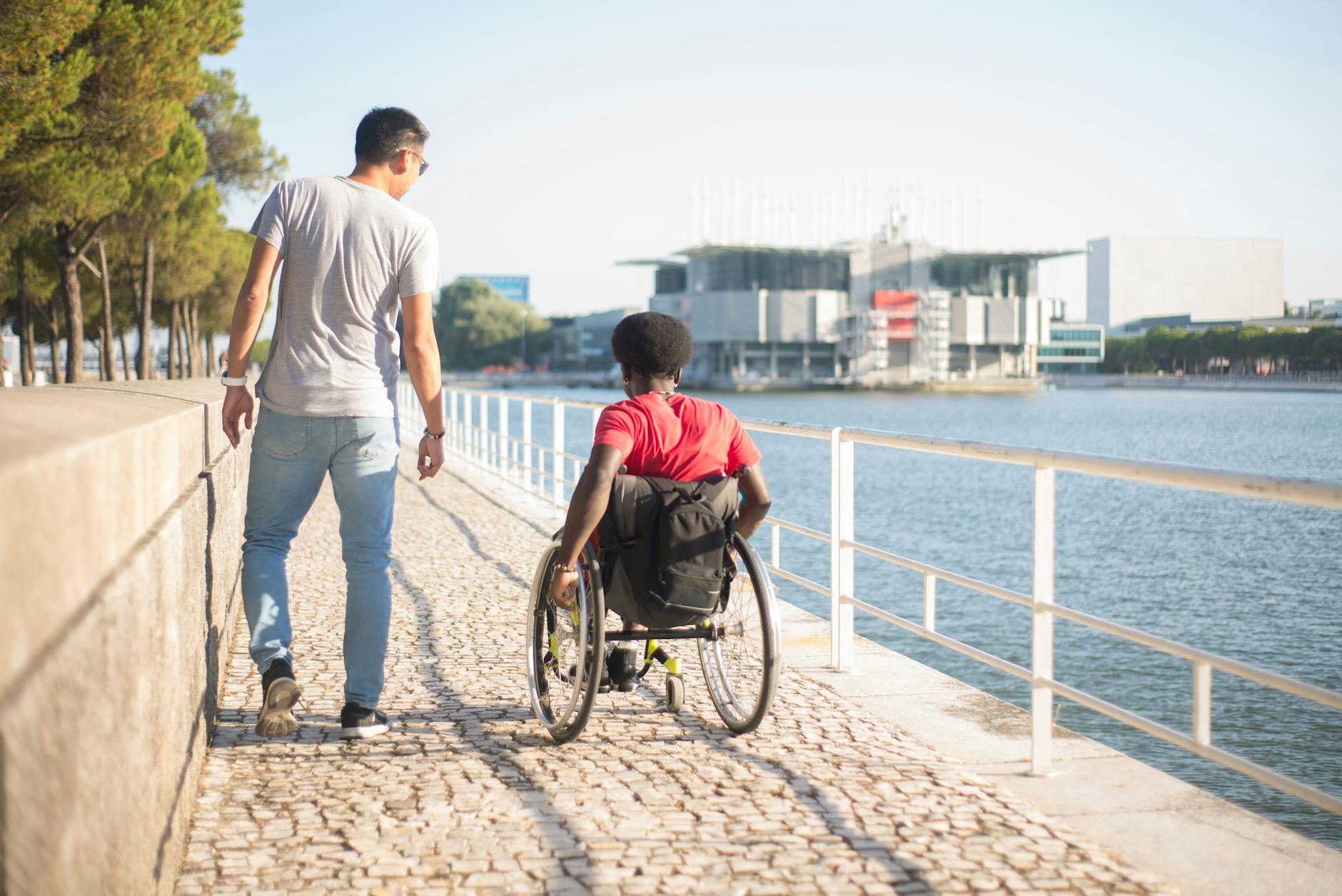
Built for the 1998 World Expo on reclaimed riverside land. Completely flat, modern, and served by an accessible cable car. It doesn’t have Alfama’s photogenic grit, but it has the Oceanarium, wide river promenades, and the Vasco da Gama Bridge panorama — and you can cover all of it without encountering a single step. Includes:
- Lisbon Oceanarium — Fully wheelchair accessible
- Vasco da Gama Tower — Accessible elevators
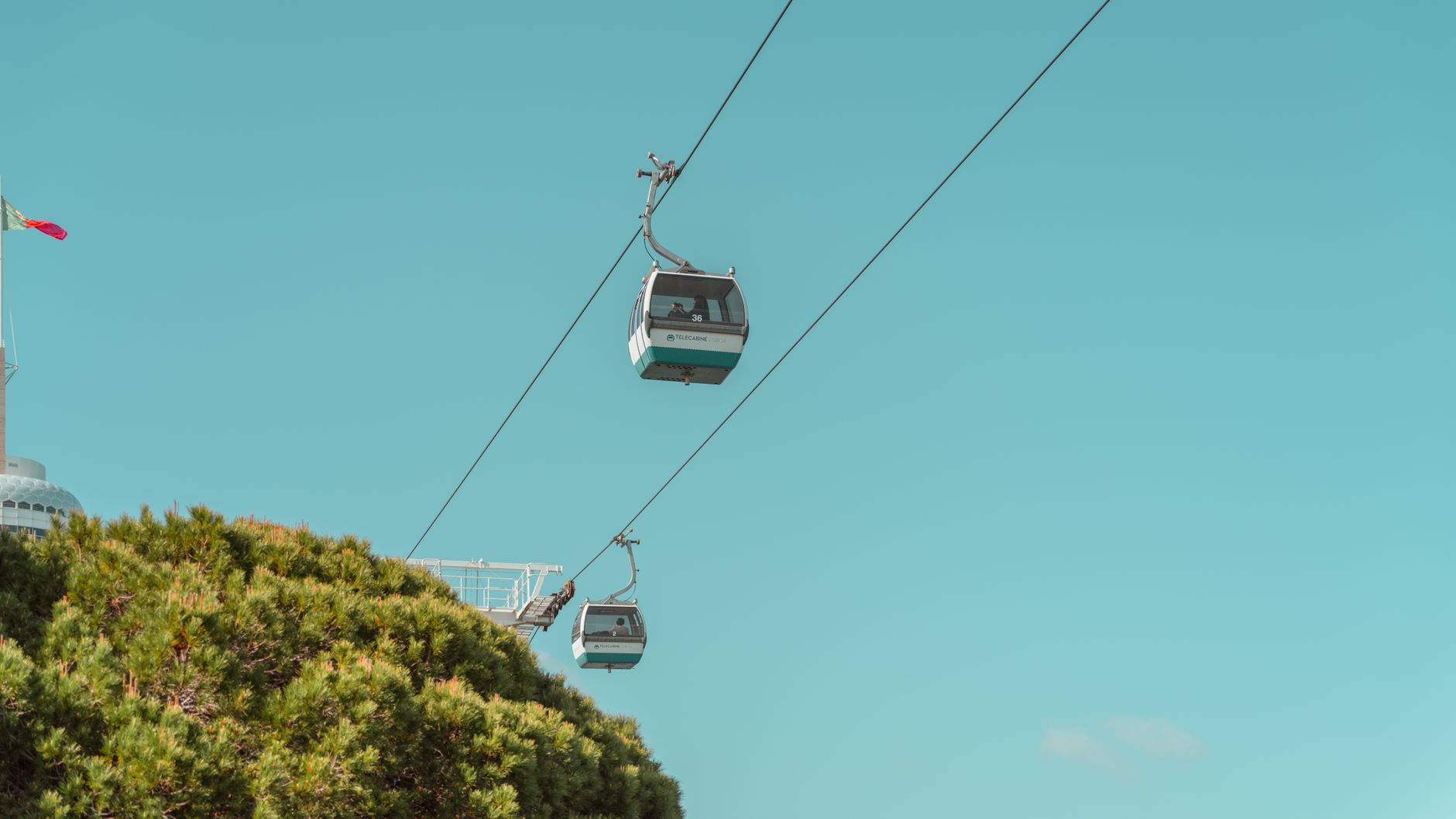
- Cable car (Telecabine Lisboa) — Wheelchair-friendly cars, river views
- Riverside promenade — Smooth wide paths stretching several kilometres
- Vasco da Gama Mall — Fully accessible
Belém
Belém is the single best half-day for wheelchair users in Lisbon. The riverfront is flat, the big museums are modern and accessible, and Tram 15E drops you right there. You’re looking at Jerónimos Monastery, the Monument to the Discoveries, MAAT, and the National Coach Museum — all accessible — within a 10-minute roll of each other.
- Jerónimos Monastery — Accessible entry; most areas have ramps
- National Coach Museum — Modern building, fully accessible
- MAAT — Modern riverside museum, fully accessible; see maat.pt for current details
- Riverfront walks — Smooth pavement, mostly flat
- Pastéis de Belém — Accessible takeaway counter at the original 1837 bakery
Baixa & Praça do Comércio
Lisbon’s flat grid downtown. Praça do Comércio is wide and accessible. Rua Augusta is pedestrianized and mostly smooth. Some surrounding streets have cobblestones but are manageable. The grid layout makes route-planning easy: if one street has awkward cobbles, the parallel one is usually smoother.
Avenida da Liberdade
Wide tree-lined boulevard. Smooth sidewalks on both sides. Fully accessible, with pavement cafés that are easy to enter. The tree-shaded median strip is a pleasant place to rest on a warm afternoon.
Accessible Transit
Metro
As of 2026, 46 of Lisbon’s 56 metro stations have elevators — including recent additions like Campo Pequeno and Picoas. Always check station maps in advance. Some older stations on the green and blue lines still have stairs only, and discovering a broken elevator at the bottom of a flight of stairs is one of the most commonly cited frustrations for wheelchair users in Lisbon. Check the Metro Lisboa website for live elevator status before travelling.
Reliable stations: Marquês de Pombal, Saldanha, Oriente, Cais do Sodré, São Sebastião, Aeroporto (the entire red line is modern and well-equipped).
More problematic: Some smaller stations on the older green/blue line sections — verify before using.
Buses (Best Everyday Option)
Carris buses are the most reliably accessible option in Lisbon. Over 80% are low-floor with retractable ramps. Drivers deploy ramps on request — signal at the front door with the blue disabled badge. Route coverage is comprehensive across all neighbourhoods. For the door-to-door service and more accessibility information, see Carris reduced mobility services.
Modern Trams (15E to Belém)
Tram 15E has low-floor entry with ramps and runs from Praça da Figueira through Cais do Sodré to Belém. This is your primary public transit tool as an accessible traveller — take it to Belém and use buses for everything else.
Heritage Trams (Tram 28)
NOT accessible. Steps, tight aisles, manual operation. It’s a famous tourist experience, but not one that works for wheelchair users. Skip it — the neighbourhoods Tram 28 passes through (Alfama, Estrela) are largely inaccessible regardless.
Trains
Lisbon’s trains (to Sintra, Cascais, Belém) have wheelchair-accessible cars. Request assistance at the station 30 minutes before departure. Cais do Sodré and Oriente stations are fully accessible.
Adapted Taxis
Standard taxis have limited wheelchair space. Adapted taxis in Lisbon are equipped with boarding platforms, wider doors, and wheelchair fastening devices. Operators include Autocoope (217 932 756), Jorge Alves Táxis (966 225 212), and Retalis Rádio Táxis (218 119 000).
Carris Door-to-Door Service
Carris operates a dedicated door-to-door transport service for passengers with 60%+ declared disability who cannot use regular public transport. Book at least two working days ahead by calling 213 613 141. The service covers the entire Lisbon municipality and runs weekdays 6:30 AM–9:30 PM, weekends/holidays 8–12 AM and 2–6 PM.
Airport
Lisbon Airport is fully accessible. Wheelchair assistance is available — request at least 48 hours before your flight through your airline.
Accessible Hotels
Most 4 and 5-star hotels in Lisbon have rooms meeting accessibility requirements, but specifications vary significantly. Before booking, always confirm:
- Roll-in shower vs grab-bar tub — these are not interchangeable
- Door width and threshold heights
- Bed height and positioning
- Elevator access from street to room — some older buildings have retrofitted lifts with tight clearances
Reliably Accessible Properties
- Hotel Mundial (Praça da Figueira) — Multiple accessible rooms, central location near metro
- Tivoli Avenida Liberdade — Adapted rooms on the most accessible boulevard in Lisbon
- Four Seasons Ritz Lisbon — Premium accessible rooms and full concierge support
- Pousada de Lisboa — Accessible historic building at Praça do Comércio
- Avani Avenida Liberdade — Modern, accessible, good transit connections
- EPIC SANA Lisboa — Multiple certified accessible rooms
Avoid older boutique hotels in Alfama, Bairro Alto, or Mouraria that occupy multi-level historic townhouses. These almost never have elevator access between floors.
Accessible Sights and Activities
Wheelchair-Accessible
- Praça do Comércio (entire square)
- Lisbon Oceanarium
- National Tile Museum (most areas)
- Calouste Gulbenkian Museum
- National Coach Museum (modern building)
- MAAT
- Jerónimos Monastery (most areas)
- Monument to the Discoveries (ground level + elevator to rooftop)
- Cable car at Parque das Nações
- Sé Cathedral (ground floor; cloister has steps)
- Lisbon Story Centre
Partially Accessible
- Belém Tower — closed for restoration through 2026; exterior viewable from flat riverside path
- Praça do Comércio Arch viewing platform — elevator most of the way, final stairs
- Alfama — some flat streets; many impossible alleys
- São Jorge Castle — accessible lower grounds; ramparts require steep walking
Largely Inaccessible
- Most of Alfama’s narrow alleys
- Most of Bairro Alto’s steep streets
- Tram 28
- Carmo Convent (steps to enter)
- Quinta da Regaleira in Sintra (very steep gardens throughout)
- Most hilltop miradouros without adapted access
Cobblestone Strategy
Lisbon’s calçada portuguesa cobblestones are beautiful but genuinely difficult in a wheelchair. The polished limestone becomes slick in rain, and the irregular surface transfers vibration directly into the chair. This is not a minor concern — it’s the dominant day-to-day challenge for wheelchair users outside of the modern districts.
Wheelchair Tire Tips
- Hard rubber or textured tires — essential. Soft pneumatic tires can fail on wet polished stone
- Avoid relying on wheelchair brakes on slopes — wheels lock but the chair can still slide on wet cobbles
- Front-wheel drive electric chairs handle cobblestones better than rear-wheel models
- Plan parallel routes — smooth pavements often run alongside cobblestone streets in Baixa
Rainy Weather
Avoid cobbled inclines when wet. Stick to Baixa and Avenida da Liberdade if rain is forecast. The Oceanarium and museums in Parque das Nações are excellent wet-weather options — fully indoor, fully accessible.
Adapted Tours
Several specialised tour operators offer accessible Lisbon experiences with adapted vehicles:
- Sage Traveling — Established disabled-traveler specialist; Lisbon adapted tours with accessible vans and pre-scouted routes
- Lisbon Accessible Tours (local operator) — Half and full-day adapted tours
- Tour Por Todos — Portuguese accessibility-focused agency
Tours typically use wheelchair-accessible vans with ramps. Prices vary — contact operators directly for current rates. Private custom routes are usually possible with advance booking. For general accessible Portugal resources, visitportugal.com maintains an accessibility section.
Day Trip Accessibility
Cascais (Best Option)
Train from Cais do Sodré is accessible. Cascais town centre is mostly flat with smooth pavement. The promenade between Cascais and Estoril is excellent for wheelchair users. Best day trip for wheelchair travellers from Lisbon. See our Cascais guide.
Belém (Best Half-Day)
Tram 15E directly from Baixa + flat Belém district = best accessible half-day within Lisbon. All major sights are within rolling distance of each other.
Sintra (Challenging)
Train from Rossio is accessible but Sintra’s hills and palace gardens are steep. Pena Palace lower levels are accessible but the full visit requires significant climbing. Quinta da Regaleira’s gardens are very steep throughout. Worth considering with an adapted tour rather than independently.
Setúbal/Arrábida (Mixed)
Town centre accessible; beach access varies significantly by beach. The cliff-edge beaches require paths that aren’t always suitable for wheelchairs. Confirm access before travelling.
Practical Tips
- Travel insurance with comprehensive accessibility coverage — always
- Request airport wheelchair assistance 48 hours before departure through your airline
- Carry medical info in Portuguese if possible — see our list of Portuguese phrases worth learning for key vocabulary
- Plan rest stops — distances feel longer with mobility constraints; Belém has benches and cafés throughout
- Accessible bathrooms at Lisboa Story Centre, major museums, malls, Time Out Market, Parque Eduardo VII, Praça do Comércio, and Cais do Sodré
- Avoid summer noon–3 PM heat in open plazas — Praça do Comércio has minimal shade
- Money and tipping — see our money guide and tipping guide
Recommended 3-Day Wheelchair-Friendly Itinerary
Day 1: Belém
Tram 15E from Praça da Figueira to Belém. Visit Jerónimos Monastery, the Monument to the Discoveries (elevator to rooftop), MAAT, and the National Coach Museum. Lunch at a café on the flat riverside. Bus or Uber back to central Lisbon for dinner on Avenida da Liberdade.
Day 2: Baixa, Museums & Avenida
Start at Praça do Comércio — wide, flat, photogenic. Walk north along Rua Augusta (pedestrianized, mostly smooth). Browse Avenida da Liberdade at your own pace. Afternoon: National Tile Museum by bus (accessible building, world-class azulejo collection). Evening at Time Out Market — accessible, excellent food variety.
Day 3: Cascais Day Trip + Parque das Nações
Morning: train from Cais do Sodré to Cascais. Walk the promenade, explore the flat town centre. Return to Lisbon mid-afternoon. Late afternoon: Parque das Nações cable car and riverside promenade. Dinner in the modern restaurants there or back in Baixa.
FAQ: Lisbon Accessibility
Is Lisbon wheelchair accessible?
Partially. Modern areas (Parque das Nações, Belém, Avenida da Liberdade, Baixa) are genuinely accessible. Historic areas (Alfama, Bairro Alto, Mouraria) are largely not — steep cobbled streets are a real barrier. Plan around the accessible zones and you can have an excellent trip.
Are Lisbon’s trams wheelchair accessible?
Modern Tram 15E to Belém: yes, low-floor with ramp access. Heritage Tram 28: no — steps and tight aisles throughout. The funiculars (Glória, Bica, Lavra) are currently suspended.
What’s the easiest day trip from Lisbon for wheelchair users?
Cascais — flat town centre, accessible train from Cais do Sodré, smooth coastal promenade. Belém makes the best accessible half-day within the city.
Are Lisbon hotels wheelchair accessible?
Most 4–5 star hotels have at least one accessible room. Always confirm specifics — roll-in shower versus grab-bar tub is the most common source of confusion. Avoid historic boutique hotels in hilly neighbourhoods.
How accessible is Lisbon’s metro?
46 of 56 stations have elevators as of 2026. Check the Metro Lisboa website before travelling for live elevator status — out-of-service lifts are the biggest practical frustration for wheelchair users on the network.
What’s the most accessible neighbourhood in Lisbon?
Parque das Nações (modern, completely flat, built for the 1998 Expo) and Belém (flat riverfront, major accessible museums). Baixa and Avenida da Liberdade are also good. Avoid Alfama and Bairro Alto.
Bottom Line
Lisbon isn’t barrier-free, but it’s increasingly accessible with modern transit, adapted tours, and well-equipped hotels in the right neighbourhoods. The formula that works: stay on Avenida da Liberdade or in Baixa; spend your days in Belém and Parque das Nações; use Tram 15E and Carris buses for transit; book a Cascais day trip rather than Sintra. With the right planning, an excellent Lisbon trip is fully achievable — the accessible half of the city has more than enough to fill several days.
Access is one layer of planning on top of the ordinary kind. The practical information pillar covers the rest, the money guide and tipping guide apply as they would to anyone, and the phrases guide is worth a look for the vocabulary you need to ask a specific question about a ramp or a lift.