Things to Do in Lisbon
São Jorge Castle: Complete Guide to Lisbon’s Hilltop Fortress (2026)
Explore São Jorge Castle with our complete guide covering history, tickets, viewpoints, the best route up, and why it's Portugal's most-visited national monument.
In this guide
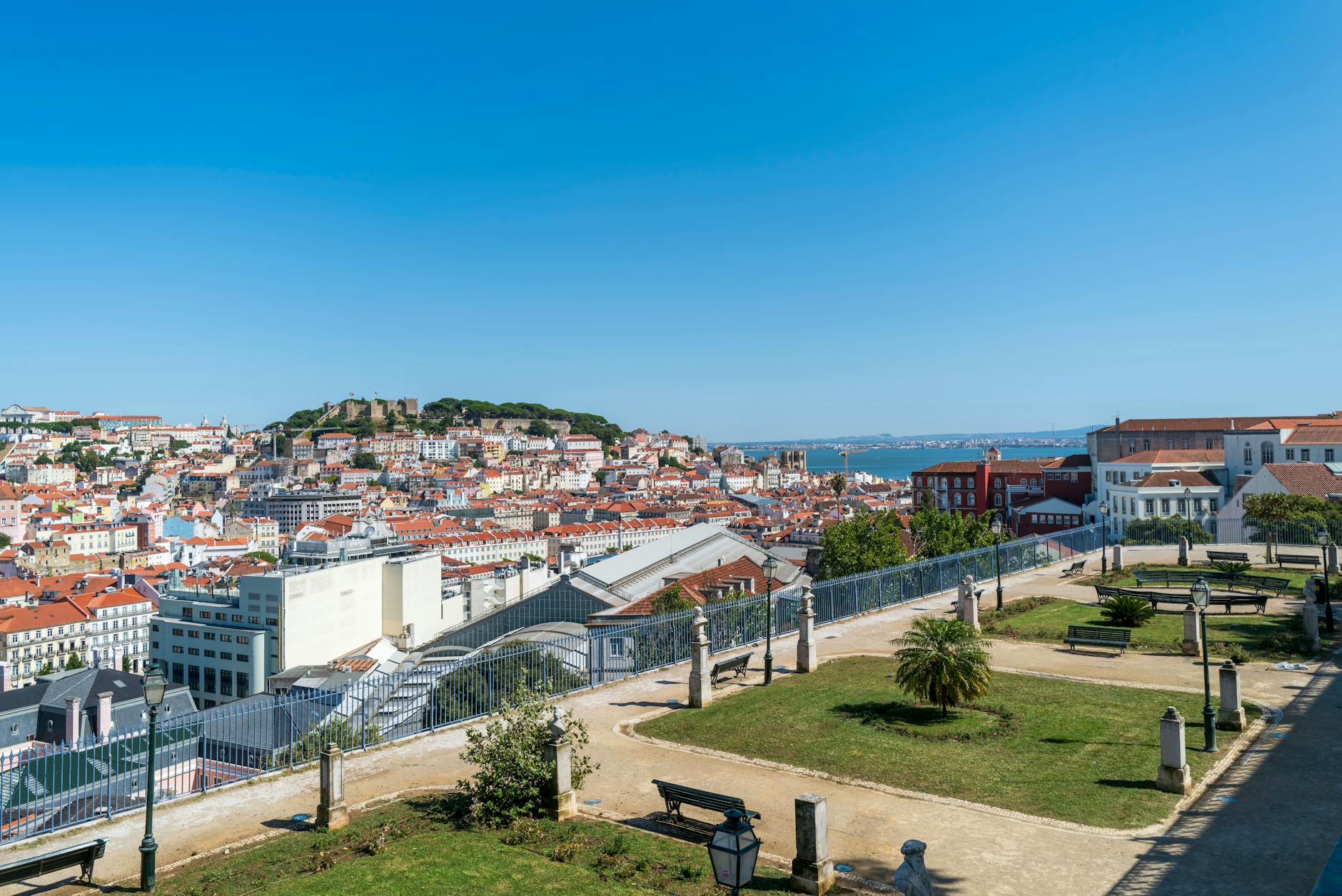
São Jorge Castle (Castelo de São Jorge) sits on the highest hill in Lisbon’s historic centre — a mid-11th-century Moorish fortress on a hill settled long before its walls went up, taken by Afonso Henriques, Portugal’s first king, in 1147, and heavily restored in 1938–1940. The castle dominates the Alfama skyline and gives panoramic views over the city, the Tagus, and the 25 de Abril Bridge.
Walking up from the Baixa, the cathedral is the obvious first stop before the climb. Our Se de Lisboa guide covers the ticket and the forty-five minutes it deserves.
The castle is one stop on a much longer list — see how it compares on cost and queue time in our Lisbon landmarks and monuments guide, which ranks every ticketed site in the city.
This guide covers everything you need to plan a great visit: tickets, opening hours, the best route up, what to see inside (peacocks, ramparts, the Camera Obscura), the layered history that makes the building so distinctive, and tips for getting the iconic photo without the worst crowds. Updated for 2026.
São Jorge Castle at a Glance
- Location: Atop the highest hill in Lisbon’s historic centre, between Alfama and Mouraria
- Founded: Mid-11th century as a Moorish fortress, on a hill settled centuries earlier; captured 1147 by Portugal’s first king
- Hours: 9 AM – 9 PM (March–October) / 9 AM – 6 PM (November–February)
- Tickets: €17 adult, €8.50 youth (13–25), €14 senior (over 65), free for children 12 and under
- Time required: No set length; leave room for the ramparts, the viewpoints and a Camera Obscura session
- Best time: Right at 9 AM opening or after 5 PM
Tickets, Hours & Practical Info (2026)
Opening Hours
- March 1 – October 31: 9:00 AM – 9:00 PM (last entry 8:30 PM; the wall-walks and towers may close earlier, between 6:00 and 9:00 PM depending on daylight)
- November 1 – February 28: 9:00 AM – 6:00 PM (last entry 5:30 PM)
- Closed: January 1, May 1, December 24, 25 and 31
Ticket Prices
- Adult: €17
- Youth (13–25): €8.50 (proof of age required)
- Senior (over 65): €14 (ID required)
- Children 12 and under: Free
Lisboa Card holders enter free. Everyone else can buy online through BOL, the only authorised online seller, linked from the official Castelo de São Jorge site: the €17 adult ticket lets you bypass the ticket-office queue. The audio guide is included free with the official ticket and accessed via your phone after entry.
Skip-the-Line Tips
Three approaches to avoid the worst queues:
- Pre-book your ticket online through BOL via the official Castelo de São Jorge site. It costs the standard admission and skips the ticket-office queue.
- Arrive at 9:00 AM right at opening. The first 45 minutes are dramatically less crowded than 11 AM–3 PM peak.
- Visit after 5 PM in summer (open until 9 PM, last entry 8:30 PM) — the light softens and, on a clear evening, the sunset from the ramparts is the reward. The wall-walks can shut before the main gates do, so don’t leave it too late.
How to Get to São Jorge Castle
The castle sits on the hilltop above central Lisbon, reached by several routes:
Walking Up Through Alfama (Recommended)
The most rewarding approach. Start at Sé Cathedral and follow the cobbled lanes up through Alfama: steep but scenic. Stop at the Miradouro de Santa Luzia and Miradouro das Portas do Sol on the way for previews of the view.
Tram 28
The famous yellow tram stops at “Largo das Portas do Sol”, below the castle. A ticket bought on board costs €3.30; Zapping credit on a €0.50 Navegante occasional card brings it to €1.72 a trip (valid one hour), and a 24-hour Carris/Metro ticket costs €7.25. The tram doesn’t reach the castle itself — you still walk the final stretch uphill.
Bus 737
The most direct option. Bus 737 runs from Praça da Figueira up to the Castelo stop. Pay €2.30 on board, or let a 24-hour Carris/Metro ticket (€7.25) cover it along with the rest of the day’s rides.
Tuk-Tuk
Tuk-tuks at Praça do Comércio offer rides up for €15–€25 per person. Useful with mobility issues but expensive for the distance. Bus 737 is dramatically cheaper.
By Foot from Mouraria (Less Touristy)
From Praça Martim Moniz, climb up through Mouraria to the castle’s western entrance. Slightly steeper than the Alfama route but quieter and more atmospheric.
What to See Inside
The Castle Walls and Eleven Towers
The main attraction. Walk the perimeter ramparts and climb each of the eleven towers for different angles on the city. Highlights:
- Tower of Ulysses — named for the legend that Ulysses founded Lisbon on his return from Troy. Houses the Camera Obscura.
- The North Tower — facing Mouraria, less crowded
- The southern ramparts — facing the Tagus and 25 de Abril Bridge
Camera Obscura
Inside the Tower of Ulysses, a camera obscura uses a system of lenses and mirrors to project a real-time 360-degree image of Lisbon. Live commentary from castle guides points out landmarks. Free with castle admission; guided sessions run subject to availability.
Archaeological Site
The eastern part of the castle complex contains an active archaeological site showing remains from three layered eras: Iron Age (7th century BC), Moorish (9th–12th century), and medieval Portuguese (13th–16th century). Walk through on raised wooden walkways with explanatory signs.
The Peacocks
Peacocks (and the occasional duck) roam the castle grounds. Photogenic, surprisingly tame, and a reliable crowd-pleaser for children, though the castle asks visitors to keep their distance and not to feed them.
The Gardens and Olive Groves
The castle grounds include several pocket gardens and a small olive grove. Quieter than the towers; good for a picnic or a moment of sitting.
The Restaurant and Café
One sit-down restaurant and a smaller café on the castle grounds. Mains €18–€32. Decent food but tourist pricing — better to eat in Alfama before or after.
The Lisboa Story Centre (Down the Hill)
Not inside the castle but adjacent. Multimedia museum telling Lisbon’s history through interactive exhibits. Separate ticket: check current prices on the Lisboa Story Centre’s own site. Worth combining for history-focused visitors.
The Layered History
What makes São Jorge Castle distinctive is that nearly every era of Iberian history has left its mark:
Pre-History and Iron Age
Archaeological evidence dates human occupation of the hilltop to the 7th century BC. The Phoenicians, Greeks, and Carthaginians all traded with the local Iron Age population.
Roman Period (1st century BC – 5th century AD)
Romans called the city Olisipo and fortified the hilltop. Foundations of Roman walls survive in the archaeological zone.
Visigothic Period (5th–8th century)
Germanic Visigoths captured Roman Iberia and took their turn occupying the hilltop. Christian until the Moorish conquest.
Moorish Period (711–1147)
Berber and Arab forces crossed into Iberia in 711 and took Lisbon in 714, holding it for most of the next four centuries. The Moors substantially expanded the castle, building most of the surviving outer walls and the qasbah (citadel) layout still recognizable today.
Christian Reconquest (1147)
The decisive moment. King Afonso Henriques — Portugal’s first king — laid siege to Lisbon for four months in 1147 with English, French, and German crusaders en route to the Holy Land. The Moorish defenders surrendered in October. The castle was later dedicated to Saint George under King João I, who married the English princess Philippa of Lancaster in the late 14th century.
Royal Residence (12th–16th century)
Inside the walls stood the Royal Palace of the Alcáçova, home to King Dinis I, King Manuel I, and others. The Torre do Tombo (Portugal’s first royal archive) was housed here. Vasco da Gama was received at the castle after returning from his voyage to India.
Decline and Earthquake (16th–18th century)
The royal family moved to Ribeira Palace on the riverfront in the 16th century. The castle decayed, and the 1755 earthquake left the old royal palace heavily damaged. By the 19th century it was a romantic ruin.
20th-Century Restoration
Major restoration in 1938–1940 under the Estado Novo regime uncovered and restored the castle and the remains of the former royal palace, giving the walls and towers much of the look they have today.
21st-Century Status
Today EGEAC, the castle’s operator, describes it as Portugal’s most-visited national monument.
Best Time to Visit
9:00 AM (right at opening) is consistently the best time. Crowds dramatically smaller, light is soft for photography, peacocks active, and the queues haven’t formed.
Late afternoon in summer (when the castle stays open until 9 PM) is worth considering too, and sunset over the Tagus from the ramparts makes a fine end to the day.
Avoid 11:00 AM – 3:00 PM in summer — peak tour-group hours. If midday is your only slot, buy online to skip the ticket-office queue and expect busy ramparts.
April–May and September–October offer the best combination of weather and crowd levels. See our best time to visit Lisbon guide.
Photography Tips
Best vantage points for the iconic shot:
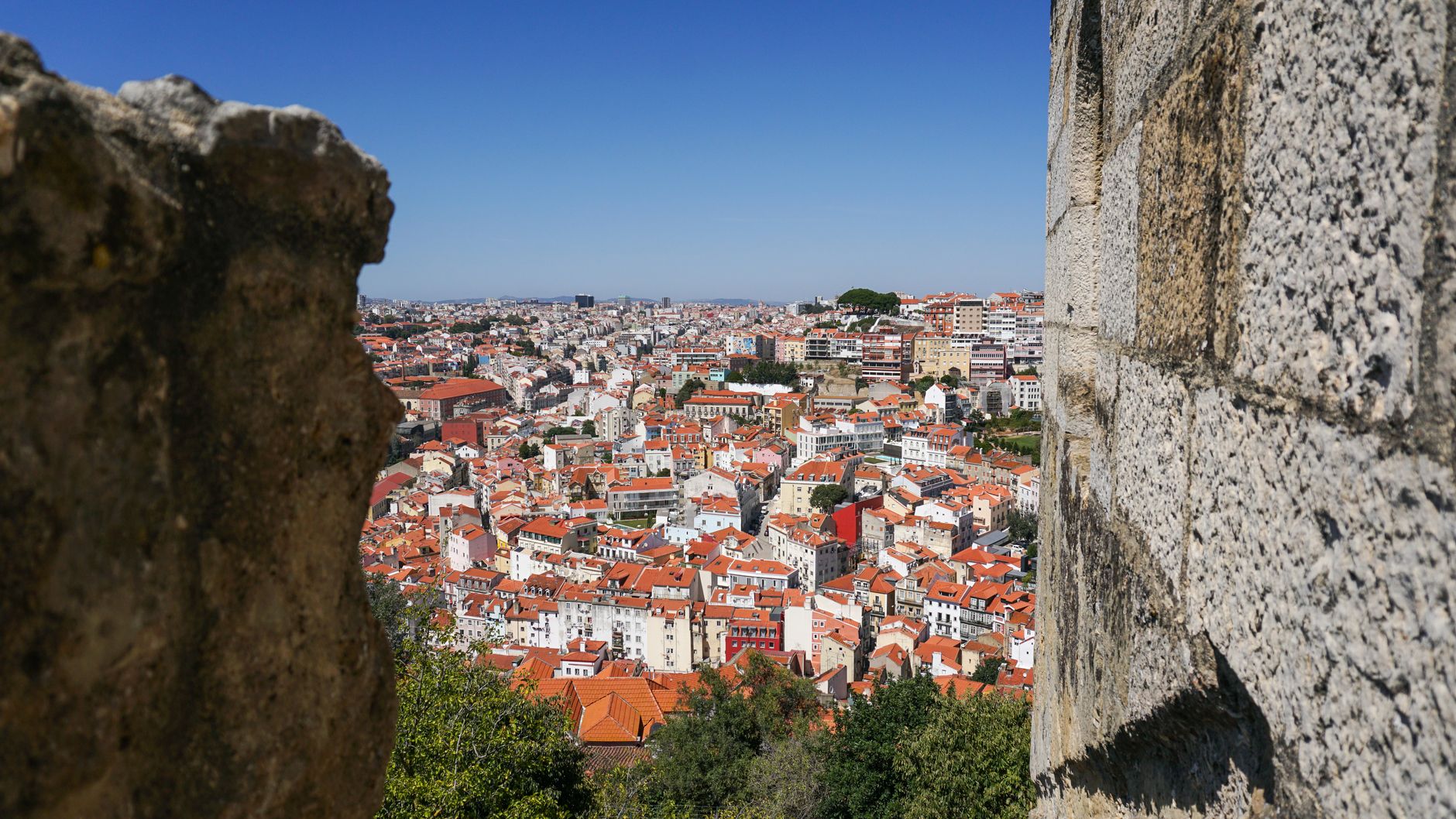
- The ramparts and towers — wide views across the rooftops to the river
- The southern ramparts at sunset — the Tagus glows behind the bridge
- The eastern towers — the most dramatic frame for Alfama’s red rooftops below
- The lower courtyard with peacocks — best for atmospheric “castle life” shots
Best light: Early morning or golden hour, shortly before sunset. Midday is harsh on the stone walls.
Photography is free and unrestricted.
Accessibility
The castle’s medieval design makes accessibility challenging. The main entrance plaza and lower courtyards are partly accessible, but the towers, ramparts, and most of the inner castle are reached only by uneven stone steps. Wheelchair users can experience the entrance plaza and outer gardens, but full castle access is not possible.
Strollers face similar challenges. Baby-carriers are easier than push-strollers.
Combining the Castle with Other Lisbon Sights
The castle pairs naturally with adjacent neighborhoods:
- Castle morning + Alfama walk-down + Time Out Market lunch — the classic Lisbon half-day
- Castle + Sé Cathedral + Roman Theatre Museum — three layered historic sites on the same hillside, linked on foot
- Castle + Mouraria walking + dinner at a fado tasca — a deeper-Lisbon evening
- Castle + sunset → walk down through Alfama → fado at Mesa de Frades — perfect first-day arrival routine
For full Lisbon planning, see our Things to Do in Lisbon pillar guide.
Practical Tips
Wear comfortable shoes — the castle’s stone steps and ramparts are uneven and slippery when wet.
Bring water — fountains exist but are limited; summer heat on the exposed ramparts is real.
Allow 90–120 minutes for a thorough visit. Rushed visitors manage 60 minutes; slow ones spend 3 hours.
The audio guide app is free with online tickets — bring earbuds and download before arrival.
Watch your belongings — pickpockets target distracted tourists at viewpoints. Front pockets, bags in front of body.
Bathrooms — available at the entrance plaza and in the lower courtyard. Both clean.
Food — the castle restaurant and café are tourist-priced. Eat in Alfama before or after for better value.
Children — well-suited for kids 5+. The peacocks, the Camera Obscura, the wide ramparts, and the archaeological dig all engage children well. Younger kids may struggle with stairs.
FAQ: São Jorge Castle Lisbon
Is São Jorge Castle worth visiting?
Yes — overwhelmingly. Most travelers rate it the highlight of central Lisbon. The dramatic hilltop position, settlement remains going back to the 7th–8th centuries BC, the Camera Obscura, the peacocks, and the sweeping panorama explain why EGEAC calls it Portugal’s most-visited national monument.
How long does it take to visit São Jorge Castle?
There’s no set visit length. Leave room to walk the ramparts, see the archaeological site and catch a Camera Obscura session, and take the audio guide at your own pace.
How much does São Jorge Castle cost?
€17 adult, €8.50 for ages 13–25, €14 for over-65s, and free for children 12 and under (proof of eligibility required). Buying online through BOL costs the same and skips the ticket-office queue. Lisboa Card holders enter free.
What is the best time to visit São Jorge Castle?
Right at 9 AM opening, or 5–7 PM in summer for sunset. Avoid 11 AM–3 PM peak. April–May and September–October are best for weather.
How do I get to São Jorge Castle?
Walk up through Alfama, take Tram 28 to Largo das Portas do Sol and climb the last stretch, or ride Bus 737 from Praça da Figueira to the Castelo stop.
Is São Jorge Castle wheelchair accessible?
Partially — the entrance plaza and lower courtyards are accessible. The towers, ramparts, and inner castle involve uneven stone steps not suitable for wheelchairs.
Can you see São Jorge Castle for free?
You can see the exterior walls from the surrounding miradouros (Santa Luzia, Portas do Sol, Senhora do Monte) without paying. The interior visit — towers, Camera Obscura, archaeological site — requires a ticket.
Are there peacocks at São Jorge Castle?
Yes — peacocks roam the grounds. They’re tame, photogenic, and reliably present; just keep your distance and don’t feed them.
What is the Camera Obscura?
An optical device of lenses and mirrors inside the Tower of Ulysses that shows a real-time 360-degree view of Lisbon. Free with castle admission, with guided sessions subject to availability.
Is São Jorge Castle suitable for kids?
Yes for kids 5+. The peacocks, the wide ramparts, the Camera Obscura, and the archaeological dig all engage children. Younger kids may struggle with stairs but generally enjoy the visit.
Bottom Line
São Jorge Castle is Lisbon’s essential hilltop fortress — dramatic views, history reaching back to the 7th–8th centuries BC, free-roaming peacocks, and a Camera Obscura with a live 360-degree view of the city. Book online, walk up through Alfama for the 9 AM opening, take your time on the ramparts, and consider returning at sunset on a long summer day. Combine with Alfama’s miradouros and a fado dinner for a near-perfect first day in the city.
Continue planning with our Things to Do in Lisbon pillar, our Jerónimos Monastery guide, our Belém Tower guide, and our Lisbon viewpoints guide.
Photo Credits
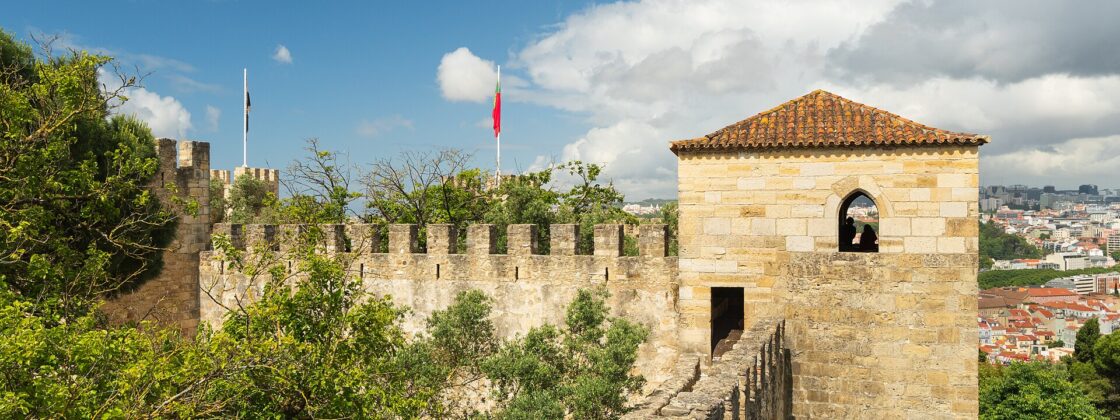
São Jorge Castle walls and tower: Castelo de Sao Jorge – Lisbon – 02 by NorbertNagel, CC BY-SA 4.0, via Wikimedia Commons.
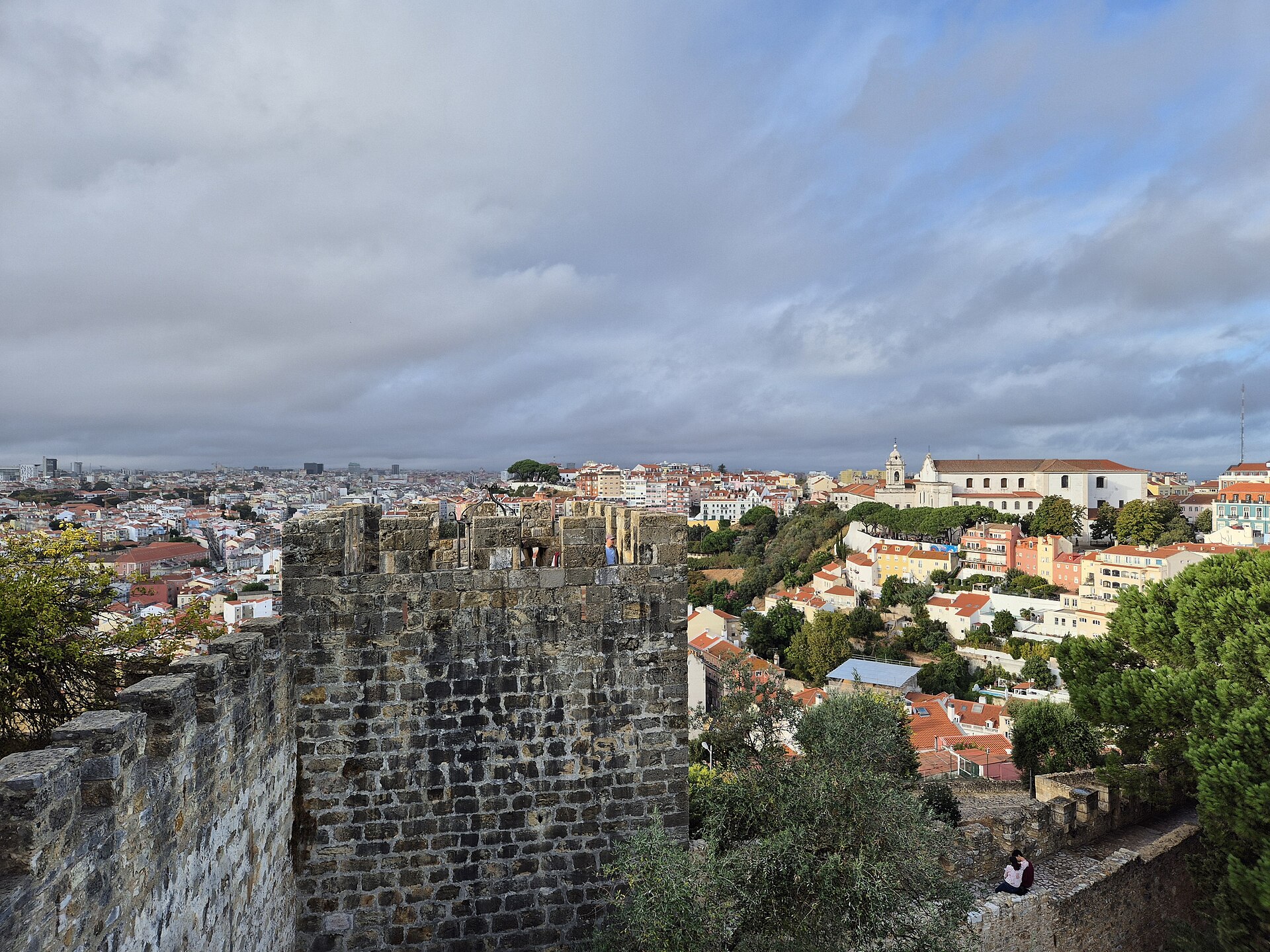
São Jorge Castle above Lisbon: Castelo de São Jorge, Lisbon, September 2025 II by Mateusz Giełczyński, CC BY-SA 4.0, via Wikimedia Commons.