Tram 28 Lisbon is the iconic yellow heritage tram that snakes through the city’s most photogenic neighbourhoods — Graça, Alfama, Baixa, Chiado, and Estrela. It’s been running this exact route since 1914, climbing impossible hills and squeezing through alleys barely wider than the tram itself. It’s also one of Europe’s most pickpocket-prone tourist attractions, which means timing your ride correctly makes the difference between a highlight and a headache.
This guide covers everything: the full route stop by stop, the best places to get off, when to ride, how to protect your belongings, ticket prices, and the quieter alternatives that locals actually use. Updated for 2026.
Tram 28 Quick Reference
| Detail | Info |
|---|---|
| Route | Martim Moniz ↔ Campo de Ourique (Prazeres) |
| Length | 7 km / ~45 minutes end-to-end |
| Stops | 35 official stops |
| Hours | 6:00 AM – 10:30 PM, 6+ trams per hour |
| Ticket (on board) | €3.10 single fare |
| Ticket (Viva Viagem) | €1.61 per ride with zapping credit |
| Lisboa Card | Included — just tap on board |
| Operator | Carris |
| Capacity | 40 seated, 22 standing |
| Best time to ride | Before 9 AM or after 7 PM |
| Worst time | 10 AM – 5 PM in summer |
Why Tram 28 Matters
Lisbon kept its 1920s-era Remodelado trams running not out of nostalgia but because the narrow hillside streets never allowed the infrastructure upgrades that would have replaced them. The result is a genuinely historic vehicle on a genuinely historic route — and one of the few city transit lines in Europe where the rolling stock itself is the attraction.
The trams were built between 1935 and 1965, with some carriages restored and some essentially original. The route passes through Alfama — Lisbon’s oldest neighbourhood, Moorish in origin — continues through the medieval Sé Cathedral, drops into the Pombaline downtown, rises through Chiado, and ends in the residential village of Campo de Ourique. That’s twelve centuries of city in 45 minutes.
The Route: Stop by Stop
The official route runs from Martim Moniz (east) to Campo de Ourique (west). Most tourists board at Martim Moniz heading west through Alfama — that’s the direction described here.
Martim Moniz (Eastern Terminus)
The practical start point. Multicultural neighbourhood, food kiosks, the entrance to Mouraria — Lisbon’s oldest Moorish quarter. Always board here if you want a seat. The tram is empty when it departs from Martim Moniz; by Largo das Portas do Sol it’s standing-room-only. In summer, a boarding queue of 20–60 minutes is common in the afternoon. Get here before 9 AM if you want a seat without queuing.
Graça (~12 min from Martim Moniz)
The Graça stop is worth a dedicated hop-off. Two of Lisbon’s best viewpoints are a short walk away: Miradouro da Graça and Miradouro da Senhora do Monte — the highest viewpoint in the city, with a sweeping panorama that includes the castle, the river, and the 25 de Abril Bridge. Neither has the Instagram crowds of Santa Luzia or São Pedro de Alcântara. Igreja da Graça (16th-century church with a cloister) is right by the tram stop.
Largo das Portas do Sol
One of Alfama’s signature spots. Azulejo-tiled viewpoint with a sweeping view across Alfama’s rooftops to the Tagus. This is beautiful and worth seeing. It’s also the single most active pickpocket spot on the entire route — the combination of tourists stopping for photos, the tight tram boarding, and experienced theft teams makes it high-risk. Go, enjoy it, but keep your phone in a front pocket and your bag closed.
Sé Cathedral
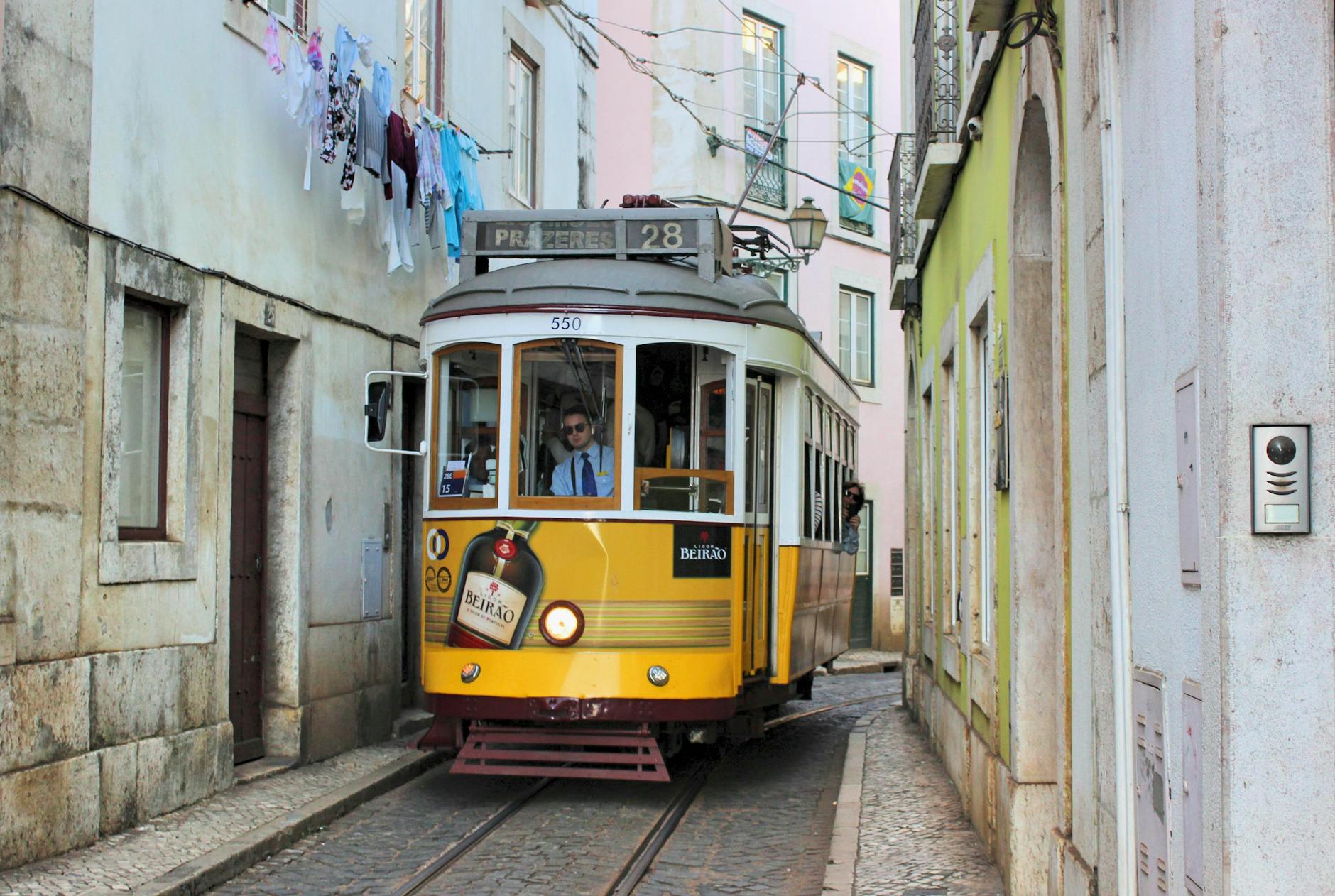
Lisbon’s main cathedral, begun in 1147 on the site of the city’s main mosque after the Christian reconquest. Romanesque and austere on the exterior, with Baroque chapels added inside over centuries. The cloister contains ongoing Roman-era excavations. Right after this stop, Tram 28 navigates a corner so tight that the tram clips the gutter — if you’re watching from outside, it’s one of the most photogenic moments on the entire route.
Baixa-Chiado
The central downtown stop, connecting to the Baixa-Chiado metro station (Green and Blue lines). Walk to Praça do Comércio and the waterfront, or up the hill to Bairro Alto from here. If you’re only after one Tram 28 segment — Martim Moniz to Baixa-Chiado — this is a legitimate stopping point that captures all of Alfama without the full ride.
Praça Luís de Camões
The heart of Chiado. Café A Brasileira is here — the celebrated literary café with Fernando Pessoa’s bronze statue outside, open since 1905. Bertrand bookshop (the world’s oldest operating bookshop, dating to 1732) is a short walk on Rua Garrett. This is where intellectuals, tourists, and pastry-seekers converge.
Largo do Calhariz
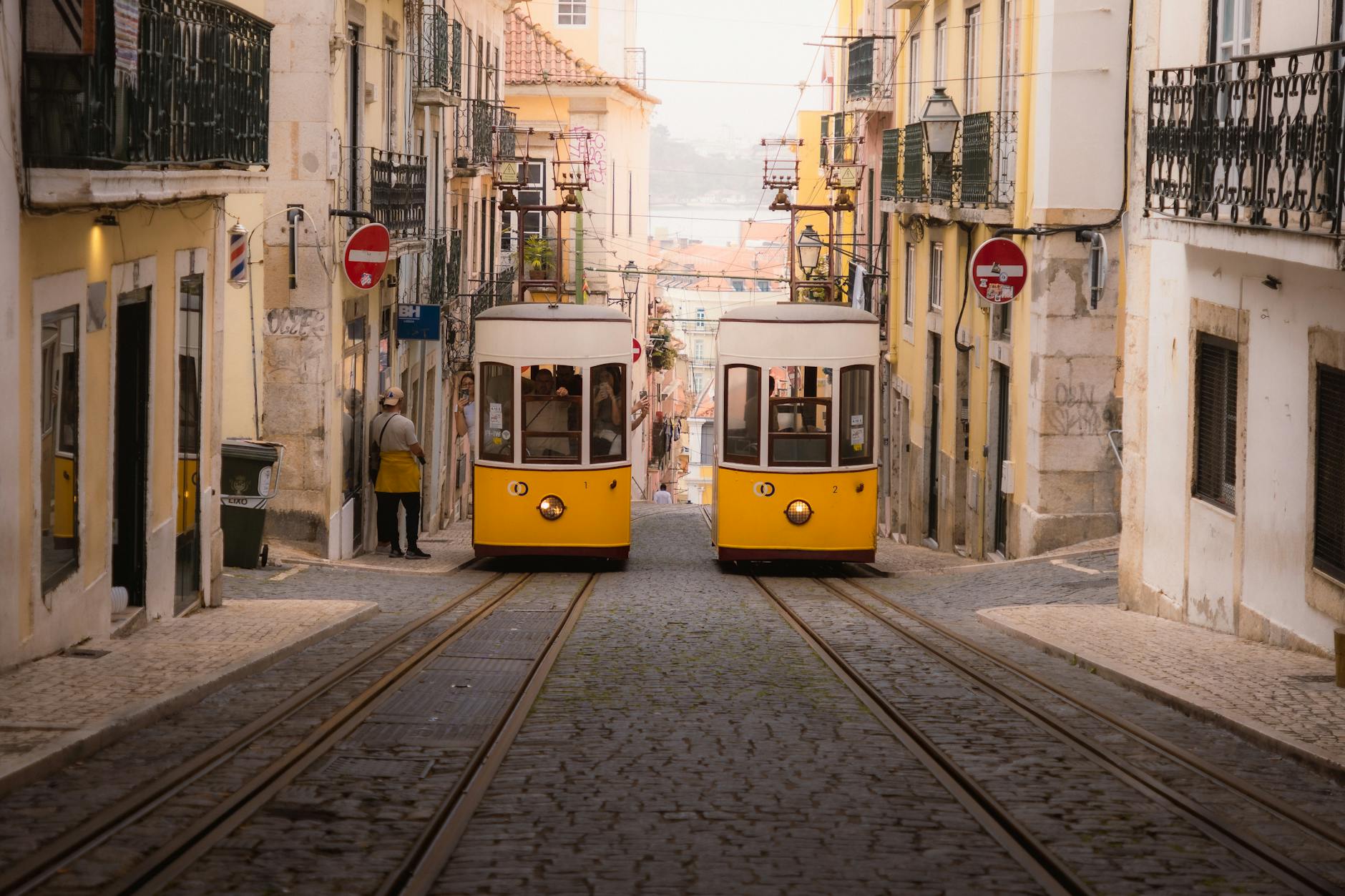
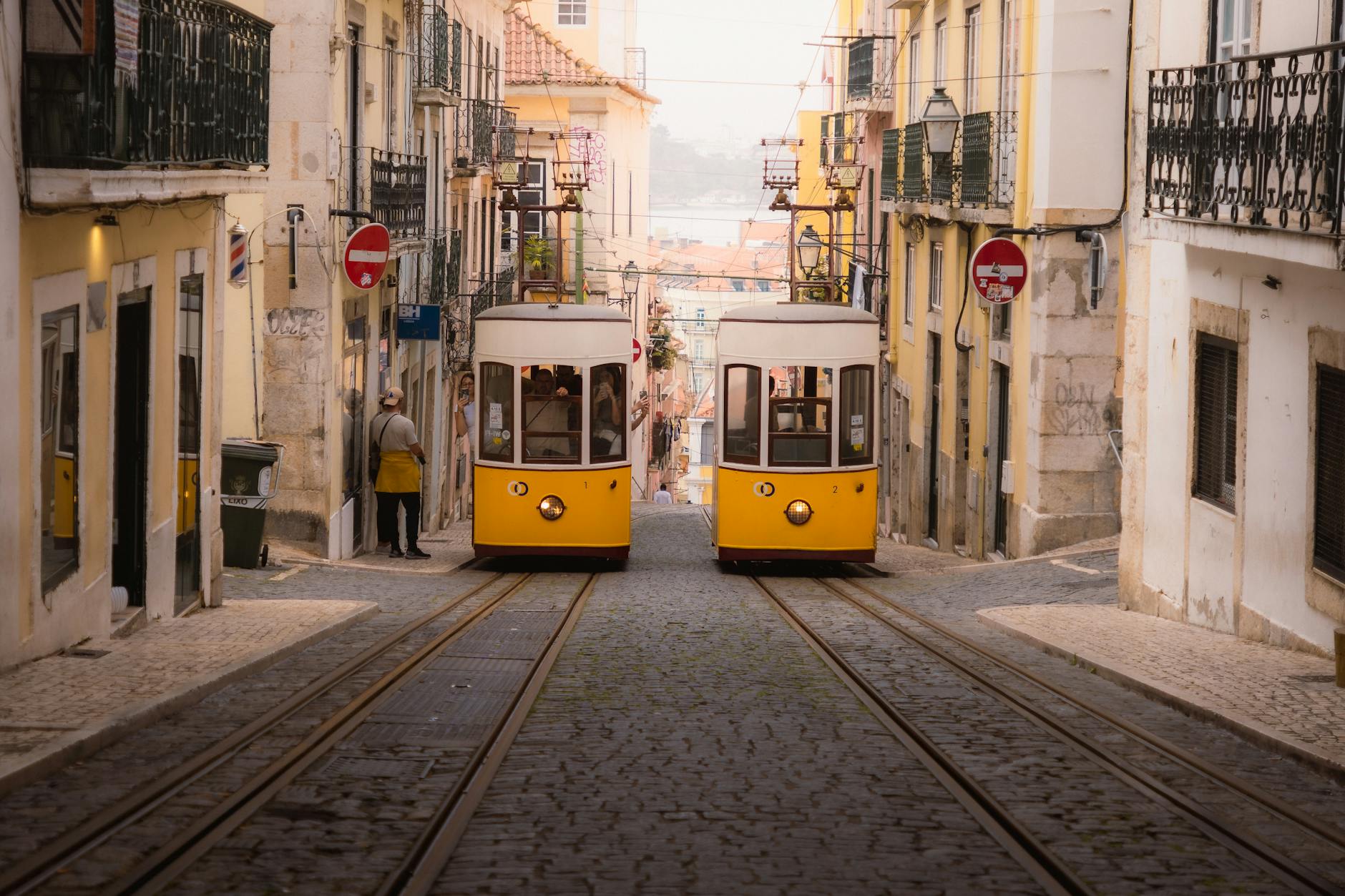
Worth noting: this stop is the starting point for the Bica Funicular, which descends dramatically toward the waterfront. The tram-meets-funicular photo from here — two iconic yellow vehicles in the same frame — is one of Lisbon’s most recognisable images.
Estrela
The Estrela Basilica (18th century, white marble, visible from half the city) anchors this stop. Jardim da Estrela — a shaded public garden with peacocks — is directly opposite. Good for a quiet half-hour away from the tourist circuit.
Campo de Ourique (Western Terminus)
A residential village that feels genuinely local. Mercado de Campo de Ourique is the neighbourhood food market — gourmet and artisanal but less touristy than Time Out Market, with a terrace and regular weekend events. Prazeres Cemetery is nearby and surprisingly atmospheric for a wander. This end of the line is where locals board every morning.
Best Stops for Specific Interests
| Stop | What’s nearby |
|---|---|
| Graça | Miradouro da Graça, Miradouro da Senhora do Monte (highest viewpoint), Igreja da Graça |
| Portas do Sol | Alfama viewpoint, Museu do Azulejo nearby, Santo António Church, Sé Cathedral |
| Sé | Lisbon Cathedral, Roman cloister excavations, iconic tram corner photo |
| Baixa-Chiado | Metro connection, Praça do Comércio, Santa Justa Elevator |
| Praça Luís de Camões | Chiado centre, Café A Brasileira, Bertrand bookshop, Bairro Alto |
| Largo do Calhariz | Bica Funicular — best tram-and-funicular photo opportunity |
| Estrela | Estrela Basilica, Jardim da Estrela |
| Campo de Ourique | Mercado de Campo de Ourique food hall, local residential neighbourhood |
How to Avoid the Crowds
Ride at Off-Peak Times
The worst window: 10:00 AM – 5:00 PM, particularly in July and August. In peak summer, trams departing between these hours are routinely overcrowded by the third stop.
The best windows:
- Early morning — 7:00 AM – 9:00 AM. Authentic, uncrowded, local. This is what the tram was designed for.
- Evening — after 7:00 PM. The tourist groups have dispersed and the light through the tram windows is better for photos.
- Late night — 9:00 PM – 10:30 PM. Near-empty trams, locals returning from dinner.
Always Board at Martim Moniz
This is the eastern terminus — the tram is empty when it leaves. By Portas do Sol, 15 minutes later, every seat is gone. Board here and you’ll sit. Board anywhere in Alfama and you’ll stand with a backpack in someone’s face.
Use the Western Half for a Local Experience
Boarding at Campo de Ourique (the western terminus) and riding east toward Chiado and Baixa is a genuinely local experience. The western half — Campo de Ourique, Estrela, Camões — carries residents, not tourists. Fewer cameras, more grocery bags.
Avoid Cruise Ship Days
When large cruise ships dock at the Lisbon terminal, hundreds of day-trippers head straight for Tram 28. Tuesdays and Thursdays are statistically the worst in summer because of cruise rotation patterns. If you’re flexible, midweek rides during non-cruise mornings are significantly quieter.
Pickpocket Reality and Prevention
Tram 28 is consistently listed among the highest-risk pickpocket environments in Europe. This isn’t hype — it’s a well-documented problem, and the conditions are ideal for professional theft: a small enclosed space, overcrowded, full of distracted tourists carrying cameras and bags.
How Pickpockets Work on Tram 28
- Teams of two or three work together
- One creates a distraction — asks directions, “drops” something near your feet, makes a loud comment, requests a group photo
- A second reaches into your bag, back pocket, or jacket while you’re distracted
- A third blocks the exit or creates a second distraction if needed
- Most thefts happen at Largo das Portas do Sol during boarding and alighting, and at the Sé Cathedral stop where the tram slows sharply
Practical Prevention
- Backpack on the front while standing — not on your back
- Phone and wallet in a zipped inside pocket or money belt; never in a back pocket or open bag
- Be alert at the high-risk stops: Sé, Portas do Sol, Baixa-Chiado
- Don’t accept “help” from strangers getting on or off the tram
- If you’re sitting, it’s significantly harder to pickpocket you — another reason to board early at Martim Moniz
- Phone out for photos is the single highest-risk behaviour — pocket it between shots
Tickets and How to Board
The Cheapest Option: Viva Viagem Zapping
A Viva Viagem card costs €0.50 at any metro station machine and can be loaded with “zapping” credit for €1.61 per ride — compared to €3.10 for a single-use ticket purchased on board. If you’re riding the tram more than once, the card pays for itself immediately. The same card works on the metro, Carris buses, and the funiculars.
Lisboa Card
All Carris transport — including Tram 28 — is included in the Lisboa Card. Tap the card on the validator as you board. If you’re visiting Jerónimos, São Jorge Castle, and multiple museums, the card likely pays off. Calculate before buying at carris.pt.
How to Board and Validate
Front and middle doors for boarding; rear door for alighting. Tap your Viva Viagem card on the yellow validator box next to the driver as you enter. Cash payments on board are accepted but cost €3.10 — significantly more than the card rate. The driver can make change but it slows boarding for everyone.
Photography Tips
Best Exterior Photo Spots
- Sé Cathedral tight corner — the tram looks like it shouldn’t fit; it barely does
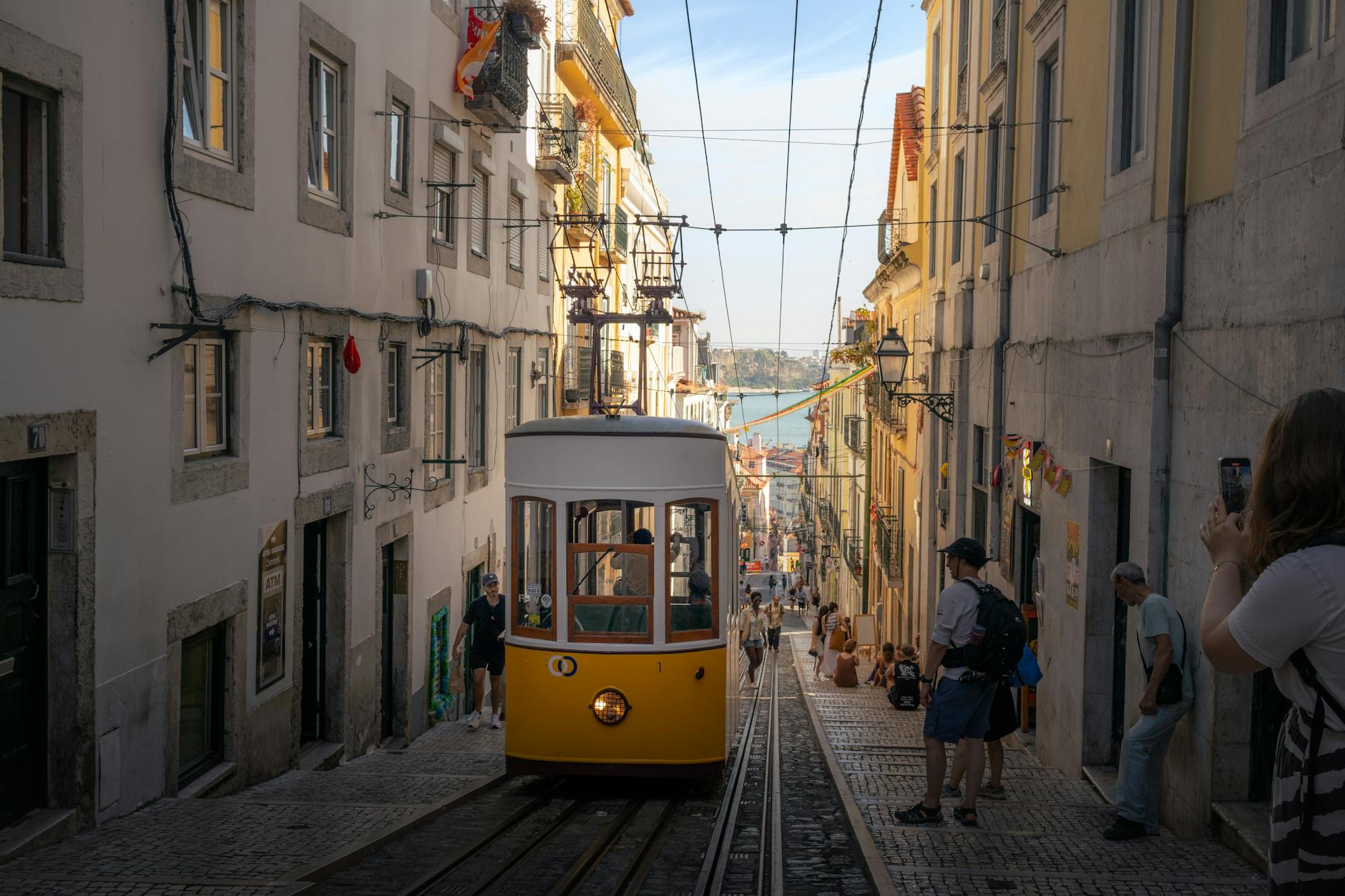
- Calçada de São Vicente — the steep Alfama hill where the tram climbs past crumbling buildings
- Largo do Calhariz / Bica Funicular — two yellow vehicles in frame
- Rua da Conceição in Baixa — clean light in the morning, tram on level ground
From Inside the Tram
The best interior shots are forward-through-the-front-window, showing the tram driver and the street ahead. Late afternoon provides warm golden light through the right-side windows heading west. The wooden seats and overhead grab bars are photogenic but don’t photograph well in harsh midday light.
Time of Day for Photos
Golden hour (6–8 PM in summer) is the sweet spot — warm yellow light on yellow paint. Early morning has clean, soft light and empty streets. Avoid harsh overhead sun between 11 AM and 3 PM.
Alternatives to Tram 28
Tram 12E
A shorter, much quieter route through Alfama: Martim Moniz → São Tomé → Largo das Portas do Sol → Praça da Figueira. Same Alfama streets, fraction of the crowd, easier to get a seat. A legitimate substitute for the Alfama section of Tram 28 if you just want the neighbourhood experience without the full tourist gauntlet.
Tram 24E
Runs between Praça Luís de Camões and Campolide. Quiet, local, same heritage atmosphere as Tram 28 in the Chiado-to-Estrela section. Most tourists don’t know it exists, which is its main advantage.
Tram 15E (Modern)
The modern articulated tram from Praça da Figueira to Belém. Not a heritage vehicle, not photogenic, but fast, frequent, and useful for getting to Jerónimos Monastery, Belém Tower, and the waterfront monuments. Use it for transport, not atmosphere.
Hop-On-Hop-Off Tourist Tram
A dedicated tourist circuit at €25–€30 for a day pass, with recorded commentary. Fixed route, no pickpocket risk, commentary in multiple languages. Not the authentic experience but it answers the “I want to see Lisbon from a tram” brief without the downsides.
Walking Alfama
For the neighbourhood itself, walking gives you more than any tram. The viewpoints, the tiled stairways, the small churches, the fado bars that open in the evening — none of these are accessible from a moving tram. Tram 28 connects Alfama to the rest of the city; it doesn’t replace exploring it on foot.
Recommended Tram 28 Itinerary (90 Minutes)
8:00 AM — Board at Martim Moniz (seat likely available, short queue)
8:15 AM — Hop off at Graça; 15 minutes at Miradouro da Senhora do Monte
8:45 AM — Catch the next westbound tram
9:00 AM — Hop off at Portas do Sol; walk Alfama for 30–45 minutes
9:45 AM — Catch tram west at Sé stop
10:00 AM — Hop off at Praça Luís de Camões for coffee at A Brasileira
10:30 AM — Option: continue to Estrela for the Basilica and gardens, or head to Baixa
Tram 28 and Nearby Sights
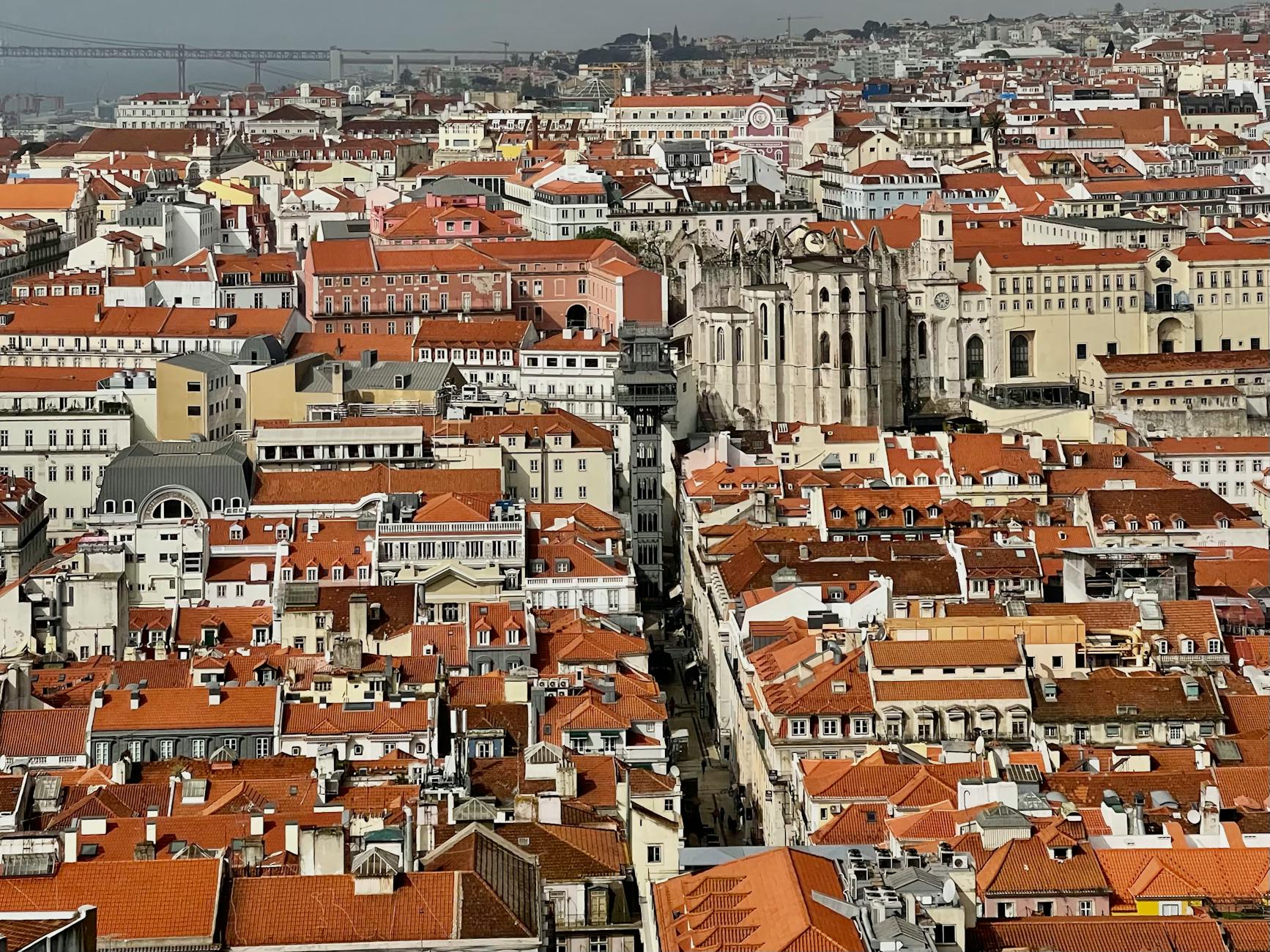
The Tram 28 route connects directly to several major Lisbon sights. From Portas do Sol, it’s a 15-minute walk to São Jorge Castle. The Sé stop puts you at the base of the castle hill and within walking distance of the Alfama fado houses. The Baixa-Chiado stop connects to the metro for quick access to the Gulbenkian Museum and Parque das Nações.
FAQ: Tram 28 Lisbon
Is Tram 28 worth riding?
Yes — if you ride at off-peak times. At 8 AM it’s a genuinely beautiful heritage experience through historic streets. At noon in August it’s an overcrowded, pickpocket-heavy tourist trap. The tram hasn’t changed. The time you choose determines the experience.
How much does Tram 28 cost?
€3.10 for a single-use ticket purchased on board; €1.61 with a Viva Viagem card loaded with zapping credit. Lisboa Card holders ride free. Full fare and pass details at carris.pt.
How long does Tram 28 take end-to-end?
About 45 minutes from Martim Moniz to Campo de Ourique without stopping. Most riders spend 90 minutes to two hours hopping off at two or three stops.
Are pickpockets really a problem on Tram 28?
Yes — it’s one of the most consistently reported pickpocket routes in Europe. Standard precautions (front-facing bag, zipped pockets, alertness at Portas do Sol and Sé stops) prevent the vast majority of incidents.
What’s the best time to ride Tram 28?
7–9 AM for the authentic local experience with available seats. After 7 PM for the golden-hour photography and quieter crowd. Avoid 10 AM–5 PM.
Where does Tram 28 start and end?
Eastern terminus: Martim Moniz. Western terminus: Campo de Ourique (Prazeres). The tram runs the same route in both directions.
Is Tram 28 part of the Lisboa Card?
Yes — all Carris transport including Tram 28 is included with any Lisboa Card duration (24h, 48h, 72h, or 96h).
Bottom Line
Tram 28 is iconic, photogenic, historically real, and best experienced before 9 AM or after sunset. Board at Martim Moniz for a seat. Hop off at Graça for the viewpoint, Portas do Sol for Alfama, and Praça Luís de Camões for Chiado. Keep your bag in front of you and your phone in a zipped pocket at the busy stops. If the midday crowd is unavoidable, Tram 12E covers the Alfama section with a fraction of the hassle.
Continue with our Things to Do pillar, our Jerónimos Monastery guide, our Belém Tower guide, and our São Jorge Castle guide.