Landmarks & Monuments
Lisbon Cathedral (Se de Lisboa): Tickets, Hours, What to See
The EUR7 ticket, the seasonal hours, the Sunday closure that catches people out, and what to look at inside Lisbon's oldest and most misunderstood church.
In this guide
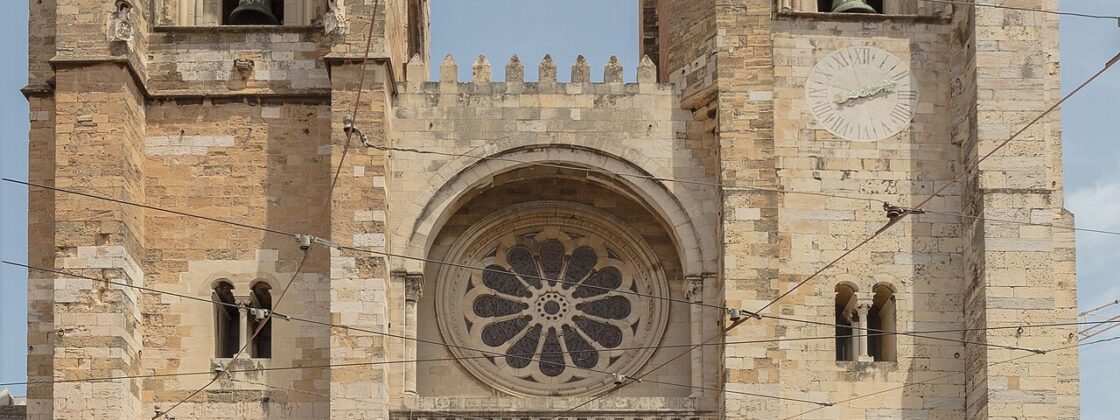
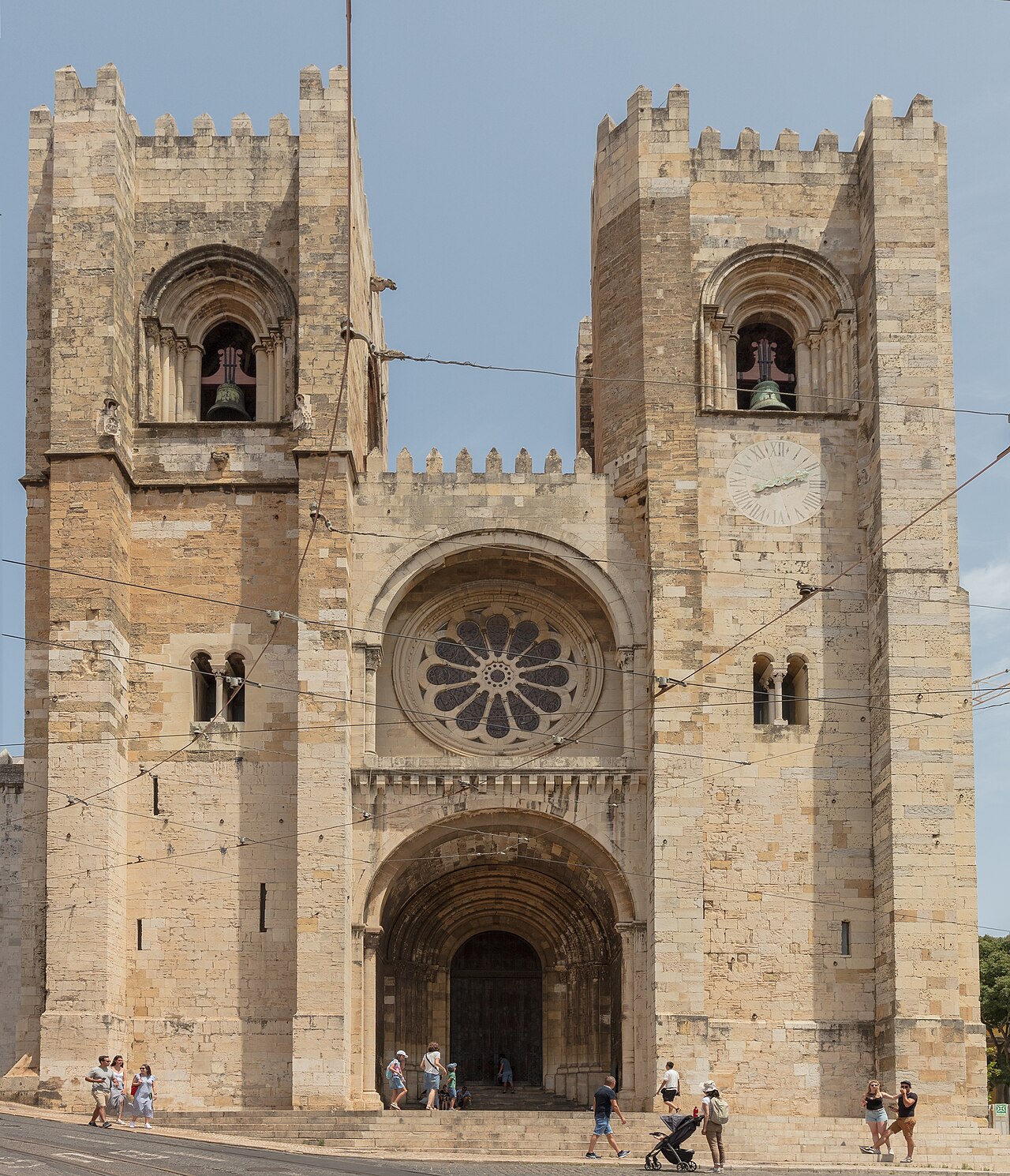
Lisbon Cathedral — the Sé, or Sé de Lisboa — is the oldest church in the city and the most misunderstood. Visitors expect a soaring Gothic interior and find something closer to a fortress: two blunt crenellated towers, walls thick enough to hold a hill, and a Romanesque nave that has been shaken by three major earthquakes and rebuilt after each. It is not the prettiest church in Lisbon. It is by some distance the most interesting.
This guide covers the €7 ticket and what it actually buys, the seasonal hours that catch people out, what to look at inside and in what order, and whether the Sé deserves an hour of a short trip. It also explains the one thing nobody mentions: the cathedral is closed on Sundays.
Tickets and hours
- Adult: €7
- With a Lisboa Card: €5
- Children 7–12: €5. Under 7 free.
- Sé Digital supplement: €3, an app-guided smartphone tour in six languages
- Hours, November to May: Monday to Saturday, 10:00–18:00
- Hours, June to October: Monday to Saturday, 09:30–19:00
- Closed: Sundays and holy days
- Last entry: 45 minutes before closing
The ticket covers the naves and ambulatory, the ascent to the High Choir, and the Museum of the Treasury. A free prayer space is kept for anyone who has come to worship rather than to sightsee — that is a genuine provision, not a loophole for a free look around.
You do not need to book. The Sé has never had the queues of Belém or the castle and you can almost always walk up and in.
The Sunday problem
This is the single most common wasted journey in Lisbon. The cathedral closes to visitors on Sundays and on holy days, and a great many people build a Sunday itinerary around Alfama and arrive at a locked visitor entrance. Mass is celebrated and worshippers are welcome; sightseeing is not. If you have one weekend in Lisbon, put the Sé on the Saturday.
What you are looking at
Afonso Henriques took Lisbon from its Moorish rulers in 1147 and began the cathedral immediately, on the site of the city’s principal mosque, which had itself been built over a Visigothic church and, before that, a Roman street. That stack of occupations is not a metaphor — you can see it, in the cloister, one layer above another.
The building was Romanesque, fortified, and deliberately martial: the two towers were defensive as well as ecclesiastical, at a point when the newly taken city was not remotely secure. Earthquakes in 1344 and 1531 damaged it. The 1755 earthquake wrecked the Gothic choir and the royal pantheon, and the fire that followed did the rest. Everything you see is therefore a compromise between the twelfth-century core, fourteenth-century Gothic additions and a twentieth-century restoration that stripped away Baroque accretions to expose the Romanesque underneath.
The result is stylistically incoherent and historically legible, which is a fair trade. Our 1755 earthquake guide and the wider history of Lisbon both start in this building.
What to see, in order
The west front and the rose window
Look at the façade from the pavement opposite before you go in. The two towers, the crenellations, the deep arched portal and the rose window in the middle — the window is a reconstruction, put back during the twentieth-century restoration after the original was lost, but it is faithful and it works.
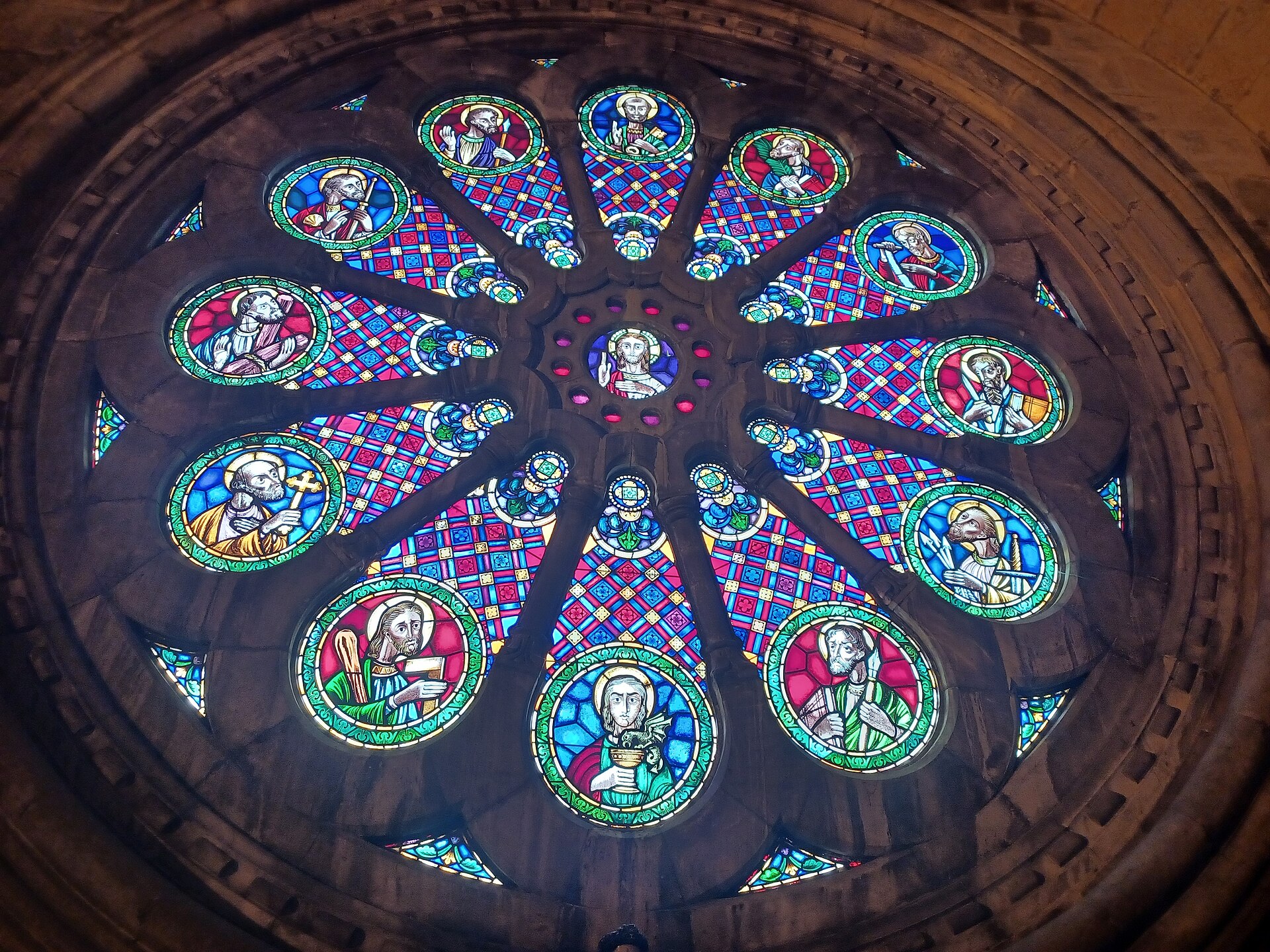
Then go in and look at it again from inside, in the late afternoon, when the sun comes through from the west and the twelve apostles set into the wheel light up in pink and blue. That is the best five minutes in the building, and it is entirely dependent on time of day. Morning visitors see a dark grey circle.
The nave
Short, heavy, barrel-vaulted, with a triforium gallery running above the arcade. It is Romanesque architecture doing what Romanesque does: mass rather than light. Compared with the Gothic soar of Batalha or the Manueline exuberance of Jerónimos, it can read as plain. Give it a moment and the proportions become the point.
The ambulatory and the royal tombs
Walk behind the high altar. The fourteenth-century Gothic ambulatory is the best-preserved part of the medieval building and considerably lighter than the nave. Off it lie the tombs of Lopo Fernandes Pacheco, a nobleman in the service of Afonso IV, and his wife Maria de Vilalobos, both carved in the 1350s with dogs at their feet and, in her case, an open book in her hands. They are among the finest medieval tomb sculptures in Portugal and most visitors walk straight past them.
The High Choir
Included in the ticket and easily missed because it involves a staircase. It puts you above the nave looking back down the length of the church towards the rose window, which is the best interior view in the building and where the space finally makes visual sense.
The Treasury museum
Upstairs: liturgical silver, vestments, illuminated manuscripts, reliquaries and the cathedral’s plate. It is a small collection and honestly a modest one by European cathedral standards. If you have half an hour rather than an hour, this is the part to skip.
The cloister and the excavations
The thirteenth-century Gothic cloister has been dug out over decades of archaeology, and what emerged is remarkable: a Roman street with drainage channels, the remains of Visigothic and Moorish structures, and the foundations of houses that stood here before the cathedral did. The excavation is open and the layers are clearly signposted. Access can be restricted while work is under way — it has been intermittently closed in recent years, so ask at the desk before you buy if this is your main reason for coming.
Saint Anthony and the font
Near the entrance, on the right as you come in, stands the font where Fernando Martins de Bulhões was baptised in 1195. He is better known as Saint Anthony of Padua, he was born in a house a few metres from this door, and he is the reason Lisbon spends the night of 12 June grilling sardines in the streets.
The font itself is unremarkable to look at — a plain stone basin with an azulejo panel above it showing the saint preaching to the fishes. What makes it worth pausing at is what it explains. Santo António is Lisbon’s patron in practice if not officially, the Festas de Lisboa are built around his feast day, and the church of Santo António stands directly across the small square outside. That church is free to enter and takes five minutes; if you are here, look in. Our festivals and events calendar covers the June celebrations that grew out of him.
The Bartolomeu Joanes chapel
Off the ambulatory, a small fourteenth-century funerary chapel endowed by a wealthy Lisbon merchant, with his tomb and a retable. It is usually gated but visible, and it is a rare survival — a piece of pre-earthquake decoration that came through 1755 largely intact.
Getting there
The Sé stands on Largo da Sé, on the slope between the Baixa and Alfama. From Praça do Comércio it is an eight-minute walk uphill along Rua da Conceição and Rua de Santo António da Sé — steep at the end but short.
Tram 28 stops directly outside, and the cathedral is one of the most photographed points on the whole route: the yellow tram passing the Romanesque west front is the definitive Lisbon photograph. If you want to take it rather than be in it, stand on the pavement opposite and wait — trams come every few minutes. Our tram 28 guide explains when the tram is worth riding and when it is a crush.
Tram 12E also passes, and buses 737 and 794 stop nearby. The nearest metro is Terreiro do Paço on the blue line, about ten minutes downhill. See the transport guide for fares and the Navegante card.
How long to allow, and what to pair it with
Forty-five minutes covers the nave, the ambulatory, the choir and the rose window properly. An hour and a quarter if you want the treasury and the cloister excavations as well. It is not a half-day building.
The obvious pairing is Alfama. The Sé sits at the bottom of the hill; walk up from here through the lanes to the Miradouro de Santa Luzia and then on to São Jorge Castle, and you have a coherent morning that gains height steadily instead of doubling back. Our Alfama guide maps the route, and the miradouros guide covers the viewpoints on the way.
Continuing east and down the far side brings you to Santa Engrácia. Together with the cathedral that makes a strong half-day of Lisbon’s ecclesiastical architecture without repeating yourself.
Details on the second half of that walk are in our Panteão Nacional guide.
Is it worth €7?
Yes, with a qualification. €7 is a fair price for the ambulatory tombs, the High Choir view and the rose window, and it is a third of what Jerónimos costs. But the Sé rewards a little preparation in a way that most churches do not. Walk in cold and you will see a dim grey Romanesque box and wonder what the fuss is. Walk in knowing to go behind the altar, to climb to the choir, and to come in the afternoon for the window, and it becomes one of the better hours in Lisbon.
The €3 digital supplement is decent value if you are the kind of visitor who reads the labels. Skip it if you are not.
Where we would not spend the money: if you have one day in Lisbon and have to choose between the Sé and Jerónimos, choose Jerónimos without hesitating. The Sé is a second-day building. Our landmarks and monuments guide ranks all of them against each other.
Practical notes
Dress and behaviour
This is the seat of the Patriarch of Lisbon and an active cathedral. Shoulders and knees covered, hats off, phones silenced. Photography without flash is fine in the nave; the treasury has restrictions and they are signposted.
Accessibility
Largo da Sé is on a slope and the main entrance has steps. The nave itself is level once you are inside. The High Choir and the Treasury are reached by stairs with no lift, and the cloister excavations involve uneven ground and changes of level. Roughly half the ticket is accessible to a wheelchair user; there is no reduced rate reflecting that, which is worth knowing before you buy. Our accessibility guide has more.
Best time of day
Late afternoon, an hour or so before closing. The rose window is lit, the tram-stop crowds outside have thinned, and the interior is at its quietest. Avoid 11:00 to 13:00, when the walking tours funnel through on their way up to the castle.
Nearby
The Casa dos Bicos, with its diamond-cut stone façade, is five minutes downhill. The Miradouro das Portas do Sol is five minutes up. Both are free. There is a cluster of tourist-priced cafés on Largo da Sé itself — walk two streets into Alfama and eat better for less; our tascas guide lists the ones worth finding.
A forty-five-minute route
If you would rather not work out an order on the spot, this is the sequence we would follow, and it wastes no steps.
- Stand on the pavement opposite for two minutes and look at the west front. Take the tram photograph now, before you buy anything.
- Inside, turn right to the baptismal font and the Santo António panel.
- Walk the length of the nave slowly, looking up at the triforium rather than ahead.
- Behind the high altar into the ambulatory, and find the Pacheco and Vilalobos tombs. This is the reason you paid.
- The Bartolomeu Joanes chapel off the same walk.
- Up to the High Choir, and turn around to look back down the nave at the rose window.
- Cloister and excavations if they are open, Treasury if you have time and interest.
- Out, and five minutes across the square into the free church of Santo António.
How it compares to Lisbon’s other churches
The Sé is one of five church interiors in central Lisbon worth an hour, and it is not obviously the best of them. Knowing where it sits helps you decide whether to buy the ticket.
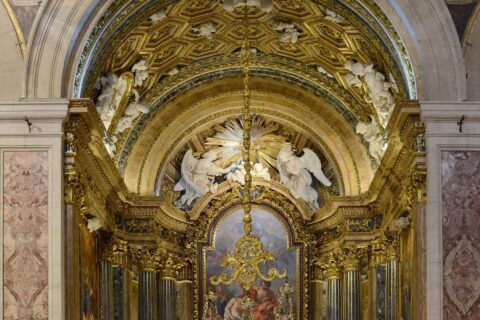
- For sheer spectacle, São Roque wins easily — the plainest exterior in the city and the most lavish chapel in Portugal inside, and the church itself is free. The Sé cannot compete on decoration.
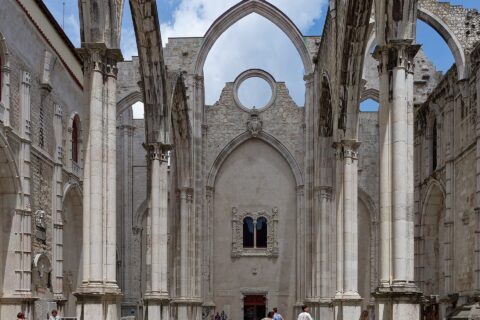
- For atmosphere, the roofless nave of the Carmo Convent at €7 is the more affecting building, and it costs the same.
- For architecture, Jerónimos is in a different class and worth its €21.
- For age and archaeology, the Sé has no rival. Nothing else in Lisbon lets you stand on a Roman street under a Gothic cloister inside a Romanesque cathedral.
So the case for the Sé is historical rather than aesthetic. If what interests you is how Lisbon accumulated — Roman, Visigothic, Moorish, Christian, all in one footprint — this is the building that shows it. If you want to be impressed by an interior, spend the money elsewhere and photograph the west front for free.
Frequently asked questions
How much does Lisbon Cathedral cost?
€7 for adults, €5 with a Lisboa Card or for children aged 7 to 12, and free for under-7s. An optional €3 digital guide supplement is available at the desk.
Is Lisbon Cathedral free to enter?
Not for sightseeing. A free prayer space is set aside for worshippers, but the visitor route through the naves, ambulatory, High Choir and Treasury requires the €7 ticket.
What are Lisbon Cathedral’s opening hours?
Monday to Saturday, 10:00–18:00 from November to May and 09:30–19:00 from June to October, with last entry 45 minutes before closing. It is closed to visitors on Sundays and holy days.
How long does a visit take?
Forty-five minutes for the church itself, or about an hour and a quarter including the Treasury museum and the cloister excavations.
Do you need to book Lisbon Cathedral in advance?
No. It does not sell out and there is rarely a queue. Buy at the door.
Is the cathedral included in the Lisboa Card?
Not free, but discounted: the card brings the €7 adult ticket down to €5.
What is the best thing inside?
The fourteenth-century tombs of Lopo Fernandes Pacheco and Maria de Vilalobos in the ambulatory, which most visitors miss entirely, and the rose window seen from inside in the late afternoon.
Bottom Line
The Sé is a fortress that happens to be a cathedral, and it repays a little knowledge more than almost any building in Lisbon. At €7 it is good value for forty-five minutes, provided you come on a weekday, go behind the high altar for the medieval tombs, climb to the High Choir, and time your visit for the late afternoon when the rose window is lit from the west.
Do not make it your first monument if your time is short — Jerónimos and the castle both give more to a first-time visitor. But do not skip it on a second day, and above all do not turn up on a Sunday.