Museums & Culture
History of Lisbon: From Romans to the 1755 Earthquake & Beyond
Lisbon's fascinating 3,000-year history—from Phoenician traders to the Age of Discovery, the devastating earthquake, the revolution, and modern Lisbon.
In this guide
- Lisbon’s History at a Glance
- Phoenicians and Greeks (~1000 BC – 205 BC)
- Roman Olisipo (205 BC – 411 AD)
- Visigothic and Suebi Kingdoms (411–711)
- Moorish al-Ushbuna (711–1147)
- The Christian Reconquista (1147)
- Capital of Portugal (1255)
- Age of Discovery (1415–1580)
- Spanish Rule and Restoration (1580–1640)
- 17th–18th Century: Brazilian Gold and Decadence (1640–1755)
- The 1755 Earthquake (November 1, 1755)
- Reconstruction: The Pombaline Era (1755–1777)
- Napoleon and Emigration to Brazil (1807–1820)
- 19th Century: Constitutional Monarchy and Decline
- Republic and Salazar (1910–1974)
- The Carnation Revolution (April 25, 1974)
- Modern Lisbon (1986–Present)
- History of Lisbon: What Locals Know That Tourists Miss
- Recommended History Walking Route
- FAQ: History of Lisbon
- Bottom Line
- Photo Credits
The history of Lisbon stretches back over 3,000 years — from Phoenician trading posts to Roman provincial capital, Moorish stronghold, capital of one of history’s largest seaborne empires, devastated victim of Europe’s deadliest 18th-century earthquake, and birthplace of one of the 20th century’s only peaceful revolutions. Knowing this history transforms ordinary sightseeing into a layered understanding of why Lisbon looks and feels the way it does.
This guide is a complete chronological history of Lisbon, with the events that shaped what you’ll see today. Updated for 2026.
Lisbon’s History at a Glance
| Period | Years | Key Event |
|---|---|---|
| Phoenician Olissipona | ~1000 BC | Phoenician trading settlement |
| Roman Olisipo | 205 BC – 411 AD | Roman provincial capital |
| Visigothic / Suebi | 411–711 | Germanic kingdoms |
| Moorish al-Ushbuna | 711–1147 | Islamic rule |
| Reconquista | 1147 | Christian retake |
| Capital of Portugal | 1255 | Capital from Coimbra |
| Age of Discovery | 1415–1580 | Maritime empire |
| Spanish rule | 1580–1640 | Iberian Union |
| Restoration / Empire | 1640–1755 | Brazilian gold and decline |
| The Earthquake | 1755 | Catastrophe and rebuilding |
| 19th century turmoil | 1807–1910 | Napoleon, monarchy, republic |
| Estado Novo dictatorship | 1933–1974 | Salazar regime |
| Carnation Revolution | 1974 | Peaceful return to democracy |
| EU member, modern | 1986–present | European integration |
Phoenicians and Greeks (~1000 BC – 205 BC)
The earliest settlement was likely Phoenician — traders from modern-day Lebanon who established a trading post on the Tagus estuary called Alis Ubbo (“calm port”). Greeks arrived later, calling it Olissipo and weaving the legend that Ulysses (Odysseus) founded the city. It’s almost certainly myth, but Lisbon has always taken pleasure in it. A few bars in Alfama still play it straight.
The location made sense for any ancient seafarer: the Tagus estuary is the widest river mouth on the Atlantic seaboard, giving natural shelter plus access to the interior. The low rocky hill where São Jorge Castle stands now would have been the obvious defensive position, exactly as the Phoenicians used it.
Where to see it: Núcleo Arqueológico da Rua dos Correeiros (under the Millennium Bank building in Baixa) — Phoenician and Roman archaeological remains, open for visits.
Roman Olisipo (205 BC – 411 AD)
The Romans took the city in 205 BC after defeating Carthage in the Second Punic War. Olisipo became part of the province of Lusitania, and Julius Caesar himself — then governor — elevated it to a municipium around 60 BC, granting Roman citizenship rights to its inhabitants. It was a significant upgrade, reflecting the city’s strategic value controlling the mouth of the Tagus.
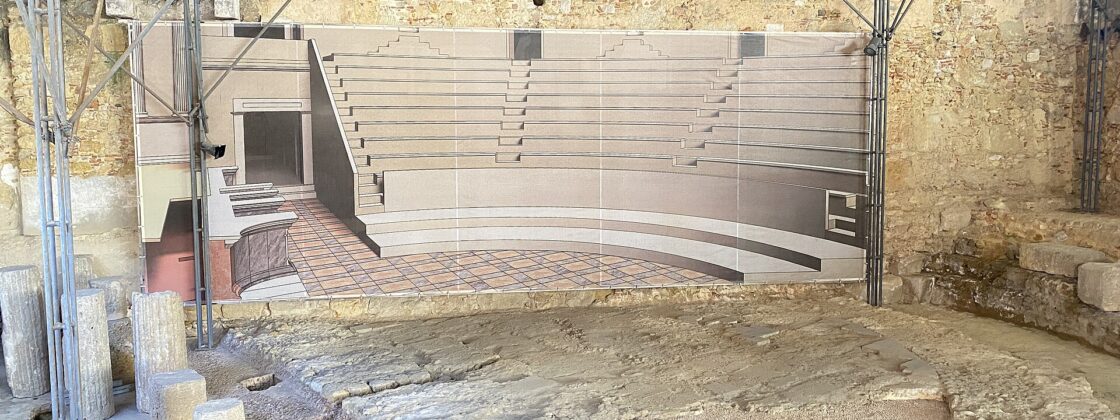
Under Rome, the city expanded considerably. The forum stood where Praça da Figueira is today. Roman baths, aqueducts, and the necessary grid of streets replaced whatever earlier settlement existed. The Roman Theatre — a large structure capable of seating several thousand — was built in the 1st century AD on the southern slopes of the castle hill. You can still see its partial ruins today.
Population estimates put Roman Olisipo at around 30,000 people at its height — comfortably one of the larger cities on the Iberian peninsula, though not matching Emerita Augusta (Mérida) as a provincial capital.
Where to see it:
- Roman Theatre Museum (Museu do Teatro Romano) — partial ruins of the 1st-century theater, Mouraria
- Sé Cathedral cloister — Roman foundations beneath the medieval church
- Núcleo Arqueológico — Roman fish-salting tanks, a major industry of the era
Visigothic and Suebi Kingdoms (411–711)
After Rome’s collapse, Germanic tribes swept across the peninsula. Lisbon was held by the Suebi (Suevi) until 585, when the Visigothic kingdom absorbed it. Neither left much visible legacy in the city — a few centuries of relative obscurity compared to the Roman era that preceded them and the Moorish era about to begin. The main inheritance was the transition to Christianity, which shaped the landscape for centuries after.
Moorish al-Ushbuna (711–1147)
In 711, Muslim armies from North Africa crossed at Gibraltar and within three years controlled most of the Iberian peninsula, including Lisbon. They renamed it al-Ushbuna (sometimes al-Lixbuna). For 436 years — longer than Portugal has been an independent country — Lisbon was an Islamic city.
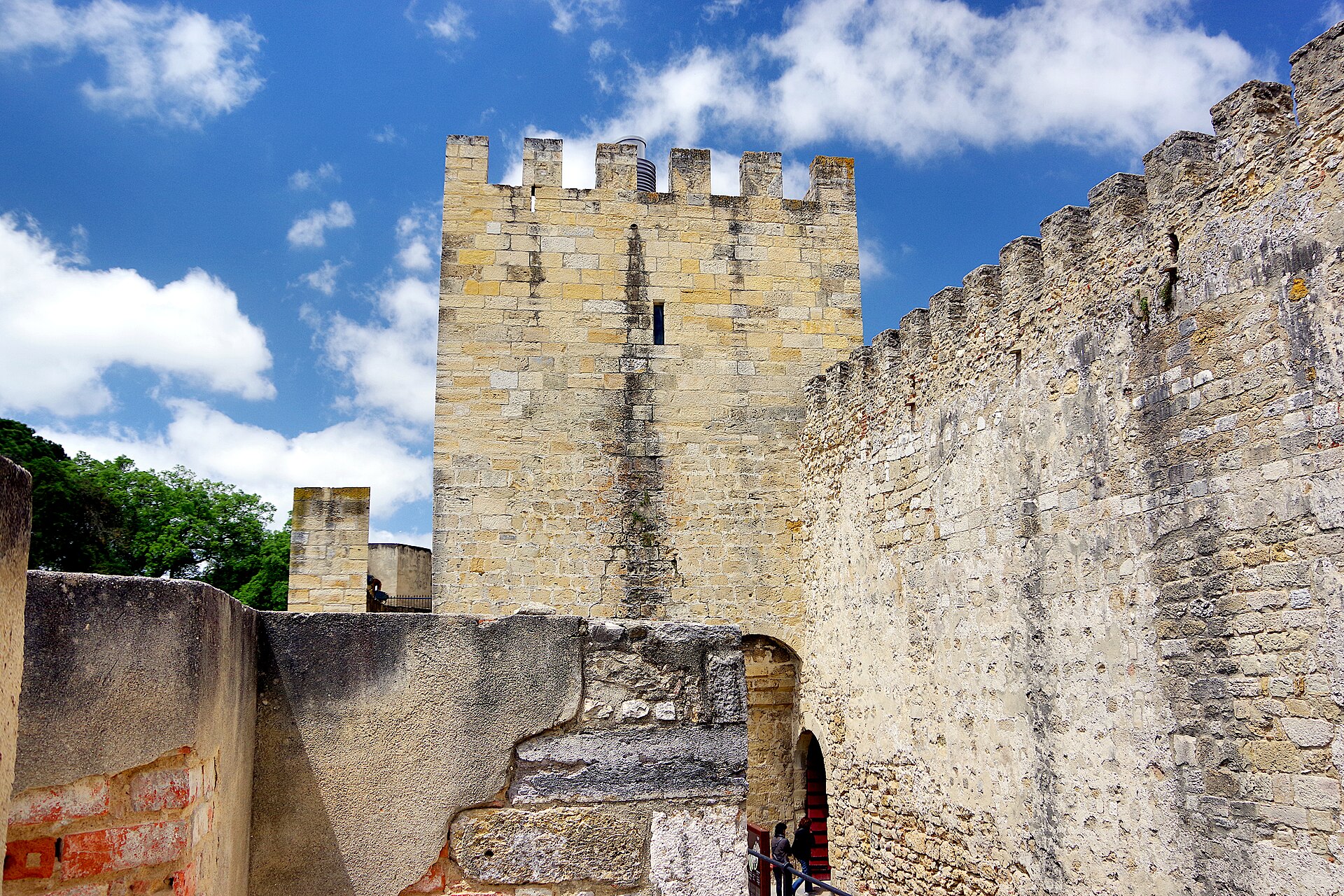
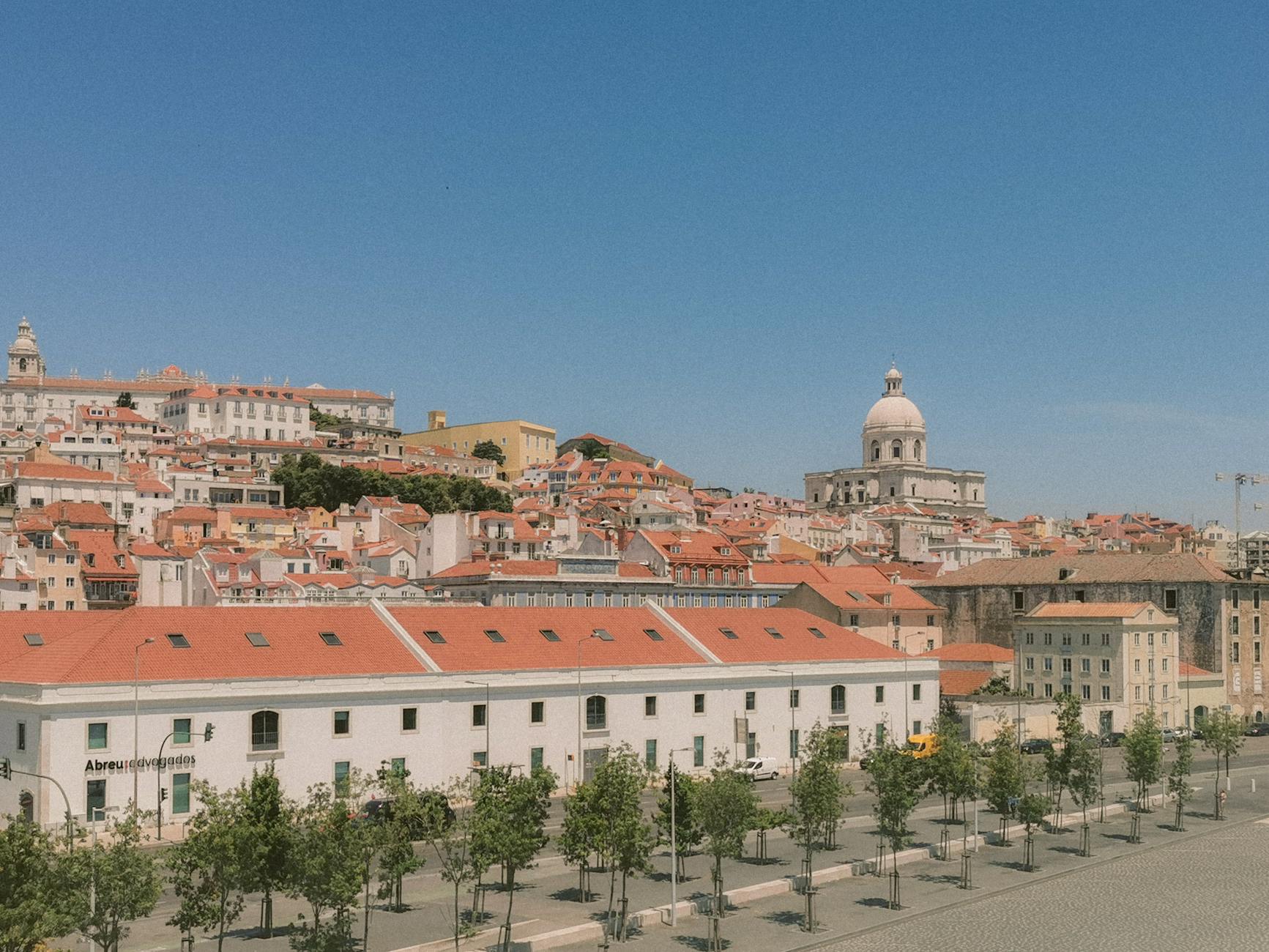
This is the era that shaped the old city’s physical form most deeply. The Moors built fortifications on the castle hill (parts of which became São Jorge Castle), introduced new agricultural practices (olive trees, citrus, almonds, irrigation), advanced urban medicine and scholarship, and gave Lisbon’s old neighborhoods their characteristic narrow winding street pattern. Alfama’s labyrinthine layout isn’t romantic happenstance — it’s how Islamic urban design worked, with winding alleys providing shade and security. Mouraria — the “Moorish quarter,” where the expelled Moors were permitted to remain after 1147 — preserves this layout most clearly.
Arabic left marks all over the Portuguese language. Azulejo comes from al-zillīj (glazed tile); alcáçova (citadel) from al-qasaba; alfama itself from al-hamma (hot springs, a reference to the thermal baths once there). You’re walking through etymology every time you navigate these streets.
Where to see it:
- São Jorge Castle — Moorish fortifications incorporated into the later castle
- Alfama and Mouraria — Moorish street layout, the oldest urban fabric in the city
- Many Portuguese words of Arabic origin (azulejo from al-zillīj)
The Christian Reconquista (1147)
On October 25, 1147, an army led by Portugal’s first king, Afonso I (Afonso Henriques), with help from a fleet of crusaders heading to the Holy Land (mostly from England, Flanders, and Germany), took Lisbon after a four-month siege. The Christian conquest is celebrated as a foundational event in Portuguese national identity. The crusaders who helped take the city were rewarded with permission to loot it — which they did comprehensively.
Sé Cathedral was built shortly after on the site of the previous mosque, in Romanesque-Gothic style. It remains the oldest church in Lisbon. Much of the castle was expanded and reinforced. The city’s layout remained largely Moorish — there was no wholesale rebuilding, just a change of ownership and religion.
The newly founded kingdom of Portugal (Afonso had declared it independent from León in 1139) would spend the next century completing the Reconquista, pushing south to the Algarve by 1249. Lisbon was its most important city throughout.
Capital of Portugal (1255)
Originally Portugal’s capital was Coimbra, 200 km north of Lisbon. King Afonso III moved the capital to Lisbon in 1255 because of its superior Atlantic location — deeper harbor, more central position in the now-expanded kingdom, and far better commercial potential. Lisbon has been the capital ever since. That’s 770 years of continuous capital city status, which goes some way to explaining why it dominates Portugal so completely.
The 13th and 14th centuries saw the construction of many of the city’s monasteries and churches. The royal palace moved to the Tagus waterfront (where Praça do Comércio is now), cementing the city’s orientation toward the sea.
Age of Discovery (1415–1580)
If there’s one era that explains modern Lisbon — its wealth, its monuments, its global cultural footprint — this is it. Portugal led Europe’s global maritime exploration from the early 1400s, and Lisbon was its engine room.
The sequence of milestones is extraordinary, compressed into 80 years: Portuguese sailors colonized Madeira (1419) and the Azores (1427), pushed methodically down the African coast, rounded the Cape of Good Hope in 1488 (Bartolomeu Dias), reached India in 1498 (Vasco da Gama, departing from Belém), and landed in Brazil in 1500 (Pedro Álvares Cabral).
The wealth that flowed back was staggering. By 1500, Lisbon was Europe’s leading port for spices (pepper alone was worth more than gold by weight), gold from West Africa, and exotic goods from Asia and the Americas. The population reached 100,000, making it one of Europe’s largest cities.
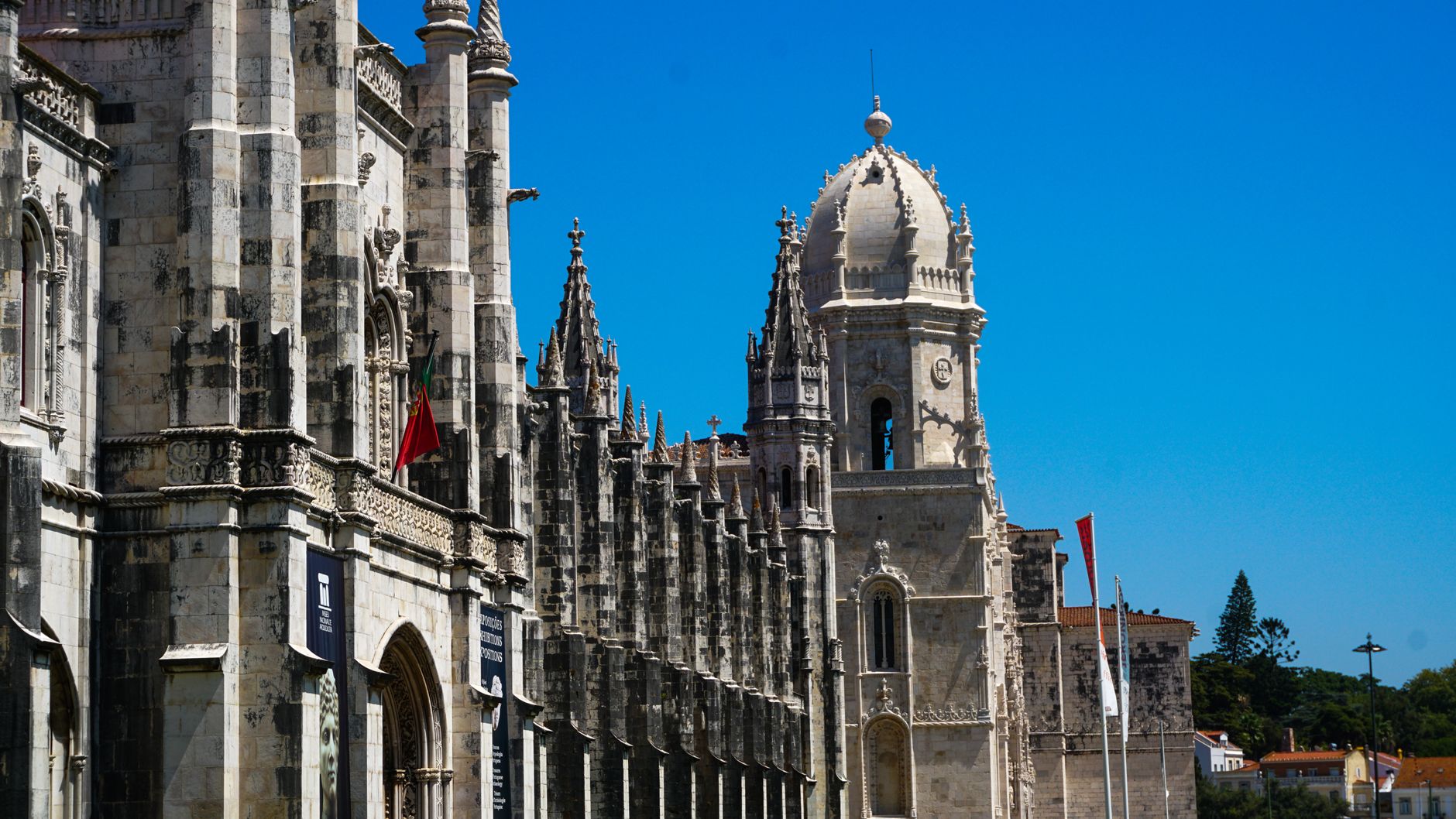
This wealth funded the Manueline architectural style — Portugal’s unique late Gothic with maritime motifs (ropes, anchors, coral, exotic plants, armillary spheres). It is ornate to the point of exuberance. Jerónimos Monastery and Belém Tower are the masterpieces, both built directly from the proceeds of the spice trade.
Where to see it:
- Jerónimos Monastery — Manueline masterpiece, funded by spice trade, contains the tombs of Vasco da Gama and Luís de Camões
- Belém Tower — riverside fortress symbolizing the era
- Monument to the Discoveries — modern (1960) commemoration of the explorers
- Maritime Museum (Museu de Marinha), Belém
Spanish Rule and Restoration (1580–1640)
King Sebastian’s death at the Battle of Alcácer Quibir in Morocco (1578) without heir led to a succession crisis. King Philip II of Spain claimed the throne, beginning 60 years of Spanish-Portuguese dual monarchy — the Iberian Union. Portugal retained separate laws and overseas empire in theory; in practice, being entangled in Spain’s wars meant losing trading outposts to the Dutch and English.
On December 1, 1640, Portuguese nobles staged a coup in Lisbon, declaring João IV king and re-establishing independence. The date is still a Portuguese national holiday — December 1, “Restoration of Independence Day.”
17th–18th Century: Brazilian Gold and Decadence (1640–1755)
Massive gold finds in Brazil — especially in Minas Gerais from the 1690s onward — poured unprecedented wealth into Lisbon for the first half of the 18th century. King João V’s reign (1706–1750) was a gilded age of lavish baroque churches, palaces, and infrastructure projects. The Águas Livres Aqueduct, completed in 1748, still stands intact — one of the longest aqueducts in the world at the time, bringing water 18 km from the Sintra hills to Lisbon.
João V spent the gold extravagantly on art, architecture, and the church. The monastery-palace of Mafra (a 40-minute drive north of Lisbon) is the monument to his excess — a building complex larger than El Escorial, built with 45,000 workers over 13 years. It was about to end catastrophically.
The 1755 Earthquake (November 1, 1755)
At 9:40 AM on All Saints’ Day, while most Lisboners were in church for one of the most important feast days of the year, an earthquake of estimated magnitude 8.5–9.0 struck. It lasted 6–10 minutes. Three distinct shocks were felt. A tsunami followed approximately 40 minutes later, with waves reportedly reaching 6–20 metres and washing up the Tagus. Six days of fires — ignited by the thousands of candles burning in churches for the feast day — consumed what the earthquake and tsunami hadn’t.
- Estimated dead: 30,000–50,000 of Lisbon’s 200,000 residents
- Buildings destroyed: roughly 85% of central Lisbon
- Lost forever: the Royal Palace (holding around 70,000 books and paintings), the Royal Opera House (opened just 6 months earlier), most of the city’s churches
The catastrophe was Europe’s worst natural disaster of the 18th century. It also generated the first scientific study of seismic events in history, as the Marquês de Pombal sent questionnaires to every parish in Portugal asking standardized questions about what they had experienced. Voltaire’s Candide (1759) was largely a response to the earthquake’s philosophical implications.
Reconstruction: The Pombaline Era (1755–1777)
King José I delegated reconstruction entirely to his prime minister, Sebastião José de Carvalho e Melo — later created the Marquês de Pombal. Pombal’s response was fast and effective. He commissioned an entirely new urban plan for the destroyed centre: engineer Eugénio dos Santos and architect Carlos Mardel designed the Baixa grid — standardized buildings on wide streets, all to the same proportions and ornamentation.
The real innovation was structural — the gaiola pombalina (Pombaline cage), an internal wooden bracing system that pre-dated modern earthquake engineering by 200 years. Buildings constructed with the cage system have survived subsequent earthquakes while later buildings without it have not. Pombal also banned the importation of enslaved Africans into mainland Portugal (1761) and restructured the Douro wine trade.
Where to see it:
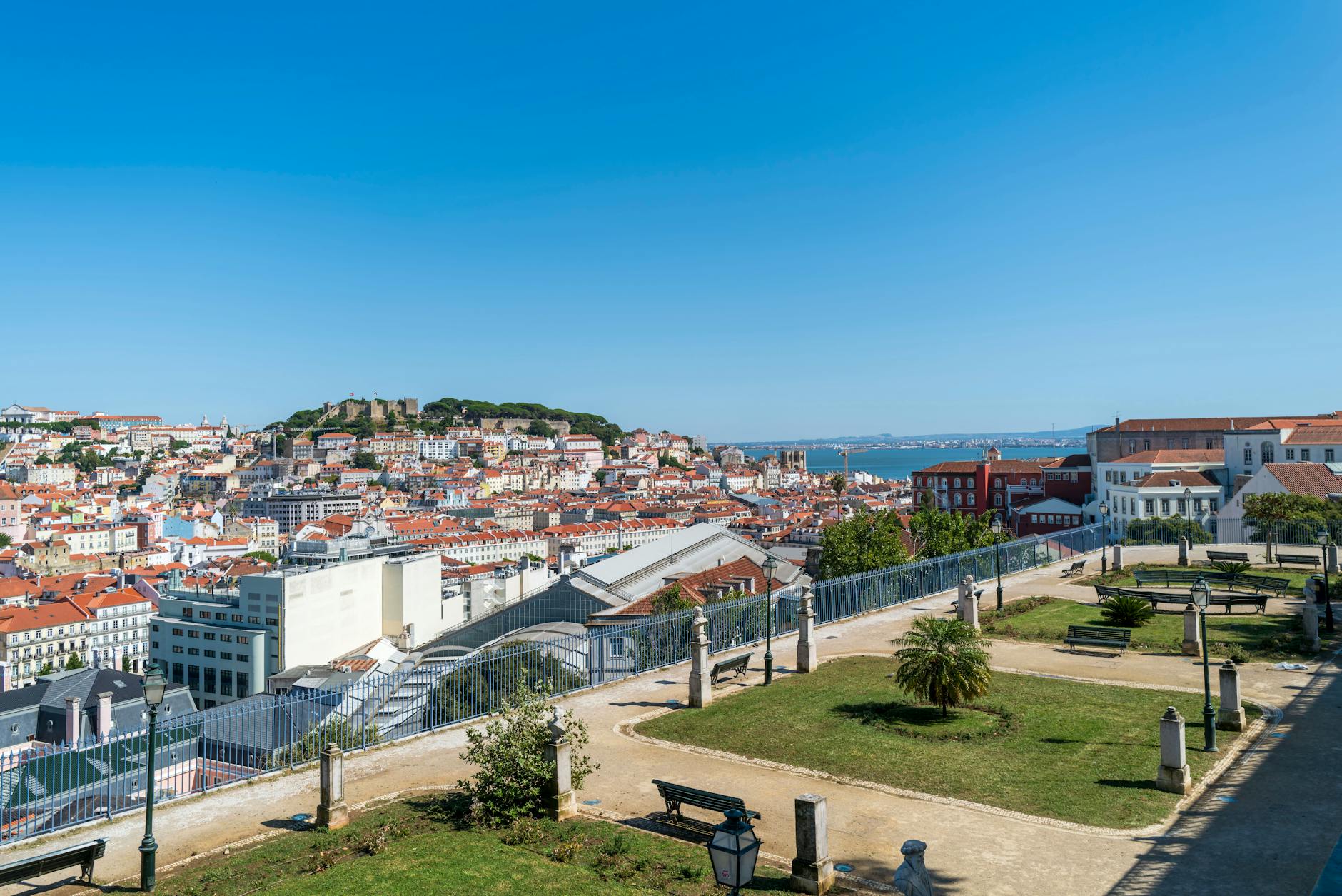
- All of Baixa — the Pombaline grid, largely intact
- Praça do Comércio — replaced the destroyed royal palace, facing the Tagus
- Rua Augusta Arch — triumphal arch celebrating the reconstruction
Napoleon and Emigration to Brazil (1807–1820)
In 1807, Napoleon’s forces invaded Portugal after the Portuguese refused to join the Continental Blockade against Britain. The Portuguese royal family — including Queen Maria I and Prince Regent João — fled to Rio de Janeiro on British ships, taking approximately 10,000–15,000 court members with them. Lisbon was occupied by the French until 1808; British forces under Wellington liberated it and used Portugal as the base for the Peninsular War.
The royal family stayed in Brazil until 1820, effectively making Rio the de facto capital of the Portuguese Empire. This had permanent consequences: Brazil declared independence in 1822. Portugal had lost its richest colony partly because it had moved there.
19th Century: Constitutional Monarchy and Decline
The 19th century in Lisbon was turbulent and largely unprosperous. Constitutional reform fought with absolutism through actual civil war in the 1820s–30s. The Estoril coast railway opened in 1889; the Glória Funicular in 1885. Avenida da Liberdade was laid out in the 1880s on the site of a public garden, beginning the northward expansion of the city.
But compared to Paris, London, or even Madrid, Lisbon stagnated. The loss of Brazil (1822) and declining colonial revenues left Portugal one of Europe’s poorest countries through the late 19th century.
Republic and Salazar (1910–1974)
The monarchy ended on October 5, 1910, with a republican revolution; King Manuel II fled to Britain. The First Republic was chronically unstable — 45 governments in 16 years.
In 1926, a military coup ended the republic. António de Oliveira Salazar was brought in to stabilize the budget in 1928 and by 1932 was Prime Minister. His “Estado Novo” (New State) constitution formalized an authoritarian single-party state that ran until 1974. The PIDE secret police surveilled and imprisoned dissidents. Portugal maintained its African colonies — Angola, Mozambique, Guinea-Bissau — through brutal colonial wars from 1961 onward.
Lisbon during this era was a city of poverty, closed borders, and fado clubs operating under the censor’s eye. The repression ironically created conditions for a particular melancholy aesthetic — saudade — that infused art, literature, and fado of the period.
The Carnation Revolution (April 25, 1974)
On April 25, 1974, junior officers of the Portuguese Army — calling themselves the Movimento das Forças Armadas (MFA) — staged a coup with a codeword broadcast on the radio: a fado song, “Grândola, Vila Morena,” by Zeca Afonso, banned under Salazar. The regime fell in 24 hours with virtually no bloodshed. Lisboners flooded the streets. Red carnations — in season and abundant — were placed into the barrels of soldiers’ rifles by civilians. A florist on Rua do Arsenal gave them out for free.
Within months, Portugal granted independence to all African colonies. Elections were held in April 1975. The transition to democracy was messy but it held. April 25 remains a national holiday, celebrated with genuine feeling. In 2024, the 50th anniversary, Lisbon held one of the largest public celebrations in the city’s postwar history.
Where to see it:
- 25 de Abril Bridge — renamed in honor of the revolution (it was the “Salazar Bridge” for its first eight years)
- Largo do Carmo — where the regime’s last Interior Minister surrendered to MFA officers on the afternoon of April 25
- April 25 is a national holiday celebrated annually with concerts, demonstrations, and the wearing of red carnations
Modern Lisbon (1986–Present)
Portugal joined the European Economic Community (now EU) in 1986. EU structural funds transformed infrastructure: motorways, the Vasco da Gama bridge (1998, at 17 km one of Europe’s longest), Metro expansion, and the Expo ’98 waterfront regeneration at Parque das Nações.
The 2008 financial crisis hit Portugal hard. The country received an EU-IMF bailout in 2011 and began slow recovery around 2014. Since 2015, Lisbon has experienced explosive tourism growth — from roughly 3 million visitors in 2014 to over 10 million by 2024. The city has become a European destination of the first rank.
Gentrification is pronounced in Alfama, Mouraria, and Cais do Sodré. Long-term residents have been displaced by short-term rentals. Housing costs that were among the lowest in Western Europe a decade ago now rank among the fastest-rising. The same tourism that funded recovery has complicated it. For a broader overview, Visit Portugal maintains current cultural and historical information about Lisbon.
History of Lisbon: What Locals Know That Tourists Miss
The standard tourist route hits Roman theatre, Moorish castle, Manueline Belém, Pombaline Baixa. That’s solid. A few things that don’t make the headline narrative are worth knowing:
- The Jewish community: Lisbon had one of Iberia’s largest Jewish communities through the medieval period. In April 1506, a massacre in Rossio Square killed an estimated 2,000–4,000 converso Jews during a religious dispute. A memorial was installed in 2008.
- Lisbon’s role in the slave trade: By 1550, roughly 10% of Lisbon’s population was enslaved, mostly from West Africa. Lisbon was Europe’s largest slave market. This history is rarely foregrounded in standard tourism narratives.
- The 1755 earthquake’s philosophical impact: If divine providence allowed Lisbon to be destroyed on a holy day while thousands knelt in church, the classic theodicy arguments became hard to sustain. This is part of why Voltaire’s Candide resonated so widely across Europe.
- The Marquesa de Távora affair (1759): Pombal used a suspected assassination attempt on King José I to execute the Távora noble family — rivals to his power. The public execution in Belém was a demonstration of the new minister’s ruthlessness.
Recommended History Walking Route
A self-guided 3-hour route hitting major eras:
Start: Núcleo Arqueológico (Phoenician/Roman)
10:00 AM — Sé Cathedral (Christian Reconquista)
10:45 AM — Walk through Alfama (Moorish street layout)
11:30 AM — São Jorge Castle (Moorish fortifications) — see our castle visitor guide
12:30 PM — Lunch in Alfama
2:00 PM — Praça do Comércio (Pombaline reconstruction)
2:30 PM — Tram 15E or train from Cais do Sodré to Belém
3:00 PM — Jerónimos Monastery (Age of Discovery)
4:00 PM — Belém Tower exterior + Discoveries Monument
5:30 PM — Return to Largo do Carmo (Carnation Revolution site)
For a deeper dive, see our Museums & Culture pillar and our guide to the National Tile Museum, which is closed for works with no reopening date. Its azulejo panels include some of the finest historical panoramas of pre-earthquake Lisbon.
FAQ: History of Lisbon
How old is Lisbon?
Settlement evidence dates to ~1000 BC, making Lisbon over 3,000 years old. It’s one of the oldest continuously inhabited cities in Western Europe — older than Rome by most estimates of continuous settlement, though not in terms of political prominence.
Who founded Lisbon?
The Phoenicians established the first known settlement around 1000 BC, calling it Alis Ubbo or Olissipona. The popular myth attributes founding to Ulysses (Odysseus), but there’s no historical basis for this — it’s a legend that gained traction during the Renaissance when connecting your city to classical antiquity was fashionable.
What was the 1755 earthquake?
An estimated magnitude 8.5–9.0 earthquake on November 1, 1755, that — combined with subsequent tsunami and fires — destroyed approximately 85% of central Lisbon and killed an estimated 30,000–50,000 people. It was the largest natural disaster to hit a European capital in recorded history and triggered fundamental changes in urban planning, seismic science, and Enlightenment philosophy.
What is the Carnation Revolution?
The April 25, 1974 peaceful military coup that overthrew Portugal’s Estado Novo dictatorship after 48 years. Junior army officers broadcast a codeword fado song, the regime collapsed in 24 hours, citizens placed red carnations into soldiers’ rifles, and Portugal transitioned to democracy without significant bloodshed. It remains one of the 20th century’s most remarkable political transitions.
Why is Lisbon’s old town so different from Baixa?
Alfama survived the 1755 earthquake with relatively little damage — its hilly terrain and narrow streets absorbed the shock differently than the flat riverside area. It retains its medieval Moorish street pattern, largely unchanged for 900 years. Baixa was completely destroyed and rebuilt from scratch to Pombal’s planned grid. The contrast between the two areas is the most visible physical record of the earthquake’s impact.
What’s Pombaline architecture?
The standardized 4–5 storey building style commissioned by the Marquês de Pombal for post-earthquake Baixa reconstruction. All buildings were built to identical proportions, floor heights, and façade ornamentation. Earthquake-resistant due to an internal wood-cage system (gaiola pombalina) — one of the world’s first deliberate seismic engineering solutions, predating modern earthquake codes by two centuries.
What happened to Lisbon’s Jewish community?
Jews were expelled from Portugal in 1496 under King Manuel I, forced to convert or leave. Many converted (becoming cristãos-novos or conversos) and remained. In April 1506, a pogrom in Lisbon’s Rossio Square killed an estimated 2,000–4,000 converso Jews. The Inquisition, established in Portugal in 1536, continued persecution through the 18th century. A memorial in Rossio Square commemorates the 1506 massacre.
Bottom Line
Lisbon’s 3,000-year history is layered into the city itself — Roman foundations under Sé, Moorish walls in Alfama, Manueline carvings at Jerónimos, Pombaline grids in Baixa, and Carnation Revolution memorials throughout. Spend half a day on a history-focused walk and ordinary sightseeing transforms into a deeper experience. The monuments you’d visit anyway become comprehensible rather than decorative.
History is easier to see than to read about. The Museu Nacional do Azulejo, closed for works at present, holds the panorama of the city as it stood before 1755, the Gulbenkian shows what a single Portuguese fortune could assemble in the century after, the MAAT occupies the power station that electrified the result, and the Museums & Culture pillar covers the rest.
Photo Credits
Lisbon’s Roman theatre excavation: Anfiteatro romano en Lisboa by ProtoplasmaKid, CC BY-SA 4.0, via Wikimedia Commons.
São Jorge Castle’s ramparts: 2019-05-16 13-38-56 PT Lisbon JHe K70 (54145546407) by Jan Helebrant, CC0, via Wikimedia Commons.