Museums & Culture
Lisbon Oceanarium: The Complete Family Visitor Guide (2026)
Plan your visit to the Lisbon Oceanarium—Europe's largest indoor aquarium. Tickets, hours, what to see, and family-friendly tips.
In this guide
- Lisbon Oceanarium at a Glance
- Tickets and Hours
- What to See Inside
- How to Get to the Lisbon Oceanarium
- Combining with Parque das Nações
- Best Time to Visit
- Practical Tips
- The Oceanarium and Lisbon’s Other Museums
- The History Behind the Oceanarium
- How the Oceanarium Compares to Other European Aquariums
- Visiting with School Groups and Education
- Conservation
- What Visitors Get Wrong About the Oceanarium
- FAQ: Lisbon Oceanarium
- Bottom Line
The Lisbon Oceanarium (Oceanário de Lisboa) is one of Europe’s largest and most-celebrated public aquariums — repeatedly named the world’s #1 aquarium on TripAdvisor’s traveler awards. Built for Expo ’98 in the modern Parque das Nações district, it features a 5-million-liter central tank, four distinct habitat zones, and nearly 8,000 marine creatures representing around 450 species.
The zoo is the other big animal attraction in the city, and the two are usually an either-or on a short trip — our Lisbon Zoo guide compares them directly.
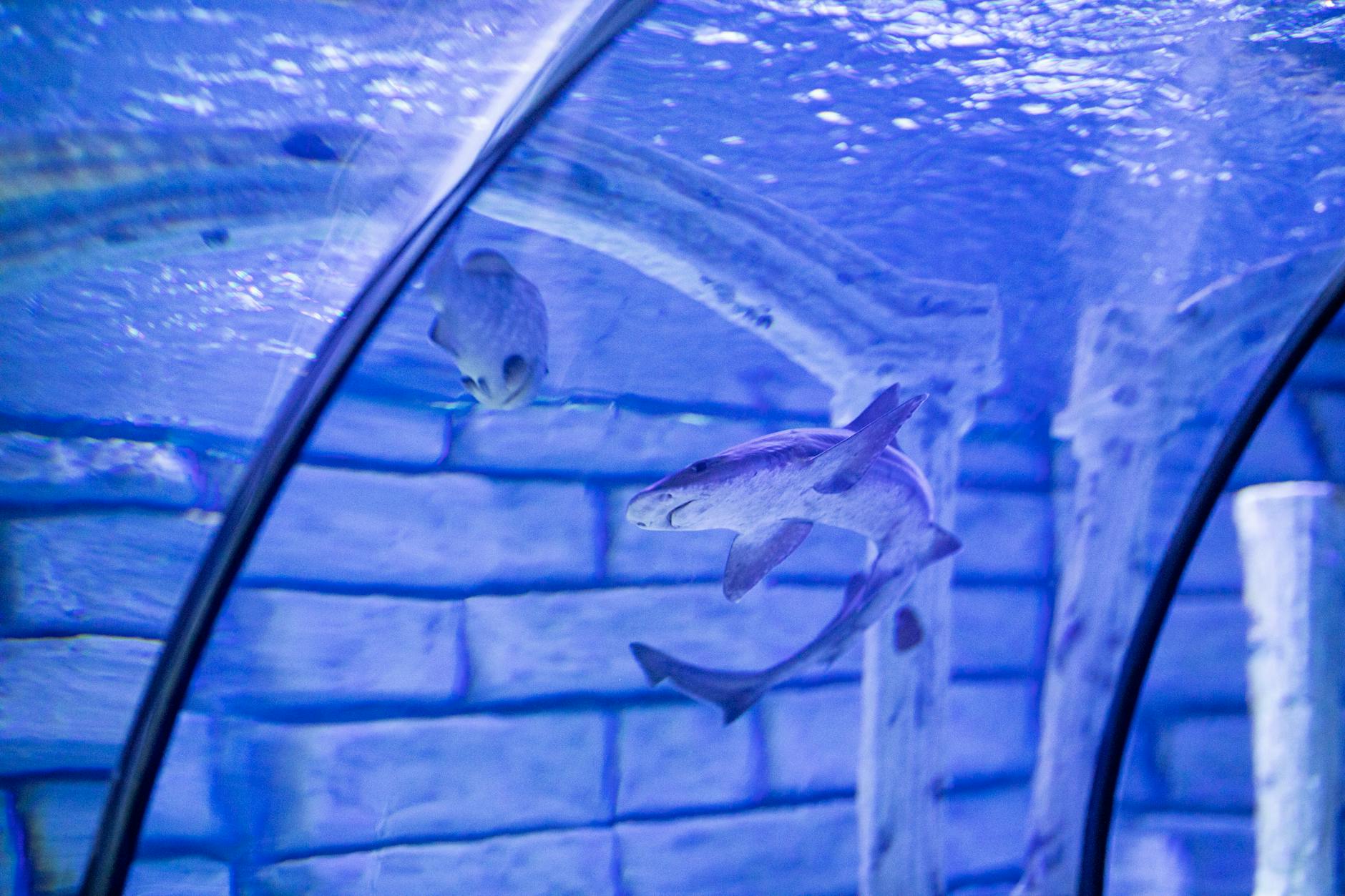
It is also one of the most technically impressive aquariums in existence. The central “Global Ocean” tank holds the equivalent of four Olympic swimming pools in a single volume — visitors view it from multiple levels, watching sand tiger sharks, sunfish, and schools of mackerel complete slow circuits around the glass. This guide covers everything you need to plan a great visit. Updated for 2026.
Lisbon Oceanarium at a Glance
| Detail | Info |
|---|---|
| Where | Parque das Nações, eastern Lisbon |
| Hours | 10 AM – 8 PM daily (last entry 7 PM) |
| Tickets | €25 adult, €15 child (3–12), €17 senior |
| Time required | 2.5–3 hours |
| Best for | Families, marine enthusiasts, rainy-day visits |
| Metro | Red Line, Oriente station (5-min walk) |
| Official site | oceanario.pt |
Tickets and Hours
Opening Hours
- Daily: 10 AM – 8 PM (last entry 7 PM)
- Open: Every day including most public holidays
- Note: Reduced hours on Christmas Eve, New Year’s Eve — check oceanario.pt for current exceptions before visiting
Ticket Prices (2026)
- Adult (13–64): €25
- Senior (65+): €17
- Child (3–12): €15
- Children under 3: Free
- Family pass (2 adults + 2 kids): €65
Lisboa Card holders: 15% discount on admission. The Lisboa Card also covers transit to get here, making it worth calculating whether a card saves money on a visit that includes the Oceanarium. Check oceanario.pt/tickets to confirm current pricing before your visit.
Skip-the-Line
Pre-book online — directly at oceanario.pt or via GetYourGuide. The booking fee is typically €2–€3 but skips entry queues that can reach 30–60 minutes on weekend afternoons in summer and school holidays. On weekday mornings this matters less, but during peak periods it is worth paying for.
What to See Inside
The Central Ocean Tank
The centerpiece: a 5-million-liter tank built as a single connected volume. The tank was designed so that species from different ocean zones coexist in one shared body of water — an engineering challenge that took years to solve and is still unusual in aquarium design worldwide. The main inhabitants are sand tiger sharks, sunfish (Mola mola — a round, flat disc with trailing fins that looks improbable and moves like it knows it), and large schools of mackerel and bonito that circulate in tight, glittering formations.
Glass walls on multiple viewing levels let you see the same animals from different depths and angles. The lower levels, where the light dims and the sharks circle at eye level, are the most affecting. Allow 20–30 minutes here alone — the experience changes as the schools reorganize and different animals drift into view.

The Four Habitat Zones
The Oceanarium is organized around four ocean ecosystems, each built as a separate habitat with appropriate species, temperature, and environment, ringing the central tank.
- North Atlantic (Azores) — temperate Atlantic species: sea bass, conger eels, wrasse, rocky kelp environments typical of the Azores shelf
- Antarctic — the penguin exhibit. Rockhopper and Magellanic penguins in a convincingly cold environment. The kid favorite by a margin. Morning feeding times draw the biggest audience.
- Pacific (Northwest) — sea otters floating on their backs in their characteristic way, plus sea birds and kelp forest species. The otters are the other highlight for children.
- Indian Ocean (Tropical Reef) — the most colorful zone: reef fish in the typical Indo-Pacific palette, anemones, rays, and the dense species diversity of a tropical reef.

Special Exhibitions
The Oceanarium runs rotating temporary exhibitions alongside the permanent aquarium. The most notable long-running display is by Japanese artist Takashi Amano — an intricate underwater garden exhibition among the world’s most discussed aquascaping works. Check the official site for current programming as exhibitions change periodically.
Special Activities
Beyond standard visits, the Oceanarium offers several experiences worth knowing about:
- Sleeping with Sharks — overnight stay in the aquarium for groups, sleeping below the main tank. Booked weeks ahead and genuinely strange in the best way.
- Ocean Night Quiz — evening event for adults, themed around marine science
- Guided tours — available for individuals and groups, with access to behind-the-scenes areas not open to general visitors
- Birthday parties — popular for children 5+, bookable via the official site
How to Get to the Lisbon Oceanarium
By Metro (Recommended)
Red Line to Oriente station, then a 5-minute walk to the Oceanarium. From central Lisbon (Baixa-Chiado), the journey takes about 20–25 minutes. The Oriente station itself is worth a look: Santiago Calatrava’s 1998 design is one of Europe’s better-engineered stations, with a white concrete canopy that mimics the ribbed vaults of a Gothic cathedral. See our guide to riding the metro for fare details.
By Train
Oriente is a major national rail hub. If you’re arriving in Lisbon by intercity train from Porto or the Algarve and want to do the Oceanarium before checking into your hotel, this is the most direct option.
By Uber or Bolt
€8–€12 from central Lisbon, 15–20 minutes outside peak traffic. The return journey can take longer during evening commute hours.
Combining with Parque das Nações
Parque das Nações is the modern eastern Lisbon district built for Expo ’98 — flat (a genuine relief after the hills of central Lisbon), waterfront-oriented, and architecturally coherent. The Oceanarium anchors it, but several other things are worth your time.
- Pavilhão do Conhecimento — interactive science and technology museum immediately next to the Oceanarium, excellent for children aged 5 and up
- Telecabine Lisboa — a cable car running about 1.5 km along the waterfront connecting the Oceanarium end to the Vasco da Gama Tower end. €4 per person. Good Tagus views on a clear day.
- Vasco da Gama Tower — 145-metre tower with an observation deck. Panoramic views, though the Telecabine covers similar visual ground for less effort.
- Riverside promenade — a long flat walking path along the Tagus in both directions. Good for a decompression walk after 3 hours of aquarium.
- Restaurants — the riverside strip has several waterfront restaurants; quality varies but there are solid options for a post-Oceanarium lunch.
A full Parque das Nações day: Oceanarium in the morning, Pavilhão do Conhecimento, Telecabine, waterfront lunch, walk toward the bridge. Allow a full day if doing all of this with children.
Best Time to Visit
Weekday mornings (10–11 AM) are consistently the quietest. Saturday and Sunday afternoons in summer and during school holidays are the busiest — queues at the door and more crowded viewing areas around the central tank. If you have flexibility, a Tuesday or Wednesday morning visit will be significantly quieter than a Saturday afternoon in July or August.
The Oceanarium is fully indoor and climate-controlled — an excellent option for rainy days in Lisbon when outdoor sightseeing becomes less appealing. The Antarctic exhibit is cold year-round; bring a light layer if you feel the cold easily.
Practical Tips
- Comfortable walking shoes — 2.5–3 hours on concrete and tiled floors
- Light jacket for the Antarctic zone
- Strollers: fully accessible, ramps and lifts throughout
- Photography: permitted throughout; no flash through glass. Low-light conditions in the main tank challenge phone cameras — manual exposure settings help.
- Feeding times: posted at the entrance on arrival. Time your circuit to catch the penguin or shark feedings.
- Café on site for snacks and meals — museum-café pricing, fine for a break
- Gift shop: ocean-themed merchandise with conservation focus, better than most museum shops
The Oceanarium and Lisbon’s Other Museums
The Oceanarium is logistically awkward to combine with central Lisbon museums in the same day — the metro ride is 20–25 minutes each way. A dedicated Parque das Nações half-day or full day is the right approach rather than rushing between the Oceanarium and, say, the National Tile Museum or Gulbenkian on the same afternoon.
For museum planning across your full Lisbon visit, see our Museums & Culture pillar, our National Tile Museum guide, our full Gulbenkian Museum guide, and our MAAT guide.
The History Behind the Oceanarium
The Oceanário was built as the centerpiece aquatic attraction for Expo ’98, Lisbon’s world exposition themed around “The Oceans: A Heritage for the Future.” The exposition ran from May to September 1998 and attracted around 10 million visitors. Most Expo ’98 buildings have been repurposed into offices and apartments — the Oceanarium is one of the few permanent public attractions that survived unchanged and actually got better over time.
The building was designed by Cambridge Seven Associates, the same firm responsible for the New England Aquarium in Boston. It sits on an artificial peninsula extending into the Tagus estuary, meaning the building is effectively surrounded by water — an appropriate setting for its contents. The location also gives it one of the better approaches of any building in Lisbon: arriving via the riverside promenade with the main tank building rising from the water ahead of you.
The Expo ’98 legacy is visible throughout Parque das Nações. Calatrava’s Oriente station, the Vasco da Gama Bridge (which opened that year), the Pavilhão Atlântico (now Altice Arena, Lisbon’s main concert venue), the Pavilhão de Portugal by Álvaro Siza Vieira — all built for 1998 and all still in active use. The Oceanarium has outlasted all of them in visitor numbers and international reputation.
How the Oceanarium Compares to Other European Aquariums
Context for how it stacks up, if you have visited other major European aquariums or are deciding between destinations.
- Georgia Aquarium (Atlanta) and Monterey Bay Aquarium: The American megaquariums are larger in absolute scale. The Lisbon Oceanarium beats most of them on visitor experience quality and the central tank design.
- L’Aquàrium Barcelona: Strong Mediterranean focus, good tunnel experience. The Lisbon Oceanarium is generally rated higher for overall ambiance and the habitat zone variety.
- Cité de la Mer, Cherbourg: Different style (submarine focus). The Oceanarium is more oriented toward live animal exhibits.
- Two Oceans Aquarium, Cape Town: Similar philosophy, strong Southern Ocean focus. Both institutions have conservation programs that go beyond typical aquarium operations.
The Oceanarium wins on the combination of the central tank engineering, the four-habitat structure that creates genuine variety, and the rotating exhibitions that give it a reason for repeat visits. It has been named the world’s best aquarium by TripAdvisor travelers multiple times, which reflects visitor satisfaction rather than scientific ranking — but for a public attraction, that is the relevant metric.
Visiting with School Groups and Education
The Oceanarium has a substantial education program for school groups, with dedicated workshops, guided tours, and curriculum-linked activities. If you’re visiting with a school group rather than as a leisure visitor, contact the education department in advance — the school visit experience is structured differently from the general public visit and benefits from pre-booked guided content. The institution’s climate change education section connects marine biodiversity to ocean warming in terms appropriate for secondary school students.
For leisure family visits, the standard general entry is fully suitable without any pre-arranged education program. The exhibits are self-explanatory, the habitat zone signage is clear in Portuguese and English, and staff are available for questions throughout the building.
Conservation
The Oceanário is not just an aquarium. It runs scientific research partnerships with Portuguese universities, breeding programs for endangered marine species, and an Ocean Conservation Fund. The sunfish (Mola mola) in the central tank, for example, is understudied relative to its size and range — the Oceanarium has contributed to research on the species. The conservation messaging throughout the exhibits is substantive rather than superficial, worth engaging with, especially with children old enough to connect marine ecosystems to the wider climate picture.
What Visitors Get Wrong About the Oceanarium
A few common mistakes worth avoiding.
Arriving too late on a busy weekend. Showing up at 2 PM on a Saturday in July means queuing 30-60 minutes at the door without a pre-booked ticket and hitting the most crowded viewing windows at the central tank. Book online and arrive at 10 AM.
Treating it as a quick stop. Visitors who budget 90 minutes feel rushed. The central tank alone deserves 20-30 minutes of unhurried viewing. Add the four habitat zones, the temporary exhibition, and a cafe break and 2.5-3 hours is the right allocation. With children, plan for more time rather than less.
Skipping the habitat zones. The central tank is the draw, but the four surrounding habitats are highlights in their own right. The Antarctic penguin enclosure and the Pacific sea otters are particular favorites. Moving straight from the entrance to the main tank and leaving means missing half the experience.
Combining it with central Lisbon museums on the same day. The metro ride is 20-25 minutes each way and the Oceanarium needs a full 2.5-3 hours. Adding Gulbenkian or the Tile Museum the same afternoon makes both feel rushed. Dedicate a full morning or half-day to Parque das Nacoes and plan other museums on separate days.
Missing the feeding schedules. Posted at the entrance on arrival. The shark feeding in the main tank and the penguin feeding in the Antarctic zone both add significant movement and energy to the visit. Time your circuit to catch at least one.
FAQ: Lisbon Oceanarium
Is the Lisbon Oceanarium worth it?
Yes — it is genuinely one of the best aquariums in Europe and repeatedly rated the world’s best by visitors. Particularly good for families with children, marine biology enthusiasts, and as a rainy-day option.
How much does the Lisbon Oceanarium cost?
€25 adult, €15 child (3–12), €17 senior. Family pass €65. 15% discount with Lisboa Card. Children under 3 free. Check oceanario.pt for current prices.
How long does it take to visit?
2.5–3 hours for a thorough visit covering the central tank, all four habitat zones, and any temporary exhibitions. Less if you’re rushing, more if you linger at the tank or stop for food.
Can I buy tickets at the door?
Yes, but pre-booking online saves 30–60-minute queues on busy weekends and holidays. Worth the small booking fee during peak periods. Not essential on weekday mornings.
Is the Oceanarium suitable for very young children?
Yes — popular with children from about age 2 upward. Fully stroller-accessible. Very young children may find crowds overwhelming during peak hours; weekday mornings are better for under-3s.
Is Parque das Nações worth visiting beyond the Oceanarium?
Yes, particularly with children or on a longer stay. The Pavilhão do Conhecimento, Telecabine, and riverside promenade add a half-day of content. The district itself is architecturally interesting as a coherent 1990s master-planned development — very different from historic Lisbon.
Bottom Line
The Lisbon Oceanarium is one of Europe’s best aquariums — the central tank alone justifies the ticket price, and the four habitat zones give it real depth for a 2.5–3 hour visit. Pre-book a 10 AM weekday ticket, bring a light layer for the Antarctic zone, and combine with the Pavilhão do Conhecimento and the Telecabine for a full Parque das Nações morning. The Red Line metro to Oriente makes it straightforward from any central Lisbon hotel.
The Oceanarium is the one major Lisbon attraction that is unambiguously built for children. When the adults want a turn, the Museums & Culture pillar covers the alternatives, the MAAT is the most child-tolerant of them, and the Tile Museum and Gulbenkian are better saved for a day without a pushchair.