Things to Do in Lisbon
Free Things to Do in Lisbon: 30+ No-Cost Attractions & Experiences 2026
Discover 30+ completely free things to do in Lisbon including viewpoints, museums on free days, street art, beaches, parks, and festivals.

In this guide
- Lisbon’s Free Attractions at a Glance
- Free Museums in Lisbon (Always Free)
- Free Sundays at Major Museums
- Free Viewpoints (Miradouros)
- Free Neighbourhoods to Walk
- Free Walking Tours
- Free Music in Lisbon
- Free Markets to Browse
- Free Public Art and Architecture
- Free Churches
- Free Day Trip: Beaches via Train
- Free Parks and Gardens
- Free Photography Spots
- Free Festivals
- Sample Budget Day in Lisbon (Near-Free)
- Free Transit Hacks
- How to Save on Almost-Free Attractions
- FAQ: Free Things to Do in Lisbon
- Bottom Line
Free things to do in Lisbon exist in genuine abundance. The city’s hilltop viewpoints cost nothing. The Berardo Museum — a world-class modern art collection with Warhol, Picasso, and Bacon — charges no admission. The first Sunday of every month makes most major museums free until 14:00. Entire neighbourhoods like Alfama and Mouraria are essentially open-air museums you can wander through at will. With a bit of planning, you can fill five or six days in Lisbon spending almost nothing on attractions — and not feel like you’re on the budget version of the trip. Updated for 2026.
The beach is free, and the nearest good one is closer than you think. Costa da Caparica is about 40 minutes from the centre by bus and ferry.
Two of the best free hours in the city sit on opposite sides of one road in Estrela — see our guide to the Basílica da Estrela and Jardim da Estrela.
Not free, but as close as a major monument gets: our Carmo Convent guide explains why EUR7 buys the best hour in central Lisbon, and how to get the Santa Justa view for EUR1.80 afterwards.
The best free hour in the city centre is a church most visitors walk straight past — see our Igreja de Sao Roque guide for what to look at in the eight chapels and when the light is right.
This guide covers 30+ completely free things to do in Lisbon: viewpoints, free museums, neighbourhood walks, street art, parks, festivals, and music.
Lisbon’s Free Attractions at a Glance
| Category | Examples | When |
|---|---|---|
| Free museums (always) | Berardo, Money Museum, Núcleo Arqueológico | Any day |
| Free Sundays (1st of month) | Gulbenkian, Tile Museum, Coach Museum, MNAA | First Sunday until 14:00 |
| Hilltop viewpoints | Santa Catarina, Senhora do Monte, Portas do Sol | Always |
| Neighbourhoods to walk | Alfama, Bairro Alto, Chiado, Mouraria | Always |
| Free walking tours | Sandeman, GuruWalk (tip-based) | Daily |
| Free music | Tasca do Chico fado, Out Jazz Sundays | Most nights / summer |
| Markets to browse | Feira da Ladra (Tue/Sat), Mercado da Ribeira | Tue & Sat / daily |
| Free public art | Street murals, tile facades, Galeria de Arte Urbana | Always |
Free Museums in Lisbon (Always Free)
These museums charge no admission on any day of the week. Not discounted — free. The Berardo alone makes this list remarkable.
Berardo Museum — Best Free Museum in Lisbon
Inside the Centro Cultural de Belém, the Berardo houses one of the strongest collections of modern and contemporary art in Iberia. Warhol, Mondrian, Picasso, Francis Bacon, Joseph Beuys — over 1,000 works spanning the entire 20th and 21st century arc from Dadaism to digital art. This is the calibre of museum that charges €15 in other European capitals. Here it’s free, always, no caveats. It routinely surprises visitors who expect a regional collection and find themselves standing in front of a genuine Rothko.
- Where: Centro Cultural de Belém, Praça do Império — Tram 15E from Praça da Figueira or bus 728
- Time needed: 1.5–2 hours for the permanent collection
- Combine with: Belém Tower and Jerónimos Monastery for a full free/discounted Belém morning
Money Museum (Museu do Dinheiro)
The Bank of Portugal’s museum in the stunning 18th-century Igreja de São Julião in Baixa. Coins from ancient Lusitania, banknotes from the Estado Novo era, the full history of Portuguese currency and monetary policy. The building alone is worth the visit. Free entry always. Open Tuesday–Saturday.
- Where: Rua do Comércio 40, Baixa
- Time needed: 45 minutes to 1 hour
Núcleo Arqueológico (Underground Archaeology)
Beneath the Millennium BCP building in Baixa, excavations revealed Phoenician fish-salting tanks, Roman structures, Moorish buildings, and medieval remains — layers of 2,500 years of urban life visible through a glass-floored walkway. Free with advance reservation (call or email the museum to book). Limited group sizes, so don’t leave it to the day.
- Where: Rua dos Correeiros 9, Baixa
- Booking: Required — contact the Museu de Lisboa
Galeria de Arte Urbana (Underground Street Art)
A permanent street art exhibition installed in the Picoas metro underpass. Works by leading Portuguese and international urban artists. Free, open during metro hours. Most people walk past it without realising it’s a curated exhibition.
- Where: Picoas metro station underpass
Free Sundays at Major Museums
The first Sunday of every month, most national and municipal museums waive admission until 14:00. It’s one of the best-kept open secrets in Lisbon travel — plan your trip to include a first Sunday and you can save €40–60 per person in a single morning.
Museums participating in the first-Sunday free scheme typically include:
- Calouste Gulbenkian Museum (€14 normally)
- National Tile Museum (€8)
- National Coach Museum (€8)
- National Museum of Ancient Art (€10)
- National Theatre Museum (€5)
- National Archaeology Museum (€5)
- Roman Theatre Museum (€3)
- Lisbon Story Centre (€7)
- + many smaller city museums
Arrive by 10:00 for the Gulbenkian — queues build quickly by 11:00 on a free Sunday. Note that participation can change; check the official museum website before visiting.
See our Lisbon on a budget guide for more money-saving tactics.
Free Viewpoints (Miradouros)
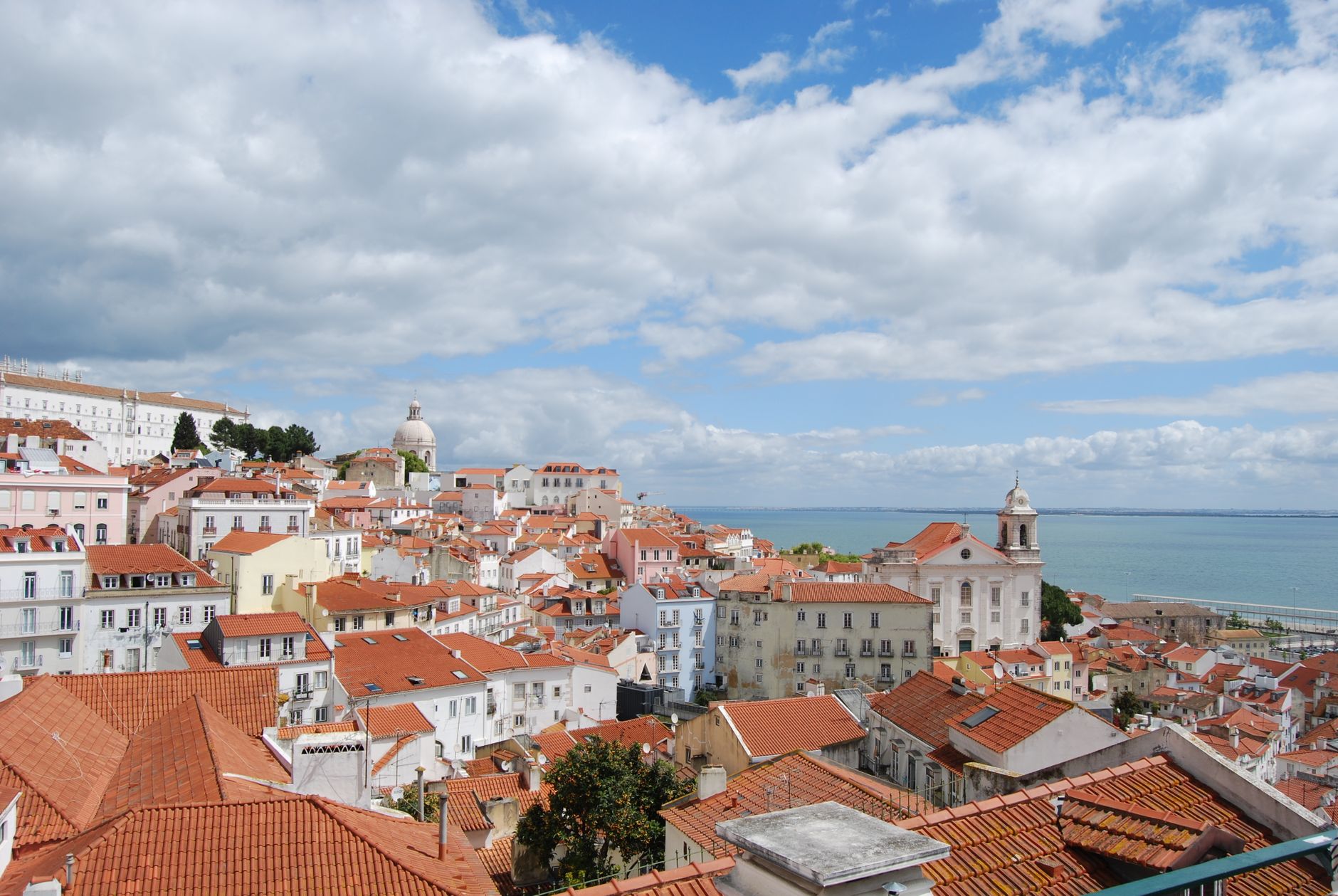
Lisbon sits across seven hills above the Tagus, which means the city’s best free activity is also its most rewarding: finding a high point and looking at it. Every miradouro is a free public space. The kiosk drinks at most of them are cheap (€2–4). The sunsets are, on their own terms, spectacular.
Best Miradouros for First-Time Visitors
- Miradouro de Santa Catarina — Bairro Alto. The city’s social viewpoint: informal, young crowd, kiosk drinks, the massive statue of Adamastor. Best at sunset when the Tagus turns orange.
- Miradouro de Nossa Senhora do Monte — Graça neighbourhood. Lisbon’s highest viewpoint. The full panorama from São Jorge Castle to the 25 de Abril Bridge is from here. Go early morning in winter for empty benches and clean light.
- Miradouro de São Pedro de Alcântara — Top of the Glória funicular. Manicured garden, kiosk café, tiled map identifying what you’re looking at. The best-laid-out viewpoint in the city.
- Miradouro de Santa Luzia — Alfama. Intimate, tile-decorated walls, benches, older neighbourhood feel. The view is of the Tagus estuary and Alfama rooftops — not the full panorama, but quieter for it.
- Miradouro das Portas do Sol — Alfama. The iconic terrace with the tiled domed São Vicente de Fora visible in the middle distance. Every photo of Alfama rooftops is shot from here or nearby.
- Miradouro da Graça — Pine-covered garden park, kiosk, beautiful in late afternoon light. Less visited than Santa Catarina or Portas do Sol.
See our miradouros guide for the complete list with opening hours for the kiosks.
Free River-Level Views
- Praça do Comércio steps down to the Tagus — best morning light
- Ribeira das Naus walkway along the waterfront
- Belém riverfront promenade between the CCB and the Tower
Free Neighbourhoods to Walk
The best free things to do in Lisbon are, fundamentally, the neighbourhoods themselves. No entry fee, no tickets, no queuing — just streets, facades, and the particular texture of each area.
Alfama
Lisbon’s oldest neighbourhood survived the 1755 earthquake because its Moorish-era urban structure sat on bedrock rather than the river sediment that liquefied under the Baixa. The result: a medieval street grid still intact, with narrow lanes, tiled facades, sudden staircases, and fado drifting from basement tascas at night. Walking it is free; you can spend three hours getting happily lost and come out the other side near the Sé Cathedral.
See our Alfama guide.
Bairro Alto and Chiado
Walk Rua do Diário de Notícias and Rua da Atalaia in Bairro Alto for layered tiles and small bars that open at 22:00. Chiado by day is Lisbon’s literary-café neighbourhood — Pessoa’s A Brasileira, the Bertrand bookshop (the world’s oldest operating bookshop, since 1732), the Carmo Convent ruins open to the sky. All the architecture is free. The Bertrand is free to browse.
Mouraria
The historic Moorish quarter, multicultural and less polished than Alfama. The Intendente square has been revived in recent years with tile-decorated bars and a genuine neighbourhood market. More authentic than most of the fado-house zone nearby.
Príncipe Real
Lisbon’s most elegant neighbourhood. Leafy streets, 19th-century townhouses, the Jardim do Príncipe Real with its extraordinary 100-year-old cedar tree (whose branches are propped up on dozens of wooden posts). The Embaixada concept mall in a neo-Moorish palace is free to enter and browse. The Saturday organic market in the garden is free to walk through.
Belém Riverfront
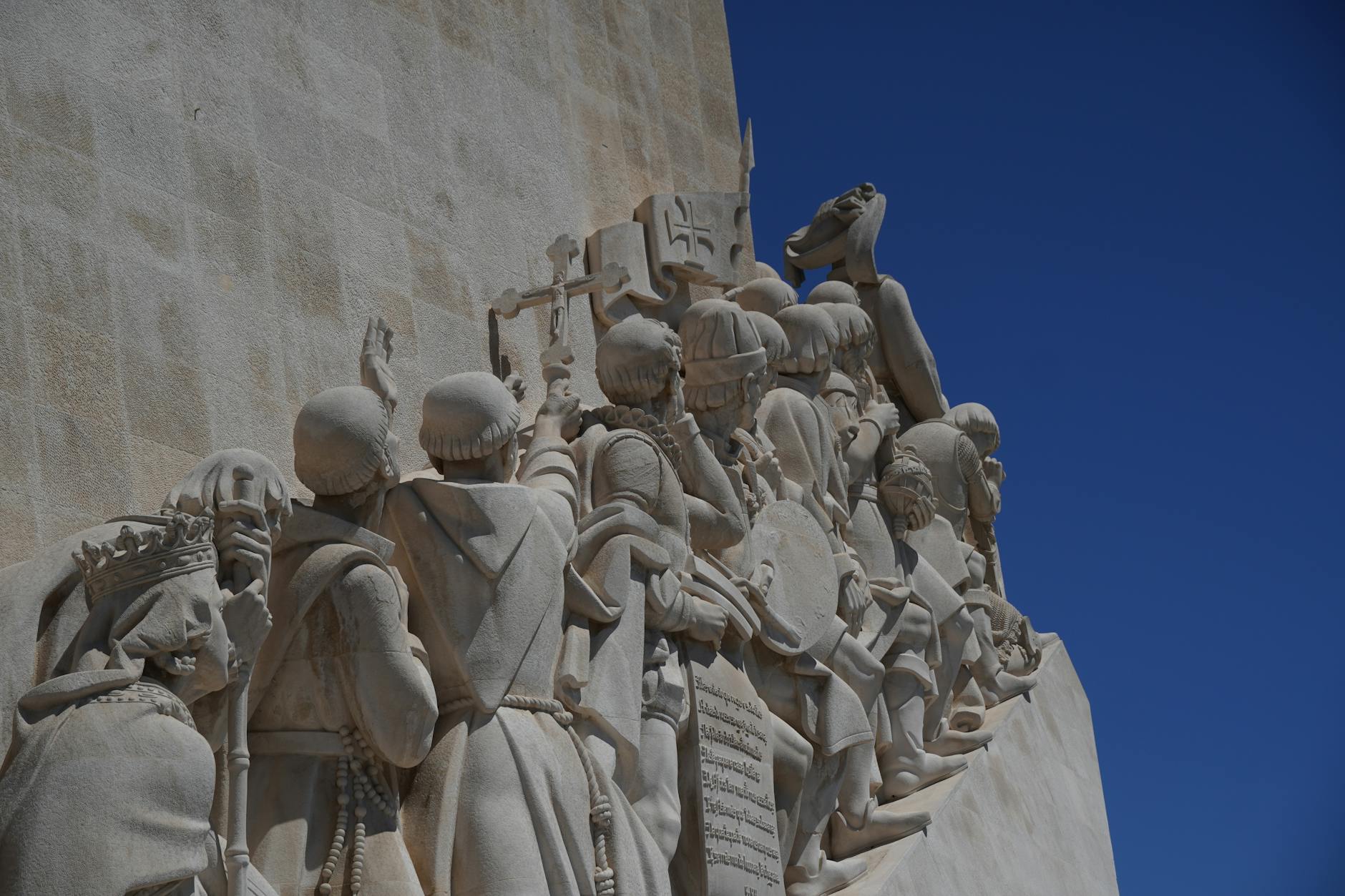
Walk along the Tagus from the Monument to the Discoveries to the exterior of Belém Tower. The Monument itself costs €8 to enter; viewing it from outside is free and most of the architectural impact is external. The Belém Tower exterior — a UNESCO World Heritage monument — is fully visible and photographable from the riverfront path at no cost. See our Belém Tower tickets guide for what’s inside.
Free Walking Tours
Several operators run tip-based walking tours — advertised as “free” because there’s no mandatory fee, though tipping €5–15 per person is the understood norm.
- Sandeman’s New Lisbon — Daily 3-hour tours of central Lisbon. Professional guides, good historical content. Tip €5–15 recommended.
- GuruWalk Lisbon — Multiple independent guides and themed tours on the platform. Check reviews carefully.
- Lisbon Walker Free Tour — History and fado-themed options.
Quality varies by guide — read recent reviews. If you get a good one, they’re genuinely excellent. See our roundup of the best walking tours for paid alternatives that guarantee quality.
Free Music in Lisbon
Free Fado
Not every fado experience costs €60 for a dinner-and-show package. Several spots offer fado without a mandatory spend:
- Tasca do Chico (Bairro Alto, Rua do Diário de Notícias 39) — Free fado most weeknights. You buy food and drink; the music is part of the room. Small, intimate, locals mixed with tourists who found their way in.
- Various Bairro Alto bars — Free live music nightly in the warren of streets around Rua da Atalaia and Travessa da Queimada.
- Casa de Linhares — Occasionally hosts free fado nights; check their programme.
Out Jazz (Summer Sundays)
Free Sunday afternoon jazz concerts in various Lisbon parks through July and August. The programme rotates between Jardim do Torel, Jardim Botto Machado, Jardim da Estrela, and other green spaces. Outstanding free music series — bring a blanket and arrive 30 minutes early for a good spot. Check the Lisbon city events listings for the current season’s schedule.
Jazz em Agosto (August)
Some free outdoor concerts at the Gulbenkian gardens. The Gulbenkian’s own summer festival — check their programme at gulbenkian.pt for the current season.
Festas dos Santos Populares (June)
Free street parties throughout Alfama and Mouraria for the June saints’ festivals. Saint Anthony’s Day (June 13) is the peak — Alfama becomes one enormous party with live music on every corner, sardines grilling in the streets, paper decorations strung between buildings, and dancing that runs until 4 AM. Entirely free to attend.
Free Markets to Browse
Feira da Ladra
Lisbon’s flea market, running every Tuesday and Saturday in Campo de Santa Clara in Alfama. Free entry. Browse vintage azulejos, Portuguese books, old maps, bric-a-brac, and the occasional genuine antique hidden among the junk. Tuesday mornings are quieter; Saturday afternoons are busier and more festive.
See our Feira da Ladra guide.
Mercado da Ribeira (Time Out Market)
Free entry to the traditional morning produce market and the Time Out food hall. Browse even if you don’t buy. The traditional section opens at 06:00 and wraps up by midday.
See our Time Out Market guide.
Mercado de Campo de Ourique
Free entry. Local neighbourhood food market, less touristy, open daily except Monday.
Mercado Biológico do Príncipe Real
Saturday morning organic market in the Jardim do Príncipe Real. Free to browse. Quality produce, artisan food products, local honey, cheese, and seasonal vegetables.
See our markets guide.
Free Public Art and Architecture
Street Art
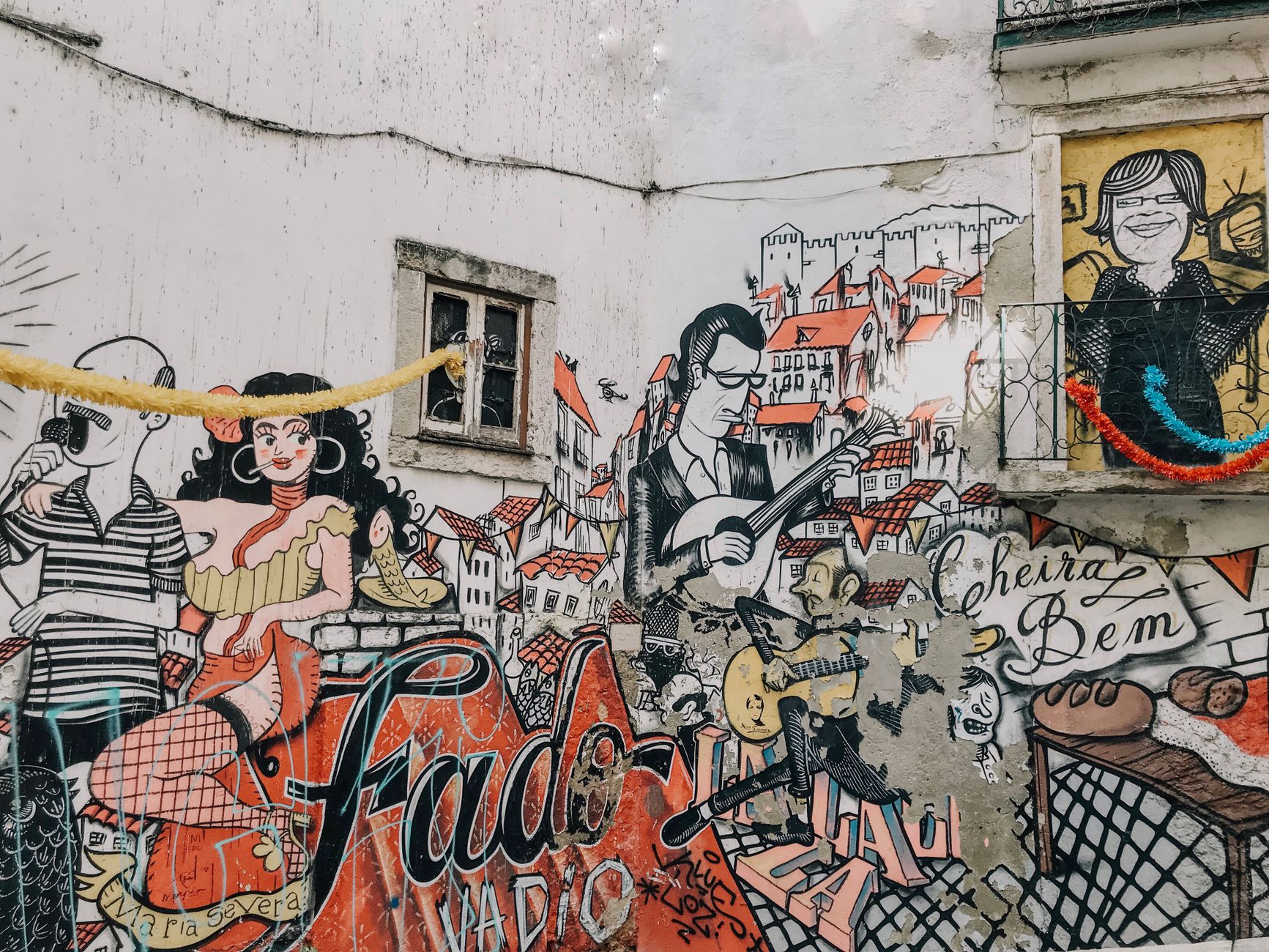
Lisbon has quietly accumulated one of Europe’s stronger street art scenes, concentrated in Bairro Alto, LX Factory exterior walls, Calçada da Glória, Graça, and the underpass near Picoas. The scale of some murals — entire building facades — makes them more significant than gallery pieces. Walk slowly and look up.
See our street art guide.
Tile Facades
Walking through Alfama, Mouraria, and Madragoa, the azulejo-covered apartment buildings are free, continuous, open-air art. No museum needed. The variety is extraordinary — from plain blue-and-white geometric patterns to figurative narrative panels from the 18th century. The National Tile Museum provides the context; the streets are where you see the real quantity.
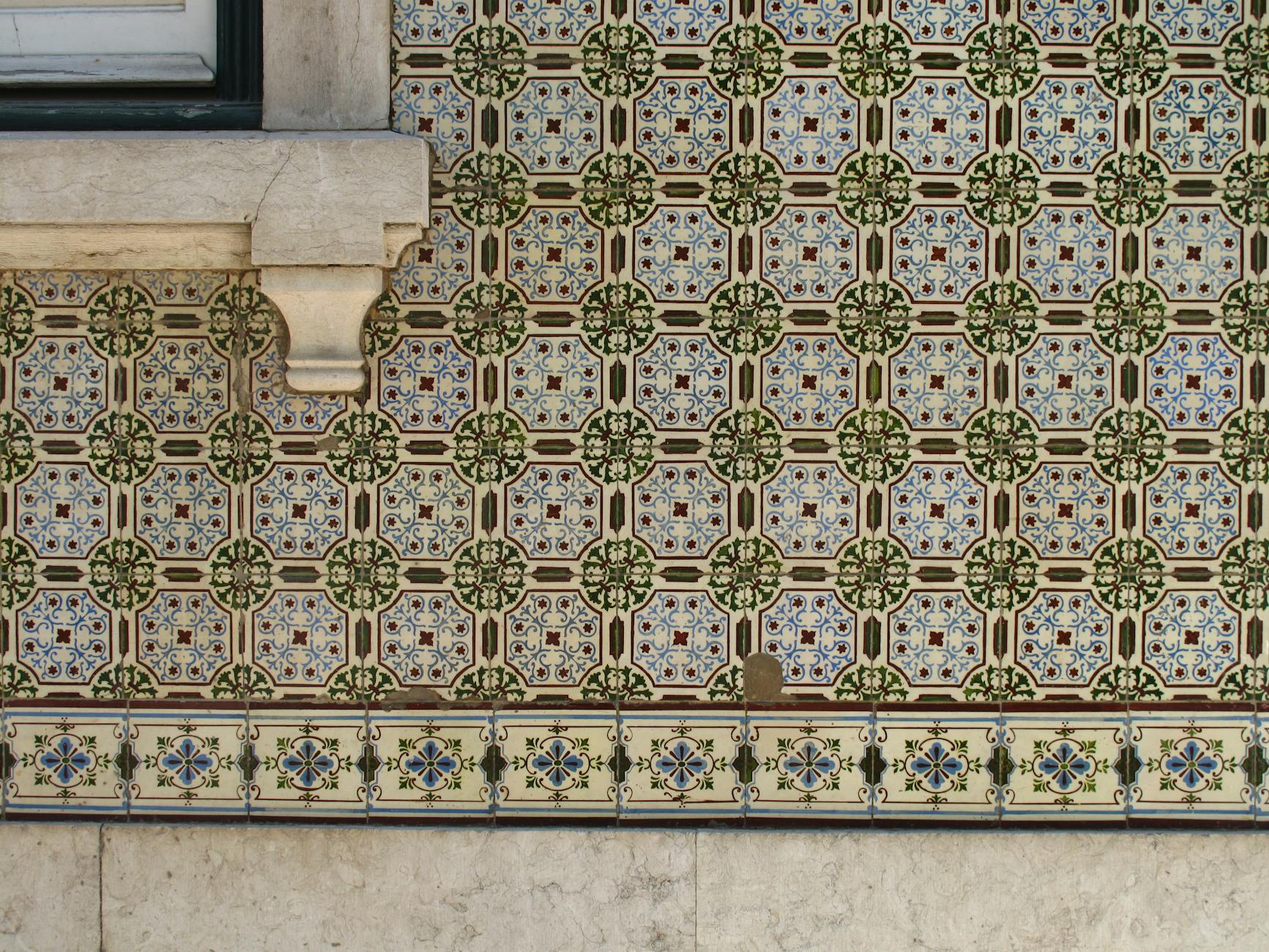
Modern Architecture
- Oriente Station (Parque das Nações) — Santiago Calatrava’s soaring steel-and-glass train station, built for Expo 98. Free to enter as a transit hub. One of the great pieces of late 20th-century European infrastructure architecture.
- MAAT exterior — The wave-shaped tilework roof of Amanda Levete’s gallery is fully accessible from the riverside path. Walk across it for free even without buying a museum ticket.
- Pavilhão de Portugal (Parque das Nações) — Álvaro Siza Vieira’s post-Expo pavilion, with a remarkable concrete canopy suspended between two porticos like a stone sheet. Free to walk past and around.
Free Churches
Lisbon’s churches range from plain exteriors hiding extraordinary interiors to elaborate baroque set-pieces that are genuinely hard to believe. Almost all are free.
Igreja de São Roque
One of the great bait-and-switches in Lisbon tourism. Plain Renaissance exterior on Largo Trindade Coelho in Bairro Alto. Inside: one of the most lavishly decorated baroque interiors in Europe, including a chapel (the Chapel of St. John the Baptist) made of lapis lazuli, amethyst, alabaster, gold, and silver — assembled in Rome and shipped to Lisbon in the 18th century. Free entry to the church. The adjacent museum charges a small fee.
Sé Cathedral
Lisbon’s 12th-century cathedral, founded in 1147 by the first King of Portugal after the reconquest of Lisbon from the Moors. The interior is free; €5 for the Gothic cloister with its Roman and medieval archaeological remains. The interior alone is worth the walk — austere Romanesque nave, rose window, treasury with 13th-century reliquaries.
Estrela Basilica
18th-century white-marble neoclassical basilica at Largo da Estrela, visible from across the city. The interior is calm and grand. Free. The Jardim da Estrela opposite is also free and excellent for a rest.
Igreja de Santa Catarina
Tile-covered baroque interior in Bairro Alto. Free. Often quiet, which makes it a good stop between the busy viewpoint at Santa Catarina and the bustle of Chiado.
Igreja de Santo António
Built on the birthplace of Saint Anthony of Lisbon (better known outside Portugal as St. Anthony of Padua). Free. In the narrow lanes below the Sé, easy to combine with an Alfama walk.
São Jorge Castle Exterior
The castle itself costs €15 to enter. The Largo de Santa Cruz do Castelo in front of it — with excellent views over Alfama and the Tagus — is free. You see most of the exterior walls from outside. See our full guide to São Jorge Castle for what the paid entry includes.
Free Day Trip: Beaches via Train
Train from Cais do Sodré to Cascais (around €2.30 each way, check current CP train fares) and beach access is free. The Cascais line runs through Belém, Estoril, and along the Atlantic coast.
- Praia da Conceição (Cascais) — central, accessible, family-friendly
- Praia da Rainha (Cascais) — small, sheltered, in the town itself
- Praia do Tamariz (Estoril) — narrow urban beach, good for a swim and a look at the casino
- Praia de Carcavelos — large, surfable, the biggest beach on the line
See our Cascais train guide for schedules and timing.
Free Parks and Gardens
- Eduardo VII Park — Lisbon’s largest central park, with a formal hedge garden and a greenhouse at the top (small fee for the greenhouse). The view down the park to the Tagus from the top terrace is one of the city’s best free panoramas.
- Jardim da Estrela — Victorian-era garden with a bandstand, duck pond, and enormous old trees. Neighbourhood families, children playing, excellent café kiosk. One of the most pleasant places to sit in Lisbon.
- Jardim do Príncipe Real — Elegant 19th-century garden centred on a vast 100-year-old cedar. Surrounding buildings give it a European square feel.
- Calouste Gulbenkian Garden — Free outdoor garden attached to the museum complex. Ponds, modern sculpture, good for a quiet walk even without visiting the museum.
- Monsanto Forest Park — Lisbon’s green lung: 10 square kilometres of pine and eucalyptus forest on the western edge of the city. Free. Walking trails, mountain biking, picnic areas. Not central but worth it for a half-day escape.
- Jardim do Torel — Small hilltop garden in Intendente with a miradouro terrace and kiosk. Often empty by 09:00.
Free Photography Spots
- Praça do Comércio at sunrise — the arch, the river, no crowds
- Tile facades anywhere in Alfama — best in morning light
- Tram 28 photographed from outside as it passes (not riding it)
- Belém Tower exterior from the riverside path
- 25 de Abril Bridge from Miradouro da Rocha do Conde de Óbidos in Alcântara
- Pink Street cobblestones in Cais do Sodré at night
Free Festivals
June: Festas dos Santos Populares
The biggest free annual event in Lisbon. Three weeks of street parties throughout Alfama, Mouraria, and Graça celebrating the June saints — Anthony (13 June), John (24 June), Peter (29 June). Saint Anthony’s Day is the peak, with competing neighbourhood parade floats, dancing, sardines on every street corner, and tens of thousands of people filling Alfama. Free.
April 25: Liberty Day
Annual celebration of the 1974 Carnation Revolution. Free parades, concerts, and events around Rossio and the waterfront. The political significance is taken seriously — this isn’t a tourist event, it’s a real national holiday with genuine civic energy.
October 5: Republic Day
National holiday with free events, military parade, and official ceremonies.
Christmas Markets (December)
Rossio and Praça do Comércio. Free entry to the market areas. Mulled wine (ginjinha) and food cost extra, but browsing is free and the square looks excellent lit up in December.
Sample Budget Day in Lisbon (Near-Free)
How to fill a day spending almost nothing on attractions:
9:00 — Walk through Alfama (free)
10:30 — São Jorge Castle exterior + Largo de São Vicente (free)
12:00 — Walk down to the Sé Cathedral — free interior (free)
13:00 — Lunch at a tasca with prato do dia (€10–12 for food, not free but cheap)
14:30 — Tram 28 ride with Viva Viagem card (€1.61 — not free, but this is the cheapest way to see the route)
15:30 — Walk Bairro Alto and Chiado; browse A Brasileira and Bertrand bookshop (free)
17:30 — Sunset at Miradouro de Santa Catarina with a kiosk beer (€2–3)
20:00 — Petiscos at a tasca (€15–20 for food)
22:00 — Free fado at Tasca do Chico (free; buy a drink)
Total spend: roughly €35–45 per person including food and one transit ride.
Free Transit Hacks
- Walk central Lisbon — Praça do Comércio to Rossio is 8 minutes on foot. Most of Baixa and Chiado is walkable in under 20 minutes.
- 24-hour transit pass — €7.25 covers metro, trams, buses, funiculars. Not free, but for a full day of travel it pays for itself fast.
- Airport metro — €1.90 from Aeroporto metro station to central Lisbon. Skip the taxis.
- Ride-sharing — Bolt is typically cheaper than Uber for point-to-point trips.
How to Save on Almost-Free Attractions
- Climb the Glória Funicular path on foot instead of riding (free, scenic, 3 minutes)
- Visit Carmo Convent on a free first Sunday morning (saves €7)
- Pastéis de Belém takeaway — same pastry as inside, no cover charge, eaten on the steps
- Happy hour at rooftop bars — 17:00–19:00 at most, often 30–50% off drinks
- Prato do dia at lunch — €8–12 gets you a full meal at most local restaurants vs €20+ at dinner à la carte
See our Lisbon on a budget guide for the full breakdown.
FAQ: Free Things to Do in Lisbon
Are there free museums in Lisbon?
Yes — the Berardo Museum (modern art, always free), the Money Museum (Museu do Dinheiro, always free), and the Núcleo Arqueológico (free with reservation) are permanently free. Additionally, the first Sunday of every month opens most national museums including the Gulbenkian (€14 normally) and National Tile Museum (€8 normally) for free until 14:00.
Are Lisbon viewpoints free?
All miradouros are free public spaces. Santa Catarina, Nossa Senhora do Monte, São Pedro de Alcântara, Portas do Sol, and Santa Luzia are the most famous. The kiosk drinks at most of them are €2–4.
Where can I see free fado?
Tasca do Chico in Bairro Alto has free fado most weeknights — you buy food and drink, the music is included. Several other Bairro Alto bars host free live music nightly, including fado-influenced sets.
Is Lisbon expensive without paid attractions?
No. A day of free Lisbon — viewpoints, neighbourhood walking, free churches, browsing markets — is a genuinely rich day. Add food (€15–25/day if eating at tascas) and one transit pass (€7.25) and you can do Lisbon thoroughly for €30–40 per day.
What’s the best free museum in Lisbon?
The Berardo Museum at the Centro Cultural de Belém — modern and contemporary art collection (Warhol, Picasso, Bacon) that rivals many paid European museums. Always free, no caveats.
Can I do Lisbon for free?
The attractions yes — miradouros, Berardo Museum, churches, tile facades, street art, neighbourhood walking. You’ll still pay for transit and food. Realistically budget €30–50 per day for a lean but full Lisbon experience.
Bottom Line
Lisbon is one of Europe’s most generous cities for budget travellers — not because it’s cheap, but because its best qualities don’t require admission. The miradouros are free. The Berardo Museum is free. Walking through Alfama is free. The first Sunday of every month opens most major museums. Street art, tile facades, churches, and parks add days of content at zero cost. Pair the free attractions with a €7.25 transit day pass and €15–20/day food budget, and you can experience Lisbon thoroughly for under €50/day without feeling like you’re missing anything.
When you do decide to pay for something, these are the three that most often justify it: Jerónimos, Belém Tower and São Jorge Castle. The things to do pillar puts the free and the paid options next to each other so you can see what the ticket actually buys.