Getting Around Lisbon
Lisbon to Cascais by Train: Beach Day Transport Guide 2026
Complete guide to taking the train from Lisbon to Cascais—timetable, tickets, coastal scenery, and how to combine with Sintra.
In this guide
- Quick Reference: Lisbon to Cascais Train
- Schedule and Frequency
- Cais do Sodré: The Departure Station
- The Coastal Journey
- Train Stops and Beaches Along the Line
- What to Do in Cascais
- Where to Eat in Cascais
- Recommended Beach Day Itinerary
- Combining with Sintra
- Train vs Other Options to Cascais
- Practical Tips
- Lisbon to Cascais Train FAQ
- Bottom Line
- Cascais: A Brief Background
- Planning Your Day: Beach vs Town Focus
The Lisbon to Cascais train is the easiest, cheapest beach day from central Lisbon — a 40-minute coastal ride along the Tagus and the Atlantic, departing every 12–20 minutes from Cais do Sodré Station for €2.30 each way. The journey itself is an experience: the train hugs the coast, passing beach after beach, and in summer Lisbon empties along this exact line every weekend. Get on, sit left, watch the water.
If the sand is the point, our Lisbon beaches by train guide goes station by station down this line and says which beach each one serves.
Most people on this train are going swimming — our Cascais and Estoril beaches guide tells you which stop to get off at for which cove.
The most popular reason to take this line is three zones and €2.20 down the track — see our Carcavelos beach guide.
The train is only the first leg if you are heading further up the coast — our Praia do Guincho guide covers the bus connection from Cascais station.
This guide covers schedules, tickets, the best beach stops, what to do in Cascais, and how to combine with Sintra. Updated for 2026.
Quick Reference: Lisbon to Cascais Train
| Detail | Info |
|---|---|
| Travel time | 33–40 minutes |
| Departure station | Cais do Sodré (Lisbon) |
| Arrival station | Cascais (terminus) |
| Frequency | Every 12–20 minutes |
| Cost one-way | €2.30 |
| Cost return | €4.60 |
| Operator | CP Comboios de Portugal |
| Lisboa Card | Included — round trip to Cascais covered |
| Viva Viagem card | €0.50 one-time purchase if you don’t have one |
For live timetables and any fare updates, check cp.pt directly.
Schedule and Frequency
Train Frequency by Time of Day
- 7:00–10:00: Every 12 minutes (morning rush)
- 10:00–17:00: Every 20 minutes (off-peak)
- 17:00–20:30: Every 12 minutes (evening rush)
- 20:30–01:30: Every 20–30 minutes (late evening)
Express Trains (Faster)
Between 7:00 and 9:12 in the morning, express trains run direct from Cais do Sodré to Cascais without stopping at every station — cutting the journey to 33 minutes instead of 40. These are the trains to catch for an early beach day. After 9:12, all trains are stopping services.
First and Last Trains
- First from Lisbon (Cais do Sodré): approximately 5:30
- Last from Lisbon: approximately 1:30 (arrives Cascais around 2:10)
- First from Cascais: approximately 5:30
- Last from Cascais: approximately 1:30
Late trains still run — you won’t be stranded if you stay in Cascais for dinner. The 1:30 last train back is later than most visitors expect.
Cais do Sodré: The Departure Station
Where Is It
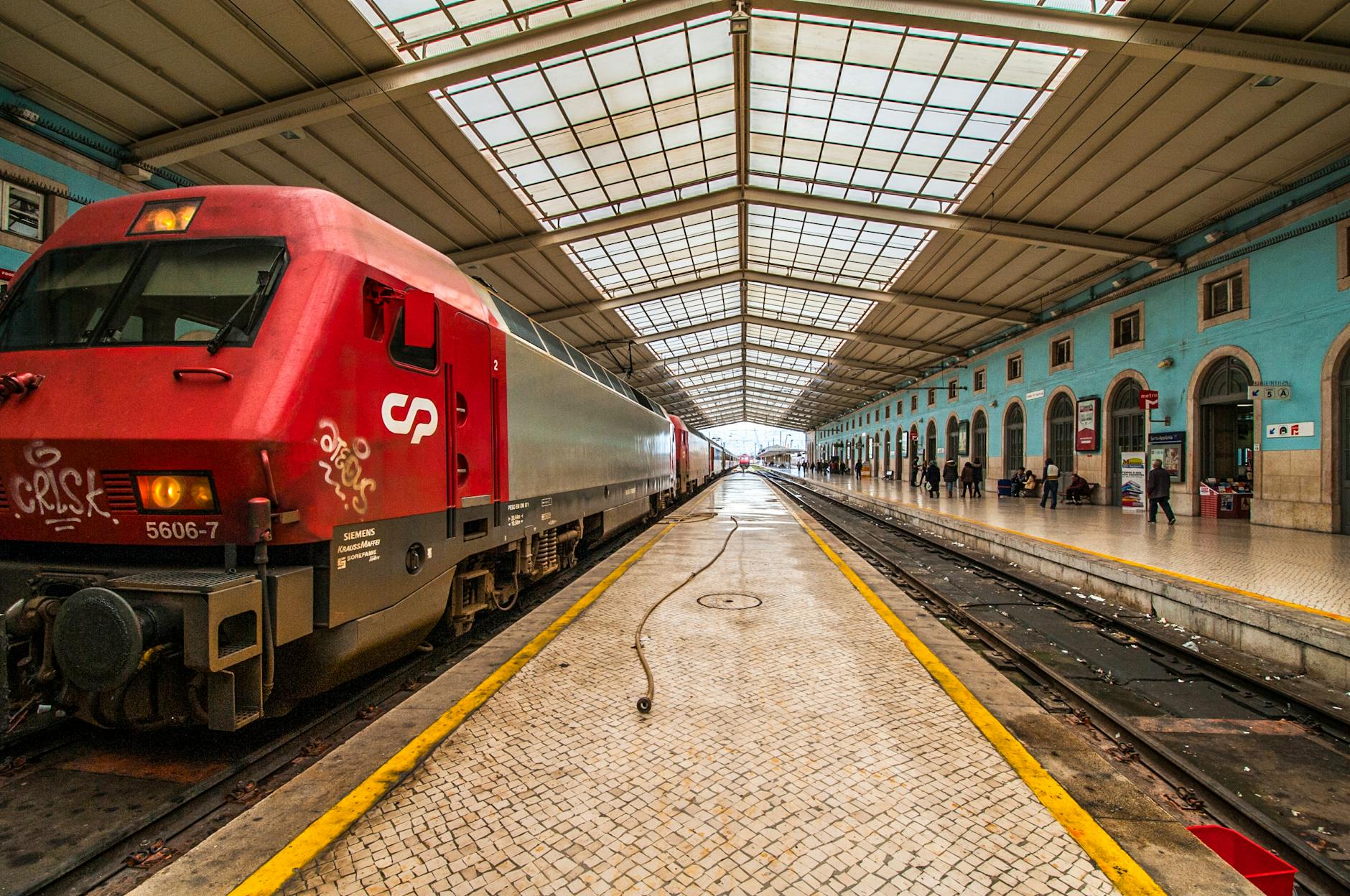
Cais do Sodré is Lisbon’s western train hub — right next to Pink Street (Rua Nova do Carvalho) and Time Out Market. The station handles the Cascais and Setúbal train lines. It also has a metro stop (green line) and the ferry terminal for crossing to the south bank. Everything is in the same building.
Getting to Cais do Sodré
- Metro: Green line “Cais do Sodré” stop — most direct from Baixa/Chiado
- Tram 15E: From Praça da Figueira or Praça do Comércio
- Walking from Baixa: 10 minutes along the waterfront
- Walking from Bairro Alto: 15 minutes downhill via Rua do Alecrim
Buying Tickets
- Get a Viva Viagem card (€0.50) from any ticket machine or counter — you’ll use this for metro too
- Load €2.30 (one-way) or €4.60 (return) for the Cascais line
- Tap the card at the turnstile validator before entering the platform
- Find the Cascais platform — look for the green line marked “Cascais”
Summer warning: Ticket machines at Cais do Sodré have long queues from May through October on weekends and sunny weekdays. Allow 15–20 extra minutes, or load your card the night before. Lisboa Card holders bypass this entirely — the train is included.
The Coastal Journey
The 40-minute ride is one of Lisbon’s best train experiences. Out of Cais do Sodré the train follows the Tagus River west — you’ll see the 25 de Abril Bridge and Cristo Rei across the water, then Belém Tower and the Monument to the Discoveries on the north bank. After Belém the train turns onto the Atlantic coast and the view opens up.
Seating strategy: Sit on the LEFT side going to Cascais (the sea side), RIGHT side returning to Lisbon. This is genuine — the right side going to Cascais faces residential streets for most of the journey.
The light changes depending on time of day. Morning trains have flat Atlantic light; afternoon trains get increasingly warm. The 18:00–19:00 return from Cascais has Tagus sunset light on the return leg that makes the trip feel like a different journey entirely.
Train Stops and Beaches Along the Line
You don’t have to ride all the way to Cascais. Every stop serves a beach or connects to one nearby. The ticket covers any stop on the line — get off wherever looks good:
| Station | Time from Lisbon | Beach / What’s There |
|---|---|---|
| Cais do Sodré | 0 min | Departure point |
| Belém | 10 min | No beach — monuments (Jerónimos, Tower) |
| Algés | 13 min | Small beach; mostly residential |
| Oeiras | 20 min | Praia de Santo Amaro de Oeiras — small, local crowd |
| Carcavelos | 27 min | Praia de Carcavelos — largest beach, surf, crowded in summer |
| São Pedro do Estoril | 30 min | Praia de São Pedro — calmer, less commercial |
| Estoril | 34 min | Praia do Tamariz — compact, near the Casino |
| Cascais | 40 min | Praia da Rainha, Praia da Conceição, Praia da Duquesa + town |
Which Beach Should You Choose?
- Carcavelos — Best overall for a beach day. Largest, cleanest, good surf conditions, board rentals available. Busy on summer weekends but wide enough to find space. Station right next to the beach.
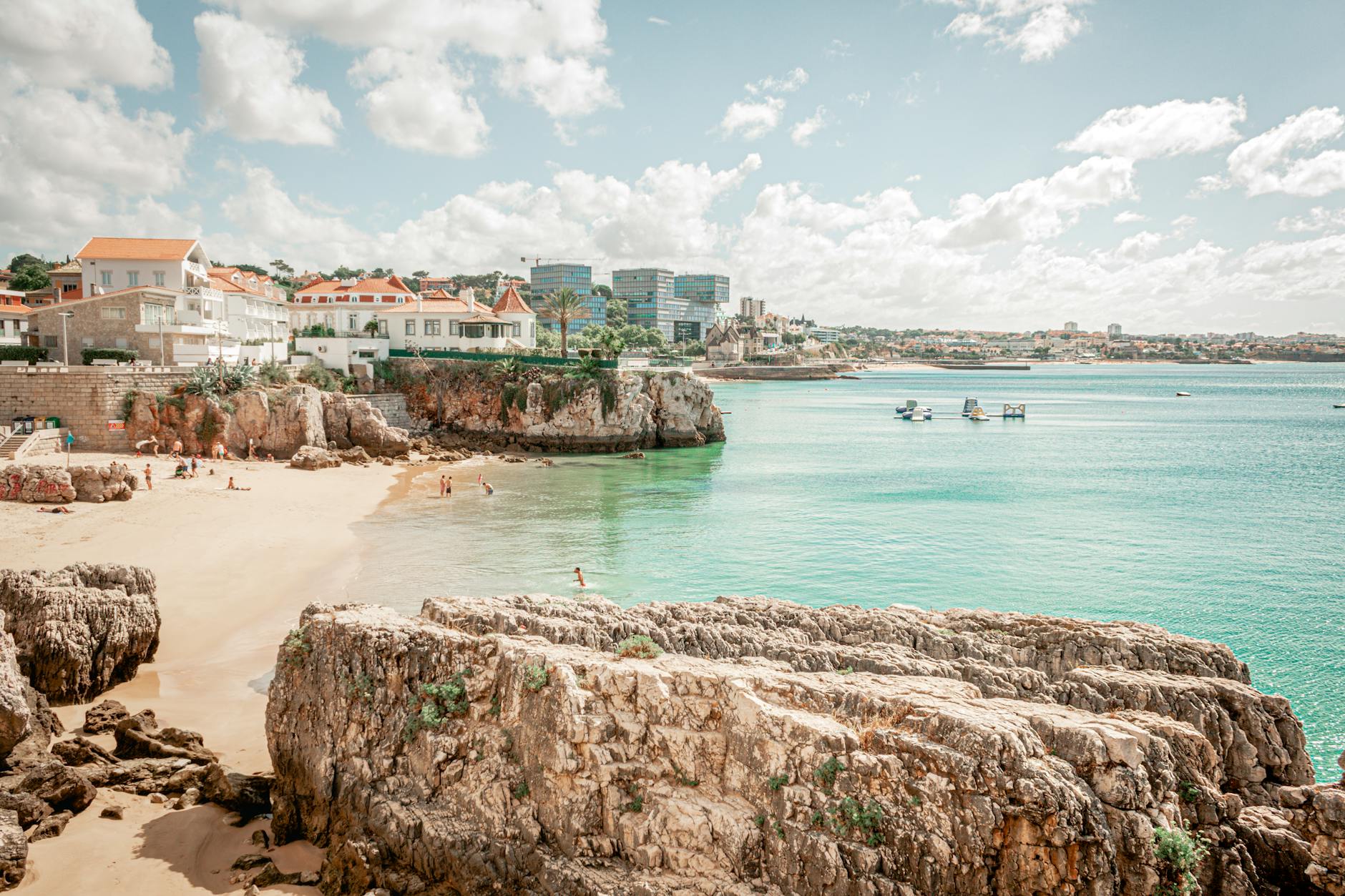
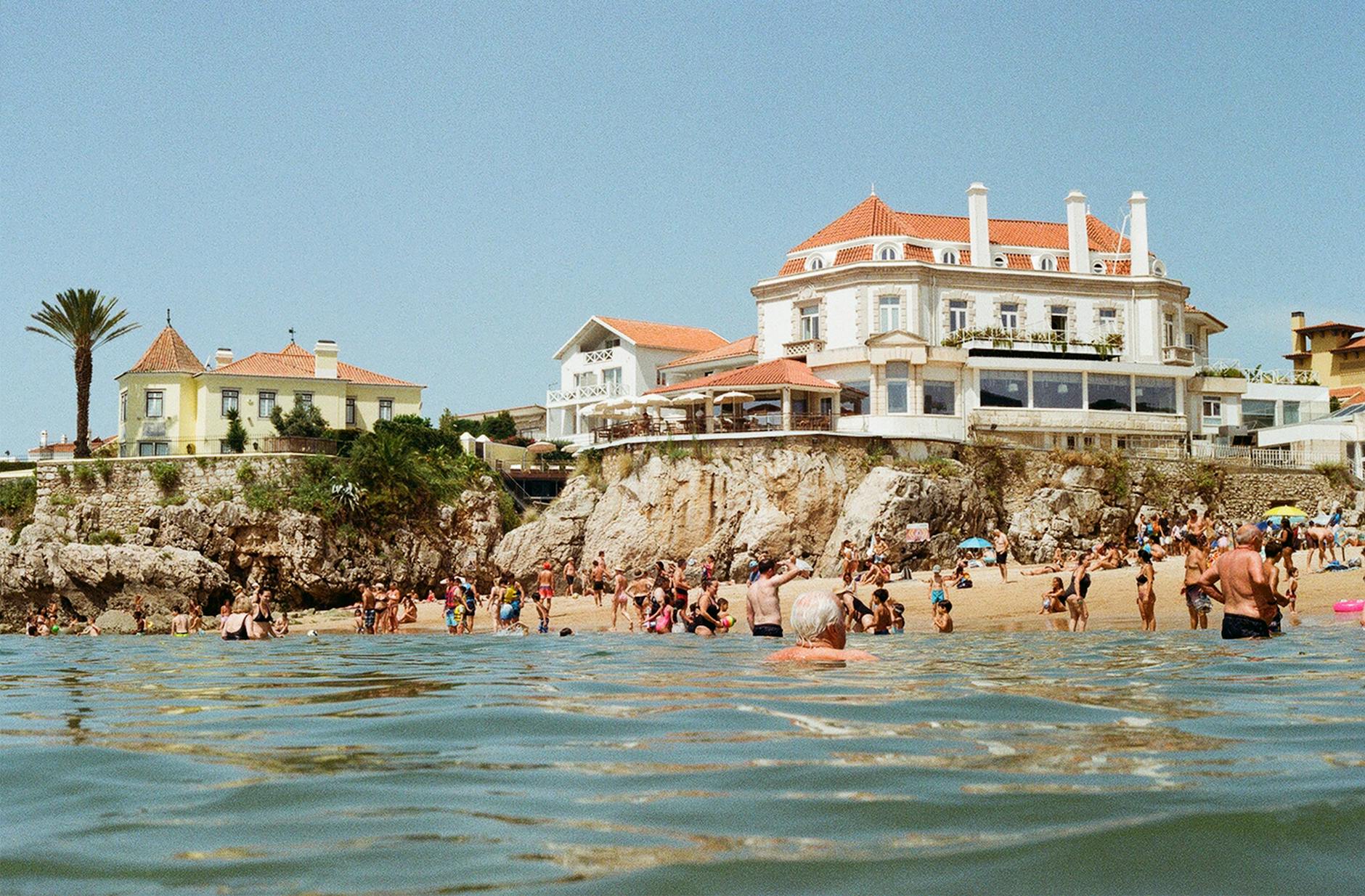
- Cascais beaches — Best if you want beach + a town to explore. Multiple small beaches within walking distance of the station. Praia da Rainha is smaller and more sheltered; Praia da Conceição is longer.
- Estoril (Praia do Tamariz) — Small but convenient. Good if you’re also going to the Casino or the Art Nouveau villas in the hills above.
- Praia do Guincho — 15 minutes by bus from Cascais. Wild, windswept, dramatic Atlantic with breaking waves. A surfer and windsurfer favourite. Not ideal for swimming or calm beach days.
What to Do in Cascais
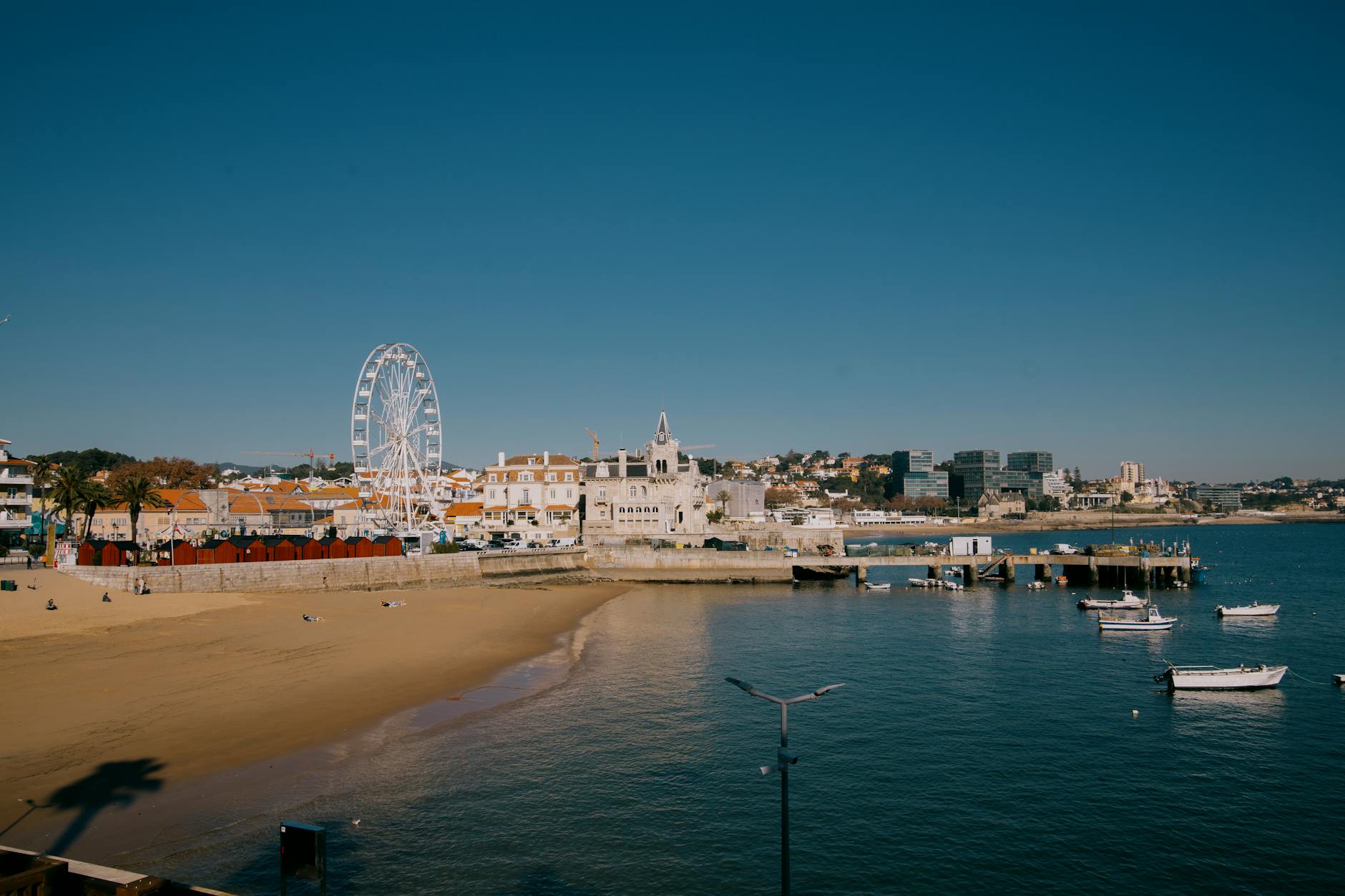
Cascais is more than a beach stop — it has a proper town centre with good restaurants, history, and half a dozen things worth doing beyond lying on sand.
Cascais Old Town
Walk Rua Frederico Arouca, the main pedestrian shopping street. White-painted houses with blue-tile façades, small restaurants and pastry shops, the occasional antique dealer. It takes about 20 minutes at a wander and gives you a sense of what the town was before it became a beach destination for Lisbon weekenders. The market on Rua Mercado sells local produce on weekday mornings.
Boca do Inferno (Mouth of Hell)
A 10-minute walk west of Cascais station along the coastal path. Rocky sea caves where Atlantic waves crash through narrow openings in the cliff — loudly, dramatically, with spray. Best at high tide; quieter at low tide. Free. Worth the detour even if you’ve already done a beach.
Cidadela de Cascais
16th-century fortress converted into contemporary art galleries and a design hotel. The outer walls are original; the interior is a thoughtful renovation. Free to enter the public areas and galleries.
Casa das Histórias Paula Rego
Museum dedicated to Paula Rego — one of Portugal’s most important painters, who died in 2022. The building itself (red concrete towers, Eduardo Souto de Moura design) is striking. The collection covers her career from the 1960s to her late work. Worth an hour.
Estoril Casino
One stop before Cascais. Europe’s largest casino when it opened in 1916; still one of its biggest. Rumoured to have been Ian Fleming’s inspiration for Casino Royale — he spent time here during WWII when Estoril was a nest of spies from every European side. Free entry to the building; the gambling tables and slots cost money. The James Bond connection is real history, not tourist mythology.
Where to Eat in Cascais
- Mar do Inferno — Famous fish restaurant near Boca do Inferno; reliable fresh catch, decent prices for quality
- Restaurante Beira Mar — Seafood with a fishing-village atmosphere; outdoor seating
- Casa de Pasto Estoril Mar — Traditional Portuguese tasca in Estoril; local crowd, simple food done right
- The Mix — Modern brunch and cocktails; good for a later start
- Hifen — Riverside fine dining if you want to push the boat out
Practical eating note: restaurants on the seafront near the Cascais beaches charge a premium. Walk two streets back and prices drop noticeably. The same grilled fish costs less inland.
See our Cascais day trip guide for the full Cascais coverage.
Recommended Beach Day Itinerary
8:45 — Walk to Cais do Sodré; buy or pre-load Viva Viagem card.
9:15 — Express train to Cascais (33 minutes; morning trains fastest).
9:50 — Coffee and pastel de nata in Cascais old town.
10:30 — Beach time at Praia da Rainha or Praia da Conceição.
13:00 — Lunch at Mar do Inferno or a seafront restaurant.
14:30 — Walk to Boca do Inferno (10 minutes).
15:30 — Cidadela galleries or Casa das Histórias Paula Rego.
17:00 — Train back from Cascais; consider stopping at Carcavelos for a late afternoon swim if the day is still good.
19:00 — Return to Lisbon — sunset light on the Tagus is exceptional on this leg.
Combining with Sintra
Cascais and Sintra are 30 minutes apart by car through the Sintra-Cascais Natural Park, which makes a combined day feasible by car. The circuit: Lisbon → Sintra (morning palaces) → drive through the park → Cabo da Roca (westernmost mainland Europe) → Cascais (late afternoon beach) → train back to Lisbon.
By public transport: Sintra to Cascais by bus (route 403) takes about 50 minutes and runs hourly. It’s doable — Sintra in the morning, Cascais in the afternoon — but leaves less time in each place than you’d want. If you’re using the Lisboa Card, the Sintra train from Rossio and the Cascais train from Cais do Sodré are both included.
See our guides on Lisbon metro, Lisbon trams, and getting from the airport for the full transport picture.
Train vs Other Options to Cascais
| Option | Cost | Time | Verdict |
|---|---|---|---|
| Train (CP) | €2.30 one-way | 33–40 min | Best — cheapest, most frequent, most scenic |
| Bus (Carris/Vimeca) | ~€3.50 | 50–60 min | Slower; useful if you need a specific stop inland |
| Uber/Bolt | €25–35 | 30–45 min (traffic dependent) | For luggage or groups; not for casual day trips |
| Driving | Fuel + €4–6 parking | 30 min without traffic | Useful for Sintra-Cascais circuit; parking in Cascais is difficult in summer |
| Tour bus | €60–85 | Varies | Overpriced; adds nothing the train doesn’t |
The train wins on every relevant measure for a standard day trip. Cheaper than everything, faster than the bus, more scenic than driving, and the wait is never more than 20 minutes.
Practical Tips
- Buy return in Lisbon — skip the Cascais queue; €4.60 round trip loaded onto your Viva Viagem card
- Sit on the LEFT going to Cascais for sea views; RIGHT on the return
- Summer weekends (June–September) the train is standing-room-only; go early or go midweek
- Pickpockets target distracted tourists on summer trains — keep bags in front
- Carry water — the beaches at Cascais have kiosks but queues for cold drinks are long in July–August
- Sunset trains at 18:00–19:00 are genuinely beautiful — the Tagus in late light is a different colour than midday
- Lisboa Card users: the full Cascais round trip is included — no need to load the Viva Viagem card separately
Lisbon to Cascais Train FAQ
How long is the Lisbon to Cascais train?
33 minutes on the express (mornings only, before 9:12); 40 minutes on regular stopping trains. All depart from Cais do Sodré.
How much is the Lisbon to Cascais train?
€2.30 one-way. €4.60 round trip. Plus €0.50 once for a Viva Viagem card if you don’t have one. Lisboa Card includes the full return journey.
Which station do I use in Lisbon?
Cais do Sodré Station — metro green line. Not Oriente, not Rossio, not Santa Apolónia. Cais do Sodré is the only station serving the Cascais line.
Is the Cascais train scenic?
Yes — coastal route along the Tagus and Atlantic. Sit left going to Cascais; right returning. The Belém stretch is the most immediately recognisable; the open Atlantic coast from Oeiras onward is more dramatic.
Can I use the Lisboa Card on this train?
Yes — round trip to Cascais (and all stops along the line) is included in the Lisboa Card. Worth considering if you’re doing multiple day trips.
What is the best beach stop on the Cascais line?
Carcavelos for the best standalone beach day (largest, surfable, wide). Cascais terminus if you want beach plus a town to explore. Both are different experiences — the stop you choose depends on what you want from the day.
What time should I take the train to Cascais?
On weekdays, 9:00–10:00 is comfortable. On weekends in summer, take the 8:00–9:00 trains to get ahead of the crowds — Cascais beaches fill by 11:00 on a hot Sunday.
Bottom Line
The Lisbon to Cascais train is one of the best value day trips anywhere in Europe. €4.60 return, 33–40 minutes, departures every 12–20 minutes, coastal views the whole way. Sit on the left side going west. Get off at Carcavelos for a proper beach day; ride to the terminus at Cascais for the town, the cliffs, and multiple smaller beaches. Take the 18:00–19:00 return train if the day allows — the light on the Tagus going back is one of those Lisbon moments that sticks.
The Cascais line is the simplest journey out of Lisbon, which makes it a good introduction to how the rest of the network behaves. The transportation pillar covers the tickets, the metro guide explains the fares and lines that connect to Cais do Sodré, the tram routes handle the last stretch at the city end, and the airport guide covers the one arrival most people get wrong.
Cascais: A Brief Background
Cascais was a fishing village until the 1870s, when King Luís I decided to use the Cidadela fortress as a summer residence. The royal court followed, the aristocracy followed the court, and within two decades Cascais had transformed into Portugal’s most fashionable summer destination. Villas and palaces were built in the hills; the casino opened at adjacent Estoril in 1916; and the railway line — already running since 1889 — made it accessible to the Lisbon middle class on weekends.
During WWII, Estoril and Cascais were a neutral enclave — the Estoril Casino was genuinely full of spies from every side, as Ian Fleming documented from personal experience. Portugal’s neutrality made the Estoril coast a hub for British, German, and American intelligence operations simultaneously. The James Bond Casino Royale inspiration isn’t apocryphal; it’s documented.
Today Cascais is Portugal’s most-visited seaside town — popular with Lisbon weekenders, expats who commute on the train, and tourists who make it a day trip from the capital. The old fishing town character survives in the whitewashed streets behind the marina, even as the seafront has become thoroughly cosmopolitan.
Planning Your Day: Beach vs Town Focus
Two different trips serve different purposes:
Pure beach day: Get off at Carcavelos (27 minutes). Large beach, surfboard rentals, beach bars, easy return. This is the optimal choice if you want maximum time in the water with minimum planning.
Beach + exploration day: Go to Cascais terminus (40 minutes). Walk to Praia da Rainha for a swim, then Boca do Inferno, then lunch, then Cidadela and Paula Rego museum, then early evening train back. This is the richer day but requires energy for walking.
Photography / coastal walk: Take the train to Cascais and walk the 30-minute coastal path west to Boca do Inferno. The Atlantic cliff views on this stretch are exceptional. Return the same way or continue another 20 minutes to Praia do Guincho (dramatic, windy, wild beach).
With children: Cascais terminus gives the most options — smaller, calmer beaches, plus the town’s playgrounds, ice cream shops, and the Cidadela area. Carcavelos has more open space but is more exposed. Either works; Cascais terminal is easier logistically for families with young children.