Getting Around Lisbon
Lisbon to Porto by Train: Times, Tickets and Advice
Alfa Pendular in 2h50 from €35.70, which station is which, how the discount fares work, and why flying and driving both lose to the train.
In this guide
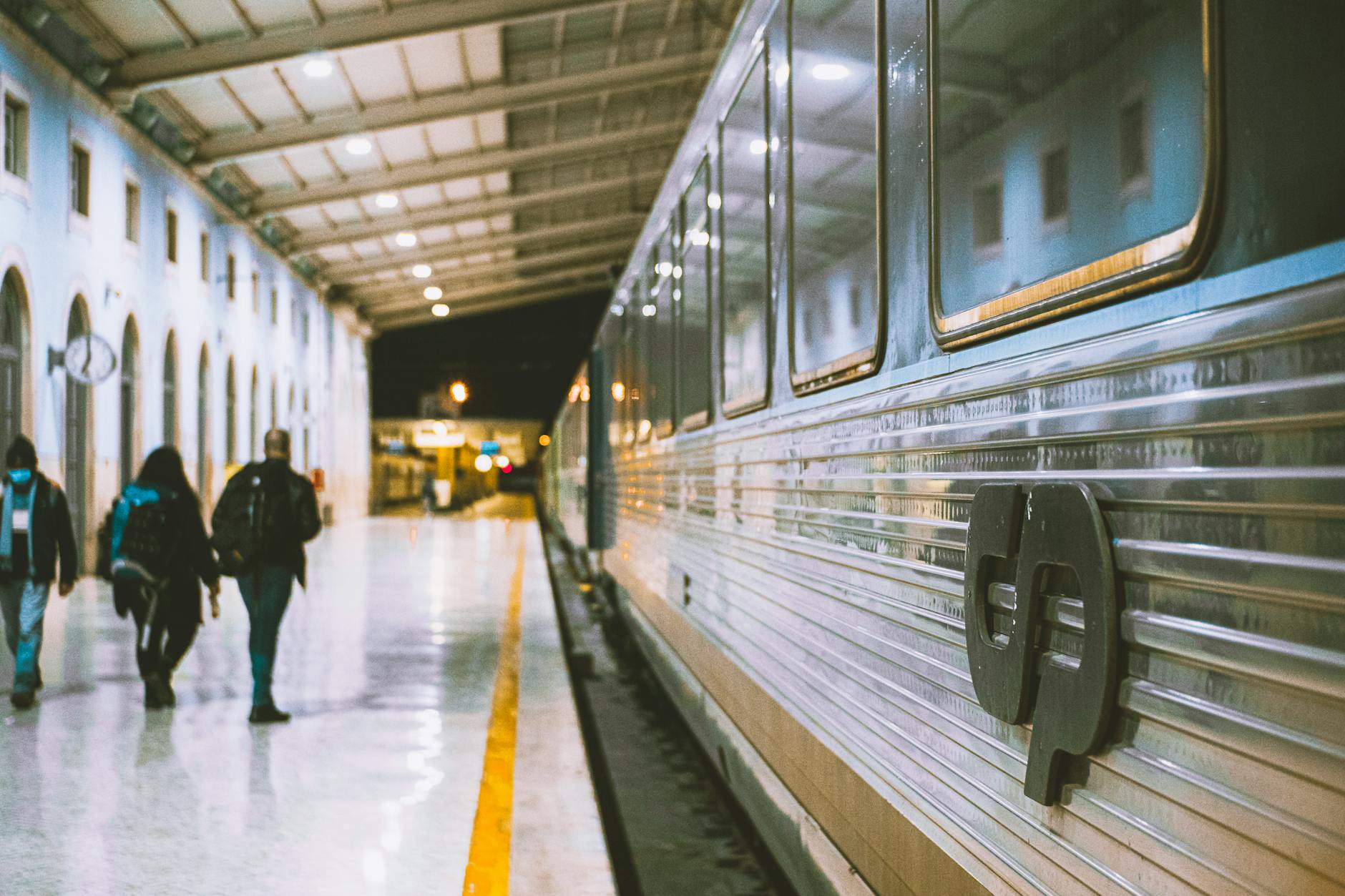
The Lisbon to Porto train is the single best long-distance journey in Portugal and, for almost everyone, the right way to make the trip. Two hours fifty minutes city centre to city centre on the fast Alfa Pendular, from €35.70 in second class and considerably less if you book early. Flying is theoretically quicker and is not, driving costs more and delivers you into a city where you do not want a car, and the bus saves a few euros in exchange for an extra hour. This guide covers the trains, the fares, the discounts, which station is which, and how to book without paying full price.
Thinking of doing it and coming back the same evening? Our Porto day trip guide works through the timings honestly — including what you will have to leave out.
Coimbra sits roughly halfway up this line, which makes it the obvious place to break the journey — our Coimbra guide covers the trains, the Coimbra-B shuttle and how to get into the Joanina Library.
The short version
- Alfa Pendular: 2 hours 50 minutes. €35.70 in Turística, €49.90 in Conforto.
- Intercidades: 3 hours 15 minutes. About €28.05 second class, €41.50 first.
- Frequency: roughly 14 departures a day in each direction.
- Stations: Lisboa Santa Apolónia, also calling at Lisboa Oriente → Porto Campanhã.
- Booking: at cp.pt. Advance Promo fares run up to 65% off and sell out first.
- Reservations are compulsory on both services — you cannot just turn up and board.
Alfa Pendular or Intercidades?
Alfa Pendular
Portugal’s flagship service, a tilting train running at up to 220 km/h with 301 seats across two classes. It is the fast option and it is genuinely comfortable: power sockets at every seat in both classes, free wi-fi, reclining seats, and a cafeteria and bar in carriage 3. Wheelchair lifts and adapted spaces are provided.
- Turística (standard) at €35.70 — perfectly good, four seats across.
- Conforto (first) at €49.90 — three across, more legroom, a light meal and drink service on some departures.
Honest verdict on the upgrade: for a two-hour-fifty journey, Turística is entirely sufficient and the €14 difference is better spent on lunch in Porto. Conforto earns its money if you are working, travelling at a peak time when standard fills up, or if the cheap Conforto Promo fare happens to undercut the standard walk-up price — which it sometimes does.
Intercidades
The slower, cheaper intercity service: 3 hours 15 minutes, about €28.05 in second class and €41.50 in first. It makes more stops, which is the point of it — if you want Coimbra, Aveiro or Santarém, this is the train that serves them properly.
For a straight Lisbon to Porto run, the twenty-five minutes you save on the Alfa is worth roughly €7.65, and most people will take the faster train. Take the Intercidades if the timing suits you better, if the Alfa is sold out, or if you are on a tight budget and there is no cheap Promo fare on the fast service.
Fares and how not to overpay
The headline prices above are the flexible walk-up fares. Almost nobody needs to pay them.
Promo fares
CP releases discounted advance-purchase tickets of up to 65% off, in limited numbers, on most departures. They are the single biggest saving available and they go first — book as soon as your dates are fixed rather than waiting. CP has periodically run campaigns pushing this further still, with Lisbon–Porto tickets in Turística advertised at €7.50 with a minimum ten days’ notice.
The trade-off is flexibility: Promo tickets are tied to a specific train and changing them is restricted or impossible. If your plans might move, pay the higher fare.
The other discounts
- Youth: 25% off up to the age of 25.
- Children: half price.
- Seniors: half price.
- TrainSharing: up to 50% off for groups of three or four travelling together — genuinely useful and frequently overlooked.
- Reduced mobility: 75% discount.
Check current eligibility rules on CP’s own site when you book, and carry ID if you are claiming an age-based discount, because it is checked on board.
Where to book
Book direct at cp.pt, which sells in English and issues a mobile ticket. Third-party rail resellers charge a booking fee for the same seat on the same train and add nothing. Station ticket offices and machines work fine too, but the cheap Promo allocations are an online thing — buying at the counter on the day means paying full price.
The stations
Lisbon end
Santa Apolónia is the terminus, on the riverfront just east of Alfama, with its own metro station on the Blue Line. It is a handsome nineteenth-century station and a short taxi or two metro stops from Baixa.
Lisboa Oriente in Parque das Nações is the second stop and, for a lot of travellers, the better one. It sits on the Red Line — the same line that runs to the airport — has a large bus interchange underneath it, and Calatrava’s canopy over the platforms is worth two minutes of looking at. If you are staying east of the centre or connecting from a flight, board at Oriente.
Both are covered in our transport guide.
Porto end
Long-distance trains terminate at Porto Campanhã, not at the famous tiled São Bento station in the centre. This surprises people every single time.
It is not a problem. Campanhã is on the Porto metro, and there is also a frequent local shuttle train that runs to São Bento in about five minutes — included on some tickets, and cheap if not. Either way you are in the middle of Porto within a quarter of an hour of stepping off.
What the journey is like
Comfortable, quiet and mildly disappointing as scenery, which is worth saying plainly. The northern main line runs inland through the Ribatejo and the flat farmland of central Portugal — pleasant enough, occasionally pretty around Coimbra, but this is not the Douro line and you should not board expecting drama. The good views are the last few minutes into Porto.
Practical notes:
- Luggage goes on overhead racks and in end-of-carriage stacks. No weight limits, no check-in, no fuss — the single biggest advantage over flying.
- Wi-fi is free and adequate for email, patchy for anything heavier.
- Power sockets at every seat, both classes.
- Food: the carriage 3 bar does coffee, sandwiches and drinks at reasonable prices. Bringing your own is fine and common.
- Seats: assigned when you book. Choose a window if the site lets you; the four-across standard layout is comfortable either way.
Train versus the alternatives
Flying
TAP flies Lisbon–Porto in about 55 minutes, which looks decisive and is not. Add getting to the airport, checking in, security, boarding, the flight, disembarking and the transfer into Porto, and the door-to-door time is comfortably over three hours — worse than the train — with a higher fare and a much higher chance of disruption. Our Lisbon Airport guide covers why the airport end is the slow part.
Fly only if you are connecting onward from Porto on the same ticket.
Bus
Rede Expressos and FlixBus run frequent coaches from Sete Rios in about three and a half hours, usually undercutting the walk-up train fare. They are comfortable and perfectly reasonable.
The honest comparison: if you book a Promo train fare in advance, the train is faster, more comfortable and often cheaper, and the bus loses on every measure. The bus wins if you are booking last-minute and the cheap train tickets are gone.
Driving
The A1 motorway does it in around three hours plus tolls and fuel, and then you have a car in Porto, a city of narrow streets and expensive parking where you will not use it. Hire a car for the Douro valley or the interior, not for the Lisbon–Porto leg. Our car hire guide makes the case.
Travelling with luggage, children or a bike
Luggage is the quiet argument for the train. There is no check-in, no weight allowance, no liquids rule and nothing to collect at the other end — you carry your case onto the platform and put it on a rack. For anyone moving between cities mid-holiday with a full suitcase, that alone is worth more than the twenty minutes an aeroplane theoretically saves.
Children travel at half fare, and a nearly-three-hour train with a bar carriage, a table and a window is a far easier proposition than an airport with a toddler. Reserve seats together when you book rather than hoping; the system allocates them automatically otherwise and a full train will scatter you. Our family itinerary covers the Lisbon end.
Bicycles can be carried on Portuguese long-distance trains but the rules and the space available vary by service, so check when booking rather than turning up with one. Folding bikes are much simpler.
Accessibility: the Alfa Pendular has wheelchair lifts and adapted spaces, and CP offers a 75% reduced-mobility fare. Assistance should be arranged with CP in advance rather than requested on the platform — see our accessibility guide for how the Lisbon stations themselves handle it.
Day trip or overnight?
A Porto day trip from Lisbon is possible and we do not recommend it.
The maths: leave on the 07:00-ish Alfa, arrive just before 10:00, leave Porto at 19:00 to be back by 22:00. That is nine hours in the city, minus the Campanhã transfer at each end, for about €70 in walk-up fares and a very long day. You will see the Ribeira, the bridge and one or two sights, and you will not have time for a port lodge tasting or the Douro.
Two nights is the right answer. Porto is a genuinely different city — smaller, steeper, more industrial in its bones, with the port houses across the river in Gaia and the Douro valley an hour upstream. Our Lisbon versus Porto comparison sets out how the two differ and how to divide your time.
If your trip is a week or more, the natural shape is four or five nights in Lisbon and two or three in Porto, with the train between them — see our one week in Lisbon and itinerary guides.
Stopping on the way
The Intercidades makes the intermediate stops that turn a transfer into a trip:
- Coimbra — the old university city, roughly halfway, with one of the most extraordinary baroque libraries in Europe. The obvious break of journey if you are making one.
- Aveiro — canals, painted boats and art nouveau, about forty minutes short of Porto.
- Santarém — Ribatejo hill town, closer to Lisbon and a quieter proposition.
Note that a stopover means two separate tickets rather than a break-of-journey on one, so price it before committing. If you want the shorter versions of this idea, our day trips guide covers what is reachable and back in a day, including Óbidos and Fátima.
What to do at each end
Before you leave Lisbon
Santa Apolónia sits at the bottom of Alfama, which makes the last morning easy to fill: the National Pantheon and the Feira da Ladra flea market on a Tuesday or Saturday are both a few minutes uphill, and there are cafés along the riverfront if you would rather sit. If you are boarding at Oriente instead, the Oceanário and the cable car are on the doorstep — see our Parque das Nações guide.
Arriving in Porto
Coming out of Campanhã, take the shuttle to São Bento and walk into the station hall before doing anything else — the twenty thousand blue tiles are the introduction Porto deserves. From there it is downhill through the old town to the Ribeira and across the Dom Luís I bridge to the port lodges in Vila Nova de Gaia, which is the walk everyone does on their first afternoon and rightly so.
Porto is steeper than Lisbon, which is a genuine surprise to people who assumed Lisbon held that title. The upper and lower decks of the bridge exist for a reason, and the funicular up from the riverbank is not a tourist novelty. Wear the same shoes you have been wearing here.
Coming back
Evening departures from Campanhã are busy with people doing exactly what you are doing, and the last useful train back to Lisbon leaves earlier than you might expect for a late dinner. Check the return timetable when you book the outbound rather than assuming there is something after 21:00.
Practical tips
- Book early. This is the whole game. Promo fares released months ahead can be a third of the walk-up price, and there is no reason to pay €35.70 if €15 was available in March.
- Arrive fifteen minutes before departure. There is no security and no check-in, but Santa Apolónia and Oriente both need a few minutes to cross, and the trains leave on time.
- Board at Oriente if you are coming from the airport or staying in the east — it saves crossing the city twice.
- Carry ID if you booked a youth, senior or reduced-mobility fare.
- Mobile tickets are fine; the guard scans your phone. Screenshot it in case the wi-fi is down.
- Travelling on to Braga or Guimarães? Some Alfa services continue north beyond Porto — check before booking a separate connection.
- Luggage storage: if your Porto train is in the evening and you have checked out, leave the bags in Lisbon and collect on the way — our luggage storage guide has the options near Santa Apolónia.
A note on the future
Portugal has committed to a new high-speed line between Lisbon and Porto that would cut the journey to well under half its current length. It is a project of the 2030s, and construction timelines on infrastructure of this scale move. Plan your trip around the railway that exists — which, at under three hours and under €36, is already a good one.
Frequently asked questions
How long does the Lisbon to Porto train take?
2 hours 50 minutes on the Alfa Pendular and 3 hours 15 minutes on the slower Intercidades, city centre to city centre.
How much is the train from Lisbon to Porto?
The flexible Alfa Pendular fare is €35.70 in Turística and €49.90 in Conforto; Intercidades is about €28.05 second class and €41.50 first. Advance Promo fares cut up to 65% off, and CP has run campaigns as low as €7.50.
Which station in Lisbon do Porto trains leave from?
Santa Apolónia, on the Blue Line metro, with a second stop at Lisboa Oriente in Parque das Nações on the Red Line. Board at whichever is closer to where you are staying.
Which station do trains arrive at in Porto?
Porto Campanhã, not the central São Bento. Campanhã is on the Porto metro and a frequent five-minute shuttle train links it to São Bento, so you are in the centre quickly either way.
Do I need to book the Lisbon to Porto train in advance?
Reservations are compulsory on both Alfa Pendular and Intercidades, so you cannot simply turn up and board. Booking early also unlocks the discounted Promo fares, which sell out first.
Is the train better than flying from Lisbon to Porto?
For almost everyone, yes. The flight is under an hour but airport transfers, check-in and security push door-to-door time past three hours, at a higher price and with more that can go wrong. Fly only to connect onwards.
Is Alfa Pendular first class worth it?
Not usually. Turística has power sockets, wi-fi and reclining seats, and the journey is under three hours. Conforto makes sense if you are working, if standard is sold out, or if a Promo fare in first undercuts the walk-up fare in standard.
Can you do Porto as a day trip from Lisbon?
You can, but it gives you about nine hours in the city for a long day and a high walk-up fare. Two nights is much better value and lets you cross the river to the port lodges.
Is there food on the Lisbon to Porto train?
Yes — a cafeteria and bar in carriage 3 serving coffee, snacks and drinks at reasonable prices. Bringing your own food and drink is normal and allowed.
Bottom Line
Take the Alfa Pendular. Two hours fifty, Santa Apolónia or Oriente to Porto Campanhã, €35.70 walk-up in a comfortable second class with a socket at your seat and a bar in carriage 3 — and far less if you book a Promo fare the moment your dates are settled. Do not fly it, do not drive it, and do not try to do Porto and back in a day: give it two nights and let the train do the work. Everything else about moving around this part of Portugal is in our Lisbon transportation guide, and if you are still deciding between the two cities, our Lisbon versus Porto comparison will settle it.