Day Trips from Lisbon
Fátima Day Trip: Visiting Portugal’s Most Sacred Pilgrimage Site 2026
Complete guide to visiting Fátima from Lisbon—the sanctuary, apparition history, Mass schedule, transport options, and combining with Óbidos.

In this guide
- Transport Comparison: Getting to Fátima from Lisbon
- The Story: Why Fátima Matters
- Getting to Fátima from Lisbon
- The Sanctuary of Fátima: What to See
- Mass Schedule
- Candlelit Procession (Procissão das Velas)
- Major Pilgrimage Days
- Combining Fátima with Other Sites
- Recommended Itinerary
- Practical Tips
- For Non-Religious Visitors
- FAQ: Fátima Day Trip from Lisbon
- Bottom Line
A Fátima day trip from Lisbon takes you to one of the world’s most significant Catholic pilgrimage sites — 120 km north through the Ribatejo hills, to the Sanctuary of Our Lady of Fátima, where three shepherd children reportedly witnessed apparitions of the Virgin Mary in 1917. Four million pilgrims visit annually. The Basilica complex, the Chapel of the Apparitions, and the candlelit evening processions make for a deeply moving experience whether you’re Catholic or simply curious about the kind of place that draws half a million people on a single day.
Half an hour further on is a Templar castle that became a monument to the Discoveries: see our Tomar day trip guide.
This guide covers everything: all transport options with current costs, the Mass schedule, what to see inside the Sanctuary, day-trip combinations, and how to time your visit. Updated for 2026.
Transport Comparison: Getting to Fátima from Lisbon
| Option | Journey Time | Cost | Best For |
|---|---|---|---|
| Bus (Rede Expressos) | ~1 hr 30 min | ~€15 single / ~€28–30 return | Most visitors — easiest, direct |
| Car (A1 highway) | ~1 hr 10 min | ~€8.40 tolls each way + fuel | Combining with Batalha, Óbidos, Nazaré |
| Train + Taxi | ~2 hrs total | €10–12 train + ~€20 taxi | Avoid — slower and pricier than bus |
| Organized Tour | Full day | €60–€110 per person | Solo travelers, first-timers, combinations |
The Story: Why Fátima Matters
On May 13, 1917, three shepherd children — Lúcia dos Santos (10), Francisco Marto (9), and Jacinta Marto (7) — were tending sheep near the village of Fátima when they reported a vision of “a lady more brilliant than the sun” who instructed them to return on the 13th of each month. The apparitions continued through October 13, 1917, when an estimated 70,000 people witnessed what became known as the “Miracle of the Sun” — the sun appearing to spin and dance in the sky.
The Catholic Church officially declared the apparitions worthy of belief in 1930. Pope John Paul II credited Our Lady of Fátima with surviving the 1981 assassination attempt on his life; the bullet that struck him is now embedded in the crown of the Virgin’s statue at the Sanctuary. Pope Francis canonized Francisco and Jacinta in 2017.
Today the Sanctuary draws four million annual visitors, placing it among the world’s most-visited Catholic pilgrimage sites alongside Lourdes and Guadalupe. If you’ve wondered what collective faith looks like at scale, this is the place.
Getting to Fátima from Lisbon
By Bus (Recommended for Most)
Rede Expressos runs multiple daily buses from Lisbon’s Sete Rios terminal, reachable on the metro Yellow Line at Jardim Zoológico (see our Lisbon transport guide). FlixBus also serves the route on certain days. The bus drops you at Fátima’s terminal, a 5-minute walk from the Sanctuary gates. No car-hire, no toll stress, no parking — just buy your ticket and go.
- Travel time: ~1 hour 30 minutes
- Cost: ~€15 single; ~€28–30 round-trip
- Booking: Check timetables and tickets at cp.pt or direct at Sete Rios on the day (early departures fill on pilgrimage days)
- Getting to Sete Rios: Metro blue line to “Jardim Zoológico”
- Arrival: Fátima bus terminal, 5-min walk to Sanctuary
Book ahead if travelling around the 13th of any month May–October — those buses fill fast. Check current schedules at the official Sanctuary website: fatima.pt.
By Car
Drive the A1 motorway north from Lisbon, exit 89 (Fátima). Distance: 120 km. Journey: roughly 1 hour 10 minutes in normal traffic. Tolls run approximately €8.40 each way. Parking is free at the Sanctuary.
The car option makes most sense if you’re combining Fátima with Batalha Monastery (15 km away), Alcobaça (35 km), or Nazaré on the coast (50 km). Those combinations work seamlessly by car and would require separate day trips by bus.
By Train
There’s no direct train to Fátima. The closest station is Caxarias (about 1.5 hours from Lisbon’s Santa Apolónia on the intercity line), from which you’d need a 30-minute taxi to the Sanctuary. Total cost and journey time exceeds the bus option with more inconvenience. Skip this unless you have a specific reason to avoid buses.
By Organized Tour
€60–€110 per person. Most include round-trip transport from central Lisbon, a guide, and combination stops — typically Fátima plus Óbidos, or Fátima plus Batalha and Alcobaça. A good guide genuinely adds to the Fátima experience: the history of the apparitions is richer explained at the site. Book through reputable Lisbon operators with verified reviews.
The Sanctuary of Fátima: What to See
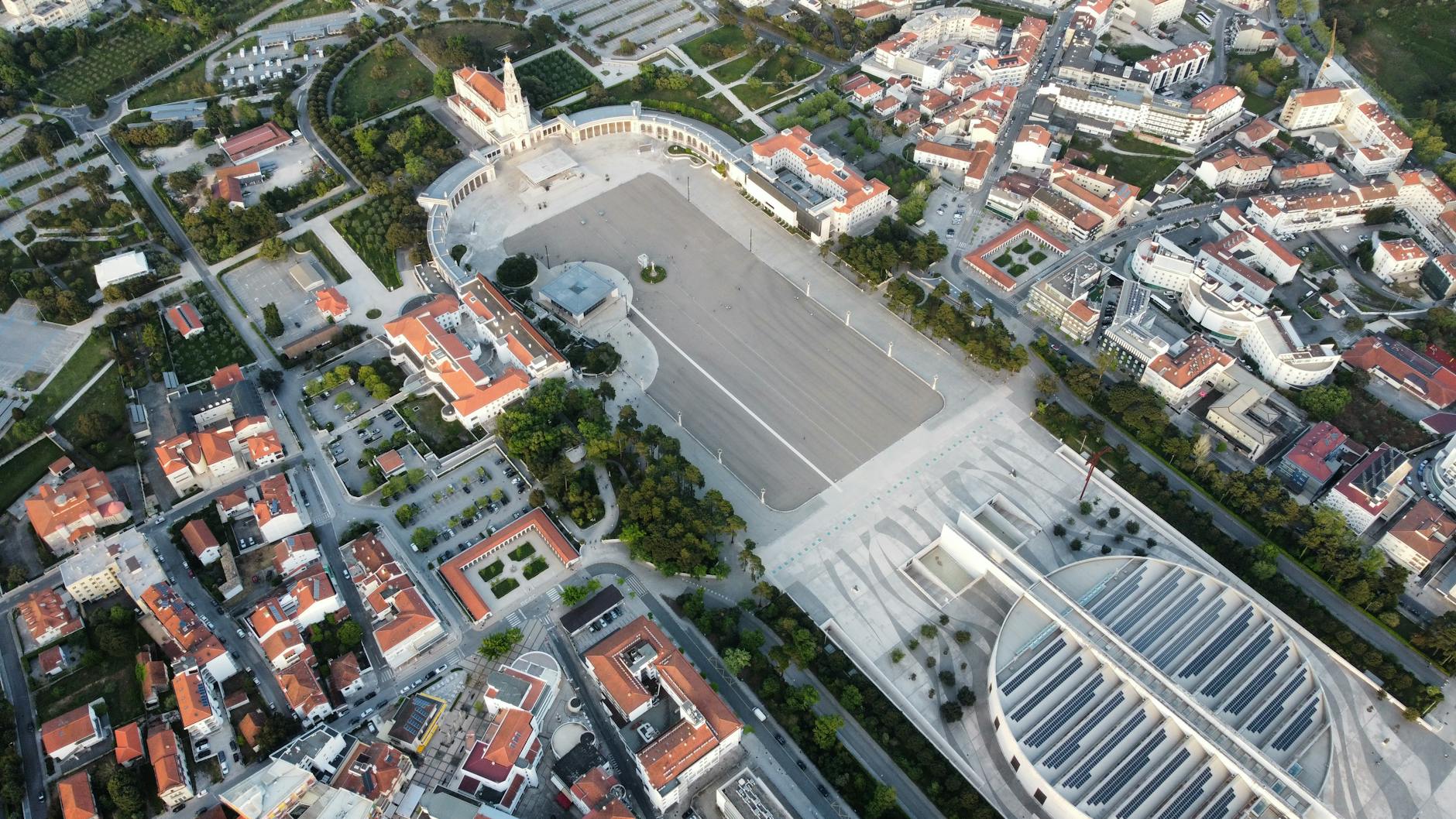
Cova da Iria (the Main Plaza)
The vast open esplanade where the apparitions are believed to have occurred. Larger than St Peter’s Square in Rome. On quiet weekdays it feels contemplatively still; on May 13 or October 13 it holds 500,000+ pilgrims. Free to enter, open at all hours.
Chapel of the Apparitions (Capelinha das Aparições)
Marks the exact spot of the May 13, 1917 apparition. The original small chapel built in 1919 was destroyed by anti-Catholic dynamite in 1922 and rebuilt. The image of Our Lady of Fátima inside is among Portuguese Catholicism’s most venerated objects. Open-air; pilgrims attend services here throughout the day.
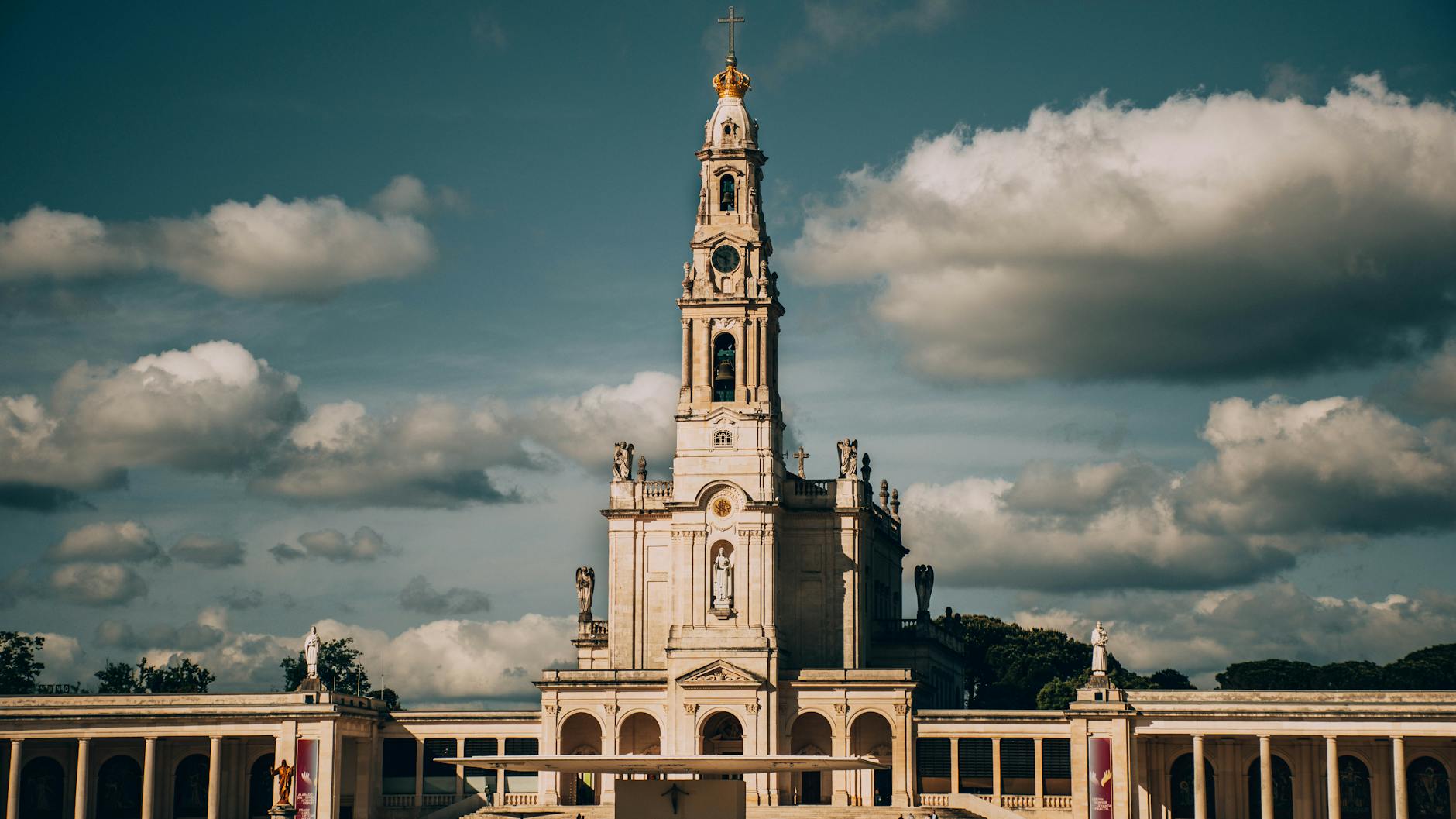
Basilica of Our Lady of the Rosary
The 1928–1953 neoclassical basilica at the northern end of the plaza. Standing 65 metres high. Houses the tombs of all three shepherd seers: Francisco and Jacinta Marto (canonized 2017) and Lúcia dos Santos (died 2005). Free entry; open 7 AM – 7 PM.
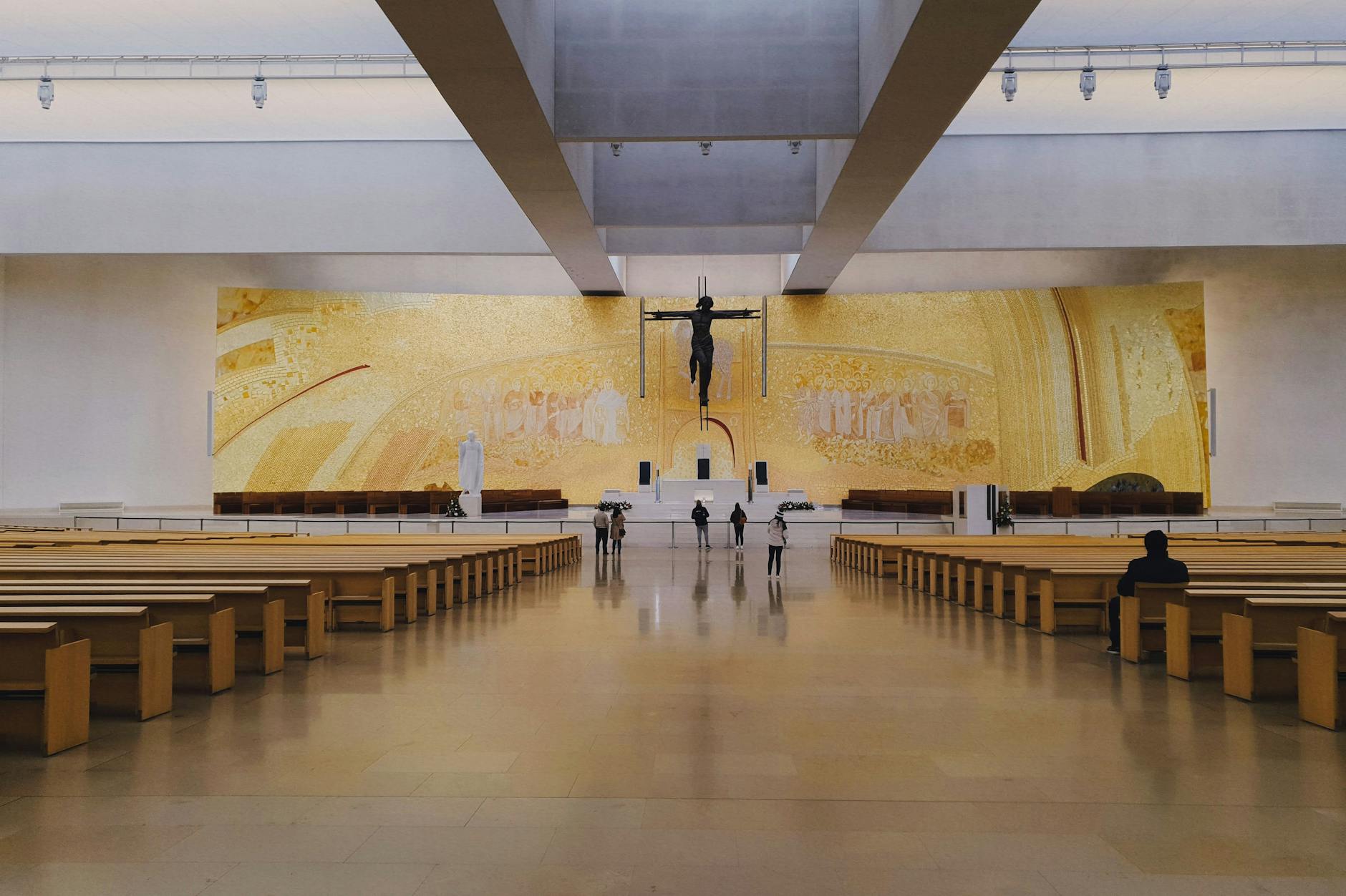
Basilica of the Holy Trinity
The modern (2007) basilica at the southern end of the plaza, designed by Greek architect Alexandros Tombazis. One of the world’s largest Catholic churches with 8,633 seats. The minimalist architecture makes a striking contrast to the neoclassical Rosary Basilica opposite.
Museum of the Sanctuary
Houses sacred relics, votive offerings left by pilgrims over decades, and historical photographs. The bullet that struck Pope John Paul II in 1981 is on display — now embedded in the crown of the Virgin’s statue. Entry €4.
Aljustrel (Shepherds’ Village)
Just 2 km south of the Sanctuary, the village where the three children lived. Their family homes are preserved as small museums. The Loca do Anjo — where an angel reportedly appeared to them before the Marian apparitions — is nearby. A worthwhile 45-minute detour if you want the full context. Free or small entry fee.
Mass Schedule
The Sanctuary holds services daily. The international Mass at 11 AM is the most accessible for visitors — celebrated in multiple languages against the extraordinary backdrop of the Chapel plaza. Check the official Sanctuary timetable at fatima.pt for current times, which vary by season.
- ~11:00 AM — International Mass (multiple languages)
- ~5:00–6:30 PM — Rosary and evening services
- ~9:30 PM (May–Oct) — Candlelit procession (Procissão das Velas)
- 13th of each month — Special Masses commemorating the apparitions
Candlelit Procession (Procissão das Velas)
One of the most moving things you can witness at Fátima, regardless of faith. Held most evenings May through October, pilgrims walk in a slow procession across the plaza carrying white candles. The ceremony typically begins around 9:30 PM. The scale and the silence together create something genuinely affecting.
Most spectacular on the 12th of each month (eve of the apparition anniversary). Free. Candles are distributed by the Sanctuary or available for a small cost.
Major Pilgrimage Days
| Date | Event | Expected Crowds |
|---|---|---|
| May 13 | First apparition anniversary | 500,000+ |
| June 13 | Second apparition anniversary | Large |
| July 13 | Third apparition anniversary | Large |
| August 19 | August apparition (originally Aug 13) | Moderate–large |
| September 13 | Fifth apparition anniversary | Large |
| October 13 | Final apparition + Miracle of the Sun | 500,000+ |
May 13 and October 13 are extraordinary for the pilgrimage atmosphere — and genuinely logistically challenging. Book bus tickets weeks ahead. If you prefer a quieter visit, choose a mid-week day outside the major dates.
Combining Fátima with Other Sites
Fátima sits in a part of central Portugal dense with UNESCO-listed monuments. These combinations work best by car or organized tour; by bus each would need a separate day.
Fátima + Batalha Monastery (15 km away)
The Monastery of Batalha is one of Portugal’s architectural masterpieces — a Gothic-Manueline complex built to commemorate the 1385 Battle of Aljubarrota. The unfinished chapels and royal cloister are exceptional. Add 1.5–2 hours. UNESCO World Heritage since 1983.
Fátima + Alcobaça Monastery (35 km away)
The Cistercian monastery at Alcobaça houses the elaborate Gothic tombs of King Pedro I and Inês de Castro — Portugal’s most famous tragic love story. Also UNESCO-listed. Another 1.5 hours.
Fátima + Óbidos (45 min away)
The medieval walled town — whitewashed houses, ginja served in chocolate cups, walls you can walk end to end. Often combined with Fátima in single-day tours. See our Óbidos guide.
Fátima + Nazaré (50 min away)
The Atlantic coast town famous for monster waves — surfers break 30-metre swells at Praia do Norte in winter. A striking contrast to the solemnity of Fátima. Add half a day.
Recommended Itinerary
Half Day (5 hours from Lisbon)
- 8:00 AM — Bus from Sete Rios
- 9:30 AM — Arrive Fátima; visit Sanctuary, Chapel of the Apparitions, Rosary Basilica
- 11:00 AM — Attend International Mass
- 12:30 PM — Walk to Aljustrel village
- 2:00 PM — Lunch in Fátima
- 3:30 PM — Bus back to Lisbon
- 5:00 PM — Arrive Lisbon
Full Day — Three UNESCO Monasteries Circuit (by Car)
Fátima morning (2 hours), drive to Alcobaça for lunch and the monastery (1.5 hours), then Batalha in the afternoon (1.5 hours). Return to Lisbon by 7 PM. Total driving roughly 3 hours spread over the day. This is one of central Portugal’s great day circuits.
Practical Tips
- Dress code: Cover shoulders and knees inside the Basilicas. A lightweight scarf does the job in summer.
- Photography: Fine in the plaza; restricted during active services inside churches.
- Sun and heat: The plaza has minimal shade. Bring water and sunscreen for summer visits.
- Cash: Useful for candle offerings (€0.50–€5), the Museum (€4), and smaller food stalls.
- Timing: Early morning is quieter, cooler, more contemplative. Midday is the busiest for day-trippers from Lisbon.
- Food: Restaurants near the Sanctuary are mid-range and tourist-oriented. Adequate, not memorable — eat in Lisbon before or after if you care about the meal.
For Non-Religious Visitors
Fátima is meaningful even without Catholic faith. The sheer scale of the Sanctuary — a plaza capable of holding 300,000 people — the documented historical record of the 1917 events, and the visible faith of millions of pilgrims create an atmosphere that transcends tourism. The candlelight procession is moving regardless of belief.
That said, this is an active, deeply sacred site. Don’t take selfies during Mass, don’t picnic in the plaza, dress modestly inside the Basilicas. The respectful visitor gets far more from the experience.
FAQ: Fátima Day Trip from Lisbon
How do I get to Fátima from Lisbon?
Bus is easiest — Rede Expressos from Sete Rios, about 1 hour 30 minutes, roughly €15 single. Car (A1, exit 89) is faster but adds toll costs. Organized tours from €60 include transport and a guide. Train via Caxarias requires a taxi transfer and is slower than the bus.
How long does a Fátima day trip take?
4–6 hours on the ground, plus around 3 hours round-trip travel by bus. A half-day is enough for the Sanctuary, Mass, and Aljustrel. A full day allows combination stops at Batalha, Alcobaça, or Óbidos.
What are the apparitions of Fátima?
Three shepherd children reported visions of the Virgin Mary from May to October 1917. The final apparition on October 13 was witnessed by an estimated 70,000 people who reported seeing the sun spin and change colour — the “Miracle of the Sun.” The Church declared the apparitions worthy of belief in 1930.
When are the major Fátima pilgrimage days?
The 13th of each month, May through October, commemorating the dates of the original apparitions. May 13 and October 13 are the largest, each drawing 500,000+ pilgrims. Book transport well ahead.
Is Fátima worth visiting if I’m not Catholic?
Yes. The historical significance, the architectural scale, and the atmosphere created by millions of pilgrims are compelling regardless of faith. The candlelight procession is worth experiencing. Visit respectfully.
What’s the candlelit procession at Fátima?
A nightly procession May through October. Pilgrims walk across the plaza carrying white candles, reciting the Rosary. Begins around 9:30 PM. Free. Most spectacular on the 12th of each month.
Can I combine Fátima with Batalha and Alcobaça in one day?
Yes, by car or organized tour. The three sites form a logical circuit through central Portugal. By bus each requires a separate trip from Lisbon.
Bottom Line
Fátima is one of Portugal’s most significant sites — and an experience unlike anything else in the Lisbon day-trip roster. Take the morning bus from Sete Rios, spend two hours at the Sanctuary, attend the 11 AM International Mass, walk to Aljustrel, and return for dinner in Lisbon. If you have a car, build the Three Monasteries circuit for a genuinely exceptional day through central Portugal.
Fátima is the day trip people take for reasons that have nothing to do with sightseeing, which makes it hard to compare with the others. The day trips pillar lines them all up anyway; Sintra and Pena Palace are the standard first choice, and Cascais the easiest half-day if you want the coast instead.