Day Trips from Lisbon
Porto from Lisbon: Is a Day Trip Actually Worth It?
Six hours on trains for seven hours in Porto. The real arithmetic, current fares, a plan that squeezes the most out of it — and the two better options.
In this guide
- The honest arithmetic
- Getting from Lisbon to Porto
- A seven-hour Porto plan
- What Porto actually is, if you have never been
- What you will have to skip
- The two better options
- If you are going anyway — practical tips
- Is a Porto day trip from Lisbon worth it?
- Doing it in reverse, and other variants
- Frequently asked questions
- Bottom Line
A Porto day trip from Lisbon is one of the most-searched Portuguese itineraries and one of the least advisable. It is entirely possible — around three hours each way by train, roughly fourteen departures a day, and you can be back for a late dinner. It is also close to six hours of travelling to spend seven hours in a city that deserves three days. Almost everyone who does it comes back saying the same thing: it was wonderful, and it was not enough.
This guide gives you the real arithmetic: what the trains cost and how long they take, exactly how much time you get on the ground, a plan that squeezes the most out of it if you are going anyway, what you will have to leave out, and the two better alternatives most people should be choosing instead. We are not going to talk you out of it if your mind is made up — but you should decide with the numbers in front of you.
The honest arithmetic
Take a realistic day. The first sensible Alfa Pendular leaves Lisbon around 07:00–08:00 and gets into Porto Campanhã just under three hours later. Add fifteen minutes to reach the actual centre. The last comfortable train back leaves in the early evening if you want to be in Lisbon before midnight.
That gives you roughly seven to eight hours in Porto, against six hours on trains and a day that starts before six and ends near midnight. In those seven hours you can see the historic core, cross the bridge, do one port lodge and eat one meal. You cannot see the Douro valley, take a river cruise and a lodge tour, browse the Bolhão market properly, do the Serralves museum, or sit anywhere for long.
Whether that is a good trade is a genuine judgement call and depends on one thing: how long you are in Portugal. On a ten-day trip, spending one of those days on trains to skim a city is poor value. On a fixed four-day Lisbon trip where you will not otherwise ever see Porto, seven hours of Porto beats zero hours of Porto. Both positions are defensible. Just do the sum first.
Getting from Lisbon to Porto
By train
Trains leave from Lisboa Santa Apolónia, calling at Lisboa Oriente, and run to Porto Campanhã. There are around fourteen departures each way per day.
- Alfa Pendular — the fast tilting train, 2 hours 50 minutes. Turística class around €35.70, Conforto around €49.90. Power sockets at every seat in both classes, free wi-fi, reclining seats, a bar in carriage 3, and wheelchair lifts and adapted spaces.
- Intercidades — 3 hours 15 minutes, second class about €28.05, first about €41.50. Perfectly comfortable, just slower and with fewer frills.
Those are walk-up fares and you should not pay them. CP’s Promo advance-purchase tickets go up to 65% off; there is a 25% youth discount to age 25, half price for children and over-65s, up to 50% off for groups of three or four on TrainSharing, and 75% for eligible passengers with disabilities. CP has run promotional campaigns as low as €7.50 Lisbon–Porto in Turística class with ten days’ notice and limited seats. Book the moment your dates are fixed. Fares checked September 2026 — see our Lisbon to Porto train guide for the full breakdown.
The Campanhã problem
Long-distance trains terminate at Porto Campanhã, which is not the centre. You want São Bento, the beautiful azulejo-lined station in the middle of the old town — and there is a free urban shuttle between the two that takes about five minutes and is covered by your long-distance ticket. The Metro also connects them. Do not pay for a taxi from Campanhã; do not assume you have arrived when you get off.
By plane, bus and car
Flying is not worth it: the flight is under an hour, but two airports, security and transfers make it slower door to door than the train and considerably more expensive. Rede Expressos coaches take around 3.5 hours and are cheaper than a walk-up train fare but not cheaper than a booked one. Driving is about three hours on the tolled A1 and is the worst option for a day trip — you arrive tired, parking in central Porto is difficult, and you cannot drink port.
A seven-hour Porto plan
If you are going, go with a plan. Improvising costs you an hour you cannot spare. This route is walkable, roughly downhill, and hits the things that would be a shame to miss.
- São Bento station — start where you arrive. Twenty thousand azulejo tiles covering the entrance hall with scenes from Portuguese history. Ten minutes, free, and one of the great railway interiors in Europe.
- Clérigos Tower — the baroque bell tower that is Porto’s landmark, with the best orientation view of the city if you climb it. Book ahead if you want to go up; skip the climb if you are tight.
- Livraria Lello — the famous bookshop with the red staircase. It is ticketed, the ticket is redeemable against a book, and it is extremely crowded. Honest verdict: worth it if you love bookshops and have pre-booked an early slot, an ordeal otherwise. On a seven-hour day, this is the first thing to cut.
- Igreja do Carmo and the azulejo facades — Porto’s tilework is the equal of Lisbon’s and less picked over.
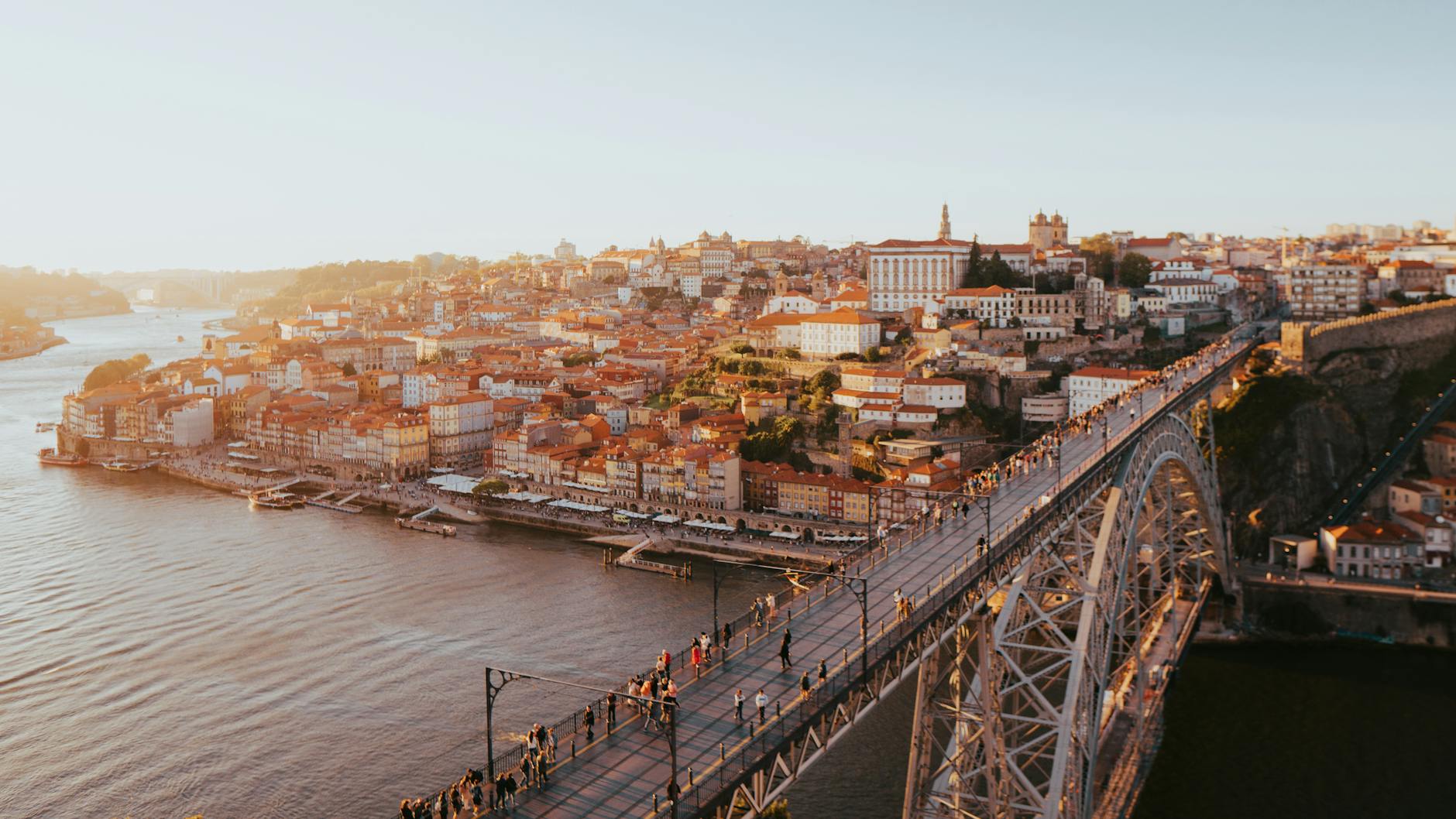
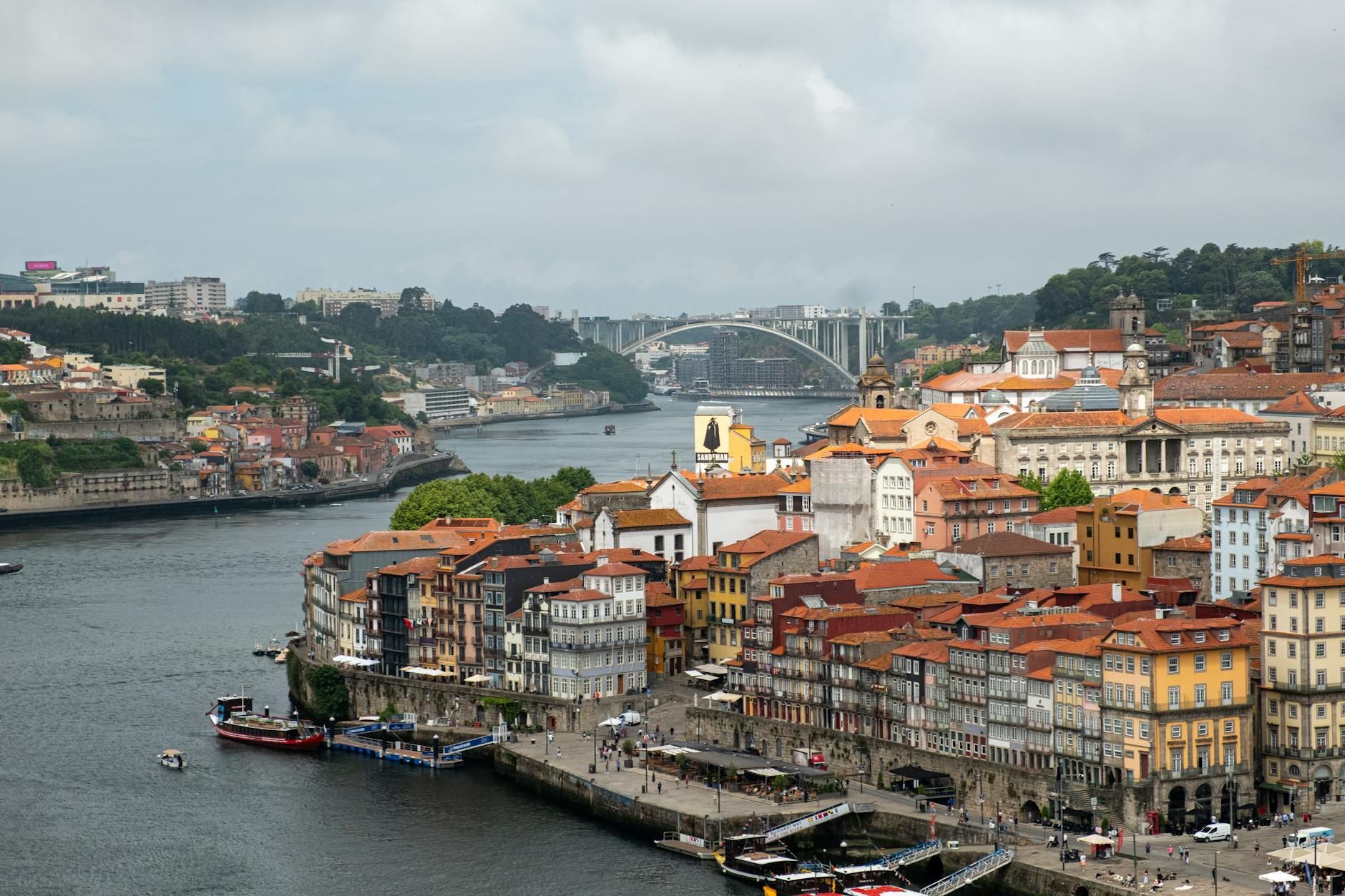
- Down to the Ribeira — the UNESCO riverfront of stacked, crooked, painted houses. Touristy, crowded, and still genuinely beautiful.
- Cross the Dom Luís I bridge on the upper deck — on foot, beside the metro line, 60 metres above the Douro. This is the single best twenty minutes in Porto and it is free. Do not do the lower deck instead; the view is from the top.
- Vila Nova de Gaia — the far bank, where every port lodge is. One tour and tasting takes about an hour.
- Back over and up for the train, or the Gaia cable car down and the lower deck across if your legs have finished.
That is a full seven hours with one meal in it. Lunch is best taken in the Ribeira or one street back from it — and if you want the local dish, the francesinha is a sandwich of steak, sausage and ham under melted cheese and a beer-and-tomato sauce, usually with chips. It is enormous, it is not sophisticated, and it is the thing to eat in Porto.

What Porto actually is, if you have never been
It helps to know what you are travelling for. Porto is Portugal’s second city, about a quarter the size of Lisbon, and it is denser, steeper, darker and more concentrated. Where Lisbon spreads across seven hills with wide squares and long avenues, Porto piles itself down one granite slope into a river gorge, and the whole historic centre is walkable in an afternoon — which is the single reason a day trip is even arguable.
The city made its money on the river. Port wine came down the Douro from the terraced vineyards inland in flat-bottomed rabelo boats, and was aged and shipped from the lodges on the Gaia bank opposite the old town. Those lodges — Sandeman, Taylor’s, Graham’s, Ferreira and a couple of dozen others — are still there, still working, and still the thing that makes Porto a different proposition from anywhere else in the country. Every one runs tours with a tasting at the end.
The other difference is the weather, and it is not a small one. Porto sits 300 km further north on an exposed Atlantic coast and gets substantially more rain than Lisbon in every month of the year. A brilliant Lisbon morning is no guarantee at all of a dry Porto afternoon, and on a day trip you have no slack to wait a shower out.
Granite, tiles, rain, port and a river gorge: that is the character of the place, and it is genuinely unlike Lisbon rather than a smaller version of it.
What you will have to skip
Being explicit about this is more useful than pretending the day is complete.
- The Douro valley. The terraced vineyards up-river are the reason port exists and one of the most beautiful landscapes in Europe. They are a full day from Porto on their own. On a day trip from Lisbon they are simply not available.
- A river cruise. The six-bridges cruise takes an hour you do not have.
- Serralves — the contemporary art museum, art deco villa and park, and one of the best cultural sites in the country. Out of the centre, needs half a day.
- Foz do Douro, where the river meets the Atlantic, and the tram ride out to it.
- Porto after dark — the lit riverfront, the bridge at night, and the bars around Galerias de Paris. This is when Porto is at its best and you will be on a train.
- More than one port lodge. There are dozens and they differ enormously.
The two better options
Two nights in Porto
The right answer for most people. Take the same train, stay two nights, and you get Porto in the evening, a proper Gaia afternoon, a Douro day or a Serralves morning, and a city that stops feeling like a checklist. The train fare is identical; you are only adding accommodation, and Porto is cheaper to sleep in than Lisbon.
If you are choosing between the two cities rather than doing both, our Lisbon vs Porto comparison sets out what each does better — briefly: Lisbon is bigger, sunnier and more varied; Porto is denser, more atmospheric and easier to walk in a weekend.
Coimbra instead
If what you want is a big day out on the northern line, Coimbra is under two hours each way rather than three, and a day genuinely covers it: the UNESCO university, the Joanina Library, a Roman gallery under a museum and lunch at half Lisbon prices. You get more of the place and less of the train. It is the better day trip by a clear margin, and almost nobody considers it because Porto is the famous name.
If you are going anyway — practical tips
- Book the earliest workable train and the latest one back, and book both at once. The Promo fares that make this affordable also make it non-refundable, so be sure of your dates.
- Reserve seats together. Alfa Pendular seating is allocated, and popular departures fill.
- Change at Campanhã for the free shuttle to São Bento. Five minutes, no extra ticket.
- Pre-book Livraria Lello and the Clérigos Tower if you want them, or accept you will not do them.
- Book a port lodge tour for a specific time before you travel. Turning up in Gaia and joining whatever is next wastes half an hour.
- Porto is wetter and cooler than Lisbon in every month of the year. Take a jacket even when Lisbon is warm — the Atlantic north gets considerably more rain.
- The hills are steeper than they look. Porto’s centre drops sharply to the river; the walk back up from the Ribeira at the end of a long day is a real climb.
- Take a card and some cash. Small lodges and cafés are not always contactless. See our money and currency guide.
- Do not check out of your Lisbon hotel. Obvious, but people plan this as though it were a relocation.
Is a Porto day trip from Lisbon worth it?
Usually not — but with real exceptions.
Do it if: you are on a short, fixed Lisbon trip, you will not be back in Portugal soon, and seeing Porto matters to you more than a relaxed day. Seven hours in a great city is still seven hours in a great city, and the bridge crossing alone justifies a lot.
Do not do it if: you have five days or more in Portugal, in which case restructure and give Porto two nights; if you have not yet finished Lisbon, because a first-time visitor with three days has not seen Alfama, Belém and Sintra properly yet and those come first; if you are travelling with small children, because eleven hours of day is too much; or if what you actually want is the Douro valley, which this trip cannot give you at all.
The most common regret we hear is not from people who skipped Porto. It is from people who did it in a day.
Doing it in reverse, and other variants
Two variations come up often enough to be worth answering.
An overnight that is not really an overnight. Take an evening train up on day one, sleep in Porto, spend a full day there and take a late train back on day two. You add one hotel night and gain roughly twelve extra waking hours in the city, including an evening on the riverfront. On any measure of value per euro this is the best version of the trip, and it barely disrupts a Lisbon-based itinerary.
Porto on the way in or out. If you are flying into Lisbon and out of Porto — or the reverse — the train stops being a day trip at all and becomes the journey itself, with Coimbra as an optional stop halfway. Open-jaw flights into Portugal are often no more expensive than returns, and this is the itinerary shape most experienced visitors end up with.
Organised day tours. Coach operators sell Porto as a day trip from Lisbon. They leave earlier than you would, spend longer on the road than the train does, and typically bundle a Gaia lodge and a walking loop. If you dislike arranging things yourself they solve that problem, but they do not solve the underlying one: the day is still mostly travel. See day tours from Lisbon for what is available.
Frequently asked questions
How long does the train from Lisbon to Porto take?
2 hours 50 minutes on the Alfa Pendular and 3 hours 15 on the Intercidades, from Santa Apolónia via Oriente to Porto Campanhã. Add about fifteen minutes to reach the city centre at São Bento.
How much does the Lisbon to Porto train cost?
Walk-up fares are around €35.70 in Alfa Pendular Turística and €28.05 in Intercidades second class. Booked in advance, Promo fares cut up to 65%, and CP has run campaigns as low as €7.50. Checked September 2026.
Can you do Porto as a day trip from Lisbon?
Yes, physically. You get about seven hours in the city for about six hours on trains. It works, but it is a long day and you will miss most of what makes Porto special.
What can you see in Porto in one day?
São Bento station, the Clérigos Tower, the Ribeira riverfront, the upper deck of the Dom Luís I bridge, one port lodge in Vila Nova de Gaia and one meal. That is a realistic list, not a conservative one.
Which Porto station should I get off at?
Get off at Campanhã, then take the free connecting urban train to São Bento — five minutes, included in your ticket. São Bento is the central station.
Is it better to fly or take the train to Porto?
The train, comfortably. The flight is short but two airports and transfers make it slower door to door and more expensive, and you land outside the city.
Should I do Porto or Coimbra as a day trip?
Coimbra, if it is genuinely a day trip. It is an hour closer each way and a day covers it properly. Porto deserves an overnight — see our Coimbra guide.
How many days do you need in Porto?
Two nights is the minimum that does the city justice; three lets you add a Douro valley day. Anything less is a highlights reel.
Bottom Line
You can do Porto from Lisbon in a day, and if your trip leaves no other option it is better than not going. Book a cheap advance ticket, take the first train, change at Campanhã for the free shuttle, walk São Bento to the Ribeira, cross the top deck of the bridge, do one port lodge in Gaia, eat a francesinha, and go home tired and glad you went.
But the better move, nearly every time, is to stop treating Porto as a day trip. Give it two nights on the same train fare and it becomes a proper second city rather than a long day out — or spend the day on Coimbra instead, which is an hour closer and fits comfortably between two trains. Our full list of options is in day trips from Lisbon.