Portugal is compact enough that within 90 minutes of Lisbon you can stand at the westernmost point of mainland Europe, walk through a UNESCO World Heritage hilltop palace complex, swim in water so clear it looks Mediterranean, or sit in a Roman city that has been continuously inhabited for 2,000 years. This day trips from Lisbon guide covers 15 destinations, organized by region and distance, with transport details, costs, and planning tips updated for 2026.
Whether you take the train, a bus, or a rental car, most of these day trips from Lisbon take between 30 minutes and two hours to reach. A Navegante card handles Sintra and Cascais — our Lisbon transport guide explains how it works. Rede Expressos buses cover most of the rest. And a car unlocks the coast south of Lisbon, where the palaces give way to empty Atlantic beaches and local wine.
1. Sintra — Palaces Above the Forest
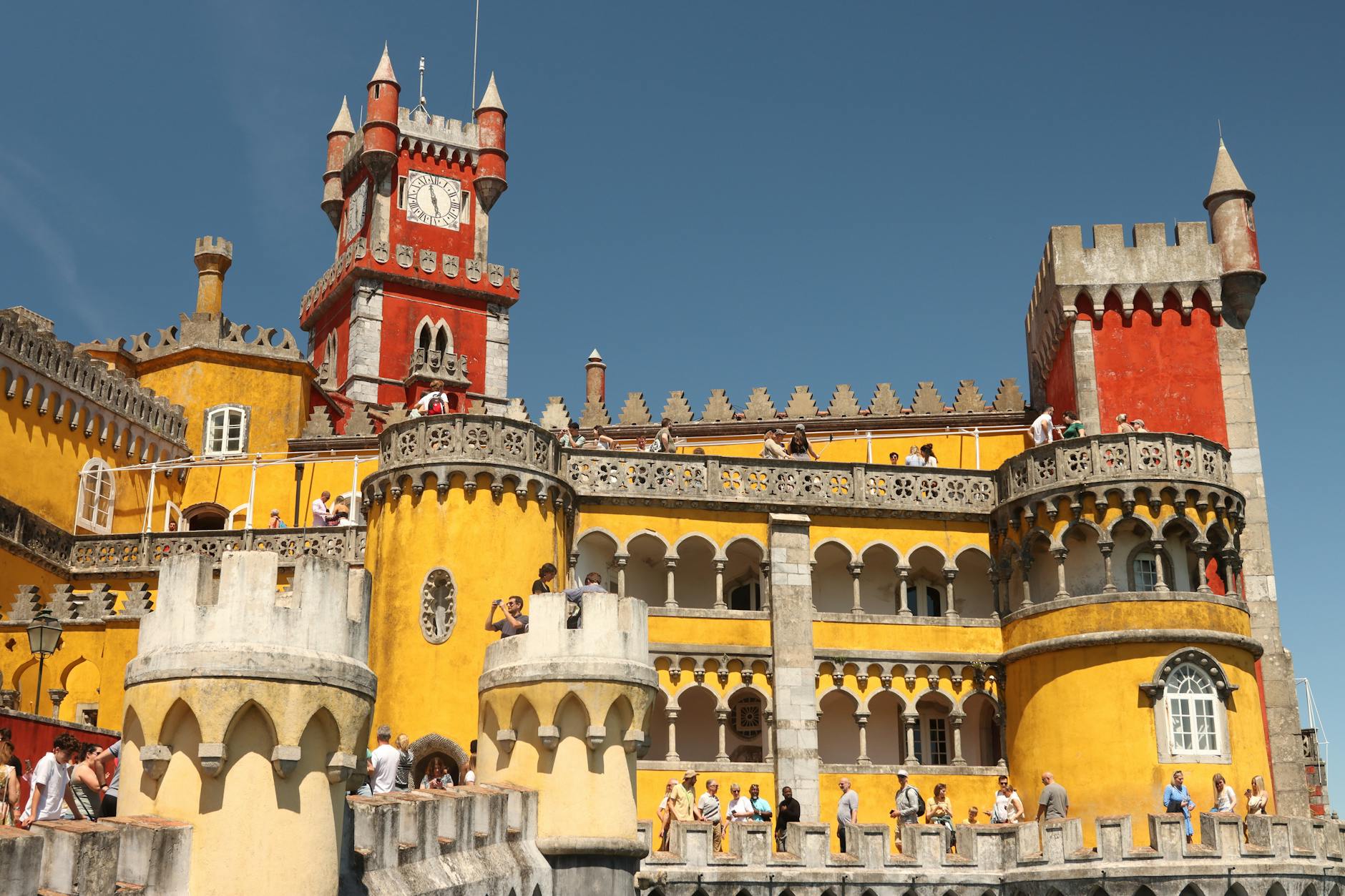
Sintra is the number-one day trip from Lisbon, and the reason isn’t hard to see. This UNESCO World Heritage cultural landscape packs four major palaces, two castles, and multiple extraordinary gardens into a forested hillside 25 km from the city. On a single day you can tour Pena Palace — a 19th-century Romantic palace painted red and yellow above the treeline — scramble the Moorish Castle walls for 360-degree Atlantic views, and descend into the 27-meter spiral Initiation Well at Quinta da Regaleira. Two palaces is realistic; three is possible if you start early.
How to Get to Sintra from Lisbon
By train: Direct trains from Rossio station every 15–20 minutes throughout the day. Journey time approximately 40 minutes, €2.45 each way with a Navegante card. Trains also run from Entrecampos and Oriente, but Rossio is most convenient. By car: 30–45 minutes via the A37/IC19. Since June 2024, private vehicles cannot park near Pena Palace or the Castle of the Moors — park at the Estefânia lot near Sintra station and use bus 434 instead. Budget tip: The 24-hour Navegante zapping pass (€11) covers the round-trip train plus all Lisbon metro and bus for the day.
What to See in Sintra
Pena Palace (€20 palace + park, €10 park only) is the headline draw — red-and-yellow turrets, Moorish balconies, a dramatic terrace with views to the Atlantic on clear days. Arrive at opening (9:30 AM) to skip the tour-bus wave that rolls in after 10:30 AM. Allow 90 minutes to two hours for the palace interior and park. Book timed-entry tickets online; walk-up slots sell out by 11 AM on peak days. Quinta da Regaleira (€15 adults) features the Initiation Well, a 27-meter spiral staircase descending nine levels modeled on the circles of Dante’s Inferno. The gardens also include grottos, underground tunnels, and a chapel — budget 90 minutes minimum.
Moorish Castle (€12) earns the climb with 360-degree views to the Atlantic. The hilltop ramparts zigzag along the ridgeline — on a clear day you can see Lisbon. Sintra National Palace (€13), in the town center, has two giant conical chimneys above the kitchen and some of the finest azulejo tile interiors in Portugal, dating from the 15th and 16th centuries.
Getting between sites: Bus 434 (Scotturb) runs a hop-on hop-off circuit from Sintra station through the historic center, past the Moorish Castle, and up to Pena Palace. €13.50 for an unlimited day pass — buy at the Scotturb kiosk at the station, not from the bus driver.
Plan a full day to see two or three sites properly. The complete Sintra day trip guide covers the optimal order of visits, bus logistics, and the ticket-booking moves that actually save you time.
2. Cascais — The Coast Without the Climb
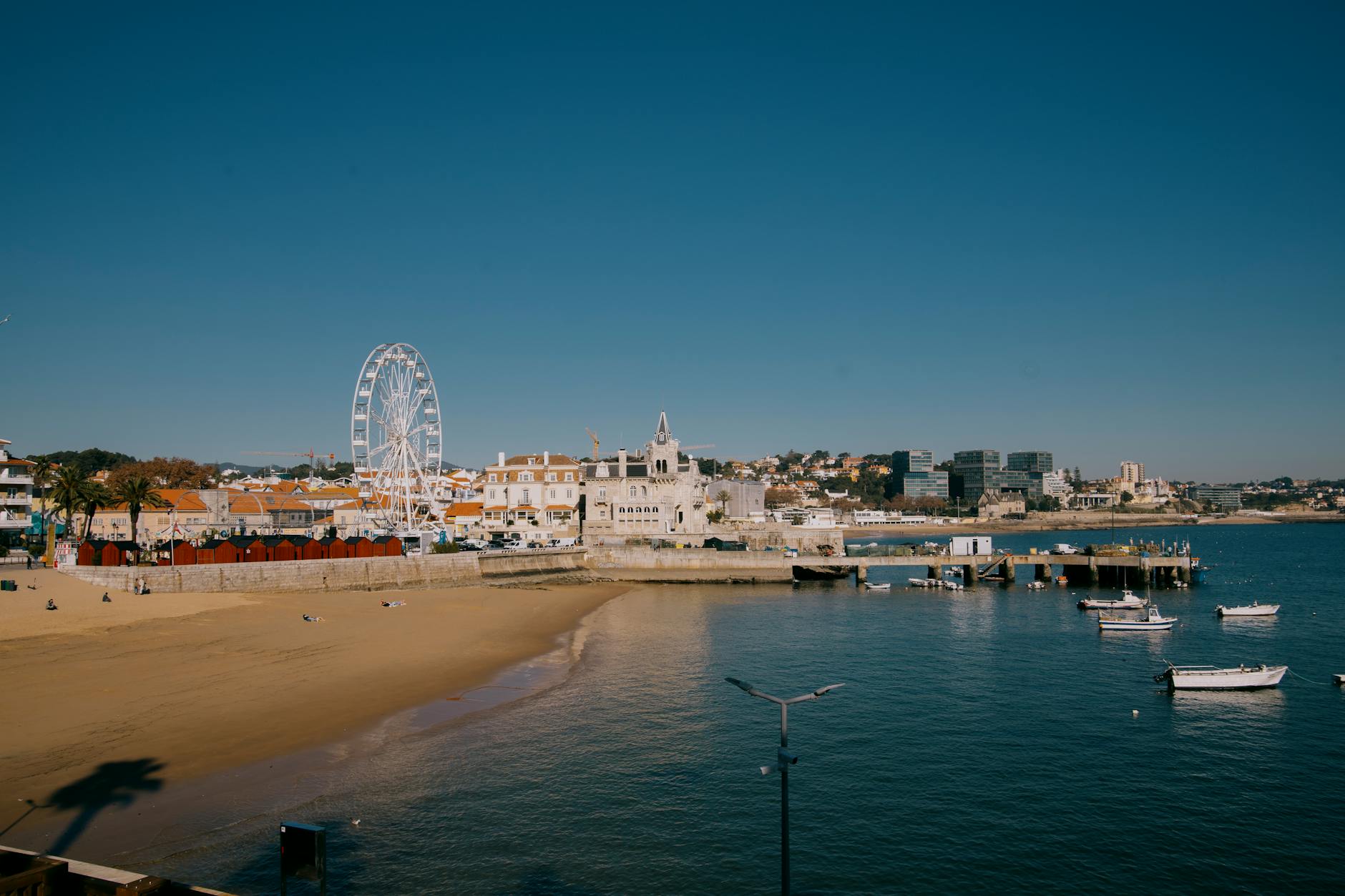
Cascais is the easiest coastal day trip from Lisbon — a former royal summer resort 30 km west, with sandy beaches, good seafood, a working fishing harbor, and a coastal walk to the dramatic sea arch at Boca do Inferno. The train from Cais do Sodré runs every 20 minutes and takes 35–40 minutes. Sit on the left side going out: you follow the Tagus, then the Atlantic coast, through Belém and Estoril.
How to Get to Cascais from Lisbon
By train: The CP Cascais line from Cais do Sodré every 20 minutes; 35–40 minute ride; €2.30 each way with a Viva Viagem card. By bike: A dedicated coastal path from Belém runs flat for 20 km to Cascais. Hire from shops near Belém waterfront or use GIRA bike-share for part of the route.
What to Do in Cascais
Start at Praia da Rainha — the small cove beach in the old town center — then walk the pedestrianized streets toward the harbor. Head west along the coastal promenade 1.5 km to Boca do Inferno, where Atlantic waves crash through a natural sea arch (go in October–April for the full dramatic effect; summer swells are small). The Casa das Histórias Paula Rego (€5) houses Portugal’s most celebrated modern artist in a striking terracotta building designed by Eduardo Souto de Moura. For families, the marina area has restaurants, boat tours, and a waterfront park.
Push further west to Praia do Guincho, a wild Atlantic surf beach 10 km from Cascais center — reachable by bus 405 (€2.30, 25 minutes) or bike. For lunch: fresh grilled fish in the old town. The peixe grelhado at a harbor-side restaurant is exactly what this place is for.
For restaurant picks and the full coastal walk breakdown, see our Cascais day trip from Lisbon page.
3. Cabo da Roca — The Edge of Europe
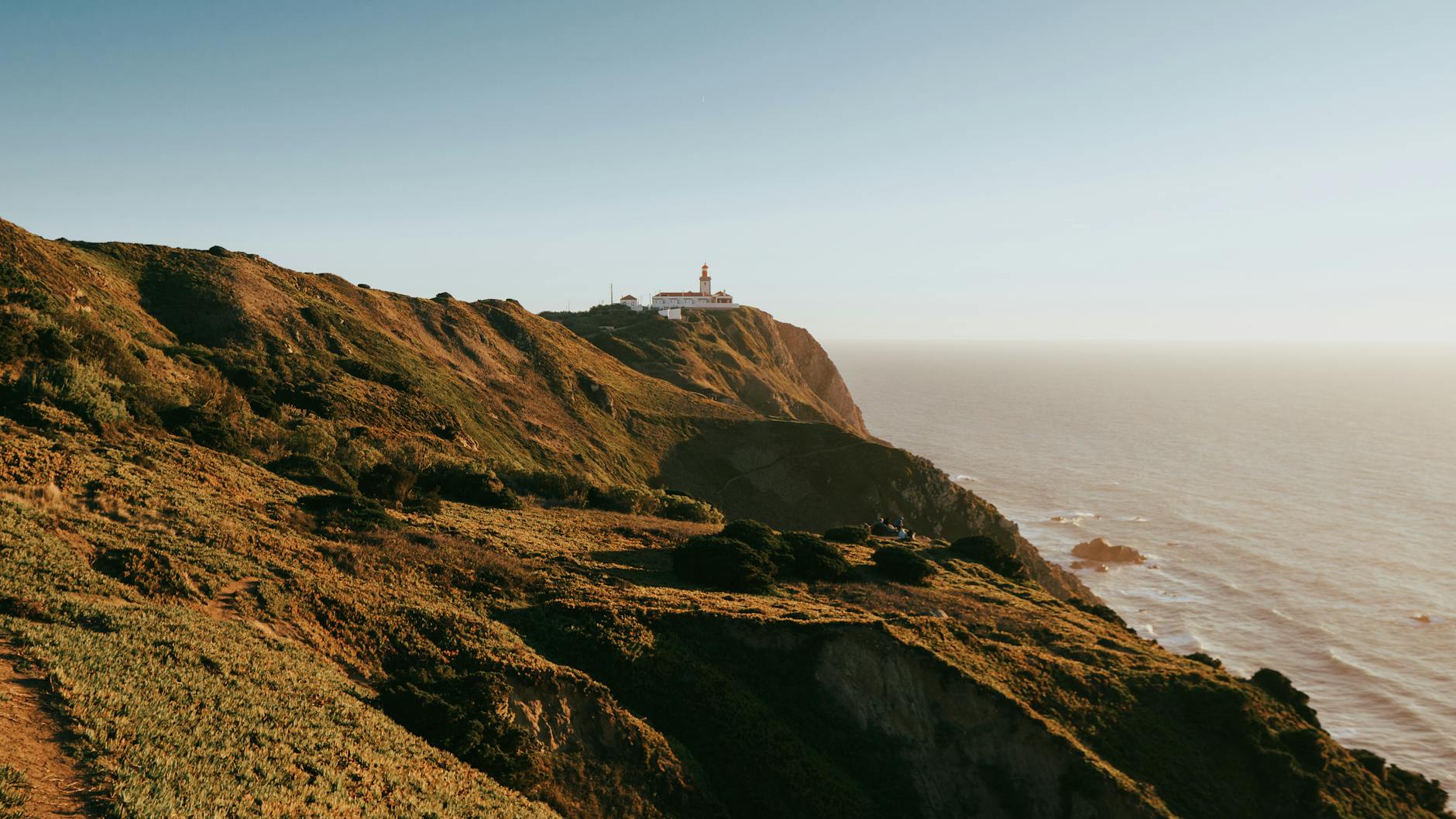
Cabo da Roca is a wind-scoured headland where 140-meter cliffs drop straight into the Atlantic — the westernmost point of mainland Europe. The lighthouse and the stone monument carved with Camões’ line (“Onde a terra acaba e o mar começa” — where the land ends and the sea begins) are the landmarks; the views along the coastline in both directions are the reason to come. The drive from Lisbon takes 40 minutes via the A5 and N247.
Getting there: Best combined with Sintra or Cascais. Bus 403 connects Sintra to Cabo da Roca (30 minutes, approximately €4.50) and continues to Cascais — making the Sintra–Cabo da Roca–Cascais circuit one of the most popular day-trip loops from Lisbon. Car from Lisbon: 40 minutes; free parking at the headland. What to do: Walk the clifftop paths for different angles — the scenery shifts dramatically as you move east and west. A small tourist kiosk sells an official certificate proving you reached the westernmost point of Europe (around €11). Bring a jacket even in summer — it’s always cold up here. Aim for late afternoon if you can: the sun sinking into the Atlantic from this headland is hard to forget.
4. Óbidos — A Medieval Town Under Glass
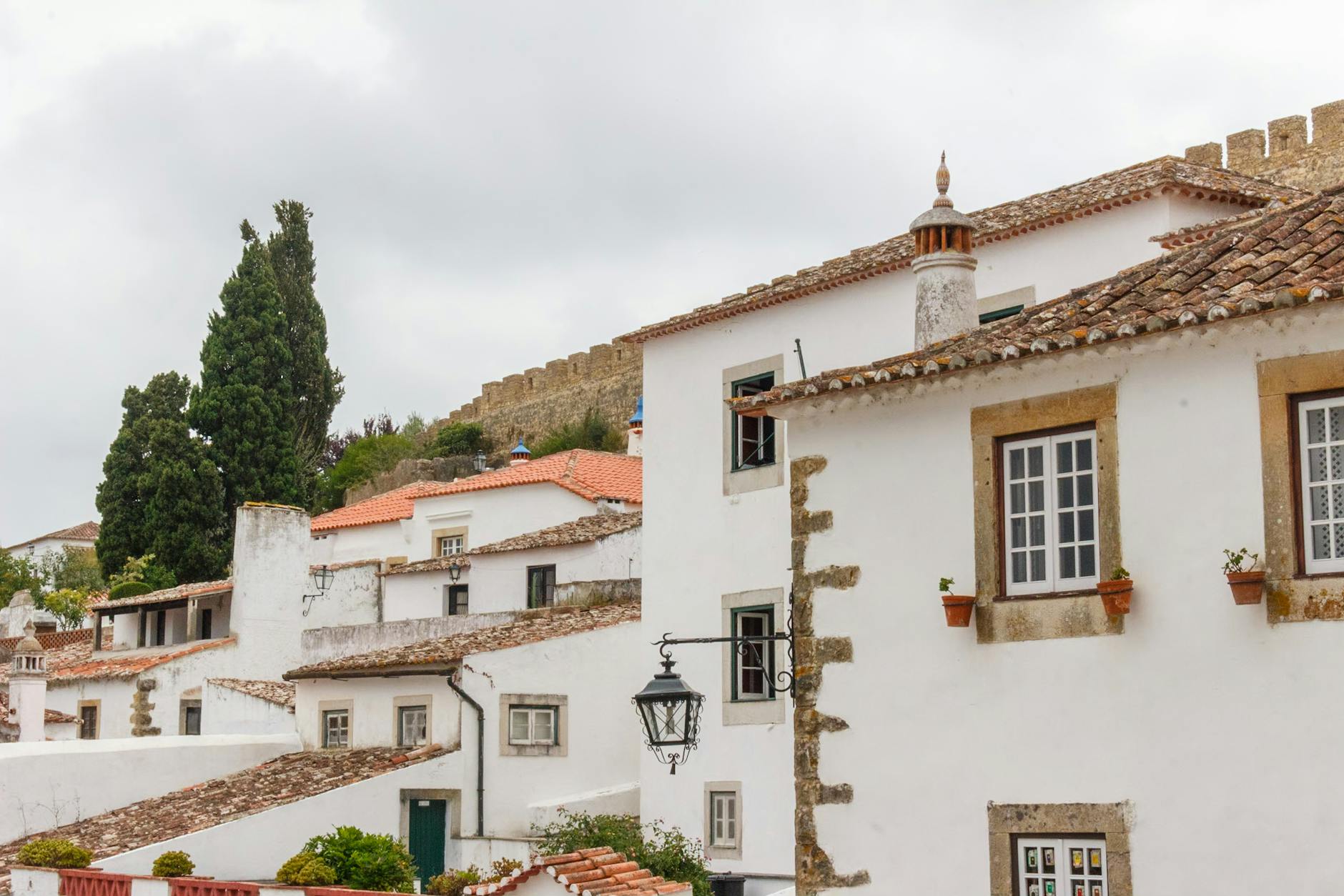
Óbidos is a walled medieval town about an hour north of Lisbon — cobbled streets, whitewashed houses with blue-and-yellow trim, bougainvillea on every second wall. Portuguese kings gave Óbidos to their queens as a traditional wedding gift from the 13th century onward. That history is visible in every corner: the castle, the walls, the main street of Rua Direita lined with ceramics shops and bakeries.
How to Get to Óbidos from Lisbon
By bus: The Rápida Verde (Green Express) from Lisbon’s Campo Grande terminal takes approximately one hour, with several daily departures. The most practical public transport option. By car: Take the A8 north — about one hour. Free parking outside the town walls. By train: Possible from Santa Apolónia or Oriente, but takes over two hours with a change at Caldas da Rainha, and the station is a 20-minute walk from town. Use the bus.
What to Do in Óbidos
Walk the medieval walls for views over the town and countryside — the circuit takes 30 minutes, the walls are narrow and have no railings, hold children’s hands. Sample ginjinha de Óbidos, the town’s sour cherry liqueur served in a small chocolate cup (€1–2 from shops on Rua Direita). Visit the Óbidos Castle, now a luxury pousada hotel, and browse the bookshops — Óbidos is a UNESCO City of Literature, with bookshops occupying a converted church, a wine cellar, and an old market hall.
Seasonal events: The Óbidos Medieval Festival (July) fills the town with jousting, markets, and period costumes — one of Portugal’s best summer events. The Christmas Village (December) brings ice skating and craft markets. The International Chocolate Festival (March/April) is a decent excuse for a spring visit. Read more in our Óbidos day trip from Lisbon guide.
5. Évora — Ancient History in the Alentejo
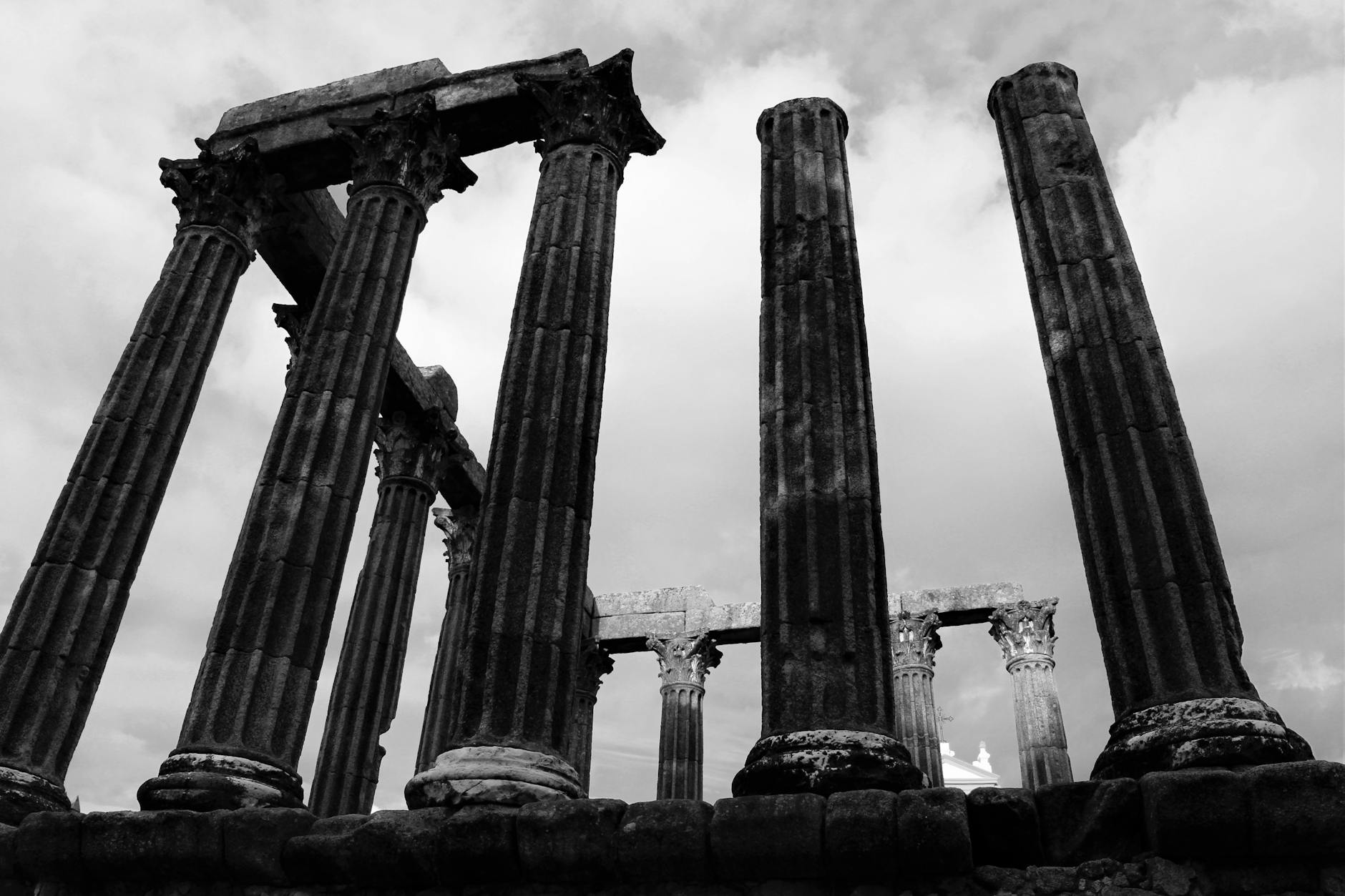
Évora is a UNESCO World Heritage city 90 minutes east of Lisbon in the Alentejo. It has a Roman temple, a Chapel of Bones, a 13th-century cathedral, a Renaissance university, and the quieter pace of a smaller Portuguese city. The Alentejo wine and food alone justify the trip — this feels like a different country from Lisbon.
How to Get to Évora from Lisbon
By bus: Rede Expressos from Sete Rios terminal, every one to two hours, approximately 1 hour 30 minutes (around €13 each way). Book online for the best prices and a guaranteed seat. By car: A2/A6 motorways, about 1 hour 20 minutes. Parking outside the old town walls is easy. By train: Intercity trains from Oriente, about 1 hour 30 minutes, but departures are less frequent than buses.
What to See in Évora
The Roman Temple of Évora (also called the Temple of Diana) stands in the city center — Corinthian columns, still imposing after 2,000 years. The Chapel of Bones (€6, Church of São Francisco) is exactly what it sounds like: walls and pillars covered with the bones and skulls of over 5,000 monks, assembled in the 16th century as a meditation on mortality. The inscription above the door: “Nós ossos que aqui estamos, pelos vossos esperamos” (We bones that are here await yours).
The Évora Cathedral (€3.50) is a Romanesque-Gothic fortress of a church with good rooftop views. Lunch on Praça do Giraldo — try migas, açorda alentejana, and the local wine. Our Évora day trip guide has a full walking itinerary and restaurant recommendations.
6. Setúbal and Arrábida Natural Park — Atlantic Beaches Without the Crowds
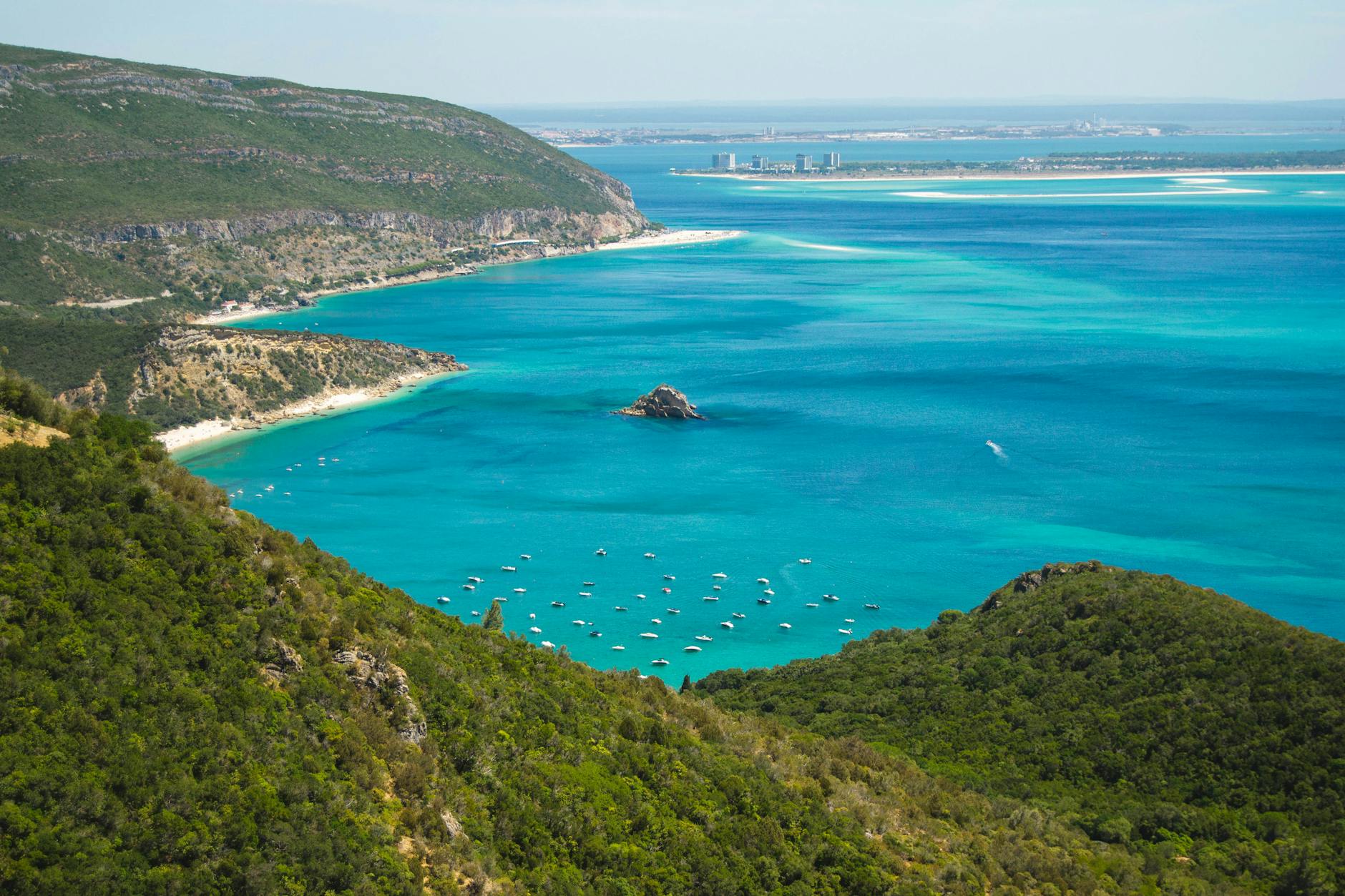
Setúbal is a working port city famous for choco frito (fried cuttlefish). The Arrábida Natural Park behind it shelters some of the best beaches in Portugal — limestone cliffs, calm turquoise water, and very limited vehicle access in summer that keeps them from turning into Cascais. This day trip is best in warmer months when swimming is the point.
Getting there: Car is the most practical option (45 minutes via A2 and A12). Buses from Sete Rios reach Setúbal in about one hour; from there, a shuttle bus operates to the park beaches in summer. Dolphin watching: Boat trips from Setúbal marina offer the chance to see the resident bottlenose dolphins in the Sado Estuary — around 30 permanently live there. Tours from €35, book ahead in summer.
Best beaches: Praia de Galapinhos (voted one of Europe’s best by European Best Destinations), Praia de Figueirinha (most accessible, parking and facilities), and Praia de Portinho da Arrábida (tiny cove, clearest water). Combine with wine tasting in nearby Azeitão. Full details in our Setúbal and Arrábida day trip guide.
7. Mafra National Palace — Portugal’s Baroque Colossus
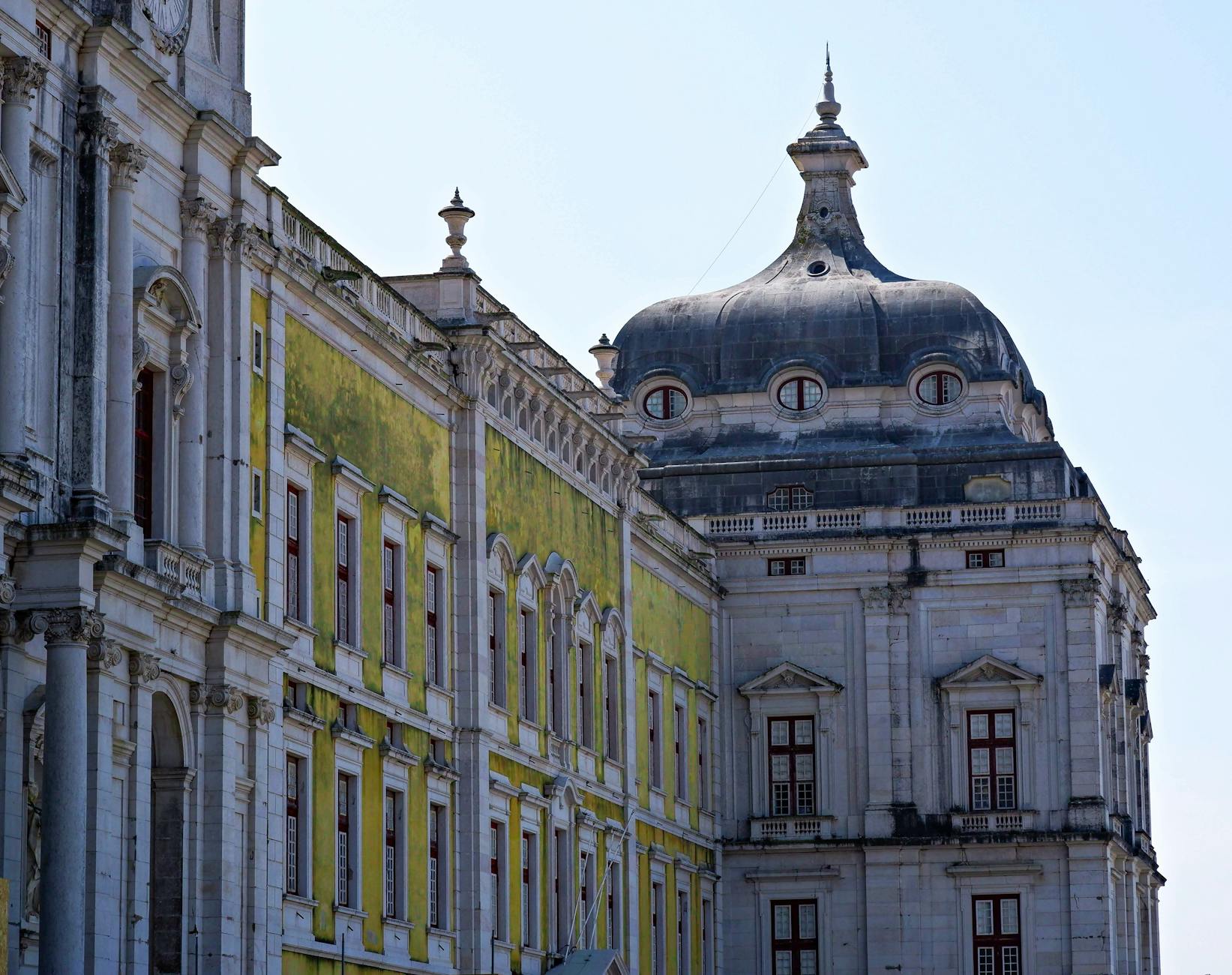
The Mafra National Palace is a UNESCO World Heritage Site built in the 18th century by King João V with Brazilian gold — a colossal Baroque complex containing a basilica, royal palace, monastery, and a library of 36,000 leather-bound volumes protected at night by a colony of bats. The library alone justifies the trip. If you’ve read José Saramago’s Memorial do Convento, visiting Mafra makes the novel concrete.
Getting there: Bus from Campo Grande terminal (Mafrense line), about one hour. By car, approximately 40 minutes via the A8. Admission €6. Combine with: The village of Ericeira, 15 minutes away — a World Surfing Reserve with fresh seafood and Atlantic waves. Our Mafra National Palace guide covers the complete visit.
8. Nazaré — Big Waves and Old Portugal
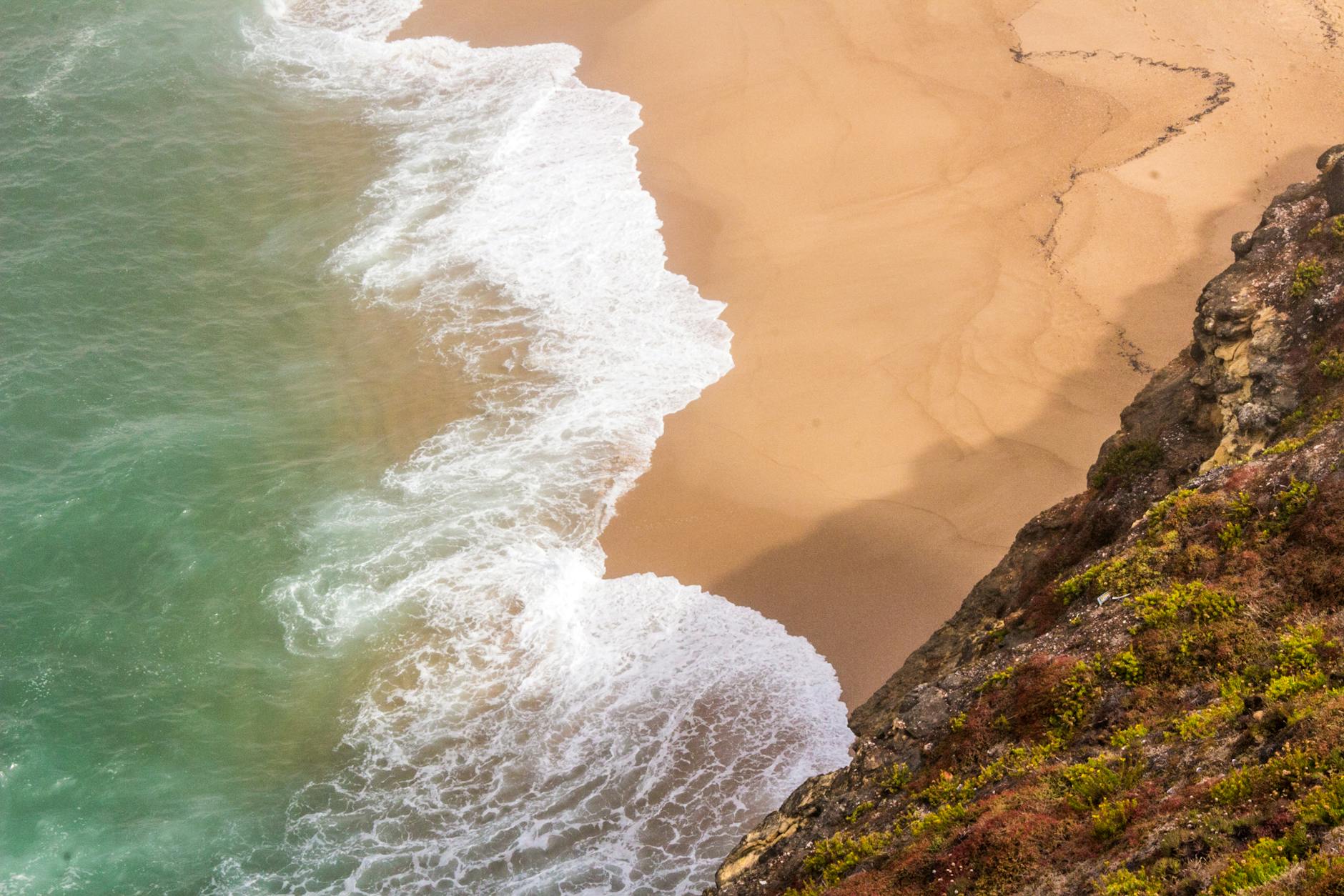
Nazaré holds the record for the biggest waves ever surfed — swells can exceed 30 meters at Praia do Norte in winter. But even outside big-wave season, this former fishing village delivers. The clifftop Sítio district has Atlantic views, the beach town below keeps traditional character (fisherwomen still dry fish on racks), and the seafood is genuinely excellent.
Getting there: Rede Expressos from Sete Rios terminal, about 1 hour 45 minutes (around €13 each way). By car: A8 north, approximately 1 hour 30 minutes. What to do: Take the vintage funicular (€1.50 each way) up to Sítio and walk to Forte de São Miguel Arcanjo (€1, free Sundays) — the viewpoint where all the famous wave photos are taken. Walk the main beach, eat grilled sardines in summer or fish stew in winter. Big wave season: October–March, biggest swells typically November and February. Combine with: Óbidos is 30 minutes south by car — a Nazaré–Óbidos combination works well as a full-day itinerary.
9. Fátima — Portugal’s Pilgrimage Center
Fátima is one of the world’s major Catholic pilgrimage sites, drawing millions of visitors annually to the sanctuary where three shepherd children reported Marian apparitions in 1917. The esplanade is twice the size of Saint Peter’s Square in Rome. Whatever your background, the scale and intensity of devotion on display are something you won’t see elsewhere.
Getting there: Rede Expressos from Sete Rios, about 1 hour 15 minutes (around €12 each way). By car: A1 north, approximately 1 hour 20 minutes. What to see: The Basilica of Our Lady of the Rosary (neo-Baroque, 1953), the Chapel of the Apparitions (the emotional heart of the sanctuary), and the Church of the Holy Trinity (inaugurated 2007, seating 8,633 people). The Fátima Museum provides historical context. Key dates: The 12th and 13th of each month see candlelight processions; May 13 and October 13 — marking the first and last reported apparitions — draw the largest crowds. Our Fátima day trip guide has full planning details. Combine with: Fátima is 20 minutes from Batalha Monastery.
10. Sesimbra — Low-Key Beach Town South of the River
Sesimbra is a fishing town with a sheltered crescent beach, a Moorish castle on the hill above it, and excellent seafood restaurants along the waterfront. Less developed than Cascais, more authentically Portuguese. The bay is protected from Atlantic swells, so the water is calmer than most Portuguese beaches.
Getting there: Buses from Praça de Espanha, about one hour. By car: 40–50 minutes via A2 and N378. What to do: Swim at the town beach, hike to Castelo de Sesimbra for views over the coast, eat arroz de marisco or peixe grelhado at a waterfront restaurant where fishermen bring in the daily catch meters away. The morning fish market is worth timing your visit for. Combine with: Cabo Espichel, 15 minutes west, has a clifftop sanctuary overlooking the Atlantic and fossilized dinosaur footprints in the cliff face — unexpected and worth seeing. Full itinerary in our Sesimbra day trip guide.
11. Costa da Caparica — Thirty Kilometers of Atlantic Beach
Costa da Caparica has over 30 km of Atlantic beaches on the south side of the Tagus — a short ferry and bus ride from Lisbon. In summer, a mini-train (the Transpraia) runs along the beach, letting you hop off at whatever stretch suits you: family-friendly sections with lifeguards near town, surf breaks in the middle, quieter naturist beaches at the southern end. The beach scene is Portuguese through and through — beach bars, grilled fish, surf culture.
Getting there: Ferry from Cais do Sodré to Cacilhas (10 minutes), then bus 135 to Costa da Caparica (about 20 minutes) — around 45 minutes total. By car: cross the 25 de Abril bridge and head south, approximately 30 minutes. Our Costa da Caparica guide has beach-by-beach recommendations.
12. Tomar — The Knights Templar City
Tomar’s Convent of Christ is a UNESCO-listed complex originally built by the Knights Templar in the 12th century and expanded over 500 years, blending Romanesque, Gothic, Manueline, and Renaissance architecture in one place. The Charola — a round church modeled on Jerusalem’s Church of the Holy Sepulchre — is at its heart. The Manueline window is one of Portugal’s greatest examples of that uniquely Portuguese style. The town sits on the Nabão River with pleasant riverside cafés and a relaxed atmosphere.
Getting there: Trains from Santa Apolónia, about two hours. By car: 1 hour 30 minutes via the A1. Plan a full day — the convent complex is larger than it looks. The Festa dos Tabuleiros (Festival of the Trays) is one of Portugal’s most spectacular processions; the next edition is expected in 2027.
13. Coimbra — Portugal’s University City
Coimbra’s Joanine Library is a Baroque masterpiece of gilded wood and painted ceilings that reportedly inspired the Hogwarts library. The university (founded 1290) is a UNESCO World Heritage Site, and the city has its own distinct form of fado — more academic and melancholic than Lisbon’s. The Machado de Castro National Museum sits above Roman cryptoporticus you can walk through. The library alone justifies a day trip.
Getting there: Alfa Pendular high-speed trains from Oriente, 1 hour 40 minutes (around €22 each way). Take the earliest train available and return on a late afternoon service — it’s a long but rewarding day. Book the Joanine Library timed-entry in advance; slots sell out.
14. Batalha Monastery — Gothic at Its Most Ambitious
The Monastery of Batalha was built to mark the Battle of Aljubarrota in 1385, which secured Portuguese independence from Castile. The Unfinished Chapels (Capelas Imperfeitas) — soaring open-air arches with Manueline carved stonework and open sky above — are among the most extraordinary architectural spaces in Portugal. The detail in the limestone carving is extraordinary; the open ceiling gives it a quality no enclosed church can match.
Getting there: Rede Expressos from Lisbon, about 1 hour 45 minutes. By car: approximately 1 hour 30 minutes via the A1. Admission €6. Combine with: Batalha is 20 minutes from both Fátima and Alcobaça Monastery — a three-monastery road trip (Batalha + Alcobaça + Tomar) is one of the best architectural day trips available from Lisbon. All three are UNESCO World Heritage Sites.
15. Azeitão — Wine, Cheese, and Pastries
Azeitão sits on the northern slopes of the Arrábida hills, 40 minutes south of Lisbon. Visit Bacalhôa and José Maria da Fonseca wineries for tastings of Moscatel de Setúbal in centuries-old cellars. Try queijo de Azeitão — a creamy, runny sheep’s milk cheese with real complexity. Finish with tortas de Azeitão, a rolled pastry filled with egg cream, from one of the bakeries on the main road.
Getting there: TST buses from Praça de Espanha (about 45 minutes). By car: 30–40 minutes via A2. Best combined with Setúbal and Arrábida (see destination 6 above) for a full Setúbal Peninsula day covering beaches, dolphins, wine, and cheese. The José Maria da Fonseca cellar tour (€10–25 depending on tasting level) is one of the best wine experiences near Lisbon.
Planning Tips for Day Trips from Lisbon
Best Time for Day Trips from Lisbon
Spring (April–June) and autumn (September–October) are the best windows for day trips from Lisbon. Temperatures sit at 20–25°C, crowds at Sintra and Óbidos are manageable, and restaurant availability is far better than in summer. July and August push regularly above 35°C — if you go then, leave early and carry water. Winter (November–February) is mild, quieter, and occasionally rainy; it’s actually the best time for Nazaré’s big waves.
Transport Tips for Day Trips
For Sintra and Cascais, the 24-hour Navegante zapping pass (€11) covers round-trip trains plus all Lisbon public transport. For bus-only destinations, book tickets on Rede Expressos (rede-expressos.pt) in advance — you get better prices and a guaranteed seat. If you’re planning three or more bus-dependent day trips, renting a car for two or three days can work out cheaper and gives you more flexibility. Return the car outside the city center to avoid Lisbon’s low-emission zones and parking headaches. Check Parques de Sintra for online tickets to Pena Palace, the Moorish Castle, and Quinta da Regaleira before you arrive — peak-season walk-up slots routinely sell out.
Combining Day Trips from Lisbon
Several destinations sit close enough to combine into a single full-day circuit. Sintra + Cabo da Roca + Cascais is the classic loop using bus 403 — start in Sintra, pause at Cabo da Roca for photos, end in Cascais for dinner before the train back. Nazaré + Óbidos works well by car (30 minutes apart) — waves in the morning, medieval town in the afternoon. Fátima + Batalha + Alcobaça covers three UNESCO monasteries in one day, best by car. Setúbal + Arrábida + Azeitão covers beaches, dolphins, wine, and cheese in one indulgent run.
Budget for Day Trips
Most day trips from Lisbon land between €40–65 per person for the full day: €15–25 round-trip transport, €10–15 in attraction entries, €15–25 for a sit-down lunch. The cheapest options are Cascais and Costa da Caparica (cheap train or bus, free beaches). Sintra adds up fast if you do multiple palace entries — budget €80–100 for a full Sintra day with three sights. Driving costs more solo but saves money for groups of three or more once you split fuel and tolls.