Day Trips from Lisbon
Óbidos Day Trip: Guide to Portugal’s Fairytale Walled Town (2026)
Plan an Óbidos day trip from Lisbon—walk the medieval walls, taste ginja in a chocolate cup, and explore Portugal's prettiest walled town.
In this guide
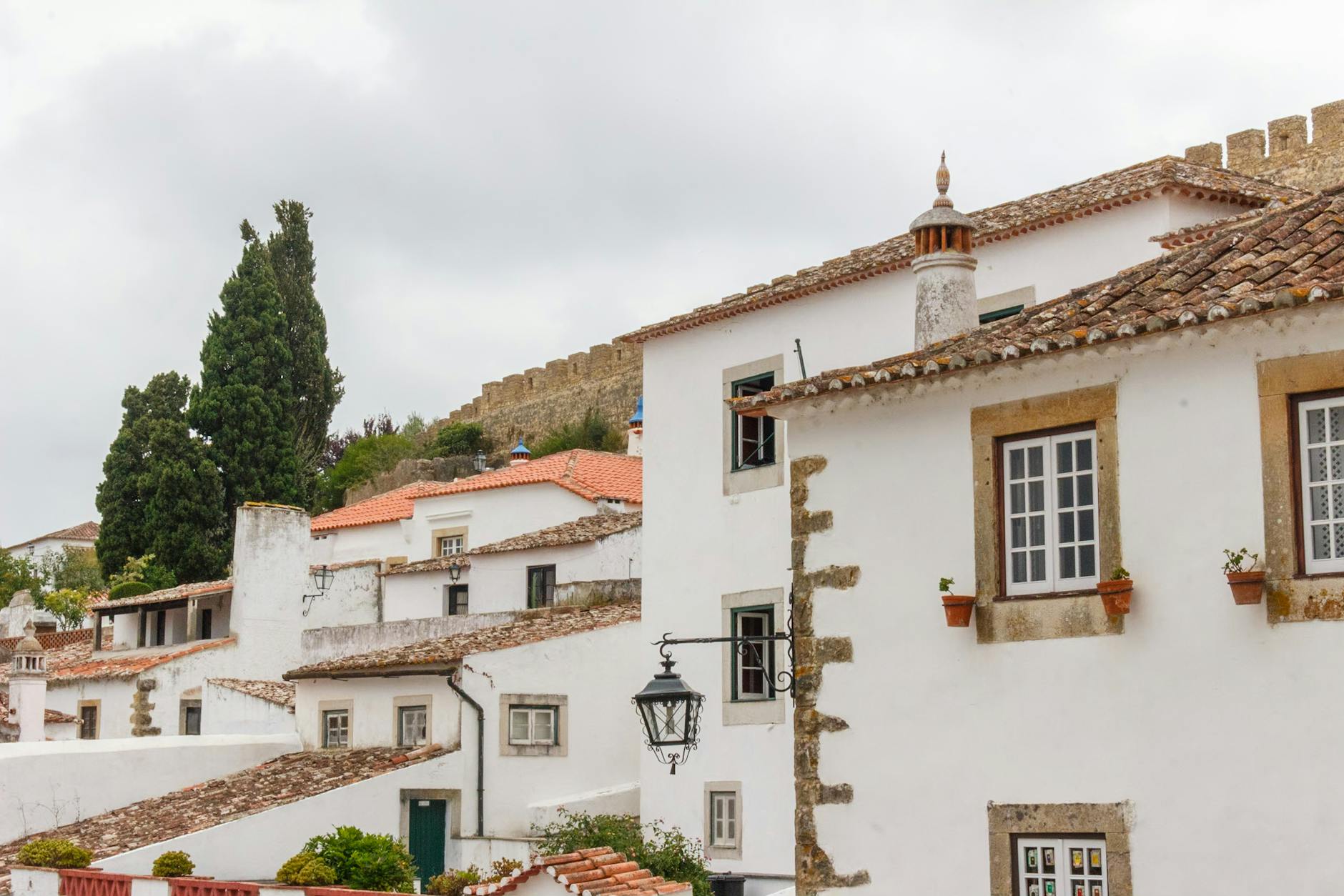
An Óbidos day trip from Lisbon takes you to one of Portugal’s best-preserved walled medieval towns — a small whitewashed village 85 km north of the city, surrounded by 12th-century battlements you can walk in their entirety. Cherry-liqueur shops, narrow cobbled lanes, and a charmingly preserved medieval atmosphere make it a popular alternative to Sintra.
For a longer day and a far greater building, our Tomar day trip guide has the direct train and the Convento de Cristo in detail.
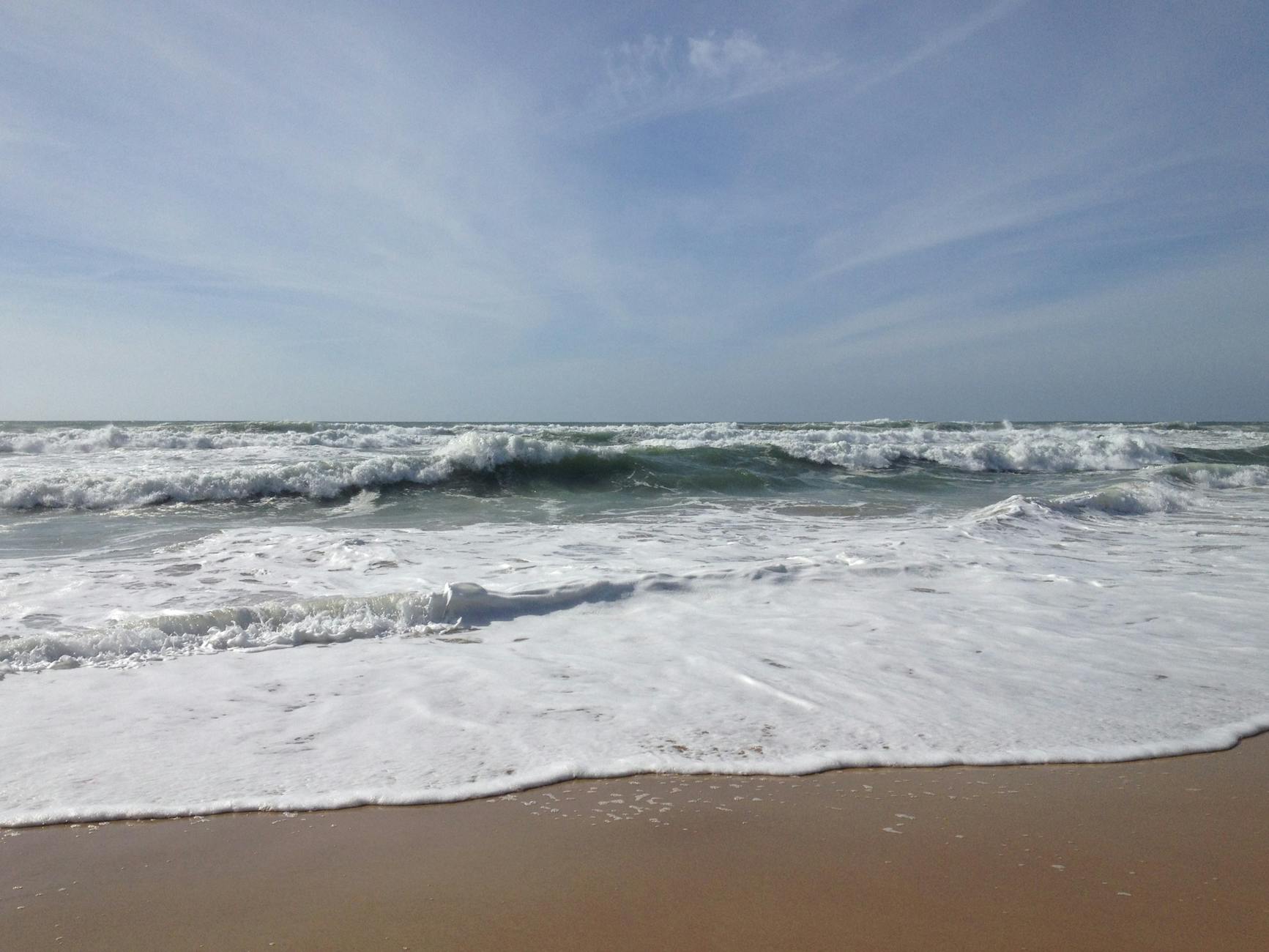
If you would rather have the Atlantic than a castle wall, our Ericeira day trip guide is the coastal alternative for the same day out.
Óbidos sits on the road north, which makes it the natural pairing with Nazaré if you have a car — and the sensible substitute if the Atlantic is flat.
The town fits inside its walls in about 15 minutes of walking. That’s not a problem — it means you can see it properly without rushing, eat lunch, drink ginja from a chocolate cup on the main street, walk the full circuit of the walls, and still be back in Lisbon for dinner. This guide covers how to get there, what to see, where to eat, when to go, and how to combine Óbidos with other stops. Updated for 2026.
Quick Plan
Morning bus from Lisbon to Óbidos (1 hour 15 minutes). Walk the walls (45 minutes). Lunch in town. Try ginja in chocolate cup on Rua Direita. Afternoon explore castle, Igreja de Santa Maria, ceramics. Return to Lisbon by 6 PM with daylight to spare.
Óbidos vs. Sintra: Which Day Trip?
| Factor | Óbidos | Sintra |
|---|---|---|
| Distance from Lisbon | 85 km north | 28 km west |
| Travel time | 1h15m bus or 2h train+bus | 40 min train from Rossio |
| Scale | Small walled village | Multiple palaces + town |
| Character | Medieval, cobbled, quiet | Romantic, palatial, crowded |
| Time needed | Half day to full day | Full day minimum |
| Crowds | Moderate (heavy in summer) | Very heavy year-round |
| Best for | Medieval atmosphere, walls, ginja | Pena Palace, palace gardens |
Most travelers do both as separate days. See our Sintra guide and our Pena Palace guide.
How to Get to Óbidos from Lisbon
By Bus (Most Direct)
Rede Expressos buses run from Lisbon’s Sete Rios station to Óbidos. Journey time is around 1 hour 15 minutes. Round trip fares are roughly €11–€14 — check current prices and book at cp.pt or the Rede Expressos site. Multiple departures daily; service is most frequent on weekdays.
Sete Rios is connected to the metro (Yellow Line, Jardim Zoológico station) and is 15 minutes from central Lisbon. The bus drops you inside Óbidos or near the main gate, depending on the departure. Easiest single-mode option — no connections required.
By Train + Bus
Train from Lisbon Santa Apolónia or Oriente to Caldas da Rainha (roughly 1 hour 15 minutes by Intercidades), then a short bus connection to Óbidos (10–15 minutes). Total journey around 2 hours, with fare check at cp.pt. This combination gives you a chance to see Caldas da Rainha — a small city famous for its ceramics market and thermal springs — if you want a second stop.
By Guided Tour
Multiple Lisbon-based tour operators offer Óbidos day tours, often combined with Nazaré beach, Fátima, or Mafra. €60–€110 per person for a full-day tour with transport; our day tours from Lisbon guide compares the operators. Useful if you want to combine three stops in one day without navigating public transport connections.
By Car
1-hour drive north on the A8 motorway. Toll costs roughly €10. Parking is available outside the walls (the town itself is pedestrian only). Easiest option if you’re combining Óbidos with Nazaré (30 minutes north) or Peniche (45 minutes west).
Things to Do in Óbidos
Walk the Castle Walls
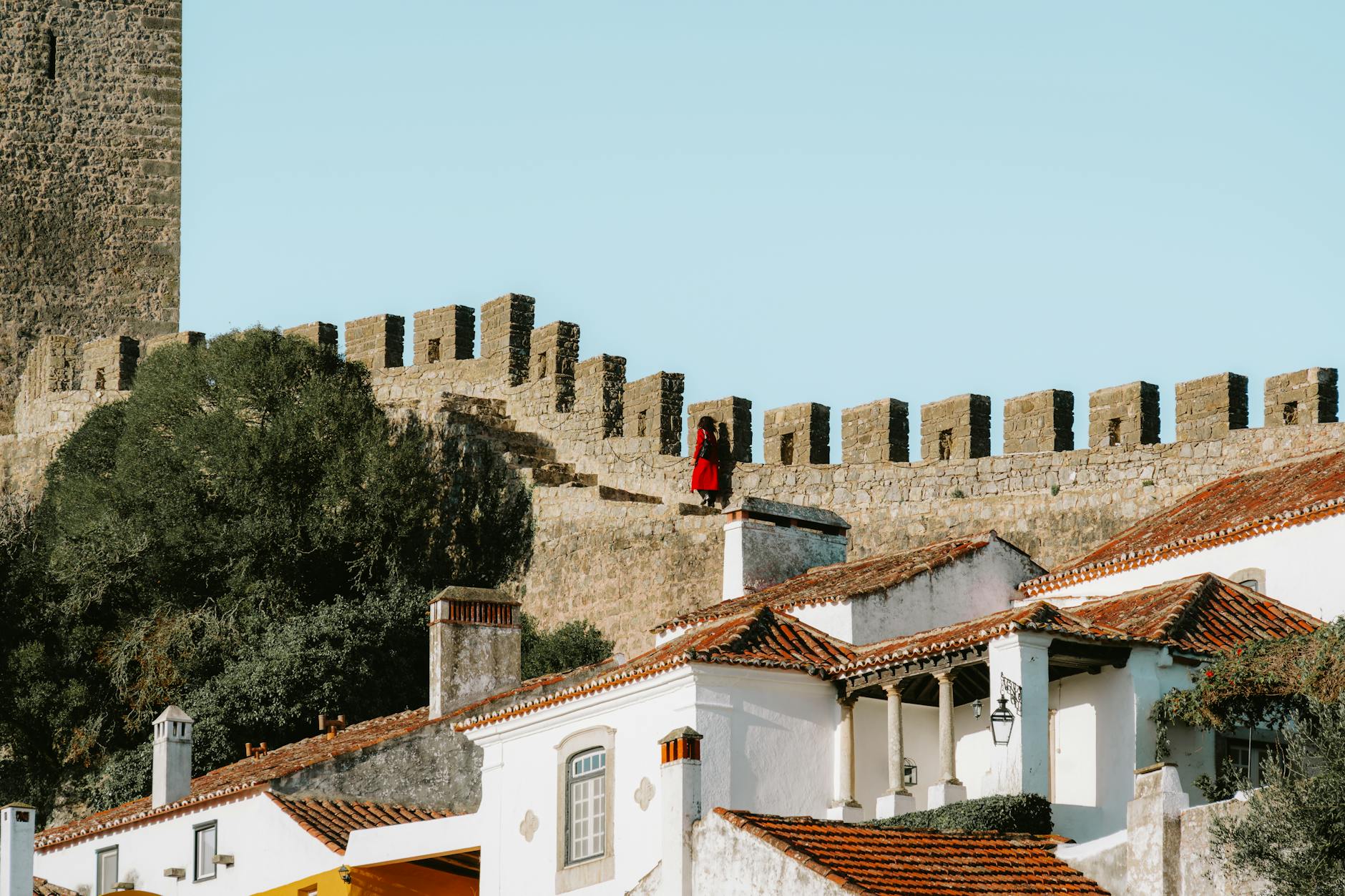
The 12th-century walls encircle the entire town and are walkable end-to-end in about 45 minutes. The walkway is mostly without safety rails — watch your step, and do not take children who are not completely steady. The drops are real. That said, this is one of the most rewarding walks in Portugal: views over the town’s white rooftops, the surrounding fields, and on clear days the silver line of the Atlantic to the west.
Start at the main gate (Porta da Vila, decorated with 18th-century blue azulejo tiles) and work your way around to the castle at the north end. The full circuit is roughly 1.5 km. Free to walk.
Castelo de Óbidos
The medieval castle at the northern end of the walls. Now operates as a Pousada (luxury hotel) — non-guests can visit the courtyard and the main tower for €5. The keep’s upper levels give the best views in town. The castle was given as a wedding gift to Queen Urraca by King Afonso Henriques in 1148, beginning a royal tradition of Óbidos being presented to queens of Portugal that lasted until the 19th century.
Igreja de Santa Maria
The town’s main church, originally built in the 16th century and featuring remarkable 17th-century blue and white azulejo tile panels on the interior walls. The marriage of King Afonso V and his cousin Isabel took place here in 1444 — he was ten, she was eight, which says something about medieval dynastic politics. The church is small and worth five minutes of your time. Free to enter.
Try Ginja de Óbidos
The town’s signature drink — a sour cherry liqueur (ginjinha) served in a small chocolate cup made from dark chocolate. Drink the ginja, then eat the chocolate. The combination is better than either element alone: the syrupy-sweet-sour liqueur cools the chocolate from the inside. Available at every street kiosk on Rua Direita for €1.50–€2 per shot. Take-home bottles are €10–€15 each and make excellent gifts.
The chocolate cups were a 20th-century innovation by local producers to make the experience more distinctive than ginja in other towns. It worked — most visitors to Óbidos mention the ginja cup as the defining memory of the town.
Walk Rua Direita (the Main Street)
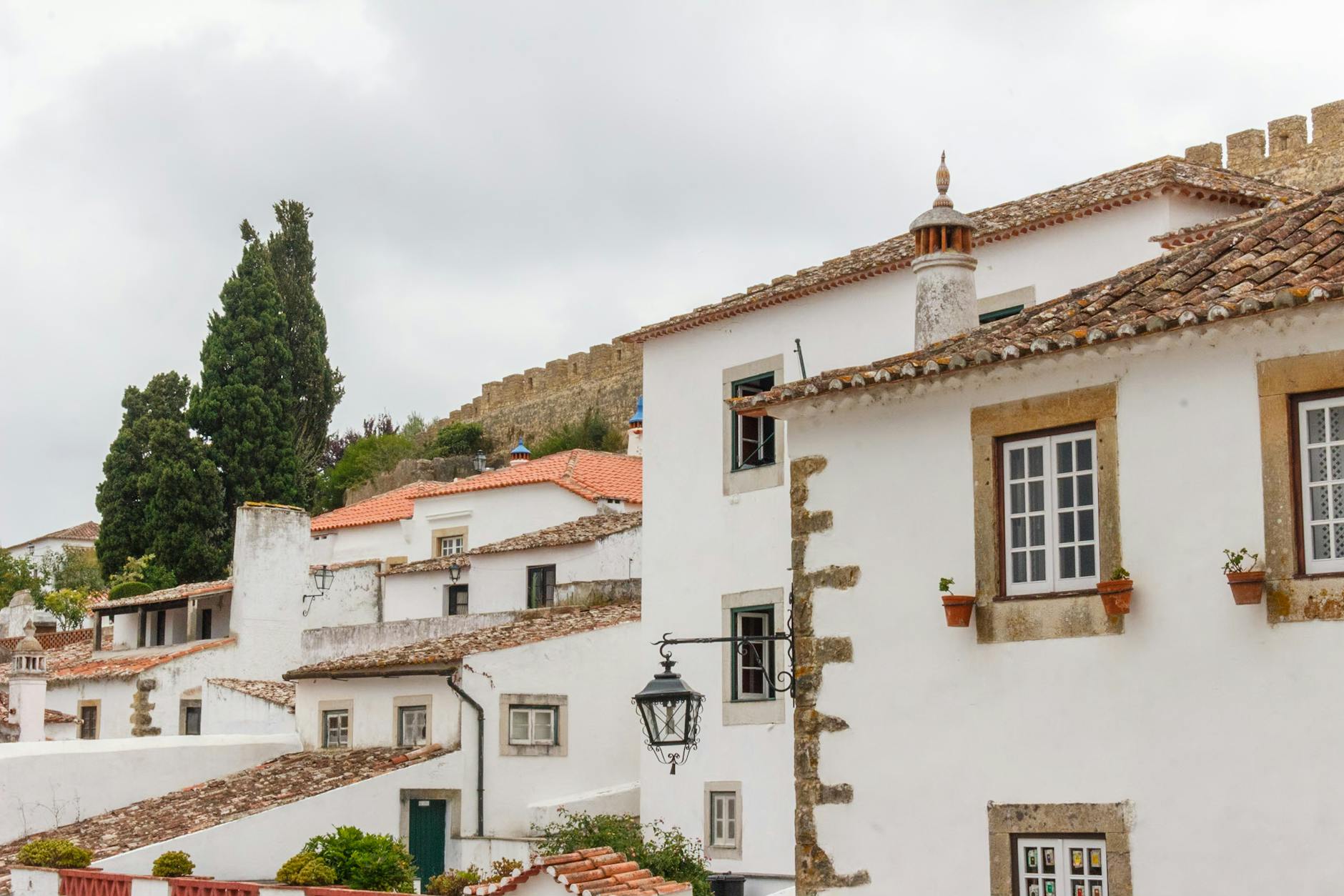
The single cobbled main street runs the length of the town from the southern Porta da Vila to the castle at the north. About 400 meters of cherry-liqueur shops, ceramics, local honey, lace, handmade soaps, and a handful of restaurants. It’s unashamedly touristy — everything on Rua Direita exists for visitors — but it’s also genuinely pleasant to walk. The buildings are uniformly whitewashed with blue and yellow trim, the cobbles are original, and the scale is human.
Explore the Side Streets
The streets off Rua Direita are quieter, more residential, and better for wandering. Cats sleep on walls. Windows have flower boxes. Laundry hangs between buildings. The contrast with the main street’s commerce is useful — it reminds you this is a town with 3,000 residents, not just a museum. Get lost for 20 minutes.
Where to Eat in Óbidos
Eating on Rua Direita is convenient and expensive. Eating outside the walls, or in the side streets, is better value and usually better food.
- A Ilustre Casa de Ramiro — best traditional Portuguese in town, mains €18–€28. Family-run, good bacalhau and grilled meats. The kitchen takes its job seriously despite the tourist traffic.
- Restaurante Alcaide — popular, €15–€22 mains. Reliable, central, good for lunch if you don’t want to search.
- Castelo de Óbidos restaurant — fine-dining option inside the Pousada. Expensive, but the courtyard setting is exceptional for a special occasion.
- Outside the walls: simpler, less-touristed tascas on the main approach road serve the same Portuguese standards at roughly half the price. Worth the 5-minute walk from the Porta da Vila.
Lunch in Óbidos is almost always busier and more expensive than dinner. If your schedule allows, eat outside the walls at lunch and spend the main afternoon hours inside exploring — by 4 PM the day-trippers thin out considerably.
Best Time to Visit
Spring (April–May) and autumn (September–October) are the best months — comfortable walking weather, manageable crowds, and the walls and white buildings at their best in softer light.
Summer (July–August) is hot and crowded. Arrive by 9 AM if you’re visiting in summer — Rua Direita is unpleasantly packed by 11 AM. The walls offer some breeze; the side streets offer shade.
July — Óbidos Medieval Market: mid-July, the town transforms into a medieval festival with costumed reenactors, jousting, craft markets, period food, and music. Entry is roughly €10 that week. Genuinely spectacular if you enjoy this kind of thing; genuinely crowded if you don’t. Book accommodation (in town or nearby) well in advance if visiting during the festival.
December — Vila Natal: The town runs a Christmas Village from late November through early January, with a Christmas market, ice rink, and festive decorations. One of the better Christmas markets in Portugal. Highly popular with Lisbon families on weekend trips.
Combining with Other Day Trip Stops
- Óbidos + Nazaré — Nazaré is 30 minutes north by car, a coastal fishing village famous for its enormous winter waves (the Praia do Norte big-wave surfing spot) and its traditional fisherwomen still wearing the seven-layered skirts. A natural second stop if you have a car.
- Óbidos + Caldas da Rainha — 10 minutes by bus. A working Portuguese town with a daily ceramics market and thermal spa complex. Not a tourist destination, which is part of the appeal. Good for lunch.
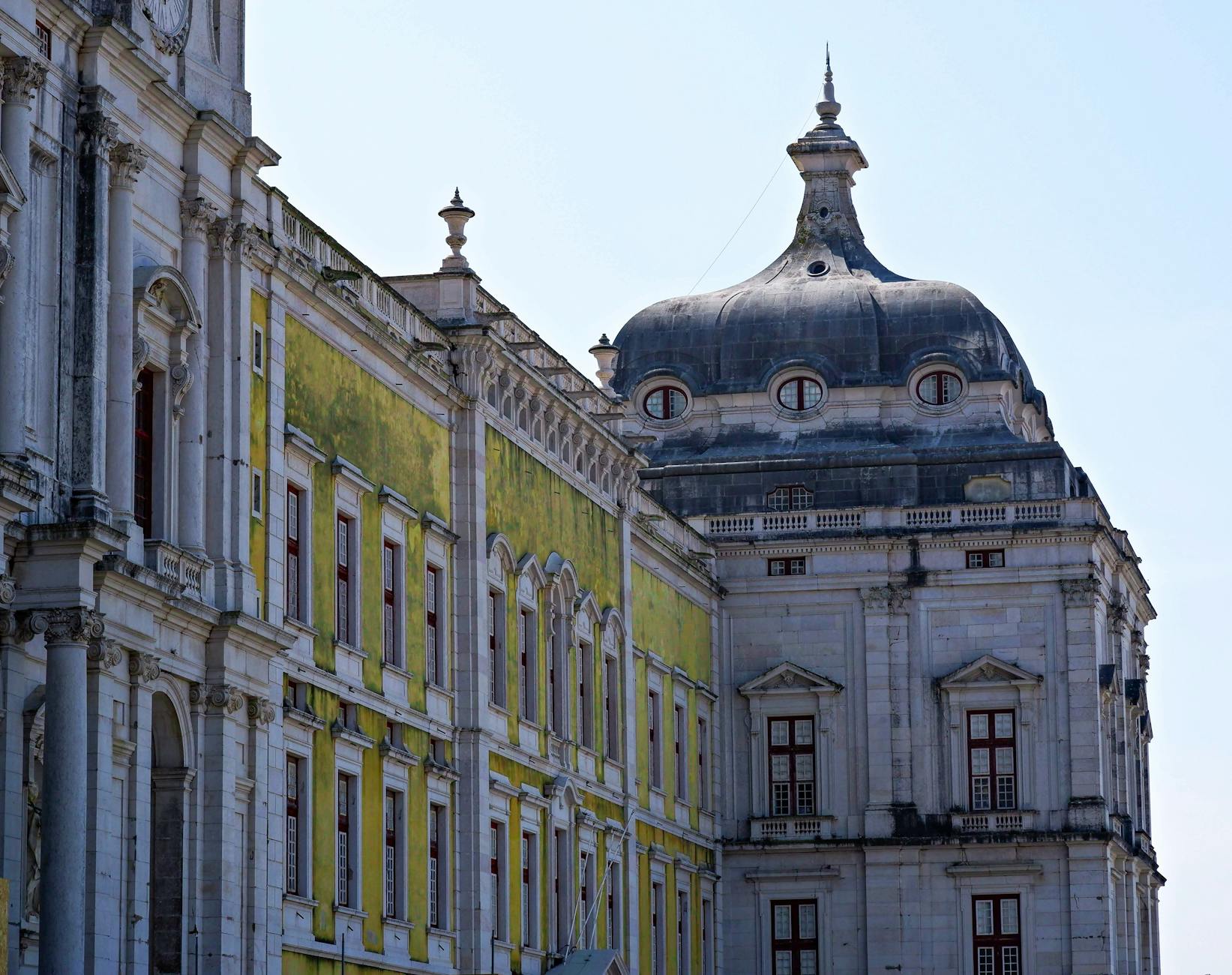
- Óbidos + Mafra — the massive 18th-century Mafra National Palace and Convent is 50 km south, roughly on the way back to Lisbon. One of Portugal’s most ambitious royal building projects, containing a famous baroque library. UNESCO-listed. Worth combining if you have a car and historical interests. See visitportugal.com for current opening times.
- Óbidos + Peniche — 45 minutes west by car. A working fishing port with excellent seafood restaurants and ferry access to Berlengas island nature reserve. Full-day combination with Óbidos and Peniche is possible with a car.
For the full day-trip picture from Lisbon, see our Day Trips pillar and our Cascais guide.
What to Buy in Óbidos
The town’s souvenir strip is predictable, but a few things are actually worth buying — and they beat most of what’s on offer in the city, which we cover in our Lisbon souvenirs guide:
- Ginja bottles — the local cherry liqueur to take home. €10–€15 per bottle. Look for small-producer versions over the supermarket brands.
- Painted ceramics — the blue and yellow Óbidos style is distinct from Alentejo or Barcelos ceramics. Good quality pieces at the better shops.
- Local honey — several producers sell directly in town. Genuine Portuguese honey, not repackaged from elsewhere.
- Handmade lace — traditional bilros lace from the region. Ask if it’s locally made versus imported.
Practical Tips
- The town is entirely pedestrian once inside the walls. Leave bags in your car boot or at the Sete Rios luggage storage if arriving by bus.
- ATM inside the town near the main street. Card payments widely accepted.
- Tourist information office just inside the Porta da Vila, on the left as you enter.
- Toilets available near the main gate and at the castle area.
- Comfortable shoes are essential — the cobbles are uneven and the wall walk has some steep sections.
FAQ: Óbidos Day Trip
Is Óbidos worth visiting?
Yes — overwhelmingly. It’s one of Portugal’s best-preserved walled towns, compact enough to see properly in half a day, and different enough from Lisbon and Sintra to justify the trip. The walls alone are worth the journey.
How long do you need in Óbidos?
Half day (4 hours) for a thorough visit including the walls, the main street, and lunch. Full day if you walk the walls, visit the castle and church, eat well, and explore the side streets properly.
Is Óbidos better than Sintra?
Different — Sintra is grander palaces set in forested hills; Óbidos is smaller, more medieval, and more intimate. Most travelers do both as separate days. For a short visit focused on the one thing, Sintra wins on spectacle; Óbidos wins on atmosphere.
How do I get to Óbidos from Lisbon?
Bus from Sete Rios is the most direct option (roughly 1h15m). Train to Caldas da Rainha plus a short bus connection is slightly longer. Check current timetables and fares at cp.pt.
Can I walk the Óbidos walls?
Yes and it’s one of the best things to do there. The walls are free to walk and circle the entire town. No safety rails on most sections — watch your step and don’t bring unsteady young children.
What is ginja de Óbidos?
A sour cherry liqueur (ginjinha) served in a small edible chocolate cup. The town’s signature drink, available from street kiosks for €1.50–€2. Drink the ginja, eat the cup. Bottles available to take home.
Bottom Line
An Óbidos day trip from Lisbon is one of the easiest good-day-out decisions you can make. Walk the walls, eat lunch, drink ginja from chocolate cups, explore the cobbled main street. Combine with Nazaré or Mafra for a fuller day. 85 km from Lisbon, easy bus access, done by 6 PM.
Óbidos is small enough that it pairs with something else, which is not true of the alternatives. Sintra and Pena Palace will take the whole day and then some, Cascais is the easy half-day by train, and the day trips pillar sets out how far each one really is.