Day Trips from Lisbon
Mafra National Palace: Guide to Portugal’s Grandest Baroque Monument
Explore the massive Mafra National Palace—UNESCO site, the stunning library, basilica, gardens, and how to visit from Lisbon.
In this guide
- Quick Reference: Mafra National Palace
- The History: A Royal Vow and 52,000 Workers
- Top Things to See Inside
- Mafra National Park (Tapada de Mafra)
- Getting There from Lisbon
- Combining with Ericeira
- Mafra vs Sintra: Which Day Trip to Choose?
- What Makes Mafra Different From Other Portuguese Palaces
- Practical Tips
- FAQ: Mafra National Palace
- Bottom Line
- Planning Your Mafra Palace Day Trip: A Practical Checklist
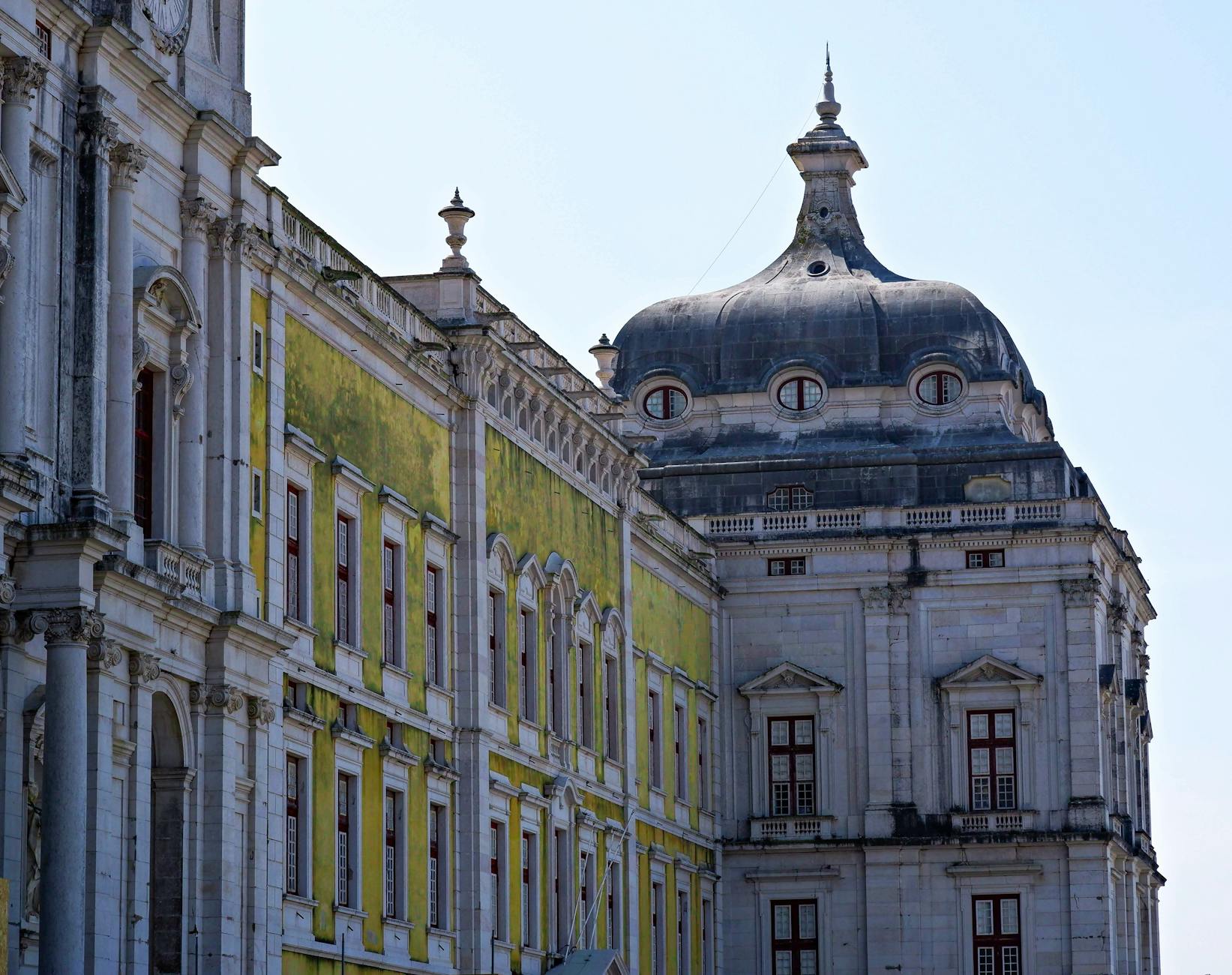
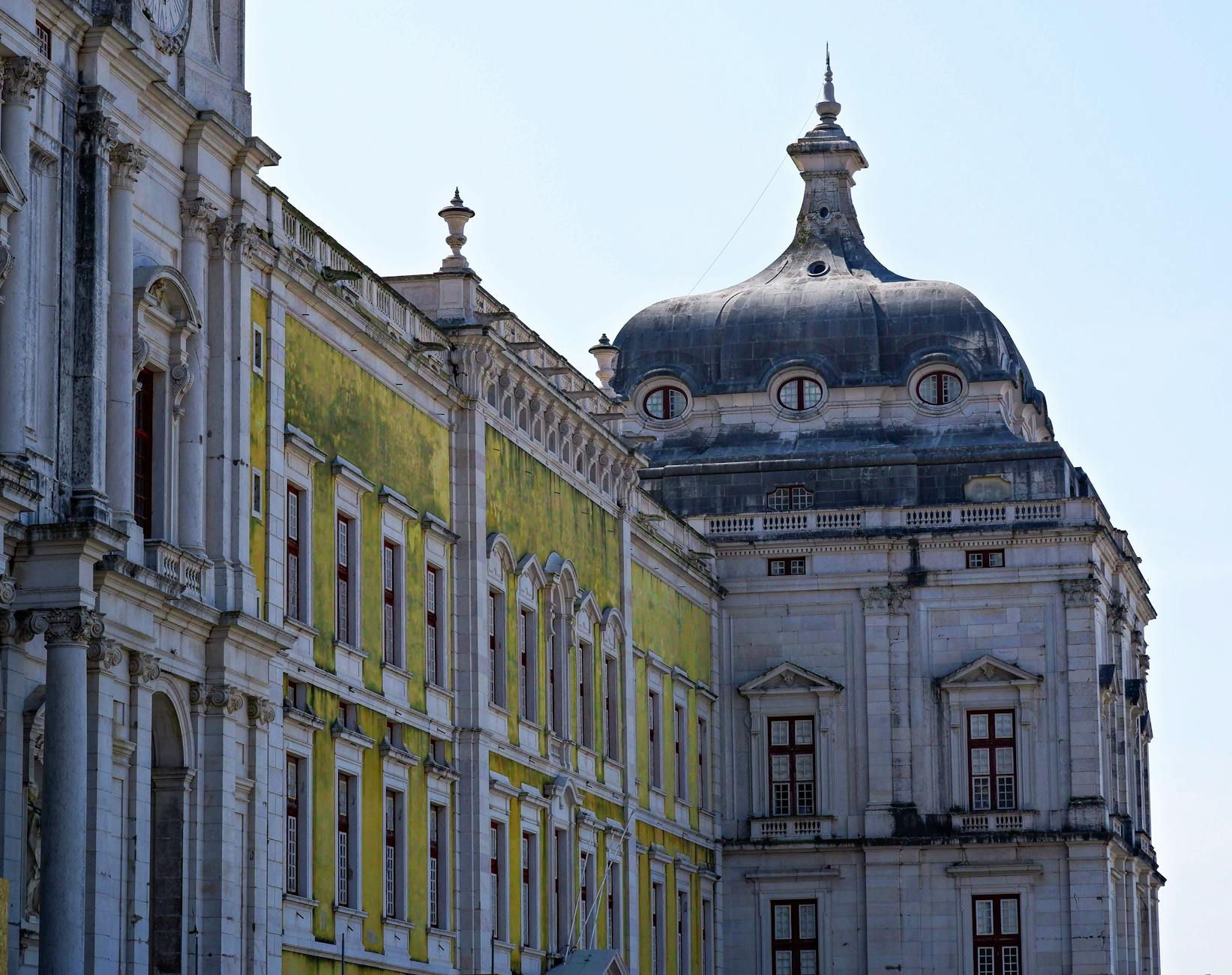
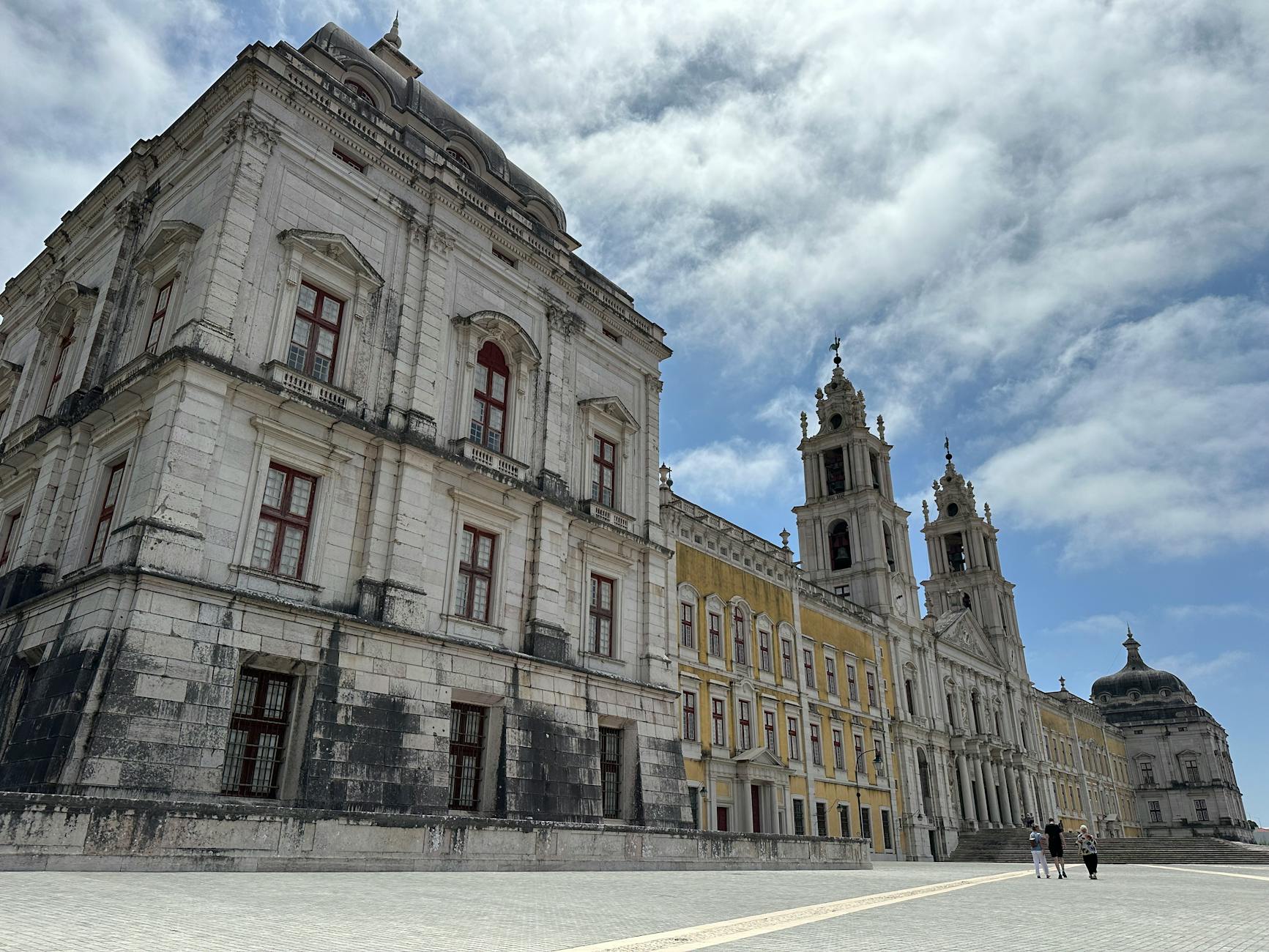
The Mafra National Palace is Portugal’s largest building — a colossal 18th-century baroque and rococo complex 40 km northwest of Lisbon, with 1,200 rooms, a 90-metre library still guarded by its colony of resident bats, six pipe organs designed to play simultaneously, and 92 bronze bells across two towers. UNESCO World Heritage since 2019. Less crowded than Sintra, architecturally more intense than anything else in the country, and easy to combine with Ericeira’s Atlantic surf coast.
This guide covers everything: the history, what to see inside, how to get there from Lisbon by bus or car, and how to plan the Mafra + Ericeira combination day. Updated for 2026.
Quick Reference: Mafra National Palace
| Detail | Info |
|---|---|
| Location | Mafra, ~40 km northwest of Lisbon |
| Travel time from Lisbon | 1 hr 10 min by bus; 40 min by car |
| Entry | €15 adult / €7.50 reduced / free under 12 |
| Hours | 9:30–17:30, closed Tuesdays (last entry 16:30) |
| Time needed | 2.5 hours for palace; full day with Ericeira |
| UNESCO | Yes, since 2019 |
| Free entry | First Sunday of month, 9:30–14:00 |
| Lisboa Card | Included |
| Best for | Architecture, baroque/rococo, less-crowded Sintra alternative |
The History: A Royal Vow and 52,000 Workers
Why It Was Built
In 1711, King João V made a vow: if his wife Queen Maria Ana of Austria gave him an heir, he would build a great convent in honour of Saint Anthony of Padua. A princess arrived the following year. João V kept his word — but on a scale that would bankrupt lesser kingdoms.
Construction started in 1717 and ran for 50 years, funded almost entirely by gold from the Minas Gerais rush in Brazil. At peak, 52,000 workers were on site simultaneously. Marble came from quarries near Sintra. Carrara marble for the statues was imported from Italy. The project consumed so much Portuguese treasury that it contributed to fiscal crises that outlasted João V himself.
The Scale
Numbers help, though they don’t quite prepare you for standing in front of it. The palace-convent complex covers roughly 40,000 square metres of floor space. The west facade stretches 220 metres. Inside:
- 1,200 rooms across two royal palaces (one for the king’s side, one for the queen’s)
- A Franciscan monastery for 300 monks
- A basilica with six pipe organs
- Two bell towers containing 92 bronze bells — one of the largest historical carillon systems in the world
- A 90-metre Rococo library holding 36,000 volumes
- Dozens of side chapels, audience halls, and ceremonial rooms
The complex is so large that tour guides use numbered corridors to navigate it. Budget 2.5 hours minimum — and that’s moving at a decent pace.
Royal Use and Republican End
The Portuguese royal family used Mafra primarily as a hunting palace and ceremonial residence. The massive walled park behind the building — the Tapada de Mafra — was their private hunting ground, stocked with deer and wild boar. After the 1910 Republican revolution ended the monarchy, royal use ceased. Mafra became a military academy for decades, which is partly why so many of its rooms survive intact. The army kept things standing.
Top Things to See Inside
The Library — The Crown Jewel
Ninety metres long. Marble inlay floors in a geometric pattern. Gilded wood shelving from floor to ceiling. 36,000 books from the 14th to 19th centuries. And, famously, the bats.
A colony of pipistrelle bats has lived in the library for over 200 years. They emerge at dusk to eat the insects — moths, beetles, silverfish — that would otherwise destroy the books. Mafra’s natural preservation system, entirely unplanned. You can see them roosting in the wooden joinery during the day if you look carefully at the upper shelves. Photography is permitted; flash is not.
The library alone justifies the trip. It is a proper Rococo interior — not “nice old room” but genuinely overwhelming — and it’s usually quiet enough to hear your footsteps on the marble.
The Basilica and Six Pipe Organs
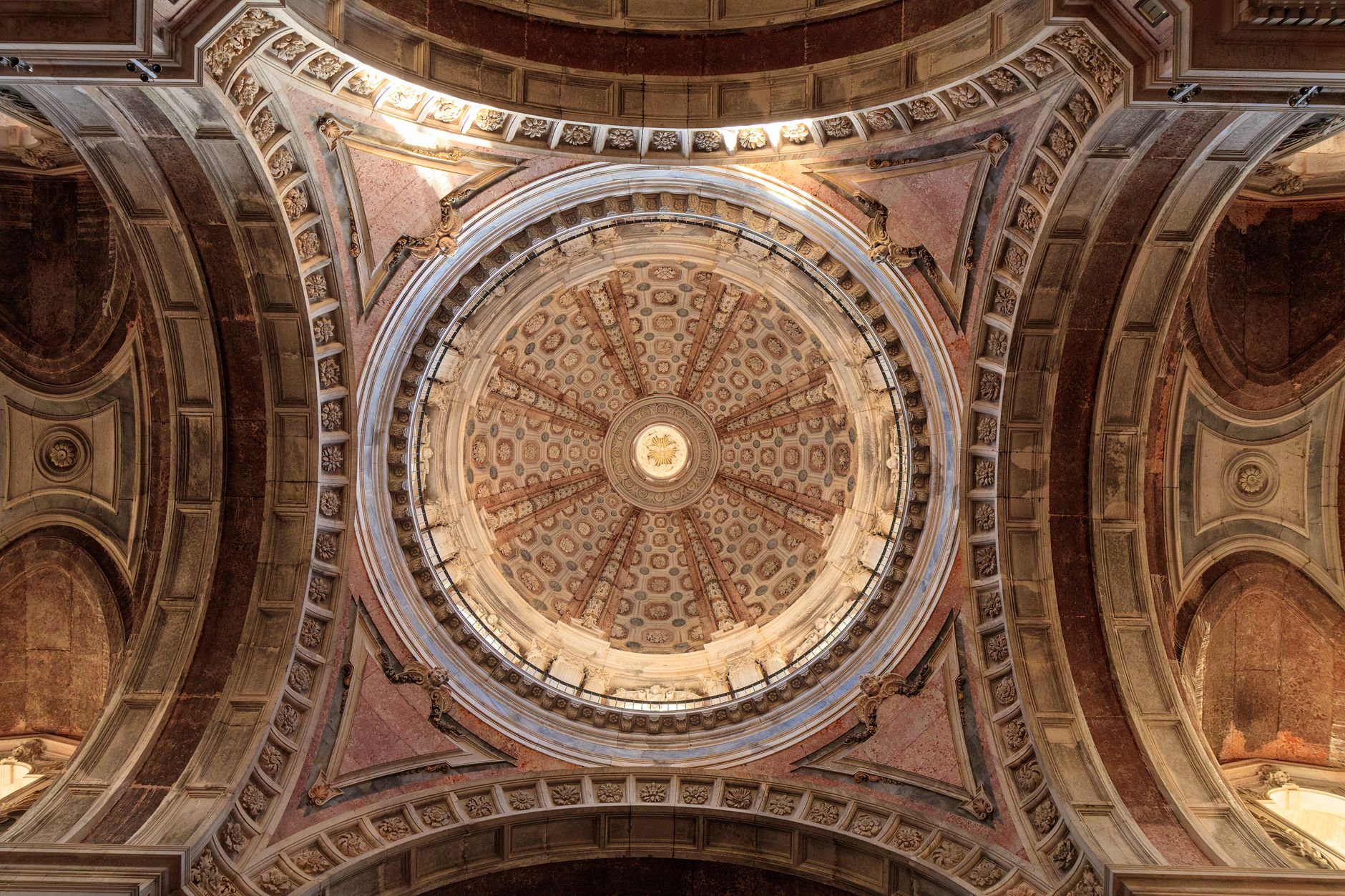
The central church has a marble-clad interior of considerable severity — baroque going cold rather than florid. Six pipe organs are set into the walls, three per side, designed from the outset to play simultaneously. During royal ceremonies all six played together; contemporary accounts describe the sound as physically overwhelming in the enclosed stone space. They were recently restored and are occasionally played for special events.
The nave is flanked by Carrara marble statues — 58 in the basilica alone, with more in the corridors. The quality is high enough that several are attributed to Italian masters brought in for the project.
The Royal Apartments
The king’s and queen’s quarters are connected by a long formal corridor lined with painted ceiling panels. Rooms are furnished with period pieces: gilded consoles, Chinese export porcelain, royal portraits in heavy frames. The hunting trophy room is exactly what it sounds like — deer antlers, boar tusks, and horns covering the walls — a thoroughly 18th-century interior that doesn’t apologise for itself.
The Monastic Hospital
One of the more unusual rooms in Mafra: the monks’ infirmary, with original wooden beds arranged in rows, dispensary cabinets intact, and a small chapel at the end so the bedridden could follow Mass without moving. Functional and austere against all the gilded excess above.
The Audience Hall and State Rooms
Where the king received foreign ambassadors. Frescoed ceiling, period chandeliers, and the deliberate theatrical staging that monarchical diplomacy required. The contrast between these formal rooms and the spartan monastic quarters on the same floor tells you something about how 18th-century Portuguese power was organised.
The Bell Towers and Carillon
The two towers hold 92 bells cast in Liège, Belgium, ranging from small to enormous. Together they constitute one of the world’s largest historical carillons. On ringing days the sound carries for miles.
Mafra National Park (Tapada de Mafra)
Behind the palace, an 8.2 km² walled hunting park that was the royal family’s private forest for nearly 200 years. Now open to the public and managed separately from the palace itself.
- Entry: €5
- Activities: Walking trails, e-bike rentals, guided deer-watching tours
- Wildlife: Deer, wild boar, foxes, migratory birds
- Best time: Spring mornings for deer; autumn for bird migration
If you have a full day, the park adds a worthwhile layer — the contrast between the extreme human artifice of the palace and the unmanicured hunting forest directly behind it is striking.
Getting There from Lisbon
By Bus (Recommended)
The Mafrense bus company runs direct from Lisbon’s Campo Grande Bus Station (Metro: Verde/Amarela lines, Campo Grande stop). Journey time is around 1 hour 10 minutes, departures every 30–45 minutes. Single fare is in the €5–7 range — check current timetables on the Mafrense website and confirm the last return bus time before you go. For official monument information, see patrimoniocultural.gov.pt.
By Car
40 minutes via the A21 highway from Lisbon. Free parking at the palace. The car makes obvious sense if you are continuing to Ericeira, which is 12 km from Mafra and awkward by public transport.
By Tour
Day tours from Lisbon combining Mafra and Ericeira run approximately €60–90 per person, including transport and a guide. Useful if you want context delivered rather than sought out.
By Train
No direct train to Mafra. A train-plus-bus combination is slower and less convenient than the direct Mafrense bus.
Combining with Ericeira
Ericeira is a fishing village 12 km west of Mafra on the Atlantic coast. It holds World Surfing Reserve status — one of only 12 in the world — for the quality and variety of its breaks. The town is whitewashed, compact, and good for lunch before returning to Lisbon. Ribeira d’Ilhas, the main surf beach, is about 15 minutes’ drive from the centre.
Sample Mafra + Ericeira Day
9:00 — Bus from Campo Grande to Mafra (1 hr 10 min)
10:30 — Mafra Palace tour (2.5 hours)
13:00 — Lunch in Mafra town (Casa do Cidadão for atmosphere)
14:00 — Bus or taxi to Ericeira (15 min)
14:30 — Walk Ericeira village and cliffside promenade
16:30 — Ribeira d’Ilhas surf beach and sunset watch
18:30 — Return bus to Lisbon
The return bus from Ericeira goes via Mafra — you can pick it up in either town.
Mafra vs Sintra: Which Day Trip to Choose?
| Mafra | Sintra |
|---|---|
| 1 massive palace-convent complex | Multiple palaces and gardens |
| Rococo + Baroque | Romanticist + Manueline |
| UNESCO since 2019 | UNESCO since 1995 |
| ~1.5 hours from Lisbon | ~40 minutes from Lisbon |
| Relatively uncrowded | Very crowded (especially summer) |
| 2.5 hours for a thorough visit | Full day minimum |
| €15 entry | €20 Pena + €15 Quinta da Regaleira |
| For: architecture focus, second-time visitors | For: classic Portugal first-timer |
Choose Mafra if:
- You have already done Sintra
- You are a baroque/rococo enthusiast
- You want genuinely quiet rooms and space to look at things
- Libraries with 200-year-old bat colonies are your thing
- Combining with the Ericeira surf coast
Choose Sintra if:
- First-time Portugal visitor with only one day-trip slot
- You want multiple palaces and forested landscape in one day
- Travelling with children who prefer fairy-tale aesthetics
They are not in competition — Mafra and Sintra are architecturally quite different things. If you have a week in Lisbon, do both. See our Sintra day trip guide and our Pena Palace guide for that other half. Our Cascais guide covers the third classic day trip — beaches and town combined.
What Makes Mafra Different From Other Portuguese Palaces
Most Portuguese palaces were layered over time — Sintra’s Pena was rebuilt in the 19th century as a deliberate romantic fantasy, Queluz is a modest copy of Versailles, the Ajuda Palace was never quite finished. Mafra is unusual in that it was designed as a single unified project, built in one generation, by a king with essentially unlimited gold and a point to prove.
João V wanted Portugal to stand alongside the great Catholic powers of Europe — Spain, Austria, France — and Mafra was his statement piece. The result is architecturally coherent in a way few palaces are. The organs are tuned to each other, the library proportioned against the nave, the royal apartments balanced across either side of the basilica. It doesn’t feel assembled over centuries. It feels built to a plan — because it was.
Practical Tips
- Closed Tuesdays — plan accordingly
- Book online in summer to skip the ticket queue; the windows can be slow
- Audio guides €3 extra — genuinely useful for navigating 1,200 rooms without getting lost
- Photography permitted everywhere except flash in the library
- Wheelchair access partial — ground floor and main rooms accessible; some upper areas have steps
- On-site café for basic refreshments
- Restaurants in Mafra town a short walk from the palace entrance
- First Sunday of each month free entry 9:30–14:00 — can be busier than usual
- Lisbon Card includes entry
FAQ: Mafra National Palace
Is Mafra National Palace worth a day trip from Lisbon?
Yes — for architecture enthusiasts it delivers more than any other Portuguese palace. Less crowded than Sintra, historically coherent, and the Rococo library is genuinely extraordinary. Pair with Ericeira for a full day.
How do I get to Mafra from Lisbon?
Mafrense bus from Campo Grande Bus Station, Metro lines Verde or Amarela. About 1 hour 10 minutes, every 30–45 minutes. Or drive 40 minutes via the A21 — free parking at the palace.
How long does Mafra National Palace take to visit?
2.5 hours for a thorough tour of the palace. Add another hour if you include the Tapada de Mafra national park. Budget the full morning if combining with Ericeira in the afternoon.
Why does the Mafra library have bats?
A colony of pipistrelle bats has lived in the library for over 200 years. They eat the moths and beetles that would otherwise damage the 36,000 historic books. Unplanned, entirely effective, still going in 2026.
Can I combine Mafra with Sintra in one day?
Technically possible but it makes both visits rushed — Sintra needs a full day and Mafra needs 2.5 hours. Better to do them on separate days, or combine Mafra with coastal Ericeira (12 km away) instead.
How much is Mafra National Palace entry?
€15 adult, €7.50 reduced (seniors 65+, youth 13–24, students), free for children under 12. Lisbon Card included. First Sunday of each month free until 14:00.
What is the best time to visit Mafra Palace?
Weekday mornings in spring or autumn. Summer is manageable — Mafra sees nothing like Sintra’s tourist volume — but midday in July or August is hot and the return bus can be crowded.
Bottom Line
Mafra National Palace is the most underrated day trip from Lisbon. UNESCO World Heritage status since 2019, an architecturally unified baroque-rococo complex built in a single generation, a bat-protected Rococo library, six pipe organs, and 92 bronze bells — all with a fraction of Sintra’s crowds. Take the Mafrense bus from Campo Grande, allow 2.5 hours inside, stop for lunch in Mafra town, and continue to Ericeira for a surf beach finish. The full day costs around €25 in entry and bus fares and delivers one of Portugal’s best architecture experiences.
Mafra tends to be the second or third day trip people take rather than the first. The day trips guide compares the field: Sintra and Pena Palace are the ones almost everyone does first, and Cascais the easiest to fit around a half-day elsewhere.
Planning Your Mafra Palace Day Trip: A Practical Checklist
A few things worth knowing before you make the trip that don’t fit neatly into any other section.
When to Go
Spring (March–May) and early autumn (September–October) are the best windows. The light is good, the temperatures are comfortable for a 2.5-hour interior tour, and the gardens around the complex are at their best. Summer is fine — Mafra is never as crowded as Sintra — but afternoons in July and August can be genuinely hot in the marble rooms, which retain heat. Winter visits work well on dry days; the palace is an all-indoor experience.
What to Wear
Comfortable shoes are a must — marble floors throughout, and you will cover a lot of ground. The basilica requires modest dress (shoulders and knees covered), as it is an active religious space. A light layer for winter visits; the stone interior stays cool year-round.
Eating and Drinking
The on-site café handles basic needs. For a proper meal, Mafra town has a number of restaurants within a 10-minute walk of the palace entrance. If you are heading to Ericeira afterwards, the seafood restaurants there are substantially better — save your appetite and have a late lunch on the coast.
Language
Most palace signage and audio guides are available in Portuguese, English, and Spanish. Staff speak enough English to handle common questions. The audio guide at €3 is genuinely the best investment for a solo visit — the palace layout is complex and context matters.
Booking
Tickets can be purchased at the door or online. Online booking is recommended in summer months (June–August) to avoid queues. The Lisboa Card is accepted and includes entry — if you have the card, there is no reason to buy separately. For the most current entry prices and opening hours, always check the official heritage body website at patrimoniocultural.gov.pt before travel, as prices and schedules can be updated.
How Mafra Palace Earned UNESCO Status
The Royal Building of Mafra was inscribed as a UNESCO World Heritage Site in 2019 as part of the broader “Palace, Basilica, Convent of Mafra, Tapada de Mafra” nomination. The inscription recognised its exceptional architectural integrity, the scale and ambition of its single-phase construction, and the historically significant library and carillon. It joined the same Portuguese UNESCO list that includes the Tower of Belém, Jerónimos Monastery, and the Sintra cultural landscape — but arrived with far less tourist infrastructure around it, which is precisely why it remains so rewarding to visit.