Lisbon Travel Guide
Lisbon vs Porto: Which Portuguese City Should You Visit? 2026
Comparing Lisbon and Porto to help you decide which Portuguese city to visit, covering attractions, food, nightlife, costs, and atmosphere.
In this guide
- Quick Verdict: Lisbon vs Porto at a Glance
- Attractions Comparison
- Food & Dining
- Cost Comparison (2026)
- Atmosphere & Character
- Nightlife
- Day Trip Options
- Climate
- Safety
- Transport & Walkability
- Time Required
- Should I Visit Both?
- Train: Lisbon to Porto
- Lisbon vs Porto for Specific Travellers
- The Portugal Two-City Itinerary
- FAQ: Lisbon vs Porto
- Bottom Line
Lisbon vs Porto — if you’ve got one trip to Portugal and people keep telling you to visit both, here’s the honest answer: they’re right, but you probably can’t. The good news is that whichever you pick, you’re not making a mistake. These are two of the best city-break destinations in Europe, and they’re only three hours apart by train.
If the choice is between countries rather than cities, our Lisbon vs Barcelona comparison is the other one worth reading.
If you decide you want both, do the sum first: our guide to the Porto day trip from Lisbon sets out exactly how much of Porto seven hours actually buys you, and why two nights is usually the better call.
You do not have to choose — the two cities are under three hours apart by rail. Our Lisbon to Porto train guide has the times, the fares and how to get them for a fraction of the walk-up price.
Lisbon is bigger, sunnier, and more varied — more attractions, more Michelin stars, easier beach and day-trip access. Porto is smaller, moodier, and more intensely itself — the Douro river frontage, the port wine cellars across in Vila Nova de Gaia, the São Bento station tiles, the francesinha at midnight. This comparison covers everything: attractions, food, cost, climate, day trips, and the train between them. Updated for 2026.
Quick Verdict: Lisbon vs Porto at a Glance
| Choose Lisbon if you want… | Choose Porto if you want… |
|---|---|
| More attractions and variety | Atmospheric, walkable city |
| Bigger food scene + Michelin stars | Excellent dining at lower prices |
| Beach access (Cascais, Caparica) | Wine country (Douro Valley) |
| Sintra fairy-tale palaces | Port wine cellars in Vila Nova de Gaia |
| Sunnier, warmer climate | Moodier, more atmospheric |
| Larger nightlife scene | Compact, intimate nightlife |
| More days needed (3-5+) | Less time needed (2-3 days) |
| International (more English spoken) | More authentic Portuguese feel |
Attractions Comparison
The raw numbers favour Lisbon. More UNESCO sites, more world-class museums, more days needed to cover the ground. But Porto punches above its size — its compact historic zone rewards slow exploration far more than its limited footprint suggests.
Lisbon’s Top Attractions
- Jerónimos Monastery (UNESCO) — 16th-century Manueline masterwork in Belém; the cloisters alone justify the entry fee
- São Jorge Castle — Moorish hilltop fortress with panoramic city views; go early morning to beat the heat and crowds
- Praça do Comércio & Rua Augusta Arch — the grandest riverfront square in Iberia, best at dusk when the light hits the triumphal arch
- Tram 28 + heritage trams — slow, photogenic, and always packed in summer; treat it as a spectacle, not transport
- Belém Tower — closed for restoration in 2026; check official listings for reopening dates before planning around it
- National Tile Museum (Museu Nacional do Azulejo) — 35,000 pieces of azulejo history, genuinely excellent and rarely overcrowded
- Calouste Gulbenkian Museum — private collection of extraordinary depth; one of Europe’s most underrated art museums
- MAAT — contemporary art and architecture right on the Tagus waterfront; the building is the attraction as much as what’s inside
- Lisbon Oceanarium — the best aquarium in Europe by most measures, especially good for families; book ahead in summer
- Miradouros — a dozen viewpoints across seven hills; Portas do Sol at dusk and Graça at dawn are the two best
Porto’s Top Attractions
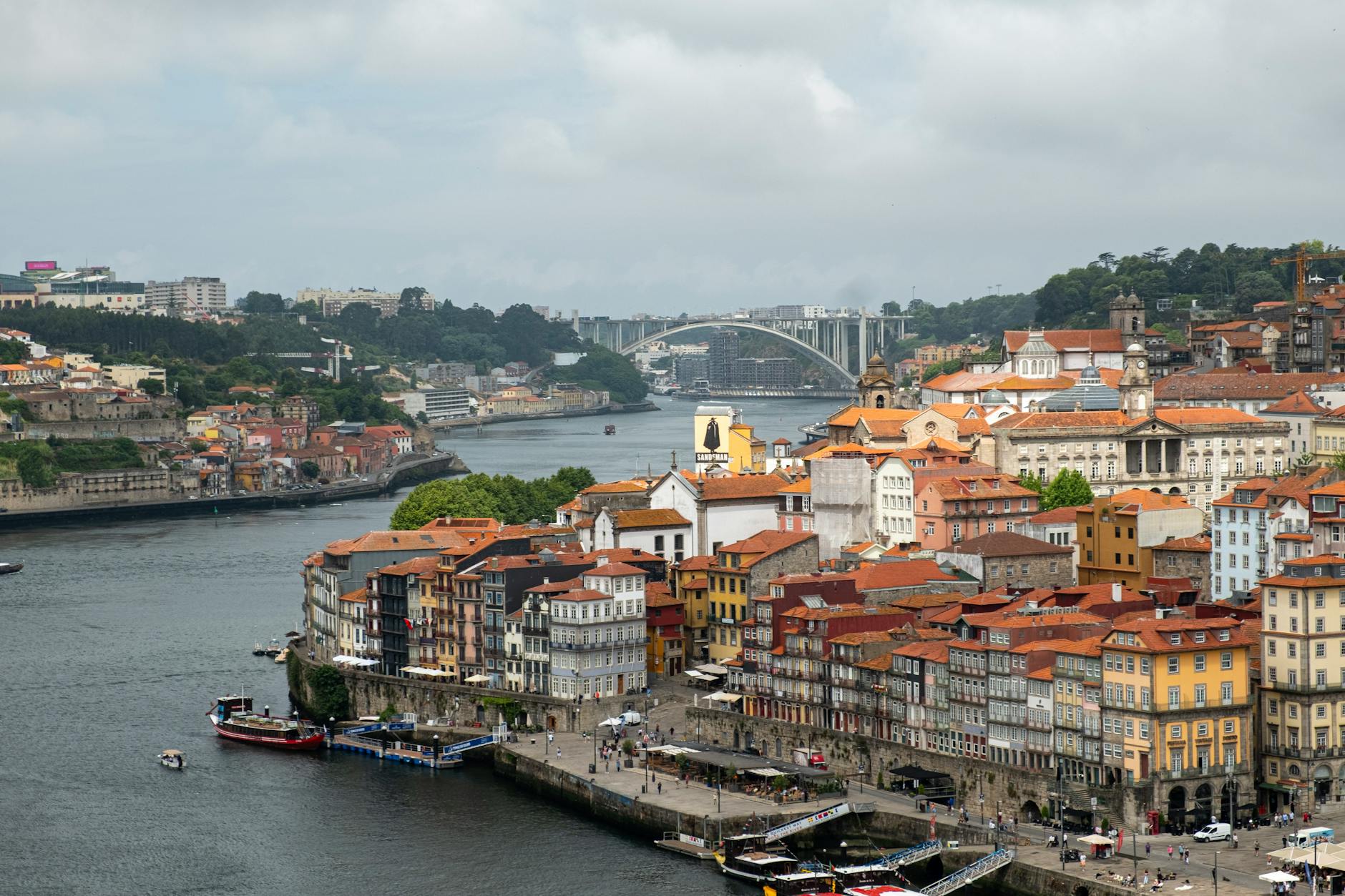
- Ribeira (UNESCO) — the old town along the Douro; the tile-front buildings stacked up the hillside behind the waterfront are instantly iconic and better in person than in photos
- Livraria Lello — the bookshop that reportedly inspired J.K. Rowling; €8 entry (deducted from purchases); book a time slot online, it sells out
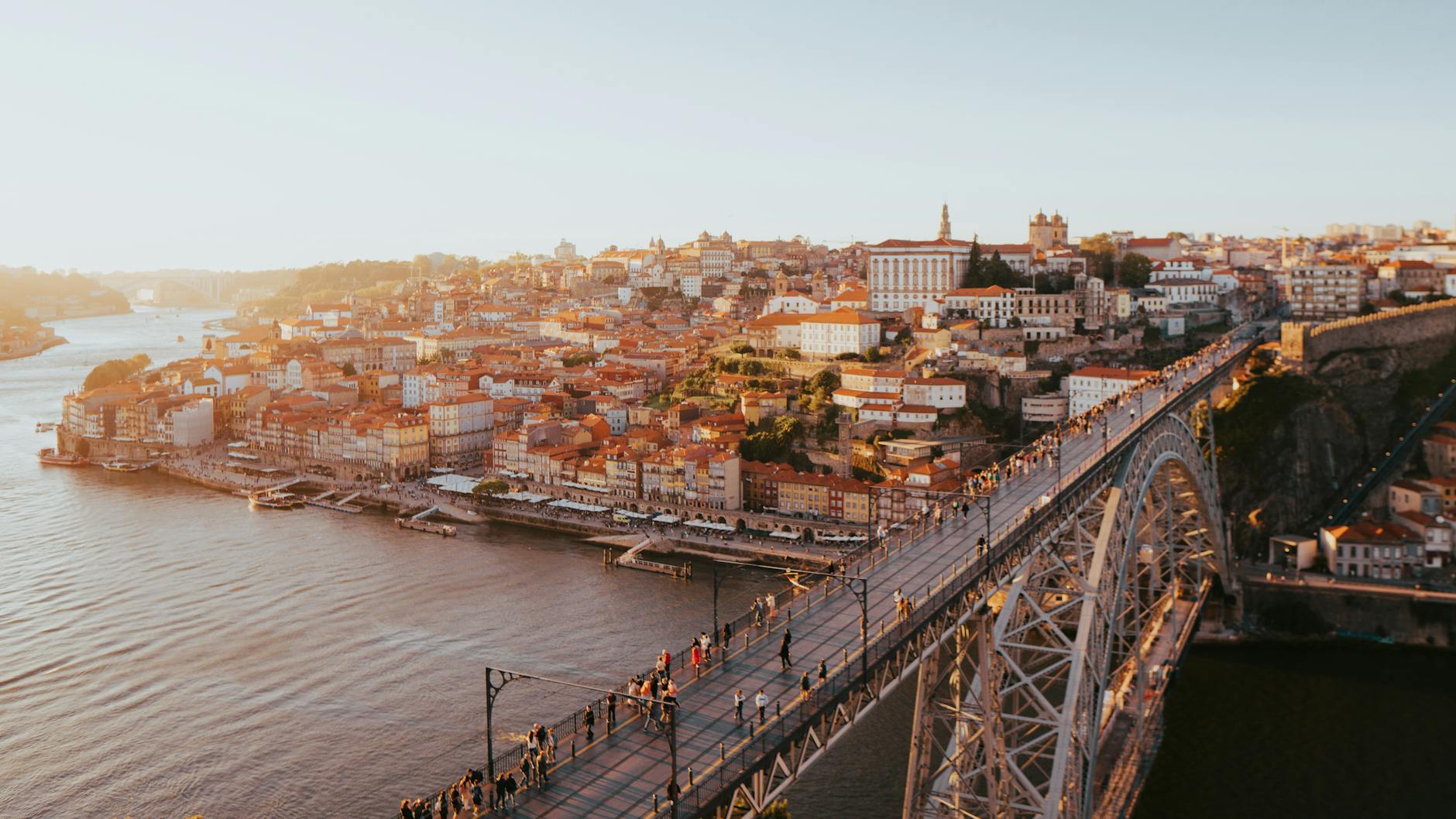
- Port wine cellars in Vila Nova de Gaia — cross the Dom Luís I Bridge on foot, then descend into the cellars of Sandeman, Graham’s, or Taylor’s for tastings; allow a half-day
- São Bento Train Station — the azulejo tile murals inside are among the finest in Portugal; free to enter; often missed because people pass through rather than stop
- Clérigos Tower — 76-metre baroque tower; the best elevated view in Porto’s historic centre
- Sé do Porto Cathedral — Romanesque fortress-church with a cloister tiled in blue azulejos; the contrast between the austere exterior and the ornate interior is striking
- Casa da Música — Rem Koolhaas’s concert hall; architectural tour available even if you don’t catch a performance
- Crystal Palace Gardens — underrated hilltop park with Douro river views and wandering peacocks; usually quiet
- Serralves Museum & Park — Álvaro Siza–designed contemporary art museum set in one of Porto’s best parks; popular with locals on weekends
- Palácio da Bolsa — neo-Moorish Stock Exchange Palace; the Arabian Room interior alone is worth the guided tour
Verdict: Lisbon has more top-tier attractions spread across a bigger city. Porto’s highlights are more concentrated — you can cover the essentials in a long day, then spend remaining time going deeper rather than wider.
Food & Dining
Both cities eat well. The gap is in variety and price, not quality.
Lisbon Food
- Michelin stars: 8+ restaurants including Belcanto (José Avillez, 2 stars), Alma, and Eleven — the most concentrated fine dining in Portugal
- Diversity: International cuisine widely available thanks to Portugal’s colonial history — Mozambican, Goan, Brazilian, Cape Verdean all represented in specific neighbourhoods
- Marisqueiras: Cervejaria Ramiro on Avenida Almirante Reis remains the benchmark for shellfish; go hungry and expect a queue on weekends
- Pastéis de Belém: The original 1837 recipe, sold only at Fábrica de Pastéis de Belém in Belém. Eat them warm, dusted with powdered cinnamon and icing sugar
- Time Out Market: Curated food hall with the city’s best chefs in a casual format; worth one visit, but it skews expensive and touristy for repeat trips
- Tasca circuit: The best eating in Lisbon is in the old-school tascas of Mouraria, Intendente, and Madragoa — paper tablecloths, set lunch menus for €9-13, no English menu required
Porto Food
- Francesinha: Porto’s signature dish — layered meat, cheese, and egg in a rich beer-and-tomato sauce. Order it at Café Santiago or Bufete Fase. It is not subtle and you will need a nap afterwards
- Tripas à moda do Porto: Tripe stew; Porto’s people are called tripeiros (tripe-eaters) because of a historic episode when the city emptied its larders to supply a fleet. Try it once
- Bacalhau: Salt cod done in dozens of ways; bacalhau à brás (scrambled with eggs and potatoes) at a local tasca runs €10-14 and is among Portugal’s best dishes
- Port wine and Vinho Verde: You are in the home territory of both. Cellar tastings in Gaia for port (€10-20 typically), local wine bars for the region’s light, slightly fizzy white
- Cheaper restaurants: A full dinner at a good Porto tasca costs what a starter runs at a mid-range Lisbon restaurant
- Michelin representation: DOP (Rui Paula), The Yeatman Hotel, Pedro Lemos — Porto’s fine dining scene has grown significantly in the last decade
Verdict: Lisbon for range and Michelin concentration. Porto for traditional regional food, value, and the kind of meal where you spend €18 and feel like you’ve found something special. Both reward the traveller who eats where the locals eat, not where the menus are laminated and the WiFi password is on a chalkboard.
Cost Comparison (2026)
| Item | Lisbon | Porto |
|---|---|---|
| Mid-range hotel | €140-280 | €100-220 |
| Casual restaurant dinner | €20-35 | €18-30 |
| Mid-range restaurant dinner | €40-75 | €35-65 |
| Beer at bar | €2.50-5 | €2-4 |
| Single transit ride | €1.61 | €1.40 |
| Daily budget mid-range | €100-180 | €80-150 |
Verdict: Porto is 20-30% cheaper across the board. That gap compounds over a week — a couple spending €300/day in Lisbon might spend €220/day in Porto for a similar experience. The savings are sharpest in accommodation and restaurants. For detailed Lisbon-specific budgeting, see our Lisbon budget guide.
Atmosphere & Character
Lisbon
The capital has the energy of a city that knows it’s arrived. Rooftop bars in Príncipe Real, natural wine shops in Santos, craft cocktails in Cais do Sodré — it’s cosmopolitan in a way Porto isn’t, and doesn’t apologise for it. The expat and digital-nomad presence is significant; in some neighbourhoods you’ll hear as much English, French, and German as Portuguese. Fado survives in Alfama, though the tourist-facing houses on the main streets have largely replaced the old tascas. The real thing still exists — you just have to look past the A-frame signs.
Lisbon’s hills give it visual drama even when you’re not trying. A corner that suddenly opens onto the Tagus; a cobbled alley disappearing upward into whitewashed houses; the red-and-gold trams grinding uphill on impossibly steep tracks. Seven neighbourhoods feel like distinct villages that happen to share a city. That’s the appeal.
Porto
Porto is prouder and more guarded. The city has a strong working-class identity — the tripeiros, the football rivalry with Lisbon (Benfica vs Porto is the Portuguese clásico), the general sense that Porto was doing things its own way before anyone was paying attention. The Douro fog in October, the granite buildings going green in the rain, the azulejo tiles flaking off century-old walls — there’s a melancholy romanticism to Porto that Lisbon, sunnier and more international, doesn’t quite replicate.
Porto is also genuinely more walkable as a city. The historic centre is compact enough that you barely need transit between the cathedral, Ribeira, Livraria Lello, and the wine cellars across the bridge. That concentration is part of what makes short visits work so well — you cover a lot of ground without covering much distance.
Nightlife
Lisbon wins on scale. Bairro Alto for bar-hopping (streets full of people with plastic cups of wine until 3am in summer), Cais do Sodré for clubs and late bars around the neon-lit Pink Street, LX Factory on Friday evenings for markets and live music. The electronic music scene is serious — Lux Frágil remains one of the best-regarded clubs in Europe, with a terrace looking over the Tagus.
Porto’s nightlife centres on the Galerias de Paris strip — dozens of bars on a few central streets, cheaper drinks, a younger and more local crowd. Rua Galeria de Paris and Rua Cândido dos Reis are the main arteries. It’s compact, unpretentious, and doesn’t take itself too seriously. For late nights, Maus Hábitos (arts bar with a rooftop terrace) and Plano B are the local anchors.
Verdict: Lisbon for scale and international club culture. Porto for unpretentious, cheaper evenings in a more local atmosphere. If nightlife is the main reason for your trip, Lisbon.
Day Trip Options
From Lisbon
- Sintra (40 min by train from Rossio) — fairy-tale palaces; Pena Palace, Moorish Castle, Quinta da Regaleira. Allow a full day; it gets very crowded in summer, go on a weekday if possible
- Cascais (40 min by train from Cais do Sodré) — beach town with a good old town and Atlantic-facing coast; works for a half-day or full day
- Setúbal/Arrábida (1 hr by bus or car) — Caribbean-green water beaches on the Setúbal Peninsula; difficult without a car or organised tour from Lisbon
- Évora (1.5 hrs by train) — UNESCO Roman city with a well-preserved centre, a Roman temple, and a bone chapel; rarely overcrowded outside summer weekends
- Óbidos (1 hr by bus) — medieval walled town; small but very pretty; works combined with nearby Caldas da Rainha or Nazaré on the same day
- Fátima (1.5 hrs by bus or train) — Portugal’s major Catholic pilgrimage site; worth visiting on religious or historical grounds, regardless of your beliefs
- Mafra Palace (1 hr) — UNESCO baroque palace; immense and often empty of tourists compared to Sintra
From Porto
- Douro Valley (1.5 hrs by train or car) — UNESCO wine country with quintas open for tastings and boat trips on the river; unmissable for wine lovers and arguably the single best day trip in Portugal
- Guimarães (1 hr by train) — UNESCO birthplace of Portugal with a compact, well-preserved historic centre; genuinely interesting rather than just photogenic
- Braga (45 min by train) — religious heart of Portugal; Bom Jesus staircase sanctuary and a lively pedestrian centre worth a few hours
- Aveiro (40 min by train) — moliceiro boats on the canals, art nouveau architecture, and the local speciality ovos moles (sweet egg pastries); underrated
- Coimbra (1 hr by train) — Portugal’s ancient university city; the Biblioteca Joanina is jaw-dropping but requires booking well in advance
- Atlantic beaches — Espinho and Matosinhos are accessible by metro from Porto in 20-30 minutes; genuinely local beach towns
Verdict: Lisbon has more variety and better-developed day-trip infrastructure. Porto has fewer options, but the Douro Valley is one of Portugal’s great experiences and worth making the trip to Porto for that alone.

Climate
| Lisbon | Porto | |
|---|---|---|
| Annual sunshine | 300+ days/year | ~220 days/year |
| Summer temperatures | 30-35°C (can hit 40°C+) | 20-25°C |
| Winter temperatures | 10-15°C | 8-13°C |
| Annual rainfall | ~600mm | ~1,200mm |
| Best months | Apr-Jun, Sep-Oct | May-Jun, Sep-Oct |
The climate gap is real and affects your decision more than most people expect. Porto’s Atlantic position means regular rain and a shorter comfortable summer. In July and August, Lisbon bakes and Porto is noticeably milder — which is either an advantage (less heat) or a disappointment (less sun) depending on what you came for. For shoulder-season travel (April-May or September-October), both cities are excellent. See our detailed best time to visit Lisbon guide for month-by-month breakdown.
Safety
Both cities are safe by European standards. Petty theft — pickpocketing on Tram 28, bag snatching near tourist-heavy squares — is the main concern in Lisbon. Porto’s tourist zones have similar issues, particularly around Ribeira and Livraria Lello. Neither city has dangerous neighbourhoods in the sense that would affect most visitors planning a normal trip. See our is Lisbon safe guide for specific detail.
Transport & Walkability
Lisbon
- 4-line metro — clean, efficient, covers most tourist zones; single ride €1.61; day pass ~€6.80
- Heritage trams (28, 12E, 15E) — slow and scenic; don’t rely on them for actual transport, but Tram 28 through Alfama is worth riding once
- Funiculars (Glória, Bica, Lavra) — useful for avoiding steep hill climbs; included on transit day pass
- Train routes for day trips — Sintra from Rossio, Cascais from Cais do Sodré, both fast and frequent
- Hills and cobblestones — uphill walking is real work; comfortable shoes are non-negotiable
Porto
- 6-line metro — surprisingly extensive for a city this size; connects airport, beaches, and outer neighbourhoods efficiently
- Mostly walkable historic centre — Ribeira to Livraria Lello to São Bento is all on foot; no transit needed for the core sights
- Hills — the climb from Ribeira up to the Cathedral is steep on cobblestones; factor it in
- Trams (limited) — the heritage Douro line runs along the river; tourist-oriented but atmospheric
Time Required
| Days | Lisbon | Porto |
|---|---|---|
| 1 day | Highlights only — rushed | City highlights — manageable |
| 2 days | Centre + Belém | Most of city + Douro half-day |
| 3 days | City + 1 day trip | City + Douro full day trip |
| 5 days | City + 2-3 day trips | City + Douro overnight + nearby towns |
| 7 days | Comfortable depth | Generous; add the coast or Guimarães |
Should I Visit Both?
If you have 7-10 days: Yes — visit both. The logistics are easy.
Best itinerary: 4 days Lisbon (with Sintra day trip) → train to Porto → 3 days Porto (with Douro day trip) → fly home from Porto. Or reverse it: arrive Porto, end in Lisbon, which has more direct international flights. Both work. An open-jaw flight (in one city, out the other) is often the same price as a return and saves 3 hours of backtracking.
If you have 4-5 days: Pick one. First-timers wanting maximum variety: Lisbon. Travellers wanting compact, atmospheric, and less expensive: Porto.
Train: Lisbon to Porto
- Time: 2 hr 50 min on the Alfa Pendular (high-speed tilting train)
- Cost: €25-45 second class; €45-70 first class. Buy at least a week ahead for the best prices
- Stations: Lisbon Oriente or Santa Apolónia → Porto Campanhã (main interchange) or São Bento (city centre, fewer direct services)
- Frequency: Multiple daily departures, roughly hourly through most of the day
- Booking: CP (Comboios de Portugal) — book online in advance; no price advantage at the station window
- Tip: First class on the Alfa Pendular is genuinely more spacious and is often only €10-15 more than second class when booked in advance; worth it for the journey
The train is almost always better than flying between Lisbon and Porto. Door-to-door, accounting for airport check-in and the distance from the airport to either city centre, the train is typically faster and deposits you in the middle of the city.
Lisbon vs Porto for Specific Travellers
First-Time Visitors to Portugal
Lisbon. More to see, easier day trips, better international flight connections, more English spoken. If you have time for both, start here and end in Porto — the contrast works well in that direction.
Wine Lovers
Porto — the Douro Valley plus Gaia port cellars is a combination that Lisbon simply can’t match. There are good wine bars in Lisbon but nothing close to the immersive wine-region experience an hour from Porto.
Beach Lovers
Lisbon — Cascais (Atlantic coast) and Costa da Caparica (long surf beach south of the Tagus) are both accessible by public transport in under an hour. Porto has beaches nearby but the water is colder and the infrastructure less developed.
Foodies
Honest tie. Lisbon for Michelin range, international options, and the overall food ecosystem. Porto for traditional regional cooking, cheaper meals, and the unmatched francesinha experience. If your main goal is great food at reasonable prices, Porto edges it.
Couples / Honeymoon
Both work. Lisbon for variety and rooftop romance. Porto for Gothic-Baroque atmosphere and the kind of fog-over-the-Douro evenings that feel genuinely cinematic — the upper deck of Dom Luís I Bridge at dusk is one of the most romantic views in Iberia.
Solo Travellers
Lisbon — larger nomad and expat community, more solo-friendly hostel scene, bigger social infrastructure. Porto is also fine but less optimised for solo travel logistics.
Budget Travellers
Porto — 20-30% cheaper. The savings on accommodation alone compound significantly over a week’s stay.
Families
Lisbon — the Oceanarium is genuinely world-class for children, the flat Parque das Nações area is pushchair-friendly, and the overall kid-focused infrastructure is better developed.
The Portugal Two-City Itinerary
If you’re combining both cities, here’s how most experienced travellers structure it:
- 7 nights: 4 in Lisbon (Sintra day trip included), 3 in Porto (Douro day trip included)
- 10 nights: 5 in Lisbon (Sintra + Cascais or Arrábida), 4 in Porto (Douro + Guimarães), 1 transit day
- Flight strategy: Open-jaw ticket — fly into Lisbon, out of Porto (or vice versa) — is often the same price as a return and saves half a day of backtracking
- Season: Both cities are at their best in May-June and September-October. July-August: Lisbon gets intensely hot and crowded; Porto is milder but also tourist-heavy
FAQ: Lisbon vs Porto
Which is better, Lisbon or Porto?
Neither is objectively better — they’re different. Lisbon for variety, energy, and big-city options. Porto for concentrated atmosphere, value, and wine country access. First-timers to Portugal usually prefer Lisbon. Repeat visitors often find Porto surprised them more.
How long do I need in each city?
A minimum of 3-5 days for Lisbon to include at least one day trip; 2-3 days for Porto with the Douro as a day trip. Both reward longer stays if you have the time.
Is Porto cheaper than Lisbon?
Yes — roughly 20-30% cheaper across hotels, restaurants, and transit. The gap has narrowed as Porto’s tourism has grown, but Lisbon remains notably more expensive, particularly for accommodation in the historic centre.
Which has better food?
Tie with nuance. Lisbon for diversity and Michelin. Porto for traditional regional cooking, the francesinha, and better value for money. If your main goal is great food at reasonable prices, Porto edges it.
Should I visit both?
Yes, if you have 7+ days. The train between them takes under 3 hours and costs €25-45 booked in advance. They complement each other — Lisbon’s international energy followed by Porto’s focused intensity, or vice versa. Together they form one of Europe’s best two-city itineraries.
Which has better day trips?
Lisbon has more variety: Sintra, Cascais, Évora, Setúbal, Óbidos, Fátima, Mafra — all manageable by public transport or tour. Porto has fewer options but the Douro Valley wine country is exceptional and arguably the single best day trip in Portugal.
Which city is easier to navigate?
Porto — it’s smaller and more compact. The historic centre is walkable and most key sights are within a short distance of each other. Lisbon requires more planning given its size, though the metro is efficient and transit day passes are affordable.
Bottom Line
For first-time Portugal visitors with limited time, choose Lisbon — more attractions, more food diversity, easier day trips, better international flight connections. For atmospheric urban exploration, serious wine country access, and a slower pace at lower prices, choose Porto. With 7+ days, do both — they’re less than 3 hours apart by train and offer genuinely different Portuguese experiences that complement each other. Together they form one of Europe’s best two-city itineraries.
If Lisbon wins — or if you decide to do both — the Lisbon travel guide is the place to start planning. The best time to visit matters more here than it does in Porto, because of the summer heat and the hills, and the budget guide and safety guide answer the two questions that come up most once the choice is made.