Lisbon Travel Guide
The Ultimate Lisbon Travel Guide: Everything You Need to Know
Plan your perfect Lisbon trip with our comprehensive travel guide covering attractions, neighborhoods, food, transport, costs, and insider tips for 2026.
In this guide
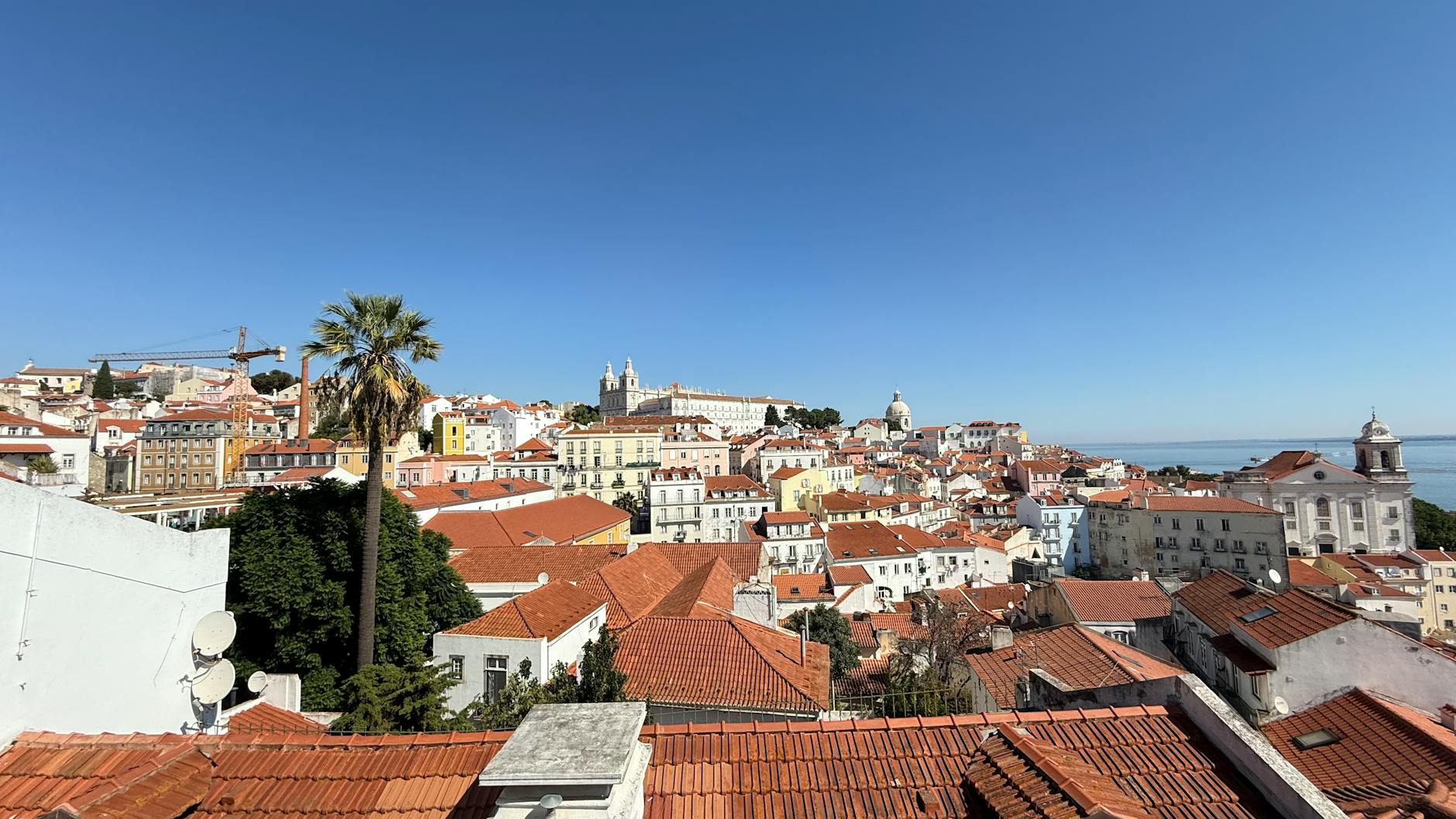
Lisbon rewards walkers. The city climbs seven hills above the Tagus, and the best of it — the tiled façades, the custard-tart counters, the miradouros, the fado bars tucked into Alfama’s back streets — reveals itself on foot. This Lisbon travel guide covers everything you need for 2026: neighbourhoods, top attractions, food, transport, budgets, day trips, and a dozen insider habits that will save you real time and money.
Weighing Portugal against Spain? Our Lisbon vs Barcelona comparison runs both on 2026 numbers — tourist tax, ticket prices, crowds and day trips — and gives a straight recommendation.
Before any of the planning, the paperwork: our Portugal entry requirements guide covers visas, passport rules, the EES biometric system and where ETIAS has actually got to.
Whether it’s your first visit or your fifth, this is your starting point. First-timers may also want our dedicated guide for first-time Lisbon visitors, which covers the most common rookie mistakes and how to avoid them.
Why Visit Lisbon?
Lisbon sits at the western edge of continental Europe where the Tagus River meets the Atlantic, and that geography has shaped the city for millennia. Phoenicians, Romans, Moors, and the great Portuguese explorers all left their mark here — layered into the architecture, the food, and the street names in ways you can actually trace on a walk. There is nothing quite like it elsewhere on the continent.
Beyond the history, you can eat excellent seafood, drink fine wine, and spend your afternoons on Atlantic-facing terraces without the prices of Paris, London, or Rome. The city also gets plenty of sun for much of the year, and its nightlife runs late. The locals are genuinely warm — not in a performative tourist-board way, but in the way of a city that hasn’t yet lost its personality to mass tourism. If you’re deciding between Portugal’s two main cities, our Lisbon vs Porto comparison lays out the differences clearly.
Book flights and accommodation early, especially for summer: the best-value rooms are the first to go.
Best Time to Visit Lisbon
Lisbon works year-round, but each season feels different. The experience you get in January bears almost no resemblance to August. Our month-by-month breakdown of when to visit Lisbon weighs weather against crowds and room rates.
Spring (March – May) — Best Overall
Spring is the strongest window for most visitors. Average daytime highs climb from about 19°C (66°F) in March to 23°C (73°F) in May, crowds haven’t peaked, and hotel rates are still reasonable. By May, the jacaranda trees lining Lisbon’s avenues and plazas are in full bloom — a carpet of lavender-purple that the city will not let you forget. Outdoor festivals are back in full swing. It’s the kindest weather of the year. Whatever month you land in, our Lisbon packing list starts with the thing most visitors get wrong — shoes that can handle calçada.
Summer (June – August) — Warmest but Most Crowded
July and August average 28–29°C (82–84°F), and heatwaves now regularly push that past 35°C. Walking Lisbon’s hills at midday in August is genuinely punishing. Peak season brings the year’s highest hotel rates, long queues at the major sights, and the longest waits to board Tram 28. The upside: the Santos Populares festival in June turns the entire city into a street party — grilled sardines, dancing, and paper-streamer-filled neighbourhood processions. It’s worth planning around.
Autumn (September – October) — Excellent Value
September is the insider’s pick. Average highs are still about 27°C (80°F), easing to 23°C (73°F) in October. October delivers Lisbon’s famous golden-afternoon light and genuinely empty restaurants on Saturday nights. Hotel prices come down from their August peak while the weather stays warm.
Winter (November – February) — Budget-Friendly
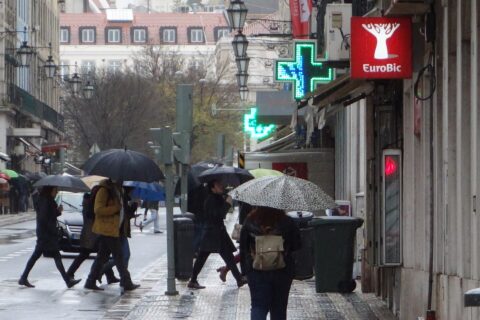
Lisbon winters are mild by European standards — average daytime highs of about 15–16°C (59–61°F) from December to February, with the wettest months running from October through the winter. Flights and hotels hit their annual lows, museums are virtually empty, and the city runs on its own rhythm rather than a tourist schedule. Winter is also when fado sounds most like itself: intimate, late, and unhurried. If you do hit a wet spell, our Lisbon rainy day guide has a full list of indoor options that work regardless of forecast.
Top Attractions and Things to Do
Lisbon packs a remarkable amount of history, culture, and coastal scenery into a compact footprint. Below are the highlights — for the full list, our Things to Do in Lisbon guide goes considerably deeper.
Belém Tower and Jerónimos Monastery
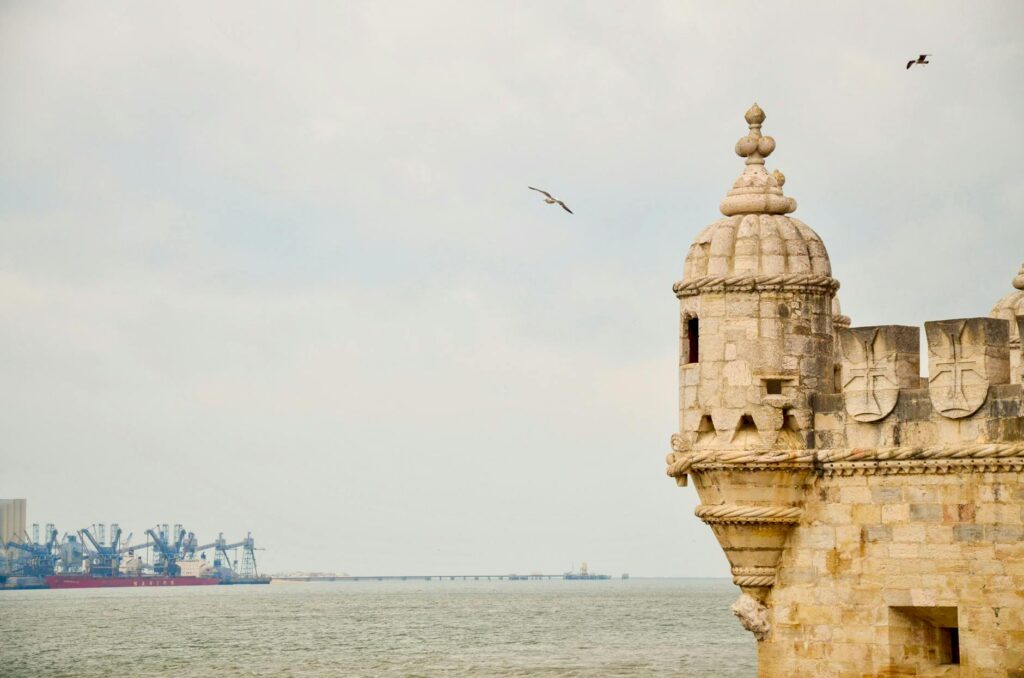
Both are UNESCO World Heritage Sites in the Belém district and Lisbon’s most iconic landmarks. The 16th-century Belém Tower guarded the mouth of Lisbon’s harbour during the Age of Discovery; the Jerónimos Monastery is a masterpiece of Manueline architecture — Portugal’s own ornate maritime-Gothic style, full of ropes, armillary spheres, and coral carved in stone. Monastery entry costs €18 for adults and is worth every cent.
Belém Tower reopened on 27 May 2026 after restoration, with timed entries every half hour. Tickets cost €15, and it opens Tuesday to Sunday from 9:30 AM to 5:30 PM (closed Mondays). The riverside promenade is the place for photos of the outside, and the gardens and the Monument to the Discoveries are close by.
São Jorge Castle
Set on the highest hill in Lisbon’s historic centre, this Moorish castle dates to the mid-11th century and gives panoramic views over the city. The grounds include archaeological ruins spanning multiple civilisations, a small museum, and gardens with resident peacocks. Budget at least 90 minutes and aim for late afternoon — the light turns golden, the crowds thin, and the Tagus below takes on a copper tint. Adult entry is €17.
Praça do Comércio and Baixa
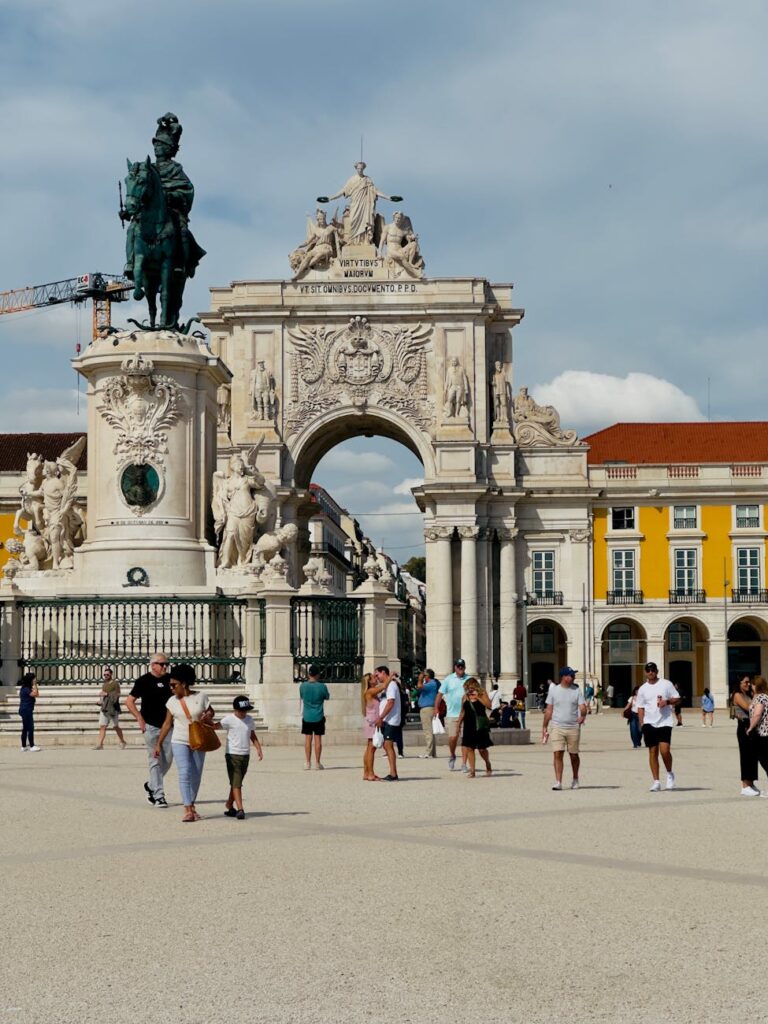
This grand waterfront square is the natural starting point. Framed by yellow arcaded buildings and anchored by a triumphal arch, Praça do Comércio opens directly onto the Tagus and captures the monumental ambition of the city the Marquis of Pombal rebuilt after the catastrophic 1755 earthquake. From here, walk north through the rational grid of Baixa — the elegant downtown — toward Rossio Square, with its wave-patterned cobblestones and Baroque fountains.

Ride Tram 28
Lisbon’s vintage wooden trams are as much part of the city’s identity as the azulejo tiles on its walls. Tram 28 is the classic sightseeing route — rattling through Graça, Alfama, Baixa, and Estrela in one long scenic arc. A ticket bought on board costs €3.30; Zapping credit on a Navegante card brings a Carris ride down to €1.72 (valid for an hour), and a 24-hour Carris/Metro ticket costs €7.25. Board at the Martim Moniz terminus early morning or late afternoon to avoid the worst crowds, and keep a close eye on your belongings: this is the city’s top pickpocket hotspot.
Oceanário de Lisboa
Located in the modern Parque das Nações district, the Lisbon Oceanarium is one of the largest aquariums in Europe. Its centrepiece is a massive central tank — visible from every floor — housing sharks, rays, sunfish, and dense schools of tropical fish. More than 500 species live here. Allow two to three hours and buy tickets online in advance to skip the queue.
Santa Justa Elevator and Miradouros
Lisbon’s hilltop viewpoints — miradouros — are some of the best free things in the city. Miradouro da Senhora do Monte, Miradouro da Graça, and Miradouro de Santa Luzia each offer entirely different angles across the terracotta rooftops and the river below. The neo-Gothic Santa Justa Elevator, designed by the engineer Raoul Mesnier du Ponsard and opened in 1902, links Rua do Ouro in Baixa with Largo do Carmo, but it has been closed since the September 2025 accident, with no reopening date. The miradouros above are the better bet for views.
Lisbon’s Best Neighborhoods
Each of Lisbon’s historic neighbourhoods has a distinct personality. Getting a little lost between them is part of the point. For a deeper look at where to base yourself, see our Where to Stay in Lisbon guide.
Alfama
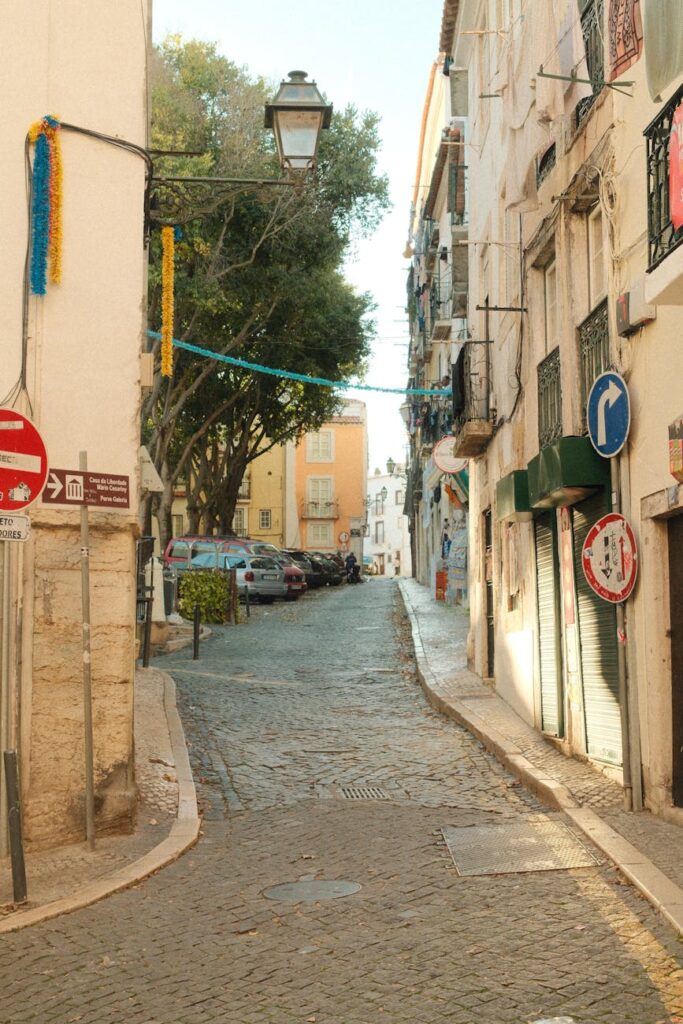
Alfama is the soul of old Lisbon. This labyrinth of narrow alleys, steep stairways, and tile-fronted houses tumbles down the hillside beneath São Jorge Castle, and its old web of narrow streets and small squares came through the 1755 earthquake. It was the Moorish heart of the city, then a working-class district of sailors and fishermen. Today it’s the best place in Lisbon to hear live fado in an authentic setting, browse the Feira da Ladra (Thieves’ Market) on Tuesday and Saturday mornings, and discover something unexpected around every corner. The neighbourhood feels like a village inside a city.
Baixa and Chiado
After the 1755 earthquake levelled most of central Lisbon, the Marquis of Pombal rebuilt Baixa as a rational grid of wide boulevards and uniform neoclassical buildings — a deliberate contrast to the organic medieval street plans elsewhere. It’s Lisbon’s commercial heart: grand squares, shops, and the wave-patterned cobblestones of Rossio. Immediately to the west and uphill, Chiado is the city’s cultural quarter — historic bookshops, the ruins of the Carmo Convent, and the cafés where literary figures like Fernando Pessoa once held court.
Bairro Alto and Cais do Sodré
Bairro Alto is Lisbon’s nightlife epicentre. By day, this grid of 16th-century streets is a quiet residential area with boutiques and local restaurants. After dark, the neighbourhood’s many small bars open their doors and the party moves onto the pavements. Nearby Cais do Sodré has evolved from a sailors’ district into the city’s most electric nightlife area, anchored by the famous Pink Street and the Time Out Market. For more on what happens after midnight, see our Lisbon Nightlife Guide.
Belém
This riverside district, a short tram or train ride west of the city centre, is where Portugal’s Age of Discovery comes to life. Beyond the Tower and Monastery, Belém has the Monument to the Discoveries, MAAT (Museum of Art, Architecture and Technology) with its striking wavy rooftop, and the Cultural Centre of Belém. Before you leave: stop at Pastéis de Belém for the original pastel de nata recipe. The queue moves fast and the tarts, served warm with cinnamon, are the real thing.
What to Eat and Drink in Lisbon
Portuguese cuisine is one of Europe’s most underrated culinary traditions, and Lisbon is where it’s at its best. The city ranges from centuries-old tascas serving unchanged recipes to innovative Michelin-starred kitchens reimagining those same flavours. The full breakdown is in our Lisbon Food Guide.

Must-Try Dishes
Bacalhau (salt cod): The Portuguese have an almost spiritual relationship with bacalhau, and a popular saying has it that there are more than 365 ways to prepare it, one for every day of the year. Try bacalhau à brás (shredded cod with eggs, onions, and matchstick potatoes) or bacalhau com natas (a rich, creamy gratin) at any traditional restaurant.
Pastel de nata: Lisbon’s most famous edible export. The flaky puff pastry shell holds a slightly caramelised custard filling — creamy, sweet, and hard to stop at one. Pastéis de Belém claims the original recipe, but you’ll find excellent versions citywide. Manteigaria and Aloma are two consistent local favourites.
Sardines: Grilled sardines are quintessential Lisbon, especially during the Santos Populares festival in June when the smoky aroma drifts through every street. Order them at any tasca alongside boiled potatoes and a simple salad.
Bifana: This humble pork sandwich — seasoned with garlic, white wine, and chilli — is Lisbon’s favourite street food. The best come from unassuming counter joints in Baixa and Cais do Sodré for €3–4.
Dining Etiquette Tips
When you sit down at a restaurant in Lisbon, the waiter will typically place bread, butter, olives, and sometimes cheese on your table without being asked. This is the couvert, and it is not free — each item will be billed if you eat it (usually €1–4 per item). Decline with “não, obrigado/a” if you don’t want to pay for it. Lunch and dinner both run later than many visitors are used to. Tipping is appreciated but not obligatory — rounding up the bill or leaving a small tip is plenty.
Getting Around Lisbon
Lisbon has an excellent public transport network. You don’t need a car. For the full breakdown, see our Getting Around Lisbon guide.
From the Airport to the City Center
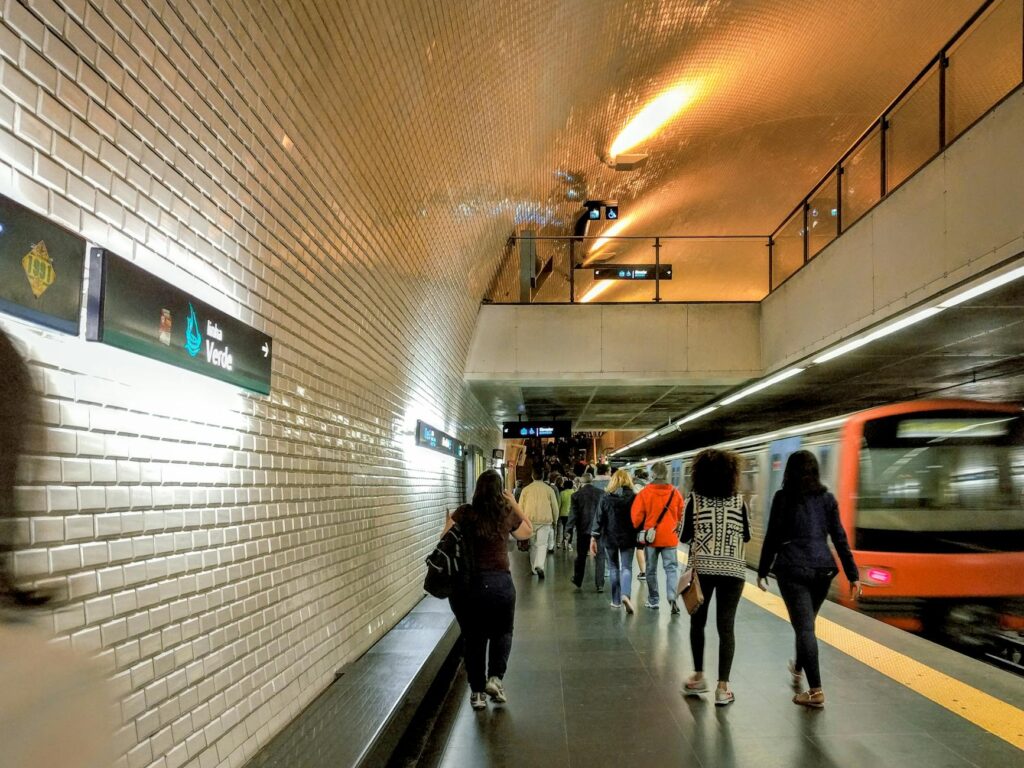
Lisbon’s Humberto Delgado Airport is 7 km from the city centre. The Metro is the cheapest option — about 20 minutes on the Red Line to Saldanha, where you can transfer. A single fare is €1.90 (or €1.72 with Zapping credit on a Navegante card). Uber and Bolt operate from a dedicated pickup area on arrivals level and typically cost €8–15. Traditional taxis charge €10–15 for the same journey — ensure the meter is running before you set off.
Public Transport
The Metro is the backbone of the system: four colour-coded lines, operating 6:30 AM to 1:00 AM. Buy a reusable Navegante card for €0.50 at any station and load it with Zapping credit for discounted fares: €1.72 per trip against €1.90 for a Carris/Metro single, or €3.30 for a tram ticket bought on board. The card works on the metro, buses and trams.
Buses operated by Carris cover routes the metro doesn’t reach, including Belém. The vintage trams are as much attraction as transport. Uber and Bolt are widely available and generally cheaper than taxis for cross-city trips.
Walking
Lisbon’s centre is largely walkable, but don’t underestimate the hills. What Google Maps shows as 10 minutes can feel considerably longer when you’re climbing cobblestones in summer heat. Wear proper, broken-in walking shoes, the way the locals do. The Glória, Bica and Lavra funiculars and the Santa Justa lift have been closed since September 2025, and Carris runs buses in their place: 51E for Glória, 22B for Bica and 19B for Lavra. The Graça funicular has been running again since 30 April 2026. A comfortable pair of shoes is genuinely the single most important thing to pack.
How Much Does a Trip to Lisbon Cost?
Lisbon remains significantly more affordable than most Western European capitals. Here’s a realistic breakdown for 2026, and our full Lisbon trip cost guide puts numbers on every line item.
Budget Traveler (€50–75 per day)
Stay in a hostel dorm (€25–30/night), eat at local tascas and markets (€15–20/day for meals), use public transport exclusively (€5–7/day), and focus on free attractions like miradouros, neighbourhood walks, and the Feira da Ladra market. A week on this budget, excluding flights, runs roughly €350–525. More ways to stretch euros in Lisbon on a budget.
Mid-Range Traveler (€130–170 per day)
Book a private room in a boutique hotel or well-reviewed Airbnb (€70–120/night), enjoy sit-down restaurant meals with wine (€30–40/day), mix public transport with the occasional Uber, and visit paid attractions like the Jerónimos Monastery and Oceanarium. Budget approximately €910–1,190 per person for a week, excluding flights.
Luxury Traveler (€250–400+ per day)
Stay at a five-star property like the Four Seasons or Bairro Alto Hotel (€200–350+/night), dine at Lisbon’s growing roster of Michelin-starred restaurants (€80–150/meal), hire private guides, and add premium experiences like sailing on the Tagus. A week at this level starts around €1,750 per person.
Money-Saving Tips
The Lisboa Card is worth it if you plan to visit multiple museums and use public transport heavily — it covers free entry to 51 museums and monuments and unlimited metro, tram, and bus rides for 24, 48, or 72 hours. See whether the Lisboa Card pays for itself. At lunch, order the prato do dia (dish of the day): €7–10 including bread, a drink, and coffee. Fill your water bottle at the city’s many public fountains — Lisbon’s tap water is safe. And always say “não, obrigado” to the couvert if you’re watching your spending.
Best Day Trips from Lisbon
Lisbon’s location makes it an excellent base for the surrounding region. Several destinations worth a full day are within an hour by train. Our full Day Trips from Lisbon guide covers these in detail.
Sintra
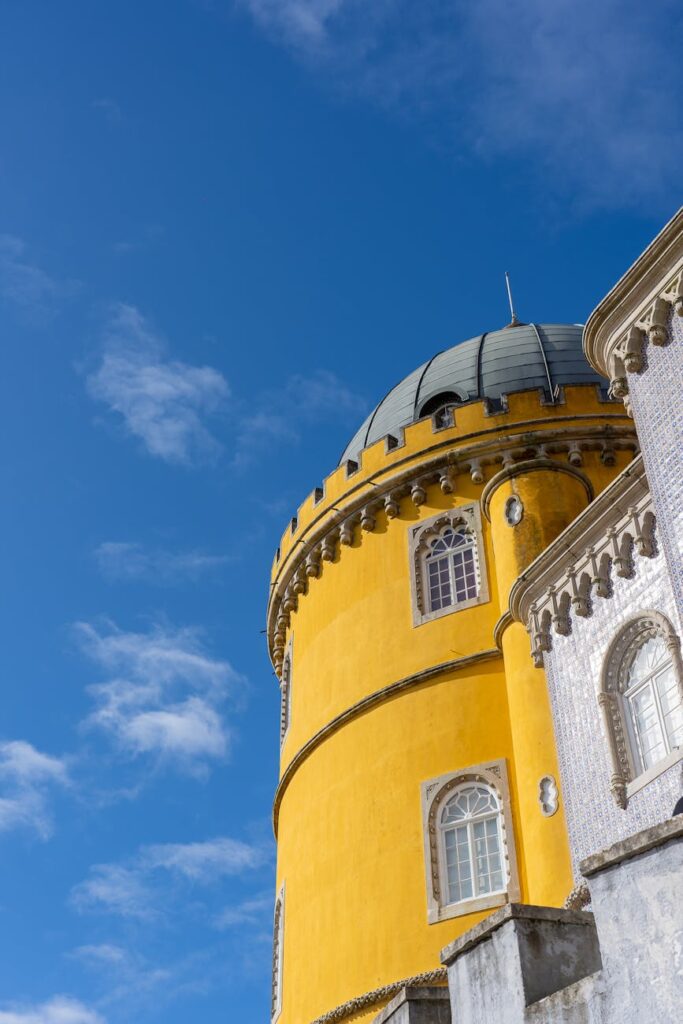
No trip to Lisbon is complete without a day in Sintra — a UNESCO-listed hilltop town of fantastical palaces and forested gardens, an easy train ride from Rossio station (CP publishes the current timetable on cp.pt). The Pena Palace, painted in vivid reds and yellows, is the headline act, but the Moorish Castle, the National Palace, and the mysterious Quinta da Regaleira (with its famous initiatic well) are equally worth the journey. Go on the first train of the day. The town gets very crowded by mid-morning.
Cascais and the Coast
This elegant seaside town is about 33–40 minutes by train from Cais do Sodré station, depending on the service, and the journey along the Tagus estuary is beautiful in itself. Cascais has sandy beaches, a charming old town, good seafood restaurants, and dramatic coastal cliffs. From Cascais you can continue to the wild beaches of Guincho or the windswept cliffs of Cabo da Roca — the westernmost point of continental Europe.
Arrábida and Setúbal
South of the Tagus, Arrábida Natural Park has some of the most beautiful beaches near Lisbon — turquoise water against dramatic limestone cliffs. The nearby city of Setúbal is a working fishing port, famous for its fresh seafood and particularly its choco frito (fried cuttlefish). This day trip needs a car or an organised tour, as public transport connections are limited.
Practical Information
The details below will save you time and confusion. For more depth, see our Practical Information guide.
Language
Portuguese is the official language. English is widely spoken in tourist areas, hotels, and restaurants. Learning a few words — bom dia (good morning), obrigado/obrigada (thank you), por favor (please) — goes further than you’d expect and is always well received.
Currency and Payment
Portugal uses the Euro (€). Cards are widely accepted in restaurants, hotels, and shops, but some smaller tascas and market vendors take cash only. ATMs (called Multibanco) are plentiful throughout the city — use bank-operated machines rather than independent ATMs to avoid excessive fees.
Safety
Lisbon is one of the safest capital cities in Europe. Violent crime affecting tourists is extremely rare. The main concern is pickpocketing — particularly on Tram 28, at crowded viewpoints, and around Baixa and Rossio. Standard precautions cover it: keep valuables in a front pocket or crossbody bag, stay alert in crowded spaces, don’t leave phones on café tables. Use Uber or Bolt rather than flagging taxis to avoid occasional overcharging. Neighbourhood-by-neighbourhood detail in is Lisbon safe for tourists?
Visa and Entry Requirements
Portugal is part of the EU and the Schengen Area. US, UK, Canadian, and Australian citizens can enter visa-free for stays up to 90 days. EU/EEA nationals need only a valid ID card or passport. ETIAS (European Travel Information and Authorisation System), an online travel authorisation for visa-exempt visitors rather than a traditional visa, is not in operation yet: the EU expects it to start in the last quarter of 2026 and will announce the date, so check travel-europe.europa.eu before you travel.
Power and Connectivity
Portugal uses Type F power sockets (standard two-round-pin European plug), 230V/50Hz. Bring a universal travel adapter from outside Europe. Free Wi-Fi is available at most cafés, hotels, and many public spaces — but a local SIM card or eSIM is worth having for reliable data on the go. Portuguese carriers MEO, NOS, and Vodafone all offer affordable tourist plans.
How Many Days Do You Need?
Three to four days covers Lisbon’s highlights at a reasonable pace. Five to seven days is better if you want to add day trips to Sintra, Cascais, or Arrábida. A three-day visit gets you through the main neighbourhoods and key attractions; a week lets you find Lisbon’s rhythm, eat your way through it properly, and discover things that aren’t on any itinerary. See our Lisbon Itineraries for day-by-day plans. Short on time? Our Lisbon weekend break guide covers how to get the most out of 48 hours.
Insider Tips for Visiting Lisbon
These are the habits that separate a good Lisbon trip from a great one:
- Pack comfortable walking shoes. The single most important item. Lisbon’s hills and cobblestones punish anything less than proper, broken-in footwear.
- Buy a Navegante card at the airport. €0.50 for the card, then load €15–20 of Zapping credit. It works on metro, buses, and trams.
- Eat where the locals eat. If the menu has photos and five languages, keep walking. The best food is at modest tascas with handwritten menus and a mostly Portuguese clientele.
- Arrive at major attractions at opening time. Jerónimos Monastery, São Jorge Castle, and Sintra’s palaces all draw big crowds, so allow time for admission; at the castle, buying online skips the ticket-office queue. Being there at opening changes the experience entirely.
- Don’t skip the miradouros. Free, spectacular, and unmissably Lisbon. Miradouro da Graça at sunset is in a different class.
- Learn the couvert system. Those appetisers that appear at your table unbidden are not complimentary. Decline with “não, obrigado” to avoid a €3–5 addition to your bill.
- Carry some cash. Many smaller shops, market stalls, and ginjinha bars are cash only.
- Use Uber and Bolt over taxis. Fixed pricing and GPS routing eliminate the risk of overcharging or circuitous routes.
- Take the train to Belém, not Tram 15E. The Cascais-line train from Cais do Sodré to Belém station is faster, more comfortable, and runs frequently.
- Drink the tap water. It’s clean, safe, and free. Carry a refillable bottle.
Start Planning Your Lisbon Trip
Lisbon rewards both meticulous planning and completely unplanned afternoons. Use this guide as your foundation and go deeper with the companion articles below — each one covers its topic in considerably more detail than a general overview can.
- Things to Do in Lisbon — Complete attraction guide
- Where to Stay in Lisbon — Neighbourhood and hotel guide
- Lisbon Food Guide — What to eat and where
- Getting Around Lisbon — Transport made simple
- Day Trips from Lisbon — Sintra, Cascais, and beyond
- Lisbon Itineraries — Day-by-day trip plans
- Lisbon Nightlife Guide — Bars, clubs, and fado
- Lisbon Travel Tips — Practical advice for a smoother trip
Pack your walking shoes. Lisbon will do the rest.