Day Trips from Lisbon
Coimbra Day Trip from Lisbon: University City on the Hill
Under two hours by train to the oldest university in the Portuguese-speaking world. How the Joanina Library ticket really works, the station trap, and whether a day is enough.

In this guide
Getting to Coimbra from Lisbon takes under two hours on a fast train, and what waits at the other end is the oldest university in the Portuguese-speaking world, a baroque library that looks like a jewel box and is guarded by a colony of bats, and a hill of medieval streets that has been full of students since 1290. It is the most intellectually interesting day trip you can make from Lisbon — and also the one most likely to leave you wishing you had given it a night.
The same northbound line passes within reach of the Templar convent — see our Tomar day trip guide.

This guide covers the trains, how the university ticket actually works — which is the part people get wrong and lose their library slot over — what is worth your time on the hill, where to eat, and an honest assessment of whether a day is enough or whether you should be treating Coimbra as a stopover on the way to Porto instead.
Getting to Coimbra from Lisbon
By train — the only sensible option
Coimbra sits on the main Lisbon–Porto line, which means fast, frequent, comfortable trains from Lisboa Santa Apolónia (also calling at Lisboa Oriente).
- Alfa Pendular — the tilting express, about 1 hour 40 minutes. Two classes, power sockets at every seat, wi-fi, and a bar in carriage 3.
- Intercidades — slower and cheaper, roughly 1 hour 55 minutes, and perfectly comfortable.
Fares vary a great deal with how far ahead you book. CP’s Promo advance fares can cut up to 65% off, there is a 25% youth discount to age 25, and children and over-65s travel at half price — book on cp.pt as soon as your dates are fixed rather than at the station on the morning. Our Lisbon to Porto train guide explains the ticket types in detail; Coimbra is the same system, roughly halfway up the line.
The station trap
This catches almost everybody once. Long-distance trains stop at Coimbra-B, which is not in the centre. It is a couple of kilometres north of town, and the historic centre is at Coimbra-A (signed simply “Coimbra”), by the river.
The fix is easy and free: a shuttle train — the Ramal — runs between Coimbra-B and Coimbra-A in about five minutes, and it is included in your long-distance ticket. Get off at Coimbra-B, walk across the platform, take the connecting service. Do not buy another ticket, and do not take a taxi thinking you have to.
By coach and by car
Rede Expressos runs from Sete Rios in around 2 hours 20 minutes, usually cheaper than a walk-up train fare but slower and less pleasant. By car it is about two hours on the tolled A1, and parking in the old city is genuinely difficult — the university is at the top of a very steep hill with narrow medieval streets around it. Unless you are continuing somewhere the train does not go, take the train. See renting a car in Lisbon if you are driving anyway.
The University: how the ticket actually works
This is the section to read twice, because the booking mechanics are the difference between seeing the library and standing outside it.
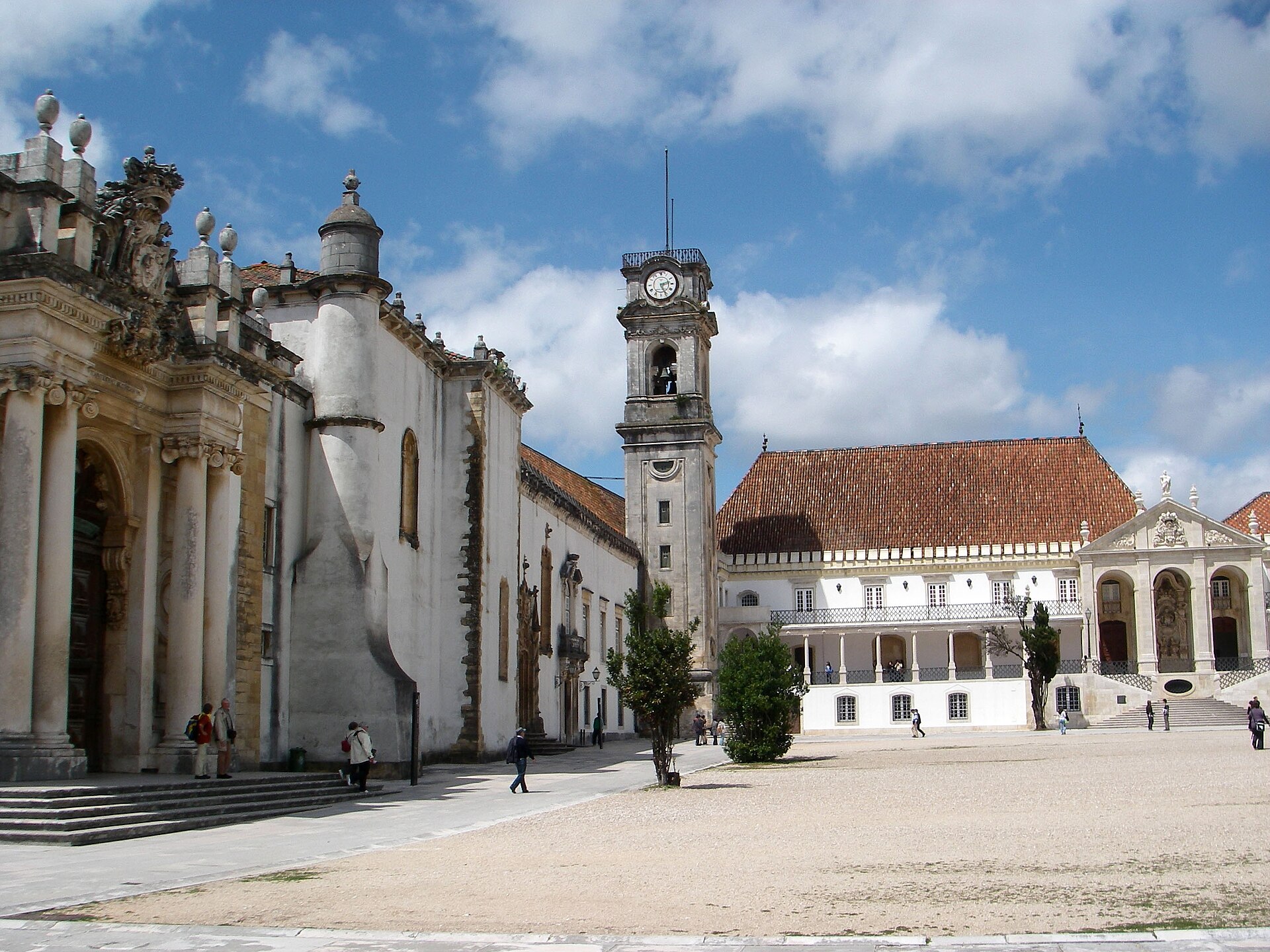
The historic university — the Paço das Escolas, on the hilltop where the royal palace stood — is a UNESCO World Heritage Site and is visited on a single combined ticket. There is no library-only ticket, and the Joanina cannot be visited on its own at any price.
The combined ticket covers, depending which tier you buy:
- The Biblioteca Joanina — the reason you came.
- The Royal Palace, including the Sala dos Capelos, the great ceremonial hall where degrees are conferred beneath a painted ceiling and the portraits of Portuguese kings.
- The Capela de São Miguel, the university chapel, wall-to-wall azulejos and an extravagant baroque organ.
- The University Tower, climbable for the view over the city and the Mondego, when it is open.
- The Science Museum, on higher tiers — a genuinely good collection of eighteenth-century instruments and natural history.
The critical detail: entry to the Joanina is in strict timed slots of about twenty minutes, in small groups. The time printed on your ticket is the time you go in, and if you miss it you have missed it. Everything else on the ticket can be visited before or after at your own pace.
Book online at the university’s own visitor site (visit.uc.pt) rather than at the door, especially between April and September, when slots for the good times of day go early. Buy the tier you actually want — prices and what each tier includes do change, so check the current list when you book rather than trusting a figure you read anywhere, this page included.
Inside the Joanina
Three vaulted rooms, finished in 1728 for João V, lined floor to ceiling in gilded exotic hardwood with tiered galleries, and holding some 60,000 volumes from before 1800. It is dark, it smells of old leather, and it is genuinely one of the most beautiful interiors in Europe.
Two details make it. The first is the walls: over two metres thick, with an oak door and a design that keeps temperature and humidity almost constant year-round without any machinery. The second is the bats. A small colony lives behind the shelves, emerges at night and eats the insects that would otherwise eat the books. The staff cover the tables in leather every evening. This is not a legend — it is the working pest-control system of a working library.
No photography inside. Every year people arrive expecting to shoot it and are disappointed. Accept it, look properly for your twenty minutes, and buy a postcard.
Below the main floor sit the Academic Prison — the only surviving medieval university prison in Europe, where the university’s own jurisdiction let it lock up its own students — and the intermediate floor. Both are on the same visit and both are worth the stairs.
The rest of Coimbra
Plenty of visitors do the university and get back on the train, which is a waste. The hill below it holds several centuries of the city.
Sé Velha — the old cathedral
A twelfth-century Romanesque fortress-church that looks more like a keep than a cathedral, because it was built as both while the frontier with the Moors was still close. Squat, austere and completely unlike anything in Lisbon. There is a newer cathedral, the Sé Nova, further up, but the old one is the one to see.
Machado de Castro National Museum
Built over the cryptoporticus — the enormous underground Roman gallery that held up the forum of Aeminium, the city that stood here two thousand years ago. You walk through Roman vaults and then up into a very good collection of medieval sculpture. It is the best museum in Coimbra by a distance and most day-trippers miss it entirely.
Santa Cruz and the lower town
The Mosteiro de Santa Cruz on Praça 8 de Maio holds the tombs of Portugal’s first two kings, Afonso Henriques and Sancho I, which makes it about as historically significant as a building in this country gets. The Baixa around it is the commercial lower town — busy, ordinary, and where the students actually live and eat.
Quinta das Lágrimas and the Mondego
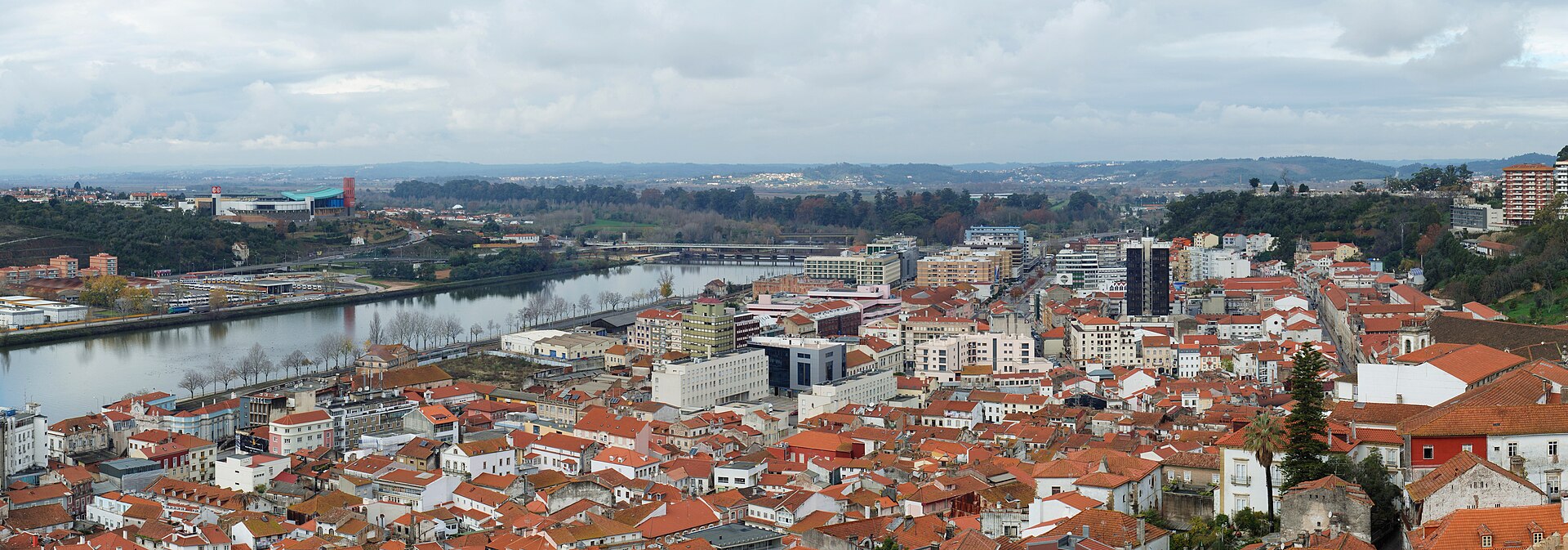
Across the river, the gardens where Inês de Castro was murdered in 1355 on the orders of the king — the founding tragedy of Portuguese literature, and the reason Pedro later had her body crowned, if you believe the version told at their tombs in Alcobaça. The gardens are pleasant; the story is the point. Crossing the Santa Clara bridge also gives you the best view back at the university on its hill.
Fado de Coimbra
Coimbra has its own fado, and it is a different animal from Lisbon’s: sung by men, historically by students in academic capes, more formal and more lyrical, and traditionally performed at night in the street rather than in a room with tables. Several venues in town run evening sessions for visitors. It is worth an hour if you are staying the night, and it is the strongest single argument for doing so. Compare it with the Lisbon tradition in our fado guide.
A one-day plan
Assuming an early Alfa Pendular out and a mid-evening train back.
- 08:00 — train from Santa Apolónia or Oriente.
- 09:45 — arrive Coimbra-B, change to the free shuttle, out at Coimbra-A.
- 10:15 — walk up through the old town to the university, via the Sé Velha. It is steep; take the escalators or a taxi if that is a problem.
- 11:00 — Joanina slot. Book this for late morning: it gives you a margin if the train is late without wasting the afternoon.
- 11:30–13:00 — Royal Palace, chapel, tower, the rest of the university complex.
- 13:00 — lunch in the Baixa, one street back from the main square.
- 14:30 — Machado de Castro and the Roman cryptoporticus.
- 16:00 — Santa Cruz, then across the bridge for the view back, or the Botanical Garden if the weather is good.
- 18:30 — train back, in Lisbon before 21:00.
That is a full but not frantic day. If you would rather move slower, drop the Machado de Castro or the river crossing.
Eating in Coimbra
It is a student city, so the value is excellent and the standard is high. Regional dishes worth ordering: chanfana, goat slow-cooked in red wine in a clay pot, which is the signature dish of the region and enormously rich; leitão da Bairrada, roast suckling pig from just up the road, crisp-skinned and served cold or hot; and arrufadas and pastéis de Santa Clara from the convent-baking tradition.
Avoid the terraces directly on the main tourist route up to the university and walk two minutes further. Lunch is where the money is — most places run a prato do dia that costs a fraction of the same meal in Lisbon. Our traditional Portuguese food guide covers what these dishes are if the menu is unfamiliar.
Is Coimbra worth a day trip from Lisbon?
Yes — with one significant caveat.
The case for: the Joanina is genuinely world-class and there is nothing like it in Lisbon; the university complex is a UNESCO site you can see properly in three hours; the train is fast, frequent and comfortable; and the city is compact enough that a day covers the highlights without rushing. It is also considerably cheaper than Lisbon for lunch, which is a small pleasure of its own.
The caveat: it is a three-and-a-half-hour round trip minimum, and Coimbra genuinely improves at night, when the students are out, the fado is on and the lit university is visible from across the river. A lot of people finish the day feeling they saw the museum version of a living city. If you can give it an overnight, do — and if you are travelling on to Porto anyway, breaking the journey in Coimbra is a much better use of the same train fare than doubling back to Lisbon.
Who should skip it: anyone on a first trip of three days or fewer. With that little time, Sintra is closer and more spectacular, and you have not yet finished Lisbon itself. Coimbra is a second- or third-visit day trip, or a stop on a longer Portugal itinerary. Our day trips from Lisbon page ranks the options by how far you have to go for what you get.
If you stay the night
Since this guide keeps recommending it, here is what an overnight actually buys you. The obvious gain is the evening: the university lit up on its hill, seen from the Santa Clara bridge, is one of the better city views in Portugal, and the student bars in the Baixa fill up with people who are not tourists. Fado de Coimbra sessions run in the evening, which is the only time you can properly hear it.
The second gain is timing. With a night in hand you can take a first-thing Joanina slot, be finished with the university by eleven and have the rest of the day for the Machado de Castro, the Botanical Garden — one of the oldest in Europe, and free — and the walk across the river, rather than compressing all of it between two trains.
Accommodation is cheap by Lisbon standards, and the sensible split is between the Baixa, which is flat, central and convenient for the station, and the upper town near the university, which is atmospheric and involves a climb every time you come home. Coimbra is also the natural halfway house on a Lisbon-to-Porto trip, which is the shape most people should be giving this in the first place.
When to go
Coimbra sits inland and is warmer than Lisbon in summer and colder in winter — the Mondego valley traps heat in August and fog in January. Spring and autumn are the best of it, and a weekday is markedly quieter than a weekend at the university.
The one date to plan around is Queima das Fitas, the ribbon-burning graduation festival, usually in May. It is a week of parades, concerts and students in academic capes, and it is genuinely something to see — but the city is full, the hotels are three times the price and the visitor operation at the university is disrupted. Go for it deliberately or avoid it entirely; do not stumble into it.
Practical tips
- Book the Joanina slot before you book anything else, then buy train tickets that comfortably beat it.
- Book a late-morning slot, not the first of the day. A single delayed train should not cost you the library.
- The hill is steep. Coimbra’s old town is a serious climb and the surface is the same polished stone as Lisbon. There are public escalators from the Baixa towards the university — use them, and wear shoes with grip.
- Change at Coimbra-B for the free shuttle to Coimbra-A. Repeating it because everyone gets caught.
- Avoid graduation week (Queima das Fitas, usually May). The city is spectacular and completely full, hotel rates triple, and the university’s visitor operation is disrupted. It is a wonderful thing to see on purpose and a bad surprise to arrive into.
- No photographs in the library. None.
- Check the last train back before you settle into dinner. Evening departures are less frequent than daytime ones.
Frequently asked questions
How long does it take to get from Lisbon to Coimbra?
About 1 hour 40 minutes on the Alfa Pendular and around 1 hour 55 on the Intercidades, both from Santa Apolónia via Oriente. By coach it is roughly 2 hours 20; by car about two hours on the A1.
Which Coimbra station should I get off at?
Long-distance trains stop at Coimbra-B, outside the centre. Change there onto the free connecting shuttle to Coimbra-A, which is the city-centre station — the transfer is included in your ticket.
Can you visit the Joanina Library without a ticket for the whole university?
No. There is no library-only ticket. The Joanina is visited as part of a combined University of Coimbra ticket, on a timed twenty-minute slot booked in advance.
Can you take photos in the Joanina Library?
No. Photography is not permitted inside.
Are there really bats in the library?
Yes. A small colony lives behind the shelves and eats the insects that would damage the books. The reading tables are covered with leather each night to protect them.
How much time do you need in Coimbra?
Six to seven hours on the ground covers the university, the old cathedral, one museum and lunch. An overnight is better, because the city is at its best in the evening.
Is Coimbra better than Óbidos or Évora as a day trip?
They are different trips. Óbidos is closest and easiest, Évora gives you Roman and medieval Alentejo, and Coimbra gives you the single most impressive interior of the three. If you only do one and you like books, buildings or history, take Coimbra.
Can you do Coimbra and Porto in one day from Lisbon?
You can, but you should not. It is a long day of trains for two cities that each need more time than you would have. Do them as a two- or three-day trip north instead — see Lisbon vs Porto for how the two cities compare.
Bottom Line
Coimbra is the most rewarding long day trip from Lisbon for anyone who likes their travel with some substance behind it. Two hours each way buys you a UNESCO university, one of the great libraries of Europe, a Roman gallery under a museum, a Romanesque cathedral built like a fort, and lunch at half the Lisbon price.
Book the Joanina slot first and make it late morning. Change at Coimbra-B for the free shuttle. Wear shoes that cope with a steep hill. And be aware that the city you leave at half past six is not quite the city Coimbra actually is — if you have the flexibility, stay the night, or fold it into a journey north rather than a return ticket.
For another inland day with a single overwhelming building at the end of it, see our Tomar day trip guide.