Day Trips from Lisbon
Nazaré Day Trip from Lisbon: Giant Waves and the Canyon
The waves that made Nazaré famous cannot be booked. How to get there, when the swell actually runs, what to do when it doesn't, and whether the trip is worth it.
In this guide
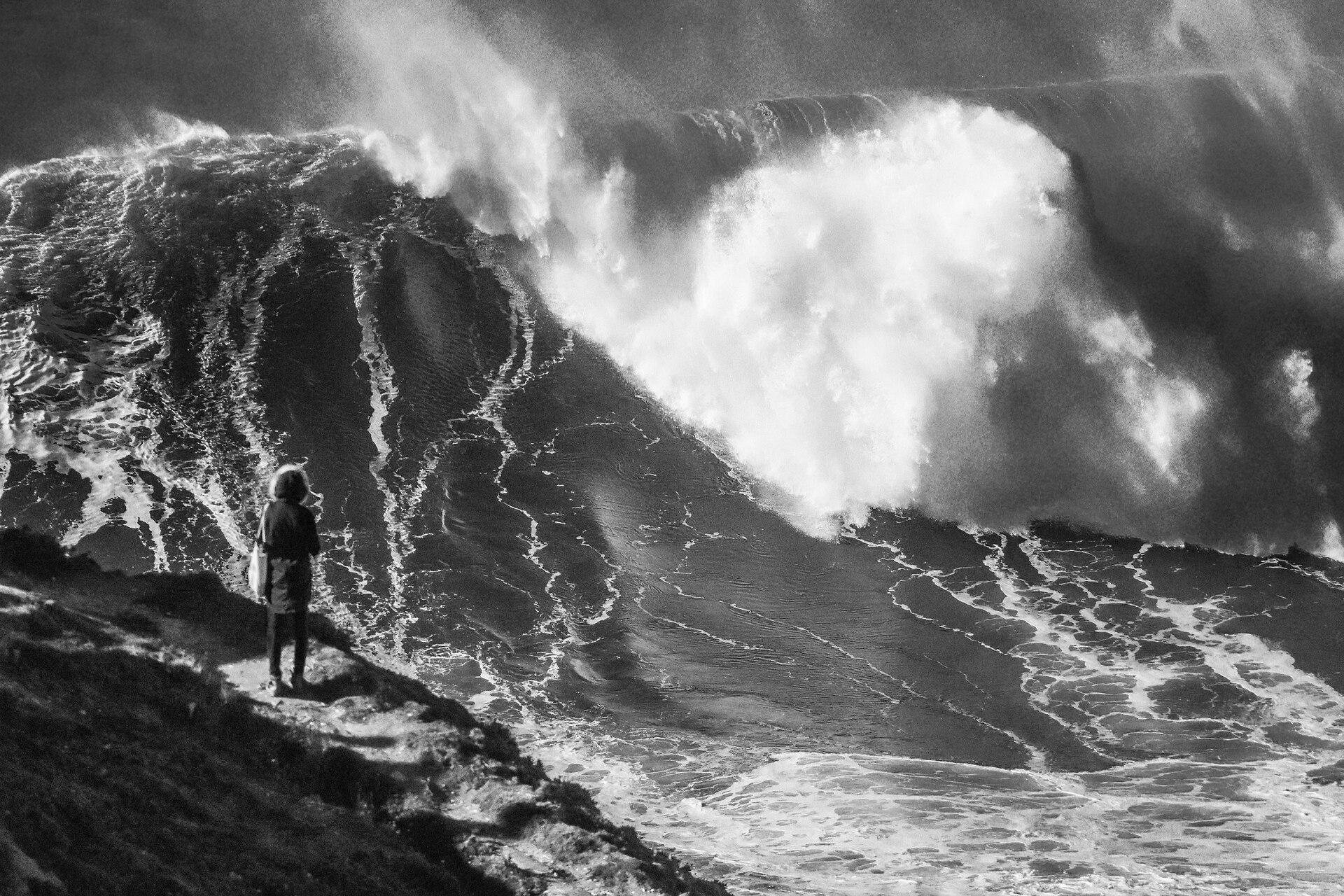
A Nazare day trip from Lisbon is the one excursion on this coast that comes with a warning attached: the thing most people come for cannot be booked, scheduled or guaranteed. Nazaré is famous for waves the size of apartment blocks, and those waves appear when a deep North Atlantic storm decides they should — not when your flights say so. Come on the wrong day and you get a pretty fishing town with a very long beach and a flat blue sea.
If you want a day north of Lisbon that does not depend on the weather, Coimbra is the reliable alternative — a fast train, a UNESCO university and one of the great libraries of Europe.
That is the honest framing, and this guide is built around it: how to get there, when the waves actually run, what to do when they do not, how to time a day so it works either way, and whether Nazaré deserves a slot in a short Lisbon trip at all. It is about 120 km north of the city — far enough that the journey is a real commitment rather than an afternoon whim.
Why Nazaré has the biggest waves in the world
The reason is underwater and it is worth understanding, because it explains everything about how to plan the visit.
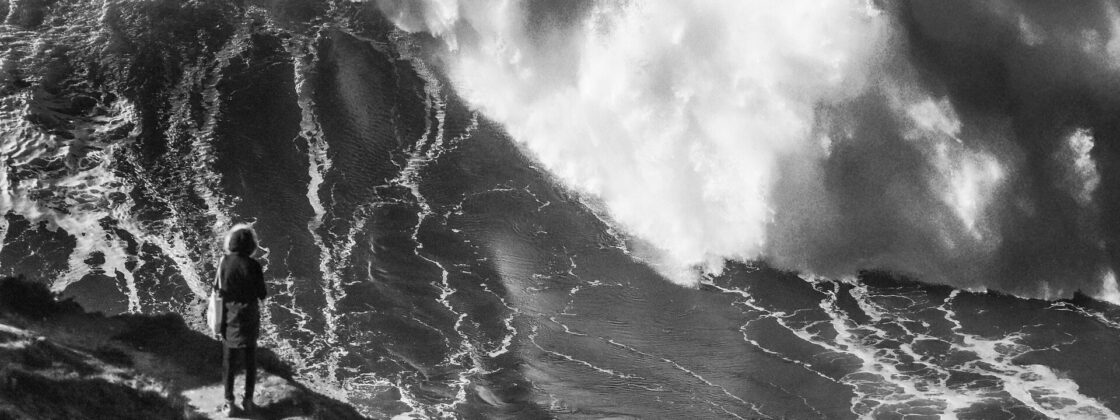
Running out to sea from the beach at Nazaré is the Nazaré Canyon — a submarine gorge over 200 km long and, at its deepest, some 5,000 metres deep. It is the largest underwater canyon in Europe. Atlantic swell travelling in deep water crosses that canyon almost unimpeded while the same swell moving over the shallow continental shelf on either side is slowed by friction. When the two halves of the wave meet again at the headland, the fast deep-water half stacks onto the slow shelf half and the energy of both is squeezed into a single peak, right in front of the cliff at Praia do Norte.
The result is a wave that arrives close to shore, breaks in a predictable spot, and can be watched from dry land a hundred metres above it. That last part is why Nazaré became famous rather than merely large: at most big-wave spots you need a boat and a long lens. Here you walk to a fort and look down.
Records have been set and reset here repeatedly since Garrett McNamara put the place on the map in 2011, with tow-in rides measured above 25 metres. The town has leaned into it completely — surf shops, a wave museum, a giant surfboard by the roundabout — and the winter economy now runs on people who have come to look at water.
When the waves actually happen
This is the single most important section of this guide.
- Season: October to March. Outside that window the giant swells effectively do not run.
- Peak: November to February, when deep North Atlantic low-pressure systems track past one after another.
- Frequency: genuinely big days number in the tens per season, not the hundreds. A properly enormous, tow-in, helicopter-overhead day might happen a handful of times a winter.
- Notice: the swell forecast firms up around three to five days out. That is your planning window.
The practical implication for a visitor with fixed dates is uncomfortable but simple: do not build a Lisbon trip around seeing giant waves. Build it around Lisbon, keep Nazaré as a flexible day, watch the forecast once you are in Portugal, and go when the charts light up. Surf forecast sites and the town’s own wave pages publish swell height and period several days ahead, and locals watch the same numbers you can.
If your dates are fixed and fall in summer, go for the town rather than the spectacle, and set your expectations accordingly. A calm July Nazaré is a perfectly nice Portuguese beach resort. It is not the thing on the internet.
Getting to Nazaré from Lisbon
By coach — the default
There is no train to Nazaré. The nearest railhead, Valado dos Frades, is a few kilometres out and awkwardly connected, so effectively everyone without a car takes the coach.
Rede Expressos runs from Sete Rios coach station in Lisbon to the Nazaré bus terminal. The journey takes about 1 hour 45 minutes and fares are typically in the €11–15 range each way, with departures every one to two hours through the morning. Book online in advance in winter, when a big-swell weekend can fill the buses with Portuguese day-trippers doing exactly what you are doing.
Sete Rios is on the Metro blue line (Jardim Zoológico) and the Sintra/Azambuja rail line, so getting there from anywhere central is straightforward — see the Lisbon transport guide.
By car
About 1 hour 20 minutes on the A8 motorway, tolled. A car is the better option for one specific reason: it lets you combine Nazaré with Alcobaça, Batalha or Óbidos in the same day, which is what turns a possibly-flat Nazaré into a guaranteed good day out. It also lets you leave at 06:00 when the forecast is enormous, which is when you want to be there.
The catch is parking. On a big-swell day the clifftop at Sítio and the approach to the lighthouse fill early and you will be walking a kilometre or more from wherever you end up. Arrive early or accept the walk. Our renting a car in Lisbon guide covers tolls and the electronic system.
By organised tour
Plenty of operators run Nazaré as part of a combined day with Óbidos, Alcobaça or Fátima. The advantage is that you see three or four places rather than one and you do not care whether the sea performs. The disadvantage is that you get roughly ninety minutes in Nazaré, which is fine on a flat day and infuriating on a big one. See day tours from Lisbon for what is on offer.
What to do in Nazaré
The town has three distinct parts and they sit at two different altitudes, which confuses people arriving for the first time.
Sítio — the clifftop
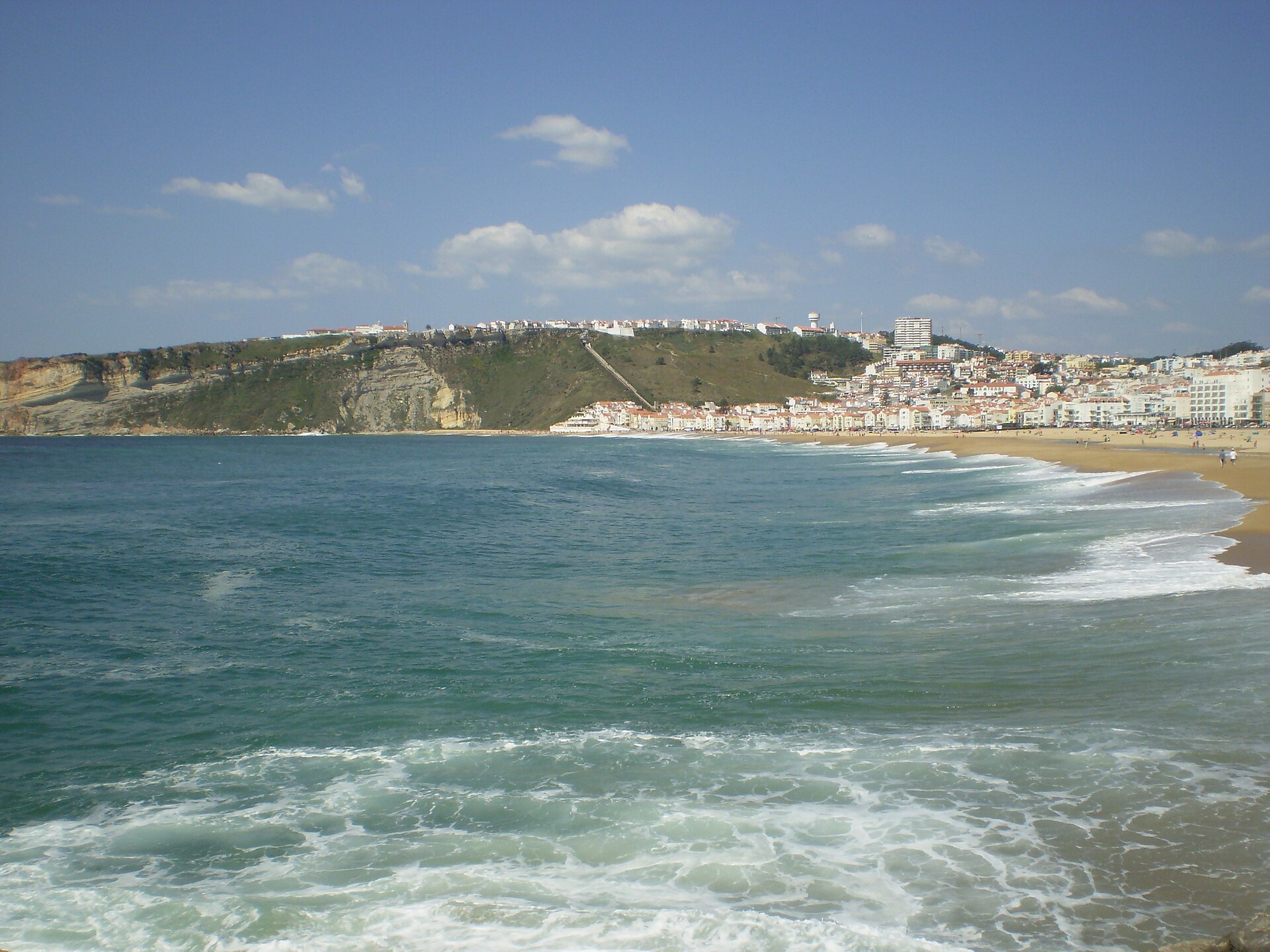
The old settlement sits 110 metres above the beach on the headland, and this is where almost everything you came for is. The Miradouro do Suberco gives you the classic view straight down onto the crescent of the town beach and the tiled roofs below. The Sanctuary of Nossa Senhora da Nazaré is a genuinely important pilgrimage church, tied to a twelfth-century legend about a nobleman whose horse was stopped at the cliff edge by a vision — there is a small chapel, the Ermida da Memória, marking the spot.
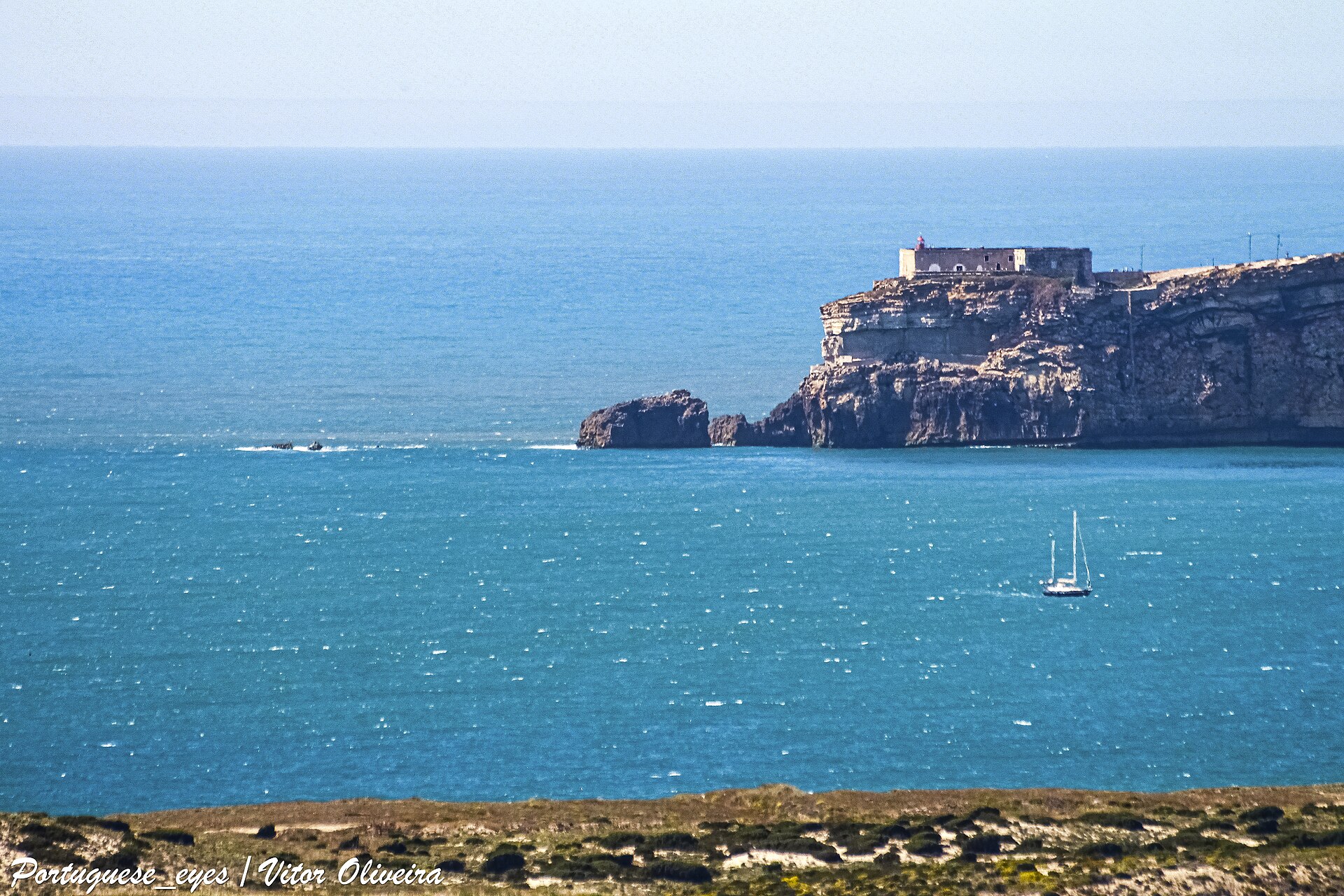
And on the far point, the Forte de São Miguel Arcanjo: a sixteenth-century fort with a red lighthouse on top, converted into a small museum about the waves and the surfers who ride them. Entry €2, open 10:00 to 18:00 year round, last admission half an hour before closing. The terrace on top of it is the viewing platform you have seen in every photograph. Checked September 2026 — confirm before you travel.
The funicular
The Ascensor da Nazaré has been hauling people up the cliff since 1889. It costs around €2.50 one way, €4 return, takes a few minutes, and saves you a stiff climb. It is also a lovely bit of Victorian machinery in its own right — if you liked Lisbon’s funiculars and street lifts, this is the same idea at three times the scale.
On big-swell days the queue for it can be long in both directions. There is a road up and a footpath, and walking down at the end of the day is no hardship.
Praia do Norte
The famous break is off Praia do Norte, on the north side of the headland — a completely different beach from the town one. You can walk down to it, and on calm days it is a wild, empty, beautiful stretch of sand.
On big days, do not go down. This water kills people. The sets arrive without warning, the run-up on that beach is enormous, and the rocks below the fort take waves clean over the top. Watch from the fort or the headland path like everyone sensible does, and treat every barrier and warning sign as meaning exactly what it says.
The town and the beach
Down at sea level, Nazaré is a working fishing town that has been a seaside resort since the nineteenth century. The beach is a long, broad crescent lined with restaurants, and in summer it fills with striped tents. Two things are worth seeking out:
- The women in seven skirts. The traditional Nazaré costume — seven layered petticoats, explanations for which range from the practical to the folkloric — is still worn by older women, some of whom sell nuts and dried fruit near the funicular. It is a genuine survival rather than a re-enactment, though it is inevitably performed for cameras too.
- The drying fish. Racks of peixe seco — split fish drying in the sun on the sand — are still a common sight at the north end of the beach. It is the oldest thing in the town and the most photogenic.
Eating
Nazaré eats fish, and does it plainly and well: grilled sardines, robalo and dourada off the coals, caldeirada fish stew, and percebes (goose barnacles) if you are brave and it is the season. The restaurants along the seafront are tourist-facing and mostly fine; the better value is one street back. Prices are noticeably lower than in Lisbon. Our seafood guide covers what to order and how it is cooked.
How to plan the day
If the forecast is big
Go early. First coach out of Sete Rios, or a car at dawn. The wave-watching crowd on a serious day is thousands strong and the clifftop fills from mid-morning. Get to the fort, pay your €2, find a spot on the terrace or the headland path, and stay. Take binoculars if you have them — the surfers are further out and smaller than photographs suggest. Take a windproof and something waterproof to sit on: the headland in a January storm is genuinely cold and the spray reaches the top.
Sets come in cycles with long flat gaps between them. Patience is the whole game. People who wander off after twenty minutes miss the thing they travelled two hours for.
If the forecast is flat
Treat Nazaré as one stop of three rather than a destination. With a car, the obvious loop is Nazaré plus Alcobaça — whose Cistercian monastery holds the tombs of Pedro and Inês, the most famous love story in Portuguese history — and Batalha, a colossal Gothic monastery about 30 minutes inland. Both are UNESCO sites and both are extraordinary. Óbidos is on the way back and makes a fourth stop if you are efficient.
Without a car, be honest with yourself: a three-and-a-half-hour round trip by coach to see a flat beach is not a good use of a day in Portugal. Do something else and keep Nazaré for a swell.
Is a Nazaré day trip worth it?
On a big-swell day, unreservedly yes. It is one of the genuine natural spectacles of Europe, it costs €2 to watch, and standing on that fort while something the height of a seven-storey building unloads onto the rocks below is not an experience you can substitute with anything else. If you are in Lisbon between November and February and the charts light up, drop your plans and go.
On a flat day, honestly no — not on its own. Nazaré without waves is a pleasant, slightly faded seaside town with a good view and a nice funicular, and you will have spent three and a half hours on a coach to see it. Every other day trip from Lisbon delivers more on an average day: Sintra is a UNESCO landscape of palaces, Évora is a Roman and medieval city, Óbidos is a walled town you can walk around in an afternoon, and Cascais is forty minutes away rather than two hours.
The middle position — Nazaré as one stop in a north-of-Lisbon loop with Alcobaça and Batalha — is the answer for most people with a car and no swell. That is a genuinely excellent day regardless of what the sea is doing.
Practical tips
- Check the swell forecast three to five days out, and again the night before. Wave height alone is not enough — long swell periods (16 seconds and up) are what produce the monsters.
- Dress for a clifftop in winter, not for a beach. Wind, spray and a 110-metre exposed headland make it far colder than the town below.
- Shoes with grip. The paths around the fort are rock, dirt and mud in wet weather.
- Book the coach both ways in advance on a big weekend. The last bus back to Lisbon leaves earlier than you would like — check it before you settle in for sunset.
- Binoculars or a long lens transform the day. Phone photographs of Nazaré waves are famously disappointing.
- Bring cash for the fort and small cafés, though cards are widely accepted. See our money and currency guide.
- Do not go down to Praia do Norte on a big day. Repeating it because people do it every winter.
Frequently asked questions
How do you get from Lisbon to Nazaré?
By Rede Expressos coach from Sete Rios — about 1 hour 45 minutes, roughly €11–15 each way, running every one to two hours. There is no direct train. By car it is about 1 hour 20 minutes on the tolled A8.
When are the biggest waves in Nazaré?
Between October and March, with the most reliable conditions from November to February. Genuinely giant days happen only a handful of times each winter and depend entirely on North Atlantic storms.
Can you see the big waves in summer?
No. The swell that produces them does not run in summer. From roughly April to September Nazaré is a normal, calm beach resort.
How much does it cost to visit the Nazaré lighthouse?
€2 for the Forte de São Miguel Arcanjo, which houses the wave museum and the viewing terrace. Open 10:00 to 18:00 all year, last entry 30 minutes before closing. Checked September 2026.
How long do you need in Nazaré?
Two to three hours covers the town, Sítio and the fort on a calm day. On a big-swell day, budget most of the daylight — the sets come in cycles and the waiting is part of it.
Is Nazaré better than Óbidos as a day trip?
On a flat day, Óbidos — it is closer, more compact and more reliably rewarding. On a big-swell day, nothing on this coast competes with Nazaré. Compare the options in our guide to day trips from Lisbon.
Can you swim at Nazaré?
At the town beach in summer, yes, with the usual Atlantic caveats about cold water and currents. At Praia do Norte, no — it is a big-wave break, not a swimming beach, and it is dangerous even on modest days.
Why does Nazaré have such big waves?
The Nazaré Canyon, a submarine gorge up to 5,000 metres deep, funnels and focuses Atlantic swell onto a single point at Praia do Norte. Deep-water swell and shelf swell converge there and stack, producing waves several times the size of those breaking a few hundred metres away.
Bottom Line
Nazaré is the most conditional day trip from Lisbon. Get the swell right and it is unforgettable — a €2 ticket onto a clifftop fort to watch the Atlantic do something it does nowhere else on earth at this scale, close enough to hear it hit. Get it wrong and it is a long coach ride to a quiet beach.
So plan it as a variable rather than a fixture. Keep one day loose in your Lisbon itinerary, watch the forecast from the middle of the week, and go the moment the numbers look right. If they never do, spend the day on Sintra or Évora instead and come back another winter — the canyon is not going anywhere.
Further inland, the Templar convent at Tomar makes another strong all-weather alternative.
Photo Credits
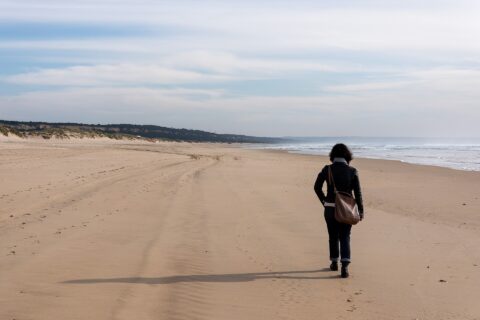
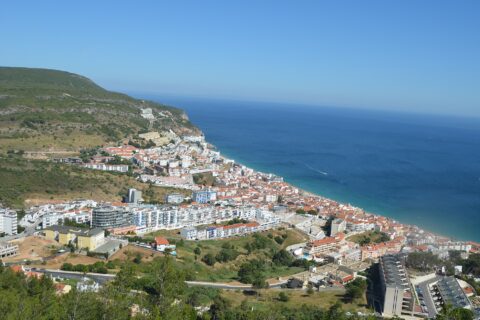
Nazaré beach and the Sítio headland: 037 Mar apetecível na Primavera . by Xiselle, CC BY-SA 3.0, via Wikimedia Commons.