Lisbon Food Guide
Pastéis de Nata: Where to Find the Best Custard Tarts in Lisbon (2026)
The ultimate guide to Lisbon's most iconic dessert. Where to find the best pastéis de nata, the Pastéis de Belém story, and a recipe to try at home.
In this guide
- The Quick Answer
- What Makes a Great Pastel de Nata?
- The Top Tier: Where to Eat the Best
- Other Excellent Pastéis de Nata in Lisbon
- How to Eat a Pastel de Nata Like a Local
- The History: How the Pastel de Nata Was Born
- Pastel de Nata vs Pastel de Belém: The Naming Dispute
- Recipe: Pastel de Nata at Home
- Cooking Classes That Teach Pastéis de Nata
- Buying Pastéis de Nata to Take Home
- Where to Skip
- Pairing Pastéis de Nata With Other Lisbon Plans
- FAQ: Pastéis de Nata in Lisbon
- Bottom Line
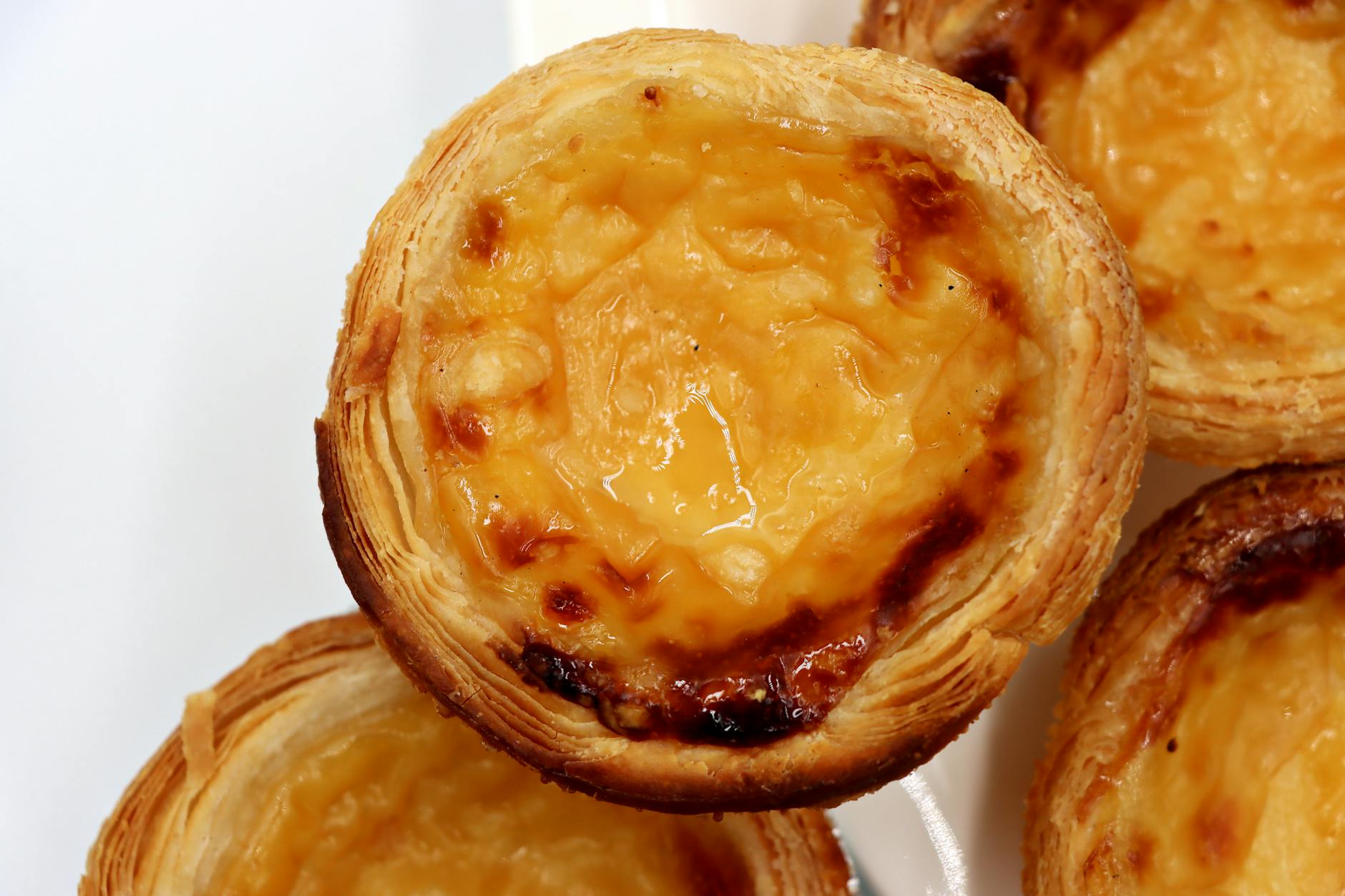
The pastel de nata is Lisbon’s most famous food — a 19th-century Portuguese custard tart with a flaky puff pastry shell and rich egg-yolk custard, finished with a scorched-caramelized top, served warm with cinnamon and powdered sugar. Lisbon eats four million of them a week, and finding the very best version is a serious local sport.
A nata and a bica standing at the counter is the real Lisbon breakfast — but if you want a table and a cooked plate, see the best brunch in Lisbon.
Portugal’s other great pastry towns are worth the trip. In Sintra the queue is for the travesseiro, invented in the 1940s and still made to a family recipe — see where to eat in Sintra.
This guide covers everything you need to find — and properly eat — the best pastéis de nata in Lisbon: the legendary Pastéis de Belém, the cult-favorite Manteigaria, the dark-horse contenders, what makes a great nata, the history, and a recipe to attempt at home. Updated for 2026.
The Quick Answer
The two best pastéis de nata in Lisbon are Pastéis de Belém (the original, since 1837) and Manteigaria (the cult favorite, founded 2014). They taste different — Belém is lighter and creamier; Manteigaria is darker, more caramelized, more intense. Most travelers should try both.
Beyond the top two: Aloma, Confeitaria Nacional, Pastelaria Versailles, and Castro all serve excellent versions worth seeking out. Pretty much every neighborhood pastelaria sells decent natas — they’re cheap, ubiquitous, and almost always good.
What Makes a Great Pastel de Nata?
Five things separate a great pastel de nata from a forgettable one:
1. The pastry must shatter. Properly laminated puff pastry should crackle audibly when you bite it. A soft pastry means it’s been sitting in a warming case too long.
2. The custard must wobble, not pour. Set but barely — like crème brûlée. Too liquid means underbaked; too firm means overbaked.
3. The top must be scorched. Black-spotted caramelization (achieved at 250°C+ ovens) is the defining textural contrast. Pale tops are amateur work.
4. The egg must dominate. Real natas are eggy — the custard is mostly egg yolks bound by milk and sugar. If yours tastes like vanilla pudding, it’s wrong.
5. It must be warm. Pastéis de nata are best within 5 minutes of leaving the oven. The pastry crisps, the custard warms slightly, the contrast peaks. Cold natas are a tragedy.

The Top Tier: Where to Eat the Best
Pastéis de Belém (Belém)
The original. Founded in 1837 next to the Jerónimos Monastery — and still using the secret recipe handed down through five generations of bakers. Only three living people know the full formula. Allegedly the monks who lived in the monastery before its dissolution in 1834 sold the recipe to the first baker. Whatever the truth, the result is the best-selling pastry in Portugal.
Address: Rua de Belém 84-92
Hours: 8 AM – 10 PM daily (often 11 PM in summer)
Price: €1.30 per nata
Best approach: Use the takeaway counter, NOT the dining room. Same custard tarts, no 30-60 minute wait. Eat warm in Praça do Império across the street.
Tip: Production runs continuously throughout the day — natas come out of the oven every 5-10 minutes. They’re never sitting for long.
The character: lighter, creamier custard with a more delicate egg flavor. The pastry is properly flaky. Slightly less aggressively caramelized than Manteigaria. Many find this the more subtle, refined version.
Manteigaria (Multiple Locations)
The cult favorite founded in 2014 by a former Pastéis de Belém baker. Five Lisbon locations — Chiado (the original), Time Out Market, Rua Garrett, Bairro Alto, and Avenida da Liberdade. All share open kitchens where you can watch natas come out of giant flaming ovens.
Best location: The Chiado original (Rua do Loreto 2). Feels least touristy.
Hours: 8 AM – midnight typically
Price: €1.30 per nata
Tip: Watch for the bell. When fresh natas come out, the staff ring a small bell — order immediately for the warmest possible nata.
The character: darker, more aggressively caramelized top, slightly looser custard, more pronounced egg flavor. Many locals (and many chefs) prefer Manteigaria over Belém. The pastry is properly shattering.
Pastéis de Belém vs Manteigaria: Side-by-Side
| Feature | Pastéis de Belém | Manteigaria |
|---|---|---|
| Founded | 1837 | 2014 |
| Custard | Lighter, creamier | Darker, more egg-forward |
| Pastry | Flaky, refined | Equally flaky, slightly more rustic |
| Top | Lightly caramelized | Aggressively scorched |
| Atmosphere | Bakery-cafeteria, often busy | Open-kitchen counter, theatrical |
| Crowds | Heavy at the dining room, light at takeaway | Steady but flowing |
| Locations | One (Belém) | Five (across central Lisbon) |
| Price | €1.30 | €1.30 |
The smart play: try Belém on a Belém day-trip morning. Try Manteigaria at the Time Out Market or Chiado on a separate occasion. Decide for yourself.
Other Excellent Pastéis de Nata in Lisbon
Aloma
Two-time National Pastel de Nata Champion (2012, 2013). Locations in Chiado and Campo de Ourique. Slightly sweeter and more dessert-like than the canonical Belém recipe. Excellent option for travelers who find the egg-forward versions too intense.
Price: €1.20–€1.40
Best location: Campo de Ourique (less touristy)
Confeitaria Nacional (Praça da Figueira)
A 1829-vintage pastry shop with a wider menu of Portuguese baked goods. Pastéis here are excellent — slightly more cake-like than Belém. Bonus: their bolo-rei (king cake) at Christmas is the best in the city.
Pastelaria Versailles (Saldanha)
Belle Époque institution serving Lisbon’s old guard since 1922. Beautiful art-deco interior worth visiting just for the room. Natas are excellent — slightly less famous than Belém but reliably high-quality.
Castro
Modern boutique pastelaria in Príncipe Real. Slightly upscale presentation, exceptional pastry, sometimes considered the connoisseur’s choice. Higher price point (€1.80) but worth it.
Fábrica de Nata (Various Locations)
Newer entrant with multiple central locations. Aggressive marketing and tourist-friendly hours, but the natas are genuinely good. Better than the worst neighborhood pastelarias; not as good as Belém or Manteigaria.
Pastéis Cristo Rei
Across the Tagus in Cacilhas. Locally beloved, rarely visited by tourists. Worth the ferry ride for travelers wanting the true off-the-beaten-path nata.
How to Eat a Pastel de Nata Like a Local
The unspoken rules:
1. Eat it warm. Cold natas are a sad imitation. If your tray comes from a warming case rather than the oven, the pastel won’t be optimal.
2. Add cinnamon and powdered sugar. Most pastelarias provide small sachets of each. Tradition is a light dust of both — not heavy.
3. Eat it in 3–4 bites. Hold the pastry shell carefully (it shatters), and bite through pastry + custard together. Don’t pick the shell apart.
4. Drink it with bica. “Bica” is the Lisbon word for espresso. €0.80–€1.20 per cup. The bitter coffee contrast is essential.
5. Eat one fresh. Two if you must. Three is greedy and they’ll get cold before you finish.
6. Don’t take pastéis de nata “to go.” Travel ruins them. Eat at the bakery counter, on a bench across the street, in the moment.

The History: How the Pastel de Nata Was Born
The story begins in the 16th century when egg whites were used in vast quantities to clarify wine and starch nun’s habits in monasteries. The leftover yolks accumulated in industrial volumes. Portuguese monasteries developed dozens of egg-yolk-based desserts — the genre is called doces conventuais (conventual sweets) — to use up the surplus.
The Hieronymite monks at the Jerónimos Monastery (next to today’s Pastéis de Belém shop) were among the most celebrated practitioners. Their custard tarts became locally famous.
In 1834, Portugal’s liberal government dissolved all male religious orders, including the Hieronymites. The monks left the monastery; the recipes risked being lost. Three years later, in 1837, a former monk (or possibly a sugar refinery owner who acquired the recipe — sources differ) opened the first commercial bakery selling the pastéis on the same site, naming them Pastéis de Belém.
The 19th-century railway expansion brought day-trippers from central Lisbon to Belém specifically for the natas. Mass tourism in the 20th century turned them international. UNESCO World Heritage status of Jerónimos Monastery in 1983 sealed the area’s status. Today the original bakery sells about 25,000 natas a day.
Pastel de Nata vs Pastel de Belém: The Naming Dispute
Strictly speaking, “pastel de Belém” is the trademarked name used only by the original 1837 bakery. Everywhere else, the same pastry is called pastel de nata. Most travelers use the names interchangeably; locals know the distinction matters legally but not gastronomically.
Recipe: Pastel de Nata at Home
For travelers who want to attempt the real thing at home, here’s a simplified version. (The actual Pastéis de Belém recipe remains a trade secret known to only three living people.)
Ingredients (makes 12)
- Puff pastry sheet (store-bought or homemade)
- 250 ml whole milk
- 250 g caster sugar
- 50 g all-purpose flour
- 6 large egg yolks
- 1 tsp vanilla extract
- 1 tsp lemon zest
- Pinch of salt
- Cinnamon and powdered sugar for serving
Steps
- Roll the puff pastry into a rectangle, then roll it tightly like a sushi roll. Slice into 12 discs (each ~2 cm thick).
- Press each disc into a buttered muffin tin, working it up the sides to form a thin shell.
- In a saucepan, combine milk, sugar, flour, vanilla, lemon zest, and salt. Heat until thickened.
- Off heat, whisk in egg yolks until smooth.
- Pour custard into pastry shells, filling 3/4 full.
- Bake at maximum oven temperature (275°C / 525°F) for 10-12 minutes — the goal is to caramelize the tops while the pastry shatters and the custard sets. Most home ovens can’t reach the temperatures of commercial Portuguese bakery ovens, so the result will be paler than Belém’s.
- Cool 5 minutes, dust with cinnamon and powdered sugar, eat immediately.
The result will be a respectable home version, not a perfect replica. The commercial 350°C+ ovens used by Pastéis de Belém and Manteigaria are essentially unreachable in domestic kitchens.

Cooking Classes That Teach Pastéis de Nata
For travelers who want to learn from a pro:
- Pastel de Nata Workshop at A Fábrica — €60 per person, 2 hours, includes 6 tarts to take home
- Cooking Lisbon’s Pastel de Nata Class — €75–€95 per person, includes lunch and recipes
- Lisbon Cooking Academy — multiple classes including pastel de nata-focused options
See our Lisbon cooking classes guide for detailed comparison.
Buying Pastéis de Nata to Take Home
Pastéis de nata travel poorly. They lose textural character within 24 hours and quality plummets within 12. That said, if you must:
- Buy them at the airport on departure day. Both Pastéis de Belém and Manteigaria have airport locations. Eat within 24 hours.
- Buy frozen. Some bakeries sell uncooked frozen natas you can finish in a hot home oven. Closer to fresh than refrigerated.
- Send the recipe instead. Better to share the experience than transport stale pastry.
Where to Skip
Tourist-trap “pastel de nata” stalls on Rua Augusta and around major attractions. Often mass-produced and reheated. The price is the same; the quality is dramatically worse.
Hotel breakfast buffet pastéis. Made hours earlier, sat in warming cases, lost their pastry texture. Fine if free; not worth €5+.
Frozen supermarket pastéis from non-bakery brands. Available abroad but no comparison to fresh Lisbon versions.
Pairing Pastéis de Nata With Other Lisbon Plans
- Belém day: Pastéis de Belém after Jerónimos Monastery, before Belém Tower
- Time Out Market lunch: Manteigaria for dessert
- Chiado walking: Manteigaria Chiado original between shopping stops
- Sunset at Miradouro de São Pedro de Alcântara: Bring a couple of warm natas + bica from Manteigaria Bairro Alto
- Morning kickoff: Manteigaria + bica is the locals’ standard breakfast
FAQ: Pastéis de Nata in Lisbon
Where is the best pastel de nata in Lisbon?
Pastéis de Belém (the original 1837 bakery) and Manteigaria (the cult favorite, founded 2014) are the two most-loved. Aloma, Confeitaria Nacional, and Castro round out the top tier.
What’s the difference between pastel de nata and pastel de Belém?
“Pastel de Belém” is the trademarked name used only by the 1837 original bakery. Everywhere else, the same pastry is called “pastel de nata.” The recipes differ; the names overlap.
How much does a pastel de nata cost?
€1.20–€1.40 at most bakeries. Premium spots like Castro charge up to €1.80. They’re cheap, intentionally — meant for daily eating.
Are pastéis de nata served warm?
Yes — fresh from the oven is the only proper way. Cold natas are a vastly inferior experience. Choose bakeries with active production.
How many pastéis de nata should I eat?
One per visit, two if you’re greedy. Three or more gets cold before you finish. Better to visit multiple bakeries on multiple days.
Is Pastéis de Belém worth the wait?
The dining room often has 30–60 minute queues. Skip it. Use the takeaway counter (no wait) and eat the same natas warm at Praça do Império across the street.
Can you take pastéis de nata home?
You can but they degrade rapidly — 24 hours maximum. Better to eat them fresh in Lisbon.
What do you drink with pastel de nata?
Bica (espresso) is the classic Portuguese pairing. €0.80–€1.20 per cup. The bitter coffee balances the sweet custard perfectly.
Are pastéis de nata vegetarian?
Yes — they’re made of eggs, milk, sugar, flour, and pastry. No meat or animal-derived rennet. Not vegan (eggs and dairy).
What time do pastelarias open in Lisbon?
Most open at 7–8 AM. The freshest natas come out of the oven from 8 AM through 11 PM at major bakeries — Manteigaria runs continuous production until late.
Bottom Line
The two best pastéis de nata in Lisbon are Pastéis de Belém (the original) and Manteigaria (the cult favorite). Try both during your visit. Eat them warm, with cinnamon and powdered sugar, paired with bica. Skip the dining room queues; use takeaway counters and eat outside. Pace yourself to one or two per visit so they’re never cold by the last bite. And know that even mid-tier neighborhood bakeries serve excellent versions — pastel de nata is genuinely democratic Portuguese food.
Continue planning food experiences with our Lisbon Food Guide pillar, our best restaurants in Lisbon guide, our guide to traditional Portuguese dishes, and our best tascas in Lisbon.