Lisbon Food Guide
Lisbon Coffee Culture: Best Cafes & the Art of Portuguese Coffee 2026
Explore Lisbon's thriving coffee culture—how to order like a local, the best specialty cafes, historic coffee houses, and Portuguese coffee traditions.
In this guide
- How to Order Coffee in Lisbon
- Historic Literary Cafés
- Best Specialty Coffee Roasters in Lisbon
- Best Cafés by Neighbourhood
- Best Cafés for Working / Digital Nomads
- Pastel de Nata Pairings
- What Makes Portuguese Coffee Different
- Coffee Tour Options
- FAQ: Lisbon Coffee & Cafés
- Bottom Line
- Portuguese Coffee: A Short History
- Best Coffee + Pastry Combinations by Budget
- Photo Credits
Lisbon’s coffee culture is one of Europe’s oldest and most distinctive — Portuguese cafés from the 1700s are still pouring espresso to standing customers; the city’s bica (a short, strong espresso served at the counter) is part of daily life; and since 2015 a wave of third-wave specialty roasters has transformed Lisbon into one of Europe’s most exciting modern coffee scenes. The best cafes in Lisbon range from Pessoa’s 1905 literary haunt to single-origin roasters serving Honduras pour-overs.
For the sit-down version — flat whites, eggs and a two-hour table — see our guide to the best brunch in Lisbon, which covers the neighbourhoods, the prices and how to avoid the weekend queue.
This guide covers everything: how to order Portuguese coffee, the historic literary cafés, the best specialty roasters, neighbourhood by neighbourhood picks, and where digital nomads actually work. Updated for 2026.
How to Order Coffee in Lisbon
Portuguese coffee vocabulary trips up tourists daily. The standard order — “um café por favor” — gets you an espresso. Everything else requires knowing the terms:
| Order | What you get |
|---|---|
| Bica (or um café) | Standard espresso shot — the default |
| Bica curta | Shorter, stronger espresso |
| Bica cheia | Slightly longer, milder espresso |
| Galão | Espresso with steamed milk in a tall glass (closest to a latte) |
| Meia de leite | Espresso with milk in a coffee cup — smaller than galão |
| Café com leite | Coffee with milk (general term) |
| Garoto | Espresso with a small splash of milk |
| Pingo | Espresso with an even smaller splash than garoto |
| Abatanado | Long black / Americano |
| Carioca | Weak coffee made from already-used grounds, or chamomile tea |
The Bica Name: Etymology
“Bica” reportedly comes from “BIba este Com Açúcar” (“Drink this with sugar”) — instructions written above the espresso machine at A Brasileira when espresso was new to Lisbon. The name stuck and spread citywide. (This is the popular story; etymologists aren’t fully convinced, but it’s the one Lisboetas tell.)
Pricing: Counter vs Table
- Bica at the counter: €0.70–€1.20
- Bica at a sit-down table: €1.50–€2.50
- Galão: €1.50–€3.00
- Specialty pour-over or filter: €4–€6
The counter price is one of Lisbon’s more civilised institutions. Standing at the bar, drinking fast, paying €0.80 — this is how most Portuguese drink coffee every morning. It’s faster, cheaper, and more sociable than sitting down.
Café Etiquette
- Standing at the counter is cheaper, faster, and what locals do
- Sugar is expected with a bica — most Portuguese add it automatically
- “Faz favor” (excuse me) or a raised hand gets the barista’s attention
- “Posso pagar?” or “Pago a conta” when you want the bill
- Tipping: round up to nearest euro at the counter; 5–10% at sit-down table service
Historic Literary Cafés

Lisbon’s café culture has an intellectual tradition. The city’s writers, poets, and political exiles spent hours in these places — and several of them are still operating, essentially unchanged.
Martinho da Arcada (1782)
Lisbon’s oldest restaurant and café, on Praça do Comércio. Fernando Pessoa — the greatest Portuguese writer of the 20th century, a man who invented 70+ fictional authors with distinct biographies — was a regular for decades. His preferred table is preserved with his portrait. The original 1782 marble counters and tile floors are intact. The coffee is straightforward; the atmosphere is the point.
Address: Praça do Comércio 3
Café A Brasileira (1905)
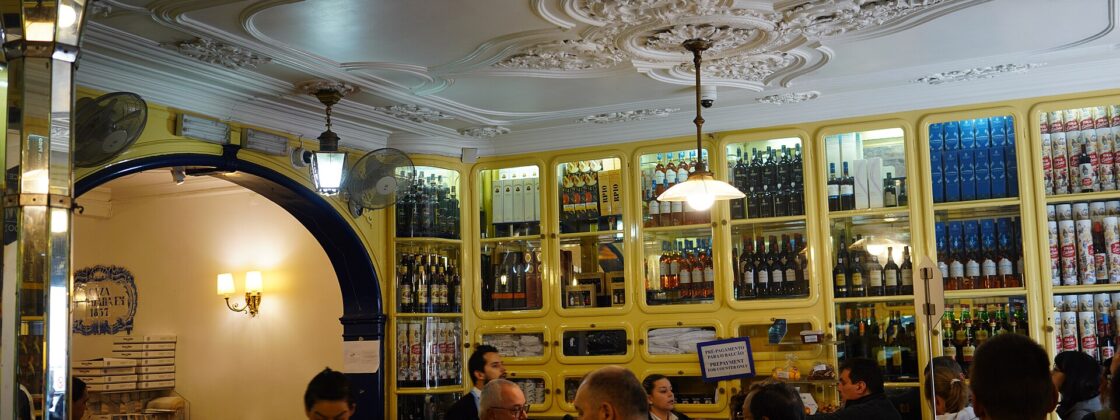
Chiado’s most famous café, and the one every visitor photographs. Pessoa wrote here daily for years; his bronze statue sits permanently at an outdoor table, available for tourist selfies at all hours. The Art Nouveau interior — dark wood, mirrors, elaborate ceiling — is a museum piece. The coffee is decent. It’s very touristy and aware of it.
Address: Rua Garrett 120, Chiado
Café Nicola (1796)
On Rossio Square since the 18th century. Frequented by poets and writers including Manuel Bocage. The terrace overlooking Rossio — with the theatre behind you and the city spreading uphill — is one of the classic Lisbon scenes. Good for a slow morning before Alfama.
Address: Praça D. Pedro IV 24, Rossio
Confeitaria Nacional (1829)
Lisbon’s oldest pastry shop, on Praça da Figueira. A combination of historic bakery counter downstairs and a more composed café upstairs. The pastel de nata here isn’t Pastéis de Belém quality, but the atmosphere is excellent and the queues are shorter.
Address: Praça da Figueira 18B
Pastelaria Versailles (1922)
Belle Époque pastry shop on Avenida da República near Saldanha. Mirrored walls, gold detailing, marble tables, ornate chandeliers — the room is over-the-top in the best possible way. Come for the aesthetic rather than the coffee, which is standard Portuguese. Excellent for a pastel de nata and a galão mid-afternoon when it’s less crowded.
Best Specialty Coffee Roasters in Lisbon
Since around 2015, Lisbon’s specialty coffee scene has grown fast — and it’s genuinely good now, not just imitating better scenes elsewhere. These are the standouts:
Fábrica Coffee Roasters
One of Lisbon’s earliest third-wave roasters, and still one of the most consistent. Multiple locations including Chiado and Cais do Sodré. Single-origin focus; in-house roasting visible from the café floor. The pour-overs are carefully made. €3–5 espresso; €5–7 pour-over. Chiado branch is the original; Cais do Sodré is better for working.
Bettina & Niccolò Corallo
Often cited as the city’s best coffee, and the case is strong. Tiny Príncipe Real café run by the Corallo family, who import cocoa from São Tomé and roast coffee from across Africa and Latin America. Limited seating — maybe a dozen people fit. The espresso is exceptional. €2–4. Come in the morning when the roasts are freshest; expect to wait for a table at peak times.
Copenhagen Coffee Lab
Multiple locations (Príncipe Real, Chiado, Mouraria). Scandinavian-style minimalism — white walls, light wood, serious filter coffee. Reliable, expat-popular, consistently good. €3–5. The Príncipe Real branch has the best light in the afternoon.
Hello, Kristof
Cais do Sodré specialty café with a magazine wall and slow, considered service. Good single-origin roasters. Laptop-friendly in the afternoons when it quiets down. €3–5. One of the few places in Lisbon where you can sit for two hours without feeling rushed.
Comoba
Australian-style brunch café in Cais do Sodré. The coffee and brunch are both taken seriously. Flat whites and lattes done correctly. €3–5 coffee; €15–20 brunch. Busy on weekends — go on a weekday for a seat.
Dear Breakfast
Multi-location Príncipe Real/Chiado favourite. Strong on flat whites, consistently good lattes, reliable WiFi. The brunch menu changes seasonally. €3–5 coffee; €12–18 brunch plates. Better for working in the afternoon when the brunch crowd clears.
Heim Café
Design-forward Príncipe Real café. Large communal tables, well-edited food menu, slow pace. Excellent for a long afternoon with a book or a laptop. Not the most technically brilliant coffee in the city, but the atmosphere is one of the best.
The Folks
Lisbon-based roaster supplying many specialty cafés around the city. Their own café in the Mouraria area is quieter than most. Good entry point into Lisbon specialty if you’re staying nearby.
Ritual Coffee
Newer Príncipe Real entrant. Specialty espresso and pour-over. Smaller and quieter than the established names — good if the bigger places are full.

Best Cafés by Neighbourhood
Chiado
- A Brasileira — historic, touristy, essential for the atmosphere
- Manteigaria — best pastéis de nata + bica combination in central Lisbon
- Copenhagen Coffee Lab — specialty filter coffee, quiet afternoons
- Fábrica Coffee Roasters — original location; single-origin espresso and pour-over
Príncipe Real
- Bettina & Niccolò Corallo — the city’s best coffee; tiny, worth the wait
- Copenhagen Coffee Lab — afternoon light is good here
- Dear Breakfast — reliable WiFi, strong flat whites
- Heim Café — design-forward, communal tables, slow pace
- Ritual Coffee — quieter alternative if the others are full
Cais do Sodré
- Hello, Kristof — magazine selection, laptop-friendly afternoons
- Comoba — Australian brunch + good coffee
- Fábrica Coffee Roasters — second location; better for working than the Chiado branch
Baixa / Rossio
- Café Nicola — 18th century origins; Rossio terrace is a classic
- Confeitaria Nacional — oldest pastry shop, galão + pastel combination
- Martinho da Arcada — Pessoa’s café; Praça do Comércio
Anjos / Intendente
- Tease Café Sofia — third-wave specialty, vegetarian/vegan friendly; €3–5
- Various smaller specialty spots — the neighbourhood has developed a quiet coffee scene since 2020
Belém
- Pastéis de Belém — famous for the original pastel de nata recipe, not the coffee itself; but the bica pairing is tradition
- Touristy cafés along Rua de Belém — pleasant for a break between monuments, not destinations in themselves
Best Cafés for Working / Digital Nomads
Lisbon is a serious digital nomad destination, and some of these cafés have built reputations specifically for laptop-friendly environments. The key factors: reliable WiFi, power sockets, enough space to spread out, and staff who don’t hustle you after one coffee.
- Hello, Kristof — magazine wall, slow service pace, afternoons ideal; best for focused work
- Heim Café — large communal tables, good power socket access
- Dear Breakfast — reliable WiFi, multiple locations, comfortable for working
- Comoba — Australian café atmosphere; busier mornings but afternoons work well
- Copenhagen Coffee Lab — busy during peak hours; better for working 14:00–17:00
- Fábrica (Cais do Sodré location) — slightly more space than the Chiado branch
Avoid for working: A Brasileira (touristy, no WiFi, tables turn constantly), Pastéis de Belém (maximum table turnover), and small intimate spots like Bettina & Niccolò Corallo where the limited seating means you’d be occupying a coveted spot.
See our digital nomad guide for coworking spaces, neighbourhoods, and SIM card advice.
Pastel de Nata Pairings
Coffee plus pastel de nata is Lisbon’s signature affordable pleasure. The pastry should shatter when you bite it — thin, caramelised top, creamy custard inside, eaten warm. The coffee cuts through the sweetness. The best pairings:
- Manteigaria + bica — best central Lisbon combination; Chiado location is most convenient
- Pastéis de Belém + bica — the original, in Belém; worth the trip at least once
- Confeitaria Nacional + galão — historic atmosphere, Baixa location
See our custard tart taste test for the full breakdown of where to find the best versions across the city.
What Makes Portuguese Coffee Different
A few things distinguish Lisbon’s coffee culture from the rest of Europe:
- Dark roasts by default — traditional Portuguese espresso is dark and bold; specialty cafés offer lighter options but they’re the exception
- Sugar is assumed — most Portuguese add sugar to a bica before drinking; asking for it without sugar (“sem açúcar”) is fine but slightly marks you as foreign
- Speed is respected — a bica is drunk in 90 seconds at a counter; it’s not a sit-down ritual
- Beans from former colonies — Brazil, Angola, and Timor were traditional sources; this is slowly diversifying with the specialty scene
- No drip coffee tradition — “café americano” exists but is unusual; espresso-based drinks are default
- Genuinely cheap — €0.80 for an espresso at the counter is real, not a tourist trap exception
Coffee Tour Options
Several operators run guided Lisbon coffee tours combining historic cafés with specialty roasters:
- Lisbon Coffee Tour by Café Talk — approximately €40–60, 3 hours, 4–6 stops mixing history and specialty
- Devour Coffee + Pastry Tour — combines coffee with pastry visits; good for food-focused travellers
- Self-guided — this guide gives you the foundation; build your own route using the neighbourhood sections above
FAQ: Lisbon Coffee & Cafés
What is a bica?
A short, strong espresso — the Portuguese word for an espresso shot. Costs €0.70–€1.20 standing at the counter; €1.50–€2.50 at a table. Ordering “um café” gets you the same thing.
Where is the best coffee in Lisbon?
Bettina & Niccolò Corallo in Príncipe Real for the best single cup. Fábrica Coffee Roasters for consistent specialty across multiple locations. Hello, Kristof for the best atmosphere if you’re staying a while.
Where did Pessoa drink coffee?
Café A Brasileira on Rua Garrett in Chiado, open since 1905. His bronze statue is at an outdoor table. Also Martinho da Arcada on Praça do Comércio — his preserved regular table is inside.
How much does coffee cost in Lisbon?
€0.70–€1.20 espresso at the counter. €1.50–€2.50 at a sit-down table. €3–€6 at specialty cafés. Lisbon is one of the cheapest cities in Western Europe for coffee.
What is a galão?
Coffee with steamed milk in a tall glass — approximately one-third espresso, two-thirds milk. The Portuguese version of a latte. About €1.50–€3. Standard morning order alongside a pastel de nata.
Do I tip at Lisbon cafés?
Round up to the nearest euro at the counter (leaving the change). At sit-down table service, 5–10% is appropriate. Tipping is genuinely appreciated but not expected in the way it is in the US.
Bottom Line
Lisbon coffee culture spans 240+ years — from 1782 Martinho da Arcada to third-wave roasters doing single-origin Honduras. Drink a bica standing at a counter to understand the city’s daily rhythm. Visit Café A Brasileira for Pessoa atmosphere and the Art Nouveau interior. Go to Bettina & Niccolò Corallo if you want the best cup in town. At €0.80–€1.20 for an espresso, it’s also one of Lisbon’s more affordable pleasures.
Coffee in Lisbon is inseparable from what is eaten beside it. The pastéis de nata guide covers the obvious pairing, the traditional food guide the meals either side of it, the restaurant picks the evenings, and the food guide pillar ties the day together.
Portuguese Coffee: A Short History
Coffee arrived in Portugal in the early 18th century through maritime trade routes — a natural consequence of a nation that had spent two centuries building sea lanes across Africa, Asia, and South America. The first Lisbon cafés opened in the 1720s and 1730s; by the time Martinho da Arcada opened on Praça do Comércio in 1782, the café had already established itself as a social institution.
The 19th century was the literary café era. Fernando Pessoa, Eça de Queirós, and Cesário Verde all wrote in Lisbon cafés. The café was simultaneously workspace, post office, bank, and salon — writers received correspondence at their regular café, and editors knew where to find their contributors.
The 20th century brought standardisation. The espresso machine became ubiquitous; the bica became the universal format; dark robusta blends from former colonies (particularly Angola and Brazil) became the default. Portuguese coffee culture ossified somewhat — excellent and distinctive but not innovating.
The third-wave shift came around 2015, when roasters like Fábrica Coffee Roasters started importing single-origin beans and running lighter roasts in Lisbon. Copenhagen Coffee Lab followed, then a wave of smaller specialty shops across Príncipe Real and Cais do Sodré. By 2026, Lisbon has a genuinely world-class specialty scene — and the old-school bica counter culture hasn’t gone anywhere alongside it. Both traditions coexist within a few streets of each other.
Best Coffee + Pastry Combinations by Budget
Budget, atmosphere, and quality aren’t the same thing in Lisbon. Matching the right café with the right occasion:
- Best value: A bica at any neighbourhood pastelaria counter + pastel de nata from the adjacent bakery. Total: €1.50–2.00. Best done in Alfama or Mouraria away from tourist streets.
- Best atmosphere: Café A Brasileira or Café Nicola — pay the tourist premium (€2.50 for a bica at a table) for the rooms and the history.
- Best coffee quality: Bettina & Niccolò Corallo (Príncipe Real) — worth a dedicated trip.
- Best all-round experience: Manteigaria in Chiado — fresh pastéis de nata, good bica, standing room at the counter. €1.80 total for both. Efficient and excellent.
- Best for a long work morning: Hello, Kristof or Heim Café — buy a pour-over, occupy a table for two hours, leave a decent tip.
See our best restaurants guide and our rundown of what to eat in Lisbon for what to eat beyond pastry counters.
Photo Credits
The counter at Pastéis de Belém: 20200206 Pasteis de Belem 7782 (49659749338) by Ray Swi-hymn from Sijhih-Taipei, Taiwan, CC BY-SA 2.0, via Wikimedia Commons.
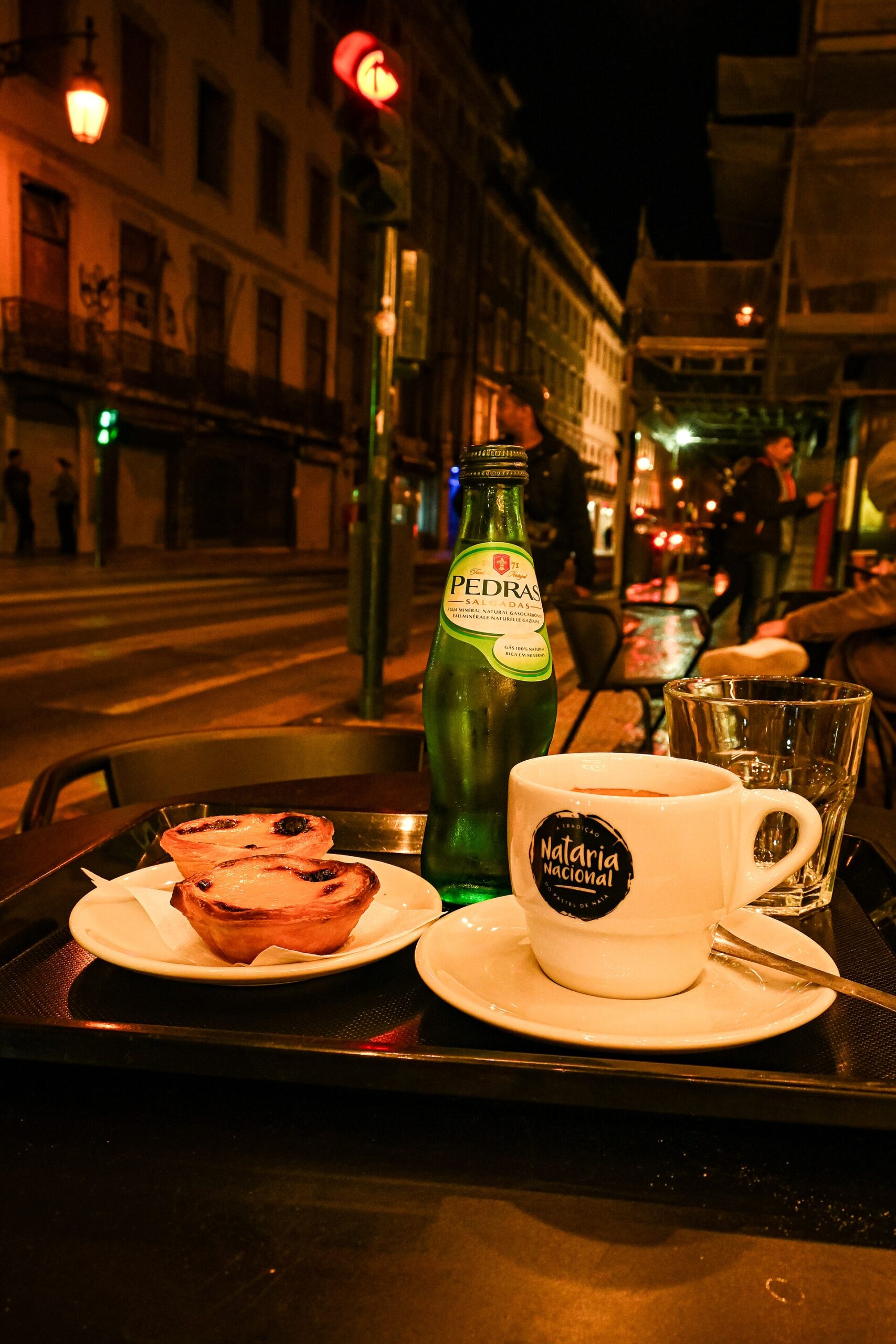
Coffee and pastéis de nata at a Natária Nacional pavement table on Rua Augusta: Lisboa – Rua Augusta – 7 by ProtoplasmaKid, CC BY-SA 4.0, via Wikimedia Commons.