Landmarks & Monuments
Cristo Rei: Crossing the River for Lisbon’s Best View
The EUR10 lift, the free esplanade most guides never mention, the ferry and bus route from Cais do Sodre, and why the afternoon is the only time worth going.
In this guide
Cristo Rei is the 110-metre statue of Christ standing over Almada on the south bank of the Tagus, arms out towards Lisbon. Everybody photographs it from the city. Far fewer people cross the river to it, which is a mistake — not because the statue is remarkable up close, but because the view back at Lisbon from that hilltop is the best there is, and it shows you something no viewpoint on the Lisbon side can: how the whole city sits on its water.
This guide covers the €10 monument ticket and, more importantly, the part of the site that is free; how to get there by ferry and bus without a tour; how long it takes; and the one time of day worth planning around.
Tickets and hours
- Monument ticket, ages 13+: €10 — covers the lift, the top terrace at the statue’s feet, the chapel and the Cardinal Cerejeira multimedia room
- Ages 8–12: €3. Under 8: free
- Booked groups: €3 per person, 72 hours’ notice, maximum 80 people
- Parking: €2 flat rate
- October to March: 10:00–18:00, every day
- April to September: 10:00–19:00, every day
- Last ascent: 20 minutes before closing
The free part, which nobody mentions
This is the single most useful thing on this page. The esplanade viewpoint, the Chapel of Nossa Senhora da Paz, the cafeteria and the restaurant are all free. You only pay to go up.
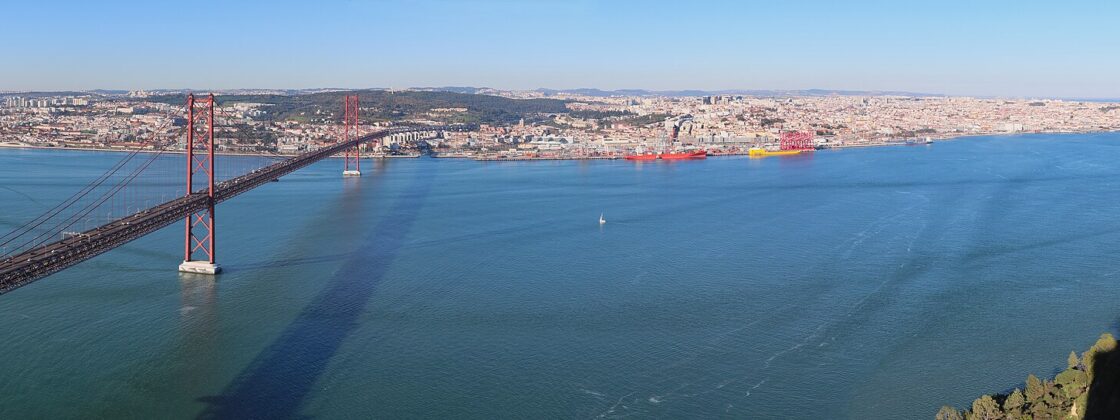
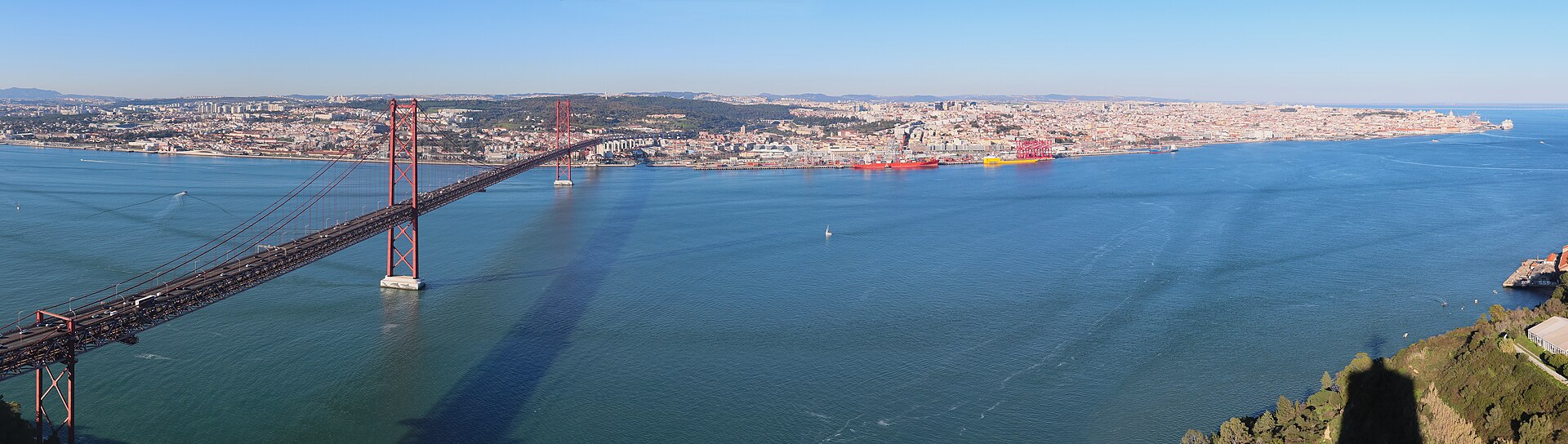
The esplanade sits at the base of the 82-metre pedestal, on a hilltop about 113 metres above the river. From there you already have the sweeping view of Lisbon, the bridge and the Tagus — the view in the photograph above. What the €10 lift buys you is another 80 metres of height and a terrace directly beneath the statue’s feet.
Is that worth €10? It depends what you want. The top terrace is higher, it is enclosed by a parapet, and standing under a 28-metre statue is a genuine experience. But the horizon does not change much, and for a family of four the difference between free and €26 is real. Our honest recommendation: go up if you are visiting once and want the full thing; stay on the esplanade if you are travelling with children, on a budget, or already view-saturated after the castle and the miradouros.
Free admission also applies to clergy and religious, visitors with 60% or greater disability plus a companion, and former combatants. Almada residents visit free on weekdays.
Getting there
The journey is half the pleasure and it is easy to do independently. Do not book a tour for this.
The ferry route — the one to take
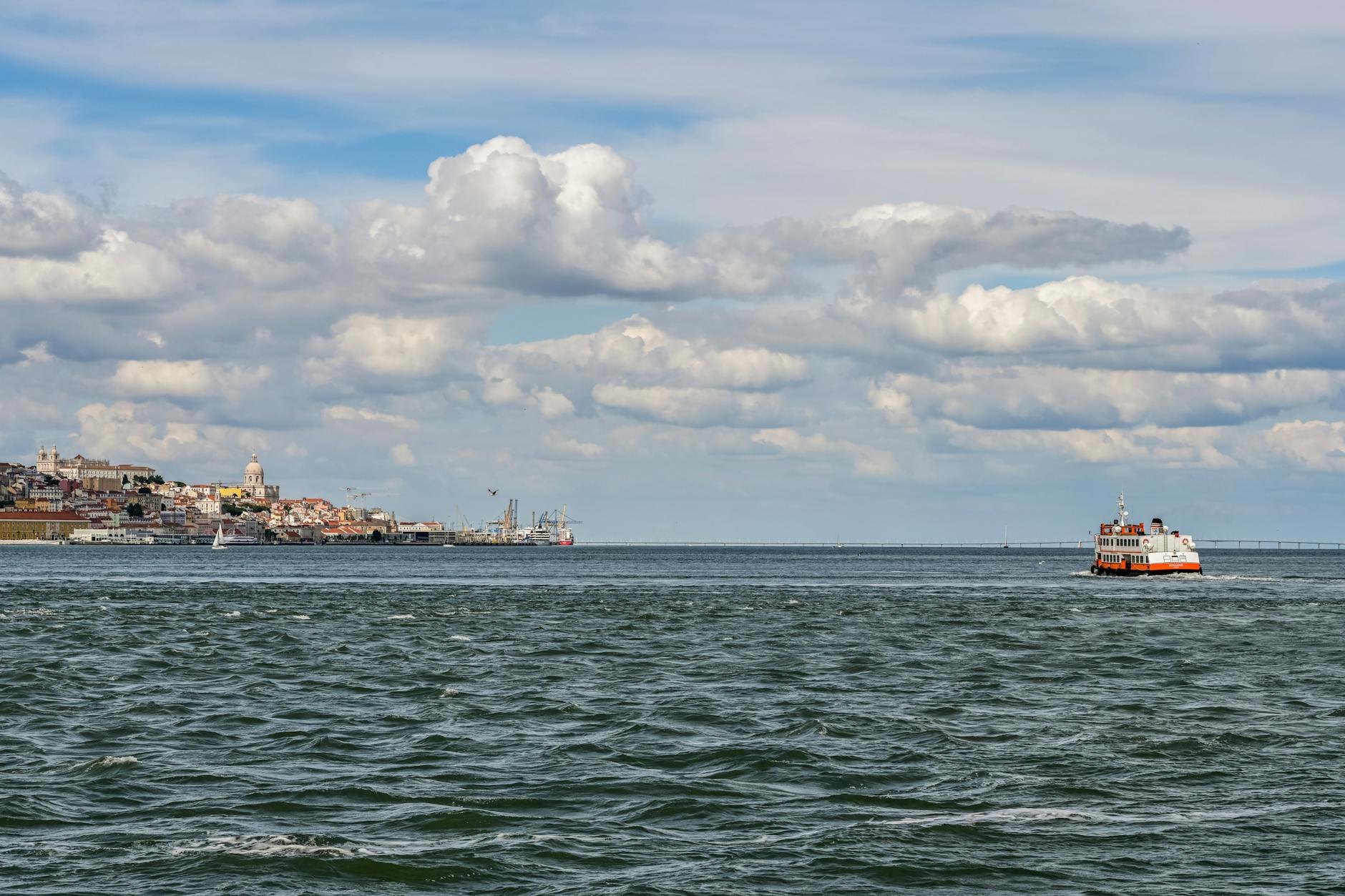
- Ferry from Cais do Sodré to Cacilhas. Ten minutes across the Tagus, running frequently through the day, and cheap on a Navegante card. Sit outside on the upper deck facing back at Lisbon — the view of Praça do Comércio and the Alfama hill from the water is worth the crossing on its own.
- Bus 3001 from Cacilhas. Carris Metropolitana, signed Cacilhas – Santuário de Cristo Rei, from the terminal beside the ferry pier. About fifteen minutes up the hill and it drops you at the sanctuary.
Allow roughly 40 minutes door to door from central Lisbon, plus waiting time. The ferry terminal at Cais do Sodré is directly connected to the green-line metro and the Cascais railway station, so the connection at the Lisbon end is straightforward — our transport guide covers the Navegante card and fares.
The alternatives
- Fertagus train across the lower deck of the 25 de Abril bridge to Pragal, then a bus or taxi up. Slower from central Lisbon but useful if you are already south of the river.
- MTS light rail lines 1 and 3 to Almada, then a short connection.
- Taxi or rideshare from central Lisbon across the bridge. Fastest, and reasonable split between three or four people, but you miss the crossing.
- Driving. There is parking at the sanctuary for €2 flat, which is unusually civilised. Bridge traffic southbound on Friday evenings and northbound on Sunday evenings is heavy.
Walking up from Cacilhas
Possible, and about 40 minutes uphill on roads with pavement most of the way. It is a real climb and there is little shade. In summer, take the bus.
What is actually up there
The statue
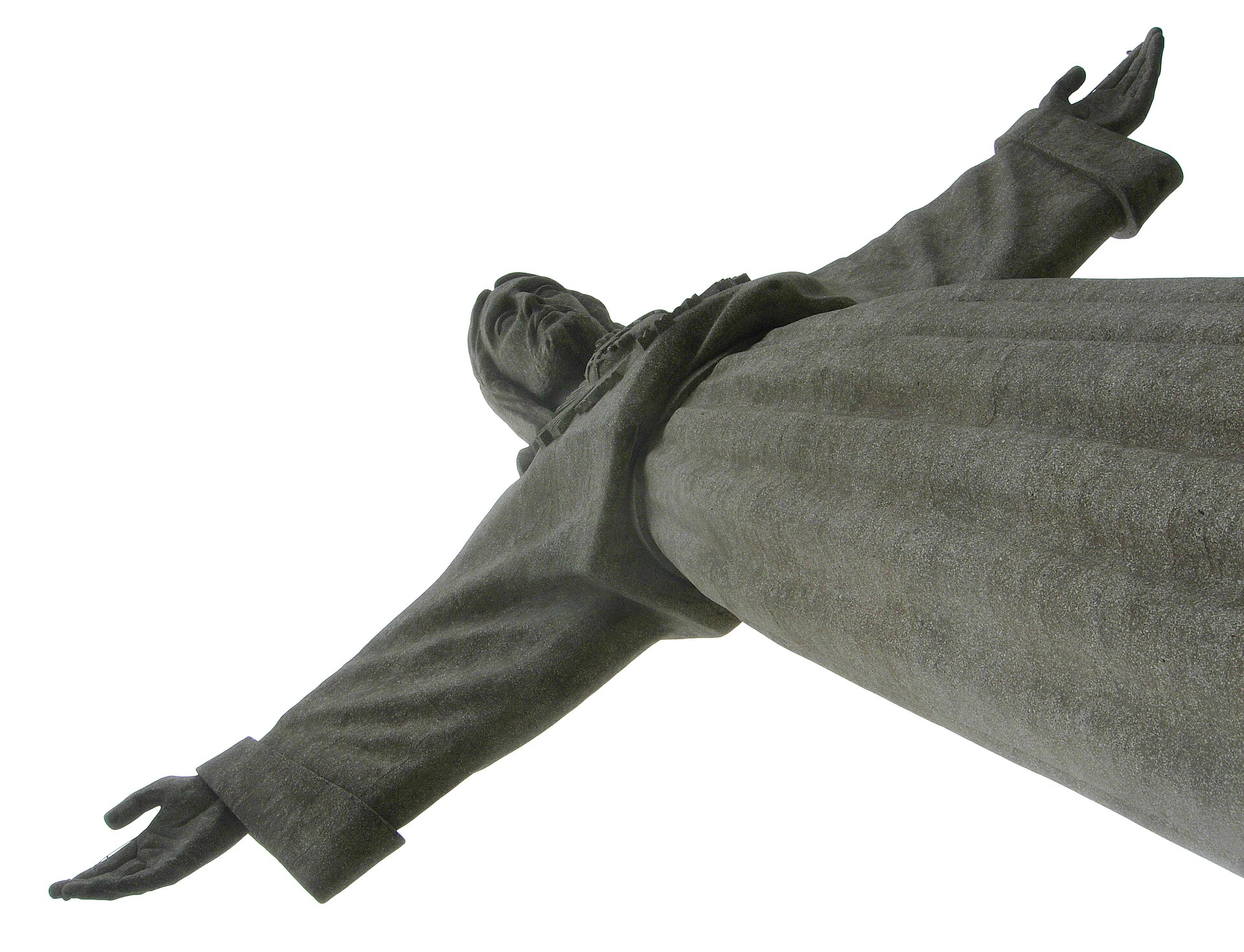
The figure itself is 28 metres tall, standing on an 82-metre portico of four concrete legs, for a total of 110 metres. It was designed by the sculptor Francisco Franco de Sousa and inaugurated in 1959.
The origin is specific and worth knowing. In 1940, with Europe at war, the Portuguese episcopate vowed that if Portugal were spared, they would build a monument in thanksgiving. Portugal stayed neutral. The money was raised largely by public subscription — much of it, by tradition, from Portuguese women — and construction ran from 1949 to 1959. The direct inspiration was Rio de Janeiro’s Cristo Redentor, which Cardinal Cerejeira had visited in 1934.
Up close, it is a plain, blocky, mid-century concrete figure. It is impressive by scale rather than by artistry, and anyone expecting the finesse of Rio’s Art Deco original will be mildly underwhelmed. That is not the point of coming.
The top terrace
The lift takes you up the inside of the pedestal to a viewing platform at the statue’s feet, roughly 80 metres above the esplanade and around 190 metres above the river. It is enclosed, it is safe, and it is genuinely high. On a clear day you can see out past Belém to the west and up the estuary to the east.
The chapel and the multimedia room
The Chapel of Nossa Senhora da Paz sits within the base and is free to enter — a calm, modern, low-lit space that is a genuine relief on a hot day. The Cardinal Cerejeira multimedia room, included in the ticket, runs a seven-minute audiovisual on the sanctuary’s history. It is short and it explains the 1940 vow properly, which the signage outside does not.
What you can actually see from up there
Half the value of this trip is knowing what you are looking at, because from the south bank Lisbon presents itself as a single legible shape rather than as a series of streets.
Facing north-east, from left to right:
- The 25 de Abril Bridge, immediately to your left and running away beneath you — road on the upper deck, railway on the lower. Opened in 1966, renamed for the date of the 1974 revolution, and unmistakably a cousin of San Francisco’s bridges.
- Belém, on the far bank beyond the bridge: the white bulk of Jerónimos and, at the water’s edge, the small silhouette of Belém Tower.
- The Alcântara docks and the cruise ships, then the long green line of the Monsanto forest park on the skyline behind the city.
- The Baixa, filling the valley in the middle distance — the regular grid is visible from here in a way it never is at street level, and the open square on the waterfront is Praça do Comércio.
- The castle hill, to the right of the Baixa, with São Jorge Castle on its crown and Alfama’s roofs spilling down towards the river.
- The white dome further right again, above the roofs: that is the Panteão Nacional at Santa Engrácia.
- The estuary opening east, with the Vasco da Gama bridge — 17 kilometres of it — thin on the far horizon on a clear day.
The Serra de Sintra is sometimes visible far to the west, a low blue ridge behind Belém, when the air is clear. It rarely photographs but it is there.
When to go
Late afternoon, ending at closing time. The statue faces roughly north-east towards Lisbon, so in the afternoon the sun is behind you and the city is fully lit — the river turns silver, the bridge is side-lit, and the light on the Baixa and Alfama is at its best.
Morning is the opposite: you are looking into the sun and the city is a haze. This is a genuine difference and it is the reason a lot of people come away with disappointing photographs.
The complication is that the sanctuary closes at 18:00 in winter and 19:00 in summer, which is before sunset for most of the year. So you cannot watch the sun go down from the top terrace — but you can from the free esplanade area outside, and from the walk back down towards Cacilhas. If sunset specifically is what you want, our sunset guide lists places that stay open later.
Weather matters more here than at most viewpoints. On a hazy or overcast day the whole point of the trip evaporates. Check the forecast the morning of, and swap it for something indoors if visibility is poor — our weather by month guide shows which months are reliable.
Cacilhas: the other half of the trip
Do not treat Cacilhas as a bus interchange. The old ferry town at the bottom of the hill is one of the better eating destinations in greater Lisbon, and it is where locals go for fish.
The strip along Rua Cândido dos Reis and the waterfront is lined with cervejarias and seafood restaurants, most of them a fraction of the price of the equivalent in Lisbon and with the same view — back across the water at the city. Grilled fish, seafood rice, and the sort of no-nonsense service that has largely gone from Chiado. Our seafood guide covers what to order.
Also at Cacilhas: the Fragata D. Fernando II e Glória, a nineteenth-century Portuguese navy frigate moored by the pier and open to visitors, and the walk west along the waterfront under the bridge towards Ginjal, a semi-derelict strip of old warehouses with a handful of restaurants and the best low-level view of Lisbon anywhere.
Further south again, the same peninsula carries the long Atlantic strand at Costa da Caparica, reachable by bus from Cacilhas — though that is a separate day out rather than an add-on to this one.
A sensible day: ferry across at 15:00, bus up, an hour and a half at the sanctuary, bus or walk down, dinner in Cacilhas, and the ferry back after dark with Lisbon lit up in front of you. That last crossing is the best twenty minutes of the whole outing.
Is it worth the trip?
Yes — but be clear about why. You are not going for the statue. You are going for the vantage point and for the crossing.
Lisbon’s own viewpoints all look across the city or down it. This one looks at it, from outside and from the far bank, which is the only way to see the shape of the place: seven hills in profile, the castle on one and the Graça dome on another, the Baixa grid filling the valley between, the estuary opening east and the bridge sweeping over your head. It is the photograph that explains Lisbon.
Who should skip it: anyone with two days or fewer in the city. Belém and the castle hill come first, and this is a half-day round trip. Anyone visiting in poor visibility. And anyone who has already done the river boat tours and feels they have seen the city from the water.
Who should definitely go: anyone on a third or fourth day, anyone who likes bridges and engineering, and anyone who wants one really good meal at half Lisbon prices. Our landmarks and monuments guide ranks it against the rest of the city’s paid views.
Practical notes
How long to allow
Half a day for the whole thing including the crossing: roughly 40 minutes each way in transit, an hour to an hour and a half at the sanctuary, and whatever you give Cacilhas. If you go up the lift, the sanctuary itself takes about an hour.
Accessibility
Better than most Lisbon monuments. The ferries have level boarding, bus 3001 is a modern low-floor vehicle, and the sanctuary has lift access from the esplanade to the top terrace. The esplanade itself is paved and flat. The main difficulty is Cacilhas, where the older streets are cobbled and sloping. See our accessibility guide.
With children
The ferry is the draw — small children generally rate a boat above a statue. Under-8s go free and 8–12s pay €3, so a family visit is not expensive. The top terrace is fully enclosed. Combine it with the ferry and a fish lunch and it fills an afternoon well; see our Lisbon with kids itinerary.
What to bring
The hilltop is exposed and consistently windier than the city — that is the single most common surprise. Take a layer even in July. Sunscreen and water in summer; the esplanade has very little shade.
Dress
This is an active sanctuary with a working chapel. Ordinary tourist dress is fine on the esplanade, but cover shoulders and knees if you go into the chapel, and keep noise down.
Photography
Bring the widest lens you have, or use your phone’s panorama mode — the view spans well over 180 degrees and a standard frame cannot hold it. From the top terrace you are shooting through a parapet; the free esplanade actually gives a cleaner foreground for wide shots. For the statue itself, the strongest angle is from below and slightly to one side, so the outstretched arms read against sky rather than against the pedestal.
Frequently asked questions
How much does Cristo Rei cost?
€10 for visitors aged 13 and over, €3 for children aged 8 to 12, and free under 8. That covers the lift, the top terrace, the chapel and the multimedia room. The esplanade viewpoint, the chapel and the cafés at the base are free to anyone.
Do you have to pay to see the view?
No. The free esplanade at the base of the monument already gives you the panorama of Lisbon, the bridge and the river. The €10 ticket adds about 80 metres of height and a terrace at the statue’s feet.
How do you get to Cristo Rei from Lisbon?
Ferry from Cais do Sodré to Cacilhas — ten minutes — then Carris Metropolitana bus 3001 up the hill to the sanctuary. Roughly 40 minutes in total. The Fertagus train to Pragal and the MTS light rail to Almada are alternatives.
What are the opening hours?
Every day, 10:00–18:00 from October to March and 10:00–19:00 from April to September, with the last ascent 20 minutes before closing.
How tall is the statue?
The figure is 28 metres and stands on an 82-metre portico, giving a total height of 110 metres. It was inaugurated in 1959.
Is it the same as the statue in Rio de Janeiro?
No, but it was directly inspired by it. Cardinal Cerejeira visited Rio’s Cristo Redentor in 1934, and the Portuguese bishops vowed in 1940 to build a comparable monument if Portugal were spared the Second World War. Rio’s statue is taller in the figure and more finely modelled; Lisbon’s is on a much higher pedestal.
Can you see the sunset from Cristo Rei?
Not from the top terrace, which closes at 18:00 or 19:00 depending on the season. You can from the free esplanade area and on the way back down to Cacilhas, and the afternoon light on Lisbon is the best of the day regardless.
Is a guided tour worth it?
No. The ferry and bus are simple, cheap and part of the experience, and there is nothing at the sanctuary that requires interpretation beyond the seven-minute film included in the ticket. Save the money for lunch in Cacilhas.
Bottom Line
Cross the river in the afternoon, take the ferry rather than a taxi, and catch bus 3001 up from Cacilhas. Once you are there, the esplanade view is free and already excellent — pay the €10 for the lift only if you want the full height and the terrace under the statue’s feet.
Then walk or ride back down to Cacilhas and eat fish by the water while Lisbon lights up across the Tagus. The statue is not the reason to make this trip. The view back, and that last ferry crossing in the dark, absolutely are.