Weather by Month
Lisbon Weather Month by Month: Temperatures, Rain and Sea
Real Portuguese met office normals for every month in Lisbon — temperature, rainfall, sunshine hours, sea temperature and daylight — plus what each month actually feels like.
In this guide
- Lisbon month by month: the numbers
- What the averages hide
- Winter: December, January and February
- Spring: March, April and May
- Summer: June, July and August
- Autumn: September, October and November
- Sea temperature and swimming
- Daylight and sunset times
- Microclimates: the city is not the whole story
- What to pack, by season
- The months ranked
- Frequently asked questions
- Bottom Line
Lisbon weather by month is not the simple Mediterranean story most people expect. The city sits at 38.7°N on the Atlantic, not the Med, and that changes everything: summers are hot and bone dry, winters are mild but genuinely wet, the sea stays cold all year, and there is almost always wind. Every figure on this page comes from the Portuguese met office normals for the 1991–2020 period, measured at the Instituto Geofísico D. Luís station in the city.
July is the sunniest and driest month of the Lisbon year: our Lisbon in July guide has the numbers and what they mean in practice.
June is the month of the Festas de Lisboa: our Lisbon in June guide has the climate numbers and the full festival practicalities.
May makes the strongest case of any month here — our Lisbon in May guide has the full climate numbers, the jacarandas and what to book.
April is the month the gamble stops — 20°C afternoons, 248 hours of sunshine and light until half past eight. Our guide to Lisbon in April covers the numbers, the 25 April holiday and what you now have to book.
March is where the year turns — 216 hours of sunshine, high-teens afternoons and the clocks going forward at the end of the month. Our guide to Lisbon in March covers the numbers, the half marathon and how Easter timing changes the prices.
February is the month the city keeps for itself — 16°C highs, eight rain days, hotel rates at their annual floor and Carnaval an hour up the road. Our full guide to Lisbon in February has the numbers and the plan.
November is the wettest month on the whole chart — 133.9 mm across about ten rain days. Our Lisbon in November guide explains why it is still one of the best-value months to come, and which ten days of it to book.
What the averages will not tell you is how a month actually feels. A 15°C January day in Lisbon with sun and no wind is shirt-sleeve weather on a south-facing terrace; the same temperature at eight in the evening, in an unheated flat, is miserable. A 29°C July afternoon on the castle ramparts with no shade is punishing in a way that 29°C in a shaded northern European city is not. This page gives you both the data and the interpretation.
Lisbon month by month: the numbers
Averages below are 1991–2020 normals. Sea temperatures are the Lisbon–Cascais coastal average.
- January — high 15.1°C, low 8.6°C, 104 mm rain over 10 wet days, 159 hours of sun, sea 16°C.
- February — high 16.4°C, low 9.1°C, 78 mm over 8 wet days, 175 hours of sun, sea 15°C.
- March — high 18.9°C, low 11.0°C, 69 mm over 8 wet days, 216 hours of sun, sea 15°C.
- April — high 20.4°C, low 12.3°C, 72 mm over 8 wet days, 248 hours of sun, sea 16°C.
- May — high 23.1°C, low 14.4°C, 58 mm over 6 wet days, 297 hours of sun, sea 17°C.
- June — high 26.1°C, low 16.8°C, 14 mm over 2 wet days, 322 hours of sun, sea 18°C.
- July — high 28.2°C, low 18.2°C, 3 mm over 0.6 wet days, 350 hours of sun, sea 18°C.
- August — high 28.8°C, low 18.8°C, 5 mm over 1 wet day, 340 hours of sun, sea 19°C.
- September — high 26.6°C, low 17.6°C, 39 mm over 4 wet days, 260 hours of sun, sea 19°C.
- October — high 22.8°C, low 15.3°C, 111 mm over 9 wet days, 196 hours of sun, sea 18°C.
- November — high 18.1°C, low 11.8°C, 134 mm over 10 wet days, 163 hours of sun, sea 18°C.
- December — high 15.4°C, low 9.4°C, 109 mm over 10 wet days, 150 hours of sun, sea 16°C.
Across the year that is about 793 mm of rain and 2,875 hours of sunshine. Three facts jump out of the table and they shape every decision on this page. First, the rain is not spread out: November alone gets more than June, July, August and September combined. Second, July has 0.6 rain days on average — statistically, it does not rain. Third, the sea never gets warm, peaking at 19°C in late summer.
What the averages hide
The wind is the real variable
Lisbon is windier than its latitude suggests. From roughly May to September the nortada, a northerly coastal wind, picks up most afternoons and can take five degrees off how a 28°C day feels. On the coast at Guincho and Cascais it is strong enough that windsurfers plan around it. In the city it is generally a mercy — it is why a Lisbon August is more bearable than a Seville August at the same temperature — but it will ruin a rooftop dinner if you are not carrying a layer.
Heat spikes are the exception, not the rule
The August average high of 28.8°C is a comfortable number. What it hides is that two or three times a summer an easterly airflow comes off the interior of Iberia and pushes Lisbon past 38°C for a few days. During those spells the city stops functioning normally: nothing outdoors is enjoyable between noon and six, the trams become unbearable, and the castle ramparts are actively dangerous without water and a hat. Check a forecast a week out in July and August rather than trusting the monthly average.
Rain arrives in bursts
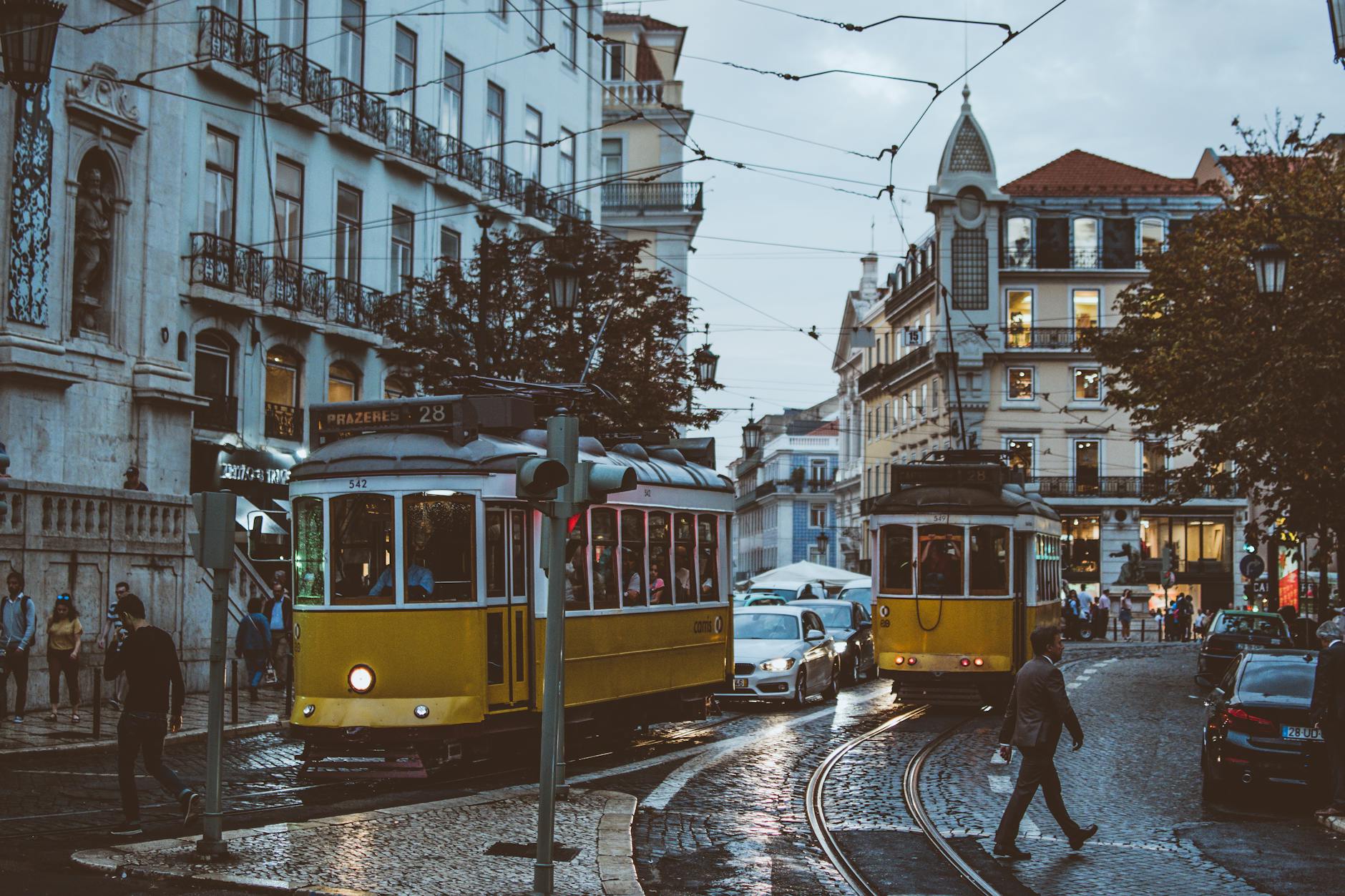
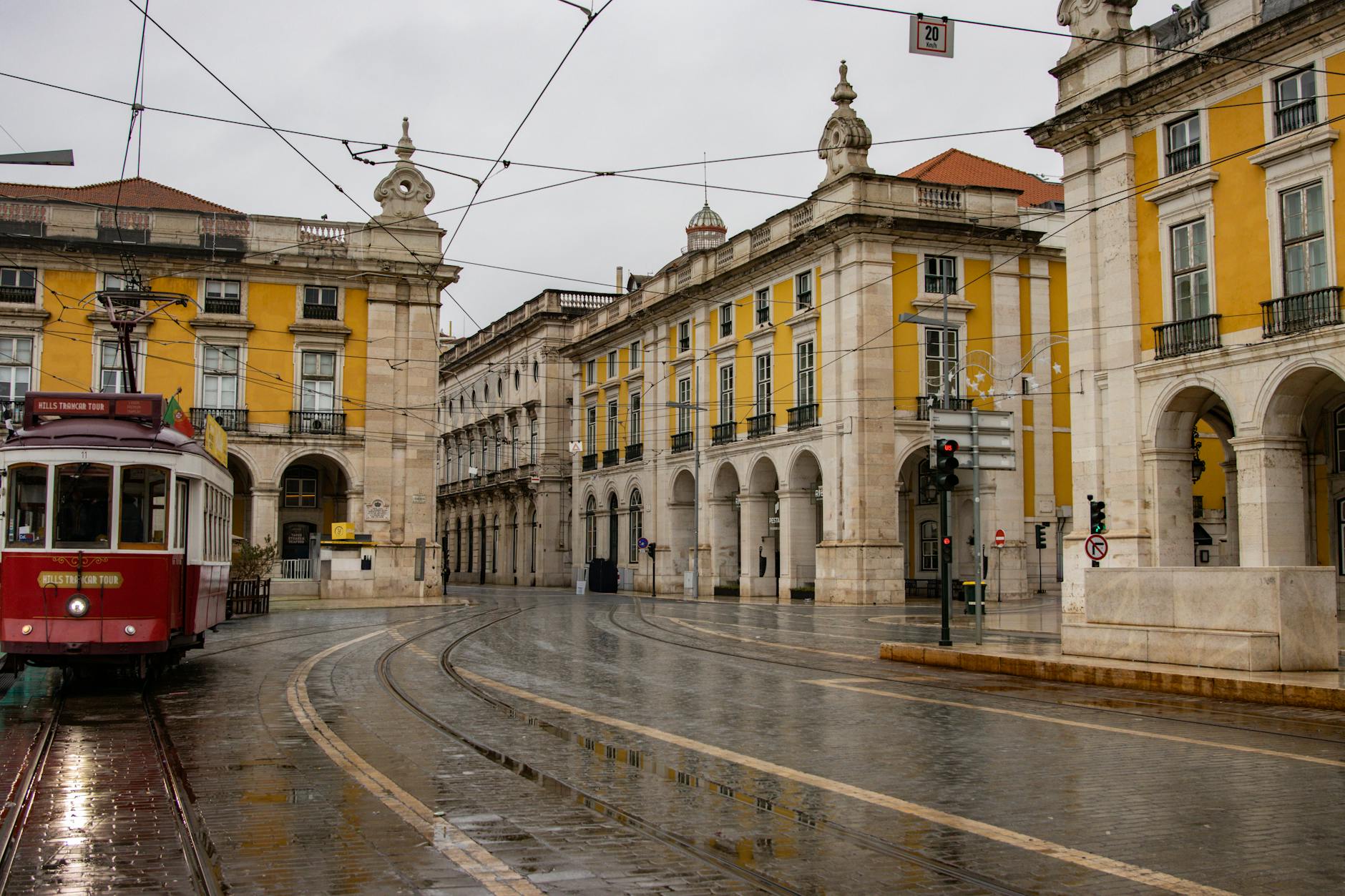
Ten wet days in December does not mean ten grey days. Atlantic fronts sweep through fast: a heavy hour, then blue sky. What that means practically is that a Lisbon winter day is often perfectly usable if you are willing to duck into a church or a café for forty minutes. Our rainy day guide is built around exactly that pattern. It also means the calçada pavement — polished limestone — becomes genuinely treacherous. Shoes with grip matter more in Lisbon than in most cities.
Buildings are built for summer, not winter
This catches people out every year. Portuguese housing stock has thin walls, single glazing and often no central heating, because the climate does not obviously demand it. A January night at 8°C outdoors can mean 14°C indoors in an older apartment. If you are booking a rental for the winter months, check that heating is listed — see our where to stay guide for what to look for.
Winter: December, January and February
Lisbon’s winter is the mildest of any major European capital and, for a certain kind of traveller, the best time to come. Daytime highs of 15–16°C, the light low and golden, restaurants that will seat you without a booking, and hotel rates at their annual floor. It is also the wettest stretch of the year and the darkest.
December
High 15.4°C, low 9.4°C, 109 mm of rain across ten days, and only 150 hours of sun — the gloomiest month on the calendar. Sunset falls at about 17:20 by the solstice, with sunrise near 07:50, giving roughly nine and a half hours of daylight.
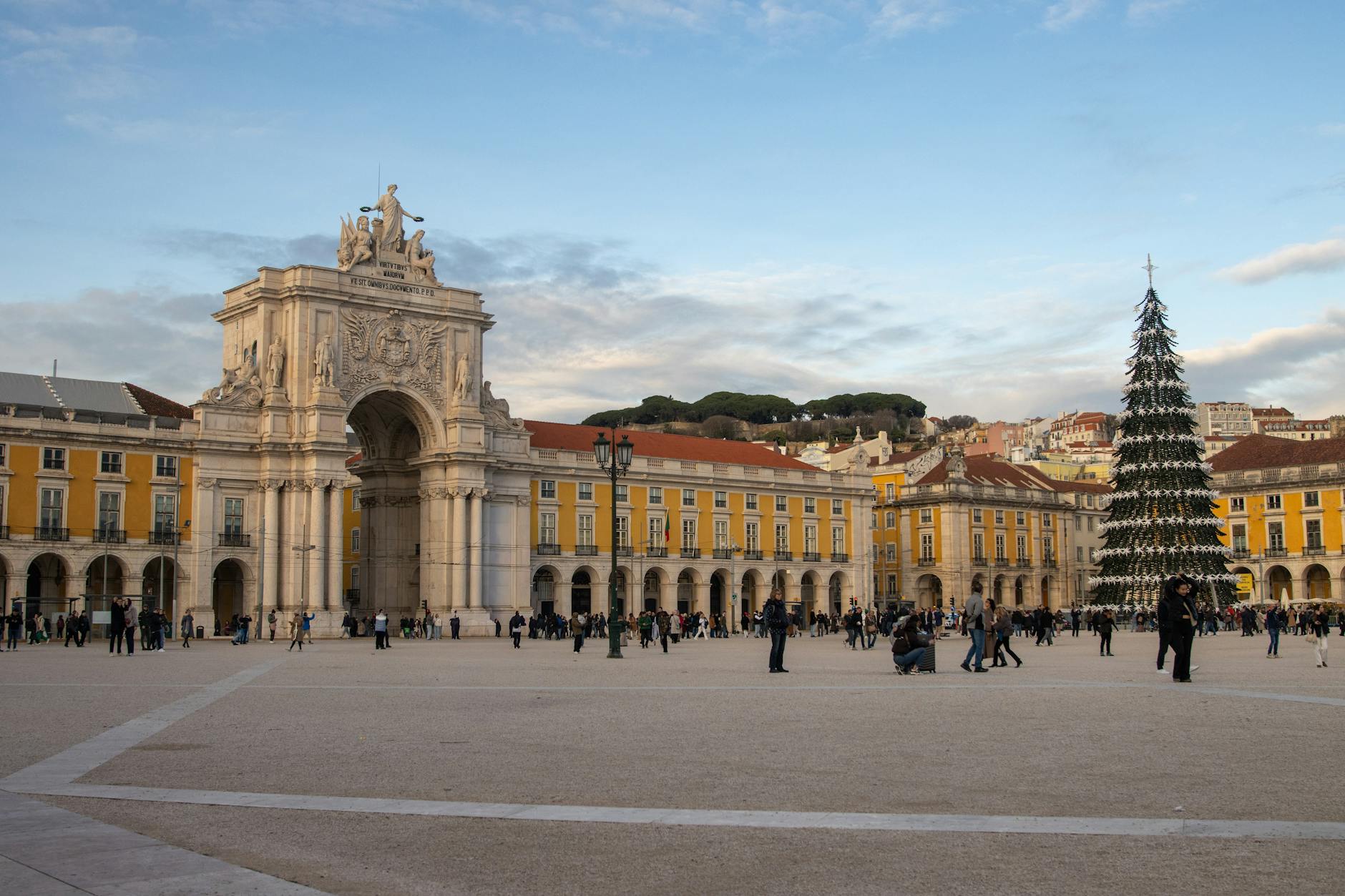
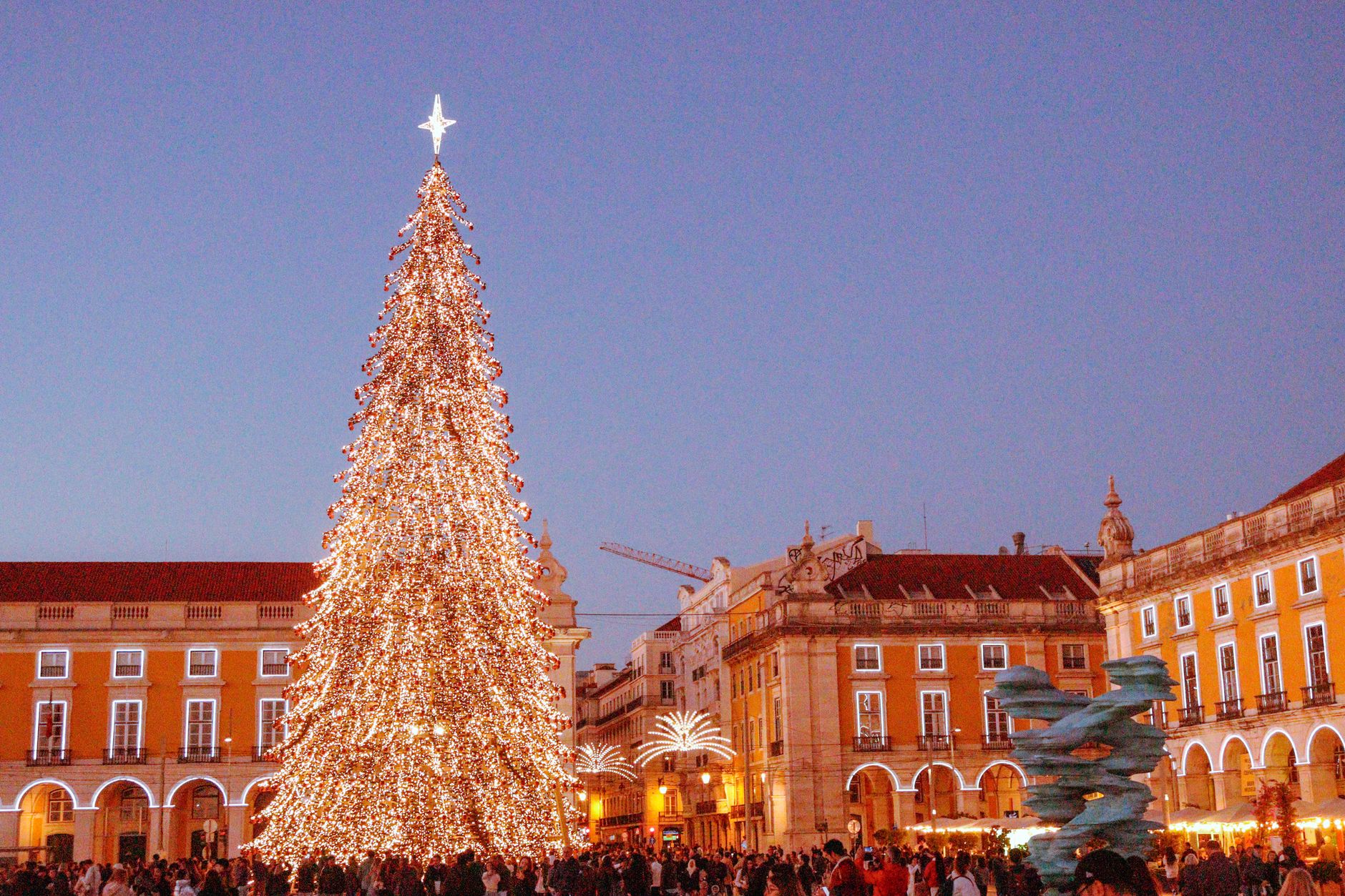
Against that: Christmas lights go up along the Baixa and Chiado in late November and are genuinely well done, Praça do Comércio gets a tree and a market, and the city is full of Portuguese families rather than tour groups. Chestnut sellers appear on street corners. It is a good month for museums, fado houses and long lunches, and a poor one for miradouros and beaches.
January
The coldest month, and still not cold: high 15.1°C, low 8.6°C. Frost is essentially unknown in the city. Rain is at 104 mm over ten days, sun back up slightly to 159 hours. The sea is 16°C, which is warmer than the air on some mornings and completely unswimmable for most people.
January is the cheapest month to visit Lisbon by a clear margin, and the queues that define the city in summer simply are not there — you can walk into Jerónimos. If you are travelling on a budget, this is the month; our Lisbon on a budget and trip cost guides both show how far the difference goes.
February
Slightly warmer and noticeably drier than January: high 16.4°C, 78 mm of rain over eight days, 175 hours of sun. The almond blossom starts in the south of the country and the first properly warm afternoons arrive. Carnival falls in February or early March and is celebrated more enthusiastically in the towns around Lisbon than in the city itself — the festivals and events calendar has the dates.
February is the month we would pick for a cheap city break with a decent chance of good weather. It is also the coldest month for sea temperature, at 15°C.
Spring: March, April and May
Spring is when Lisbon is at its best, and the data supports what most repeat visitors already believe. Sunshine climbs steeply — 216 hours in March, 248 in April, 297 in May — while temperatures stay in the comfortable twenties and the crowds have not fully arrived.
March
High 18.9°C, low 11.0°C, 69 mm over eight days. Clocks go forward on the last Sunday of the month, which suddenly pushes sunset past 19:30 and transforms the evenings. Jacarandas are not out yet, but the parks green up and the terraces reopen properly.
March is variable. You can get a week of 22°C and blue sky or a week of Atlantic fronts. Pack for both. It is an excellent month for Sintra, which is cooler and mistier than Lisbon year-round and is unpleasantly hot in July.
April
High 20.4°C, low 12.3°C, 72 mm across eight days, 248 hours of sun. April is statistically wetter than March, which surprises people, but the rain comes in short bursts between long bright spells.
The 25 April holiday fills the city with parades and street events marking the Carnation Revolution, and Easter — whichever month it falls in — brings Portuguese domestic travel and higher hotel rates for a week. Otherwise April is close to ideal: warm enough to sit outside, cool enough to walk up to the castle without suffering.
May
Our pick for the best month in Lisbon, and the one we would build a full week in Lisbon around. High 23.1°C, low 14.4°C, only 58 mm of rain over six days, and 297 hours of sun — nearly ten a day. The jacarandas come into flower in the second half of the month and turn Praça do Príncipe Real and Avenida Dom Carlos I purple.
Everything works in May. The miradouros are pleasant rather than baking, day trips to Cascais and Sintra are comfortable, the sea is 17°C and technically swimmable if you are hardy, and hotel prices have not yet hit their July peak. See the miradouros guide and our sunset guide — May and June have the longest, softest evenings of the year.
Summer: June, July and August
Hot, dry, bright and busy. Rain effectively stops: 14 mm in June, 3 mm in July, 5 mm in August. Sunshine peaks at 350 hours in July. Sunset reaches about 21:05 around the solstice, giving nearly fifteen hours of daylight and long, warm evenings that are the single best thing about a Lisbon summer.
June
High 26.1°C, low 16.8°C, two rain days all month. June is the last comfortable summer month and it contains the best event in the Lisbon calendar: the Festas de Lisboa, running the whole month and peaking on the night of 12–13 June for Santo António. Alfama, Graça and Mouraria fill with grilled sardines, paper decorations, arch competitions between streets and dancing until dawn. If you want one reason to time a trip precisely, this is it.
The trade-off is that accommodation in and around Alfama books out and prices rise. Our Alfama guide and the events calendar cover how to handle the crowds.
July
High 28.2°C, low 18.2°C, 350 hours of sun, and a statistical average of 0.6 rain days. It genuinely does not rain in July in Lisbon.
The heat is manageable most days because of the afternoon wind and because the nights cool to 18°C. What is not manageable is the combination of heat and crowds at the major monuments. Queues at Belém Tower and Jerónimos run over an hour in the middle of the day with no shade. If you visit in July, do outdoor sightseeing before 11:00 and after 18:00 and treat the middle of the day as indoor time — our landmarks guide flags which sites have shaded queues and which do not.
August
The hottest month: high 28.8°C, low 18.8°C. It is also the month when Lisbon itself partly closes — many family-run restaurants shut for two or three weeks while their owners go to the coast, and the city centre can feel oddly hollowed out and simultaneously overrun with visitors.
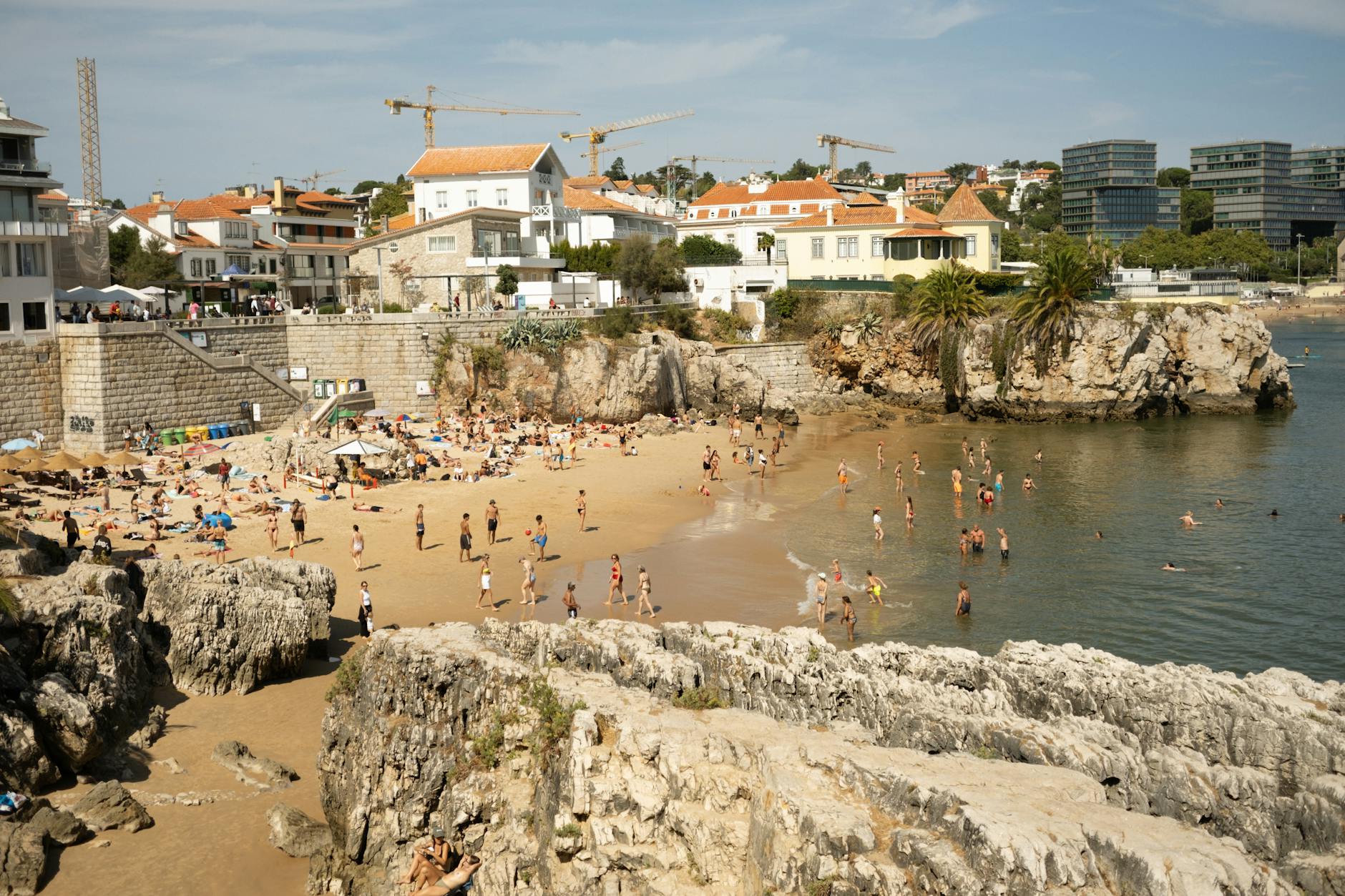
The sea is at its annual warmest, 19°C, which is still cold. Beaches at Costa da Caparica and Cascais are packed at weekends. If you can only travel in August, go to the coast early in the day and save the city for the evening.
Autumn: September, October and November
September is summer with the crowds thinning. October is a genuinely good month with a real risk of rain. November is the wettest month of the year and where the season falls away.
September
High 26.6°C, low 17.6°C, 39 mm of rain over four days, 260 hours of sun, and the sea at its warmest, 19°C. On paper this is the second-best month after May, and many people would put it first.
The change from August is sharp: prices drop from the second week, restaurants reopen, and the light gets noticeably warmer for photographs. The first Atlantic fronts usually arrive in the last week. If you want summer conditions without summer crowds, mid-September is the window.
October
High 22.8°C, low 15.3°C, and here is where the pattern breaks: 111 mm of rain over nine days, a jump of almost three times September’s total. Sunshine drops to 196 hours. Clocks go back on the last Sunday of the month and the evenings shorten abruptly — sunset moves from about 18:50 to 17:50 overnight.
Despite that, October is a good month to visit. Daytime temperatures are still in the low twenties, the sea is a mild 18°C, hotel prices have fallen properly and the monuments are quiet. You will get rain, but you will get plenty of sun between it.
A full breakdown of what to expect, what to pack and what is on: our Lisbon in October guide.
November
The wettest month of the year: 134 mm across ten days, with sunshine down to 163 hours and highs of 18.1°C. It is still mild by northern European standards and the city stays perfectly walkable, but this is the month most likely to give you three grey days in a row.
It is also the cheapest month before the Christmas run-up, and the last week brings the Christmas lights switch-on. A November trip is a museums-and-restaurants trip; plan it that way and it works well. See our museums and culture guide.
Sea temperature and swimming
This is where visitors are most often misled. Lisbon looks southern, so people assume Mediterranean water. It is not. The Atlantic here is fed by cold upwelling along the Portuguese coast and ranges from 15°C in February and March to 19°C in August and September — a spread of just four degrees across the entire year.
What that means in practice: from late June to early October the water is swimmable and pleasant once you are in, especially in the sheltered bays at Cascais. Outside that window it is a cold-water swim and most people last minutes rather than hours. Nobody who has swum in the Mediterranean in August will describe the Atlantic off Caparica as warm.
Wetsuits are standard for surfers year-round on this coast, and the surf schools supply them. The exposed Atlantic beaches — Guincho, the Caparica strand, the Sintra coast — also have real currents and cold shock as genuine risks. The Cascais bay beaches and the river beaches east of the city are the calm option; the Cascais train guide covers getting to them.
Daylight and sunset times
Portugal runs on Western European Time, the same as the UK, which puts Lisbon an hour behind most of the continent despite being further east than Madrid. The practical effect is late, generous summer evenings.
- Midwinter (late December): sunrise around 07:50, sunset around 17:20. Roughly 9 hours 30 minutes of daylight.
- Equinoxes (late March, late September): around 12 hours, with sunset near 19:30 after the March clock change.
- Midsummer (late June): sunrise around 06:10, sunset around 21:05. Nearly 15 hours of daylight, with usable light until almost 22:00.
Clocks go forward on the last Sunday in March and back on the last Sunday in October. That October change is the single biggest shift in how the city feels — plan sunset viewpoints and boat trips around it.
Microclimates: the city is not the whole story
Everything above is measured in central Lisbon. Travel twenty minutes in any direction and the numbers change enough to affect what you wear.
Sintra is colder and wetter — always
The Serra de Sintra catches Atlantic moisture and holds it. Sintra routinely sits three to five degrees below Lisbon, and the hilltop palaces are frequently in cloud when the city is in full sun. In winter it can be genuinely raw up at Pena; in July it is a relief. Take a layer to Sintra in every month of the year, including August — this is the single most common mistake day-trippers make. Our Sintra day trip guide and Pena Palace guide both build around it.
The coast is windier and cooler
Cascais, Estoril and especially Guincho get the full Atlantic exposure. Summer afternoons on that coast are several degrees cooler than the city and considerably windier — pleasant in August, exposed in April. Guincho in particular is one of the windiest beaches in Europe, which is exactly why the windsurfers are there.
The Baixa is hotter than the numbers say
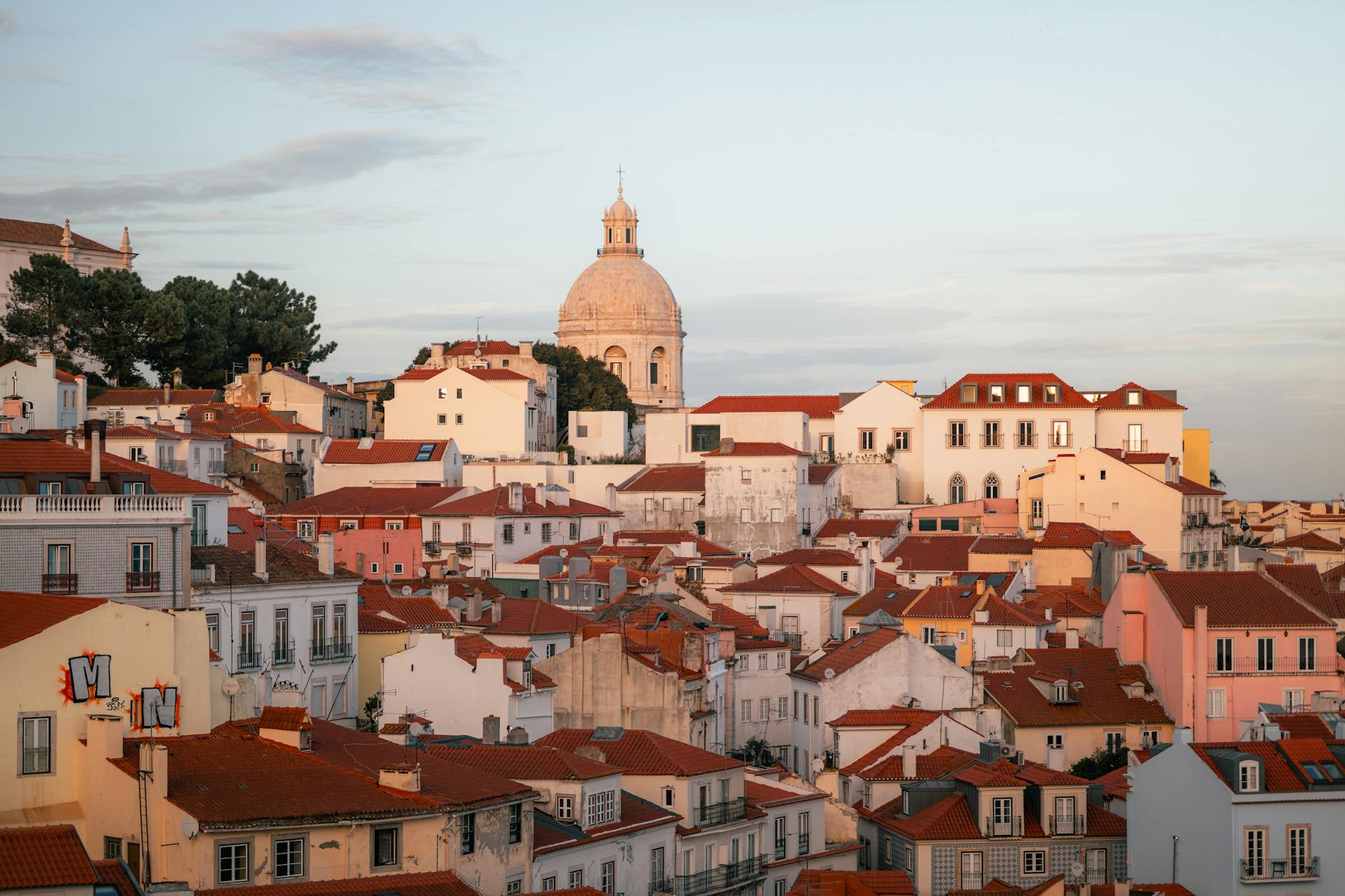
The grid of the lower town is stone, low-rise and enclosed, and it traps heat through the afternoon. On a 30°C day the Baixa and Praça do Comércio feel several degrees hotter than the same reading up at São Jorge or out at Belém, where the river breeze reaches. When a heat spell hits, plan the flat centre for the morning and head uphill or riverside after lunch.
What to pack, by season
- Winter (Dec–Feb): a waterproof jacket, layers, and shoes with real grip for wet calçada. A warm layer for evenings and for indoors — heating is not a given. Umbrellas are of limited use in Atlantic wind.
- Spring (Mar–May): layers plus a light rain shell in March and April. Sunglasses and sunscreen from March: 216 sunshine hours is a lot of UV even at 19°C.
- Summer (Jun–Aug): lightweight clothing, a hat, high-factor sunscreen, a refillable water bottle, and — genuinely — one warm layer for the evening wind and for air-conditioned interiors.
- Autumn (Sep–Nov): summer clothes for September; a proper waterproof from October. Grippy shoes again.
The full list, including what not to bring, is on our Lisbon packing list. Walking shoes are the one thing worth spending money on for this city — see the walking guide for why.
The months ranked
- May — 297 hours of sun, 23°C, six rain days, jacarandas, pre-peak prices. The best month.
- September — summer weather, warmest sea, crowds falling away from the second week.
- June — the festivals, the longest evenings, and only two rain days. Busy and pricier.
- April — comfortable and bright, with a real chance of showers.
- October — still warm, much cheaper, but the rain returns properly.
- March — improving fast and quiet, if you accept the variability.
- February — the best of the cheap months. Drier than January, mild, empty.
- July — perfect weather, difficult crowds and heat at the monuments.
- August — hottest, busiest, and half the good restaurants are shut.
- January — cheap and calm, but wet and dark.
- November — the wettest month, and the greyest stretch of the year.
- December — least sun of any month, though Christmas partly makes up for it.
If you want that framed as a recommendation for your particular kind of trip rather than as a weather ranking, our best time to visit Lisbon guide does exactly that.
Frequently asked questions
What is the rainiest month in Lisbon?
November, with 134 mm across about ten wet days. October and December are close behind at 111 mm and 109 mm. The three of them account for well over a third of the annual rainfall.
Does it ever get cold in Lisbon?
Not by continental standards. The coldest month, January, averages a high of 15.1°C and a low of 8.6°C, and frost in the city is essentially unheard of. What catches visitors out is indoor cold — older buildings have poor insulation and often no central heating.
Is the sea warm enough to swim in?
From late June to early October, yes, at 18–19°C. The rest of the year it sits at 15–17°C, which is a cold-water swim. The Atlantic off Lisbon never gets Mediterranean-warm because of coastal upwelling.
How hot does Lisbon actually get in summer?
The August average high is 28.8°C, which is comfortable. But two or three times each summer a hot easterly airflow pushes the city past 38°C for a few days. Those spells are the reason to check a ten-day forecast rather than the monthly average before booking peak-summer sightseeing.
Which month has the most sunshine?
July, at about 350 hours — roughly 11 hours a day. August is barely behind at 340. The annual total is around 2,875 hours, which is among the highest of any European capital.
When is the cheapest time to visit Lisbon?
January, followed by February and November. Hotel rates in January can be less than half the July figure, and the major monuments have no queues. The trip cost breakdown puts numbers on the difference.
Does it rain in Lisbon in summer?
Barely. July averages 2.6 mm across 0.6 rain days and August 5.4 mm across 1.1 days. From mid-June to early September you can plan outdoor days without a contingency and be right almost every time.
Bottom Line
Lisbon has one of the kindest climates in Europe and a very lopsided one. Half the annual rain falls in four months from October to January, and the summer is effectively rainless. The temperature range is narrow — 15°C in January to 29°C in August — so there is no month you cannot visit and no month that is uniformly bad.
If you can choose, choose May: nearly ten hours of sun a day, 23°C, six rain days and the jacarandas out. September is the close second and has the warmest sea. Avoid August if crowds and closed restaurants bother you, and treat November as a museums-and-restaurants month rather than a walking one. And whatever month you pick, bring a layer for the evening wind and shoes that grip wet limestone — those two things matter more in Lisbon than the temperature on the forecast.