Weather by Month
Lisbon in January: Weather, Prices and What to Expect
The cheapest, quietest month — real climate figures, what closes for the season, the winter sales, and an honest verdict on whether an empty Lisbon suits your trip.
In this guide
Lisbon in January is the city at its emptiest, its cheapest and — surprisingly — one of its brightest winter months. This is the deadest point in the tourist calendar, which is either the whole appeal or a dealbreaker depending on what you want from a trip. Here are the actual numbers, what is open and what is not, and an honest answer on whether the quietest month is worth booking.
January sits in the middle of the big-wave season up the coast, which is the one thing winter gives you that summer cannot — see our Nazaré day trip guide for how to time it against the swell forecast.
If your dates are flexible, February keeps January’s prices but adds two degrees, forty minutes of evening daylight and Carnaval — it is the better half of the Lisbon winter.
January weather: the numbers
Lisbon’s 1991–2020 normals for January, from IPMA:
- Average high: 15.1°C — the coldest month of the year
- Average low: 8.6°C
- Rainfall: 103.8 mm
- Rain days: 10.0
- Sunshine: 158.6 hours, about 5.1 hours a day
- Sea temperature: around 16°C
Two things stand out. First, “coldest month” in Lisbon means a 15.1°C average high — warmer than a good English April. Second, January gets more sunshine than December’s 149.7 hours and only marginally less than November’s 163.1, while being drier than both. The reputation of January as the grim month does not really survive contact with the data here.
What it actually feels like
Crisp. A clear January morning in Lisbon is cold enough that you can see your breath in the shade at 09:00 and warm enough that you are carrying your coat by 14:00 if the sun is out. The Atlantic keeps the temperature range narrow — there is no continental cold snap coming — but it also means damp air, and damp 9°C feels colder than dry 9°C.
The wind is the variable that actually matters. A still, sunny January day on a miradouro is one of the loveliest things the city does. The same day with a northerly off the river turns the exposed squares genuinely unpleasant, and Belém, which is flat and open to the water, is always a few degrees worse than sheltered Alfama.
The other January reality is indoors. Central heating is not standard in Portuguese housing, and January is when that stops being a curiosity and starts being a problem. Older restaurants, some guesthouses and plenty of apartments run cold. This is the month to check what heating your accommodation actually has.
The days start growing again
January is the month you can feel the light coming back. Sunset moves from about 17:20 on the 1st to roughly 17:50 by the 31st — a full half-hour gained inside four weeks — and sunrise pulls back from close to 07:55 to about 07:40. By the end of the month you get a proper late-afternoon hour again, which is more than December ever offers.
What is on in January
The first week is still Christmas
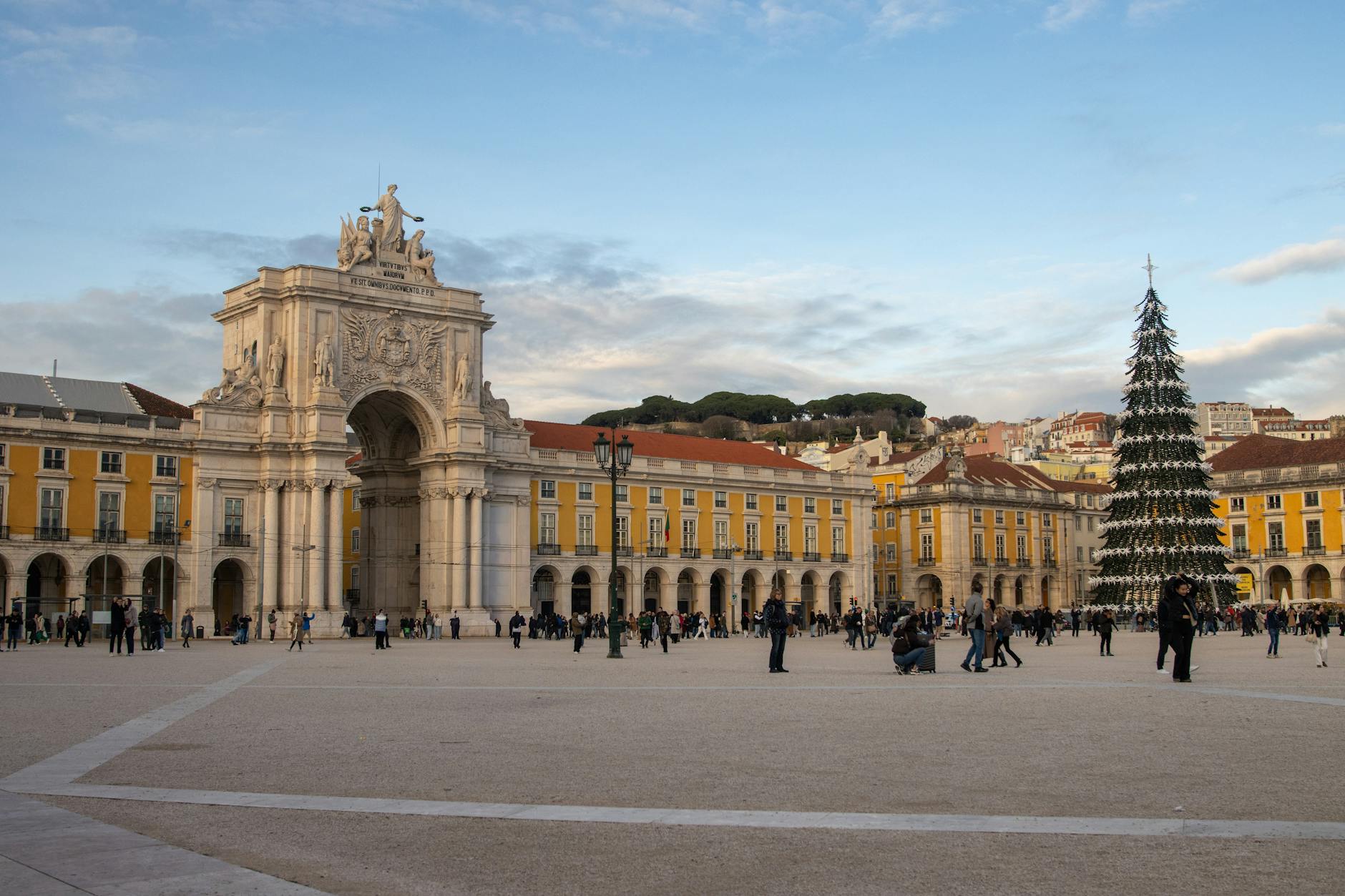
The decorations stay up until around 6 January, and the seasonal markets typically run into the first weekend. If you arrive on the 2nd or 3rd you get lights, an emptying city and post-New-Year prices at the same time, which is arguably the single best-value week of the Lisbon year.
Dia de Reis — 6 January
Epiphany. Not a public holiday in Portugal, but the day the tree comes down and the last of the bolo-rei gets eaten. Some neighbourhoods still do janeiras — informal groups going door to door singing for food and wine — and pastelarias sell the cake at a discount as the season closes. It is a low-key, domestic sort of festival rather than a spectacle.
The New Year’s Concert
The Teatro Nacional de São Carlos stages a New Year concert in early January with the Portuguese Symphony Orchestra. It is the one properly grand event in an otherwise flat month, and tickets are far easier to get than for the same theatre in season.
The saldos
Portugal’s winter sales run hard through January and this is a real reason to come if you like shopping. Chiado, Rua Augusta, Avenida da Liberdade for the expensive end, Campo de Ourique for the neighbourhood version and the big malls for volume. Our shopping streets guide maps the areas and the souvenirs guide covers what is actually worth carrying home.
What is not on
Almost everything else. There is no festival, no street programme, no season of note between Epiphany and Carnival in February. The events calendar is genuinely thin, and pretending otherwise would be dishonest. January’s appeal is the absence of events, not the presence of them.
Crowds and prices
From about 7 January, Lisbon is as empty as it gets. Flights are at their annual floor, hotel rates bottom out — often forty to sixty per cent below August for the same room — and the four-star places that are unaffordable in May become ordinary. Our trip cost breakdown sits at the very bottom of every range in this month, and Lisbon on a budget is easiest to execute now.
What that buys you at the sights is substantial:
- Jerónimos Monastery with a queue of minutes rather than the summer hour.
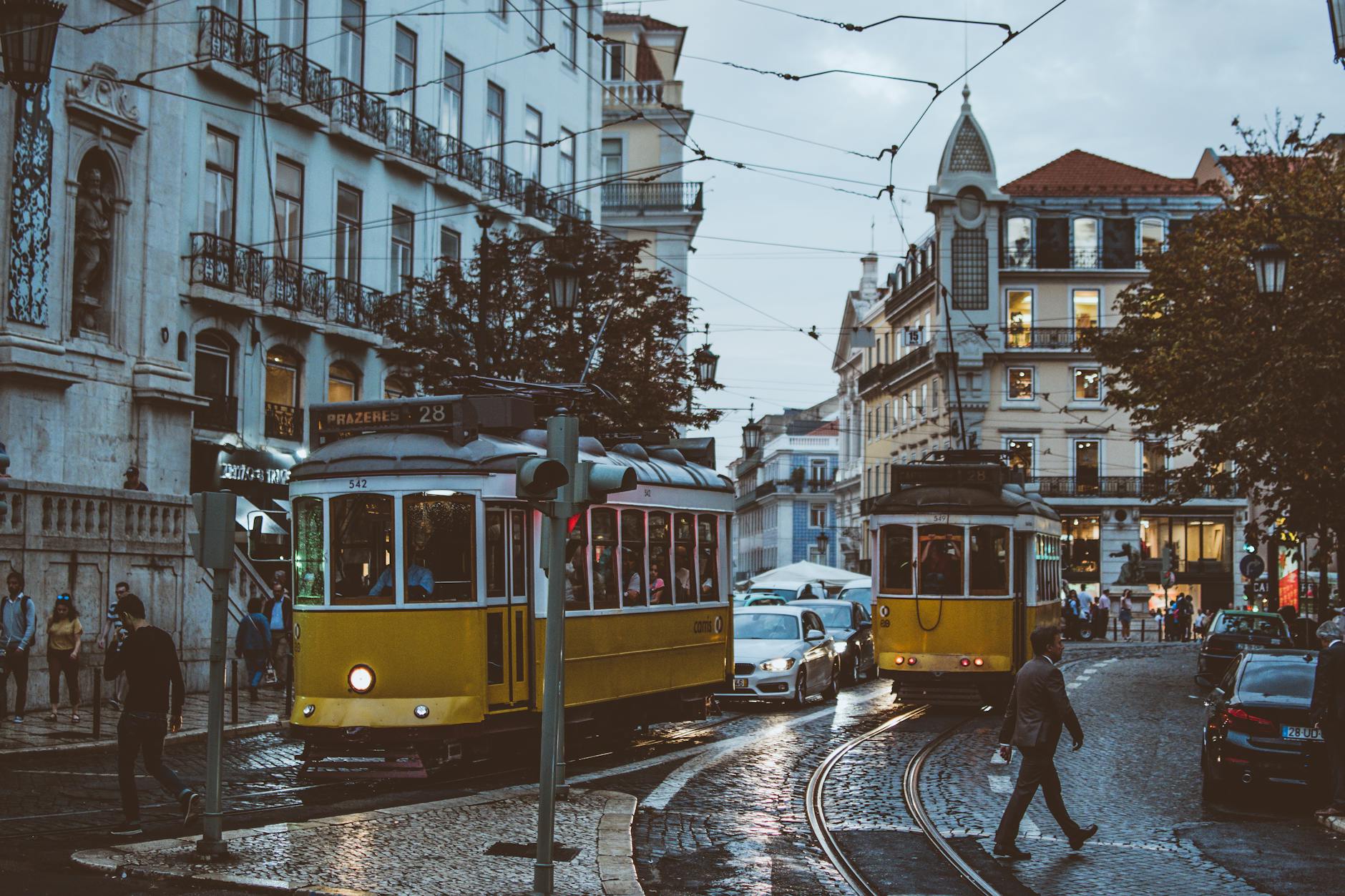
- Tram 28 boardable at Martim Moniz with a seat, in daylight, without a wait.
- São Jorge Castle ramparts you can walk without dodging anyone.
- Sintra’s Pena Palace (€20 for the Essential Visit) bookable for the next day rather than the next week.
- Restaurant tables available on the night, including the ones that need a fortnight’s notice in June.
The catch: things close in January
This is the honest cost of the quietest month, and it is worth taking seriously.
- Restaurants take their annual holiday. Portuguese kitchens close for a week or two in January far more often than in any other month. Check before you cross the city for a specific place — an Instagram post is more reliable than Google’s hours.
- The beach towns largely shut. Much of the seafront in Costa da Caparica is closed for the season, and Cascais runs on a fraction of its summer capacity.
- Boat trips and sunset cruises run reduced schedules and cancel in weather.
- Rooftop bars are mostly closed or pointless. The rooftop list is a warm-weather document.
- Winter opening hours apply at Sintra and several monuments — shorter days, earlier last admission. Always check the operator’s own site rather than an aggregator.
What to do in Lisbon in January
Museums, properly
January is the month to do the big collections without hurrying. The Gulbenkian is the standout — a world-class collection in a modernist building with a garden that is green all winter, and enough space to spend an entire wet afternoon. Add the National Tile Museum, the MAAT on the riverfront and the National Pantheon (€10) for the dome walkway. The full survey is in our museums and culture guide.
Walking, in the best light of the year
Low winter sun through clear Atlantic air does something to Lisbon’s pastel façades and tile that August’s overhead glare cannot. Walk Alfama early, do the miradouro circuit in the late afternoon, and take the Alfama route without the cruise-ship crowd on it. Our hidden gems list is far easier to actually enjoy when nothing is queued.
Fado and long lunches
Cold, dark, quiet — the conditions fado exists for, in rooms that are half-full of locals rather than full of tour groups. Pair it with a tasca lunch: soup, a main and a glass of wine for roughly €12 to €18, in a steamed-up room, with the whole afternoon ahead of you.
Day trips that still work
Sintra in January is misty, dramatic and nearly empty, but you have only about seven hours of usable light and shorter opening hours — plan two sights. Évora and Óbidos both work well in winter and are mostly indoors-and-walls rather than gardens. Skip the coastal trips unless the forecast is genuinely good.
What to skip
Beaches, obviously — 16°C sea and a wind. Also skip anything sold as a “sunset experience”, since the odds are poor and you will have paid in advance. And be sceptical of open-top bus tours in January; the top deck is unusable most days and you are paying for a view you cannot sit in.
A four-day January plan
Built around short daylight and the possibility of one washout, with outdoor sights loaded into the mornings.
Day one — the centre
Start at 09:30 in Alfama while the light is low and the lanes are empty, up to São Jorge Castle, then down through the miradouros to Baixa for a late lunch. Afternoon indoors at the Carmo Convent or the Pantheon, and fado in the evening. If it rains, swap the castle for the Tile Museum and keep the walk for another day.
Day two — Belém
Belém is flat, exposed and cold in wind, so do it on the best-forecast morning you have. Jerónimos at opening, the Monument to the Discoveries, a pastel de nata, then MAAT in the afternoon when the temperature drops. Tram 15E back rather than the walk.
Day three — Sintra
Early train from Rossio, two sights only, back in Lisbon by dark. Pena and Regaleira is the classic pairing; the Moorish Castle in mist is the atmospheric alternative if the forecast is clear enough to see anything from the walls.
Day four — flexible
Hold this one open. If the weather is good, take it to Cascais on the coastal line or walk Príncipe Real and the botanical garden. If it is not, this is your Gulbenkian day — three hours indoors, followed by the sales in Chiado and a long tasca lunch.
Getting around in January
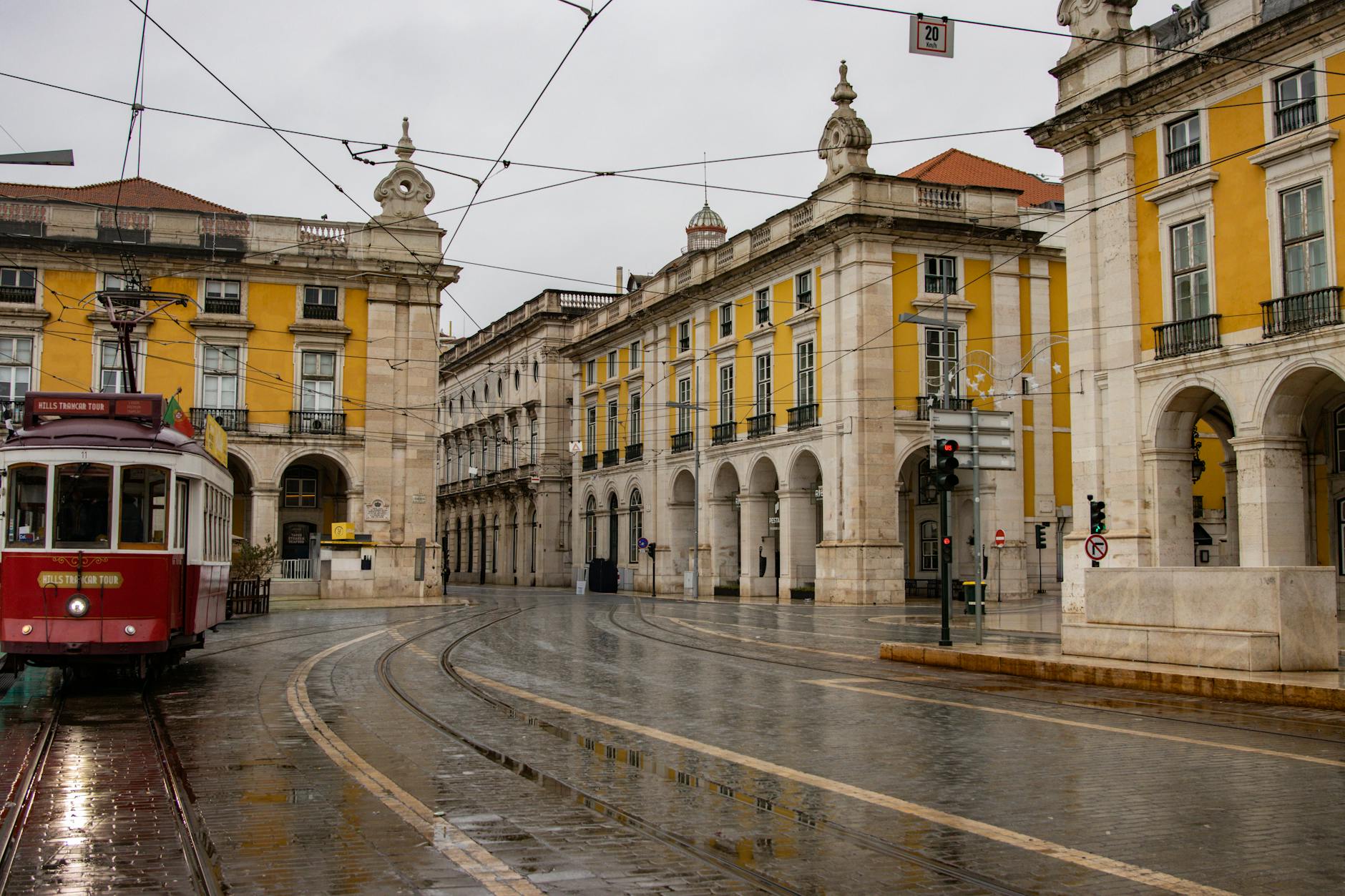
The metro is the reliable spine in wet weather: dry, frequent and covering the airport, Parque das Nações and most of the centre. The historic trams and funiculars still run but are cold and draughty, and the open-top tourist buses are close to useless on a wet January day. Walking remains the best way to see the city, with the caveat that hills plus wet cobbles demand grip.
On the Lisboa Card: it pays best on a museum-heavy itinerary, which is exactly what a January trip tends to become. Run the maths against your actual list rather than assuming, and remember that a few included sites keep shorter winter hours. Fare detail is in our transport guide.
What to pack
- A warm waterproof coat. One layer that handles 103.8 mm of rain and 8.6°C nights.
- Shoes with real grip. Wet calçada portuguesa on a slope is the genuine hazard of a Lisbon winter, more than the cold ever is.
- A jumper and a scarf. The river wind, not the thermometer, is what makes January bite.
- Warm socks and a second pair of shoes, because a cold flat plus wet feet is a miserable combination.
- Sunglasses. Not a joke — the low January sun sits straight in your eyes on a west-facing street.
The year-round version is in our Lisbon packing list.
Where to stay in January
This is the month to trade up. The rate that gets you a small room in a mediocre hotel in May will get you something considerably better in January, so look at the places on our best hotels list that are normally out of reach.
Two practical filters. Ask about heating and be specific — “air conditioning” in a Lisbon listing often means a single reversible unit that will not warm a high-ceilinged room. And stay somewhere flat and central, because with sunset before 18:00 you will be walking back in the dark most evenings. Baixa, Chiado and Príncipe Real all work; a beautiful place at the top of Alfama’s stairs will feel less charming in the rain. Our neighbourhood guide compares them.
Is January a good time to visit Lisbon?
It depends entirely on whether an empty city reads to you as a gift or as a disappointment.
Come in January if you want the monuments, the museums, the food and the neighbourhoods with nobody in the way, at the lowest prices of the year, in the mildest winter weather in western Europe. For a returning visitor who has already done the checklist, or for anyone who mainly wants to eat, walk and look at things without queueing, it is genuinely excellent — and the first week, with the lights still up, is the best of it.
Do not come in January if you want atmosphere, events, terraces, beaches or a city that feels alive in the evening. There is no festival to catch, a fair number of places are shut, and if you get an unlucky week of Atlantic fronts you will spend a lot of it indoors. A first trip to Lisbon is better in spring or autumn.
Against its neighbours: December has the decoration and the party but costs more in its second half; February is a touch warmer and drier with Carnival at the end of it. The month-by-month weather guide puts the whole year side by side, and best time to visit Lisbon makes the call by trip type.
For the month after, see our Lisbon in February guide.
Frequently asked questions
How cold is Lisbon in January?
January is Lisbon’s coldest month, with average highs of 15.1°C and lows of 8.6°C. That is mild by European standards — no snow, essentially no frost — but damp, and older buildings are often poorly heated.
Is January a good month to visit Lisbon?
For value and quiet, yes: the lowest prices of the year and no queues anywhere. For atmosphere and events, no — it is the flattest month in the calendar and a number of restaurants and coastal businesses close.
Does it rain a lot in Lisbon in January?
About 103.8 mm across roughly ten rain days — less than November or December. January also gets 158.6 hours of sunshine, more than December, so it is drier and brighter than its reputation.
Are the Christmas lights still up in January?
Usually until around 6 January, Dia de Reis. Arriving in the first week gets you the decorations, the winter sales and post-New-Year prices at the same time.
What time does it get dark in Lisbon in January?
Sunset moves from about 17:20 at the start of the month to roughly 17:50 by the end — the days lengthen noticeably across January. Sunrise shifts from near 07:55 to about 07:40.
Can you swim in Lisbon in January?
No, other than in a wetsuit. The sea is around 16°C and most beach-town facilities are closed for the season.
Is Sintra open in January?
Yes, but on winter hours with earlier last admissions, and you only have about seven hours of usable daylight. Plan two sights rather than four and check each site’s own opening times before you travel.
When do the January sales start in Portugal?
The saldos generally begin in the days after Christmas and run through January, with the deepest discounts arriving later in the month as stock clears.
Bottom Line
Lisbon in January is the cheapest, quietest and coldest month — and “coldest” here means a 15.1°C average high with more sunshine than December. You get the monuments, the museums, Tram 28 and Sintra effectively to yourself, at rates that let you stay somewhere considerably better than usual. What you give up is atmosphere: no events, several closures, dark by 17:30 and a real chance of a wet week. If this is your first trip to Lisbon, come in spring instead. If you have been before and you want the city without the crowd, book the first ten days of January, check that your room has proper heating, and bring shoes with grip.