Landmarks & Monuments
Lisbon Landmarks: Every Monument, Church and Icon Ranked
Every major Lisbon monument, church and square with 2026 prices, opening hours and an honest verdict on which are worth a ticket and which are not.
In this guide
- The honest ranking: which landmarks earn a ticket
- Belém: the monumental quarter
- The hill: São Jorge Castle and the cathedral
- The churches most visitors walk past
- Iron, water and engineering
- Across the river: Cristo Rei
- The squares: civic Lisbon after the earthquake
- What to skip
- What a landmark day actually costs
- Three routes that string the landmarks together
- Practical notes
- Frequently asked questions
- Bottom Line
- Photo Credits
Lisbon landmarks are scattered across three separate parts of the city, and that geography — not the monuments themselves — is what ruins most first visits. People try to fit Belém, the castle hill and Chiado into one afternoon, spend two hours on trams and buses, and arrive at each door too tired to look up. This page fixes that. It covers every major monument, church and civic set piece in Lisbon: what each one costs in 2026, when it opens, how long it actually takes, and — the part most guides leave out — whether it is worth a ticket at all.
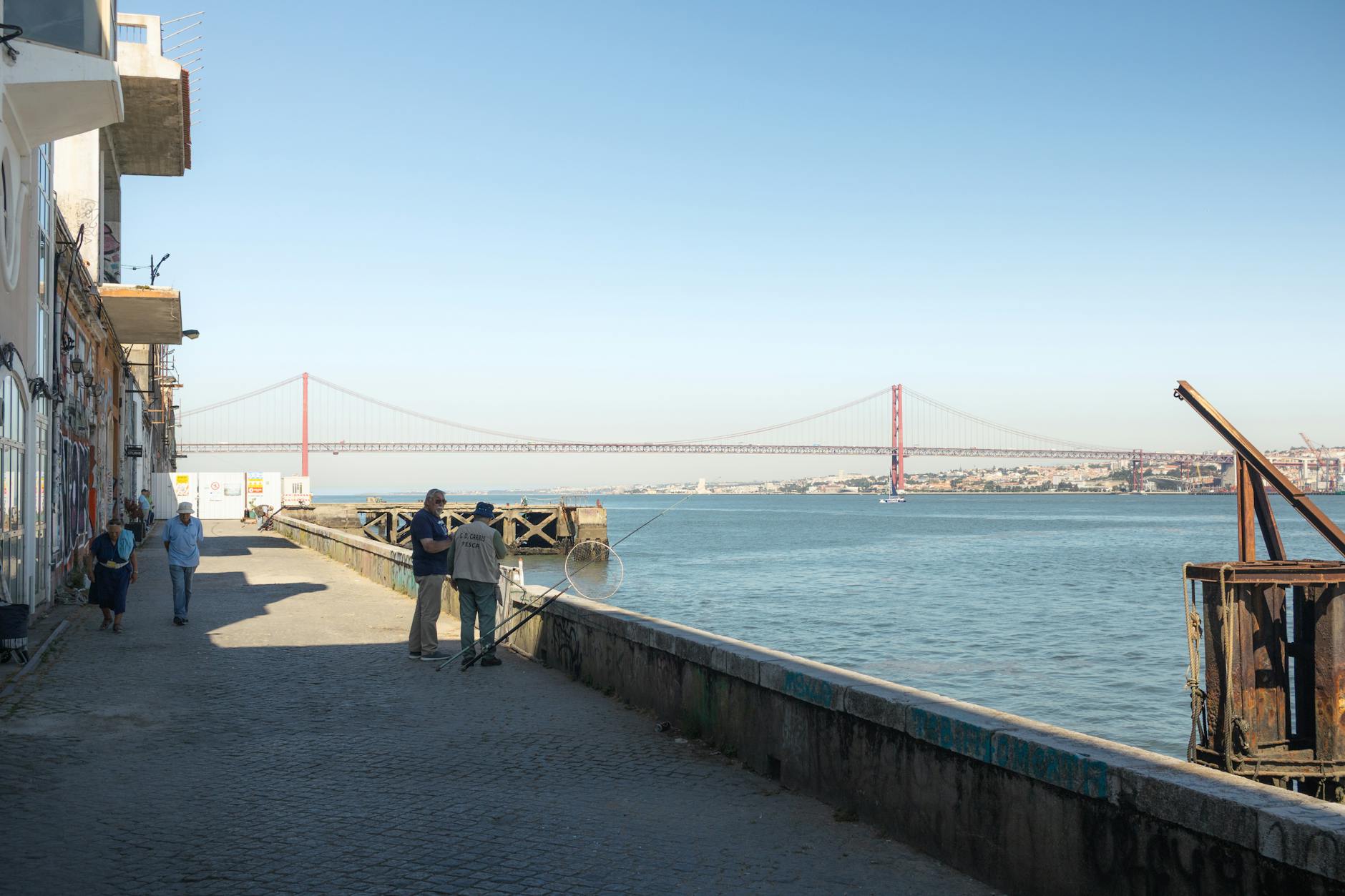
The Ponte 25 de Abril is the landmark most visitors photograph without ever visiting, and the Pilar 7 experience inside one of its legs is the cheapest ticketed attraction on this list.
The one monument in the city that was still working the week after the earthquake. Our Lisbon aqueduct guide covers the 35 arches over Alcântara, the walkway across the top, and the reservoir where the water arrived.
The white dome you keep seeing from the miradouros is free to walk into. Our Basílica da Estrela guide covers Maria I’s tomb, the marble interior and the empty roof terrace nobody queues for.
Across the river, the statue over Almada offers the one perspective the Lisbon bank cannot. Our Cristo Rei guide has the EUR10 ticket, the free viewpoint and the ferry and bus route.
Some of these are unmissable. A handful are among the finest buildings in Europe and would justify the flight on their own. Several are pleasant twenty-minute stops that ticket resellers have inflated into half-day experiences. And two or three are, honestly, a waste of your money. We say which is which.
The honest ranking: which landmarks earn a ticket
If you only have a couple of days, this is the order we would spend money in. Everything below is explained in detail further down the page.
- Jerónimos Monastery — €18. The single best building in the city and one of the great cloisters anywhere. Book a timed slot. Non-negotiable.
- São Jorge Castle — €17. Less about the castle than about the view and the walk up through Alfama. Still worth it, but go early or late.
- Carmo Convent — €7. The best-value ticket in Lisbon. A Gothic nave with no roof, left as the 1755 earthquake made it.
- Panteão Nacional — €10. Underrated. A vast marble drum, an easy dome climb and one of the least crowded 360° views in the city.
- Igreja de São Roque — church free, museum €8. The plainest façade in Lisbon and, inside, the most extravagant chapel in Portugal.
- Belém Tower — €15. Beautiful from outside, cramped and queue-bound inside. It is a separate ticket from Jerónimos, so decide whether the interior earns its own €15 or skip it.
- Sé de Lisboa, the cathedral — €7. Covers the nave, ambulatory, high choir and treasury museum. There is a free prayer space for worshippers.
- Santa Justa Elevator — closed. The lift and its viewing platform have been shut since the Glória funicular accident in September 2025, with no reopening date. The iron tower is still worth a look from the Baixa streets below, and that costs nothing.
- Cristo Rei — small charge for the lift. Not for the statue; the reason to cross is the view back at Lisbon, which is the best there is.
- Monument to the Discoveries — modest charge for the lift. Fine from the pavement. The rooftop is optional.
Everything on that list is covered in depth below, grouped by where it stands so you can build a route rather than a shopping list. For the wider picture of how these fit into a trip, our things to do in Lisbon guide and the Lisbon itinerary pages sequence them by day.
Belém: the monumental quarter
Belém sits six kilometres west of the centre, on the riverbank where the ships left for India. It holds two UNESCO World Heritage monuments, a national museum cluster and the original pastéis de nata bakery within a few hundred metres of each other. It is the only part of Lisbon where you can walk between three major landmarks without climbing a hill.
Getting there: tram 15E from Praça da Figueira or Cais do Sodré takes 25–30 minutes, or the Cascais-line train from Cais do Sodré stops at Belém in about seven minutes and is far more comfortable. Both cost €1.80 with a Viva Viagem card. Our Belém guide covers the whole district; the transport guide explains the fare cards.
Jerónimos Monastery — €18
The Mosteiro dos Jerónimos is the reason to come to Belém and, for many people, the reason to come to Lisbon. Begun in 1501 with money from the pepper trade, it is Manueline architecture at full stretch: stone carved into ropes, corals, artichokes, armillary spheres and knots, as though the masons were trying to build the sea itself into the walls.
The two-storey cloister is the masterpiece. Each arch is different, the tracery grows denser as it climbs, and the light changes completely between morning and late afternoon. Give it forty minutes minimum and walk both levels.
Practicalities: €18 adult, €9 for ages 13–24 and over-65s. The church itself — where Vasco da Gama and Camões are buried — is free and has its own entrance, though the queue for it can be as long as the paid one. Book a timed slot online; the walk-up queue in summer regularly runs past an hour. Belém Tower is a separate €15 ticket, so weigh it on its own merits.
Best time: the first slot of the day, or after 16:00. Midday coach groups fill the cloister and there is nowhere for the noise to go. Full detail on our Jerónimos Monastery guide.
Belém Tower — €15
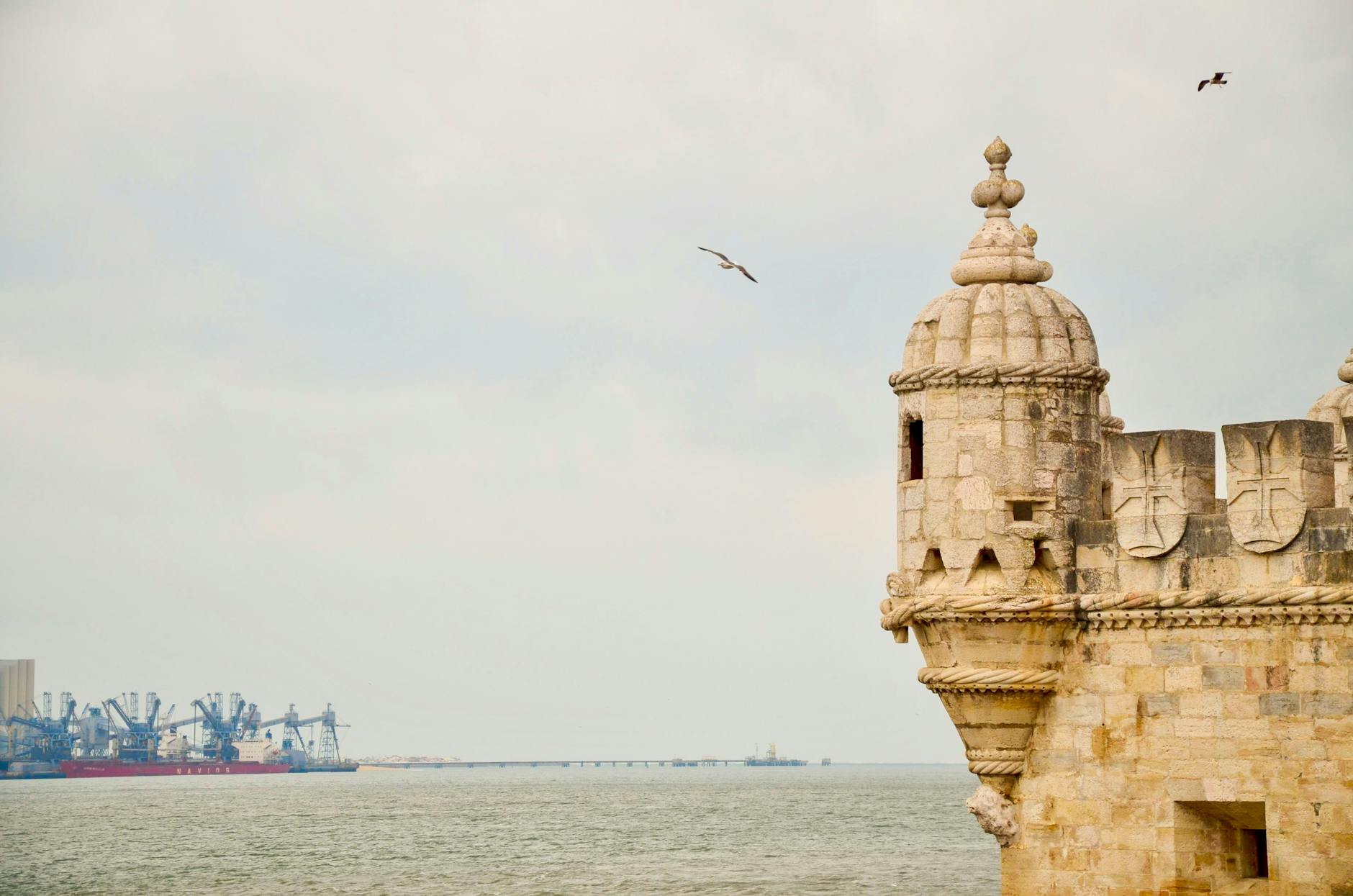
The Torre de Belém is the postcard: a small fortified tower standing in the Tagus, half Manueline fantasy and half working gun platform, finished in 1519. From the riverside path it is genuinely lovely, especially in the hour before sunset when the limestone turns gold.
Inside is a different experience. The tower is narrow, the staircase is a single spiral controlled by a traffic light, and visitor numbers are capped — which means a queue outside and a shuffle within. There are five levels, a governor’s room, a chapel and a terrace, and the whole visit takes about thirty minutes, of which a good ten are spent waiting on stairs.
Our verdict: at €15 on its own, the interior is not worth it for most people. If you are travelling with anyone who struggles with stairs or tight spaces, admire it from the outside and spend the money on lunch. Children under 12 go free, and ages 13–24, over-65s and families pay half price. Details on the Belém Tower guide.
Monument to the Discoveries
The Padrão dos Descobrimentos is a 52-metre concrete prow with Henry the Navigator at the front and thirty-odd figures behind him, put up in its permanent form in 1960. It is not old and it is not subtle — it was built by the Estado Novo to celebrate empire, and it reads that way.
Still, it photographs superbly, and the lift to the roof gives you a clean overhead view of the marble compass rose set into the pavement in front, a map of the voyages that only makes sense from above. That, plus the sightline back to Jerónimos, is the whole argument for the ticket. Twenty minutes. See the Monument to the Discoveries guide for opening times and the current fare.
The hill: São Jorge Castle and the cathedral
The eastern hill is the oldest inhabited part of Lisbon and the part the 1755 earthquake mostly spared. Two landmarks sit on it, connected by a fifteen-minute walk through Alfama that is itself one of the best things you will do in the city.
São Jorge Castle — €17
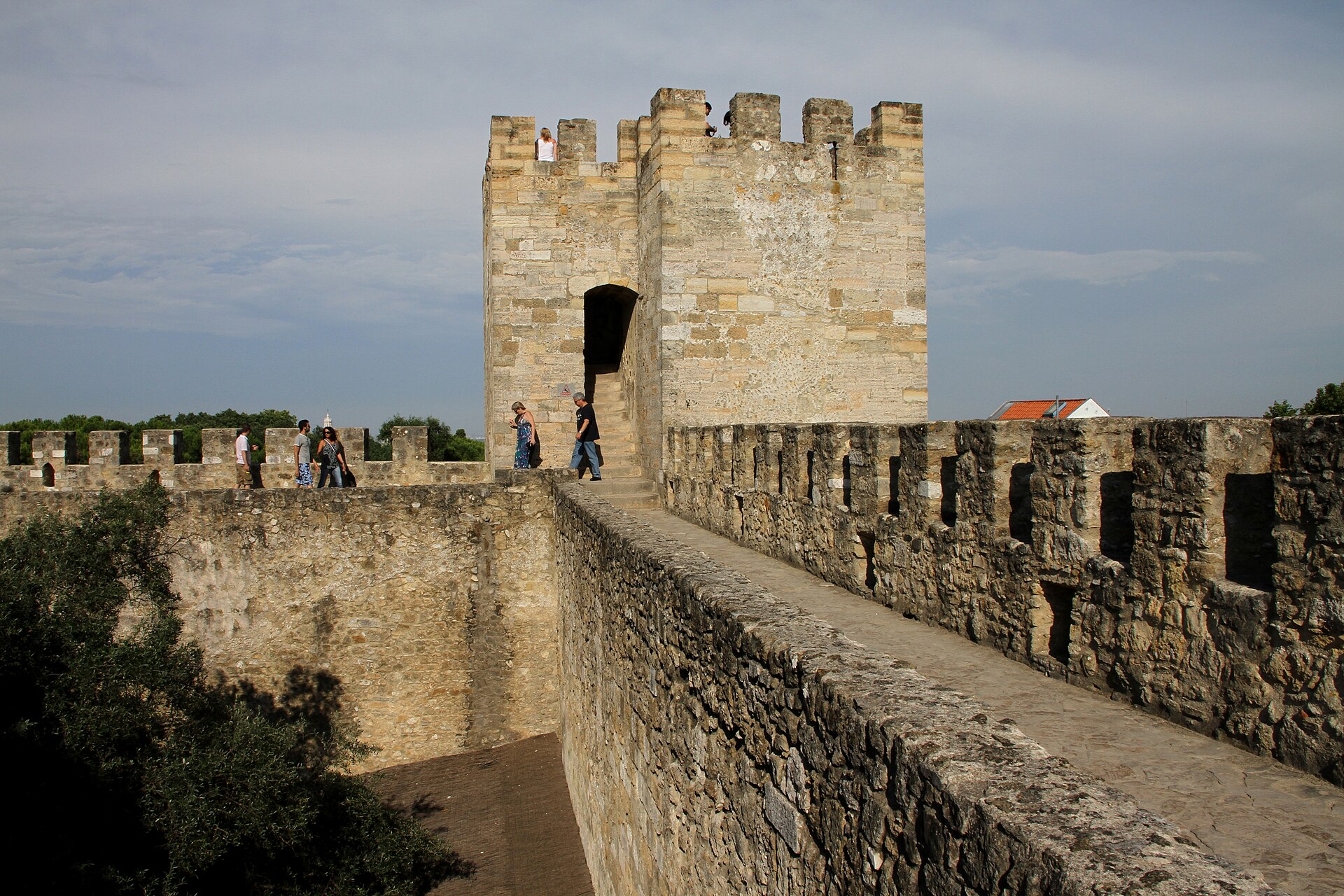
Be clear about what you are buying. This is not a furnished castle with rooms and collections. It is a walled enclosure with eleven towers, a set of ramparts you can walk, an archaeological site showing Iron Age, Moorish and medieval Lisbon stacked on top of each other, a camera obscura and a great many peacocks. The Moorish fortress fell in 1147; most of what stands was heavily restored in the 1940s.
What justifies €17 is the position. The ramparts give you the whole city at once: the Baixa grid below, the Tagus beyond, the bridge to the right, Alfama’s roofs tumbling away to the left. It is the definitive Lisbon view and there is no cheaper way to get it from that angle.
Prices: €17 adult, €8.50 for ages 13–25, €14 for seniors over 65, free for children 12 and under. Go at opening or in the last ninety minutes before closing — midday is both hottest and busiest, and the ramparts have almost no shade. The camera obscura runs on a schedule and in clear weather is worth timing your visit around. More on the São Jorge Castle guide, and on the neighbourhood in our Alfama guide.
Sé de Lisboa, the cathedral
Lisbon’s cathedral was begun in 1147, the year the city was taken, and it looks like what it is: a fortress church with two blunt towers and battlements, built to hold a hill as much as to hold a congregation. Earthquakes in 1344, 1531 and 1755 knocked it about repeatedly, and successive restorations have left a building that is Romanesque at the front, Gothic at the back and slightly confused in the middle.
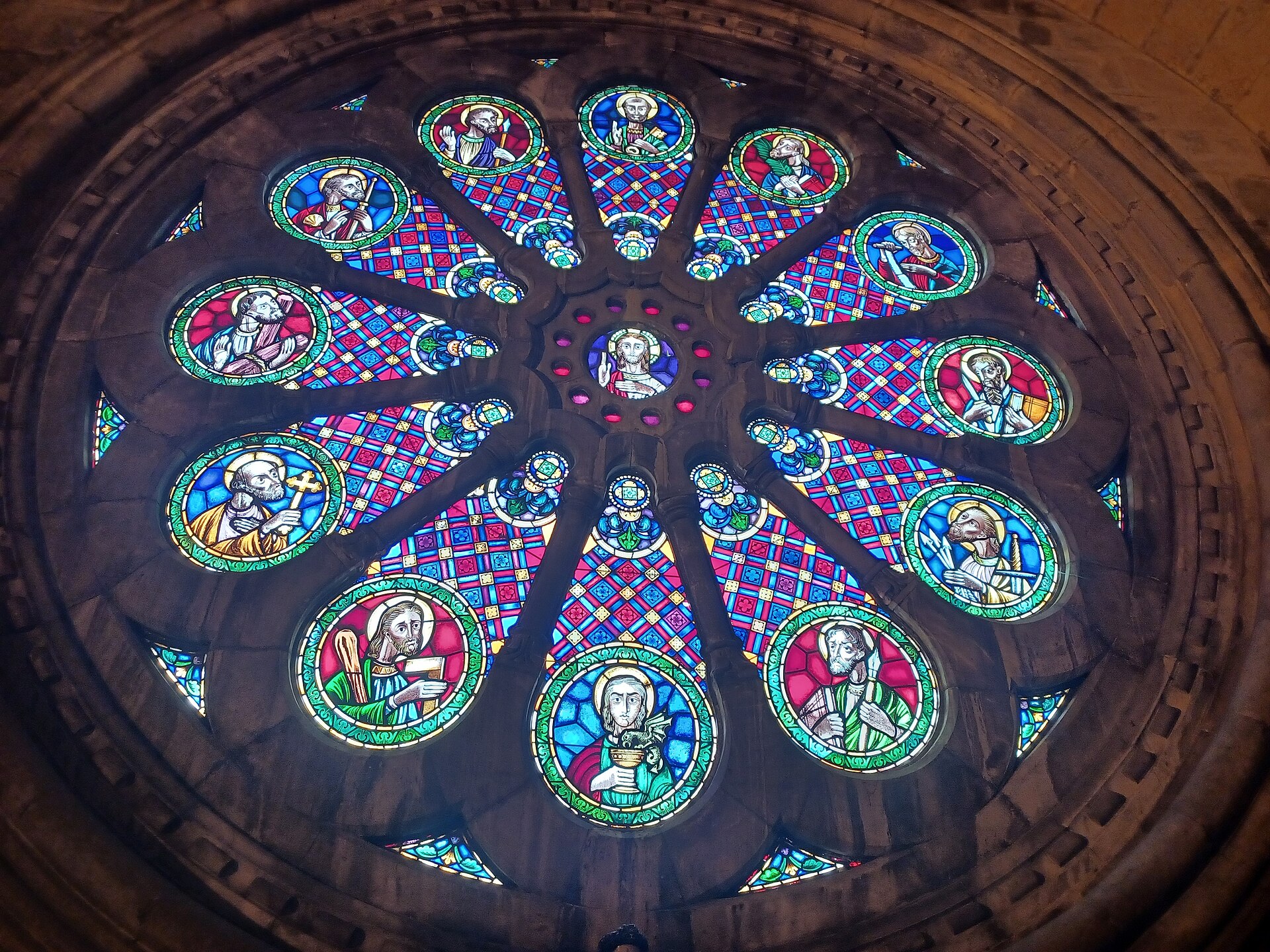
The rose window in the west front is the thing to look at, from outside and then from within — the twelve apostles set in a wheel of pink and blue glass, best seen in the late afternoon when the sun is behind it. Beyond the high altar, the Gothic ambulatory and the royal tombs are quieter and better than the nave. In the cloister, excavations have exposed a Roman street, Visigothic foundations and a Moorish house, one on top of another.
Hours are seasonal: 10:00–18:00 Monday to Saturday from November to May, and 09:30–19:00 from June to October, closed on Sundays and holy days, with last entry 45 minutes before closing. Admission is €7, or €5 with a Lisboa Card, covering the naves and ambulatory, the ascent to the High Choir and the Treasury museum. A free prayer space is set aside for anyone who has come to worship rather than to look.
Full opening hours, the ticket breakdown and how to combine it with Alfama are in our Lisbon Cathedral guide.
One practical note: tram 28 rattles past the west front, and the photograph everyone wants — yellow tram, cathedral towers — is taken from the pavement opposite, for nothing. See our tram 28 guide for when that tram is bearable.
The churches most visitors walk past
Lisbon’s four best church interiors are all free or nearly free, all within walking distance of the centre, and all far emptier than the queue at Belém Tower. If you want the single honest tip on this page, it is this section.
Igreja de São Roque
From Largo Trindade Coelho in the Bairro Alto, São Roque looks like a barn. Flat façade, no tower, no ornament — the original front came down in 1755 and was rebuilt plainly. Nothing prepares you for the inside.
It was the Jesuits’ first church in Portugal, and the ceiling is a flat painted trompe l’oeil rather than a vault, which is itself unusual. Along both sides run eight side chapels, any one of which would be the highlight of a lesser church. The last on the left is the Chapel of St John the Baptist: commissioned by João V, built in Rome from lapis lazuli, amethyst, alabaster, gold and ivory, blessed by the Pope, dismantled, shipped to Lisbon and reassembled here in 1747. Its mosaics are so fine that visitors routinely mistake them for oil paintings. At the time it was reputedly the most expensive chapel in the world.
The church is free. The adjoining museum, which holds the chapel’s silver and vestments, is €8, half that with a Lisboa Card. Budget thirty minutes and go in the morning, when the light comes through the south windows. Dress modestly — this is an active church, not a museum.
More on the chapels, the museum and the best time of day in our Igreja de São Roque guide.
Carmo Convent — €7
The Convento do Carmo was Lisbon’s grandest Gothic church until the morning of 1 November 1755, when the earthquake struck during All Saints’ Day mass and brought the roof down on the congregation. The city rebuilt around it and left it as it fell.
What remains is a nave open to the sky: bay after bay of pointed arches with nothing above them but weather. It is the most affecting place in Lisbon and, at €7, the cheapest important ticket in the city. At the east end, the archaeological museum occupies the surviving apse chapels and holds a strange and wonderful collection — Visigothic pillars, a Roman sarcophagus, medieval tombs, and two Peruvian mummies that nobody quite expects.
It stands in Largo do Carmo, the small square at the top of the Santa Justa Elevator, which is also where the Carnation Revolution ended in April 1974 when the regime’s last prime minister surrendered from the barracks on the square. Allow an hour. Combine it with Chiado — see the Bairro Alto and Chiado guide — and with the story of the 1755 earthquake, which this building tells better than any text can.
Tickets, hours and what is actually in the museum: our Carmo Convent guide.
Panteão Nacional — €10
The Church of Santa Engrácia, out beyond Alfama near the Feira da Ladra flea market, took so long to build that obras de Santa Engrácia became the Portuguese phrase for a job that never ends. Started in 1682, finished in 1966. Two hundred and eighty-four years.
The result is a vast, cool, almost empty Baroque drum in white and pink marble, converted into the national pantheon. Buried or memorialised here: Vasco da Gama, Henry the Navigator, Camões, the fado singer Amália Rodrigues, the footballer Eusébio, and several presidents. It is worth going for the interior alone — the acoustics and the geometry of the inlaid floor are extraordinary when it is quiet, which is most of the time.
Then take the lift and the last flight of steps to the terrace around the dome. You get a 360° view over Alfama, the river, the cruise terminal and the 25 de Abril bridge, and on most days you will share it with three or four other people. For €10 that is still the best view-per-euro in Lisbon. Half price for over-65s, for 13–24s and on family tickets; free for accompanied under-12s.
Hours, the dome climb and how to combine it with Feira da Ladra: our Panteão Nacional guide.
Basílica da Estrela
West of the centre, at the top of the 28 tram line, the Basílica da Estrela is a late-Baroque and neoclassical church with a white dome visible from half the city. Queen Maria I built it in thanks for the birth of a son; she is buried inside, and so is the son, who died of smallpox before it was finished.
Entry to the church is free. There is a small charge to climb to the roof terrace, which puts you level with the dome and gives a view west and south that almost nobody photographs. Across the road, the Jardim da Estrela is one of the best parks in Lisbon for a sit-down — bandstand, duck pond, enormous trees, and a café that is not aimed at tourists.
Iron, water and engineering
Lisbon’s other landmark tradition has nothing to do with religion. It is about moving water, moving people and crossing the river.
Santa Justa Elevator — closed, but worth seeing from below
The Elevador de Santa Justa is a 45-metre wrought-iron tower, built in 1902 to lift riders from the Baixa to Chiado, by Raoul Mesnier du Ponsard. The neo-Gothic ironwork is genuinely beautiful and the wooden cabins are original.
Here is the honest verdict. The lift and the viewing platform at its top have both been closed since the Glória funicular accident in September 2025, and Carris has given no reopening date. Photograph the tower from below for nothing, then walk up through Chiado to Largo do Carmo, where the Carmo Convent is waiting.
Carris shows its status on its lifts and funiculars page, and our Santa Justa Elevator guide covers the tower’s history. The three street funiculars (Glória, Bica and Lavra) are closed as well; the funiculars and lifts guide covers what is running and the buses that stand in for them.
Aqueduto das Águas Livres
The most impressive structure in Lisbon is the one almost no visitor sees. The Águas Livres aqueduct brought fresh water into the city from 1748 and survived the 1755 earthquake without a crack — a fact that did a great deal for the reputation of its engineers. Where it crosses the Alcântara valley it runs 941 metres on 35 arches, the tallest of them 65 metres, which puts them among the highest stone arches ever built.
You can walk along the top of that section on certain days through the Museu da Água, which also runs the Mãe d’Água reservoir at Amoreiras — a cathedral-like stone chamber holding a still black pool, occasionally used for exhibitions and concerts. Opening arrangements for the aqueduct walk are seasonal and limited, so check the museum’s own site before planning around it. If you have three days or more in Lisbon and like engineering, this is the landmark to add.
Pilar 7 and the 25 de Abril Bridge
The suspension bridge over the Tagus opened in 1966, was renamed for the date of the 1974 revolution, and looks unmistakably like the Bay Bridge in San Francisco — same era, same American engineering, same red-orange paint. It carries road on the upper deck and, since 1999, railway on the lower one.
Pilar 7 is a visitor experience inside one of the bridge’s piers: a lift up the pillar to a glass-floored platform 80 metres above the water, plus an exhibition on how the thing was built. Reactions divide sharply. If you like structural engineering, standing inside a live suspension bridge pier while traffic thunders overhead is memorable. If you came to Lisbon for tiles and pastries, it will feel like a lot of money for a small platform. It is genuinely not for anyone uneasy with heights or glass floors.
Across the river: Cristo Rei
The 110-metre statue of Christ standing over Almada on the south bank was inspired directly by Rio’s Cristo Redentor and completed in 1959, in thanks for Portugal having stayed out of the Second World War. A lift runs up inside the pedestal to a terrace at the statue’s feet.
Nobody should cross the river for the statue. You should cross for the view back. From that terrace you see Lisbon whole — the bridge sweeping away beneath you, the seven hills laid out in profile, the river turning silver in the afternoon, Belém at the far right. It is the only vantage point that shows you how the city sits on its water, and it is better at sunset than anything on the Lisbon side.
Opening hours are 10:00 to 18:00 from October to March and 10:00 to 19:00 from April to September, with the last ascent twenty minutes before closing. Getting there is half the pleasure: take the ferry from Cais do Sodré to Cacilhas — ten minutes, cheap, and a fine view in itself — then Carris Metropolitana bus 3001 up the hill to the sanctuary. Alternatively the Fertagus train stops at Pragal, or MTS light rail lines 1 and 3 reach Almada. Budget half a day including the crossing.
The ferry timings, the bus, the sunset window and where to eat in Cacilhas: our Cristo Rei guide.
The squares: civic Lisbon after the earthquake
When the Marquês de Pombal rebuilt central Lisbon after 1755 he did it on a grid, with two great squares as bookends. They are free, they are always open, and they are landmarks in their own right.
Praça do Comércio
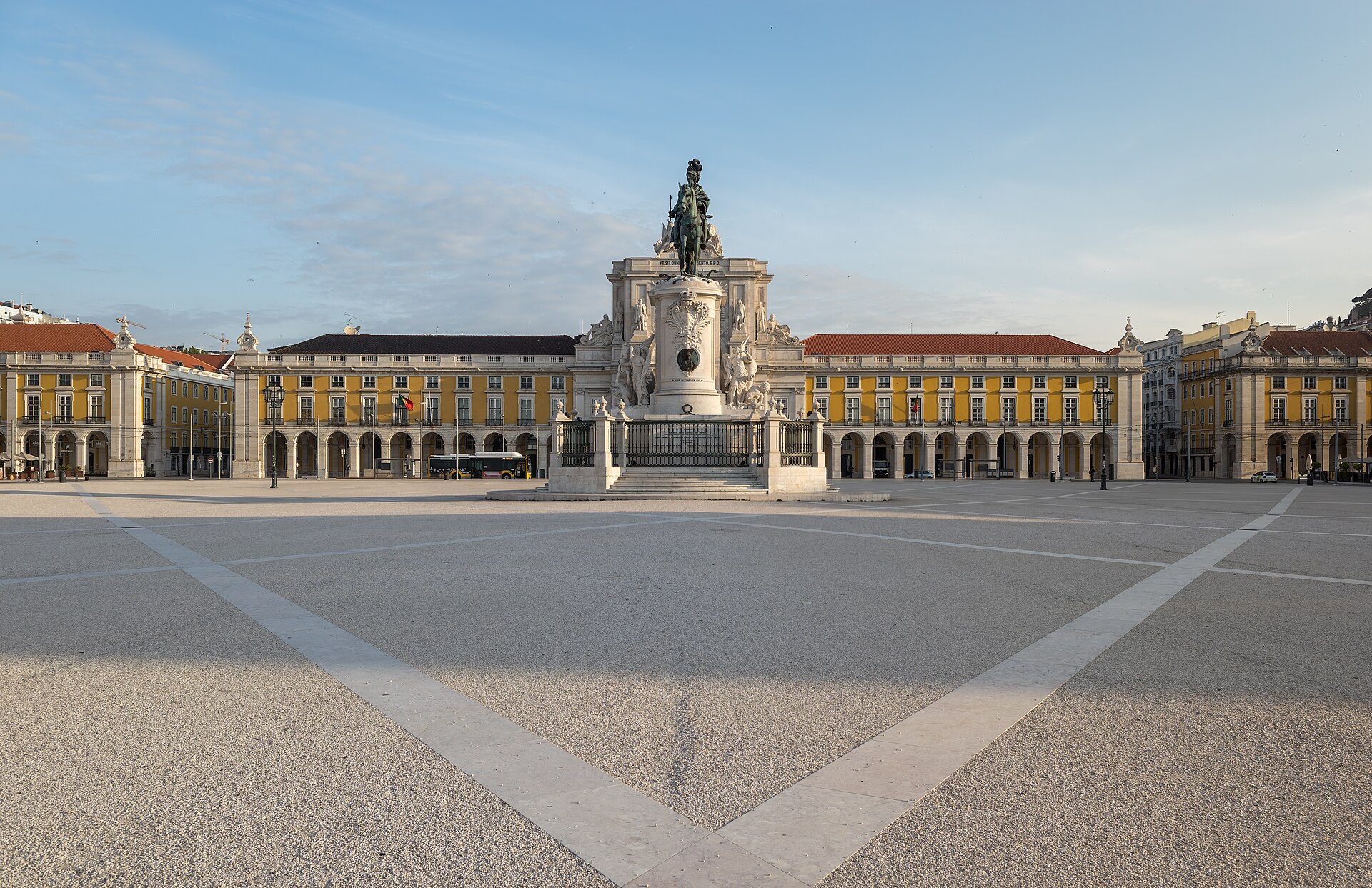
Lisbon’s front door: an enormous arcaded square opening straight onto the Tagus, with the ministries that replaced the royal palace on three sides, an equestrian statue of José I in the middle, and the Rua Augusta triumphal arch on the north side. Walk in from the river steps rather than down from the Baixa — the square was designed to be entered by boat, and it shows.
There is a lift and a short stair to the top of the Rua Augusta arch, which gives a straight view up the Baixa grid to the castle. It is a modest charge and a genuinely good ten minutes. The square itself is best at either end of the day; at midday it is a hot, shadeless expanse. See our Praça do Comércio guide and the Baixa and Rossio guide.
Rossio and Praça da Figueira
Rossio has the wave-patterned calçada paving everybody photographs, two Baroque fountains, the neoclassical Teatro Nacional D. Maria II on its north side and, behind that, the Rossio railway station, whose Manueline Revival façade with its two horseshoe doorways is one of the most enjoyable buildings in the city. None of it costs anything.
What to skip
Being useful means saying where not to spend money.
- The Belém Tower interior in July or August. A timed slot, a wait at the door and thirty minutes of narrow staircase. If you want it, it is a separate €15 ticket on top of Jerónimos (€18); otherwise admire it from the path and put the time into Jerónimos.
- Skip-the-line resale tickets sold on the street. For Jerónimos and the castle, book directly on the official sites. Street resellers charge a premium for the same timed slot.
- Any “Lisbon in one day” bus tour that includes Belém, the castle and Cristo Rei. You will see the inside of a coach. Pick two of the three.
- Climbing every viewpoint. After the castle ramparts and the Panteão dome, each additional miradouro adds very little. Our miradouros guide ranks them properly.
What a landmark day actually costs
Two adults doing the classic Belém morning — Jerónimos (€18) plus Belém Tower (€15) — pay €66 in admissions, plus roughly €7 in transport with day passes. Add the castle (€17 each) in the afternoon and you are at €100 before food.
The cheap version of the same day looks like this: Jerónimos church (free), Belém Tower from the path (free), Carmo Convent (€7), São Roque (free), the Sé nave (free), Panteão dome (€10). Two people: €34, and arguably a better day. Our free things to do in Lisbon guide goes further on this.
The Lisboa Card covers most of the monuments listed here plus public transport, and the arithmetic depends entirely on how many paid sites you actually enter per day. That page does the sums; the short version is that it pays off if you are visiting three or more ticketed monuments in a day and using trams heavily, and loses money if you are the kind of traveller who mostly walks and looks.
Free-entry days: residents of Portugal can visit the state-run monuments, Jerónimos and Belém Tower included, free on 52 days of their choice a year with ID. There is no general free Sunday morning, so visitors from abroad pay on every day of the week.
Three routes that string the landmarks together
Each of these is a half-day. If you have longer and want them folded into a fuller plan, our one week in Lisbon itinerary spreads them across seven days.
A Belém half-day
Train from Cais do Sodré at 09:00, Jerónimos on the first timed slot, the cloister for forty minutes, then the church. Walk west along the waterfront past the Discoveries monument, under the road to Belém Tower, and photograph it from the path with the light behind you. Pastéis de nata at the original bakery on the way back, and the tram or train home by 14:00. If you have longer, the coach and maritime museums are both in the same block.
A hill half-day
Start at the Sé, walk up through Alfama’s lanes rather than taking the tram, and reach São Jorge Castle by mid-morning. An hour and a half on the ramparts and in the archaeological site. Come down the eastern side to the Panteão and the dome terrace, then finish at Feira da Ladra if it is a Tuesday or a Saturday. Roughly four hours at a walking pace; see the walking guide for the gradients, which are real.
A day of churches, free or nearly
São Roque in the morning light, down through Chiado to the Carmo Convent, then the tram west to the Basílica da Estrela and the park. Back east in the afternoon for the Sé and the Panteão. Total admissions under €20 per person, and almost no queueing anywhere.
Practical notes
Dress code
São Roque, the Sé and the Estrela are working churches. Shoulders and knees covered, hats off, phones silent. Nobody will turn you away at the door in practice, but you will be the person everyone is looking at. The Carmo and the Panteão are deconsecrated and have no requirements.
Accessibility
Jerónimos, the Panteão, the Rua Augusta arch and Cristo Rei all have lifts and are broadly manageable. São Jorge Castle has cobbles, uneven ramparts and steps without handrails; the lower courtyards are reachable but the walls are not. Belém Tower has a single narrow spiral staircase and no alternative. The Sé’s main nave is level; the treasury and choir are not. Our Lisbon accessibility guide has step-by-step detail.
Photography
Interior photography without flash is allowed almost everywhere, the São Roque museum’s silver room and parts of the cathedral treasury excepted. Tripods generally are not. The best exterior light: Belém Tower in the last hour before sunset, the Jerónimos façade in the morning, the castle ramparts at either end of the day, and Cristo Rei looking north at dusk as the city lights come on behind the bridge.
When the weather turns
Lisbon rain arrives hard and usually passes within the hour. Church interiors are the obvious shelter, and the Panteão in particular is a fine place to wait out a downpour. Our rainy day guide and the museums and culture guide both list indoor alternatives near each of the landmarks above.
Frequently asked questions
How many days do you need to see Lisbon’s main landmarks?
Two full days covers the essentials if you split them geographically: Belém on one, the castle hill and the centre on the other. Three days lets you add Cristo Rei or the aqueduct without rushing. Trying to do Belém and the castle on the same day is the most common planning mistake visitors make.
Which landmark should I book in advance?
Jerónimos Monastery, always, and São Jorge Castle in high season. Both sell timed slots online at the gate price. Belém Tower now admits visitors in timed slots, so book it too if you want the interior. Nothing else on this page needs advance booking.
Are Lisbon’s churches free to enter?
Several are. São Roque and the Basílica da Estrela cost nothing to enter. The Sé charges €7 for the visitor route, though it keeps a free prayer space. The Carmo Convent at €7 and the Panteão Nacional at €10 are deconsecrated monuments with admission charges.
Is the Lisboa Card worth it just for the monuments?
Only if you are entering three or more ticketed sites in a single day. It includes public transport, which shifts the sums, but a traveller doing one monument a day and walking between them will not get their money back. The full breakdown is here.
What is the best view in Lisbon that you have to pay for?
The Panteão Nacional dome terrace, at €10 — a full 360°, uncrowded, and it includes the interior. The castle ramparts are the better-known answer and the wider view, but they cost nearly twice as much and you will be sharing them.
Can you see the landmarks with limited mobility?
A good proportion of them, yes. Belém is flat and the monastery has lifts; the Panteão, the Rua Augusta arch and Cristo Rei all have lift access. The castle and the Belém Tower interior are the two that genuinely cannot be adapted. Trams are not accessible; the metro and the Cascais-line trains largely are.
Which one do visitors most often regret paying for?
The Belém Tower interior in peak season. The Santa Justa Elevator would have topped this answer for its queue, but the lift and its platform have been closed since the September 2025 accident, with no reopening date.
Bottom Line
Lisbon’s landmarks reward planning by geography rather than by list. Do Belém as a self-contained morning and book Jerónimos ahead — it is the one building here that is genuinely world-class, and decide separately whether the Tower’s €15 interior earns its place. Give the castle hill its own half day, and walk up through Alfama rather than riding.
Then spend the rest of your time on the cheap ones. The Carmo Convent at €7, São Roque at nothing and the Panteão at €10 are, between them, better value than every paid monument in Belém combined, and you will have most of them to yourself. Cross the river to Cristo Rei once, near sunset, for the view back. The Santa Justa lift and its platform stay shut until Carris says otherwise, so climb to Chiado on foot and admire the ironwork from the street.
Photo Credits
Walking the ramparts at São Jorge Castle: Lissabon-Castelo de Sao Jorge-36-2011-gje by Gerd Eichmann, CC BY-SA 4.0, via Wikimedia Commons.
Praça do Comércio from its river side: Empty Praça do Comércio during the COVID-19 lockdown, Lisbon, Portugal julesvernex2 by Jules Verne Times Two, CC BY-SA 4.0, via Wikimedia Commons.