Things to Do in Lisbon
Lisbon at Night: What to Do After Dark
The whole evening, not just the bars — sunset viewpoints, what stays open late, fado worth paying for, what to skip, and how to get home after the metro stops at one.
In this guide
- The shape of a Lisbon evening
- Start with sunset — the part people get wrong
- Monuments and museums that are open after dark
- Fado — the one genuinely unmissable night out
- Eating late
- Drinking: the four neighbourhoods, briefly
- On the river
- Walking Lisbon at night
- Summer nights and winter nights are different trips
- What is not worth doing at night
- Getting home
- Is Lisbon safe at night?
- A good evening, start to finish
- Frequently asked questions
- Bottom Line
- Photo Credits
Most lists of things to do in Lisbon at night are really lists of bars, which sells the city short. Lisbon after dark is a genuinely different place from Lisbon at two in the afternoon — cooler, quieter in the parts that matter, and lit in a way that flatters a city built out of pale limestone. This guide covers the whole evening, from the hour before sunset to the last metro at one in the morning: what is actually open, what a Lisbon night runs to for time, what it costs, what to skip, and how to get home afterwards without an argument with a taxi driver.
The shape of a Lisbon evening
Get the timings right and everything else follows. Portuguese evenings run later than northern European ones and earlier than Spanish ones, and visitors routinely arrive two hours out of step, then wonder why the restaurant is empty and the bar is dead.
- 19:00–20:00 — sunset drinks. Miradouros and rooftops are at their busiest; a rooftop bar with no reservation is already full by 19:30 in summer.
- 20:00–21:30 — dinner. Book for 20:00 if you want a quiet room, 21:00 if you want atmosphere. Kitchens in traditional places often stop taking orders around 22:30.
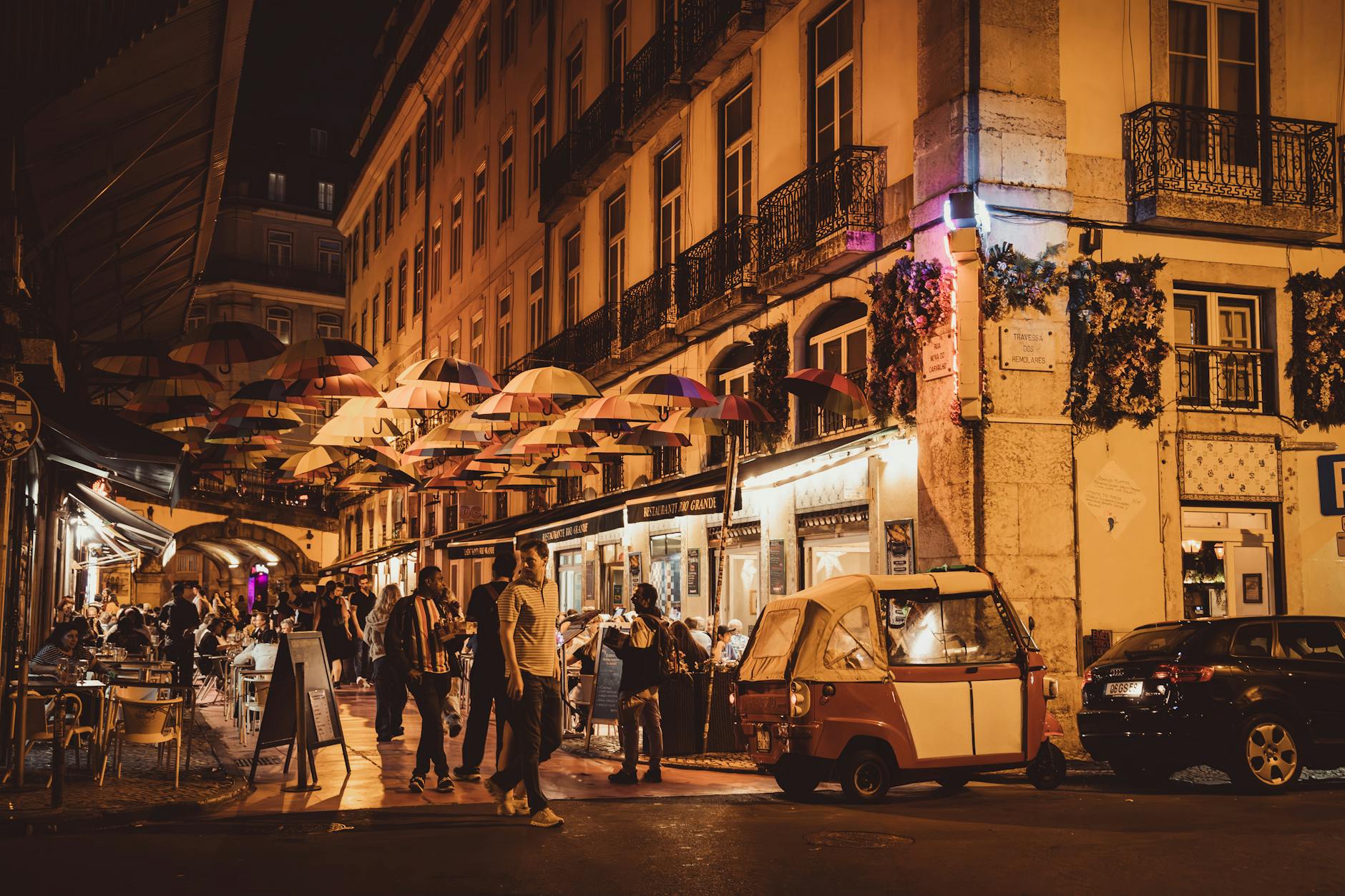
- 22:00–00:30 — bars. Bairro Alto fills from about 22:30 and the drinking is largely done standing in the street.
- 01:00–04:00 — clubs. Almost nothing worth going to has a crowd before one in the morning. Turning up at midnight means paying a cover to stand in an empty room.
If you are only out for one evening, the honest planning advice is to pick two of those four blocks rather than all four. Trying to do sunset, dinner, bars and a club in a single night in a city this hilly is how people end up asleep in a taxi at three.
Start with sunset — the part people get wrong
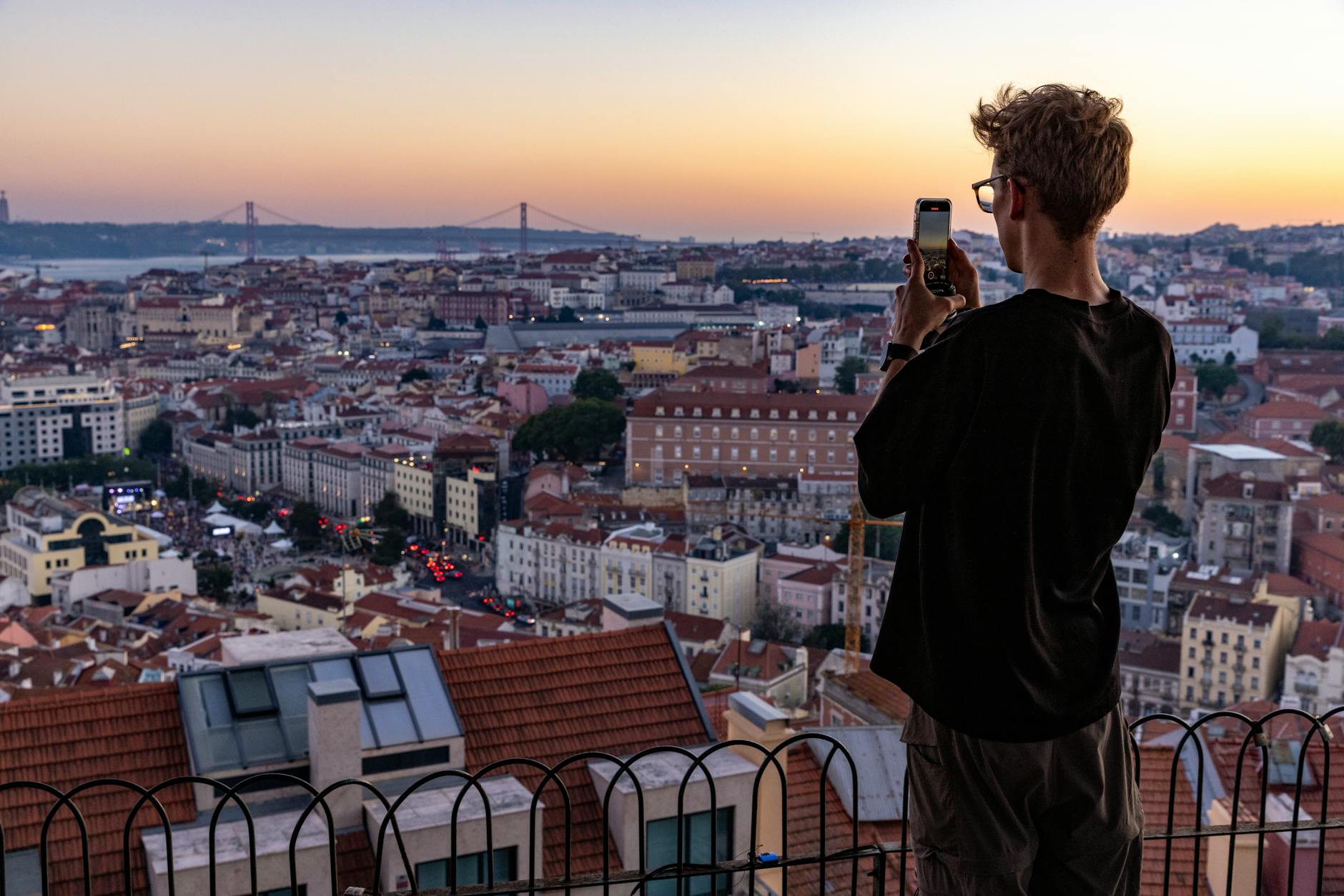
Lisbon faces south onto the Tagus, so the sun sets over the river and the 25 de Abril bridge rather than behind the city. That geography is why the miradouros are the single best free thing to do here in the evening, and why the good ones are packed by seven.
- Miradouro de Santa Catarina — young, loud, beer from a kiosk, a guitar or three. The most fun and the least peaceful.
- Miradouro de São Pedro de Alcântara — the postcard view across to the castle, formal gardens, a kiosk with tables. Reliable and busy.
- Miradouro da Senhora do Monte — the highest, the furthest to climb, and the one that still feels like a neighbourhood at nine at night.
- Miradouro das Portas do Sol — the Alfama rooftops shot. Best in the morning, honestly; at sunset the light is behind you.
Rooftop bars are the paid version of the same view. They are good and they are not cheap — a cocktail runs €12–€16 at the well-known ones — and most now take reservations, which you should make. Our rooftop bars guide ranks them, and the sunset guide covers the boat and hilltop options in more detail.
What is not worth it: queuing forty minutes at a viewpoint kiosk for a warm beer at €4 when there is a supermarket two streets back selling the same bottle for €1.20. Buying a drink to take to a miradouro is completely normal here, and it is what most of the people around you have done.
Monuments and museums that are open after dark
Lisbon is not a late-opening museum city. Most of the big institutions shut at 18:00 and a fair number close on Mondays. There are, however, real exceptions worth planning around.
- Castelo de São Jorge stays open until 21:00 from 1 March to 31 October, with last admission at 20:30 — the only major monument in the city you can visit properly after dinner-time light. One important caveat: the wall-walks and towers may be closed between 18:00 and 21:00 for safety, which is most of the reason people go. Check the day you plan to visit; if the walls are shut, the castle is a garden with a view, and there are free viewpoints with the same view.
- Time Out Market runs to midnight Sunday to Wednesday and 02:00 Thursday to Saturday, which makes it the reliable late-food answer when a kitchen has closed on you.
- Churches are generally shut by early evening, with the exception of occasional concerts. The Sé and Carmo Convent are daytime visits.
- Late-night openings do happen — the Gulbenkian, the MAAT and several municipal museums run occasional evening programmes, and there is a Noite dos Museus in May when dozens open free until small hours. Check the events calendar before you assume.
Fado — the one genuinely unmissable night out
If you do one organised evening thing in Lisbon, do this. Fado is sung at night, in small rooms, with the lights down and the room silent — actually silent, phones down, conversation stopped between songs. It is the closest thing the city has to an experience you cannot get anywhere else.
The practical shape of it: most fado houses in Alfama and Bairro Alto run two or three sets between about 21:00 and midnight, and most require either dinner or a minimum spend. Expect roughly €45–€70 a head with a meal at a proper casa de fado, less at a smaller place with a drink minimum. Book — the good rooms hold thirty people.
The honest warning: there is a tier of restaurant on the tourist streets that advertises “fado” on a chalkboard and delivers a man with a microphone over the clatter of plates. It is not the same thing and it is not worth €60. Our fado guide explains how to tell them apart before you book, and the live music guide covers everything else the city plays after dark.
Eating late
Lisbon eats out constantly and is genuinely good value at night. A tasca dinner — grilled fish, potatoes, a half-litre of house wine — lands around €15–€20 a head. A mid-range sit-down dinner is more like €18–€35 per person, and the tourist-strip three-course-with-a-drink deals sit at €25–€30 and are mostly not worth it. Full detail in the restaurants guide.
Three things specific to nights:
- Kitchens close earlier than you think. A traditional restaurant may stop serving at 22:00 on a weeknight. If you are arriving from the airport in the evening, eat before you drop your bags, not after.
- The couvert is not free. The bread, olives and cheese that appear unasked are charged, usually €2–€6. Send them back if you do not want them; nobody minds.
- Late options really do exist — Time Out Market until midnight or 02:00, the Cais do Sodré and Bairro Alto streets, and the traditional Lisbon end-of-night move, a bifana or a bowl of caldo verde from a hole-in-the-wall at two in the morning.
Tipping is light here and nobody expects twenty per cent — see tipping in Lisbon for what is normal.
Drinking: the four neighbourhoods, briefly
Covered properly in the nightlife guide, but in one paragraph each:
- Bairro Alto — dozens of tiny bars in a grid of narrow streets, everyone drinking outside, cheap and chaotic, roughly 22:30 to 02:00. Residents have to live there, so the police move the crowds along after two.
- Cais do Sodré and Pink Street — the former red-light street, now the tourist-facing party strip. Loud, fun, and the most likely place to be overcharged.
- Príncipe Real — older, calmer, better cocktails, and the centre of the city’s LGBTQ+ scene.
- Alcântara, LX Factory and the docks — where the actual clubs are, including Lux Frágil across at Santa Apolónia. Nothing starts before one.
More in our gay Lisbon guide.
On the river
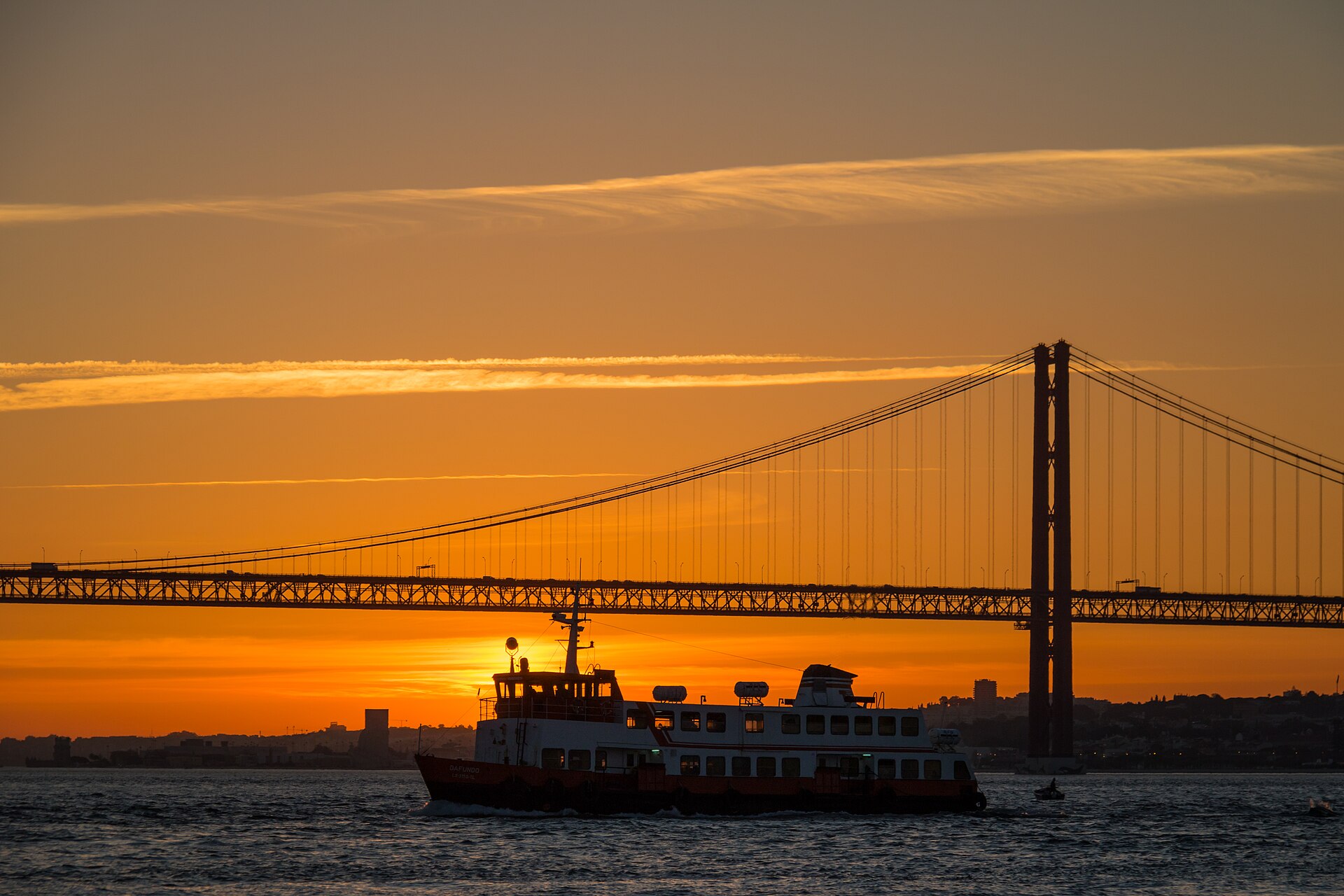
Sunset cruises on the Tagus run from about April to October, take two hours, and cost roughly €35–€45 a head with a drink included — a good evening if the weather is settled, a waste if it is windy. The boat tours guide covers the operators.
The much cheaper alternative, and one locals actually use: take the ferry from Cais do Sodré to Cacilhas at dusk. It costs a normal transport fare, takes about ten minutes, and gives you the whole city lit up from the water. Eat at one of the fish restaurants on the Cacilhas waterfront and come back on a later boat. Cristo Rei is up the hill from the same terminal, though the monument itself closes in the evening.
Walking Lisbon at night
The city is at its best on foot after dark, partly because the hills are survivable once the heat has gone. Two walks worth doing:
- Praça do Comércio to Alfama. Start at the arch on Praça do Comércio with the square lit and largely empty, follow the river east, then turn up into the lanes below the castle. Twenty-five minutes, all of it good.
- Chiado to Santa Catarina. Up through Chiado past the lit façades, along Rua do Alecrim, and out at the Santa Catarina viewpoint. Ends where the drinking starts.
The street art in Graça and Marvila is not visible at night — that is a daytime activity, whatever the tour listings imply.
Summer nights and winter nights are different trips
The single biggest variable is the month, and it changes more here than in most European cities because so much of the evening happens outdoors.
June to September the sun sets between roughly 20:00 and 21:00, the streets stay warm past midnight, and everything spills outside. This is also when the city is fullest: rooftops need booking days ahead, Bairro Alto is shoulder-to-shoulder at weekends, and the miradouros are standing room only. Mid-June is a category of its own — the Santo António festivities turn Alfama and Graça into street parties with grilled sardines and paper decorations, and the whole neighbourhood is out until dawn on the night of the 12th.
November to February the sun is gone by 18:00, which sounds bleak and is actually one of the better times to be here. Dinner tables are available, fado houses take walk-ins, the lit façades of Baixa and Chiado look better in the damp, and you can have a viewpoint largely to yourself. The trade-off is genuine: it rains, the terraces close or fill with heaters, and the harbour-side venues in Alcântara are cold. Bring a proper jacket rather than assuming Portugal is warm — the best time to visit guide has the month-by-month temperatures.
March to May and October are the sweet spot for an evening: light until 19:00 or later, mild enough to sit outside, and the crowds are half what they are in August. If you have a choice of month and the evenings are what you are here for, take one of those.
What is not worth doing at night
- Tram 28. It runs into the evening but the point of it is the view, and after dark you are paying to look at reflections of your own carriage. Do Tram 28 at eight in the morning instead.
- Tuk-tuk night tours. Expensive, and the commentary competes with traffic noise. Tuk-tuks earn their money on the hills in daylight.
- Belém after dark. The monuments are floodlit and closed, the area empties out, and it is a long way back. Belém is a morning.
- Pub crawls in Bairro Alto. You are paying €25 for someone to walk you between bars that are forty metres apart and charge €3 for a beer anyway.
Getting home
This is the part that catches people out, and it is easily solved.
- The metro runs 06:30 to 01:00, every day of the week including weekends. Last trains leave the terminal stations at 01:00 and you can still enter a station until then — but “last train at 01:00 from the terminus” means the train through your station may be earlier. A single is €1.90 on a Navegante card. See the metro guide.
- Night buses — the Carris Rede da Madrugada, lines numbered in the 200s — cover the gap from roughly 01:00 to 06:00. Slow, but they exist and they are cheap.
- Taxis and ride-hailing. The night tariff runs 21:00–06:00 and on weekends and holidays, about twenty per cent above the daytime rate. Uber and Bolt both work well here and surge hard at 02:00 and again at 04:00 when the clubs empty.
- Walking. Perfectly reasonable within the centre, and often faster than waiting. Wear shoes with grip — the calçada pavement is polished limestone and genuinely slippery, wet or dry.
Is Lisbon safe at night?
Yes, by the standards of European capitals — violent crime against visitors is rare and the centre stays populated late. The realistic risks are pickpocketing in the crowded nightlife streets, drug touts around Cais do Sodré and Bairro Alto who are persistent but harmless and who are not selling what they say they are, and the pavement. Walk away, do not engage, keep your phone in a front pocket. Our safety guide and solo travel guide go into more detail.
A good evening, start to finish
If you want one plan rather than a menu: be at São Pedro de Alcântara for 19:15 with a bottle from the shop on the corner. Walk down into Bairro Alto at 20:15 and eat at a tasca — book it. Take a taxi across to Alfama for a 22:00 fado set. Walk down to the river afterwards, along the front to Praça do Comércio, and pick up the metro at Terreiro do Paço before one. That is about €70 a head with dinner and fado, and it is the best value evening in the city.
Frequently asked questions
What time does Lisbon nightlife start?
Bars fill around 22:30 and clubs do not have a crowd until one in the morning. Dinner at 20:00 or 21:00 is normal. Arriving at a club at midnight means paying to stand in an empty room.
What is open late in Lisbon?
Time Out Market until midnight, or 02:00 from Thursday to Saturday. Castelo de São Jorge until 21:00 between March and October. Bars until roughly 02:00, clubs until 04:00 or later. Most museums and churches shut by 18:00.
How late does the Lisbon metro run?
Until 01:00, seven days a week, with last trains leaving terminal stations at that time. After that, Carris night buses in the 200-series cover the city until about 06:00.
Is Lisbon safe to walk around at night?
Generally yes, in the central neighbourhoods, which stay busy late. Watch for pickpockets in crowded streets and expect to be offered drugs around Cais do Sodré — decline and keep walking. Wear shoes with grip on the polished pavement.
What should I wear out in Lisbon at night?
Casual is fine almost everywhere, including most clubs. The two things that matter are shoes you can walk hills in and a layer — the city cools sharply after dark even in summer, and river-front terraces are windy. Our packing list covers the rest.
Is a fado show worth the money?
At a proper casa de fado, yes — it is the one Lisbon evening you cannot replicate elsewhere. At a restaurant advertising fado on a board outside, no. The difference is whether the room goes quiet when the singing starts.
What can you do in Lisbon at night for free?
Miradouros at sunset with a bottle from a supermarket, the walk along the river from Praça do Comércio, the lit façades of Chiado, and simply sitting in a square. Our free things to do guide has more.
Is Lisbon good for a night out compared with other cities?
It is one of the better ones in Europe, mostly because it is cheap, compact and outdoors. A beer is €1.50–€2.50 in a normal bar and much of the night happens in the street rather than inside a venue.
Bottom Line
Lisbon rewards patience after dark. Be at a viewpoint before the sun goes, eat at eight or nine rather than six, put one proper fado set in the middle of the trip, and let the drinking happen late and outdoors rather than trying to schedule it. Skip Tram 28, Belém and the organised pub crawls, check whether the castle walls are actually open before you build an evening around them, and know that the metro stops at one and the night buses do not. Do that and Lisbon at night costs very little and turns out to be the half of the day most people remember.
Photo Credits
A Tagus cacilheiro ferry passing under the 25 de Abril Bridge at sunset: Bridge at Sunset (34942035102) by Susanne Nilsson, CC BY-SA 2.0, via Wikimedia Commons.