Weather by Month
Lisbon in October: Weather, Events and What to Expect
Real October weather figures, the two dates that change the shape of the month, what is on, what to pack, and an honest verdict on whether October is worth it.

In this guide
Lisbon in October is the month the city hands back to itself. The summer crowds have gone, hotel rates have fallen properly for the first time since spring, and daytime temperatures still reach the low twenties. It is also the month the rain returns — October gets nearly three times September’s rainfall — and the month the clocks go back and the evenings suddenly shorten.
That combination makes October genuinely good and slightly unpredictable. This guide gives the real weather figures from the Portuguese met office, what to pack for a month that can deliver both 25°C and an Atlantic front in the same week, what is on, and how to plan around the two dates that change the shape of the month.
October weather: the numbers
From the 1991–2020 normals measured at the Instituto Geofísico D. Luís station in central Lisbon:
- Average high: 22.8°C
- Average low: 15.3°C
- Rainfall: 111 mm across about 9 wet days
- Sunshine: 196 hours, roughly six and a half a day
- Sea temperature: 18°C
Put beside September — 26.6°C, 39 mm, 260 hours of sun — October is a real step down, and the rainfall figure is the one to notice. September averages under four wet days; October averages nearly nine. That is the sharpest month-to-month change in the Lisbon calendar.
What the averages do not convey is the shape of the month. Early October is usually an extension of September: warm, dry, bright. The Atlantic front pattern typically establishes itself somewhere in the second or third week, and by the end of the month you are in autumn proper. If you have a choice of dates, the first half of October is materially better than the second.
What it actually feels like
A good October day in Lisbon is 23°C, blue, and perfect for walking — the miradouros are pleasant instead of baking, and the castle ramparts are bearable at midday for the first time since May. A bad one is grey and wet for three or four hours, then clears completely by mid-afternoon.
Evenings cool off noticeably. The 15.3°C average low means you will want a layer after about seven o’clock, and rooftop bars stop being a comfortable place to sit still by late in the month. Indoors is the other thing to be ready for: Portuguese buildings are not heated in October and a north-facing apartment can sit at 17–18°C.
The two dates that matter
The clocks go back
Portugal moves off summer time on the last Sunday in October — 25 October in 2026. Sunset jumps back by an hour overnight, from around 18:50 to around 17:50, and by the end of the month it is dark by six.
This matters more than it sounds. Sunset viewpoints, river boat trips and the walk back down from the castle all need to be moved an hour earlier, and monuments that close at 18:00 in winter — the Panteão among them — are suddenly closing after dark. If your trip straddles that Sunday, plan the second half differently from the first.
The rain turns on
There is no calendar date for this, but the pattern is consistent: the first sustained Atlantic fronts of the season usually arrive in the second or third week. Before them, October is a summer month. After them, it is not.
What to pack
- A proper waterproof jacket, not an umbrella. Lisbon rain comes with wind and umbrellas invert.
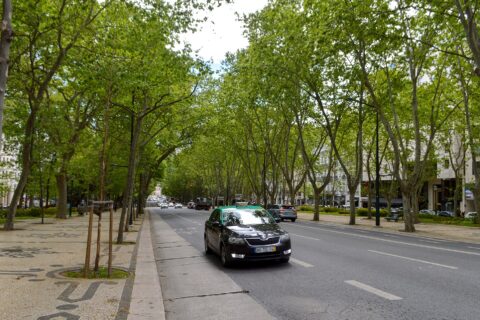
- Shoes with real grip. The calçada pavement — polished limestone set in patterns — becomes genuinely slippery when wet, and Lisbon is all hills. This is the single most important thing on the list, and our walking guide explains why.
- Layers. A t-shirt at two in the afternoon and a jumper at eight in the evening is a normal October day.
- Sunglasses and sunscreen. 196 hours of sun is still a lot of UV, and people underestimate it at 22°C.
- Swimwear, if you are the hardy sort. The sea is 18°C in October, which is only one degree below its August peak.
The full list is on our Lisbon packing list, and the month-by-month weather guide puts October in context against the rest of the year.

What is on in October
The Lisbon Marathon
Run in October, starting in Cascais and following the Tagus into Lisbon — one of the flatter and more scenic big-city marathons, and a genuinely good spectator event along the Belém waterfront. Confirm the exact date with the organisers before booking around it; in 2026 it falls in the first half of the month. If you are not running, expect road closures along the riverfront on race morning.
DocLisboa
Portugal’s main documentary film festival, held in the second half of October across Culturgest and Cinema São Jorge, with a couple of hundred films over ten days. Tickets are cheap by international festival standards and a good number of screenings carry English subtitles. It is one of the better wet-afternoon options in the city.
Moda Lisboa
Lisbon Fashion Week, one of Europe’s longest-running independent fashion weeks, showing the following year’s spring and summer collections. Most of it is trade-facing, but there are public events and the city visibly fills with a certain crowd for a few days.
What is not in October
Web Summit — the 70,000-person tech conference at Parque das Nações — is a November event. It matters here only as a warning: if your trip runs into early November, check the Web Summit dates before booking a hotel, because rates across the city roughly double for that week. Our festivals and events calendar tracks the year.
Crowds and prices
This is October’s real argument. Hotel rates drop noticeably from the start of the month and keep falling; by late October you are paying closer to winter prices than summer ones. Restaurants that needed a booking in August will seat you. Queues at the monuments shrink to something reasonable.
Concretely: at Jerónimos a walk-up in August can mean an hour in the sun; in late October it is usually twenty minutes, and a booked slot is comfortable rather than essential. São Jorge Castle stops being unpleasant at midday. Tram 28 is still crowded — it always is — but survivable outside the middle of the day.
The exception is the first week, which still carries some September momentum, and any weekend with a major event. Our trip cost guide has the seasonal price comparison.
What to do in October
The things that are better now than in summer
- The castle and the miradouros. No shade problem, no heat, and the light is warmer for photographs. Our miradouros guide ranks them.
- Walking the hills. Alfama, Graça and the Bairro Alto are all better at 22°C than at 30°C. See the Alfama guide.
- Sintra. The hilltop palaces are unpleasantly hot and heaving in July; in October they are cool, quiet and often atmospherically misty. Take a layer — Sintra runs several degrees below Lisbon. Our Sintra day trip guide covers the logistics.
- Eating outside at lunchtime, which is genuinely pleasant, unlike August when you want to be indoors.
The things to have in reserve for rain
Nine wet days means you will probably lose part of one. Have a shortlist ready rather than improvising in a doorway:
- The Gulbenkian, which is the best museum in the country and easily a half-day.
- The Oceanarium at Parque das Nações, which is entirely indoors.
- São Roque, free and extraordinary, plus the museums and culture guide for more.
- A long lunch. This is the correct Portuguese response to weather.
Our rainy day guide is built for exactly this.
Beaches in October
Not over. The sea is 18°C — one degree below August — and the first half of the month often gives you beach weather. Costa da Caparica and the Cascais beaches are empty on weekdays and pleasant on a warm afternoon. Lifeguard cover ends after the summer season, so the exposed Atlantic beaches need more caution than in August.
Eating in October
Portuguese food is seasonal in a way that is easy to miss, and October is one of the better months for it.
This is when castanhas — roasted chestnuts — appear on street corners, sold from oil-drum braziers in paper cones. They peak around São Martinho on 11 November but the sellers are out from mid-October, and the smell is one of the honest markers that the season has turned. Chestnuts are traditionally eaten with água-pé or jeropiga, the young fortified wines of the same season.
October is also the start of the game and stew months. Cozido à portuguesa, the enormous boiled meat and vegetable dish that nobody orders in August, comes back onto blackboards. So does caldo verde, the kale and potato soup, in a form thicker than the summer version. Restaurants that serve genuinely seasonal food will have both.
The wine harvest finishes in September and the new wines arrive through the autumn, so October is a good month for tastings — see our wine guide and the wine tasting tours page. Sardines, by contrast, are essentially over: they are a June to September fish and anything grilled in late October is likely frozen. Order something else — our seafood guide covers what is good when.
The practical benefit is the same as everywhere else in October: the restaurants that needed a week’s notice in August will take a same-day booking. Our best restaurants guide and the tascas guide both become genuinely usable this month.
Is October a good time to visit Lisbon?
Yes, and it is the best month for a particular kind of traveller: someone who cares more about cost and crowds than about guaranteed sunshine, and who is happy to have a wet afternoon or two.
Ranked against the rest of the year, we would put October fifth — behind May, September, June and April. May and September both give you October’s temperatures with a third of the rain. But they also cost more and are busier, and if your dates are fixed by school holidays or work, October is a perfectly good hand to be dealt.
Where October beats everything: the combination of low prices, thin crowds and daytime temperatures still in the low twenties does not exist in any other month. November is cheaper but wetter and much darker. April is drier but busier and pricier.
Who should avoid it: anyone travelling specifically for beach weather, and anyone whose trip cannot absorb a lost afternoon. If you have three days and a fixed list of outdoor sights, May or September is the safer bet. Our best time to visit Lisbon guide makes the recommendation by trip type.
Where to stay in October
October is the month when the accommodation calculation changes. In August you take what you can get; in October you can be choosy, and two things are worth being choosy about.
Heating, or at least the absence of damp. Portuguese buildings are built to shed summer heat and most rentals have no central heating. A ground-floor or north-facing apartment in an old building can be genuinely cold and damp by late October. Look for a listing that explicitly mentions heating or air conditioning with a heat setting, and prefer an upper floor.
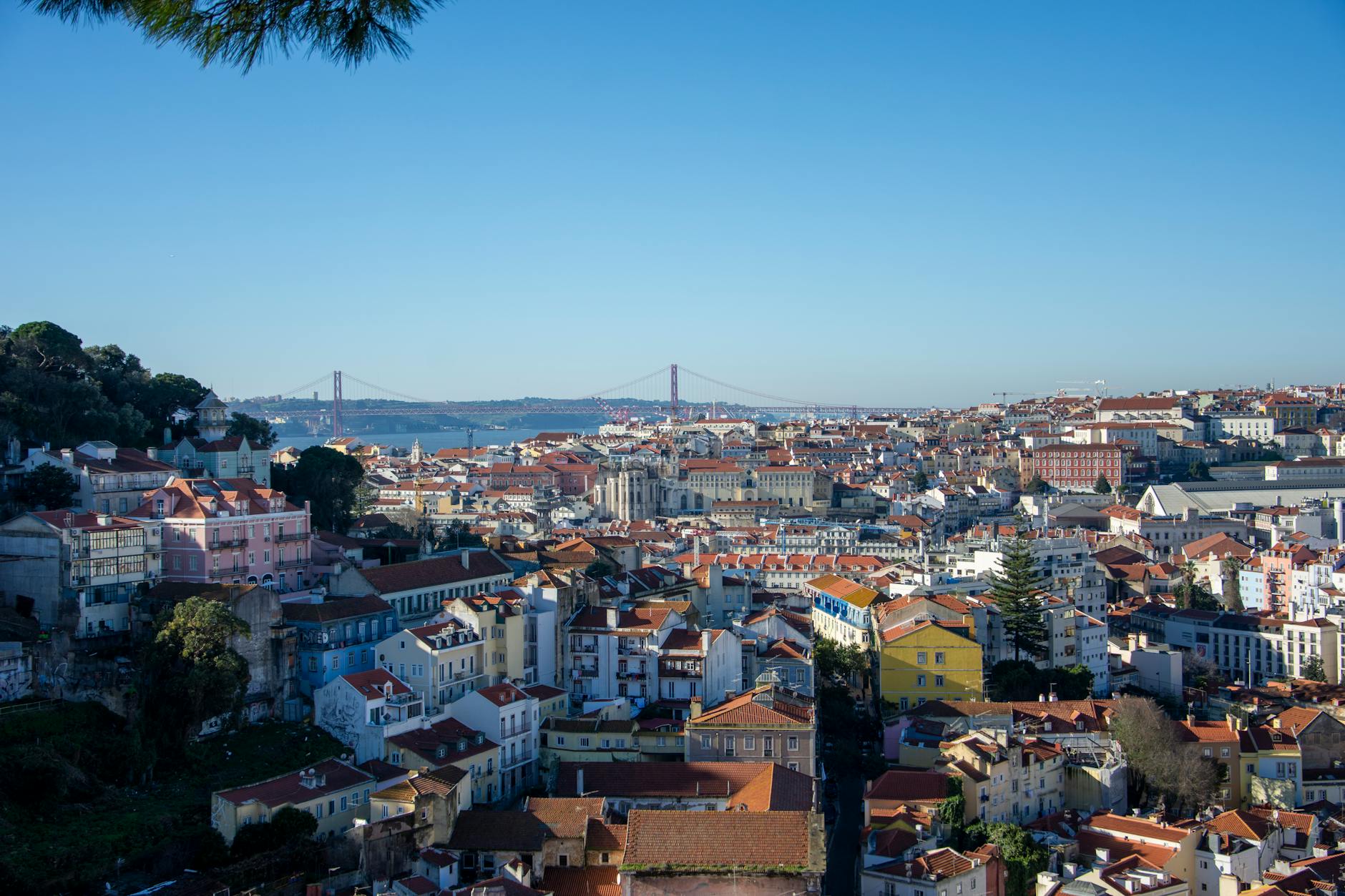
Position on the hill. In summer, staying up in Alfama or Graça means a hot climb home. In October the climb is pleasant, so the calculus flips and the hill neighbourhoods become the better choice — better views, quieter streets, and a walk home that is no longer punishing. Our where to stay guide compares the neighbourhoods.
Rates fall through the month, and last-minute booking becomes viable in a way it is not between June and September. The one exception is any weekend carrying a major event, and the run-up to Web Summit at the start of November.
A four-day October itinerary
Built so the weather-dependent things come first and the indoor options sit in reserve.
Day one — the centre
Baixa, Chiado and the Carmo Convent in the morning, São Roque before lunch. Afternoon in Alfama and up to the castle for the late light.
Day two — Belém
Train from Cais do Sodré, Jerónimos on an early slot, the waterfront to Belém Tower, pastéis de nata. Back by mid-afternoon. This is the day to protect from rain if the forecast is mixed, because most of it is outdoors.
Day three — Sintra
An early train and two sites, no more. October is the best month of the year for Sintra: cool, quiet and often beautifully misty on the hill.
Day four — flexible
If it is fine: cross the river to Cristo Rei in the afternoon and eat fish in Cacilhas. If it is wet: the Gulbenkian, then a long dinner. Our Lisbon itinerary pages have longer and shorter versions.
Frequently asked questions
How warm is Lisbon in October?
The average high is 22.8°C and the average low 15.3°C. Early in the month is often warmer than that; by the end it has usually cooled a few degrees.
Does it rain a lot in Lisbon in October?
More than most visitors expect: about 111 mm across nine wet days, nearly three times September’s total. But the rain tends to come in sharp bursts between bright spells rather than as all-day drizzle.
Can you swim in Lisbon in October?
Yes, if you do not mind cool water. The sea is 18°C, only one degree below its August peak, and the first half of the month often gives beach weather. Lifeguard cover ends after the summer season, so take more care on the exposed Atlantic beaches.
When do the clocks change in Portugal?
On the last Sunday in October, which is 25 October in 2026. Sunset moves back an hour overnight, from around 18:50 to around 17:50.
Is October cheaper than September in Lisbon?
Yes, noticeably. Hotel rates fall through the month and are closer to winter than to summer levels by late October, with restaurants and monuments correspondingly quieter.
What should I wear in Lisbon in October?
Layers, a waterproof jacket rather than an umbrella, and shoes with grip for wet calçada. Add sunglasses — there are still nearly 200 hours of sunshine in the month.
Is Sintra worth doing in October?
It is one of the best months for it. Sintra sits several degrees below Lisbon and is uncomfortable in high summer; in October the queues are short and the hill is often atmospherically misty. Take a warm layer.
Bottom Line
October gives you September’s temperatures at close to winter prices, and charges you about nine wet days for the privilege. If you can pick your dates, take the first half of the month — it is reliably drier and the evenings are still long.
Pack a waterproof and shoes that grip, have two indoor days in reserve, and check whether your trip crosses the last Sunday of the month, because the clock change takes an hour off every evening after it. Do Sintra and the castle while the weather holds, and treat a wet afternoon as an excuse for the Gulbenkian and a long lunch rather than as a lost day.