Museums & Culture
Quake Museum Lisbon: The 1755 Earthquake Experience
What Quake in Belém actually is, what it costs, the simulator restrictions nobody reads until it's too late — and the free version of the same story, standing in the street.
In this guide
The Quake museum Lisbon opened in Belém as something the city had oddly never had: a place that explains the single event that made modern Lisbon what it is. On the morning of 1 November 1755 an earthquake, a tsunami and a five-day fire destroyed most of the city and killed tens of thousands of people. Everything you walk through in Baixa — the grid, the identical façades, the wide straight streets in a city that has none anywhere else — exists because of that morning. Quake is an immersive, ticketed, ninety-minute experience that puts you inside it, and this guide covers what it actually is, what it costs, who it suits, who should avoid it, and whether it beats simply going and standing in the ruins for free.
What Quake actually is
The important thing to understand before you book is that this is not a museum in the sense that the Tile Museum or the Gulbenkian are museums. There are almost no historical objects. It is a guided, timed, multi-room experience built out of video mapping, projection, sound design, set-dressing and a motion simulator — closer in kind to a very good visitor attraction than to a collection.
You are given an RFID bracelet at check-in, put into a group of no more than nineteen people, and taken through a sequence of rooms by a member of staff. The sequence builds: the Lisbon of 1755 before the earthquake, the event itself in the simulator, the aftermath and the rebuilding under the Marquês de Pombal, and then a wider scientific section about seismology, plate tectonics and modern earthquakes, including a room devoted to Tohoku and one to San Francisco.
It takes about an hour and a half. You cannot wander off and do it at your own pace; the group moves together, which is either reassuring or constraining depending on how you like to visit things.
The story the museum is telling
It helps to arrive knowing roughly what happened, because the experience assumes some of it.
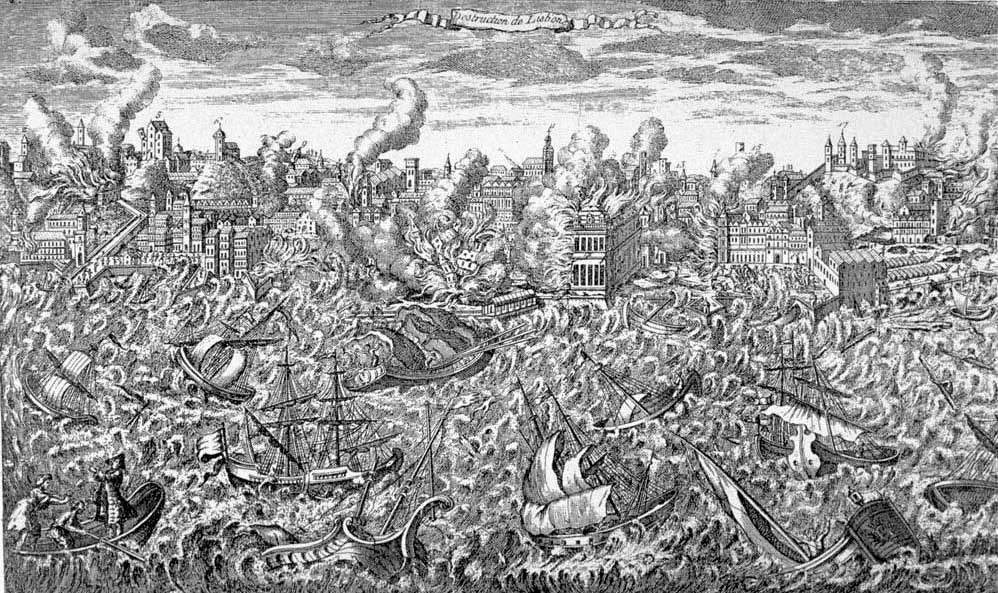
It was All Saints’ Day, a Saturday, and the churches were full — candles lit, congregations at morning mass. The first shock struck at around half past nine in the morning and lasted, by contemporary accounts, several minutes. The epicentre was offshore in the Atlantic, southwest of Cape St Vincent; modern estimates put the magnitude somewhere around 8.5 to 9.0, which would make it one of the largest earthquakes ever recorded in Europe. It was felt across the Iberian peninsula, in North Africa and as far north as Scandinavia.
Then came the two things that did most of the killing. Survivors ran for open ground, and the largest open ground in Lisbon was the riverfront — where, roughly forty minutes later, the tsunami arrived, several waves of it, sweeping up the Tagus and through the lower town. Behind it, the candles and overturned kitchen fires became a fire that burned for the best part of a week and consumed what the water had not. Estimates of the death toll in the city vary enormously and always will; the range usually given runs from about twelve thousand to fifty thousand people, out of a population of perhaps two hundred thousand. Nobody counted properly, and anyone quoting a precise figure is inventing it.
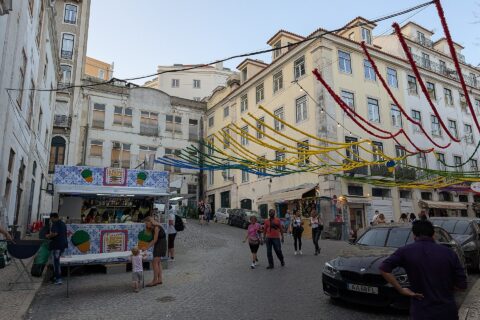
What happened next is the part that makes it more than a disaster story. The king, José I, was so shaken that he refused to sleep indoors again; effective power passed to his chief minister, the Marquês de Pombal, whose reported instruction — bury the dead and feed the living — became the most famous sentence in Portuguese history. Pombal cleared the rubble, controlled the price of food, hanged looters, and then rebuilt the lower town from nothing on a rectangular grid with standardised façades and a timber lattice inside the walls, the gaiola pombalina, designed to flex in a tremor rather than shatter. It is generally regarded as the first serious attempt at earthquake-resistant construction anywhere in Europe.
He also did something quietly remarkable: he sent every parish in the country a questionnaire asking how long the shaking lasted, which way it moved, what the animals did, how the wells behaved. The answers are still in the archives, and they are why the 1755 earthquake is often called the beginning of modern seismology. And in the wider intellectual world the disaster detonated a theological argument that ran for decades — Voltaire wrote a poem about it and then Candide, Rousseau wrote back, and the comfortable idea that everything happens for the best did not entirely survive the encounter. Our full account is in the 1755 Lisbon earthquake guide.
The practical details
- Address: Rua Cais da Alfândega Velha 39, 1300-598 Lisboa — on the riverside in Belém, a short walk from the Coach Museum and about ten minutes from Jerónimos.
- Open: daily, 10:00 to 18:00. The last session begins at 18:00 and there is no entry after it.
- Duration: roughly 1 hour 30 minutes, start to finish.
- Languages: Portuguese, English, Spanish and French.
- Group size: maximum nineteen, accompanied by staff throughout.
- Getting there: tram 15E from Praça da Figueira or Cais do Sodré, or the train from Cais do Sodré to Belém. See the Belém guide for how to string the district together in one day.
Tickets and price
Quake does not publish its prices on its public pages — they sit behind the booking module — so we will not print a figure as though it were official. What resellers and aggregators consistently report is an adult ticket around €27.50, children aged 6–12 from about €14.50, free entry for under-6s who cannot use the simulator, and concessions for students and over-65s. Check the actual price at the point of booking; do not budget from a blog, including this one.
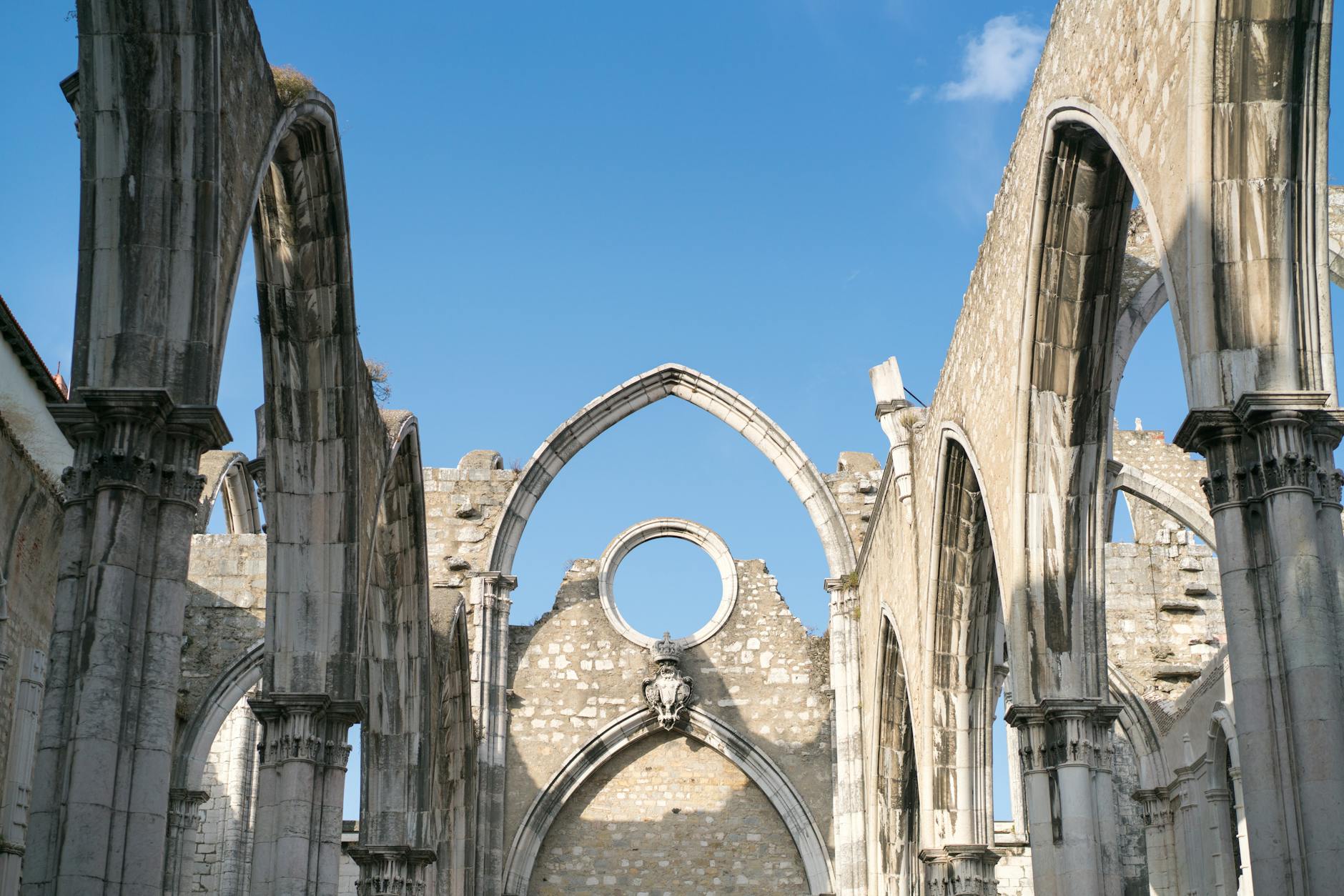
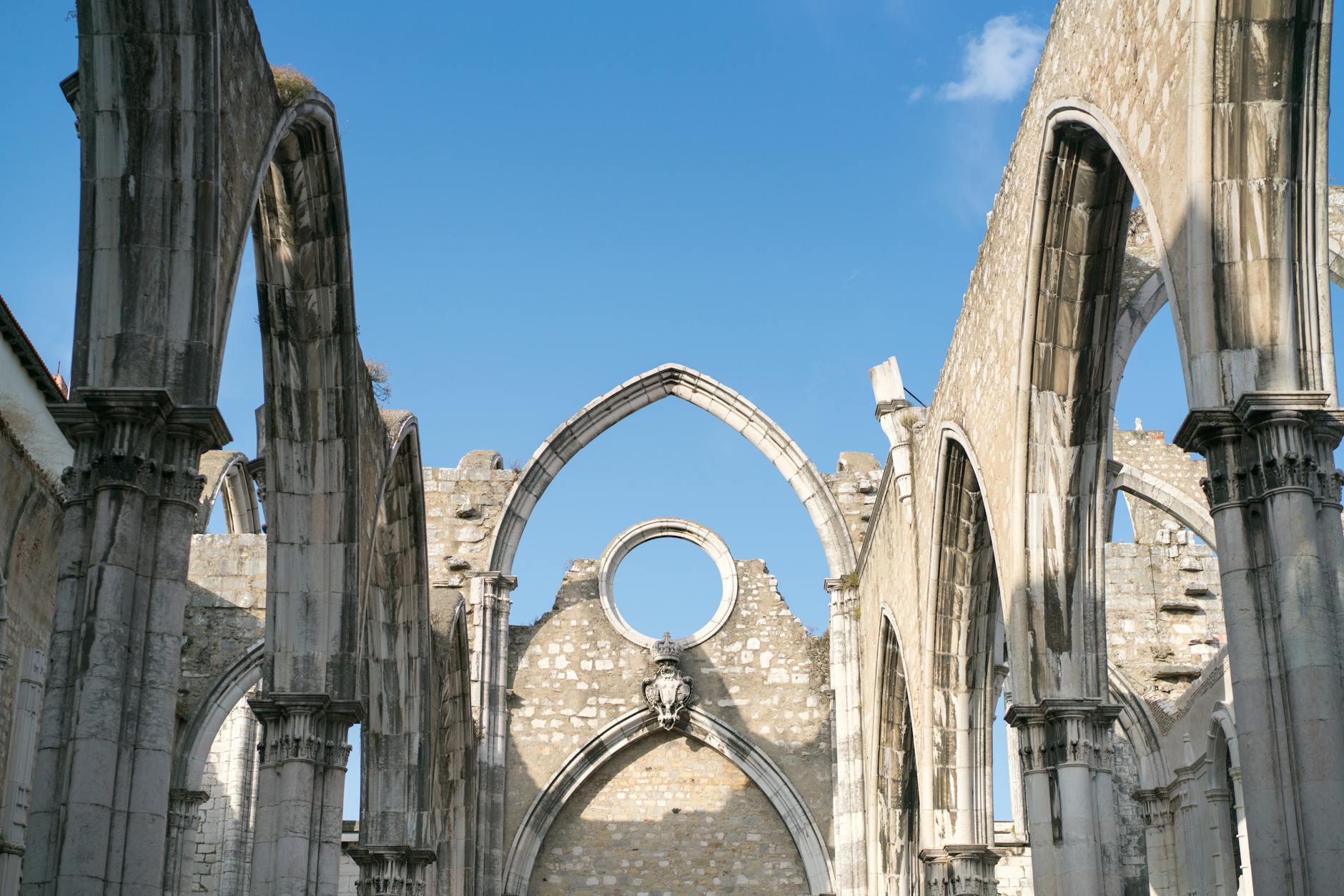
At that level it is one of the more expensive tickets in the city — comparable to the zoo, well above the Oceanarium, and many times the €7 you pay to walk into the roofless nave of the Carmo Convent, which is the actual ruin. That comparison is the crux of whether Quake is worth it, and we come back to it below.
Book ahead. Sessions are timed and capped at nineteen people, which means a walk-up on a wet Saturday in Belém can easily find the next three slots gone. Booking online also lets you slot it into a Belém day rather than building the day around it.
Restrictions you need to know before you book
This is the section most people skip and then regret, because the simulator has real limits.
- Children under six are not permitted on the simulator. They can enter the museum free, but the centrepiece is closed to them, which changes the value calculation substantially for families with small children.
- Not recommended for pregnant visitors, people with heart conditions, or visitors with reduced mobility. There is a viewing area that lets you watch without going on the moving platform.
- The Tohoku Room and the San Francisco simulator are not accessible to visitors with reduced mobility. The building as a whole was designed with accessibility in mind, but adaptations are needed and the museum asks you to email [email protected] before booking so they can arrange them.
- It is loud and dark. That is the point, and it is also why it does not suit everyone — anxious children, sensory sensitivities and a fear of enclosed spaces are all real considerations here.
Our accessibility guide has the broader picture for a city that is, being honest, hard work on wheels.
Is Quake worth it?
Our verdict, plainly: Quake is very well made and it is expensive, and whether it is worth it depends almost entirely on whether you would otherwise learn this story at all.
Yes, if…
- You are travelling with children roughly aged eight to fourteen. This is the audience it is built for and it lands squarely. The simulator is genuinely exciting and the science section is pitched well for that age.
- You want the 1755 story and will not read a book about it. It is a far better hour and a half than most guided tours, and you come out understanding why Baixa looks the way it does.
- It is raining. Belém on a wet day is a hard place to be, and this is indoors, warm and timed.
- You are already spending a full day in Belém and want something that is not another monastery.
No, if…
- You want history in the form of actual objects. There is very little here that is old. If that is what you came for, the museums guide will serve you better and cheaply.
- Your budget is tight. Two adults and two children is roughly €85 for ninety minutes. The 1755 earthquake story is legible for free by walking Baixa and paying €7 at the Carmo Convent.
- Your children are under six. They cannot use the simulator, and without it you are paying a lot for projections.
- You have two days in Lisbon. It does not make the cut. See the two-day itinerary for what does.
- You dislike being moved through a fixed sequence. There is no free-roaming; you go at the group’s pace throughout.
The free version, and why it is genuinely good
If you decide against the ticket, the earthquake is still one of the most legible stories in Lisbon, because the evidence is standing in the street.
- The Carmo Convent. The nave lost its roof on 1 November 1755 and was deliberately never rebuilt. Standing under those open Gothic arches with the sky where the vault should be does more in five minutes than most museums manage in an hour. €7.
- Baixa Pombalina. Walk from Praça do Comércio to Rossio and notice that the streets are straight, the buildings the same height, the façades identical. That is Europe’s first large-scale earthquake-resistant urban plan, built on a timber cage — the gaiola pombalina — designed to flex rather than snap. Nothing else in Lisbon is laid out like it.
- Alfama. The reason it is a maze of medieval lanes is that it largely survived, sitting on rock rather than the alluvial ground of the lower town. Walking from Alfama straight into Baixa is the clearest lesson in the whole city.
- The Sé and the Igreja de São Domingos. The cathedral was badly damaged and rebuilt; São Domingos, off Rossio, still carries the scorching of the fire on its interior stone and has been left that way.
Do that walk and then decide whether you want the ninety minutes and the simulator on top. Plenty of people will, and they will not feel cheated.
Fitting it into a Belém day
Belém is a half-day to a full day, and Quake’s timed sessions make it the fixed point to build around. A workable order: the Jerónimos Monastery first thing at 09:30 before the queue, pastéis de nata, the Belém Tower from the outside, lunch, then an afternoon Quake session, and the MAAT or the riverside walk afterwards. That is a full day and a good one.
Do not try to combine it with Sintra. People do, and it does not work — see the Sintra day trip guide for why that day is already full.
Frequently asked questions
How much does Quake Lisbon cost?
The museum does not publish its prices publicly. Aggregators consistently report about €27.50 for an adult and from around €14.50 for children aged 6–12, with under-6s free and concessions for students and over-65s. Confirm the price at the booking stage.
How long does Quake take?
About an hour and a half. It is a guided sequence with a fixed pace, so you cannot speed it up or linger.
What are Quake’s opening hours?
Daily from 10:00 to 18:00, with the last session starting at 18:00. Nobody is admitted after that.
Is Quake suitable for young children?
Children under six are not allowed on the simulator, which is the main attraction, though they can enter free. It works best for children of about eight and up. It is also dark and loud, which suits some children and not others.
Is Quake wheelchair accessible?
Partly. The building was designed to accommodate reduced mobility but requires adaptations, and the Tohoku Room and San Francisco simulator are not accessible. Email the museum before booking so arrangements can be made.
What language is Quake in?
Portuguese, English, Spanish and French. Check which language your session runs in when you book, because sessions are scheduled by language.
Is Quake better than visiting the Carmo Convent?
They do different things. The Carmo is the actual ruin, costs €7 and takes forty minutes; Quake explains the event, costs around €27.50 and takes ninety. If you can only do one, do the Carmo — and if the story grips you, add Quake.
Do I need to book Quake in advance?
Yes, particularly at weekends and in bad weather. Sessions are timed and capped at nineteen people, and popular slots go.
Where exactly is Quake?
Rua Cais da Alfândega Velha 39, on the riverfront in Belém. Tram 15E or the Cascais-line train from Cais do Sodré both get you there in about twenty minutes.
Bottom Line
Quake is a polished, well-designed immersive attraction about the event that built modern Lisbon, and it is the best ninety minutes in the city for a curious eleven-year-old. It is also around €27.50 a head for something with almost no historical objects in it, in a city where the ruins themselves are standing in the open and the Carmo Convent costs €7. Book ahead, check the language of your session, and read the simulator restrictions properly if you are pregnant, have a heart condition, use a wheelchair or are travelling with an under-six. Then walk Baixa afterwards and look at the straight streets — that is when the whole thing lands.