Things to Do in Lisbon
Things to Do in Lisbon: 50+ Best Attractions & Activities (2026)


In this guide
- Iconic Landmarks and Historic Monuments
- Best Viewpoints in Lisbon (Miradouros)
- Exploring Lisbon’s Historic Neighborhoods
- Iconic Transport Experiences
- Museums and Cultural Attractions
- Food and Drink Experiences
- Squares, Parks, and Public Spaces
- Hidden Gems and Unique Things to Do in Lisbon
- Free Things to Do in Lisbon
- Things to Do in Lisbon with Kids
- Nightlife and Evening Activities
- Day Trips from Lisbon
- Practical Tips for Sightseeing in Lisbon
- Start Planning Your Lisbon Adventure
Lisbon rewards walkers. The city spreads across seven hills above the Tagus, and the best of it — the viewpoints, the tiled façades, the custard-tart counters, the fado bars in Alfama — reveals itself on foot. This guide covers 50+ things to do in Lisbon, sorted so you can build a day that actually flows instead of zig-zagging across town. Prices, hours, and transport are updated for 2026.
A morning in the Atlantic is one of the easiest things to add to a Lisbon trip: our surfing near Lisbon guide has the beaches, the schools and the prices.
Lisbon has no beach of its own and about a hundred kilometres of them within an hour — our guide to the beaches near Lisbon covers all four coasts, with train fares and journey times.
With young children in tow, the zoo at Sete Rios fills a whole day and includes a cable car — our Lisbon Zoo guide has tickets, hours and an honest verdict on the price.
A good half of what Lisbon is best at happens after the sun goes down — our guide to Lisbon at night covers sunset viewpoints, what stays open late, and how to get home once the metro stops.
One of the few things Lisbon does at world level barely appears on most lists. Our football in Lisbon guide covers Benfica, Sporting, match tickets and the two stadium tours.
If you would rather work through the monuments in one place, our guide to Lisbon’s landmarks and monuments prices every church, castle and square in the city and says plainly which tickets are worth buying.
From the cobblestoned lanes of Alfama to the futuristic Parque das Nações, from iconic landmarks like São Jorge Castle and the Jerónimos Monastery to the National Azulejo Museum and the creative warehouses of Marvila, we have organized everything into clear categories so you can plan your perfect Lisbon itinerary. Each listing includes practical tips on prices, hours, and how to get there, updated for 2026.
Iconic Landmarks and Historic Monuments
Lisbon’s skyline is defined by centuries of history — Moorish fortifications, Manueline masterpieces, earthquake-era rebuilds. These are the city’s essential historical sites for any first visit.
1. São Jorge Castle (Castelo de São Jorge)
Perched atop Lisbon’s highest hill, São Jorge Castle has watched over the city for more than a millennium. Originally a Moorish fortification, the castle was taken by Portugal’s first king, Afonso Henriques, in 1147. The ramparts offer the finest panoramic views in Lisbon — terracotta rooftops stretching to the Tagus River and the Cristo Rei statue beyond. Allow at least 90 minutes for the archaeological site, the Camera Obscura in the Tower of Ulysses, and the shaded gardens where peacocks roam freely. Tickets cost around €15 for adults. Arrive right at 9 AM opening or after 5 PM to beat the worst queues.
2. Jerónimos Monastery (Mosteiro dos Jerónimos)
The Jerónimos Monastery in Belém is Portugal’s greatest architectural statement and has been a UNESCO World Heritage Site since 1983. Commissioned by King Manuel I to celebrate Vasco da Gama’s sea route to India, the monastery is a Manueline tour de force — lavishly carved limestone columns, ribbed vaulted ceilings, maritime motifs on every surface. Inside the church: the ornate tombs of Vasco da Gama and the poet Luís de Camões. The church itself is free to enter; the cloister requires a ticket. Expect to spend one to two hours here; weekday mornings have thinner crowds.
3. Belém Tower (Torre de Belém)
Standing guard on the north bank of the Tagus, the Belém Tower is Lisbon’s most photographed monument. Built between 1514 and 1520 as a ceremonial gateway and defensive fortification, this UNESCO World Heritage Site packs extraordinary Manueline and Moorish detail into a compact package — intricate rope carvings, Cross of Christ battlements, and an iconic rhinoceros gargoyle. Note for 2026 visitors: the tower has been undergoing restoration and interior access may be limited — check the official DGPC website before your visit. The surrounding waterfront promenade is worth the walk regardless, connecting toward the Monument to the Discoveries.
4. Monument to the Discoveries (Padrão dos Descobrimentos)
This 52-meter limestone monument on the Belém waterfront was originally built in 1940 and reconstructed in 1960 to honor the Portuguese Age of Discovery. The prow-shaped structure carries 33 figures — navigators, cartographers, missionaries, monarchs — with Prince Henry the Navigator at the prow. Take the elevator to the rooftop terrace for river views and look down at the giant compass rose and world map mosaic in the plaza. Admission around €10; combined tickets with other Belém attractions save money.
5. Lisbon Cathedral (Sé de Lisboa)
The oldest church in the city, the Sé de Lisboa has stood on this spot since 1147 — nine centuries of earthquakes, fires, and renovations have all left marks. Its fortress-like Romanesque exterior gives way to a quieter Gothic interior. The highlight is the cloister, where active archaeological digs have uncovered Roman, Visigothic, and Islamic-era remains. Cathedral entry is free; the cloister and treasury carry a small fee. Easily reached on foot from Alfama or off Tram 28.
6. Carmo Convent (Convento do Carmo)
The 1755 earthquake destroyed Carmo Convent and it was never rebuilt. That incompleteness is the point: the roofless nave, Gothic arches open to the sky, functions as an accidental monument to the disaster. It now holds a small archaeological museum. Positioned in Chiado at the top of the Santa Justa Elevator, it slots neatly into a Baixa-to-Bairro Alto walk. Entry around €5.
Best Viewpoints in Lisbon (Miradouros)
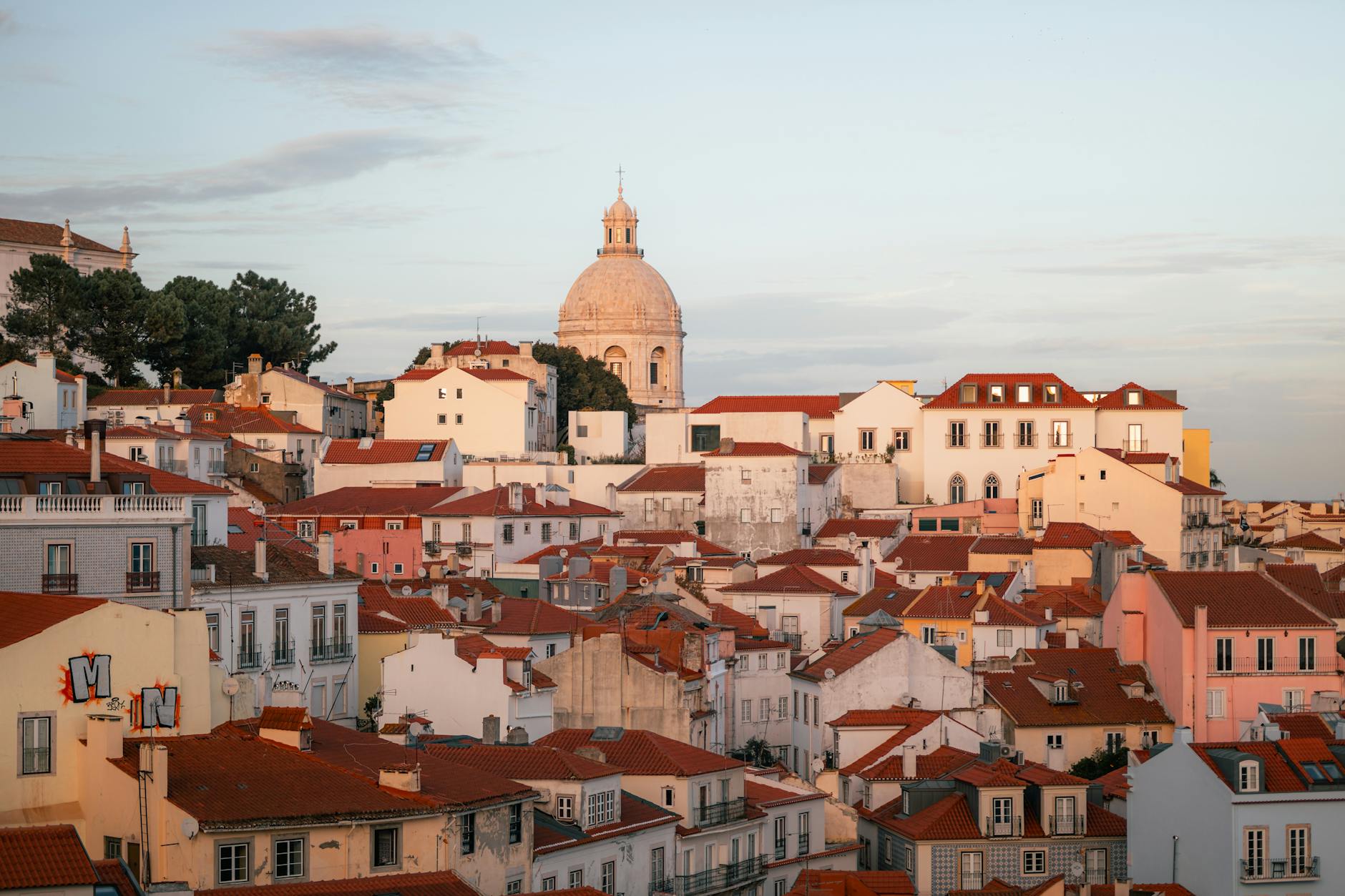
Built on seven hills, Lisbon has a miradouro (viewpoint) at every turn. They’re free, they’re social, and at golden hour they’re some of the finest things to do in Lisbon. Here are the best ones.
7. Miradouro da Senhora do Monte
The highest viewpoint in the city. Senhora do Monte delivers a sweeping 360-degree panorama: São Jorge Castle, the Tagus, the 25 de Abril Bridge, the hills of Graça and Alfama. One of the quieter miradouros, particularly good at sunset when locals arrive with wine. Short uphill walk from the Graça tram stop.
8. Miradouro da Graça
Just below Senhora do Monte, the Graça viewpoint sits beside the Convento da Graça with a café terrace shaded by pine trees. The views toward the castle and downtown are sharp, and the crowd here runs more local than tourist. A good mid-morning coffee stop.
9. Miradouro de Santa Luzia
This bougainvillea-covered terrace in upper Alfama is Lisbon’s most photogenic viewpoint. Azulejo panels on the walls depict pre-earthquake Lisbon and the Christian reconquest; the terrace looks out over Alfama’s red rooftops toward the river. Right on the Tram 28 route — convenient and consistently excellent.
10. Miradouro de São Pedro de Alcântara
At the top of the Glória funicular in Bairro Alto, this terraced garden puts São Jorge Castle directly in front of you — particularly good when the castle is lit at dusk. An illustrated tile map identifies the landmarks on the horizon. There’s usually a drinks kiosk; this is a good place to linger.
11. Miradouro de Santa Catarina (Adamastor)
The more social option. Santa Catarina — known locally as Adamastor after the mythological statue — overlooks the 25 de Abril Bridge and river. Street musicians, craft beer, a mixed crowd of locals and visitors. On warm evenings it feels more like a neighbourhood gathering than a tourist stop.
Exploring Lisbon’s Historic Neighborhoods
Some of the best things to do in Lisbon require no entrance ticket. Each bairro has its own personality, architecture, and rhythm; simply walking through them is worth your time.
12. Alfama
Lisbon’s oldest neighborhood survived the 1755 earthquake largely intact, and its Moorish-era street plan — a labyrinth of steep staircases, covered alleyways, and tiny squares — is still there. Stow your map and get lost among tile-fronted houses draped with laundry, stopping at hole-in-the-wall tascas for ginjinha (cherry liqueur). Alfama is the spiritual home of fado; you’ll hear it drifting from restaurants most evenings. Key sights: the cathedral, the Fado Museum, the National Pantheon, the Feira da Ladra flea market (Tuesday and Saturday mornings).
13. Belém
Lisbon’s monumental riverside district, west of the center. The Jerónimos Monastery, Belém Tower, the Monument to the Discoveries, and the MAAT museum are all here, within a walkable stretch of waterfront. Beyond the landmarks: Pastéis de Belém bakery (custard tarts from a secret recipe since 1837), the Jardim de Belém tropical gardens, and the Coaches Museum. Budget at least half a day; consider the Lisboa Card for free entry to most sites.
14. Bairro Alto and Chiado
By day, Bairro Alto is quiet — crumbling townhouses, vintage shops, cats on doorsteps. By night it’s a different city: dozens of small bars fill the streets until 2 AM. Adjacent Chiado is more polished, with elegant theatres, the historic Bertrand bookshop (founded 1732, among the world’s oldest), upscale boutiques, and A Brasileira café where Fernando Pessoa famously held court. Together they form Lisbon’s creative and social core.
15. Mouraria
Mouraria takes its name from the Moors who settled here after the Christian reconquest. Today it’s a patchwork of cultures — Chinese grocers beside Bangladeshi restaurants beside traditional Portuguese tascas, street art on every corner, community vegetable gardens on rooftops. Mouraria is also considered fado’s true birthplace, predating even Alfama’s claim. The gentrification wave is visible but a raw, working energy persists. One of the most interesting neighborhoods to explore on foot.
16. Príncipe Real
A leafy, upscale neighborhood above Bairro Alto. The centerpiece is the Jardim do Príncipe Real, shaded by an enormous centuries-old cypress tree, where weekend markets sell organic produce, artisan crafts, and vintage clothing. The surrounding streets hold independent design studios, brunch spots, wine bars, and some of the city’s best boutique hotels. Good for a relaxed afternoon of wandering.
Iconic Transport Experiences
Lisbon’s hills prompted some creative engineering in the 19th century. Many of those original solutions — trams, funiculars, elevators — still run today and have become attractions in their own right.
17. Ride Tram 28
The complete Tram 28 route guide route is one of the most popular things to do in Lisbon, and it earns that. These vintage wooden trams — barely wider than a golf cart — screech and rattle through the city’s steepest, narrowest streets, passing São Jorge Castle, the cathedral, Alfama, Graça, and Bairro Alto. The full route takes about 40 minutes one way. A single journey costs €3.10 paid on board, or €1.65 with a loaded Viva Viagem card. Pro tip: board at the Martim Moniz terminus for the best seat odds; ride early morning or late afternoon to avoid peak crowds and pickpockets.
18. Santa Justa Elevator (Elevador de Santa Justa)
This neo-Gothic iron elevator, designed by Raul Mesnier du Ponsard (an apprentice of Gustave Eiffel), has been running between Baixa and the Carmo Convent since 1902. The Santa Justa Elevator rises 45 meters; the top platform has 360-degree views over downtown Lisbon. Included with the Lisboa Card, otherwise around €5.30 return. Summer queues can be very long — an insider alternative is to access the upper viewing platform from the Carmo side and pay just the small terrace fee.
19. Historic Funiculars
Three funicular railways — the Glória, Bica, and Lavra — have hauled passengers up Lisbon’s steep gradients since the late 1800s. The Elevador da Bica has a postcard-perfect river view framed between pastel buildings. The Elevador da Glória connects Restauradores to Bairro Alto and the São Pedro de Alcântara viewpoint. Each ride takes about three minutes and costs a couple of euros. All three are covered by the 24-hour public transport pass.
Museums and Cultural Attractions
Lisbon punches well above its weight for museums, covering everything from 15th-century azulejo tiles to cutting-edge contemporary art. Many offer free admission on the first Sunday of each month or on Sunday afternoons.
20. National Azulejo Museum (Museu Nacional do Azulejo)
Housed in the 16th-century Madre de Deus Convent, this museum traces the history of Portugal’s azulejo tiles from Moorish geometric patterns to contemporary designs. The highlight is a stunning 23-meter tile panorama of pre-earthquake Lisbon. Entry around €5; the cloister alone is worth the visit. Located slightly east of the center in Xabregas — bus 794 from Santa Apolónia station.
21. Calouste Gulbenkian Museum
One of Europe’s finest private art collections: Egyptian antiquities, Greek coins, Islamic ceramics, Impressionist paintings, René Lalique jewelry — all amassed by Armenian oil magnate Calouste Gulbenkian. The separate Modern Collection building next door covers Portuguese and international art from the 20th and 21st centuries. Tranquil gardens surround both buildings. Free on Sundays after 2 PM.
22. MAAT (Museum of Art, Architecture and Technology)
Amanda Levete’s undulating, tile-clad MAAT building on the Belém waterfront is an instant Lisbon landmark. Inside, rotating exhibitions explore art, science, and technology. Even skipping the galleries, walking the building’s rooftop is free and delivers sweeping river views. Admission around €9, free on the first Sunday of each month.
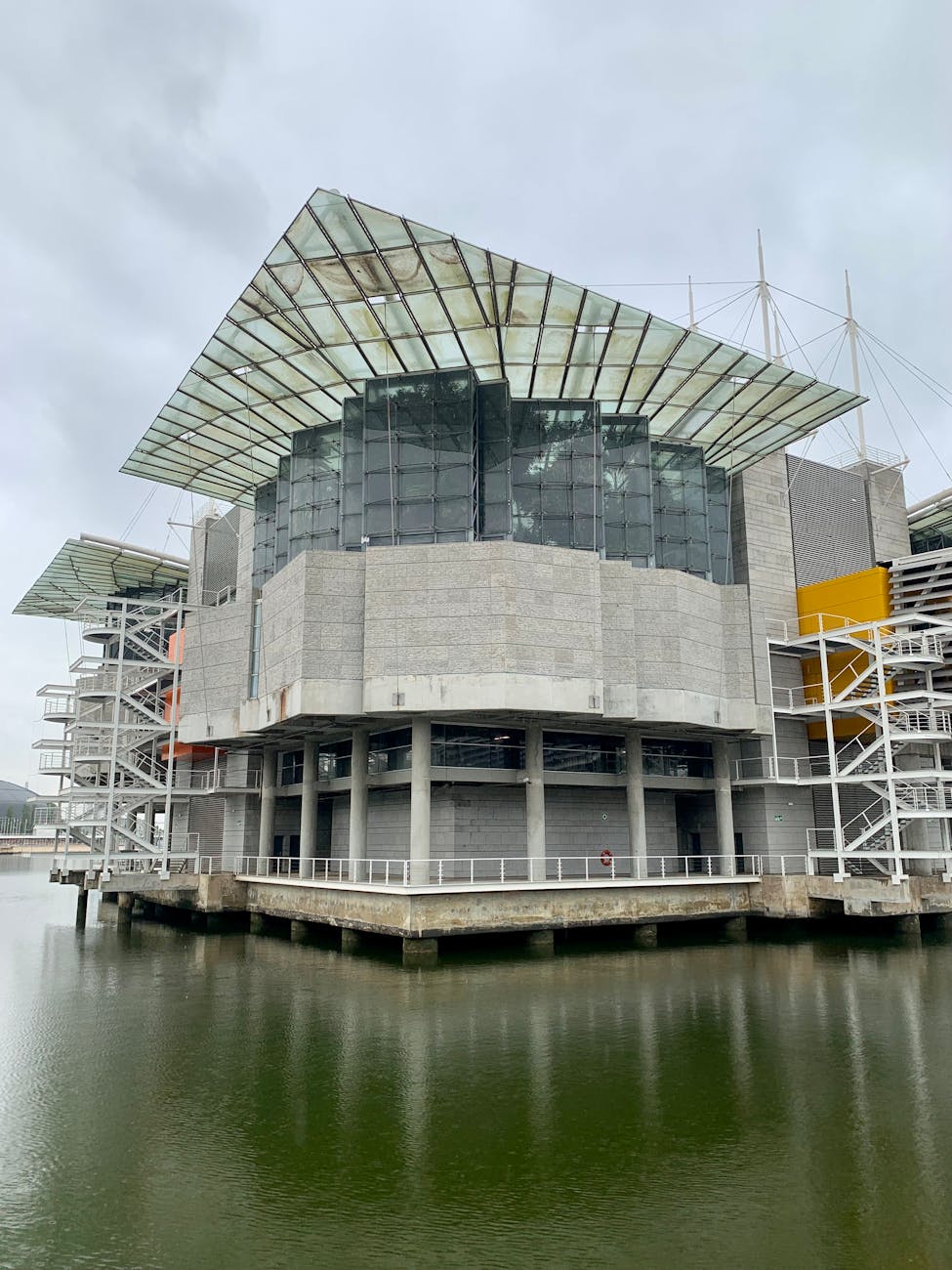
23. Lisbon Oceanarium (Oceanário de Lisboa)
One of the largest indoor aquariums in Europe, in Parque das Nações, with more than 8,000 marine creatures across 500 species and four ocean habitat zones. The central tank — sharks, rays, a sunfish drifting past — is genuinely impressive. The top family attraction in the city. Book online to skip the queue; around €25 adult, €17 children.
24. National Coach Museum (Museu dos Coches)
Located in Belém, this museum holds one of the world’s finest collections of historical carriages and royal vehicles from the 17th to 19th centuries. The lavishly gilded coaches of the Portuguese and Spanish royal families are extraordinary, displayed in a spacious modern building opened in 2015. A natural addition to any Belém day.
25. Fado Museum (Museu do Fado)
In the heart of Alfama, the Fado Museum tells the story of Portugal’s distinctive musical tradition from its 19th-century origins to its UNESCO Intangible Cultural Heritage status. Interactive exhibits let you listen to legendary performers like Amália Rodrigues and Mariza. Entry around €5; ideal preparation before a live fado evening in one of Alfama’s small venues.
Food and Drink Experiences
Lisbon’s food scene blends centuries-old culinary traditions with a sharp contemporary dining culture. These gastronomic things to do in Lisbon are essential.

26. Taste Pastéis de Nata at Pastéis de Belém
Portugal’s most famous pastry — the pastel de nata — reaches its peak at Pastéis de Belém, a bakery using the same secret recipe since 1837. Crisp flaky shells, warm caramelized custard, baked continuously through the day. The queue often stretches down the block but moves fast. Eat yours warm at the counter, dusted with cinnamon and powdered sugar. The tart is available all over the city, but the original is a Lisbon rite of passage.
27. Explore Time Out Market (Mercado da Ribeira)
Lisbon’s most famous food hall occupies one wing of the 19th-century Ribeira market near Cais do Sodré station. Curated stalls represent some of the city’s top chefs — Michelin-level seafood, gourmet burgers, Azorean steaks, artisan gelato, wine by the glass. Communal tables, always full. Go after 2 PM to avoid the worst queues. The surrounding Cais do Sodré and Pink Street district turns over into a bar quarter after dark. The traditional market side — fresh fruit, flowers, fish — operates mornings and is worth exploring too.
28. Take a Food Walking Tour
A guided food tour early in your trip is one of the smartest investments you can make. Operators like Eating Europe and Devour Tours take small groups through Mouraria, Campo de Ourique, and Alfama, stopping at family tascas, bakeries, and wine bars. Expect bacalhau, presunto, bifana, fresh seafood, and local wines — plus the stories behind them. Our Lisbon food tours guide compares the main operators. Most tours run three to four hours at around €80 to €100 per person including tastings.
29. Drink Ginjinha at A Ginjinha
This hole-in-the-wall bar near Rossio Square has been pouring ginjinha — a sweet cherry liqueur — since 1840. The entire bar is barely the size of a wardrobe; a shot costs €1.50. Order “com elas” (with the cherries) for the full experience. It takes five minutes, costs almost nothing, and is entirely Lisbon.
30. Browse Mercado de Campo de Ourique
Time Out Market draws the tourists; this neighbourhood market in Campo de Ourique is where locals actually eat. Operating since the 1930s, the renovated market hall combines traditional produce stalls with modern counters serving everything from sushi to petiscos (Portuguese tapas). Easily reached on Tram 28; pairs well with a stroll through the surrounding streets. See our roundup of Lisbon’s best markets for the rest.
Squares, Parks, and Public Spaces
Lisbon’s grand squares and green spaces are where the city breathes — good for people-watching, picnicking, or taking a break between monuments.
31. Praça do Comércio
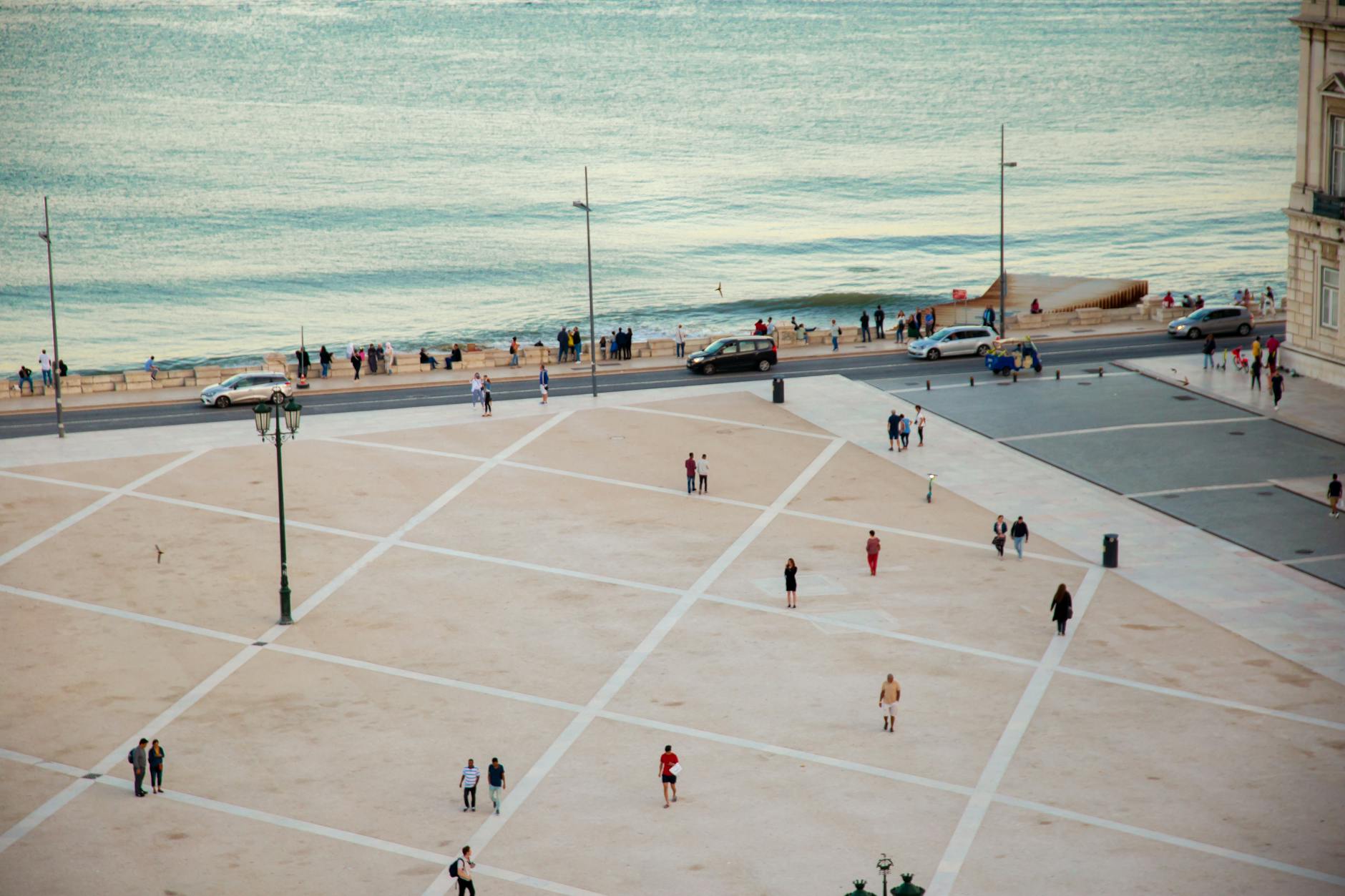
Lisbon’s largest square opens directly onto the Tagus and was once the site of the royal palace before the 1755 earthquake. The Praça do Comércio is flanked by Pombaline-yellow arcaded buildings; the triumphal Arco da Rua Augusta provides the ceremonial entrance from Baixa. Climb the arch for elevated views (around €3), visit the Lisbon Story Centre, or sit at a waterfront café and watch the ferries cross the river.
32. Rossio Square (Praça de Dom Pedro IV)
Rossio has been the city’s central gathering point for over 500 years — a marketplace, a bullring, the site of public executions. Today it’s a pedestrian space ringed by cafés (including the ornately decorated Café Nicola), with a column topped by a statue of King Pedro IV and twin Baroque fountains imported from Paris. The wave-patterned calçada underfoot is one of Lisbon’s small pleasures.
33. Edward VII Park (Parque Eduardo VII)
Lisbon’s largest central park extends from the top of Avenida da Liberdade up to a viewpoint looking all the way down the boulevard to the river. The park’s real draw is the Estufa Fria (Cold Greenhouse) — a botanical garden built into a former quarry, filled with tropical plants, waterfalls, and koi ponds. Entry is just €3.25 and it’s one of the better-kept secrets in the city, especially useful as a cool escape on a hot afternoon.
34. Jardim da Estrela
Across from the grand Basílica da Estrela, this 1852 garden has a wrought-iron bandstand, duck ponds, centuries-old trees, and a good café. Popular with local families; a peaceful retreat from the touristy center. Combine it with the basilica, which offers free entry and a rooftop terrace with panoramic views for a small fee.
Hidden Gems and Unique Things to Do in Lisbon
Beyond the main attractions, Lisbon rewards curious visitors with a layer of unexpected experiences. These are the finds that make the difference between a good trip and one you’ll describe for years.
35. LX Factory
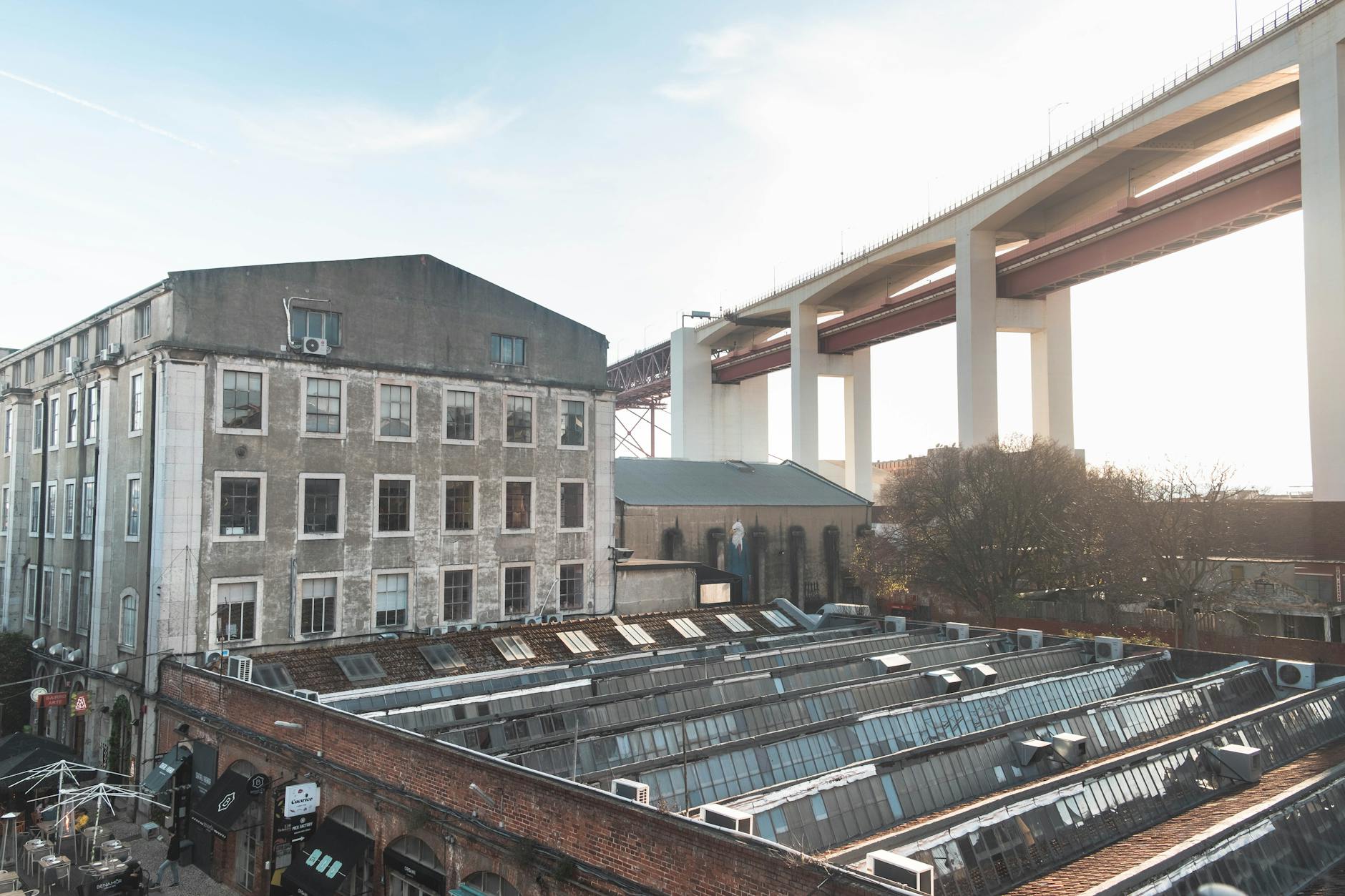
A converted 19th-century industrial complex under the 25 de Abril Bridge. Former textile factory buildings now hold independent bookshops (including the spectacular Ler Devagar, with a flying bicycle suspended above the shelves), street art galleries, design studios, vintage stores, craft breweries, and some of Lisbon’s most inventive restaurants. Weekend markets and live events fill the calendar. Free to wander; a good half-day.
36. Palácio da Ajuda
Routinely overlooked by visitors heading straight for Belém’s UNESCO sites, the neoclassical Royal Palace of Ajuda is one of Lisbon’s most opulent interiors. Lavishly decorated state rooms, a gold-leaf throne room, an exceptional decorative arts collection. Short uphill walk from Belém; rarely crowded. Admission around €5.
37. Explore the Street Art of Mouraria and Marvila
Lisbon has become one of Europe’s leading street art cities, with major works by Vhils, Bordalo II, and Pantonio across building facades citywide. Mouraria and Marvila are the richest hunting grounds. Walking tours led by local artists can be arranged through Underdogs Gallery. The murals change — a reason to come back.
38. Paint Your Own Azulejo Tiles
Several workshops across Lisbon offer hands-on azulejo tile painting — you learn traditional techniques and leave with a tile. Sant’Anna (one of the oldest tile factories in the city, founded 1741), Cortiço & Netos, and Fábrica Sant’Ana all run popular sessions. Typically two to three hours; around €35 to €50 per person. Especially good with families.
39. Feira da Ladra Flea Market
Lisbon’s “Thieves’ Market” has been running since at least the 13th century. Every Tuesday and Saturday in Campo de Santa Clara near the National Pantheon, it sprawls across the hillside with antique azulejo tiles, vintage vinyl, old postcards, handmade jewelry, and military surplus. Arrive early for the best finds; be ready to haggle. Even if you buy nothing, the atmosphere is worth the trip.
40. Attend a Live Fado Performance
Fado — Portugal’s soul music, on UNESCO’s Intangible Cultural Heritage list since 2011 — is best experienced live in one of Alfama’s or Mouraria’s small fado houses, where singers perform meters from the audience. Tasca do Chico (arrive early, no reservations), Clube de Fado, and Mesa de Frades all offer deeply moving evenings. Some restaurants include fado with dinner; more casual spots let you order drinks. Minimum spend at most venues: €15 to €25.
Free Things to Do in Lisbon
Lisbon is one of Europe’s more affordable capitals, and many of its best experiences are genuinely free. Here are the top free things to do in Lisbon.
41. Free Walking Tours
Several companies run free walking tours of Alfama, Belém, and Bairro Alto. Guides are knowledgeable locals who work for tips — pay what you think it was worth. One of the best ways to orient yourself on day one and collect genuine restaurant and bar recommendations.
42. Free Museum Sundays
Many top Lisbon museums are free on the first Sunday of each month, including the MAAT, the National Tile Museum, the National Coach Museum, and the Berardo Collection Museum in Belém (free every day). The Calouste Gulbenkian Museum is free every Sunday after 2 PM. Build your itinerary around these and the savings are significant.
43. Walk Across the 25 de Abril Bridge Viewpoint
The Pilar 7 Bridge Experience at the base of the 25 de Abril Bridge has a small paid exhibition, but the riverside promenades nearby — especially along the Docas de Santo Amaro and toward LX Factory — are free and excellent. For the ultimate free view, take the ferry to Cacilhas and look back at the Lisbon skyline with the bridge in the foreground.
44. Stroll the Ribeira das Naus Waterfront
This redesigned waterfront promenade runs from Praça do Comércio west toward Cais do Sodré. Wooden steps descend to the river where locals sunbathe; the wide esplanade is good for an evening walk. Some of the city’s best waterfront bars are here, and the promenade is free around the clock.
Things to Do in Lisbon with Kids
Lisbon works well for families. Outdoor spaces, interactive museums, and an abundance of pastry counters all help. Here’s what travels well with children.
45. Visit the Lisbon Oceanarium
Already listed above, the Oceanarium deserves a second mention as the top family pick. Kids of all ages stop in front of the central tank. The sea otter habitat and penguin area add to it. The surrounding Parque das Nações has playgrounds, a cable car ride, and waterfront spaces where children can run freely. Combined family tickets offer good value.
46. Ride the Parque das Nações Cable Car
The Telecabine gondola runs along the Tagus riverfront in the Nations Park, with aerial views of the modern waterfront and the Vasco da Gama Bridge. The eight-minute ride is a hit with younger children and saves tired legs. One-way tickets cost around €7 for adults and €4 for children.
47. HIPPOtrip Amphibious Tour
A 90-minute tour aboard an amphibious vehicle that drives through Belém before splashing into the Tagus. Children love the land-to-water transition; guides keep the narration entertaining. All the major Belém landmarks plus river views. Book in advance — it fills quickly in peak season. Tickets around €35 adults, €19 children.
48. Lisbon Zoo (Jardim Zoológico)
Lisbon’s zoo has over 300 species, a cable car for treetop views, dolphin shows, a reptile house, and an amusement area. Metro accessible (Jardim Zoológico station). It’s not the most modern zoo in Europe, but younger children generally enjoy a full day here. Combo tickets with public transport are available and offer better value.
Nightlife and Evening Activities
Lisbon’s nightlife is legitimately exceptional. The city comes alive after dark, most locals don’t head out until midnight, and clubs stay open until 6 AM or later.
49. Bar-Hop Through Bairro Alto
The narrow streets of Bairro Alto hold an extraordinary concentration of small bars — craft cocktail lounges, vintage dive bars, jazz clubs. The tradition: buy a drink, wander the street with it, move to the next place. On a warm Friday or Saturday night, with hundreds of people socializing in the lanes, it’s unlike anywhere else. Most bars open around 9 PM and close at 2 AM.
50. Pink Street (Rua Nova do Carvalho)
Once a rough sailors’ quarter near Cais do Sodré, this street was literally painted pink in 2013 and has since become Lisbon’s liveliest nightlife strip. Clubs like Musicbox (live music and DJs), Pensão Amor (a former brothel turned bar), and Tokyo (Asian-inspired cocktails) draw a cosmopolitan crowd. Late-night restaurants make it a natural follow-on from dinner at Time Out Market nearby.
51. Sunset Cocktails at a Rooftop Bar
Lisbon’s hillside geography makes rooftop bars worth the extra cost. TOPO Chiado, Park Bar (on the roof of a parking garage in Bairro Alto), Sky Bar at Tivoli Avenida Liberdade, and Memmo Alfama’s terrace are among the best options. Arrive before sunset for a seat; most cocktails run €10 to €15.
Day Trips from Lisbon
There’s enough to do in Lisbon to fill a week, but some of Portugal’s most spectacular places are within easy reach. These excursions fit naturally into any Lisbon trip.
52. Sintra’s Fairy-Tale Palaces
The UNESCO-listed town of Sintra, 40 minutes by train from Rossio station, sits among misty forested hills studded with 19th-century palaces. The colorful Pena Palace, the mysterious Quinta da Regaleira with its initiatic well, and the Moorish Castle ruins are the main draws. Go on a weekday — weekends are very crowded. A day ticket for the main palaces runs around €35 to €40.
53. Cascais Coastal Town
A 35-minute train ride along the Estoril coast from Cais do Sodré station. Cascais has sandy beaches, good seafood restaurants, a walkable old town, and the dramatic Boca do Inferno sea cave. The wild Guincho beach nearby and the Cascais-Sintra nature reserve add options. The train ride itself — hugging the coastline — is one of the most scenic short journeys in Portugal.
54. Costa da Caparica Beaches
Just across the 25 de Abril Bridge — about 30 minutes by bus from Lisbon — Costa da Caparica has over 10 kilometers of sandy Atlantic beaches. A mini-train runs the coast in summer, each stop catering to a different crowd: families near the town, surfers further south, naturists at the end. The easiest beach escape from Lisbon; popular with locals on hot days.
Practical Tips for Sightseeing in Lisbon
To make the most of everything there is to do in Lisbon, keep these practical points in mind as you plan.
Get the Lisboa Card: Available for 24, 48, or 72 hours, the Lisboa Card gives unlimited public transport (including the Sintra train) plus free or discounted entry to 30+ museums and attractions. For a sightseeing-heavy trip the 72-hour card (around €46) typically pays for itself within two days.
Wear comfortable shoes: Lisbon’s hills and cobblestone calçadas are demanding on feet. Bring sturdy, broken-in walking shoes with good grip — not sandals.
Book popular attractions online: The Jerónimos Monastery, São Jorge Castle, Sintra palaces, and the Oceanarium all benefit from advance booking, especially April through October.
ETIAS requirement from 2026: Travelers from visa-exempt countries (including the US, UK, Canada, and Australia) need an approved ETIAS travel authorization before entering Portugal. Apply online before your trip — approvals are usually granted within minutes.
Watch for pickpockets: Crowded spots like Tram 28, the Santa Justa Elevator queue, and busy viewpoints are known hotspots. Keep valuables in a front pocket or crossbody bag.
Start Planning Your Lisbon Adventure
With 50+ things to do in Lisbon across every category — history, food, music, beaches, art — the city covers a lot of ground. Many of its best moments are unplanned: fado drifting from a ground-floor window, an unmarked viewpoint around the next corner, a perfect custard tart at a bakery you stumbled into. Plan enough to have structure; leave room for the rest.
For more help planning your trip, explore our comprehensive Lisbon travel guide, find out where to stay in Lisbon, and check our guides to Lisbon’s food scene and getting around the city. For official tourism information, Visit Lisboa keeps up-to-date event listings and practical visitor information.