Lisbon Food Guide
The Best Brunch in Lisbon: Specialty Coffee and Slow Mornings
Where the good brunch and the good coffee actually are, what it all costs, how to skip the weekend queue — and why the €2 counter breakfast is the one you should not miss.
In this guide
- First: what the Portuguese actually eat for breakfast
- So where did brunch come from?
- Where to go
- The Portuguese alternative: pastelarias and old cafés
- How to order coffee like you have been here before
- What to eat, beyond the eggs
- What it costs
- Timing, queues and how to avoid them
- Vegetarian, vegan and dietary requirements
- The honest verdict
- Frequently asked questions
- Bottom Line
- Photo Credits
Finding the best brunch Lisbon has to offer requires accepting one thing first: brunch is not Portuguese. It arrived here in the last fifteen years with expatriates, remote workers and Australian-style coffee culture, and it now runs a parallel breakfast economy alongside the one the city has had for a century — in which breakfast is an espresso and a custard tart, taken standing at a marble counter, in four minutes, for about two euros.

Both versions are worth your time and they cost wildly different amounts. This guide covers where to find the good imported brunch, where the specialty coffee actually is, what a Portuguese breakfast is and why you should have several, what it all costs, and how to avoid the weekend queues that have become the defining feature of the scene.
First: what the Portuguese actually eat for breakfast
Understanding this changes how you use the rest of the guide.
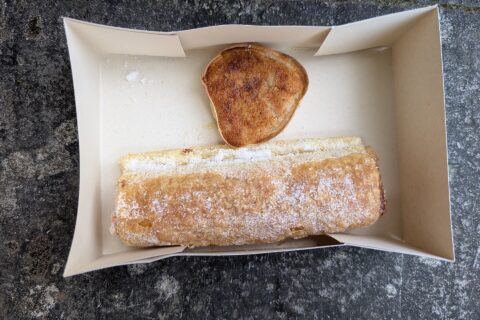
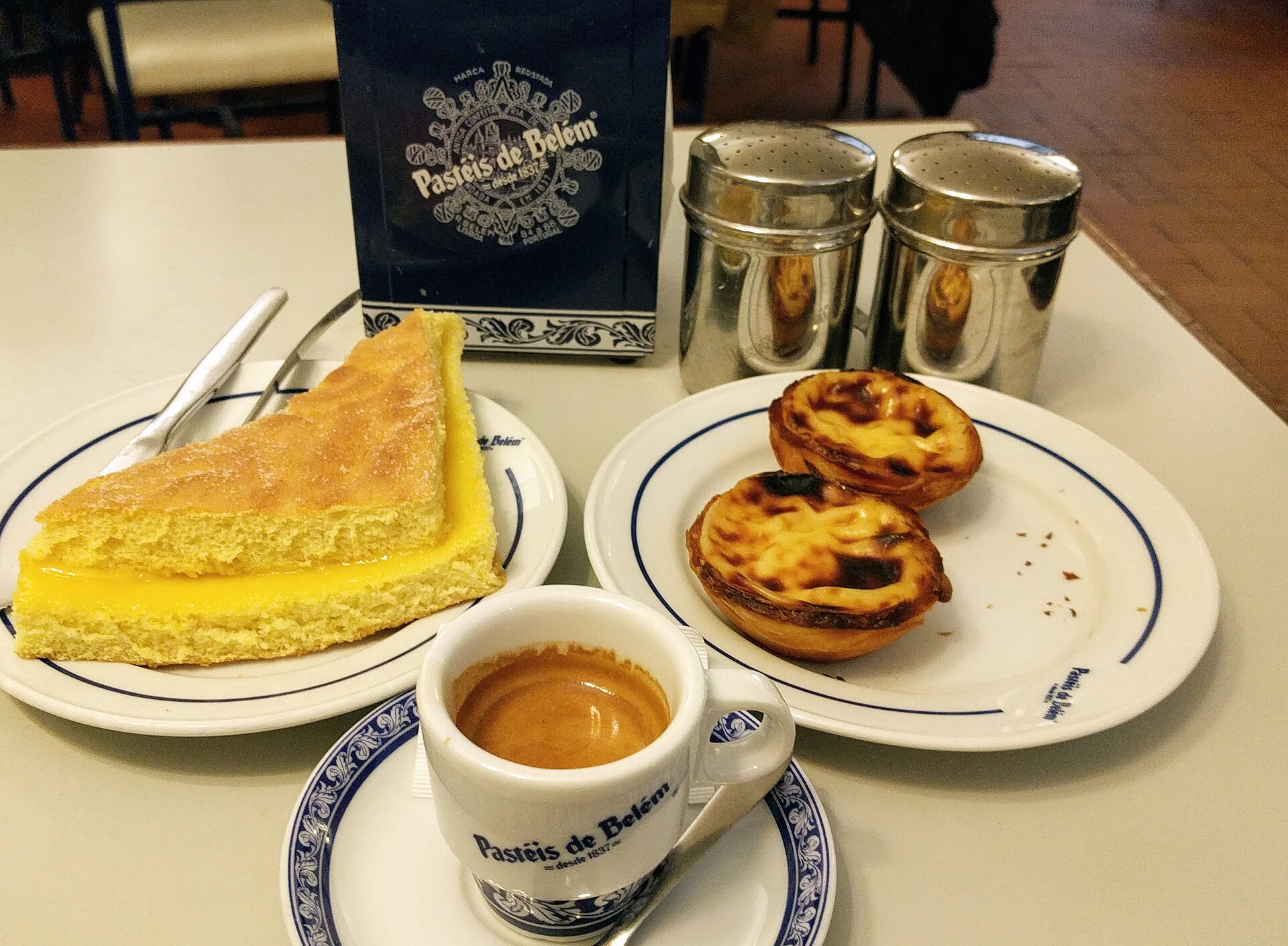
The Portuguese breakfast — pequeno-almoço, literally “little lunch” — is small, fast and taken standing up at a counter. It is a bica (a short, strong espresso; the word is Lisbon’s, in Porto you would ask for a cimbalino) and something sweet: a pastel de nata, a torrada of thick toasted bread soaked in butter, a croissant that is softer and sweeter than the French version, or a bola de Berlim from the counter.
It costs, standing at the counter, €0.80–€1.20 for the bica and a euro or so for the pastry — call it €2 for the whole thing. Sitting at a table is more expensive; sitting on a tourist square is more expensive again, and a bica on Praça do Comércio will run you €1.50 or above for the same coffee.
This is not a lesser version of brunch. It is a different meal with a different purpose, and doing it every morning of your trip is one of the genuine pleasures of Lisbon. The pastelaria near your accommodation, whichever it is, will serve you better and faster than any queue you join on a Sunday.

So where did brunch come from?
Lisbon’s brunch scene is roughly as old as its status as a European tech and remote-work hub. From the mid-2010s, a wave of new residents — Brazilians, Northern Europeans, Americans, Australians — arrived expecting flat whites, sourdough, poached eggs and a table you could sit at for two hours. A generation of cafés opened to serve them, largely run by the same demographic, and the model spread outwards into the Portuguese market.
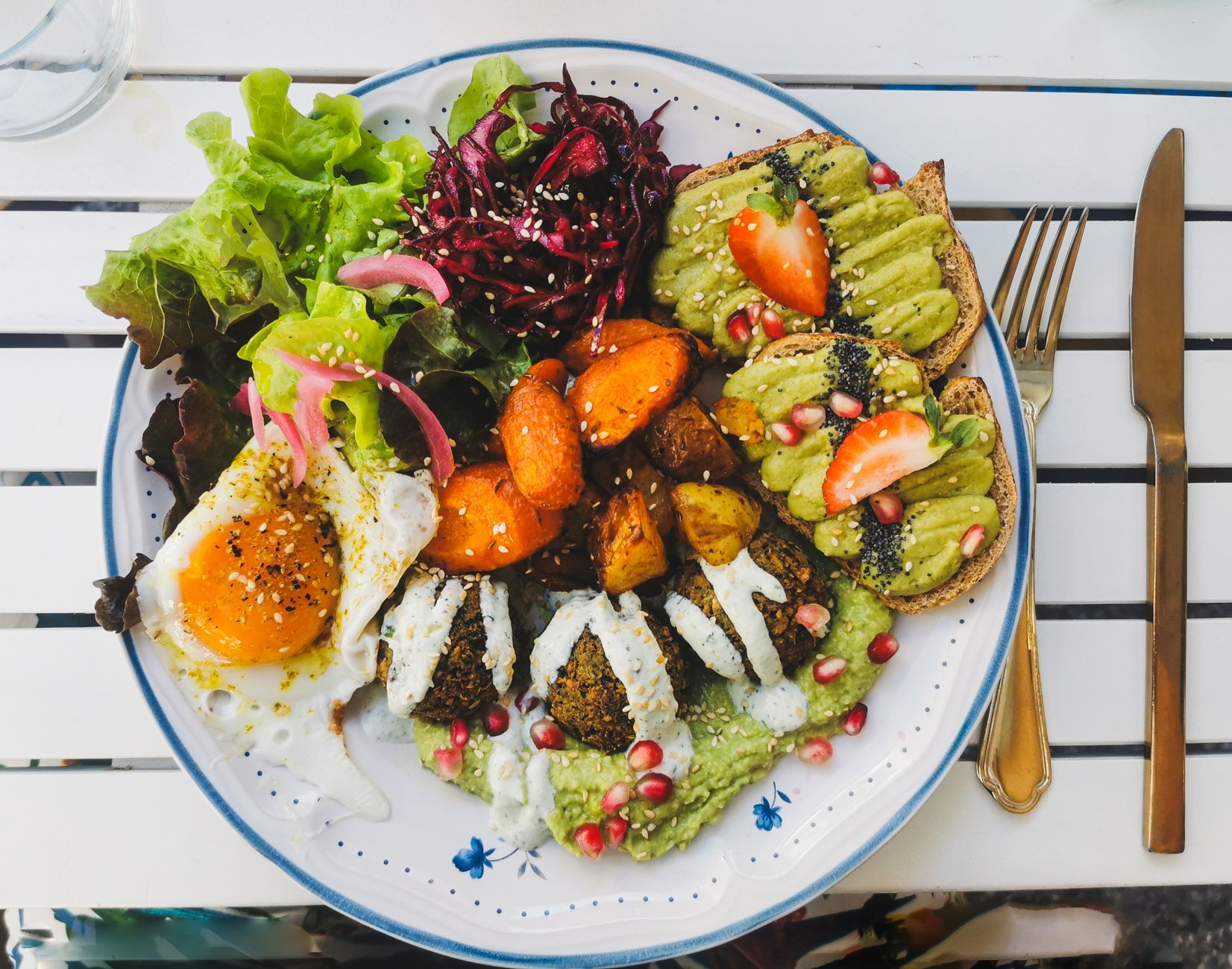
The result is genuinely good and also slightly disconnected from the city around it. A Lisbon brunch café tends to look and taste like a Lisbon brunch café whether it is in Príncipe Real, Berlin or Melbourne — same tiles, same plants, same menu of avocado, eggs, granola bowls and banana bread, same excellent coffee. Whether that is a feature or a bug depends on what you came to Portugal for.
Our advice: do both. Have brunch once or twice, because the quality is high and it is a pleasant way to start a slow day, and have a bica and a nata every other morning, because you can only do that here.
Where to go
An important caveat before the names. This is the fastest-turning-over part of Lisbon’s food scene — cafés open, move, change hands and close on a timescale no guide keeps up with. Check that a place is still there and still open on the day before you cross the city for it. The neighbourhoods below are more durable than any individual address.
Príncipe Real and Rua do Poço dos Negros
The heartland. The area between Príncipe Real and the long slope of Rua do Poço dos Negros down towards Santos holds the highest density of good coffee and good brunch in the city, and it is where the scene started.
- Hello, Kristof — a magazine café off Poço dos Negros, all Scandinavian restraint, excellent coffee and a rack of design periodicals. Small, and it fills.
- The Mill — Australian-run, on the same street, and one of the originals. Proper flat whites and a brunch menu that does not apologise for being Antipodean.
- Bettina & Niccolò Corallo — not brunch, but a chocolate and coffee shop in Príncipe Real run by a family who grow their own cacao on São Tomé. Worth the detour on principle.
Chiado, Baixa and Cais do Sodré
Central, convenient and busier. Good if you are staying in Chiado or Baixa and want to walk to breakfast.
- Dear Breakfast — a small local chain that does the full imported brunch properly: eggs, pancakes, good bread, decent coffee, tiled rooms.
- Nicolau Lisboa — on Rua de São Nicolau in Baixa, and probably the single most photographed brunch in the city. The food is genuinely good; the queue on a weekend is genuinely long.
- Comoba — near Cais do Sodré, with a bowl-and-smoothie lean and a following among people who take their coffee seriously.
- Fábrica Coffee Roasters — a Portuguese-founded roaster with several sites, including one on Rua das Portas de Santo Antão. Roasts its own, and is a good bridge between the two coffee cultures.
Santos, Estrela and the west
Quieter, more residential, and where you will share a room with people who live here rather than people on a four-day trip.
- Heim Café — Santos, Australian in style, and one of the more reliable full brunch menus in the city.
- Copenhagen Coffee Lab — a Danish-founded operation with sites across the city, doing pastries and filter coffee well and consistently.
- The area around the Basílica da Estrela and its garden is a good place to combine a slow breakfast with somewhere to sit afterwards.
Further out — Marvila, Beato and Alcântara
The eastern industrial belt around Marvila and Beato, and LX Factory in Alcântara, hold the newest end of the scene: converted warehouses, roasteries, breweries and cafés with more space than anywhere central can offer. It is a trip rather than a stroll, but it is where you go if you want a table on a Sunday without waiting.
The Portuguese alternative: pastelarias and old cafés
If the imported version does not appeal, Lisbon’s own tradition is richer and much cheaper. These are not brunch spots; they are pastry shops and coffee houses, and they have been doing breakfast for a very long time.
- Confeitaria Nacional — on Praça da Figueira, trading since 1829, with a gilded ceiling and a counter of pastries you will not recognise. Ask what things are; they are used to it.
- Pastelaria Versailles — up in Saldanha, a vast belle époque room with chandeliers, mirrors and elderly waiters in white jackets. Genuinely unchanged, and largely full of Lisboetas.
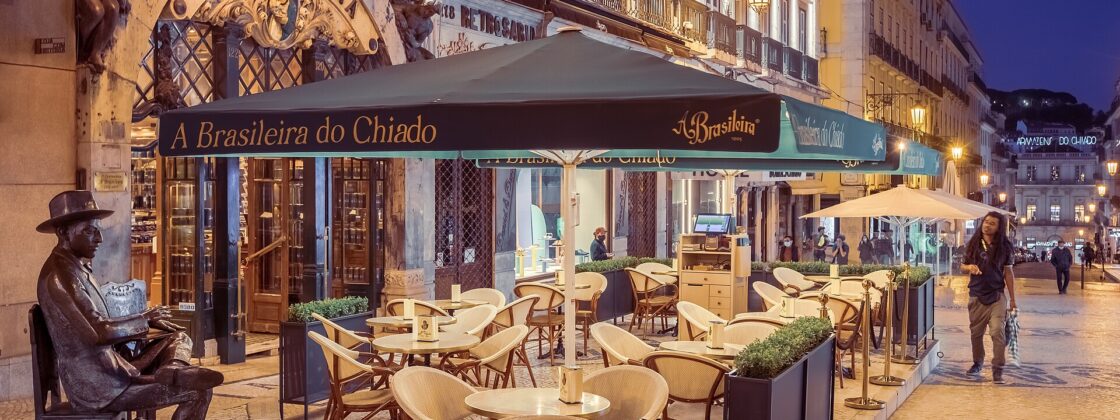
- A Brasileira — the famous Chiado café with the Pessoa statue outside. Historically important, thoroughly touristy, and worth one bica standing at the counter rather than a sit-down meal on the terrace at three times the price.
- Manteigaria — for the nata itself. Several locations, made in front of you, and eaten warm with cinnamon at the counter.
- Any pastelaria with no English menu. This is the real advice. Lisbon has hundreds, they are all decent, and the one nearest your bed is the one to adopt.
Our Lisbon coffee and cafés guide goes deeper on both traditions, and the pastéis de nata guide settles the question of where the best ones are.
How to order coffee like you have been here before
Portuguese coffee vocabulary is small, specific, and completely different from the Italian one you may be expecting. Getting it right takes about ninety seconds to learn and makes every morning easier.
- Uma bica — a short espresso. In the rest of the country, um café. This is the default and it is what almost everyone is drinking.
- Um abatanado — a longer black coffee, roughly an americano.
- Uma meia de leite — half coffee, half hot milk, in a cup. The closest thing to a breakfast latte.
- Um galão — the same idea but weaker and served in a tall glass. This is the classic Lisbon breakfast drink and what you want alongside a torrada.
- Um pingado — an espresso with a drop of milk. A macchiato, essentially.
- Uma carioca — a very weak coffee made from the second pass of the grounds. Order it late at night, or never.
Two practical notes. First, “cappuccino” exists on tourist menus and is usually disappointing — order a meia de leite instead and you will get better coffee for less. Second, prices are tiered by where you stand: the counter is cheapest, an indoor table costs more, and an outdoor table on a square costs more again. This is legal, normal and displayed; it is not a scam. Our Portuguese phrases guide covers the rest of what you need at a counter.
What to eat, beyond the eggs
If you are in a Portuguese café rather than a brunch café, the menu will be short and mostly unfamiliar. The things worth knowing:
- Torrada — thick-cut bread, toasted, and served drenched in butter. Order it com manteiga and do not think about it too hard.
- Pão com manteiga — the lighter version, a bread roll with butter.
- Bola de Berlim — a doughnut filled with egg custard, sold on beaches in summer and on counters year-round.
- Queijada and travesseiro — cheese tart and puff-pastry almond pillow respectively, both Sintra specialities that have colonised Lisbon counters.
- Tosta mista — a toasted ham and cheese sandwich, the default light breakfast or late-morning snack, and available absolutely everywhere.
- Sumo de laranja natural — freshly squeezed orange juice, pressed in front of you, and much better than it has any right to be at the price.
The full picture of Portuguese pastry and its convent origins is in our traditional Portuguese food guide.
What it costs
- Portuguese breakfast at a counter: around €2 for a bica and a pastry. Sitting down adds a little; a tourist square adds more.
- Specialty coffee: €2.50–€4 for a flat white or a filter, which is two to four times the price of a bica and roughly what you would pay in any European city.
- A brunch main: typically €10–€16 — eggs, toast, a bowl, a plate of things.
- Full brunch with coffee and juice: realistically €18–€25 per person.
- Hotel buffet brunch: €25–€45, and generally the worst value on this list unless it is included in your room rate.
Note the scale of the gap: a full brunch costs roughly ten times a Portuguese breakfast. Neither price is wrong — you are buying a table, a two-hour sit and a cooked plate rather than a coffee — but it is worth being conscious of, particularly if you are watching the budget. See Lisbon on a budget and is Lisbon expensive for the wider picture.
Timing, queues and how to avoid them
The weekend queue is the defining feature of Lisbon brunch and the main reason people come away unimpressed.
- Saturday and Sunday from 11:00 to 14:00 is peak. The well-known places will have a wait of thirty to sixty minutes, and most do not take bookings.
- Go before 10:30 or after 14:30 and the same café is half empty.
- Go on a weekday. This is the whole answer. Midweek brunch in Lisbon is a calm, pleasant, walk-in affair at every place named above.
- Put your name down and go for a walk. Many places take a phone number and text you. Do not stand on the pavement for forty minutes.
- Have a plan B two streets away. Density is the advantage of these neighbourhoods — if one is full, another is three minutes’ walk.
Also worth knowing: Portuguese cafés generally serve breakfast into the early afternoon without fuss, and the concept of a hard breakfast cut-off at 11:00 is not really a thing here. You will not go hungry for arriving late.
Vegetarian, vegan and dietary requirements
This is where the brunch scene genuinely outperforms the rest of the city. Traditional Portuguese cooking is built on pork, salt cod and shellfish, and vegetarians can find restaurant menus hard going. Lisbon’s brunch cafés, by contrast, are almost uniformly good on this — plant milks as standard, vegan plates as a default rather than an afterthought, and gluten-free bread more often than not.
If you are travelling with dietary requirements, brunch cafés are a reliable and low-stress option for at least one meal a day. Our vegetarian and vegan Lisbon guide covers the rest.
The honest verdict
What is genuinely worth it: the coffee. Lisbon’s specialty roasters are as good as anywhere in Europe, and if you care about coffee the difference between a well-made flat white and a supermarket-blend bica is real and worth €3. The vegetarian and vegan cooking is also genuinely strong, and the cafés are pleasant places to spend a slow morning after three days of hills.
What is not: queueing an hour on a Sunday for eggs on toast in a city where a hundred pastelarias will feed you in four minutes for two euros. And hotel buffet brunch, which is expensive and rarely good anywhere.
The thing most visitors get wrong: treating brunch as the Lisbon breakfast experience. It is an excellent international brunch scene that happens to be in Lisbon. The Lisbon breakfast experience is a marble counter, a small strong coffee, a warm custard tart, and being out of the door in four minutes. Do that most mornings. Do brunch when you want a table and a long sit — which, on a trip full of walking, will be more often than you expect.
Frequently asked questions
What is a typical Portuguese breakfast?
A bica — a short espresso — with a pastel de nata, a buttered torrada, or a soft croissant, eaten standing at the counter. It costs around €2 and takes a few minutes.
What is a bica?
The Lisbon word for a short espresso. Order “uma bica” and you will get exactly what everyone at the counter is drinking. In Porto the same coffee is a cimbalino.
Is brunch expensive in Lisbon?
A full brunch with coffee runs about €18–€25 per person — reasonable by European standards but roughly ten times what a Portuguese counter breakfast costs.
Which neighbourhood is best for brunch in Lisbon?
Príncipe Real and the Rua do Poço dos Negros corridor down towards Santos have the highest concentration of good cafés. Chiado and Baixa are the most convenient if you are staying centrally.
Do Lisbon brunch places take reservations?
Most do not. The reliable strategy is to go on a weekday, or before 10:30 and after 14:30 at weekends.
Is Lisbon good for specialty coffee?
Yes, genuinely — there is a strong roasting scene and standards are high. It is a recent development, and it sits alongside rather than replacing the traditional café culture.
Can you get vegan brunch in Lisbon?
Easily. The brunch scene is markedly better for vegetarians and vegans than the traditional restaurant scene, with plant milks and vegan plates as standard.
What time do cafés open in Lisbon?
Traditional pastelarias open early, often by 07:00, for the working breakfast trade. Brunch cafés generally start between 09:00 and 10:00 and serve into the afternoon.
Bottom Line
Lisbon’s brunch scene is good, international and worth one or two mornings of your trip — particularly for the coffee, which is excellent, and for the vegetarian cooking, which is better here than almost anywhere else in the city. Príncipe Real and Poço dos Negros are the heartland; go on a weekday and you will walk straight in.
But do not let it displace the thing you can only do here. Find the pastelaria nearest your bed, go in every morning, stand at the counter, say uma bica e um pastel de nata, por favor, and be back on the street in four minutes with two euros gone. That is breakfast in Lisbon, and no amount of sourdough improves on it.
Photo Credits
A Brasileira terrace in Chiado: 58 A Brasileira – Esplanada by Luísa Paulos, CC BY-SA 4.0, via Wikimedia Commons.
Espresso and custard tarts at Pastéis de Belém: リスボンパステルデナタ by OJ-JP, CC BY-SA 4.0, via Wikimedia Commons.