Sintra
Monserrate Palace and Park: Sintra Without the Crowds
Sintra's quietest monument: €12 for a Mughal-Gothic house and one of Europe's great botanical gardens — plus the roof restoration you need to know about before you book.
In this guide
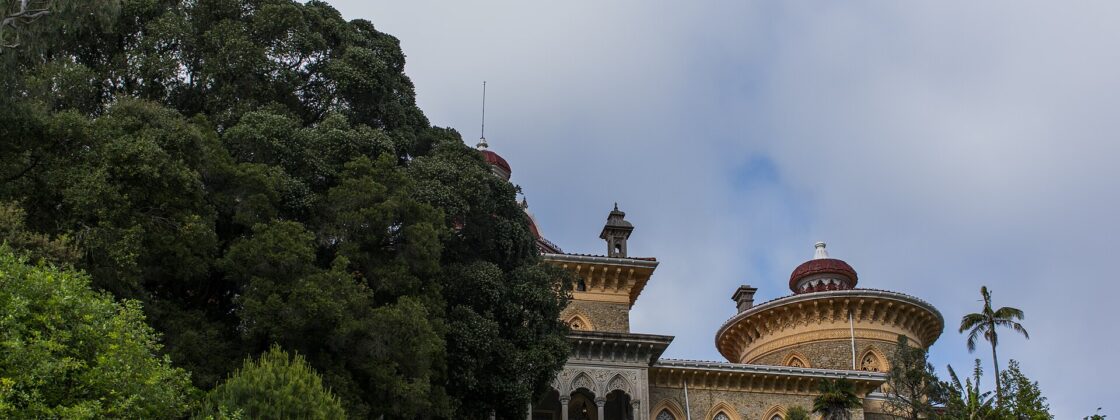
Monserrate Palace is the Sintra monument you can still have almost to yourself — a pink-and-gold Mughal-Gothic fantasy sitting above a lawn at the far western end of the Serra, surrounded by one of the finest botanical gardens in Europe. It is €12, it is twenty minutes by bus from the station, and on a busy August Tuesday it will be quieter than Pena is at nine in the morning. This guide covers the tickets, the transport, what to see in the gardens, and one thing you genuinely need to know before booking: the palace roof is under restoration until early 2027.
Read this first: the 2026–27 restoration
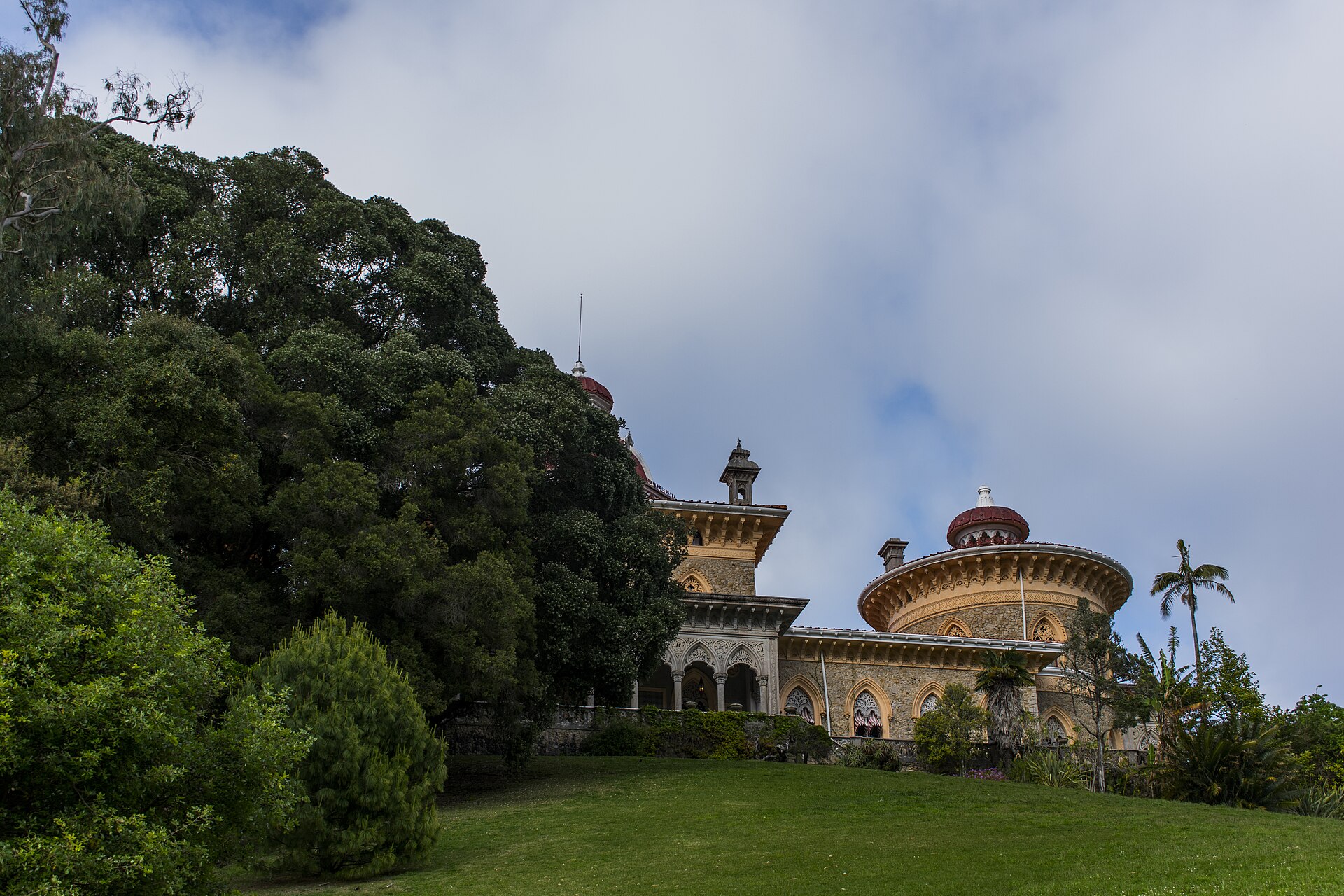
Parques de Sintra is carrying out roof restoration works on the palace that run until the first quarter of 2027. That means scaffolding on the building and a temporary covering over parts of it. The palace remains open, and the gardens are entirely unaffected — but if the reason you were coming is the exterior silhouette against the trees, you will be photographing scaffolding.
Our view: go anyway, but go for the garden. Monserrate’s park is the better half of the ticket in any year, and it is untouched by the works. If the building’s exterior is the whole point for you, wait until spring 2027 and use the money on Quinta da Regaleira instead. Check the Parques de Sintra site for the current state of the scaffolding before you travel — the phasing moves.
The essentials
- Adult ticket: €12. Youth (6–17) and senior (65+) €10; family €33.
- Park hours: 09:00–19:00, last ticket 17:30, last admission 18:00.
- Palace hours: 09:30–18:00, last ticket 17:00, last admission 17:30.
- Time needed: 2 to 2.5 hours. The gardens are large and the paths are long.
- Getting there: Scotturb bus 435 from Sintra station — not the 434, which serves Pena and the Moorish Castle.
- Best for: gardeners, botanists, anyone allergic to crowds, and anyone who has already done Pena and wants the opposite experience.
Note the awkward detail buried in those hours: the park opens half an hour before the palace and closes an hour after it, and the last ticket for either is 17:30. Arrive at five and you can still walk the gardens in the best light of the day, but you will not get inside the house.
What Monserrate is
The estate has been passing between wealthy foreigners for two and a half centuries, and each one left a layer. William Beckford, the English writer and serial builder of follies, rented the earlier house here in the 1790s and began landscaping the grounds. Byron came through in 1809 and wrote about the place in Childe Harold’s Pilgrimage, which did for Sintra’s reputation among the English what a good review does for a restaurant — the estate spent the next fifty years as a romantic ruin visited by people who had read the poem.
The building you see was commissioned in the 1860s by Sir Francis Cook, a British textile magnate and art collector, and designed by James Knowles Jr. Knowles produced something genuinely strange and genuinely coherent: a Gothic-revival plan wearing Mughal Indian and Moorish decoration, with three domes, a long arcaded gallery, and interiors of carved plaster fretwork so fine it looks like paper.
Cook also collected plants on an industrial scale, and this is Monserrate’s real achievement. The gardens hold thousands of species from every continent, arranged in geographic zones, and they have been under continuous restoration by Parques de Sintra since the early 2000s. The Serra’s microclimate — cool, damp, frost-free — does something remarkable: New Zealand tree ferns, Mexican agaves, Australian eucalypts and Himalayan rhododendrons all thrive within a few hundred metres of each other.
What to see
The gardens
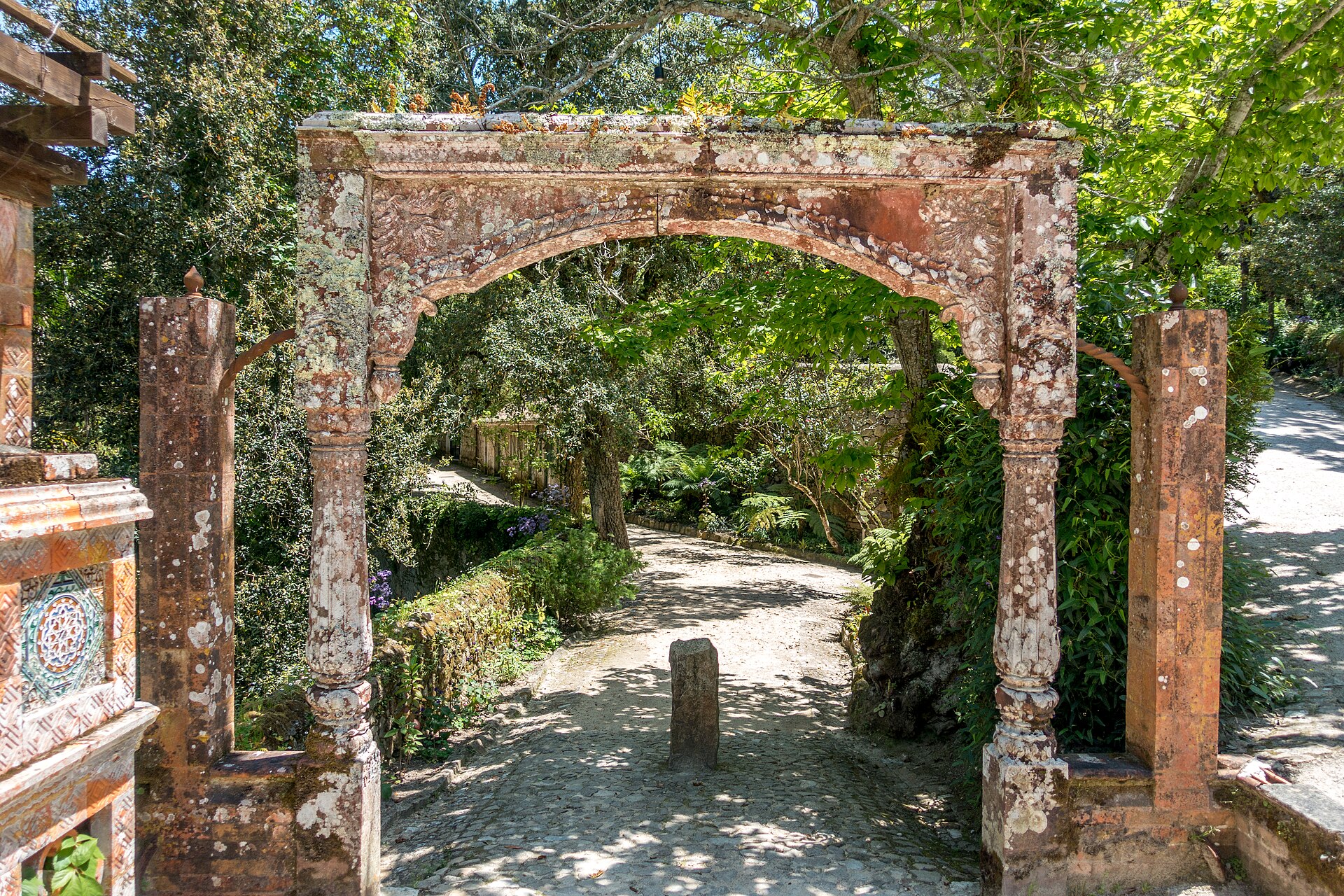
Give the gardens the majority of your time. They are laid out down a steep, wooded valley below the house, and the named areas each have a distinct character:
- The Lawn — the great sweep in front of the palace, with specimen trees placed to frame the building. This is the classic view and where everyone sits.
- Fern Valley — the highlight. A damp, deeply shaded ravine of tree ferns, some of them enormous, fed by an artificial stream. It is several degrees cooler than the lawn and feels like a different country.
- The Mexican Garden — agaves, yuccas and cacti on the dry, sunny slope, the deliberate opposite of the ferns.
- The Japanese Garden — smaller, quieter, and easy to walk past.
- The Rose Garden — at its best in May and June.
- The Scented Path — exactly what the name says, and worth taking slowly.
- The Chapel Ruin — a fabricated Gothic ruin swallowed by a strangler fig, in the manner of every eighteenth-century English landscape garden, and none the worse for being fake.
The paths are long, gravelled, and involve real gradients. Budget ninety minutes minimum for the garden alone, and more if you stop.
What a gardener should actually look for
If you know your plants, three things here are worth the trip on their own. The first is the sheer size of the mature specimens — the estate has had a frost-free, humid microclimate and 160 uninterrupted years, and trees that are ornamental shrubs elsewhere in Europe have become genuine forest here. The second is the layering: Cook and his successors planted for canopy, understorey and ground cover as deliberately as any modern designer, and the valley reads as a functioning ecosystem rather than a collection.
The third is the water. Every stream, cascade and pool in the valley is artificial, fed by a system that dates to Beckford’s time and was rebuilt by Cook, and it is what makes the ferns possible at all. Walk down the valley following the water rather than the signposts and the whole design suddenly makes sense — the paths were laid to bring you to the stream at intervals, and each arrival was staged.
Parques de Sintra publishes a plant list and runs occasional guided botanical visits. If you are the sort of visitor who will want one, book ahead rather than hoping on the day.
The palace interior
Smaller than you expect and worth an unhurried forty minutes. The set piece is the long gallery running the length of the building, with its carved arcades and marble floor, and the music room under the central dome. What makes the interiors distinctive is the plasterwork — a dense vegetal fretwork drawn from Mughal and Moorish sources, carved rather than moulded, running across ceilings and around every arch. It is the sort of thing you photograph badly and remember well.
Much of the house is sparsely furnished, because Cook’s collection was dispersed in the twentieth century. Parques de Sintra has restored the rooms rather than refurnishing them speculatively, which is honest and leaves the architecture to speak. If you want crammed period interiors, this is not that; if you want to see a room properly, it is better.
Getting to Monserrate
By bus 435
The key practical fact about Monserrate is that it is not on the 434 circuit. The 434 does Pena and the Moorish Castle; Monserrate is served by the 435, which runs west from Sintra station through the town and past Seteais and Quinta da Regaleira to Monserrate. Journey time is around 20 minutes.
The Scotturb day pass at €13.50 covers both the 434 and the 435 for 24 hours from first validation, and it is roughly 8% cheaper bought online. If you are doing a full Sintra day, that one pass carries you up the hill in the morning and out west in the afternoon.
On foot
It is about an hour’s walk from Sintra town along the road, and while the road is scenic it is narrow, has patchy pavement and carries tour coaches. We would not recommend it. Walking back is more pleasant, downhill and mostly in shade, and takes about 45 minutes — a decent option if you have missed the bus and the light is good.
By car
Unlike Pena and the Moorish Castle, Monserrate does have a car park and private vehicles can reach it. It is small and fills by mid-morning in season, but it is a genuine advantage of this monument over the others, and it is the reason Monserrate works well as a stop on a driving day that also takes in Cascais or the coast.
If you are driving on west afterwards, our Cabo da Roca guide covers the continent’s edge, about 25 minutes away.
Is Monserrate worth it?
Yes, with one condition: you have to like gardens. This is the most honest thing we can say about it.
If the phrase “botanical collection arranged in geographic zones” makes you happy, Monserrate is the best half-day in Sintra and it is not close. The gardens are extraordinary, the crowds are a fraction of Pena’s, the lawn is one of the great places to sit in Portugal, and the €12 buys you two and a half hours of genuine pleasure.
If you are in Sintra for one day, want palaces, and are not especially moved by tree ferns, then Monserrate is the one to drop. It is the furthest out, it takes the longest, it is on a different bus route, and its interior is the least spectacular of the four. Three monuments is already an ambitious Sintra day, and Monserrate is honestly the fourth-most-urgent of them for a first-time visitor with limited hours.
The visitors who love it most are: repeat visitors to Sintra, people travelling in high summer who want to escape the queues, gardeners of any level of seriousness, and anyone with a car. The visitors who regret it are people who went because a list told them to and spent the afternoon wishing they were somewhere with a view.
How it compares
- Versus Pena (€20): Pena is the spectacle and the crush. Monserrate is the calm and the plants. They are almost opposite experiences at almost the same place.
- Versus Regaleira (€20): the closest comparison, since both are gardens with a house attached. Regaleira has more invention, more theatre and far more people; Monserrate has better plants and more space. Regaleira for children, Monserrate for adults.
- Versus the National Palace (€13): different needs entirely. The National Palace is an hour indoors in the town centre; Monserrate is half a day outdoors twenty minutes west.
- Versus the Moorish Castle (€12): the castle for views and history, Monserrate for shade and quiet. On a very hot day, Monserrate wins comfortably.
When to go
- Best months: April to June, when the rose garden is out, the ferns are lush and the Serra is green. September and October are the second-best window.
- Summer: Monserrate is the Sintra monument that handles August best, because most of it is deep shade and the fern valley is naturally cool. If you are visiting in a heatwave, put this first.
- Winter: genuinely good. The gardens are evergreen, the camellias flower from December, and you may have the lawn to yourself. Bring waterproofs — the Serra makes its own rain.
- Time of day: late afternoon is best for the light on the west-facing facade, but remember the 17:30 last-ticket cut-off.
See the best time to visit Lisbon for the seasonal picture, and check the Sintra forecast rather than the Lisbon one.
Practical notes
- Wear shoes you can walk in. The garden paths are gravel, uneven in places and consistently sloped.
- Accessibility is mixed. There is a level route around the palace and the upper lawn; the valley paths are not suitable for wheelchairs and are hard work with a pram. See our accessibility guide.
- There is a café near the palace with terrace seating — decent, not cheap, and a better lunch option than anything on the Pena hill.
- Toilets are near the entrance and the palace; there are none deep in the valley.
- Picnics on the lawn are permitted and are the single best thing you can do here.
- No timed entry, so this is a monument you can decide on at ten in the morning.
Fitting it into a Sintra day
Monserrate does not combine well with a Pena-plus-castle morning unless you are prepared to be out until seven. The pairings that work:
- Monserrate plus the National Palace — one bus route west, one monument in town, both easy, both indoors-capable. A relaxed day.
- Monserrate plus Regaleira — both on the 435, both garden-led, about ten minutes apart. The best day in Sintra for anyone who does not want to climb.
- Pena in the morning, Monserrate in the afternoon — possible, but it means two different bus routes and a real risk of spending an hour on transport. Do it only with a car.
Our Sintra day trip guide and Sintra guide have the full shapes, and the train guide covers getting there from Lisbon.
Frequently asked questions
How long do you need at Monserrate?
Two to two and a half hours: roughly 90 minutes in the gardens and 40 in the house. Under 90 minutes total and you will only have seen the lawn, which is the least interesting part.
Is Monserrate worth visiting during the restoration?
For the gardens, absolutely — they are unaffected. For the building’s exterior, less so, because there is scaffolding and temporary covering on the roofs until the first quarter of 2027. The interior remains open throughout.
Which bus goes to Monserrate?
The Scotturb 435 from Sintra station, not the 434. The €13.50 day pass covers both routes for 24 hours, so one ticket serves the whole day.
Is Monserrate better than Quinta da Regaleira?
For plants, space and quiet, yes. For invention, atmosphere and children, no. Regaleira is the more entertaining place and Monserrate the more beautiful one. If you have time for both, do Regaleira first while you have energy.
Can you visit Monserrate gardens without entering the palace?
There is one ticket covering both, so you cannot pay less for gardens only — but plenty of visitors buy the ticket and never go inside the house, and that is a perfectly reasonable way to spend €12.
Is there parking at Monserrate?
Yes, which makes it unusual in Sintra. The car park is small and fills by mid-morning in high season, so arrive early or accept a walk from the roadside.
Bottom Line
Monserrate is Sintra’s best-kept balance: a genuinely unusual building, an outstanding garden, and a fraction of the crowd that Pena carries. At €12 for two and a half hours it is excellent value, and in high summer it is the only monument on this hill where you can be comfortable at two in the afternoon.
Just be clear about what you are buying. Until early 2027 the palace wears scaffolding, and even without it the house is the smaller pleasure here. Come for the fern valley, the lawn and the strangler fig on the fake ruin, treat the interior as a bonus, and Monserrate will be the part of your Sintra day you talk about afterwards.