Lisbon Food Guide
Where to Eat in Sintra (and the Real Travesseiro Story)
The travesseiro is a 1940s invention, the queijada is the older one, and the good restaurants are all 300 metres past where the crowd stops. Where to eat, and what to skip.
In this guide
Working out where to eat in Sintra is mostly an exercise in walking away from the palace. The streets immediately around the National Palace hold some of the least rewarding restaurants in the Lisbon district — laminated menus, indifferent cooking and prices thirty per cent above the city — and the good places sit a few hundred metres beyond, in São Pedro or up towards the station, where the day-trippers do not reach. This guide covers the pastries the town is famous for, where the food is actually good, and what to skip.
The travesseiro, and where it actually comes from
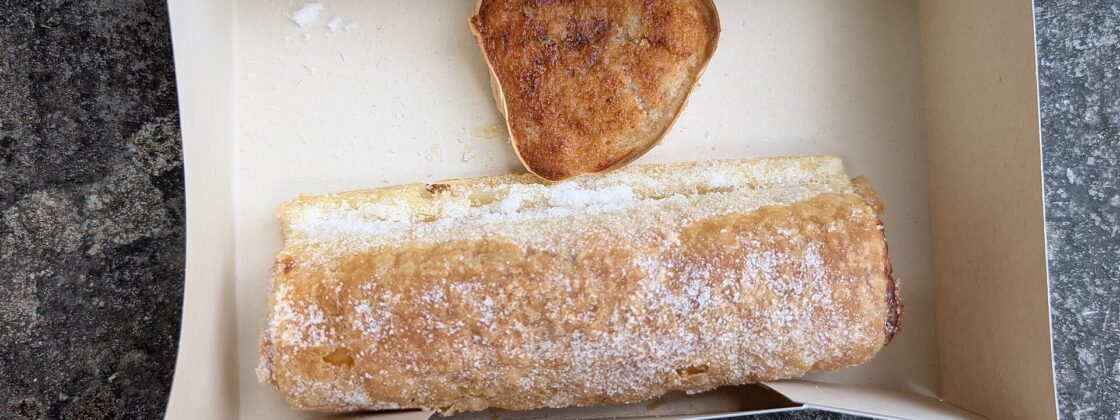
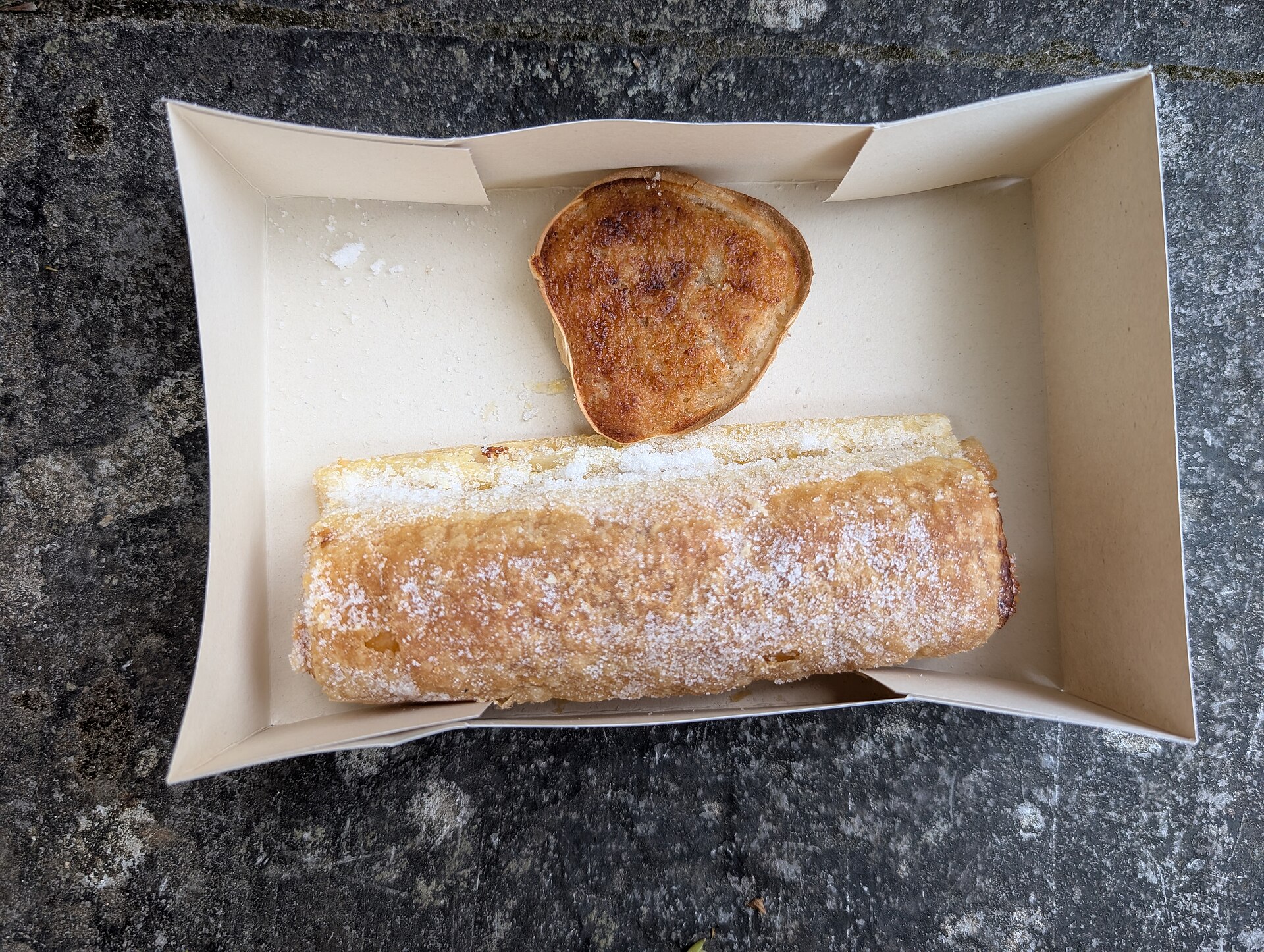
Sintra’s famous pastry is a long rectangle of flaky puff pastry filled with an almond-and-egg cream, rolled, baked and rolled again in sugar. It is called a travesseiro — a pillow — and it is served warm, which is most of the point.
Here is the part almost every guide gets wrong. The travesseiro is not an ancient recipe. It was invented at Casa Piriquita in the 1940s, during the Second World War, by Constança Luísa Cunha, the granddaughter of the shop’s founders, who found the basis for it in an old cookbook. It is younger than the aeroplane and considerably younger than the town’s other pastry. The recipe has stayed inside the family for five generations and has never been published.
Casa Piriquita itself is genuinely old, founded on Rua das Padarias in 1862 by Constança Gomes Piriquita. The name is royal in origin: King Carlos I, who summered in Sintra, came in daily and called the small-statured owner “Piriquita”. In 2022, its 160th year, the family opened a branch in Lisbon — the first time the travesseiro had been sold outside Sintra.
Piriquita I or Piriquita II?
There are two shops on the same street, both family-run, both selling the same thing. The original at the bottom is small, tiled and permanently rammed; the second one further up is larger, has more seating, and is where you should go if you want to sit down with a coffee rather than queue on the pavement.
Our advice, and it saves twenty minutes: walk up to the second shop. The pastries come from the same kitchen. If you want the original room specifically — and it is charming — go before 10:00 or after 18:00.
The queijada, which is the older one
The queijada de Sintra is a small, dense tartlet of fresh cheese, sugar, egg and cinnamon in a paper-thin crust, and it is the town’s real historic speciality — made here for centuries, long before anyone thought of the travesseiro. Several rival houses in Sintra claim descent from the oldest queijada factory, and the claims are difficult to untangle, so we will not adjudicate.
What we will say is that the queijada is the more interesting pastry and the one most visitors skip because the travesseiro is on every list. It is drier, less sweet, and tastes distinctly of cinnamon and cheese rather than of almond and sugar. Buy one of each; that is what they are sold in boxes of six for.
Where to actually eat
Sintra’s restaurant scene is small and clearly stratified, and the stratification runs almost exactly along the tourist footprint. These are the names that consistently top local and national lists, and they are worth booking:
- Incomum by Luís Santos — near the station, about five minutes’ walk from the palace, and the town’s most reliable proposition. Modern Portuguese cooking, a well-priced lunch menu, and a following built entirely on being better than everything nearer the palace. Book.
- Tascantiga — petiscos, small plates, Portuguese wines by the glass. Informal, good value, and the right choice if you want to eat well without committing to a two-hour dinner. Small, so it fills.
- Romaria de Baco — traditional Portuguese cooking with a serious wine list, in the historic centre and one of the few places there we would send anyone. Cosy, cramped, and booked out at weekends.
- A Raposa — a small, long-running restaurant in the old town with a short menu and a loyal following. The kind of place that survives on regulars in a town full of one-time visitors.
- Metamorphosis — the ambitious end of the scale, and consistently rated at the top of Sintra’s restaurant lists. Worth it for a proper dinner rather than a between-palaces lunch.
The pattern is worth stating explicitly: the good restaurants are roughly 300 metres outside the main tourist flow. Walk five minutes towards the station, or twenty minutes up to São Pedro, and both the quality and the value improve sharply.
São Pedro de Penaferrim
The neighbouring village east of the centre is where Sintra actually eats. It has its own square, a scattering of proper restaurants and tascas, and prices that look like the rest of Portugal rather than like a UNESCO site. On the second and fourth Sunday of the month it holds the Feira de São Pedro, a large open-air market with food stalls, which is the best-value meal in the municipality by a distance.
It is a twenty-minute walk uphill from the old town or a couple of stops on the bus. If you are staying overnight — see where to stay in Sintra — this is where you should have dinner.
The coast
Twenty minutes west, Praia das Maçãs, Azenhas do Mar and the Colares villages have the seafood, and it is a different order of thing: grilled fish landed that morning, eaten looking at the Atlantic, at prices that are not cheap but are honest. Azenhas do Mar in particular has a clifftop restaurant with one of the best settings on this coast.
You need a car, or the summer tram from Sintra to Praia das Maçãs, which is a lovely thing in its own right and runs on a limited seasonal timetable. Check before relying on it.
Coffee, wine and the in-between hours
Sintra runs on short visits, which means most people are here at exactly the wrong times for meals — arriving mid-morning, leaving late afternoon, hungry at neither point. The town handles this better than it gets credit for, provided you know what to ask for.
Coffee
The pastelarias near the station and along the road up to the old town serve the same €0.80 bica you would get anywhere in Portugal, drunk standing at the counter. The cafés on the palace square charge two or three times that for a table with a view of a coach park. The difference is one street and roughly ninety seconds of walking. Our coffee guide covers how to order without being handed the tourist version.
Wine bars and a glass of Colares
Sintra has a handful of proper wine bars, and they are the best solution to the awkward late-afternoon hour between coming down the hill and dinner. Romaria de Baco doubles as one; there are others in the old town and up in São Pedro. Ask specifically for a glass of Colares — most places that carry it are pleased to be asked, and a glass costs a fraction of what a bottle does.
Picnics
Underrated here, and the answer to both the cost and the queueing problems. Buy bread, cheese, presunto and fruit at a supermarket in Estefânia or at the São Pedro market, and eat on the lawn at Monserrate or in the Parque da Liberdade in the middle of town. In good weather this is genuinely the best lunch in Sintra, and it costs about €6 a head.
What to eat here
Beyond the pastries, Sintra’s food is the food of the Lisbon hinterland, with a few local specialities worth seeking out:
- Queijadas and travesseiros, obviously, and ideally both.
- Fofos de Belas — a light sponge cake from the neighbouring parish, less famous and easier to find than you would expect.
- Vinho de Colares — wine grown on sand dunes on ungrafted vines, one of Portugal’s oldest demarcated regions and unlike anything else in the country. Production is tiny and bottles are not cheap. Try a glass before buying. Our Portuguese wine guide explains why Colares survived phylloxera when nothing else did.
- Grilled fish and seafood on the coast — sardines in summer, robalo and dourada year-round.
- Chestnuts in autumn, roasted on the street from about October. The Serra is chestnut country.
What to skip, honestly
This is the section that makes this page useful, so we will be blunt.
- Any restaurant on the main tourist street with a photo menu and someone outside encouraging you in. Sintra has an unusually high density of these because it receives an unusually high density of people who will eat there exactly once.
- Lunch between 12:30 and 14:30 in the old town in high season. Every restaurant is at capacity, service collapses, and you will wait forty minutes for something indifferent. Eat at 12:00 or at 15:00.
- The cafés at the monuments. Pena’s is expensive and mediocre; the Moorish Castle’s is a kiosk. Monserrate’s is genuinely decent and the exception. Eat in town before or after.
- Buying pastries at the station. They exist, and they are not the same thing.
- Assuming you can eat late. Many Sintra kitchens stop serving around 21:30, and a good number close entirely on Sunday or Monday. This is a town of 400,000 day visitors and not very many diners.
How to plan meals around a Sintra day

The practical problem is that Sintra’s monuments are on a hill and its restaurants are not, so lunch is a logistical decision rather than a spontaneous one. The shape that works:
- Breakfast at Piriquita II before the first bus, or at any pastelaria near the station. A bica and a queijada, standing up, costs under €3.
- Carry lunch if you are doing Pena plus the Moorish Castle, because the options up there are poor and the queues are long. A bakery in town will sell you a sandwich.
- Eat properly at 15:00, once you have come down the hill and the lunch rush has cleared. This is the single best meal-timing decision available in Sintra.
- Or eat late in São Pedro if you are staying the night, and let the old town empty out first.
Our Sintra day trip guide has the wider schedule, and the Moorish Castle and National Palace pages cover how long each monument actually takes.
Eating with children
Sintra is easy with children in one way and hard in another. Easy, because Portuguese restaurants are unfussy about kids, most will do a half portion without being asked twice, and the pastry economy is essentially designed for them. Hard, because the peak-lunch crush in the old town is exactly the wrong environment for a tired six-year-old after a morning on a castle wall.
The fix is the same as for everyone else, only more so: eat early or late, and eat away from the palace. The São Pedro square has space to sit outside and room for children to be children, which the old town’s narrow pavements do not. See Lisbon with kids for how the rest of the region compares.
Vegetarians, vegans and dietary needs
Sintra is behind Lisbon on this, and it is worth planning for. Traditional Portuguese cooking here is meat- and fish-led, and the smaller tascas will offer little beyond soup, salad and a plate of vegetables. The more modern restaurants — Incomum, Metamorphosis, Tascantiga — all handle vegetarian requests properly, and the petisco format makes it easier to assemble a good meal from side dishes.
Vegans should call ahead rather than turning up hopeful. Our vegetarian and vegan guide covers the city, where the situation is much better; in Sintra, the pragmatic answer is to eat well in Lisbon and treat Sintra as a pastry stop.
Frequently asked questions
Where do you get the best travesseiros in Sintra?
Casa Piriquita on Rua das Padarias, which invented them in the 1940s and still makes them to a recipe held inside the family. There are two Piriquita shops on the same street sharing one kitchen; the upper one has shorter queues and more seating. Eat them warm and on the day.
Is it better to eat in Sintra or go back to Lisbon?
For a casual lunch between monuments, Sintra is fine if you pick carefully and avoid the peak. For a serious dinner, Lisbon is better — more range, better value and later kitchens. If you are staying the night in Sintra, book somewhere good rather than wandering out at nine and hoping.
How much does a meal cost in Sintra?
Expect roughly 20–30% above Lisbon prices in the historic centre and Lisbon prices or below in São Pedro. A weekday lunch menu at a good restaurant runs around €15–€20; dinner with wine at the better places sits in the €30–€45 range per person. Pastries are €1.50–€2 each.
Do I need to book restaurants in Sintra?
For the five named above, yes, especially at weekends and in summer — they are all small. For everything else, no, but you may wait at peak lunch. Book Incomum and Romaria de Baco specifically; they fill fastest.
What is a queijada de Sintra?
A small tartlet of fresh cheese, sugar, egg and cinnamon in a very thin pastry shell. It is the town’s original speciality and far older than the travesseiro, and it is the one most visitors overlook. Buy a box of six and eat them over the afternoon.
Can you eat well near Pena Palace?
Not really. The catering on the hill is limited and expensive, and the Moorish Castle has only a kiosk. Monserrate’s café is the exception and is genuinely pleasant. Plan to eat in the town, and carry something if you are spending the whole morning up top.
Bottom Line
Sintra feeds two entirely different populations: several thousand people passing through for four hours, and a few thousand who live here. The restaurants serving the first group are, with a handful of exceptions, not worth your money. The ones serving the second are excellent and are almost all a short walk beyond where the crowd stops.
So: queue once at Piriquita, buy a box with both pastries in it, and then walk five minutes towards the station or twenty up to São Pedro before you sit down to a real meal. Eat at three in the afternoon rather than one. And if you are only here for the day and want one memorable dinner, have it in Lisbon — Sintra’s gift to you is the warm travesseiro, not the tasting menu.