Tours & Experiences
Best Lisbon Tours & Experiences: Walking, Boat, Food, and More
In this guide
- Walking Tours in Lisbon
- Tuk-Tuk and Vehicle Tours
- Boat Tours and Sailing Experiences
- Food Tours and Cooking Classes
- Wine Tasting Experiences
- Unique Experiences and Activities
- How to Book Tours — Practical Tips
- Organized Day Trip Tours from Lisbon
- Bicycle and E-Bike Tours
- Night Tours and Evening Experiences
- Family-Friendly Tours and Kids’ Experiences
- Lisbon Tours at a Glance — What to Choose
Lisbon tours and experiences go well beyond the hop-on-hop-off bus. The city’s compact hills, waterfront, medieval neighborhoods, and obsessive food culture make it genuinely worth paying for a guide in the right context — and genuinely wasteful in others. This guide runs through every major tour format available, with honest takes on what earns its price and what you can skip.
Out of season, the Luz and Alvalade both run stadium and museum tours year-round. Our football in Lisbon guide says what each includes and which is worth the half day.
The key question is what you can’t easily do solo. An Alfama walking tour with a knowledgeable guide surfaces stories and alleyways that three hours of independent wandering won’t. A food tour gets you inside family tascas with no English menu and no Google Maps listing. A Tagus boat tour gives you a skyline that simply doesn’t exist from land. On the other hand, Tram 28, the main viewpoints, and Baixa shopping need no guide — you’ll do better at your own pace. Use this to calibrate the budget.
Walking Tours in Lisbon
Free Walking Tours
Lisbon’s free walking tour scene is well-established and a solid first-day move for anyone arriving cold. The model: join for free, tip what it was worth at the end — €10–15 per person is fair for a good tour. Main operators are Lisbon Free Tour, SANDEMANs New Europe, and Chill-Out Free Tour. Our roundup of the best walking tours in Lisbon compares free and paid options neighbourhood by neighbourhood.
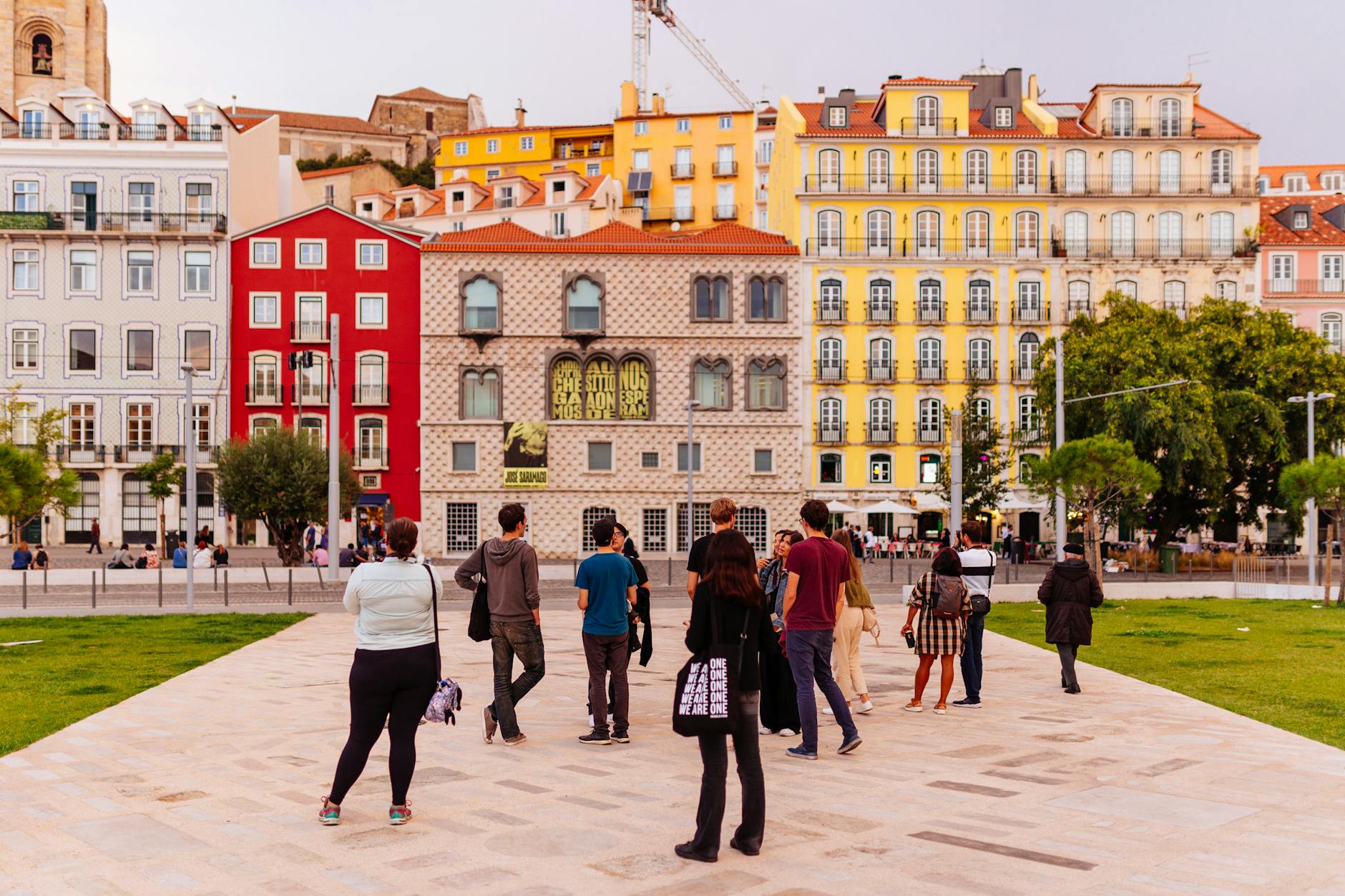
Most run two routes: a Downtown/Historical tour covering Praça do Comércio, Baixa, Rossio, Chiado, and the 1755 earthquake story (approximately 2.5–3 hours); and an Alfama tour winding through medieval streets past the Cathedral and Castelo de São Jorge, with proper context on fado, the Moorish period, and the neighborhood’s fishing-village roots (approximately 2 hours). Both depart from Praça do Comércio and run multiple times daily. Guide quality varies sharply — the best are passionate Lisboetas who combine history with personal stories and genuine recommendations.
Pros: Zero financial risk, you pay what it’s worth, social atmosphere, covers a lot of ground fast. Cons: Groups can hit 20–40 people, routes are fixed, some guides push restaurants where they earn commissions. Tip: Take a free tour on day one to get oriented, then go deeper on your own or with a specialist paid tour later in the trip.
Paid Walking Tours — Specialist and Small-Group
Smaller groups (typically 8–15 people), expert guides, and themed depth — these cost €15–40 per person and most are worth the premium.
Food tours are consistently the best-rated option in this city. Devour Lisbon and Eat Lisbon take small groups through traditional neighborhoods, stopping at family tascas, bakeries, wine bars, and food markets. A typical food tour runs 3–4 hours, includes 8–12 tastings (often enough to call it a meal), and costs €65–85 per person. You’ll eat pastéis de nata from the oven, ginjinha, chouriço, bifana, Portuguese cheese, and local wine. The guides know the history behind each dish, and the stops are the kind of places you’d walk past without a local pointing them out. Schedule a food tour for day one or two — the recommendations are useful for the rest of the trip.
Street art tours with Street Art Lisbon and Underdogs Gallery cover Mouraria, Bairro Alto, and beyond, explaining the murals by Vhils, Bordalo II, and Pantónio in proper context. Around 2–3 hours, €15–25 per person. History and culture tours from Lisbon Walker and Inside Lisbon run themed walks on the 1755 earthquake, the Carnation Revolution, Jewish Lisbon, and Moorish Lisbon — the right move if you want something beyond the standard highlights sweep.
Tuk-Tuk and Vehicle Tours
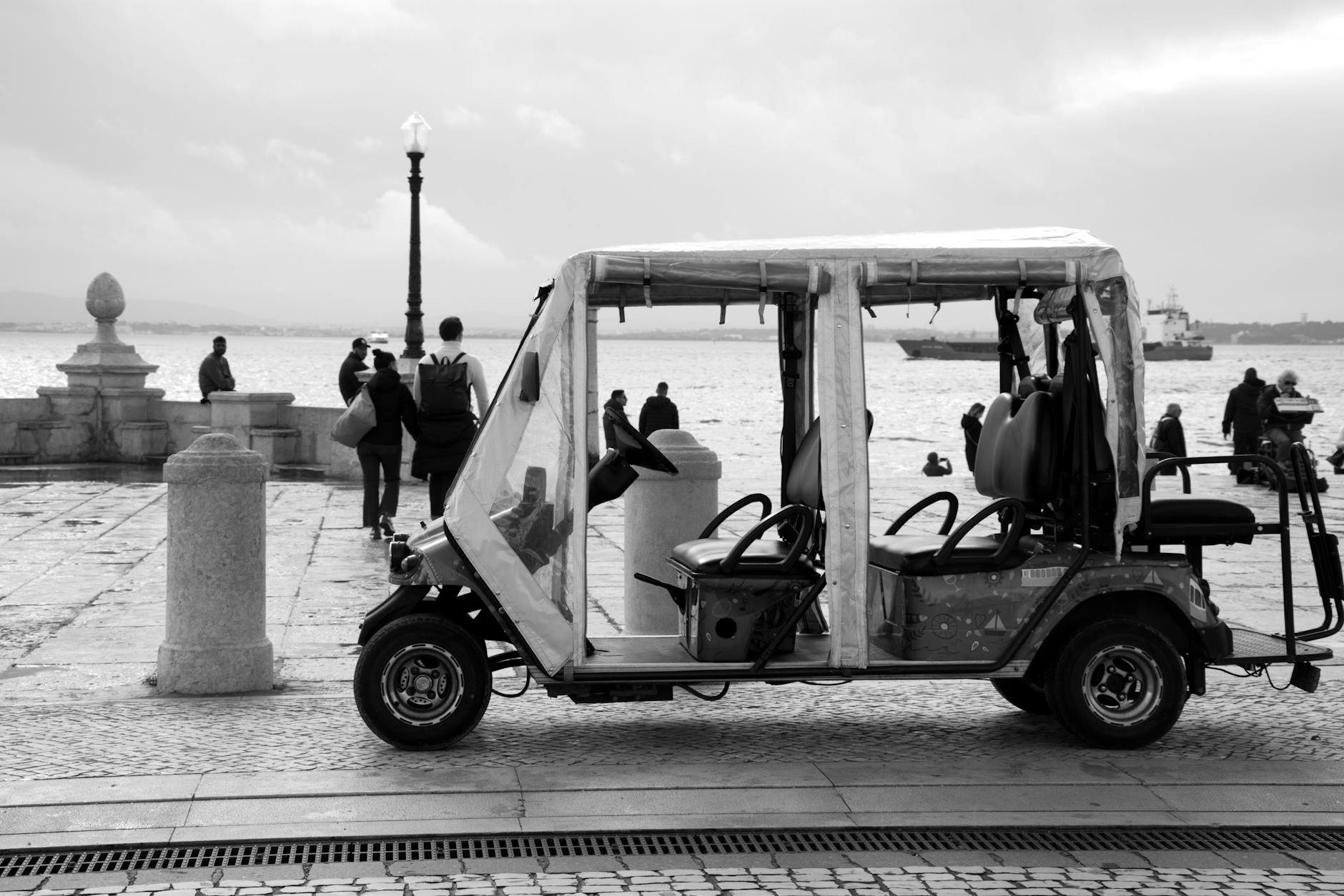
Tuk-tuks are everywhere in Lisbon for a practical reason: the small three-wheelers reach narrow, steep streets that buses and taxis can’t, opening up viewpoints and hidden alleys that are a real slog on foot if you have mobility limits or limited time. Most are private — just your group and a driver-guide — last 1–3 hours, and cost €40–90 depending on route and duration.
The most popular routes: Alfama hills and viewpoints (1–1.5 hours, €40–50), the Belém district with monument stops (2 hours, €60–70), or a combined tour covering both (3 hours, €80–90). The best tuk-tuk drivers double as storytellers — neighborhood gossip, restaurant tips, the kind of local knowledge that doesn’t make it into guidebooks.
Practical notes: Book through GetYourGuide or Viator rather than accepting street solicitations — vetted operators have better guides and honest pricing. Agree on route and price before you move. Morning tours (9–10am) beat the heat and the crowds. Some companies run sunset routes ending at a viewpoint — these are worth seeking out. Skip tuk-tuks in heavy rain: the open sides offer essentially no cover.
Vintage sidecar tours are a more stylish alternative. Companies like Sidecar Touring use restored vintage motorcycles with sidecars — pricier at €80–120 for 2 hours, but memorable. GoCar offers GPS-guided self-drive tours in small yellow vehicles: flexible and fun, though narration quality varies.
Boat Tours and Sailing Experiences

The Tagus waterfront — from Belém to Parque das Nações — looks completely different from the water, and the evening light on the river can stop a conversation dead. Several boat tour formats are available, from large sightseeing cruises to intimate private sailboat charters. We compare operators, routes, and prices in the Lisbon boat tours and cruises guide.
Sunset sailing cruises are the most popular river experience and the one worth booking early. Small sailing boats (typically 10–14 passengers) depart from the Doca de Santo Amaro marina in Alcântara, sail 2 hours past the 25 de Abril Bridge, the Cristo Rei statue, and the Belém monuments, and include a glass of wine or beer and snacks. Prices run €30–45 per person. Best operators: Lisbon by Boat and Palmayachts. Book the departure timed to actual sunset — look up the date, then book the slot starting 60–90 minutes before.
Larger sightseeing cruises (€20–30 per person, 1–2 hours) run throughout the day on bigger vessels — fine for families or people who want stability over atmosphere. Private catamaran charters (€200–400 for up to 10 people, 2–3 hours) work well for groups celebrating something — you get the boat, a skipper, drinks, and usually music.
Ferry crossings to Cacilhas (€1.35 one way with a Navegante card) are technically public transport, not a tour — but the 10-minute crossing from Cais do Sodré delivers the same Lisbon skyline panorama as expensive cruises for the price of a bus ticket. From Cacilhas, it’s a 20-minute walk to the Cristo Rei statue for the best view of Lisbon from across the river. The Lisbon itinerary guide includes this as a recommended activity.
Food Tours and Cooking Classes

The food is one of the main reasons people come to Lisbon. Hands-on culinary experiences let you take the techniques home rather than just the memories.
Cooking classes typically run 3–4 hours, include a market visit, hands-on preparation of 3–5 dishes, and a sit-down meal with wine at the end. Standard curriculum: bacalhau à brás (salt cod with eggs and potato), cataplana (seafood stew in a copper clamshell pot), caldo verde (kale soup with chouriço), and pastéis de nata. Cost: €55–90 per person. Cooking Lisbon and Lisbon Cooking Academy have strong reputations — our Lisbon cooking classes guide covers what a typical session includes and how to choose between them. Some classes run in local homes through Airbnb Experiences — more intimate than commercial kitchens and genuinely different.
Market tours with tastings: If a full cooking class is too much of a time commitment, guided market tours at the Mercado da Ribeira (Time Out Market) or Mercado de Campo de Ourique give a curated introduction to Portuguese ingredients in 1.5–2 hours, typically €30–50 with multiple tastings. Pastry workshops focused specifically on pastéis de nata are popular and shorter (1.5–2 hours, €35–50) — you learn the technique and eat the results warm from the oven.
Wine Tasting Experiences

Portugal has 14 wine regions and over 250 indigenous grape varieties — one of Europe’s most diverse wine countries, still flying under the radar compared to France, Italy, or Spain. Lisbon is a good base for exploring it, with tasting options from casual bar flights to full-day vineyard trips.
Wine tasting in Lisbon: Several wine bars and tasting rooms offer structured flights with knowledgeable sommeliers. Wine Room Lisboa and ViniPortugal (at the Praça do Comércio Terreiro do Paço tasting room) pour flights of 4–6 wines for €15–30, covering regions from the Douro to the Alentejo to the Azores. Sessions run 1–1.5 hours and give you enough orientation before committing to a full day out. By the Wine in Chiado uses a digital dispensing system for premium wines in small pours.
Day trips to wine regions: The Setúbal Peninsula (45 minutes south) and the Lisbon wine region (surrounding the capital) are the closest options. Full-day tours with 2–3 winery visits, tastings, lunch, and transport cost €80–120 per person. Setúbal is known for Moscatel dessert wines and strong reds from Palmela and Azeitão. For longer excursions: the Douro Valley (3 hours north, better as an overnight) and the Alentejo (1.5–2 hours southeast). Reliable Lisbon-based operators include Portugal Wine Tours, Blue Coast Wines, and Viator. See the day trips guide for more wine region excursions. For a deeper look at the options in and around the city, see our Lisbon wine tasting tours guide.
Unique Experiences and Activities
Fado evening experiences: You can visit fado houses independently (see the nightlife guide), but organized fado experiences — dinner, a guide intro to fado history, live performance at an authentic venue — cost €50–80 and remove the guesswork of picking a genuine house over a tourist trap. Fado in Chiado offers a theater-style show without dinner (50 minutes, €22) if you want access without a full evening commitment.
Surfing lessons: Lisbon is one of the only European capitals with surfable waves 30 minutes from the center. Beaches at Costa da Caparica (across the bridge) and Carcavelos (on the Cascais train line) both work for beginners. Half-day lessons including equipment: €35–50 per person. Surf Lisbon and Ride Lisbon offer lessons with central Lisbon pickup.
Tile painting workshops: Azulejo workshops in Alfama and Mouraria teach traditional techniques — you paint your own tiles and take them home. Sessions run 1.5–3 hours, €25–45. Azulejo Workshop Lisbon and Fábrica de Sant’Anna both run structured classes.
Photography tours: Lisbon’s light, viewpoints, tram lines, and textured streets reward serious photographers. Tours led by professionals help you find the right angles, understand when the golden hour actually hits, and get beyond the obvious shots. Lisbon Photo Tour and We Hate Tourism Tours offer 3-hour sessions for €40–60.
How to Book Tours — Practical Tips
Booking platforms: GetYourGuide and Viator are the largest, with verified reviews, free cancellation on most bookings, and mobile tickets. Airbnb Experiences skews toward smaller, more unusual offerings hosted by locals. TripAdvisor also lists tours with user reviews. For free walking tours, go directly to operator websites for schedules and meeting points.
When to book: Sunset sailing, food tours, and cooking classes sell out days ahead in peak season (June–September). Book 3–5 days ahead in summer, 1–2 days in shoulder season. Free walking tours don’t require booking — show up at the meeting point. Best times: Morning tours (9–10am) are cooler and less crowded. Sunset tours are the most atmospheric but fill fastest. Avoid midday tours in summer — the heat between noon and 3pm makes walking a grind.
Tipping: Free walking tours: €10–15 per person is standard. Paid tours: tipping not expected but appreciated — €5–10 for an excellent guide. Tuk-tuk drivers and boat crew welcome tips too. Footwear: Lisbon’s cobblestones are uneven and deceptively slippery — comfortable walking shoes are essential for any tour. Pack sun protection from May through September and a light layer for evening boat tours.
For help fitting tours into your schedule, see the Lisbon itinerary guide. For the cultural sites that guided tours bring to life, the museums and culture guide is the right companion. The best Lisbon trips combine independent exploration with a few well-chosen tours that get you local knowledge and access you can’t replicate alone.
Organized Day Trip Tours from Lisbon
Many day trips from Lisbon work fine independently by train or bus. Organized tours earn their keep when destinations are hard to reach by public transport, when you want expert commentary at historic sites, or when you want to combine several stops without planning every connection. For a full overview of guided day tour options, the day tours from Lisbon guide covers every major operator and itinerary.
Sintra tours are the most popular day trip. A typical organized tour runs €50–80 per person and includes transport, visits to Pena Palace and one or two other sites (Moorish Castle or Quinta da Regaleira), and sometimes Cabo da Roca and Cascais on the return. The main advantage over going independently is pre-booked timed entry tickets for Pena Palace, which can mean the difference between a 20-minute wait and a 2-hour queue in summer. That said, organized tours move at a fixed pace and spend less time at each site. For Sintra specifically, the independent train option (€2.30 each way from Rossio, 40 minutes) combined with pre-booked palace tickets is often the better call for anyone who values flexibility.
Arrábida and Setúbal tours are among the strongest candidates for organized trips. The Arrábida Natural Park has minimal public transport access, and the route is genuinely hard to replicate without a car. Full-day tours (€60–90) typically include the clifftop drive through the park, a stop at Praia de Galapinhos or Portinho da Arrábida (among Portugal’s best beaches), lunch in Setúbal with fresh seafood, a visit to a Moscatel winery, and dolphin watching in the Sado estuary — where a resident pod of bottlenose dolphins has lived for decades.
Óbidos, Nazaré, and Fátima tours combine three very different destinations in a long but rewarding day (€60–80). The medieval walled town of Óbidos serves ginjinha in chocolate cups; Nazaré has the dramatic big-wave beach where swells can reach 30 metres in winter; Fátima is one of Catholicism’s major pilgrimage sites. Each requires multiple public transport changes to reach independently, which is where the organized tour earns its price.
Bicycle and E-Bike Tours
Lisbon’s hills once made cycling impractical. E-bikes changed that. Guided e-bike tours now cover more ground than walking tours, handle the gradients without effort, and give you a genuinely different rhythm for exploring the city.
Guided e-bike tours run 2.5–3.5 hours and cost €35–50 per person, including the bike, helmet, and guide. Popular routes follow the waterfront from Belém to the city center (mostly flat, passing MAAT, Jerónimos Monastery, the 25 de Abril bridge, and Cais do Sodré) or climb the seven hills route through Alfama, Graça, and the viewpoints — steep but manageable with e-assist. Bike My Side and Lisbon Bike Rentals are well-reviewed operators.
Self-guided e-bike rentals (€20–35 per day) are available from multiple shops in Baixa and Cais do Sodré. The waterfront cycle path from Cais do Sodré to Belém is well-maintained and almost entirely flat — ideal for casual riders. Lisbon’s GIRA bike-sharing system has electric bikes at docking stations across the city (€2 per 45-minute ride after a €2 day pass), though availability gets patchy during peak hours.
Night Tours and Evening Experiences
Lisbon after dark is a different city. The monuments are lit, the cobblestones glow warm yellow, and fado drifts from open windows in Alfama. Several tour formats are built specifically around the evening.
Fado and dinner experiences combine a guided walk through Alfama or Mouraria with dinner at a traditional restaurant and live fado. Typically 3–4 hours, starting 7–8pm, €55–85 per person including food and drinks. Lisbon Evening Fado Tour and Treasures of Lisboa are reliable operators.
Sunset and twilight tours time viewpoint walks for the evening light, often with a glass of wine. The Seven Hills Sunset Walk is a popular option (2 hours, €20–30). For the full range of sunset activities across the city — from rooftop bars to river cruises — see our Lisbon sunset experiences guide. Ghost tours and mystery walks through Alfama add a theatrical angle — useful for families and groups, though quality varies considerably. Pub crawls through Bairro Alto and Cais do Sodré (€15–25 including some drinks) give younger travelers a guided introduction to the nightlife scene.
Family-Friendly Tours and Kids’ Experiences
Lisbon works well for families, and several tours are designed to keep children engaged without boring the adults.
Treasure hunts and scavenger hunts: Cityquest Lisbon and Secret Food Tours offer family-oriented exploration games using smartphones — clues lead you through historic neighborhoods, history lands sideways rather than in lecture form. Self-paced (typically 2–3 hours), €20–40 per family group. Tuk-tuk tours work well with children too — the open vehicle, the steep hills, and the narrow passages have a theme-park quality that kids respond to.
Surfing lessons at Carcavelos or Costa da Caparica take children from age 6 with all equipment provided. Half-day family surf sessions run €30–40 per person. Kayaking tours on the Tagus or along the Cascais coast work for families with older children (age 8+). Cooking classes from operators like Cooking Lisbon run family-friendly sessions where children can help make pastéis de nata.
Lisbon Tours at a Glance — What to Choose
Best for first-time visitors: Free walking tour (downtown + Alfama) for orientation, plus a food tour for cultural depth. Best for foodies: Food walking tour plus a cooking class or wine tasting. Best for couples: Sunset sailing cruise plus a fado dinner experience. Best for families: Tuk-tuk tour plus Sintra day trip plus surfing lesson. Best for photographers: Photography walking tour plus sunrise/sunset viewpoint visits. Best for active travelers: E-bike waterfront tour plus surfing or kayaking plus Arrábida day trip.
Budget breakdown per person: Free walking tour: €10–15 (tip). Paid walking tour: €15–40. Food tour: €65–85. Tuk-tuk tour: €40–90. Sunset sailing: €30–45. Cooking class: €55–90. Wine tasting: €15–30 (city) or €80–120 (day trip). Day trip tour: €50–90. E-bike tour: €35–50. Total for a well-rounded 5-day trip with 3–4 carefully chosen tours: approximately €150–250 per person.