Lisbon Food Guide
Michelin-Star Restaurants in Lisbon: The Complete Guide
Every starred restaurant in the city from the 2026 guide, what a tasting menu really costs, the lunch trick that halves the bill — and why the best meal in Lisbon might not be one of these.
In this guide
- The Lisbon list, 2026 guide
- How the scene got here
- What each kind of restaurant is like
- What it costs
- Booking: how far ahead, and how it works
- What a Portuguese Michelin dinner is actually like
- Is a Michelin meal in Lisbon worth it?
- Below the stars: where the real value is
- Practical tips
- Frequently asked questions
- Bottom Line
- Photo Credits
Michelin star restaurants Lisbon is a shorter list than the city’s food reputation might suggest, and a far more interesting one than it was ten years ago. As of the 2026 Portugal guide the capital holds three two-star restaurants and a dozen with one star — a scene that has roughly doubled in a decade and now runs from Japanese fine dining to a chef cooking Portuguese ingredients on live fire in a small room near a basilica.
At the opposite end of the day and the price list, our guide to the best brunch in Lisbon covers where to spend a slow morning for the price of one Michelin canapé.

This guide gives you the current list, what a meal actually costs, how far ahead you genuinely need to book, the lunch-menu route that halves the price, what these dinners are like if you have not done one before, and an honest answer to whether any of it is worth your money in a city where €25 buys an outstanding meal in a family restaurant.
The Lisbon list, 2026 guide
Portugal as a whole holds 53 starred restaurants in the 2026 guide — nine with two stars and 44 with one — of which the following are in Lisbon itself.
Two stars
- Belcanto — José Avillez. The restaurant that started modern Lisbon fine dining, in Chiado, and still the reference point.
- Fifty Seconds — Rui Silvestre. Promoted to two stars in 2026, and the biggest news in the Portuguese guide that year. It occupies the top of the Vasco da Gama Tower out at Parque das Nações, which makes it the only one of these where the view is part of the argument.
- Henrique Sá Pessoa — the chef’s own eponymous restaurant, and the third of the city’s two-star rooms.
One star
- 2 Monkeys — Vítor Matos and Guilherme Spalk
- Cura — Rodolfo Lavrador
- Encanto — José Avillez’s vegetarian restaurant, and a genuinely unusual thing to find at this level anywhere in southern Europe
- Epur — Vincent Farges, French-trained, minimalist, with one of the better dining-room views in the city
- Feitoria — André Cruz, out in Belém
- Grenache — Philippe Gelfi
- Kabuki — Paulo Alves
- Kanazawa — Paulo Morais, a very small kaiseki room
- Loco — Alexandre Silva, a long tasting menu with a strong fire-and-fermentation streak
- Marlene — Marlene Vieira
- Sála — João Sá
- Yōso — Habner Gomes
Check before you book. The guide is reissued every year, usually in late winter, and stars move both ways. Chefs leave, restaurants relocate, and a name that held a star when this was written may not by the time you read it. Treat this list as the shape of the scene and confirm the current position — and the address — on guide.michelin.com and the restaurant’s own site.
What stands out about the list
Two things. The first is how much of it is Japanese: three of the one-stars are Japanese or Japanese-influenced, which is a real Lisbon speciality and traces back to Portugal’s long historical connection with Japan as much as to any recent trend.
The second is Encanto, a starred vegetarian restaurant in a country whose traditional cooking is built on pork, salt cod and shellfish. That it exists, and that it works, says more about how far the city has moved than any of the tasting menus do. If you are travelling with a vegetarian, see also our vegetarian and vegan Lisbon guide.
How the scene got here
Lisbon’s fine dining is young, and knowing that changes how you read the list.
For most of the twentieth century Portugal was poor, isolated and, until 1974, a dictatorship. There was a grand hotel tradition and there was the extraordinary home and tavern cooking of the regions, and very little in between. Michelin did not publish a dedicated Portuguese guide for decades, and the country’s restaurants were assessed as an appendix to Spain — which is roughly how the world treated Portuguese food generally.
What changed was a generation of chefs who trained abroad, largely in Spain and France during the years when Spanish cooking was rewriting the rules, and came home. José Avillez worked in some of the most influential kitchens in Europe before opening Belcanto in Chiado in 2012; Henrique Sá Pessoa and Alexandre Silva came up in the same decade through television and their own rooms. Their argument was that Portugal had the ingredients — the Atlantic, the pork, the cheeses, the wine, four centuries of spice-route influence baked into the national palate — and had never applied modern technique to any of it.
The result, a decade and a half on, is a scene that is small but genuinely its own. The best of these kitchens are not doing French cooking in Lisbon. They are doing Portuguese cooking at a level Portugal had never previously attempted, and the tell is on the plate: salt cod, suckling pig, percebes, Azorean beef, Alentejo bread, and enough sarrabulho and caldeirada reference points that a Portuguese diner recognises the dish under the technique.
What each kind of restaurant is like
Fifteen restaurants is too many to book and they are not interchangeable. Broadly, they fall into four camps.
The Portuguese modernists
Belcanto and Henrique Sá Pessoa are the establishment: long tasting menus built on Portuguese ingredients and classical technique, in formal rooms with the full apparatus of trolleys, sommeliers and multiple serving staff. These are the ones to pick if you want the complete two-star experience and are prepared to pay for it. Encanto, Avillez’s vegetarian one-star, is the same thinking applied to vegetables.
The small and personal
Loco, Sála and Marlene are smaller operations where the chef’s own hand is more visible and the room is less formal. Loco in particular runs a long, fast-moving menu with a heavy emphasis on fire and fermentation, and the pace is closer to an event than a dinner. If the idea of a formal dining room puts you off, this is your group.
The Japanese
Kanazawa, Kabuki and Yōso give Lisbon an unusual concentration of starred Japanese cooking for a city this size. Kanazawa is a very small kaiseki room and books out furthest ahead; the others are more accessible. Portugal’s connection with Japan runs back to the sixteenth century and left marks in both cuisines — the word tempura reached Japan with Portuguese missionaries — which makes this less of a curiosity than it first appears.
The view and the classicists
Fifty Seconds sits at the top of the Vasco da Gama Tower near the top of Parque das Nações’s landmark tower, and is the only one where the setting is a headline attraction in itself. Epur, Feitoria, Grenache, Cura and 2 Monkeys sit closer to a European classical tradition, French-influenced and precisely executed, with Epur among the more visually striking rooms in the city.
If you are choosing one: take a two-star for the occasion, Loco or Sála for the cooking, Kanazawa if you love Japanese food, and Fifty Seconds if you want the view as part of the memory.
What it costs
Broadly, and before wine:
- One-star tasting menu, dinner: roughly €120–€200 per person.
- Two-star tasting menu, dinner: roughly €200–€300 per person.
- Wine pairing: typically adds 50–80% to the food price. A reduced pairing, where offered, is usually the better deal.
- Lunch menus, where they exist: often half the dinner price, sometimes less.
Those are ranges rather than quotes, because every one of these restaurants prices its own menus and changes them. Look at the actual menu page before you book — and note that Portuguese menu prices normally include VAT and service, so the number you see is close to the number you pay. Tipping is modest here; our tipping guide explains the local norm.
Against European comparators this is inexpensive. A two-star dinner in Paris, Copenhagen or London routinely costs half again as much as the same experience in Lisbon, and the Portuguese wine on the list is dramatically better value than the equivalent French or Italian bottles elsewhere. If you have ever wanted to try this kind of cooking and never quite justified it, Lisbon is a rational place to start.
The lunch trick
This is the single most useful thing in this guide. Several of Lisbon’s starred restaurants serve a shorter lunch menu at a fraction of the dinner price — the same kitchen, the same room, the same service, fewer courses and a much smaller bill.
It is not universal; some open only for dinner, and lunch offerings appear and disappear. But where it exists it is the best-value fine dining in the city by a wide margin, and it has the secondary advantage of leaving your evening free. Check each restaurant’s own site for lunch service before you assume dinner is the only option.
Booking: how far ahead, and how it works
- Two-star restaurants: book four to eight weeks ahead for a weekend evening, particularly between April and October. Weekday lunch is far easier.
- One-star restaurants: two to four weeks is usually enough, and you can sometimes get a table within the week outside high season.
- Deposits are normal. Most of these restaurants take a card at booking and charge a per-head cancellation fee if you no-show or cancel late. Read the terms — they are enforced.
- Book direct where you can. The restaurant’s own booking page usually releases tables before the aggregators do.
- Dietary requirements go in at booking, not on the night. Tasting menus are planned and shopped for in advance; a kitchen given twenty-four hours’ notice will build you something excellent, and a kitchen told at the table will do its best with what it has.
- Cancellations happen. If a restaurant is full, check again a few days out and on the morning. Deposits mean fewer no-shows but late releases are still common.
What a Portuguese Michelin dinner is actually like
If you have not eaten in a restaurant like this before, the mechanics are worth knowing so you can relax into it.
Length. A full tasting menu runs three to four hours. This is not a meal you fit in before a show. Book the table as the evening, not as part of it.
Structure. Snacks, then eight to fifteen small courses, then two desserts and petits fours. Portions are small individually and the total is substantial — people who arrive starving regret it by course ten.
Dress. Lisbon is relaxed by international fine-dining standards. Smart casual is right nearly everywhere; a jacket is never wrong and rarely required. Nobody will turn you away for not wearing a tie.
Language. Service is in fluent English at every restaurant on this list. Courses are explained as they arrive, and asking questions is welcomed rather than tolerated — the staff at this level are usually delighted that someone is interested.
Timing. The Portuguese eat late. A 20:00 booking is early; 20:30 to 21:30 is normal. Book early if you want a quieter room, late if you want the full atmosphere.
The wine. Take the pairing at least once, because the point of it here is the Portuguese list — Douro reds, Alentejo whites, Bairrada, Colares, Madeira with dessert — and most visitors have no way to navigate that list unaided. Our Lisbon wine guide covers the regions if you would rather order by the bottle.
Is a Michelin meal in Lisbon worth it?
Here is the honest answer, in two parts.
Yes, if you want the specific thing it is. A tasting menu at this level is a piece of theatre with technique behind it — a chef showing you what can be done with Portuguese ingredients when money and time are no object. Loco’s fire-driven menu, Encanto’s vegetables, Kanazawa’s kaiseki: none of these has any equivalent at a lower price point, because the thing itself does not exist at a lower price point. If that appeals, Lisbon does it well and charges less than most of Europe.
No, if what you want is the best food in Lisbon. This is the part most guides will not say. The best eating in this city is not in these rooms. It is in a tasca where a grilled fish and a bottle of Vinho Verde costs €30 for two; in a market; in a cervejaria ordering clams and prawns by weight; in a queue for pastéis de nata. Portuguese food is a peasant tradition of extraordinary depth, and the version of it served on a slate at €220 a head is a translation, not an upgrade.
So the sensible approach for most visitors: one starred meal, ideally at lunch, and spend the rest of the week eating the way the city actually eats. Our best restaurants in Lisbon guide covers the non-starred end properly, and the Lisbon food guide is the place to start if you want to understand the cuisine rather than just eat it.

Below the stars: where the real value is
Michelin awards more than stars, and in Lisbon the other categories are arguably more useful.
- Bib Gourmand — the guide’s mark for good cooking at moderate prices, and in Portugal that means genuinely moderate. A Bib Gourmand meal in Lisbon typically costs a fifth of a starred one and is, for a lot of people, the more satisfying evening. The list is published on the same site and updated with the guide.
- The Michelin selection — restaurants listed in the guide without a star or a Bib. These are inspected and recommended, and the Lisbon selection includes a number of excellent mid-priced places that never appear in the headlines.
- Green Star — awarded for sustainability rather than cooking. Worth checking if that matters to you.
If your budget for the trip runs to one big meal, a Bib Gourmand dinner plus a starred lunch will usually give you a better week than a single starred dinner.
Practical tips
- Book the starred meal first, then plan the rest of the trip around it. It is the one fixed point in your itinerary that cannot be moved.
- Take the lunch slot where it exists. Cheaper, easier to book, and it does not cost you an evening.
- Do not book a tasting menu for the night you land. Four hours of food after a flight is a waste of both the money and the meal.
- Eat lightly that day. Skip the big lunch before a big dinner.
- Take a taxi or a rideshare home. Several of these restaurants are on steep streets or out at Parque das Nações, and you will have had wine.
- Children: policies vary and some restaurants set a minimum age. Ask when you book rather than arriving hopeful.
- Photographs are fine at every restaurant on this list, but keep the flash off — it is the one thing that reliably irritates both the kitchen and the next table.
- If you are staying somewhere central, most of these are a short taxi ride away; our where to stay guide covers the neighbourhoods.
Frequently asked questions
How many Michelin star restaurants are there in Lisbon?
In the 2026 Portugal guide, three two-star restaurants and twelve one-star restaurants within Lisbon city — fifteen in total. Portugal as a whole has 53 starred restaurants.
Which Lisbon restaurants have two Michelin stars?
Belcanto, Fifty Seconds and Henrique Sá Pessoa, as of the 2026 guide. Fifty Seconds was promoted to two stars that year.
How much does a Michelin star meal cost in Lisbon?
Roughly €120–€200 per person for a one-star dinner tasting menu and €200–€300 at two stars, before wine. Lunch menus, where offered, are often around half that. Portuguese menu prices include VAT and service.
How far in advance should I book?
Four to eight weeks for a two-star weekend dinner in high season; two to four weeks for one star. Weekday lunches are much easier and often available within the week.
Is there a vegetarian Michelin restaurant in Lisbon?
Yes — Encanto, which holds one star and is entirely vegetarian. It is unusual at this level anywhere in southern Europe.
What is the dress code?
Smart casual is fine almost everywhere in Lisbon. A jacket is never out of place and is rarely required, and nobody enforces ties.
Is Michelin dining in Lisbon cheaper than in other European capitals?
Noticeably, yes — commonly a third to a half less than the equivalent experience in Paris, London or Copenhagen, with a wine list that is better value again.
Do I need to speak Portuguese?
No. Service is in fluent English at every starred restaurant in the city. A few words are always appreciated — see our Portuguese phrases guide.
Is a starred restaurant the best meal I will have in Lisbon?
Possibly the most impressive, but not necessarily the best. A great deal of the finest eating in this city happens in tascas and cervejarias at a tenth of the price.
Bottom Line
Lisbon’s starred scene is small, well priced by European standards, and more varied than its size suggests: three two-star rooms, a dozen one-stars, an unusual concentration of Japanese cooking and a vegetarian restaurant that has no obvious peer in the region. If you want that kind of meal, this is a good and comparatively affordable city in which to have it.
Book one, take the lunch sitting if the restaurant offers one, put your dietary requirements in when you reserve rather than at the table, and give the evening four hours. Then spend the rest of your trip eating grilled fish and drinking Vinho Verde in rooms with paper tablecloths, because that is where Lisbon’s food reputation actually comes from — and it costs almost nothing.
At the other end of the day, our guide to the best brunch in Lisbon covers the specialty coffee and weekend-eating scene.
Photo Credits
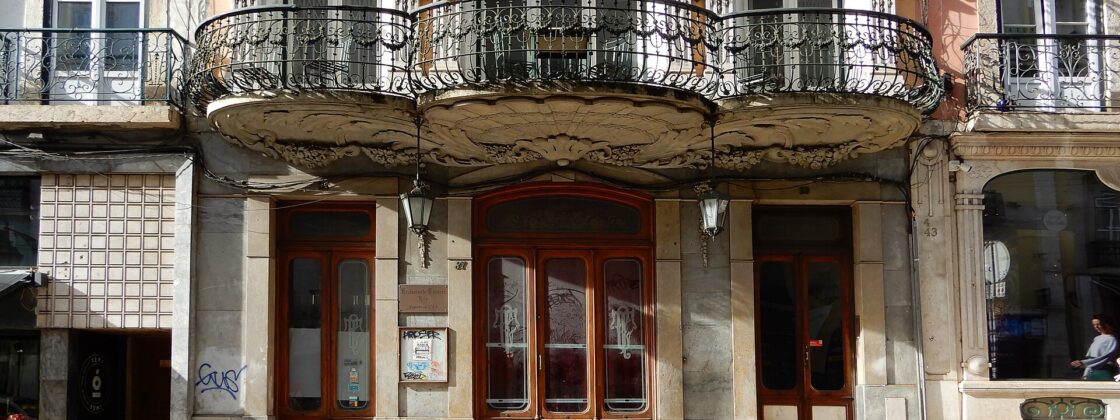
The Belle Époque facade of Restaurante Tavares on Rua da Misericórdia, Chiado: Lisboa – Tavares Restaurant (53658819719) by _morgado, CC BY 2.0, via Wikimedia Commons.