Lisbon Travel Guide
Is Lisbon Safe? Honest Safety Guide for Tourists (2026)
Find out if Lisbon is safe for tourists, solo travelers, and families with our honest guide covering scams, pickpockets, neighborhoods, and safety tips.
In this guide
- The Quick Answer
- How Safe Is Lisbon vs Other Cities?
- Pickpocketing in Lisbon
- Common Scams in Lisbon
- Neighbourhoods to Be Aware Of
- Safe Neighbourhoods
- Solo Female Travel Safety
- Family Safety
- LGBTQ+ Safety
- Health and Medical Safety
- Transportation Safety
- Driving in Lisbon
- Emergency Numbers
- Travel Insurance
- If Something Goes Wrong
- FAQ: Is Lisbon Safe?
- Bottom Line
- Photo Credits
Is Lisbon safe? Yes — overwhelmingly. Lisbon is generally considered safe for visitors, and normal precautions are enough for most trips. Most tourists never experience any problems beyond pickpocketing on Tram 28, and even that is preventable with basic awareness.
Border formalities are the other thing worth getting right before you fly. Our Portugal entry requirements guide covers passport validity, the 90/180 rule and the biometric checks now running at Lisbon.
This is the honest, balanced answer to “is Lisbon safe?” — covering pickpocketing, common scams, neighbourhoods to be aware of (no-go zones don’t really exist), advice for solo female travellers, families, LGBTQ+ travellers, and the small details that turn confused first-time visitors into confident ones. Updated for 2026.
The Quick Answer
Yes, Lisbon is safe. Portugal ranks #4–6 on the Global Peace Index every year, just behind Iceland, Ireland, and Denmark. Violent crime against tourists is rare. Solo female travellers, families, LGBTQ+ visitors, and elderly travellers all generally report feeling comfortable in the city.
The main risk is pickpocketing — on Tram 28 above all, and at the Time Out Market, Bairro Alto’s nightlife streets, and major attractions during peak summer crowds. None of this rises to the level of dangerous; it’s the kind of nuisance that basic precautions eliminate.
How Safe Is Lisbon vs Other Cities?
| City | Safety Index | Pickpocket Risk |
|---|---|---|
| Reykjavik | Very high | Minimal |
| Copenhagen | Very high | Low |
| Vienna | Very high | Low |
| Lisbon | High | Medium (tourist zones only) |
| Berlin | High | Medium |
| London | Medium-High | Medium-High |
| Madrid | Medium-High | High (tourist zones) |
| Paris | Medium | Very high |
| Rome | Medium | Very high |
| Barcelona | Medium | Very high |
Lisbon sits comfortably in the safer half of European capitals — meaningfully safer than Barcelona, Rome, or Paris, but slightly behind Nordic and German cities.
Pickpocketing in Lisbon
This is the only crime category that matters for most tourists. Some context:
Where Pickpockets Operate
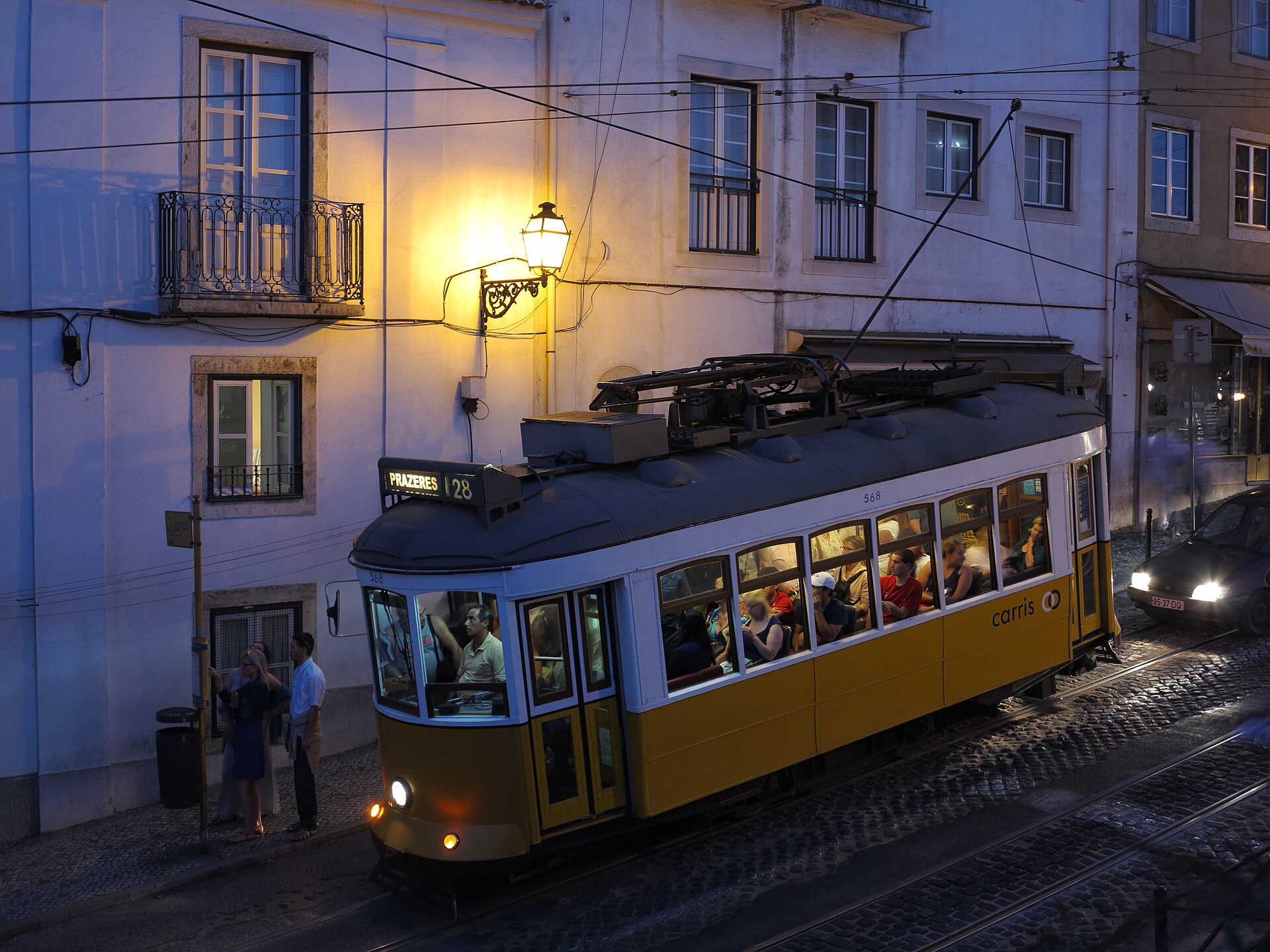
- Tram 28 — the famous yellow tram. The single highest-risk location in Lisbon. Pickpockets target distracted tourists especially at boarding and exiting moments.
- Tram 15E to Belém — second-highest risk on public transit
- Cais do Sodré and Time Out Market — crowded, distracted shoppers
- Around Praça do Comércio and Rua Augusta — peak tourist density
- Bairro Alto and Cais do Sodré nightlife — drunk tourists are easy targets
- Metro Green Line (Cais do Sodré–Martim Moniz section) during rush hour
- Major attractions during peak hours — Jerónimos Monastery and São Jorge Castle queues
How They Work
Lisbon pickpockets are skilled and often work in pairs or groups. Common techniques:
- Distraction theft — one person bumps into you or asks for directions while another reaches into your bag or pocket
- Boarding and exiting trams or metro — squeezing past you at door moments
- Crowded venue jostling — at popular bars or markets, casual contact masks pocket access
- Phone-on-table grabs at café terraces — quick walk-by snatch
- Petition scams near tourist sites — clipboard distraction while accomplice picks pocket
How to Prevent It
Simple rules that prevent 95% of incidents:
- Front pockets only. No wallets in back pockets. No phones in back pockets.
- Bags zipped and worn in front of your body. Crossbody bags at the front, not at the hip.
- Money belt for cash and passport. Worn under clothing.
- Keep phone in a hidden pocket while walking. Pull it out only when stationary.
- Don’t put bags on chair backs at restaurants. Use the floor with the strap looped around your foot, or your lap.
- Don’t board Tram 28 at Praça Martim Moniz. Board mid-route at a less crowded stop.
- Be alert to sudden bumps or commotion. Standard pickpocket distraction signal.
- Carry only what you need each day. Leave your passport in the hotel safe and carry a phone photo as backup.
Common Scams in Lisbon
The Couvert Scam (Restaurants)
Restaurants bring bread, olives, butter, and cheese to your table without ordering. These are charged separately, typically €1.50–€5 per item. Locally this is standard practice, not a scam — but tourists sometimes don’t realise they’re being billed. Say “não, obrigado/a” and the waiter will take it back.
The “Free Drink” or “Free Bracelet” Approach
Around Praça do Comércio and major tourist sites, hustlers approach with “free” tokens — bracelets, photos, drink samples. Once accepted, they demand payment. Polite refusal works.
The Petition Scam
Someone with a clipboard asks you to sign for a charity. While you read or write, an accomplice picks your pocket. Decline politely and walk away.
The Hash Scam
In Bairro Alto, around Rossio, and Praça da Figueira, men approach offering “hash” or “marijuana.” They sell fake substances — often soap, sometimes dangerous — for €15–€30. Just keep walking and don’t engage.
Tuk-Tuk Overcharging
Tuk-tuks targeting tourists often charge €30–€80 for short rides. Always confirm the price in writing upfront. For most central trips, a metered taxi or Uber is far cheaper. See our airport transfer guide for context on official fares.
Restaurant Menus Without Prices
Some tourist-trap restaurants on Rua Augusta present menus without prices. By the time the bill arrives, they’ve added 50–100% over normal rates. Always ask for a printed menu with prices before ordering — walk out if they refuse.
Currency Exchange Scams
Some exchange offices advertise great rates and then add hidden fees. Confirm the total amount you’ll receive in writing before exchanging any cash. See our money in Lisbon guide for safer alternatives.
Fake Police Officers
Extremely rare in Lisbon but occasionally reported. Real Portuguese police are uniformed and never ask for ID or wallets in the street. If approached by anyone claiming to be police in plain clothes, ask to walk together to the nearest police station.
Neighbourhoods to Be Aware Of
Lisbon has no genuine no-go zones. The city is overwhelmingly safe even in poorer neighbourhoods. That said, a few areas warrant slightly elevated awareness:
Intendente, Martim Moniz, Anjos (Late Night)
These central-eastern neighbourhoods have improved significantly over the past decade and are generally safe by day. After 10 PM, they have higher rates of drug dealing and street harassment, particularly along Rua dos Anjos and around Praça Martim Moniz. Still not dangerous in the violent-crime sense — just less pleasant. Uber or taxi after dark; daytime walking is fine.
Cais do Sodré and Pink Street (After Bar Hours)
The nightlife district is safe but rowdy. Late-night drunk tourists are pickpocket targets. Stick to well-lit streets and walk in groups when leaving clubs.
Outer Suburbs (Amadora, Sacavém)
Some Lisbon outer suburbs have higher crime rates, but tourists rarely visit them. Exercise standard urban awareness if you’re travelling through these areas.

Safe Neighbourhoods
Most of central Lisbon is genuinely safe day and night:
- Baixa and Chiado — crowded but safe, well-policed
- Alfama — quiet, residential, low crime
- Bairro Alto — safe but rowdy late at night
- Príncipe Real — affluent residential, very safe
- Avenida da Liberdade — high-end residential and commercial
- Belém — quiet riverside, very safe
- Lapa and Estrela — diplomatic and embassy area, safe
- Campo de Ourique — quiet residential, safe
- Parque das Nações — modern eastern district, safe
Solo Female Travel Safety
Lisbon is widely considered one of Europe’s best cities for solo female travellers. Most women report feeling comfortable walking alone day and night in central neighbourhoods. Standard urban precautions apply:
- Trust your instincts — if a street feels off, change route
- Use well-lit streets after dark, especially around Intendente and outer Cais do Sodré
- Don’t leave drinks unattended at bars (drink-spiking is rare but reported)
- Use Uber or Bolt for late-night transit rather than walking long distances alone
- Catcalls exist but are rarely menacing — usually verbal only
- Stay at accommodations with 24-hour reception or strong building security
Women report dramatically less harassment in Lisbon than in southern Italian or Spanish cities.
Family Safety
Lisbon is excellent for families. Public spaces are pram-friendly (with exceptions for Alfama’s cobblestones), violent crime against children is essentially unheard of, and Portuguese culture is deeply child-positive. Restaurants welcome children warmly.
- Keep children close in crowded tourist areas
- Establish a meeting point for older kids in case of separation
- Note your hotel address in Portuguese for emergencies
- Enrol in your country’s traveller registration programme (e.g., US STEP) for emergency contact
- Carry photos of your children on your phone
- Be especially careful on Tram 28 and at major attractions during peak hours
LGBTQ+ Safety
Portugal is among Europe’s most LGBTQ+-friendly countries. Same-sex marriage has been legal since 2010, gender-identity rights are well-protected, and Lisbon hosts a vibrant Pride event every June. Príncipe Real is widely considered Lisbon’s gay-friendly neighbourhood.
Public displays of affection between same-sex couples are generally accepted in central Lisbon without issue. Older Portuguese in rural areas can be more conservative, but central Lisbon is essentially fully welcoming.
Health and Medical Safety
Healthcare Quality
Lisbon has excellent healthcare. Major hospitals — Hospital de Santa Maria, Hospital São Francisco Xavier, Hospital CUF Descobertas — provide emergency care to European standards. EU citizens with EHIC/GHIC cards receive free emergency care; others should have travel insurance.
Pharmacy Access
Pharmacies (farmácias) are everywhere, identified by a green cross. Many run 24-hour rotations — every farmácia posts the nearest 24-hour location in the window.
Tap Water
Lisbon’s tap water is safe to drink and high-quality. Refillable bottles work perfectly throughout the city.
Sun and Heat
Summer heat (35°C+ peaks in July–August) requires standard precautions: water, sunscreen, hat, mid-day shade. Heatstroke at major outdoor attractions is the most common medical issue for tourists in peak season.
Atlantic Surf
If swimming at Cascais, Estoril, or Costa da Caparica: respect the lifeguard flags. Atlantic currents are stronger than Mediterranean and undertows are real, especially from October through April.
Transportation Safety
Tram 28
Scenic but pickpocket-heavy. If you ride it, board at less-crowded stops mid-route, keep wallets in front pockets, hold bags in front of your body.
Metro
Generally safe. Pickpockets work the Green Line during rush hours. Stations are well-staffed and well-lit.
Walking at Night
Central Lisbon — Baixa, Chiado, Bairro Alto, Príncipe Real, Alfama, Belém — is safe to walk at night. Stick to well-lit main streets after midnight. Use Uber for outer neighbourhoods after dark.
Uber and Bolt Safety
Both are safe and reliable. Pre-paid pricing eliminates haggling. Drivers are vetted. Generally safer than flagging unmarked taxis.
Driving in Lisbon
Driving in Lisbon is more stressful than dangerous. Narrow medieval streets, aggressive driving culture, scarce parking, and confusing one-way systems make it difficult for tourists. Most travellers don’t need to drive in the city at all — public transit and walking cover everything.
If you do drive: parking is your biggest headache. Use licensed lots, never park on the street overnight in tourist zones (vehicle break-ins are reported, though uncommon). Never leave valuables visible in a parked car.
Emergency Numbers
- 112 — universal European emergency (police, fire, ambulance)
- 808 24 24 24 — non-emergency health hotline (Saúde 24)
- +351 21 765 4242 — Tourist Police (PSP), staffed by English-speaking officers, located at Foz Cultura on Praça do Comércio
Save these in your phone before you travel.
Travel Insurance
Highly recommended. €15–€40 for a 1-week trip covers theft of phones, cameras, and wallets (the only meaningful Lisbon risk for most travellers), plus medical emergencies. Compare options at TravelInsurance.com, World Nomads, or through your credit card’s existing travel benefits. For up-to-date safety information from Portugal’s official tourism authority, see visitportugal.com.
If Something Goes Wrong
If You’re Pickpocketed
- Cancel cards immediately via your bank’s app or hotline
- File a police report at the nearest station (required for insurance claims)
- The Tourist Police at Foz Cultura on Praça do Comércio handles most tourist incidents in English
- Keep the police report number for your insurance claim
- Notify your hotel — they often help with replacement documents
If You Lose Your Passport
Contact your country’s embassy in Lisbon. Most major countries — US, UK, Canada, Australia, France, Germany — maintain embassies or consulates. Same-day emergency travel documents are usually possible.
If You Need Medical Care
For non-emergencies, walk into any farmácia or a private clinic. For emergencies, call 112 or go to the nearest emergency room (urgência). EU citizens use EHIC/GHIC; others pay and claim through travel insurance.
FAQ: Is Lisbon Safe?
Is Lisbon safe at night?
Yes, central Lisbon (Baixa, Chiado, Bairro Alto, Alfama, Príncipe Real) is safe to walk at night. Stick to well-lit main streets after midnight. Use Uber for outer neighbourhoods.
Is Lisbon safe for solo female travellers?
Yes — among Europe’s safer capital cities for women travelling alone. Standard urban precautions apply, but most women report feeling comfortable throughout the city. More in our Lisbon solo travel guide.
Is Lisbon safe for families with children?
Yes. Low violent crime and a child-positive culture make it excellent for families. Standard precautions in crowded tourist areas apply.
What is the most dangerous part of Lisbon?
No single area is genuinely dangerous. Intendente, Martim Moniz, and Anjos can have street harassment late at night but aren’t violent. Use taxis or Uber at night in these areas.
How common is pickpocketing in Lisbon?
Common in tourist areas, especially Tram 28, Time Out Market, and major attractions. Easily prevented with basic awareness — front pockets, bags in front, phone out of sight while walking.
Are there many scams in Lisbon?
Yes, but they’re mostly minor. The most common: unrequested couvert (bread, olives) on restaurant tables, fake hash sellers around Rossio, and tuk-tuk overcharging. Easy to avoid once you know they exist.
Is Lisbon safe compared to other European capitals?
Among Europe’s safer capitals — meaningfully safer than Barcelona, Rome, Paris, or Madrid. Slightly behind Nordic and German cities.
Should I get travel insurance for Lisbon?
Yes — €15–€40 for a 1-week trip covers theft of electronics and wallets (the main risk) plus medical emergencies. Worth it.
What should I do if I’m pickpocketed?
Cancel cards immediately, file a police report at the Tourist Police on Praça do Comércio, notify your hotel, and contact your insurance company.
Are taxis safe in Lisbon?
Yes — Lisbon taxis are metered and regulated. Always confirm the meter is running. Uber and Bolt are also safe alternatives with pre-paid pricing.
Bottom Line
Lisbon is generally considered safe for visitors, and normal precautions go a long way. Violent crime against tourists is rare. The main risk is pickpocketing on Tram 28 and at major tourist sites — and it’s preventable with basic awareness (front pockets, bag in front, phone out of sight while walking). Solo female travellers, families, and LGBTQ+ visitors all generally feel comfortable. Use the Tourist Police at Praça do Comércio for any English-language assistance. Get travel insurance, save 112 in your phone, and enjoy the city without anxiety.
Continue planning with our Ultimate Lisbon Travel Guide, our best time to visit guide, our budget travel guide, and our Lisbon packing list.
Photo Credits
Tram 28 at dusk in Alfama: Lisbon Estación Limoeiro by TeWeBs, CC BY-SA 4.0, via Wikimedia Commons.