Shopping
Best Markets in Lisbon: Food, Vintage, Crafts & More 2026
Lisbon's best markets—Mercado da Ribeira, Feira da Ladra, Campo de Ourique market, and weekly artisan and food markets worth visiting.

In this guide
The best markets in Lisbon range from 19th-century food halls to weekly flea markets that have been running on their sites for centuries. From buying lunch at a curated chef’s stall to hunting vintage azulejos at Feira da Ladra to picking up organic produce at the Saturday Príncipe Real garden market — Lisbon’s market culture is one of the city’s best low-cost pleasures, and genuinely worth planning your days around.
From late November the seasonal markets arrive — Wonderland Lisboa in Parque Eduardo VII, free to enter, plus artisan weekends around the city. Our Lisbon in December guide gives an honest verdict on which are worth the trip.
This guide covers the best markets in Lisbon: food, vintage, crafts, organic, and weekly artisan. Updated for 2026.
Lisbon Markets at a Glance
| Market | Type | When | Best For |
|---|---|---|---|
| Mercado da Ribeira (Time Out) | Food hall + traditional | Daily | Top chefs, one roof |
| Mercado de Campo de Ourique | Food hall (local) | Daily | Authentic, no tourist crowds |
| Feira da Ladra | Flea market | Tuesday + Saturday | Vintage, tiles, vinyl |
| LX Market (LX Factory) | Craft market | Sunday | Design, handmade, indie |
| Mercado Biológico Príncipe Real | Organic produce | Saturday morning | Weekend breakfast + shopping |
| Mercado de Arroios | Local fresh produce | Daily morning | Real local market atmosphere |
| Mercado de São Bento | Local food + crafts | Daily | Neighbourhood feel |
| Mercado da Baixa | Pop-up artisan | Periodic | Artisan crafts, seasonal events |
Food Markets
Mercado da Ribeira / Time Out Market
Where: Avenida 24 de Julho, Cais do Sodré
Hours: Sunday–Wednesday 10 AM – midnight; Thursday–Saturday 10 AM – 2 AM
What: Half is curated chef’s food hall (26 stalls + 8 bars); other half is traditional morning produce/fish market (6 AM – 2 PM)
Best for: Sampling Lisbon’s top chefs in one location
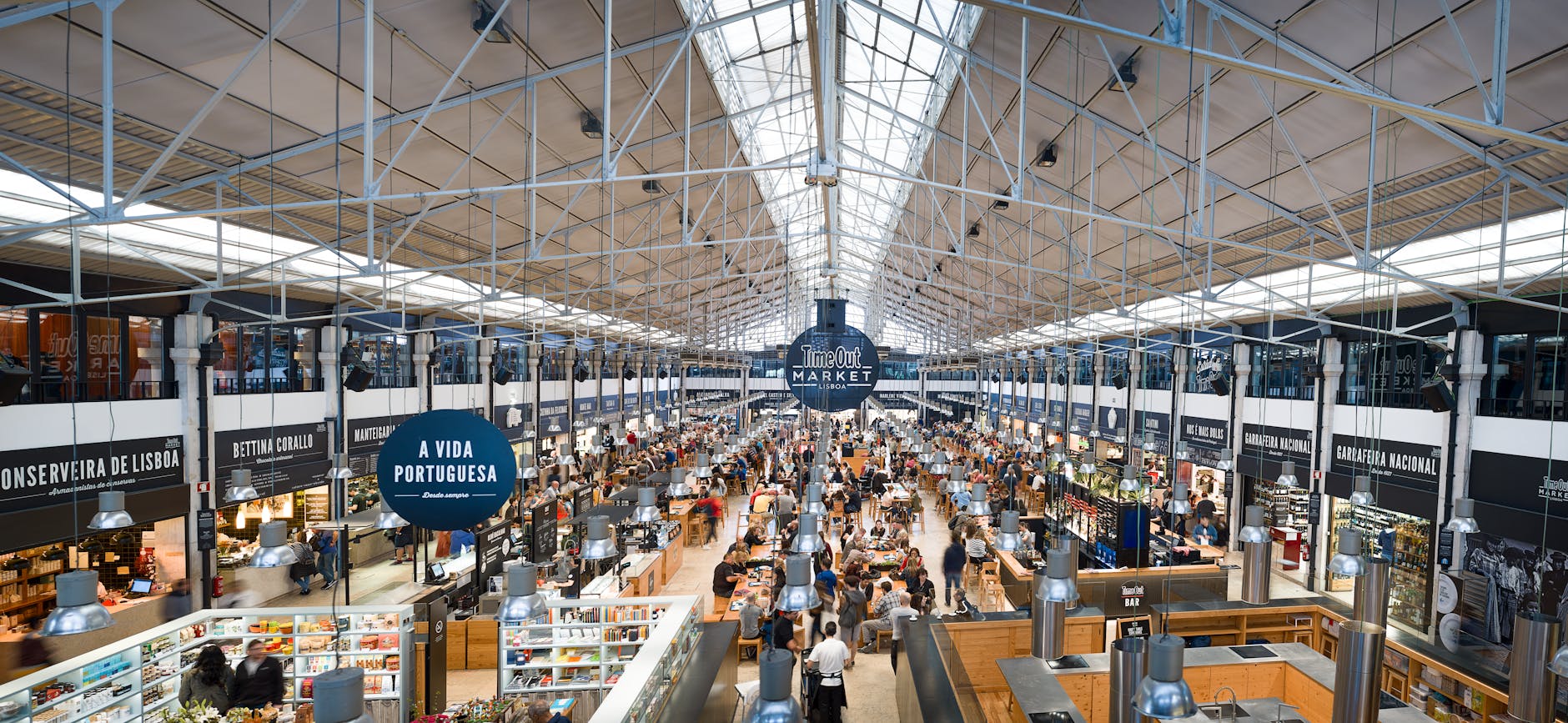
Founded 1882. The food hall opened in 2014 and immediately transformed Lisbon’s dining scene — it was one of the first of its kind in Europe, before the format became ubiquitous. The concept is simple: take an underused historic market building, invite the city’s best chefs to open satellite stalls, add long communal tables. It worked. Manteigaria for pastéis de nata, Henrique Sá Pessoa for octopus, Taylor’s for port. Friday and Saturday nights get genuinely crowded; Sunday afternoons are calmer.
The traditional produce market side of the building operates completely separately — arrive before 2 PM to see the working-market half with its fish stalls, fresh produce, and flower sellers. Completely different atmosphere from the food-hall side. The official Time Out Market website has the current stall lineup and any new additions. See our full Time Out Market guide for stall-by-stall recommendations.
Mercado de Campo de Ourique
Where: Rua Coelho da Rocha 104, Campo de Ourique
Hours: Daily 10 AM – 11 PM (food hall); fresh produce 7 AM – 1 PM
What: 30+ food stalls + traditional grocers; the majority of customers are local
Best for: Local food hall feel without Time Out crowds
Founded 1934. This is what Time Out Market looked like before the design budget arrived. Smaller, friendlier, and used by the neighbourhood far more than by tourists. Tram 28 stops right outside, making it an easy addition to a tram-day itinerary. Traditional Portuguese stalls alongside international fusion, at prices generally lower than Ribeira. Excellent choice for lunch on a weekday — you eat well without paying tourist-market premiums.
The Campo de Ourique neighbourhood itself is one of Lisbon’s most pleasant residential areas — quiet streets, good coffee, the kind of place locals actually live. Worth a 20-minute wander after the market.
Mercado de Arroios
Where: Rua Ângela Pinto, Arroios
Hours: Tuesday–Sunday 8 AM – 2 PM
What: Working-class fresh-produce market; recently renovated
Best for: Real local market experience away from tourists
One of Lisbon’s most authentic markets. The Arroios neighbourhood has a large South Asian and African community — the market reflects this with produce and ingredients you won’t find at more central locations. Excellent fresh fish every morning, good prices on herbs and vegetables. Not a tourist destination in any sense, which is exactly the point. Go before 10 AM for the best selection.
Mercado da Encarnação (Olaias)
Where: Bairro da Encarnação
What: Traditional working-class market
Best for: Off-the-tourist-track local atmosphere
One for the genuinely curious: a completely untouristy neighbourhood market serving the large Encarnação residential area in the east of the city. You’ll almost certainly be the only visitor. The market sells the basics — vegetables, fish, bread, cheap household goods. A useful reminder that Lisbon isn’t only about heritage tourism and food halls.
Flea Markets and Vintage
Feira da Ladra
Where: Campo de Santa Clara, near Panteão Nacional
When: Tuesday and Saturday, 9 AM – 5 PM
What: Lisbon’s legendary flea market, running on this site for centuries
Best for: Antiques, vintage clothes, vinyl records, azulejo tiles, weird curiosities
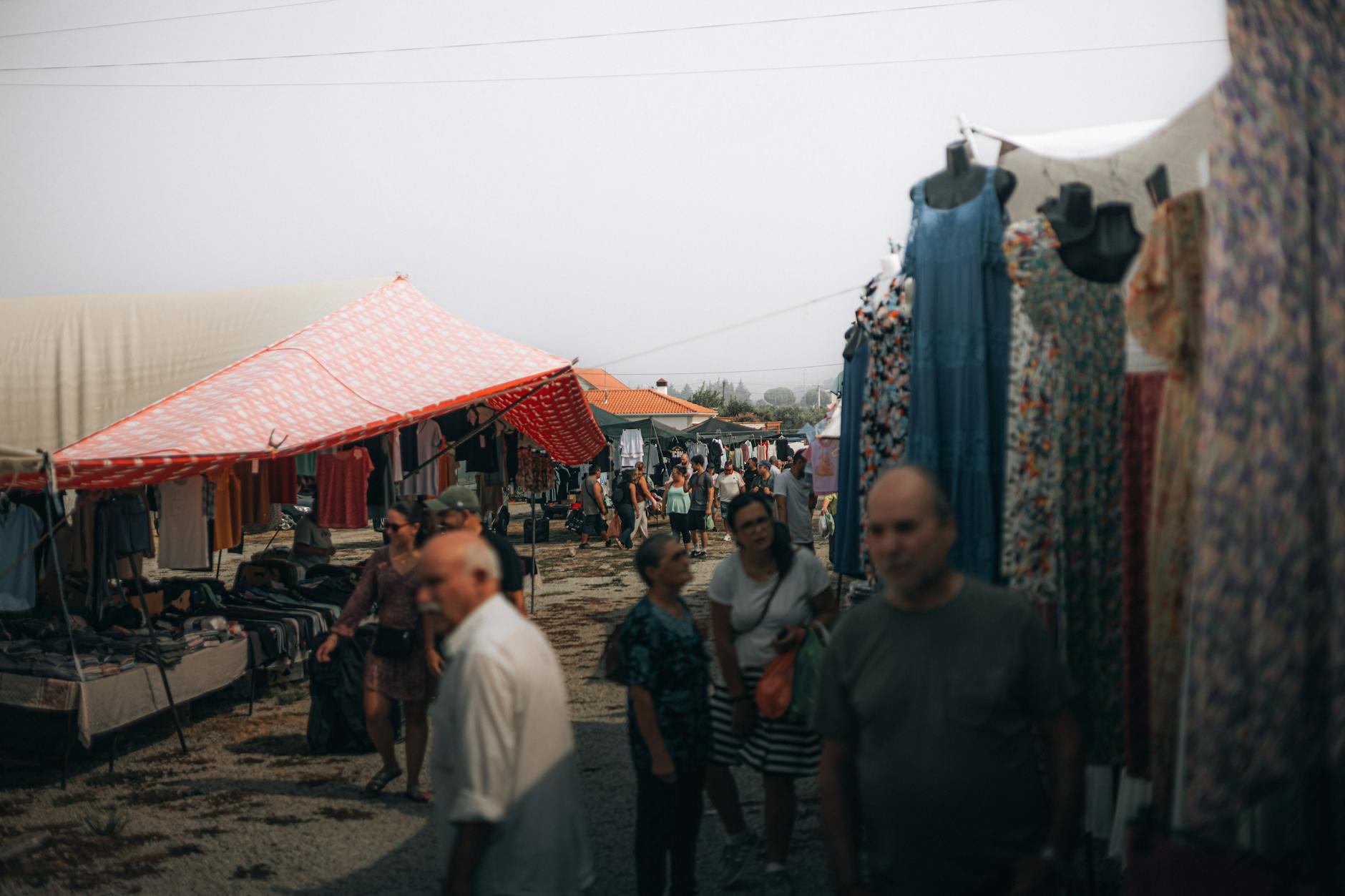
The name translates to “Thief’s Fair” — though the etymology is contested (some say ladra referred to old fabric, not theft). It has been operating on or near Campo de Santa Clara since at least the 13th century. Hundreds of stalls spread across the sloping square below the Panteão Nacional. The quality varies enormously: genuine antiques and junk sit side by side, which is most of the fun. Bargaining is expected and normal.
The best stalls are the permanent ones at the far end of the market near the church — those vendors tend to have better stock and know what they have. The outer edges are more chaotic and sometimes more interesting. Saturday mornings are busiest; Tuesday mornings have fewer tourists and can have better pickings from vendors who cleared out storage. Arrive before 11 AM either day for the full market. See our full Feira da Ladra guide.
What to Buy at Feira da Ladra
- Vintage azulejo tiles (€5–€50 each) — verify they’re authentic hand-painted Portuguese tiles, not Spanish or Chinese imports; check the underside for Portuguese kiln marks
- Used books in Portuguese, English, and French — 19th-century Portuguese editions occasionally surface
- Vintage clothes — selection varies week to week but real finds are possible, especially early in the day
- Vinyl records: Portuguese fado pressings, international rock, jazz — some vendors specialise in records exclusively
- Old kitchenware, ceramics, silver cutlery sets
- Antique furniture (some authentic, some replicas — ask for provenance before paying serious money)
- Cork accessories from local craftspeople at the market periphery
Navigating Feira da Ladra: Practical Tips
The market divides roughly into three zones. The upper section near Santa Engrácia (Panteão) has more established vendors with antiques and art. The central slopes have mixed merchandise — clothes, ceramics, books, curiosities. The outer lower edges are looser, with vendors who set up blankets on the ground selling whatever they’ve pulled from storage. That last zone is where the genuinely unexpected finds tend to appear.
Cash is essential. Most vendors won’t have card terminals. ATMs are available at Cais do Sodré or Alfama; there are none immediately at Campo de Santa Clara. Bring more than you think you’ll spend — markets have a way of generating desire.
Craft and Artisan Markets
LX Market (LX Factory)
Where: LX Factory, Rua Rodrigues de Faria, Alcântara
When: Sunday, 10 AM – 6 PM
What: Curated indie craft market
Best for: Handmade design, vintage clothes, local artisans
Less touristy than Feira da Ladra, more design-focused. Each Sunday, vendors fill the central cobbled street of LX Factory with handmade jewellery, ceramics, vintage clothes, screenprinted textiles, leather goods, and crafts. The market shares the space with the LX Factory’s permanent shops and restaurants — worth combining with lunch at one of the factory’s restaurants or a coffee at Ler Devagar (the bookshop inside an old printing press). See our LX Factory walkthrough for the full picture of the complex.
The Alcântara location means fewer casual tourists than Chiado or Alfama markets — the people browsing here tend to have made the effort intentionally. Good place to find Portuguese designers at early-career prices. The quality control is better than Feira da Ladra but it’s smaller.
Mercado de Artesanato (Various)
Rotating artisan markets pop up monthly in Praça do Comércio, Príncipe Real, and other central squares. Check the Lisbon municipal events calendar for current schedule. These tend to be higher-quality and higher-priced than the flea market, focused on contemporary artisan work rather than vintage — ceramics, textiles, jewellery, and speciality food products from across Portugal. A good option if you want to buy directly from a maker.
Underdogs Public Art Store
Not strictly a market but a curated shop in Mouraria selling prints, books, and merchandise from Lisbon’s leading street artists. Worth a visit if street art is your interest — the selection is far more serious than the typical tourist poster shop.
Organic and Specialty Markets
Mercado Biológico do Príncipe Real
Where: Jardim do Príncipe Real
When: Saturday, 9 AM – 2 PM
What: Organic produce, artisan bread, raw honey, homemade preserves
Best for: Healthy weekend breakfast and quality food shopping
Small but high-quality. Mostly Portuguese small-scale farmers selling directly — many the same vendors week after week who know their regulars. The bread stalls are excellent: proper sourdough, regional breads from Alentejo wheat, corn bread from the north. Coffee carts and ready-to-eat snacks (pastéis, fruit, cheese) make this a comfortable Saturday morning stop.
The Jardim do Príncipe Real itself is one of Lisbon’s nicest squares — an enormous old cedar tree shades the central fountain, surrounded by good cafes and the antique shops of the Príncipe Real neighbourhood. After the market, linger for a coffee. The area is popular on weekends but not overcrowded the way Alfama tends to be.
Quinta dos Sete Nomes (Sintra Market)
Saturday morning organic market in Sintra. Worth visiting if you’re already making the day trip; not a Lisbon market but accessible by train from Rossio Station in about 40 minutes.
Christmas Markets
December brings seasonal Christmas markets to several central locations:
- Rossio Square — large central market with food, crafts, mulled wine; the most central option
- Praça do Comércio — illuminated, more upscale, with a dramatic riverside setting
- Wonderland Lisboa (Eduardo VII Park) — large family-oriented market with ice rink, carnival rides, and food stalls
These typically operate mid-November through early January. Wonderland Lisboa is the largest and most commercial; Rossio tends to have better food. Check the Lisbon municipality website for dates each year as they vary slightly.
What to Buy at Lisbon Markets
Authentic Souvenirs Worth Buying
- Cork wallets and bags — LX Market has several good cork-goods vendors; also see Cork & Co in Chiado
- Hand-painted azulejos — vintage at Feira da Ladra; new from Sant’Anna (Chiado) or Viúva Lamego (Intendente)
- Portuguese ceramics: Bordallo Pinheiro’s signature cabbage-leaf pieces at LX Factory; hand-thrown pottery from Estremoz or Barcelos
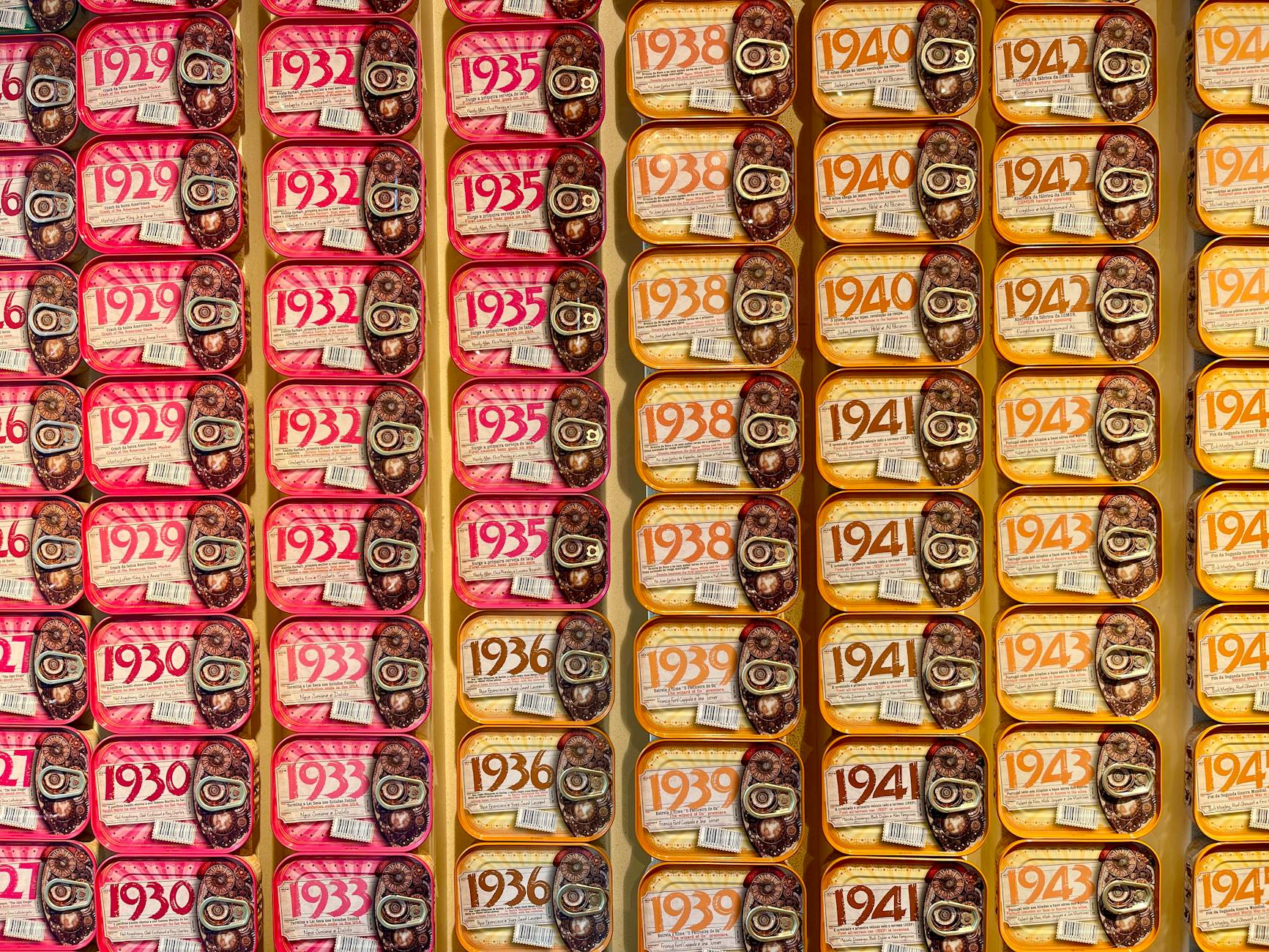
- Conservas (gourmet canned fish): multiple stalls at Ribeira market, or dedicated shops like Loja das Conservas near Praça do Comércio, and A Vida Portuguesa
- Olive oil and Flor de Sal sea salt — premium Portuguese versions, very good quality-to-price ratio
- Vintage fado and Portuguese folk records from Feira da Ladra — often pressed on original labels in the 1960s–80s
- Books: Portuguese literature in translation is worth seeking; Bertrand in Chiado is the world’s oldest operating bookshop (founded 1732) and worth a browse
For a deeper guide to shopping decisions, see our best souvenirs guide and our dedicated azulejo shopping guide, which covers how to spot authentic tiles vs. imports.
What to Avoid
- Mass-produced “Lisbon” magnets and printed t-shirts — sold at every tourist shop in Alfama, made in China
- “Cork-printed” plastic claiming to be cork
- Tiles imported from Spain or China sold as “Portuguese azulejos” — check the underside for Portuguese kiln marks; hand-painted Portuguese tiles have a characteristic weight and glaze
- Antique reproductions sold as genuine antiques — ask for provenance before paying serious money at Feira da Ladra
Market Etiquette
- Bargaining at Feira da Ladra: yes, expected — start around 60–70% of asking price; vendors expect to negotiate, especially if you’re buying multiple items
- No bargaining at food halls (Ribeira, Campo de Ourique) or organic markets — prices are fixed
- Cash preferred at most flea markets and outdoor stalls; Time Out Market is cards-only with individual terminals at each stall
- Bring your own bag — plastic bags are charged or unavailable throughout Portugal
- Photography is generally fine at markets; ask before photographing people or their stalls up close
- Arrive early at fresh-produce markets — the best fish and produce goes by 10–11 AM
- Tuesdays at Feira da Ladra are quieter than Saturdays — better for browsing without the weekend crowd
Getting to the Main Lisbon Markets
All four main markets are well-served by public transit. See our Lisbon transportation guide for how to navigate the city.
- Mercado da Ribeira / Time Out Market: 2-minute walk from Cais do Sodré station (commuter train, metro Green line, multiple buses)
- Feira da Ladra: Tram 28 to Campo de Santa Clara, or buses 734/756. The tram is the classic approach — it deposits you at the market’s uphill edge
- LX Factory / LX Market: Tram 15E or 18E to Calvário stop in Alcântara; or suburban train to Alcântara-Terra station
- Mercado Biológico Príncipe Real: Bus 758, or a 15-minute walk from Chiado; Rato metro station is a 10-minute walk uphill
- Mercado de Campo de Ourique: Tram 28 stops directly outside on Rua Coelho da Rocha
Lisbon Market Day Itinerary (Saturday)
The ideal Lisbon market day on a Saturday:
9:30 AM — Coffee + Mercado Biológico do Príncipe Real (organic shopping, sourdough, breakfast snacks)
11:00 AM — Tram or bus to Feira da Ladra (vintage hunt; give yourself 90 minutes minimum to cover it properly)
1:00 PM — Tram or bus to Cais do Sodré; lunch at Time Out Market / Mercado da Ribeira
3:00 PM — Walk or tram to Campo de Ourique for an afternoon coffee and browse of the neighbourhood
5:30 PM — Cocktails at Pensão Amor (100m from Time Out Market, built into a former brothel)
On Sundays, swap Feira da Ladra for LX Market (Campo Santa Clara is closed on Sundays) and start in Alcântara: LX Market from 10 AM, then Time Out for lunch, then Príncipe Real area in the afternoon.
FAQ: Markets in Lisbon
What’s the best market in Lisbon?
For food: Time Out Market (Mercado da Ribeira) — largest selection, best chefs, great atmosphere. For vintage and antiques: Feira da Ladra — centuries old and genuinely varied. For local food-hall feel without tourists: Mercado de Campo de Ourique — same quality, fraction of the crowds.
When is the Feira da Ladra flea market?
Tuesday and Saturday, 9 AM – 5 PM, at Campo de Santa Clara near the Panteão Nacional. Tuesdays are quieter and sometimes better for finds.
Are Lisbon markets cash only?
Time Out Market is cards-only (each stall has its own payment terminal). Most other food halls accept both cash and card. Feira da Ladra is mostly cash — bring €20–50 in small notes if you plan to buy.
Can I bargain at Feira da Ladra?
Yes — bargaining is expected and normal. Offer around 60–70% of the asking price as a starting point. A polite counter-offer usually gets a reasonable response; don’t be aggressive. Buying multiple items from one vendor strengthens your negotiating position.
What’s a good organic market in Lisbon?
Mercado Biológico do Príncipe Real, Saturday mornings in the Jardim do Príncipe Real. Small but high-quality, mostly Portuguese small-scale farmers selling directly. Arrive before 11 AM for the best selection.
Is the Sunday LX Market worth it?
Yes, for indie crafts and contemporary Portuguese design. Smaller than Feira da Ladra but better curation and more contemporary work. Combine with lunch at one of LX Factory’s restaurants for a solid Sunday afternoon.
What’s the difference between the two halves of Mercado da Ribeira?
The Time Out food hall occupies the east wing — 26 chef stalls open until midnight (2 AM weekends). The traditional produce market occupies the west wing and runs from 6 AM to 2 PM daily. They’re in the same building but completely different in character. Most tourists only see the food hall; the produce market is worth seeing if you’re there before 2 PM.
Bottom Line
Lisbon’s market scene is one of the city’s best low-cost cultural experiences. Time Out for curated food from serious chefs, Mercado de Campo de Ourique for local atmosphere, Feira da Ladra for vintage treasures (Tuesday or Saturday — check our detailed Feira da Ladra guide), and LX Market for indie crafts (Sunday). Save Saturday for a market crawl: organic breakfast at Príncipe Real, then Feira da Ladra, then Time Out lunch at Cais do Sodré. That’s a near-perfect Lisbon morning for under €30.
Markets are where most of the good souvenir shopping happens. Feira da Ladra gets its own guide because it rewards a strategy, the souvenirs guide covers what is worth buying anywhere in the city, azulejo tiles need their own set of cautions, and the shopping pillar covers the streets and boutiques beyond the stalls.