Lisbon Travel Guide
How Much Does a Trip to Lisbon Cost? Complete Budget Breakdown (2026)
Detailed breakdown of how much a trip to Lisbon costs—accommodation, food, attractions, and transit. Sample budgets for every travel style.
In this guide
How much does a trip to Lisbon cost? The honest answer: anywhere from €40/day for ultra-budget backpackers to €500+/day for luxury travelers, with most people landing around €100–€180/day. Lisbon is mid-priced for Western European capitals — significantly cheaper than London, Paris, or Amsterdam, broadly comparable to Madrid or Athens. Updated for 2026.
For the wider picture — how Lisbon compares to Madrid, Barcelona and Porto, and where the city is still genuinely cheap — see is Lisbon expensive?
Every range on this page sits at its lowest in January. Our Lisbon in January guide covers what those prices buy you — and the closures that come with them.
This guide breaks down the real costs of every major trip category — flights, accommodation, food, transit, attractions, and day trips — with verified 2026 figures, realistic sample budgets for four travel styles, hidden costs to watch out for, and a full set of money-saving tactics.
Daily Budget by Travel Style — Quick Answer
| Style | Per day per person | What it gets you |
|---|---|---|
| Ultra-budget backpacker | €40–€60 | Hostel dorm, tascas, free sights |
| Smart budget | €70–€100 | Private guesthouse room, mix of eating in/out |
| Comfortable mid-range | €120–€200 | Mid-range hotel, restaurant meals, paid attractions |
| Upscale | €280–€450 | Boutique hotel, good restaurants, tours |
| Luxury | €500+ | Five-star, Michelin dinners, private guides |
The single biggest variable is accommodation. Food, attractions, and transit are reasonably affordable at every level. A mid-range hotel in July costs nearly double what it costs in February — plan around that more than anything else.
Flights to Lisbon
How much you spend getting to Lisbon depends entirely on where you’re flying from and when you book. The good news: Lisbon is one of the better-served European hubs for budget carriers, and the transatlantic market has grown significantly in recent years.
From the UK: Ryanair and easyJet dominate the London–Lisbon route. Off-peak return fares start around £80–£120; summer peak (July–August) pushes Ryanair to £150–£250 return and easyJet higher still. TAP Air Portugal flies from Heathrow and Gatwick with more legroom and checked bags included — expect to pay £180–£350 depending on timing. British Airways is typically pricier at £280–£450 return in summer. November is the cheapest month to fly London–Lisbon. The flight is roughly 2 hours 20 minutes.
From the US: TAP Air Portugal operates direct flights from New York, Boston, Washington, Miami, and several other US cities. Return fares from New York typically run $600–$950 off-peak; summer peak adds $200–$300. Budget roughly $500–$900 return from the East Coast; $800–$1,200 from the West Coast depending on routing.
From the rest of Europe: Lisbon is an easy hop from almost anywhere — budget €60–€150 return from most major European cities.
Lisbon’s airport (Humberto Delgado, LIS) is 7 km from the city center. The metro red line runs directly from the terminal to downtown — a single ticket costs €1.90 and takes about 25 minutes. Taxis and Uber/Bolt run €10–€18 to central Lisbon. See the airport transfer guide.
Accommodation Costs in Lisbon
| Type | Per night |
|---|---|
| Hostel dorm bed | €18–€35 |
| Guesthouse / pensão | €60–€100 |
| Mid-range hotel | €140–€280 |
| Boutique 4-star | €220–€400 |
| Luxury 5-star | €450–€1,500+ |
Hostel dorm beds in Lisbon run €18–€35/night — competitive with other Southern European capitals, and the hostel scene is genuinely good. Several award-winning hostels sit in Bairro Alto and Chiado. Private rooms in hostels or small guesthouses (pensões) push to €60–€100 for a basic but clean double.
Mid-range hotels (€140–€280/night) are the most popular category for independent travelers. The range covers 3-star and solid 4-star properties across the center — Baixa, Chiado, Príncipe Real, Intendente. Quality is generally good and the location premium is well worth it.
Boutique and 4-star properties in the €220–€400 range deliver excellent rooms with character — converted palaces, tiled façade buildings, rooftop pools. Alfama and Mouraria have the best architectural stock; Príncipe Real tends to be quieter and slightly more expensive for a similar product.
Luxury (€450+): Bairro Alto Hotel, Palácio da Anunciada, and Fontecruz Lisboa sit in the €400–€800/night bracket. At €1,000+/night you’re into private villa territory or the finest suites.
The cheapest areas for accommodation are Anjos and Areeiro — residential neighborhoods on the metro with apartments running 30–50% less than equivalent places in Baixa or Chiado. Alfama and Bairro Alto command premiums for atmosphere; Belém is quieter and slightly cheaper. See our hotel recommendations by neighbourhood and best hostels guide.
Seasonal swing: High season (June–August) pushes mid-range hotel rates up 40–80% versus low season (November–February). Shoulder season (April–May, September–October) offers the best combination of good weather and reasonable prices.

Food and Drink Costs
Food is one of Lisbon’s genuine bargains. A full prato do dia lunch — soup, main, bread, dessert, and a drink — costs €8–€14 at a local tasca. Dinner at a nice restaurant that a local would actually go to runs €20–€40 per person including wine. The extremes are low (€1.30 pastel de nata, €0.80 espresso at a stand-up café counter) and high (€130–€280 for a Michelin tasting menu).
| Item | Cost |
|---|---|
| Pastel de nata | €1.30 |
| Espresso | €0.80–€1.50 |
| Bifana sandwich | €3.50–€5 |
| Tasca lunch (prato do dia) | €8–€14 |
| Casual restaurant dinner | €20–€35 |
| Mid-range restaurant dinner | €40–€75 |
| Michelin tasting menu | €130–€280 |
| House wine glass | €2–€4 |
| Cocktail (rooftop bar) | €10–€18 |
| Beer (kiosk / quiosque) | €2–€3 |
| Beer (restaurant) | €2.50–€5 |
Tasca lunches are the single best cost-saving tactic in the city. The prato do dia is typically a generous portion of grilled fish or meat, plus soup, bread, and a glass of wine or water. At €8–€14 with everything included, it’s cheaper than a sandwich at an airport café and far better. Most residential neighborhoods have a cluster of tascas aimed at locals on lunch break — Mouraria, Intendente, Campo de Ourique, and Santos are all good hunting grounds.
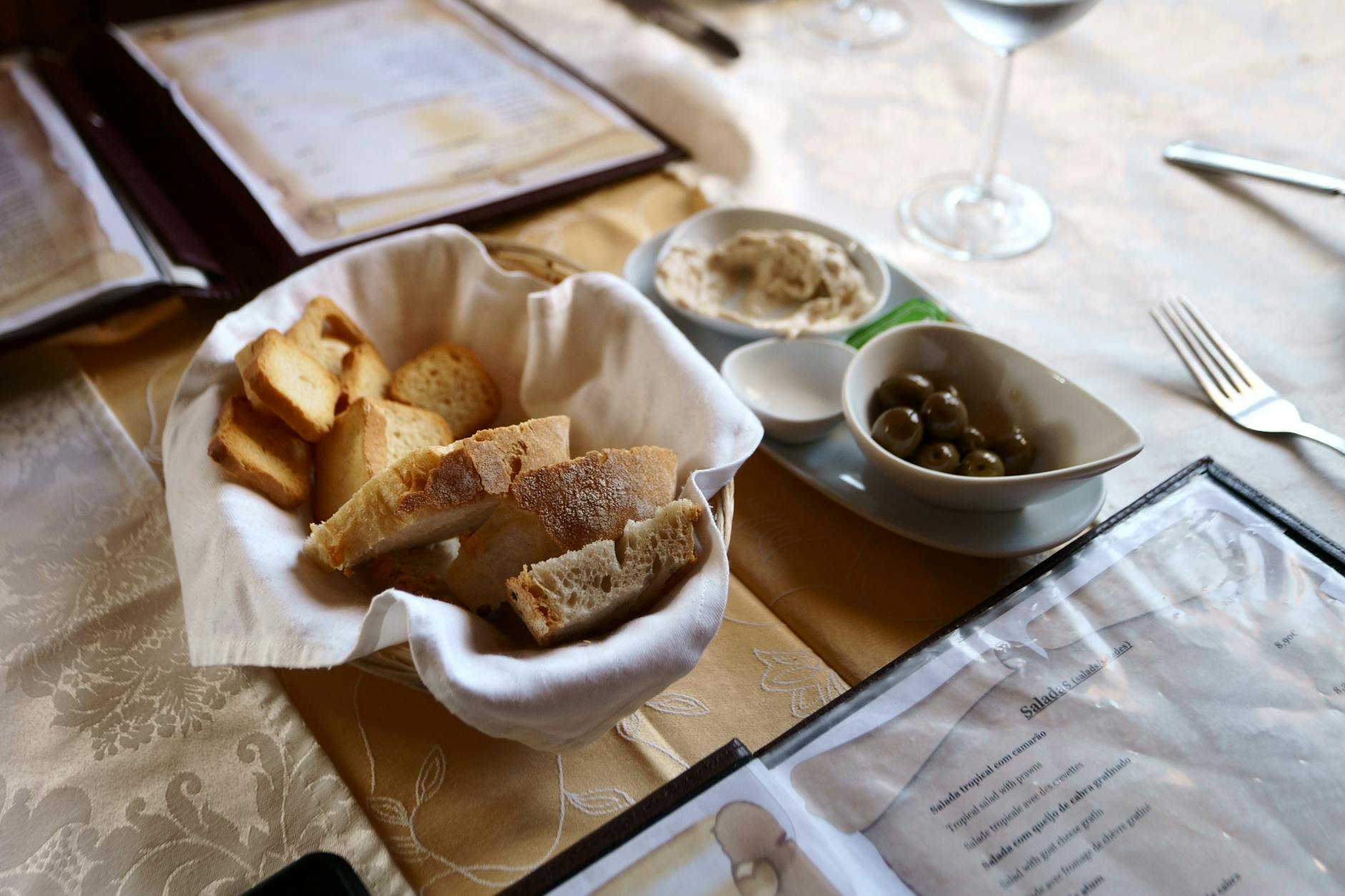
The cover charge (couvert): Bread, olives, and butter brought to your restaurant table are not free — they’re the couvert, typically €2–€4 per person. You’re entitled to wave them away. It’s not a scam, just a custom. Know before you go.
Wine is cheap relative to most European capitals. A glass of house wine at dinner runs €2–€4; a decent bottle at a mid-range restaurant costs €15–€30. Supermarket wine (Pingo Doce or Continente) is extraordinary value — solid Portuguese reds and whites for €3–€10 a bottle. If you’re self-catering any meals, buy wine at the supermarket rather than a corner shop.
Fado dinner shows: Budget €45–€80 per person at a proper casa de fado. Fado vadio (informal neighborhood fado) costs roughly the price of a meal and a drink at the tasca hosting it — no ticket required.
Transit Costs
Lisbon’s metro, buses, and trams all use the same card and ticketing system. The Viva Viagem card (€0.50 for the reusable card itself) is the standard option for tourists. A single trip on the metro, bus, or tram costs €1.90 with a loaded card. For heavy transit days (4+ rides), the 24-hour pass is better value.
| Service | Cost |
|---|---|
| Single metro/bus/tram ride | €1.90 with Viva Viagem |
| 24-hour transit pass | €7.25 |
| Lisboa Card 24h | €31 |
| Lisboa Card 48h | €51 |
| Lisboa Card 72h | €62 |
| Airport metro (single trip) | €1.90 |
| Airport taxi / Uber | €10–€18 |
| Train to Sintra (round trip) | €4.60 |
| Train to Cascais (round trip) | €4.60 |
The Lisboa Card includes unlimited transit plus free entry to 50+ attractions. At 72 hours for €62, it pays off if you’re planning to hit São Jorge Castle (€15), Jerónimos Monastery (€21), Belém Tower (€15), and a museum or two. Skip it if you’re spending most of your time at free viewpoints and neighborhoods. See our complete metro guide and Lisbon transportation guide.
Uber and Bolt are active in Lisbon and cheaper than traditional taxis for most short trips. A ride across the center costs €4–€8. Useful for getting back from a late-night dinner when trams have stopped, or for areas not well-served by the metro. For the airport, the metro almost always makes more sense unless you have heavy luggage.
Tram 28 costs the same as any other Carris vehicle — €1.90 with a Viva Viagem tap. Avoid buying single-use paper tickets on board (€3 each). The day pass covers it. See our Lisbon tram routes explained for routing and timing tips.
Attraction Costs
| Attraction | Cost |
|---|---|
| São Jorge Castle | €15 |
| Jerónimos Monastery | €21 |
| Belém Tower | €15 |
| Pena Palace + Park | €20 |
| Quinta da Regaleira | €15 |
| Calouste Gulbenkian | €10–€14 |
| National Tile Museum | €8 |
| MAAT | €11 |
| Lisbon Oceanarium | €25 |
| Carmo Convent | €7 |
| National Pantheon | €8 |
Free attractions: Lisbon’s miradouros (viewpoints) are free. Praça do Comércio, Rossio, and the Alfama streets cost nothing. The Núcleo Arqueológico under the Millennium Bank building is free (reservation required). Walking costs nothing in a city built for pedestrians. See our miradouros guide for the full free list.
Timed entry and pre-booking: Several of Lisbon’s top attractions now require advance booking — Jerónimos Monastery in particular sells out for popular timeslots weeks ahead in summer. Book online before you arrive; same-day walk-up tickets are sometimes unavailable. Pre-booking doesn’t usually change the price but saves queuing.
Museum free days: Several national museums offer free entry on Sunday mornings (until 2 PM). Check individual museum websites before your visit — the National Tile Museum and Jerónimos are among those that have historically offered this, though schedules can change seasonally.

Day Trip Costs from Lisbon
| Destination | Train | Entry fees | Total day cost |
|---|---|---|---|
| Sintra | €4.60 return | €20–€45 (palaces) | €40–€70 |
| Cascais | €4.60 return | Mostly free | €20–€35 |
| Setúbal / Arrábida | No direct train | Free beaches | €40–€60 (bus+taxi) |
Sintra is the big-ticket day trip. The train from Rossio Station is cheap (€2.30 each way), but the palaces each charge €15–€20 separately. Do two in a day and you’re looking at €35–€45 in entry fees on top of transport. The Sintra day trip guide has the full breakdown. Cascais is the opposite — the town and beaches are free; the train is cheap. See the Cascais guide.
Organized day tours from Lisbon to Sintra, Cascais, or the Arrábida coast typically run €35–€65/person. They handle transport, skip queues, and add a guide — worth considering if you want Sintra without the planning overhead. Going independently is still cheaper by €10–€25 per person and more flexible.
Nightlife Costs
Lisbon’s nightlife is spread across several different scenes — Bairro Alto’s street party, the riverside club strip in Santos and Alcântara, fado in Alfama, and a live music scene in LX Factory and beyond.
Bars: Most bars in Bairro Alto and Cais do Sodré don’t charge entry. A beer runs €2.50–€5 depending on whether you’re at a kiosk or a cocktail bar. Cocktails in styled venues (rooftop bars, hotel terraces) run €10–€18. The habit of drinking on the street outside is widespread — bars sell takeaway cups and prices stay low.
Clubs: Lux Frágil — the anchor of the Lisbon club scene since 1998 — charges €15–€20 entry. Music Box and similar venues in Cais do Sodré run €10–€15. Budget clubs near Intendente are cheaper. Some nights have no entry charge but expect higher drink prices inside.
Fado shows: The tourist-facing casas de fado in Alfama and Chiado package dinner and show for €45–€80 per person. Entry-only to some venues runs €20–€30 with a drinks minimum. Fado vadio in a neighborhood tasca costs €10–€15 in food and drink, no ticket. That’s the better option if you can find it — ask at your accommodation.
Hidden Costs
Three costs catch first-time visitors off guard in Lisbon:
Tourist tax (taxa turística): €4 per person per night, capped at 7 nights — maximum €28 per person per stay. Collected by hotels, hostels, and short-term rentals at check-out. Children under 13 are exempt. Applies to all accommodation types including Airbnb. Confirmed unchanged for 2026.
The couvert: Those olives, cheese, or bread that appear unbidden on your restaurant table cost €2–€4 per person. You can refuse them when they arrive. If you eat them, you pay for them. Entirely legal and declared on every menu by law — but easy to miss if you’re not looking.
Tipping: Not obligatory, but rounding up or leaving 5–10% at sit-down restaurants is the local norm. Don’t feel obliged at counter service, pastelarias, or tascas. See our tipping guide for the full breakdown.
Sample Trip Budgets
Ultra-Budget 5-Day Lisbon (€280 per person)
Possible if you’re disciplined. Hostel dorms, prato-do-dia lunches, supermarket dinners, free viewpoints, one or two paid attractions. Here’s the math:
- 5 nights hostel dorm: €100
- 5 day passes: €36
- Self-catering breakfasts: €20
- 5 prato-do-dia lunches: €55
- 5 cheap dinners: €40
- 2 paid attractions: €30
- Free attractions + viewpoints
This is lean but genuinely enjoyable — Lisbon’s free sights (Alfama streets, miradouros, Praça do Comércio, Belém riverside) are some of its best. The €50/day mark is achievable in low season; July and August makes it harder on accommodation.
Mid-Range 5-Day Lisbon (€800 per person)
Mid-range hotel, restaurants for most meals, Lisboa Card for a couple of days, one Sintra day trip:
- 5 nights mid-range hotel: €750
- 72-hour Lisboa Card + 2 days passes: €68
- 5 café breakfasts: €25
- 5 mid-range lunches: €100
- 5 mid-range dinners: €200
- 5 paid attractions: €70
- Drinks and incidentals: €100
- Sintra day with palaces: €40
This is the most common travel style. The hotel is the dominant line item — book three to four months ahead for July–August stays or face either paying 30% more or settling for a lesser location.
Comfortable 5-Day Lisbon (€1,400 per person)
Boutique hotel, good restaurants nightly, one Michelin meal, private Sintra guide:
- 5 nights upscale boutique hotel: €1,000
- Lisboa Card + transit: €80
- 5 hotel breakfasts: €100
- 5 lunches: €150
- 5 dinners (1 Michelin): €450
- Attractions including private guide for Sintra: €250
Luxury 5-Day Lisbon (€3,500+ per person)
Five-star property, multiple Michelin meals, private transportation, spa:
- 5 nights at Four Seasons: €2,500
- Private chauffeur airport: €100
- 5-star meals: €700
- Multiple Michelin dinners: €600
- Private Sintra and Cascais tours: €600
- Spa and incidentals: €400
Seasonal Price Swings
Summer (July–August) is expensive across all categories. Hotel rates at the mid-range level routinely double versus February–March. Flight fares from the UK and US peak in July and August. Even restaurants are more crowded and tourist-facing menus trend higher. Arrive in November and Lisbon genuinely feels like a different cost environment.
Shoulder season — April–May and September–October — is the sweet spot. Weather is excellent (20–26°C), hotel rates are 25–40% below peak, and the city is more navigable. The best time to visit Lisbon guide breaks down the seasonal trade-offs in more detail.
Money-Saving Tips
- Travel in shoulder season (April–May, September–October) for 30–40% lower hotel rates
- Eat the prato do dia at lunch (€8–€14 vs €20+ at dinner)
- Use 24-hour transit passes if taking 4+ rides daily
- Buy Lisboa Card if visiting 4+ ticketed attractions in 2–3 days
- Drink at quiosques (€2–€3 beers) instead of rooftop bars (€10–€18)
- Stay in Anjos or Areeiro for 30–50% cheaper apartments than central
- Skip Pastéis de Belém dining room (no extra cost; takeaway is better)
- Free walking tours instead of paid (€5–€15 tip vs €40–€80 fee)
- Airport metro instead of taxi — saves €10–€15 each way
- Supermarket wine — a decent Portuguese red at Pingo Doce or Continente costs €3–€8
- Check museum free-entry Sundays before booking paid tickets
- Refuse the couvert if you’re not going to eat it — saves €4–€8 per couple
- Book Jerónimos and timed-entry attractions online weeks ahead — same price, no queue
For a full strategy guide see our Lisbon on a budget guide. For when to book, see best time to visit Lisbon. For safety and practicalities, see our Lisbon safety guide.
FAQ: Lisbon Trip Cost
How much does a trip to Lisbon cost?
€40–€60/day ultra-budget; €70–€100/day smart budget; €120–€200/day comfortable mid-range; €280+/day upscale. Most comfortable travelers budget €100–€180/day excluding flights.
Is Lisbon expensive?
Mid-priced for Western Europe. Cheaper than London, Paris, and Amsterdam; broadly comparable to Madrid and Athens. Food and transit are particularly affordable; accommodation and luxury dining are standard European prices.
How much does a 5-day Lisbon trip cost?
€280 ultra-budget, €800 mid-range, €1,400 comfortable, €3,500+ luxury per person, excluding flights.
Can I visit Lisbon on €50/day?
Yes, with hostel dorms, prato-do-dia lunches, free attractions, and a 24-hour transit pass.
What’s the most expensive part of a Lisbon trip?
Accommodation, especially in summer high season. Hotel rates double from February to July. The second biggest variable: Sintra palace entry fees if you visit multiple palaces in a day.
Is Lisbon cheaper than Barcelona?
Comparable. Both are mid-range European capitals. Lisbon’s edge comes from cheaper transit, lower attraction entry fees, and better value at the lower end of the restaurant market.
Do I need to tip in Lisbon?
Tipping is not obligatory. Rounding up or leaving 5–10% at sit-down restaurants is standard for good service. See our guide to tipping in Portugal.
What is the Lisbon tourist tax?
€4 per person per night, capped at 7 nights (maximum €28/person per stay). Children under 13 are exempt. Applies to all accommodation types including Airbnb. Unchanged for 2026.
When is the cheapest time to visit Lisbon?
November through February for the lowest hotel rates and flight fares. Shoulder season (April–May, September–October) offers the best balance of good weather and reasonable prices.
Bottom Line
Most travelers should budget €100–€180/day for a comfortable Lisbon trip. Ultra-budget travelers can do it for €40–€60/day. Luxury travelers easily spend €500+/day. The single biggest variable is accommodation; food, attractions, and transit are reasonably affordable across all budgets. Book accommodation early if traveling July–August — rates jump sharply and availability in the best central hotels fills months ahead.
A budget is only as good as the assumptions under it. The best time to visit is what moves these numbers most, the budget guide shows where the same trip can be done for less, the hotel guide covers the line item that varies the most, and the travel guide and safety guide handle the planning either side of the money.